The Trade

Becoming a photographer

Photography in the early 20th century

Scroll
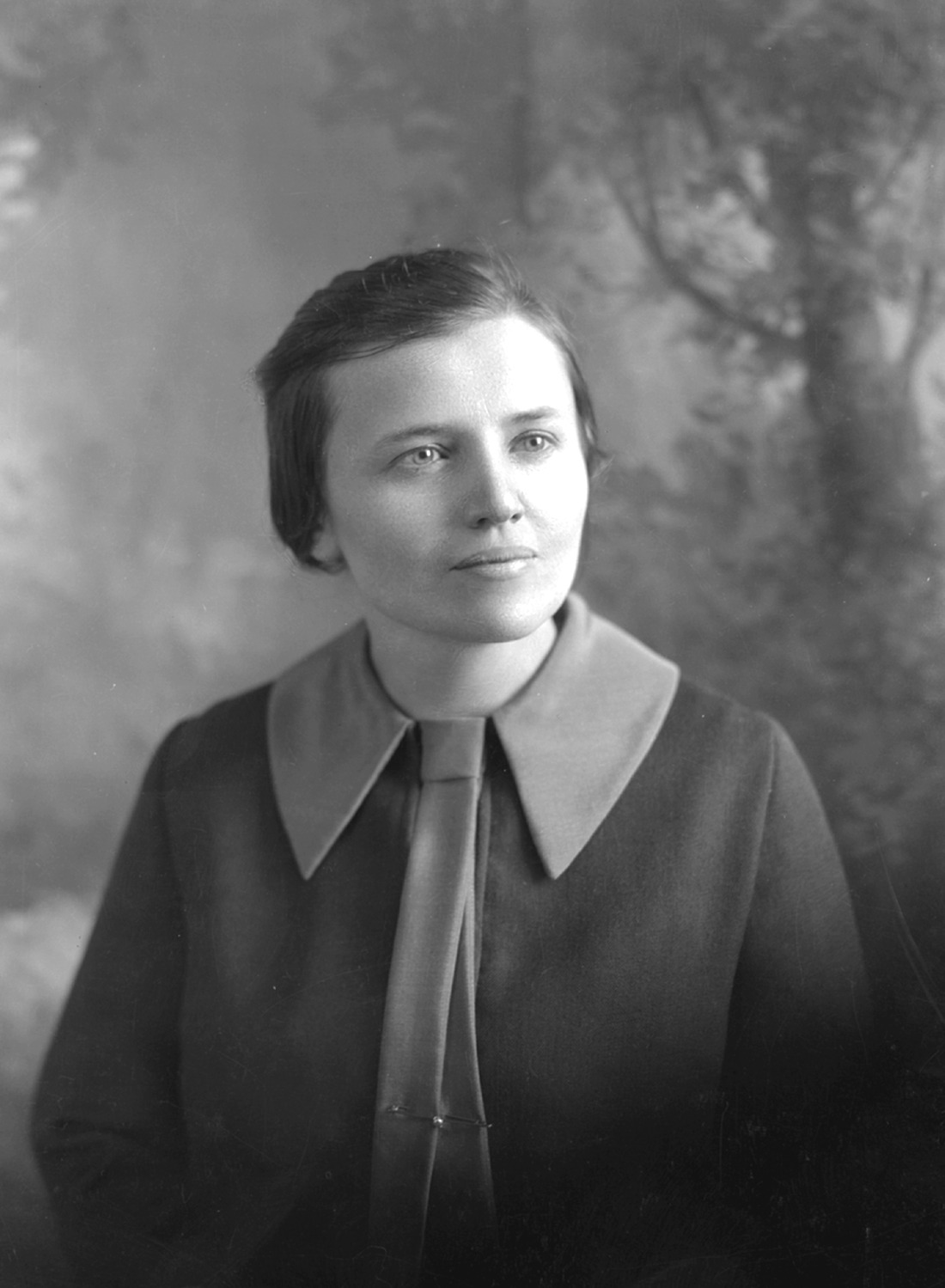
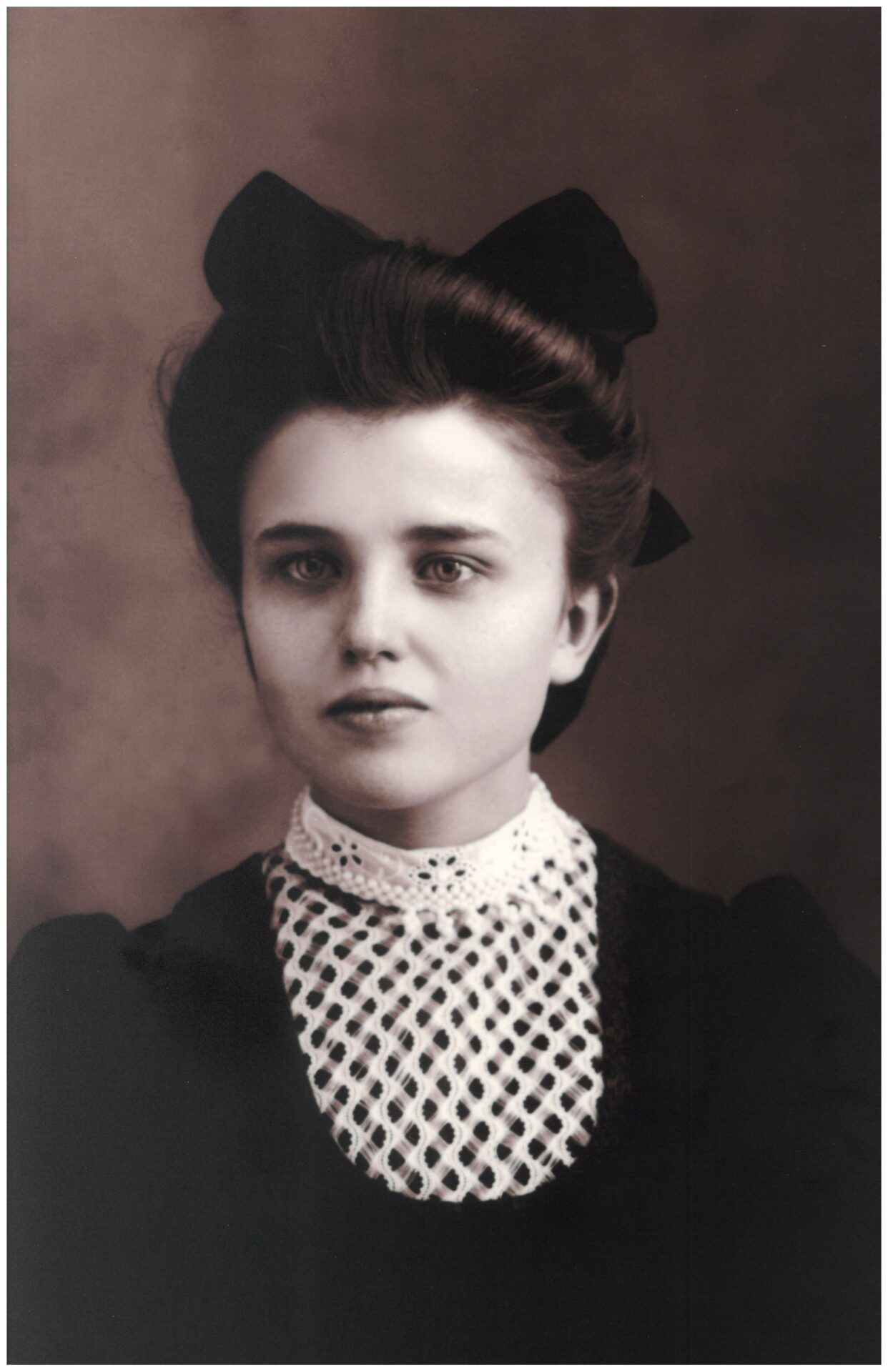
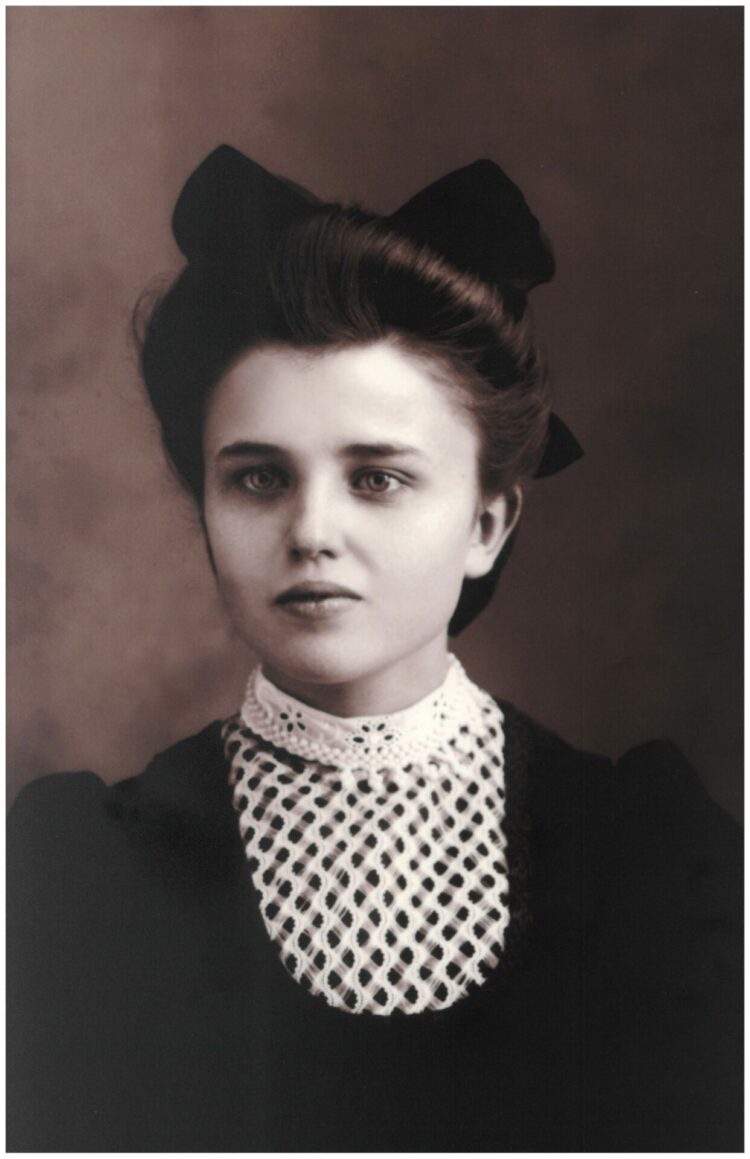
Retouched portrait of Marie-Alice Dumont, approximately 40 years old, in Ulric Lavoie's studio.

d5524

1951 [late 1920s - early 1930s]Photographe: Photographer: Ulric Lavoie

This could very well be the most refined portrait of Marie-Alice. Ulric Lavoie took it at the very beginning of Dumont’s career. Did she intend to use it as a professional carte de visite or a promotional image? Lavoie clearly took great care in retouching the photo, especially the face, which, on closer inspection, appears very smooth, almost flawless. Marie-Alice even looks a few years younger! She is smiling slightly and gazes off into the distance, lending her an expression that is both soft and serious, and creating a certain distance between her and the viewer. For the occasion, the photographer chose a modest yet fashionable outfit, one she often wore when sitting for studio portraits.

11 cm X 16 cmMarie-Alice Dumont collection, MBSL, d5524
Retouched portrait of Marie-Alice Dumont, approximately 40 years old, in Ulric Lavoie's studio.
Marie-Alice Dumont was a gifted photographer and the first woman to take up the profession in the Bas-Saint-Laurent region of Quebec. However, photography had not been her dream. This section explores how she got started and situates her story within the context of her time.

d5523

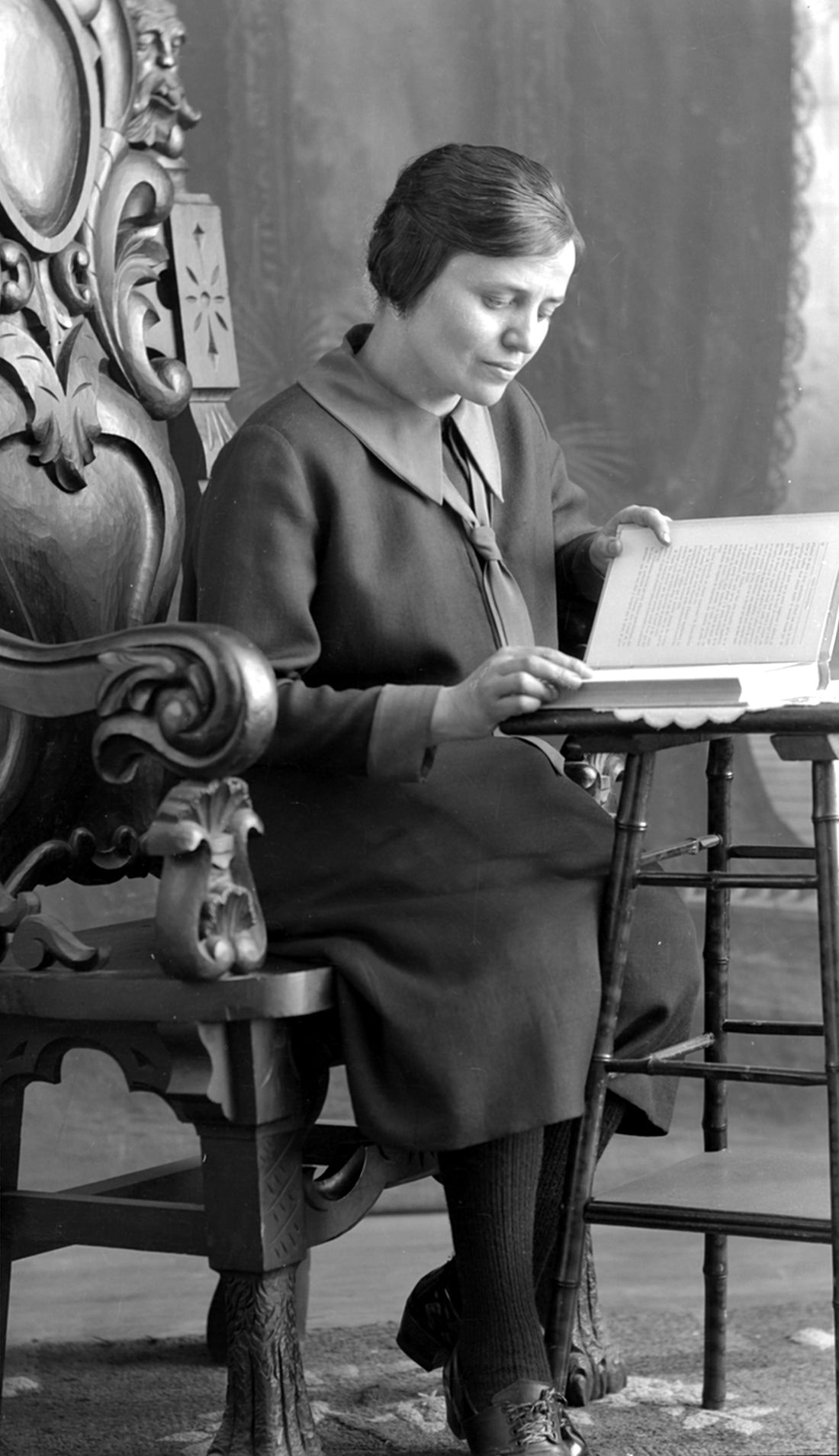
1951 [probably early 1930s]Photographe: Photographer: Marie-Alice Dumont

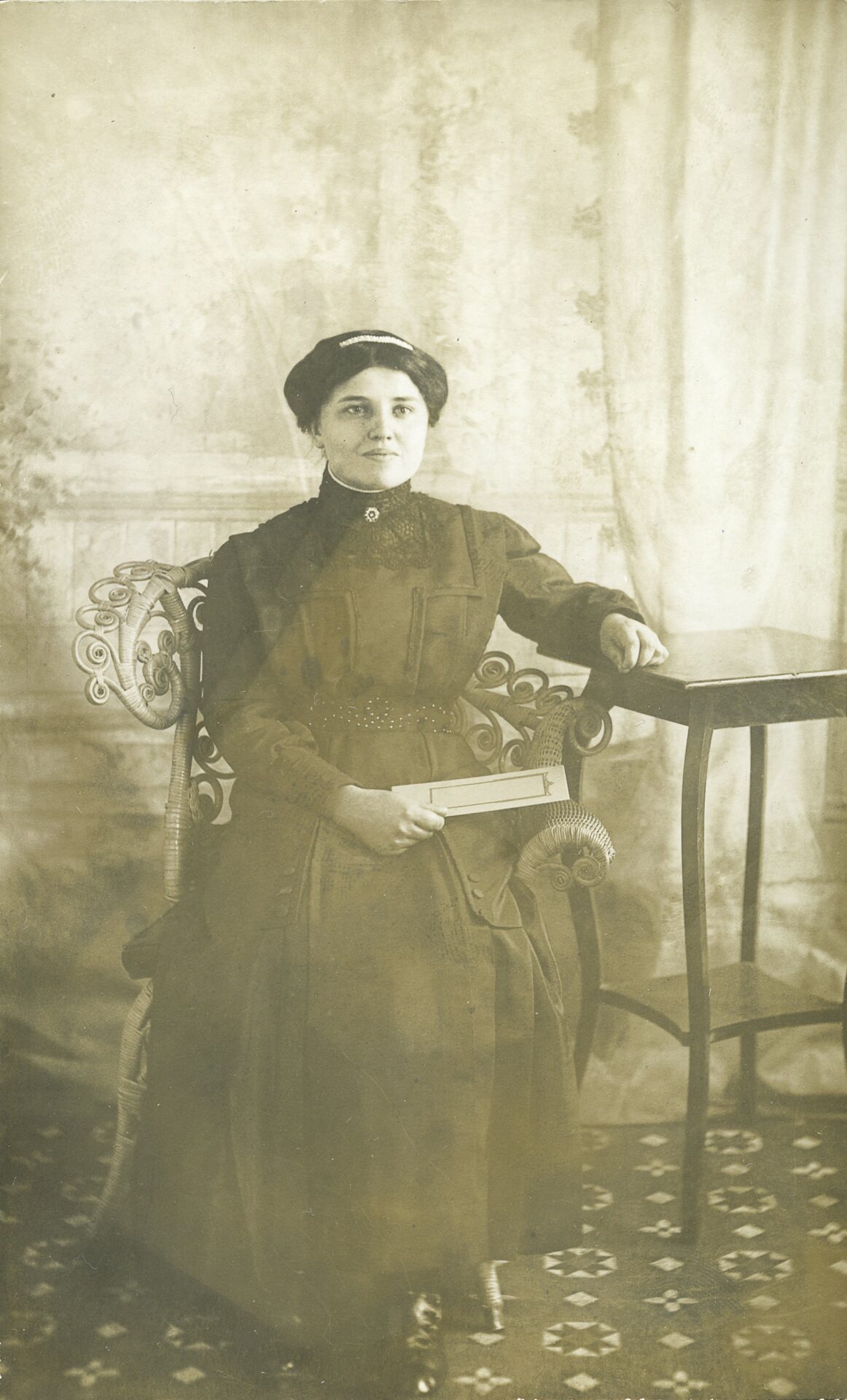
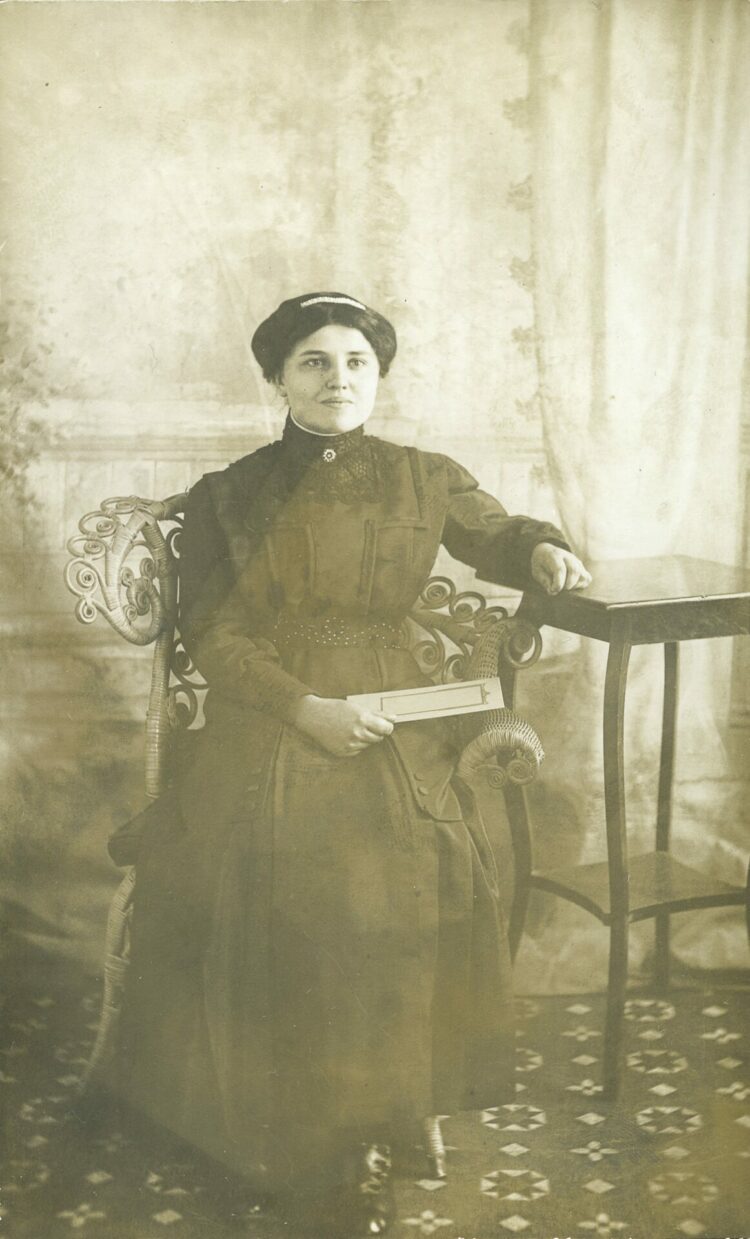
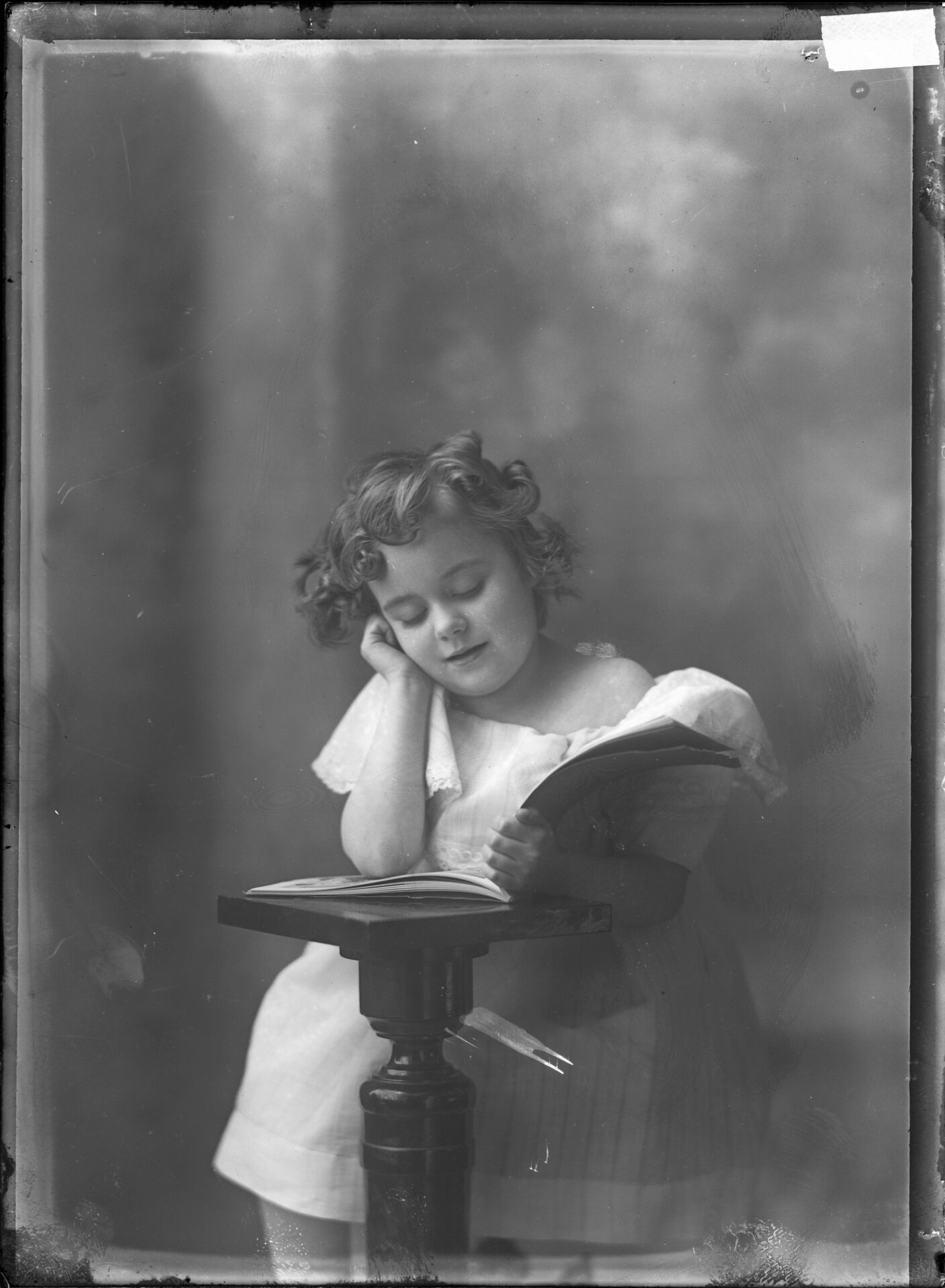
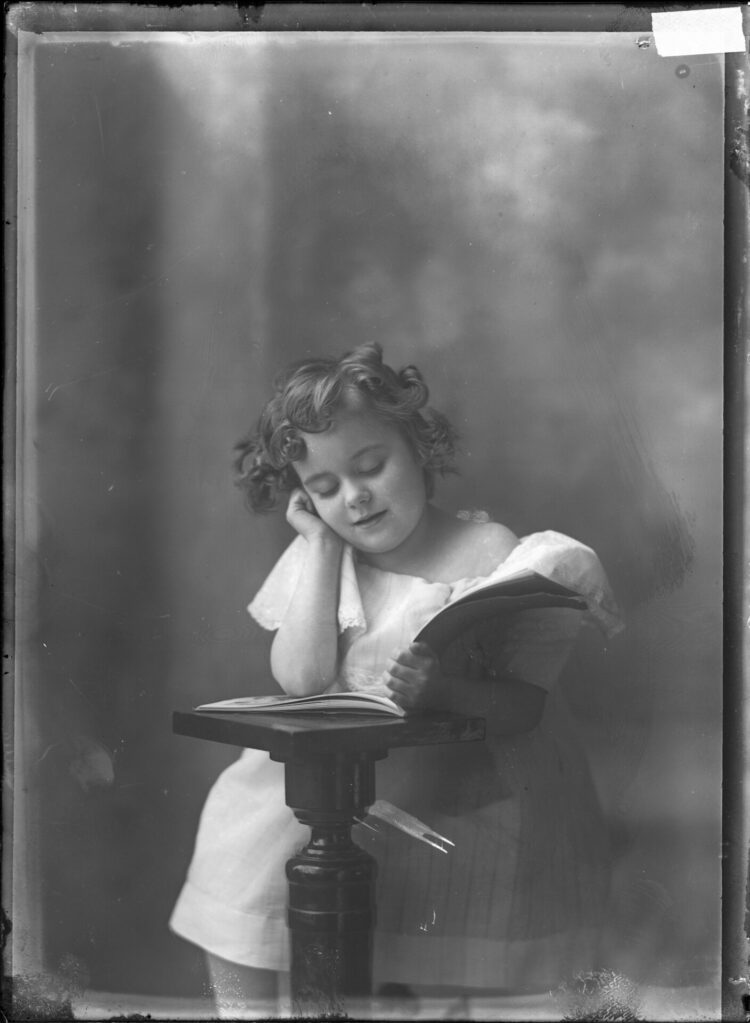
This self-portrait is undoubtedly one of the most striking Dumont ever created. She is seated on the grand yet elegant “Devil’s Chair,” her feet barely touching the floor. With a serious expression, she pretends to read a book. What image is she trying to project? That of a serious, educated and busy woman.

9 cm X 16 cmMarie-Alice Dumont collection, MBSL, d5523
Self-portrait of Marie-Alice Dumont, approximately 40 years old, in her studio, sitting on a large wooden chair and reading a book.

l09403

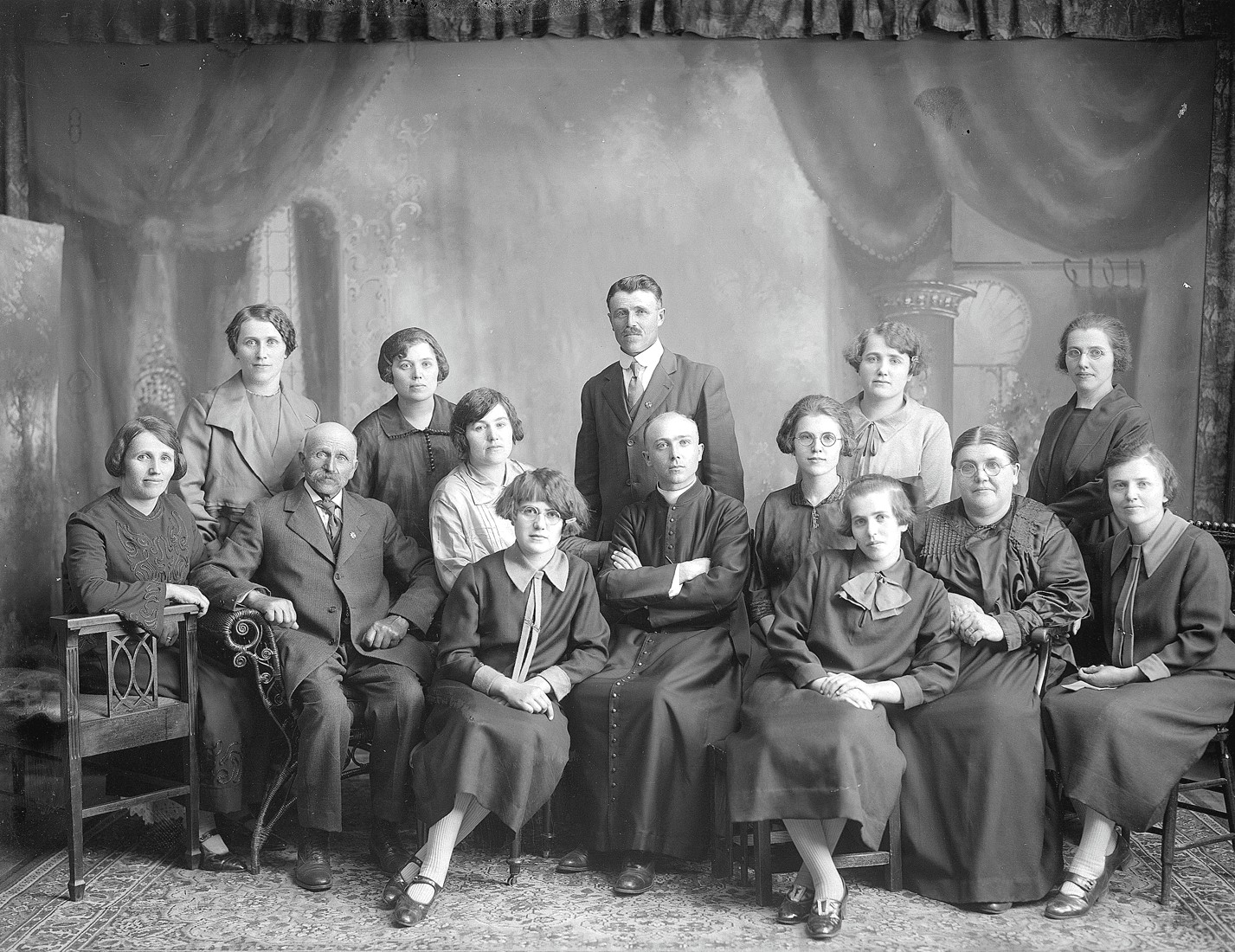
1926Photographe: Photographer: Ulric Lavoie

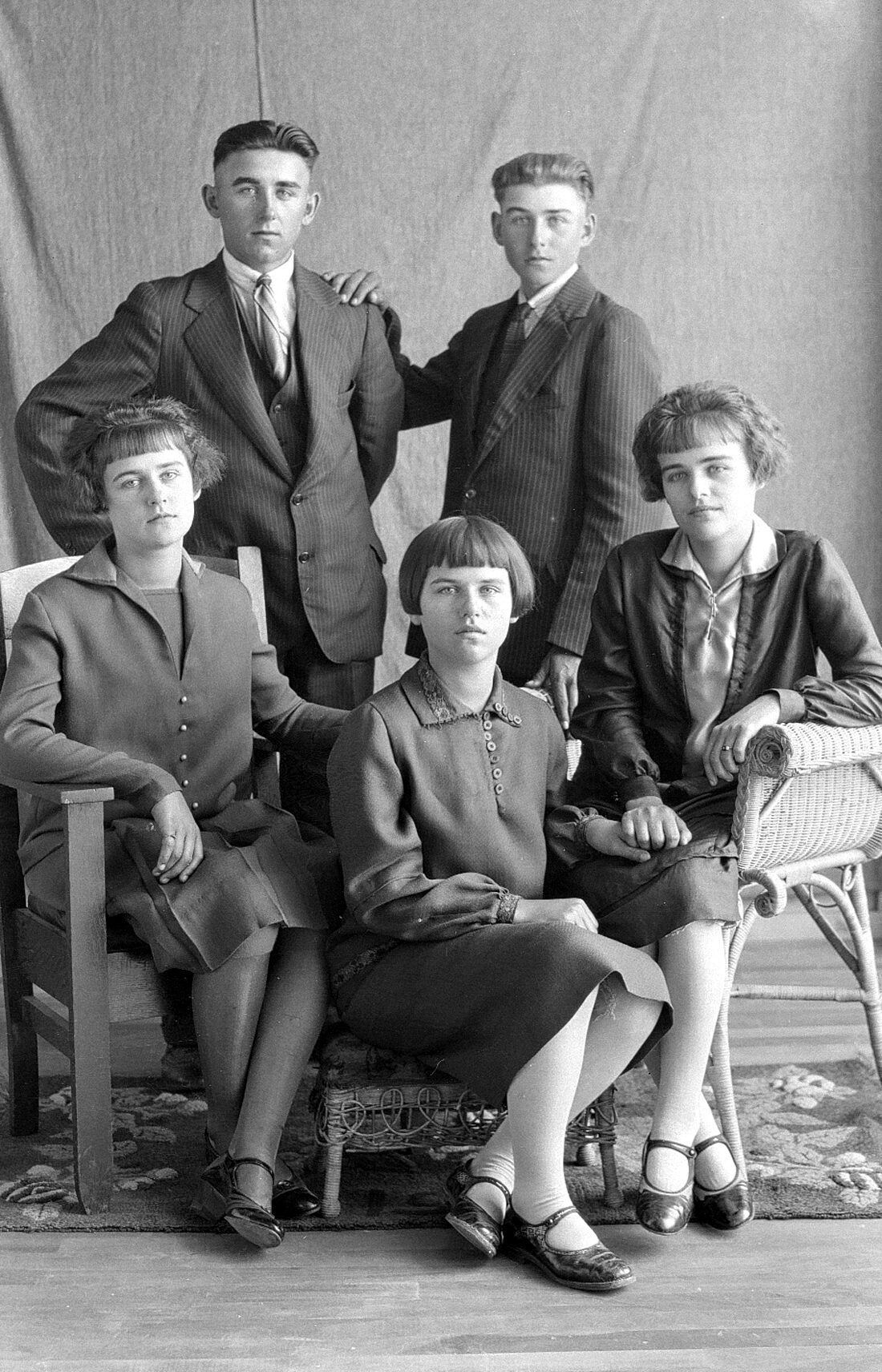
In this photograph of the Dumont family taken by Ulric Lavoie, the two sons are prominently placed at the centre of the composition. Joseph-Napoléon, the younger of the two, is seated in the front row at the very centre, while, by his height and position, the elder boy François towers over the group from the second row. The father (Uldéric, on the left) and mother (Marie, on the right) are surrounded by their many daughters. Marie-Alice stands at the far right, next to her mother.

Back row, left to right: Anna, Marie-Louise, François, Marie-Jeanne, Marie-Claire.

Front row, left to right: Albertine, Uldéric, Émilia, Elizabeth, Napoléon, Gabrielle, Berthe, Marie, Marie-Alice.

20 cm X 25 cmUlric Lavoie collection, MBSL, l09403
Portrait of the 14 members of the Dumont family in Ulric Lavoie's studio.

Marie-Alice was born in 1892 in Saint-Alexandre-de-Kamouraska, a small village in the Bas-Saint-Laurent region of Quebec, near Rivière-du-Loup. She grew up on her family’s modest farm with her parents, Uldéric and Marie, her two brothers and her eleven sisters. The Dumonts were a tight-knit family who made their living from farming.

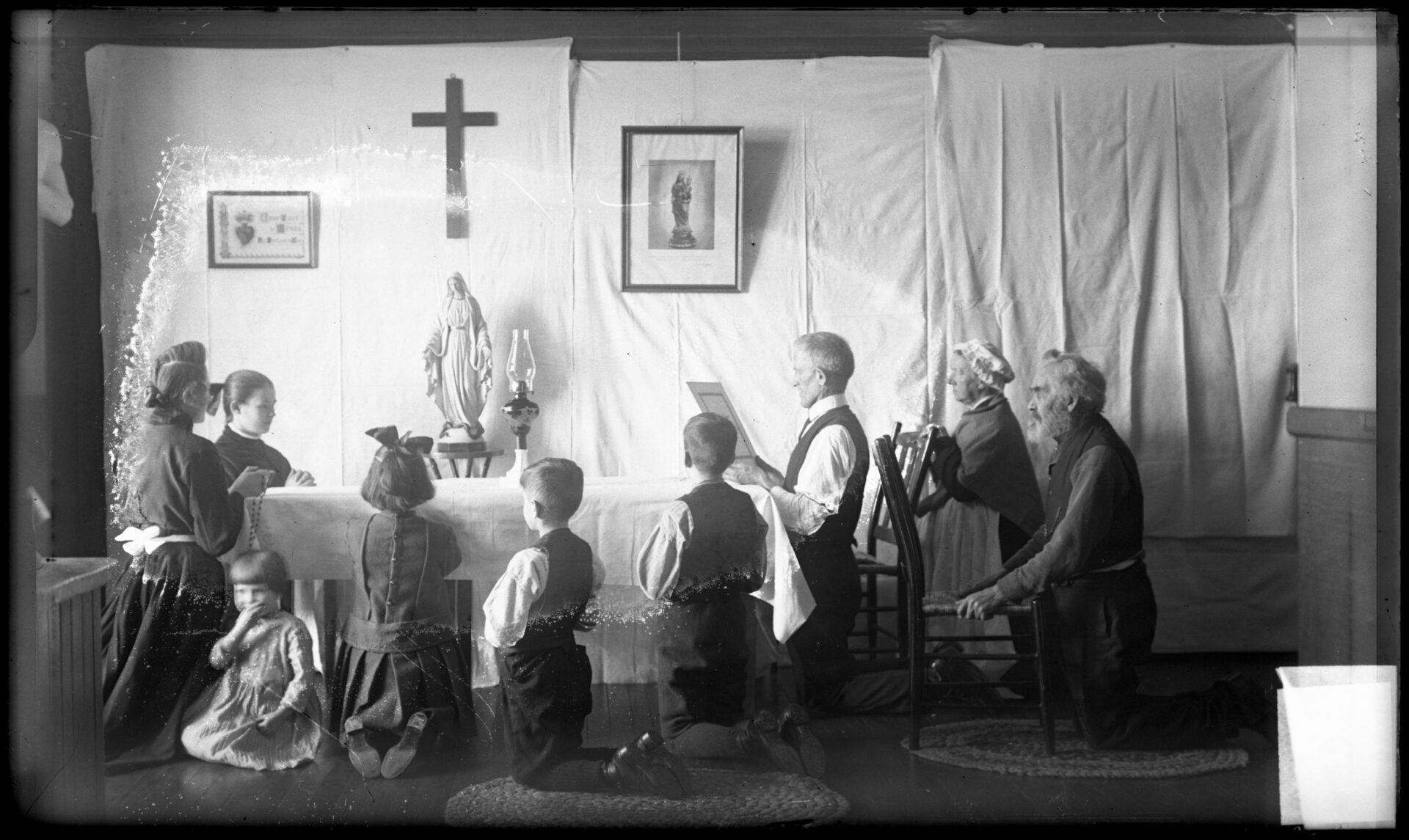
Their way of life mirrored that of most of their neighbours, who were predominantly French Canadian farmers. Like her siblings, Marie-Alice was raised to strictly follow the rituals and traditions of the Catholic faith.

II
The learning years

At the turn of the 20th century, not every child in Quebec had the chance to go to school. Many—both boys and girls—attended the local one-room schoolhouse for a few years, or sometimes just for a few months, before leaving to help their parents with their day-to-day work. Uldéric and Marie, on the other hand, had the means to provide their children with an education.
Marie-Alice started out at the local school and later moved on to the village convent. She was a bright and diligent student. As a teenager and young adult, she even taught her younger sister Berthe.

Dumont_15 ans

1907Photographe: Photographer: unknown

This portrait is one of the few known images of Marie-Alice Dumont before her twenties. It already reflects an aesthetic quite similar to the one Dumont herself would later adopt when she found herself on the other side of the lens, in her own studio. The stream of light coming from the left softens the young woman’s gaze and lends her a mysterious quality. It also heightens the already striking contrast between the white high-buttoned blouse and the black of the rest of her outfit, which nearly blends into the background. The viewer’s eye is naturally drawn to the centre of the image, to the subject’s face. Did Marie-Alice draw inspiration from this image when crafting her own portraits?

Private collection of Daria Dumont
Portrait of Marie-Alice Dumont, approximately 15 years old.

Dumont_18-20 ans

About 1910Photographe: Photographer: unknown

In this portrait, Marie-Alice must be between 18 and 20 years old. Around this time, circa 1910, she is preparing to leave for the novitiate in Québec City. Although she never realized her dream of becoming a nun, she is still remembered within the family as a deeply devout woman, often seen wearing clothing as modest and sober as a nun’s habit.

Marie-Alice Dumont collection, MBSL, uncatalogued
Portrait of Marie-Alice Dumont, approximately 18 to 20 years old.
Marie-Alice's primary ambition is to become a nun, not a photographer.

1900_Couvent Saint-Alexandre

About 1900Photographe: Photographer: unknown

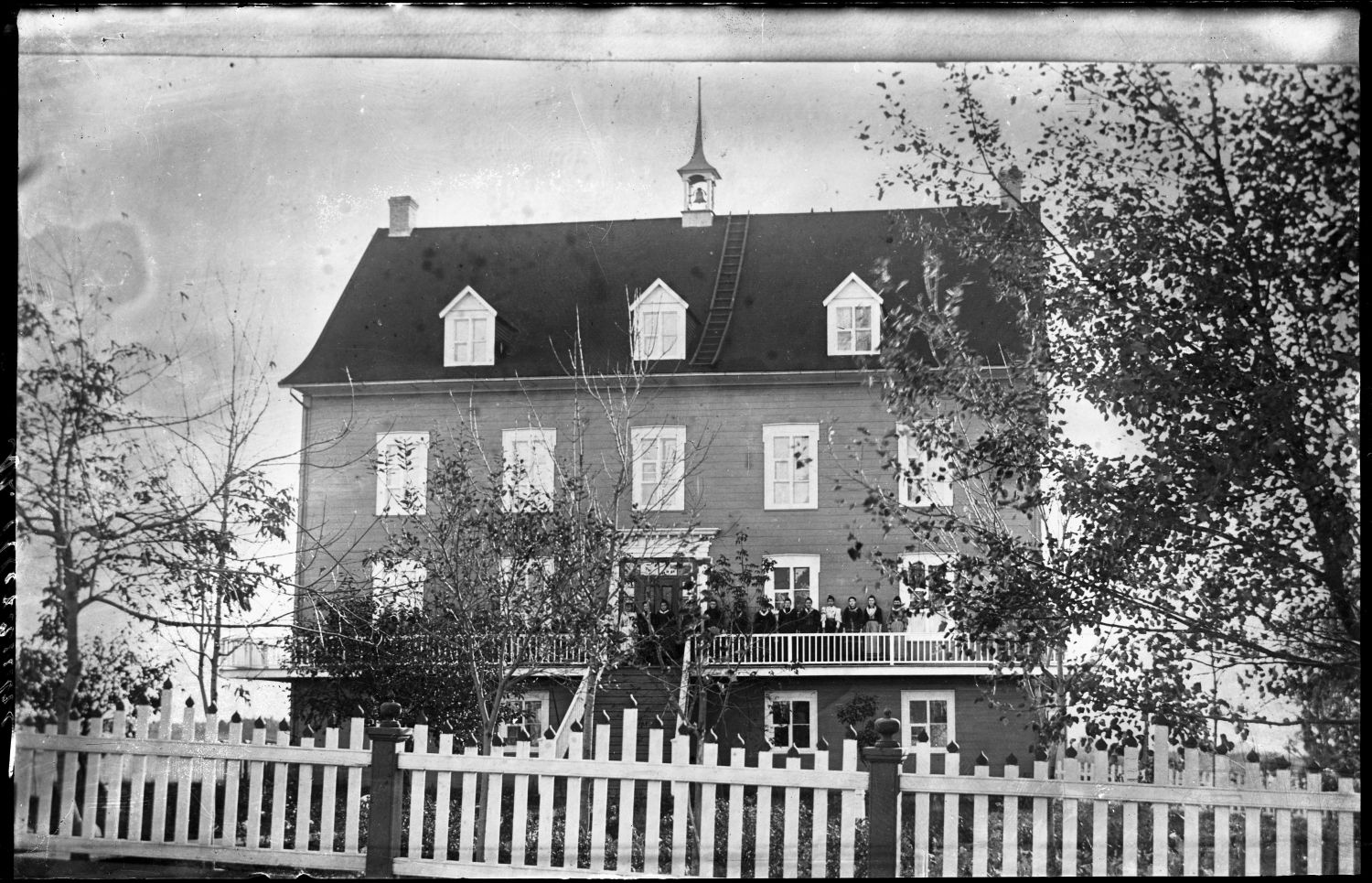
The convent of Saint-Alexandre-de-Kamouraska was founded in 1881 by the Sisters of Charity. This photograph represents a distant view of the building’s facade, located not far from the village church. Can you see the fifteen or so young girls lined up on the porch? It is not impossible that Marie-Alice was among them. From the mid-19th century to the mid-20th century, thousands of young girls received a post-primary education in schools like these. In Saint-Alexandre, a rural setting, the convent girls acquired the necessary skills for maintaining a good home (cooking, sewing, and other manual labor). They were prepared to become good wives and mothers, which may seem ironic given that Marie-Alice Dumont never married. Convent girls in Quebec could also take advanced lessons in geography, history, and arithmetic (among others), not to mention painting, drawing, music, and singing, which were often practiced there. Marie-Alice thus left the convent well-prepared to obtain a teaching certificate.

Glass negativeLes Sœurs de la Charité de Québec collection, BAnQ-Québec, P910,S3,D6,P17
Convent of Saint-Alexandre-de-Kamouraska seen from the front with students standing on the porch.

After finishing her studies in Saint-Alexandre, Marie-Alice joined the Sisters of Charity of Quebec City, entering their novitiate with plans to become a teaching nun. But it was a hard way of life. Her health, too fragile to handle the demands of the novitiate, forced her to return home after about a year. So, what now? Marriage? The idea didn’t interest her in the slightest. At just 20 years old, Marie-Alice was determined to carve out a different path for herself.

After finishing her studies in Saint-Alexandre, Marie-Alice joined the Sisters of Charity of Quebec City, entering their novitiate with plans to become a teaching nun. But it was a hard way of life. Her health, too fragile to handle the demands of the novitiate, forced her to return home after about a year. So, what now? Marriage? The idea didn’t interest her in the slightest. At just 20 years old, Marie-Alice was determined to carve out a different path for herself.

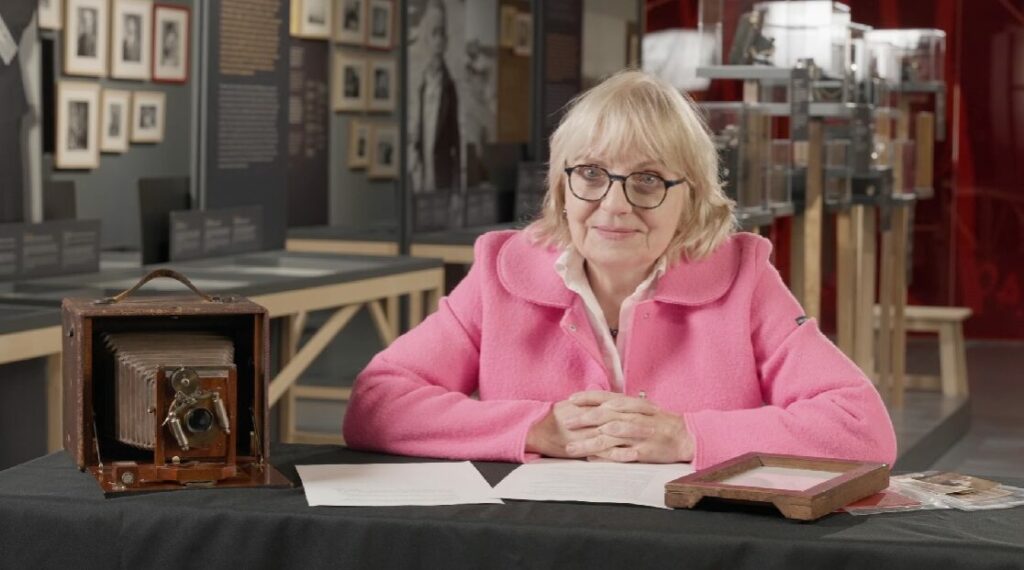
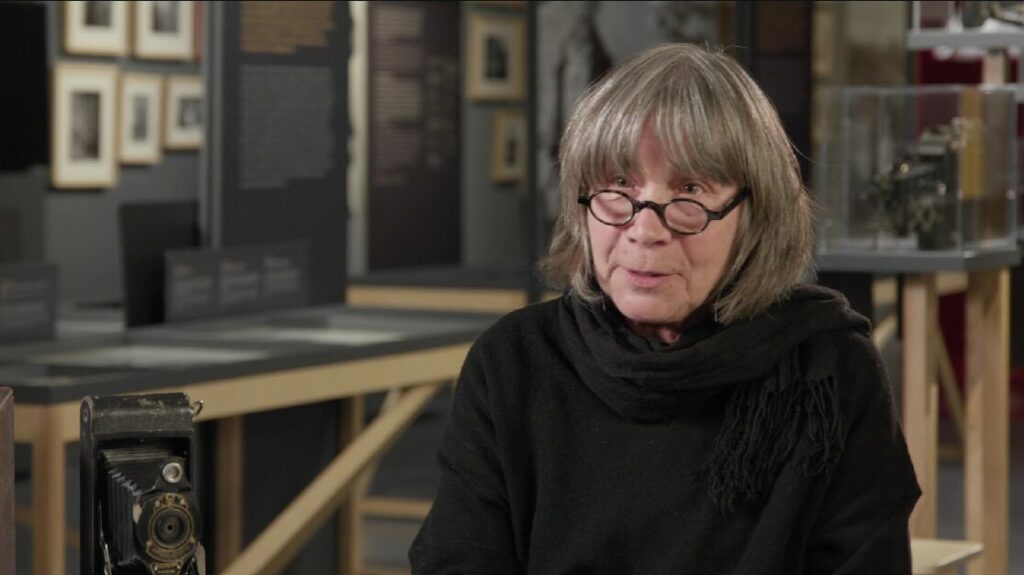
“Marie-Alice really pursued her craft with a remarkable passion, I think.” 

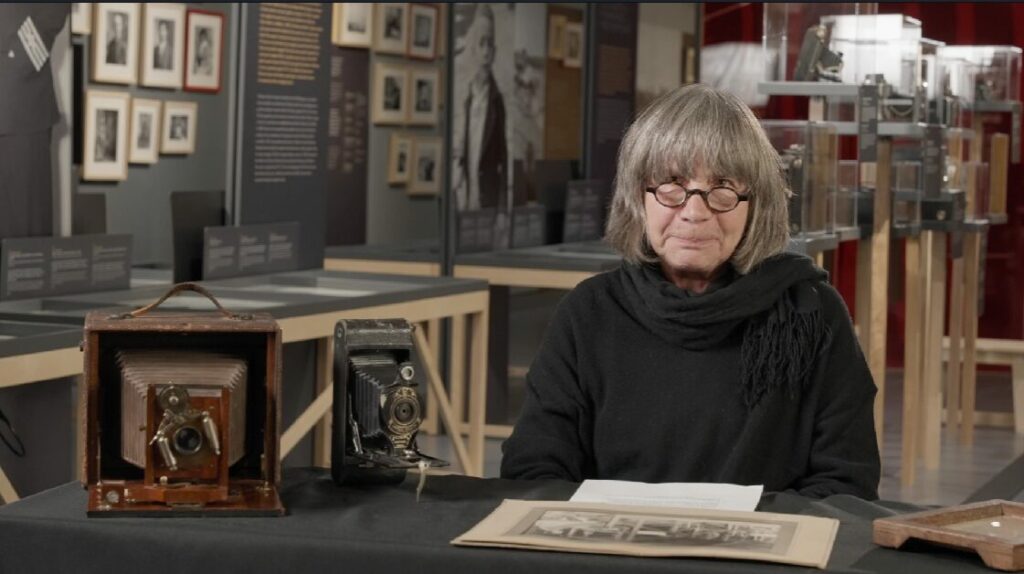
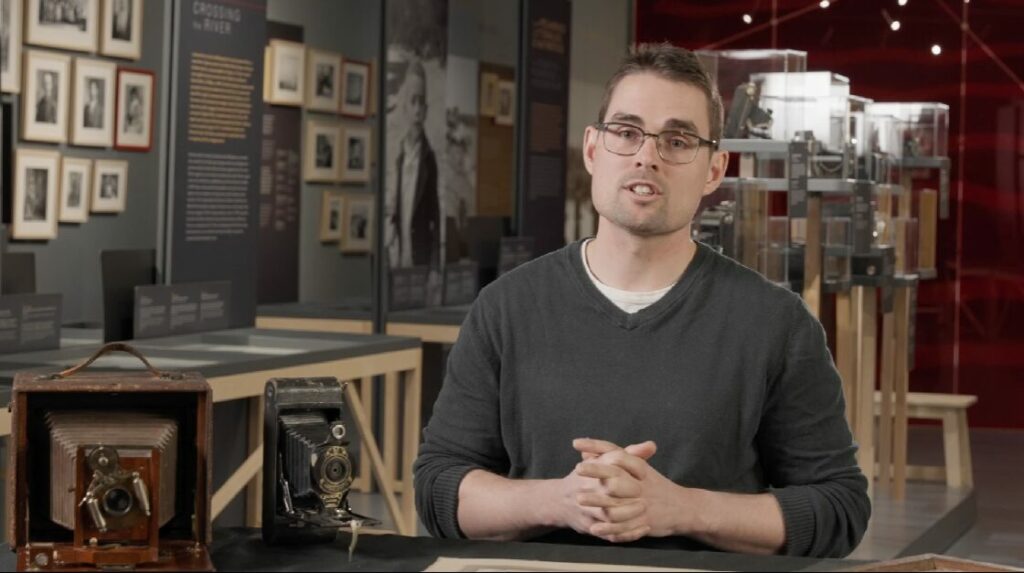
Madeleine Marcil, art historian and photographer, shares the story of Marie-Alice Dumont.

Dumont's first photographs

Marie-Alice’s journey into photography likely began thanks to her younger brother, Joseph-Napoléon. Perhaps he noticed her independence and artistic sensibility and saw the traits of a professional photographer. Aware that Marie-Alice considered herself unsuited for “heavy labour,” he may have also thought photography was a career that was both accessible and appropriate for his unmarried sister.

Whatever his reasoning, Napoléon, a photography enthusiast himself, encouraged her to give it a try. In 1920, when Marie-Alice was 27 years old, he lent her an amateur photography book and urged her to study it in preparation for the experiments they planned to do together that summer. And with that, Marie-Alice’s journey into photography began.

d1177

1925Photographe: Photographer: Marie-Alice Dumont

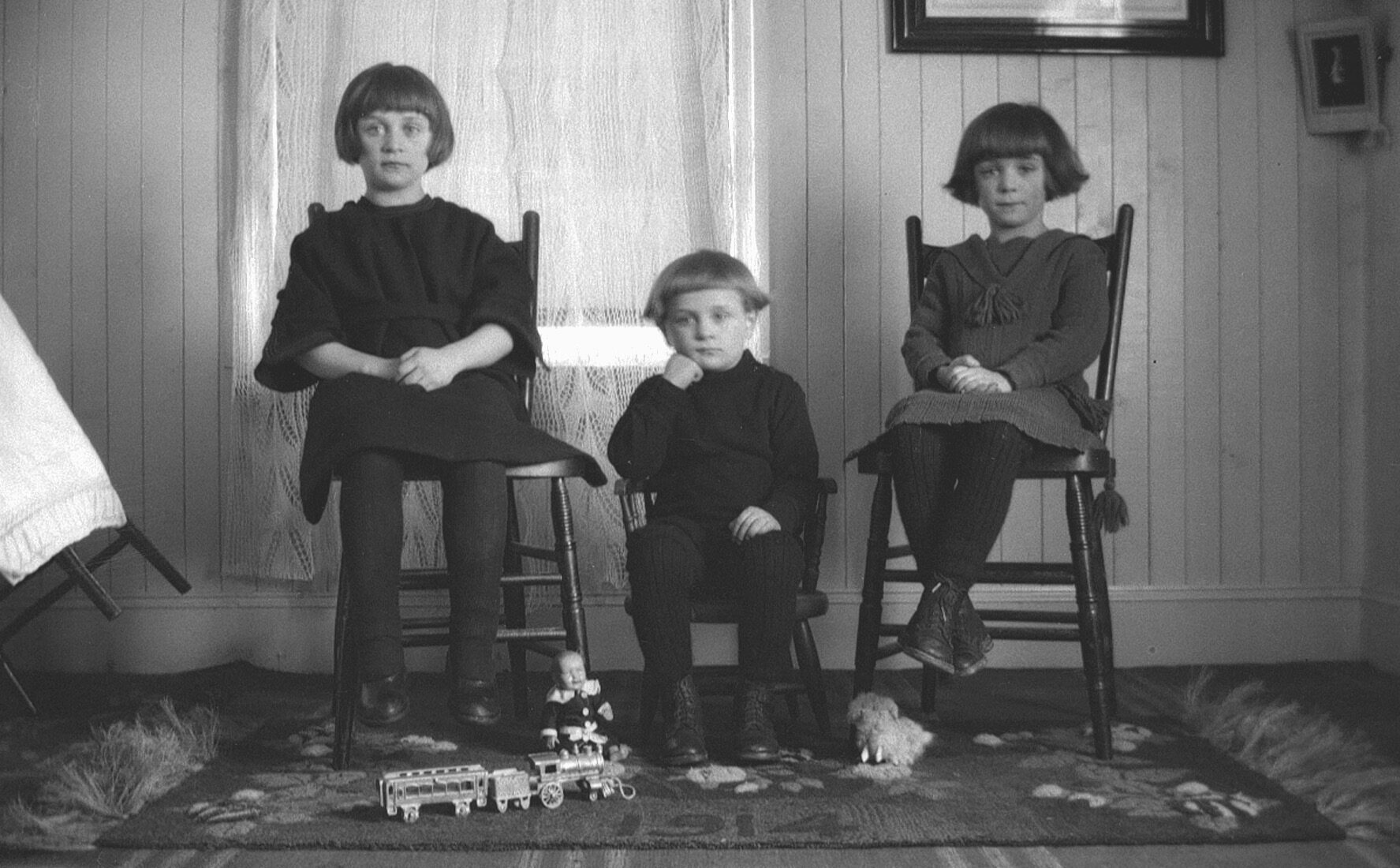
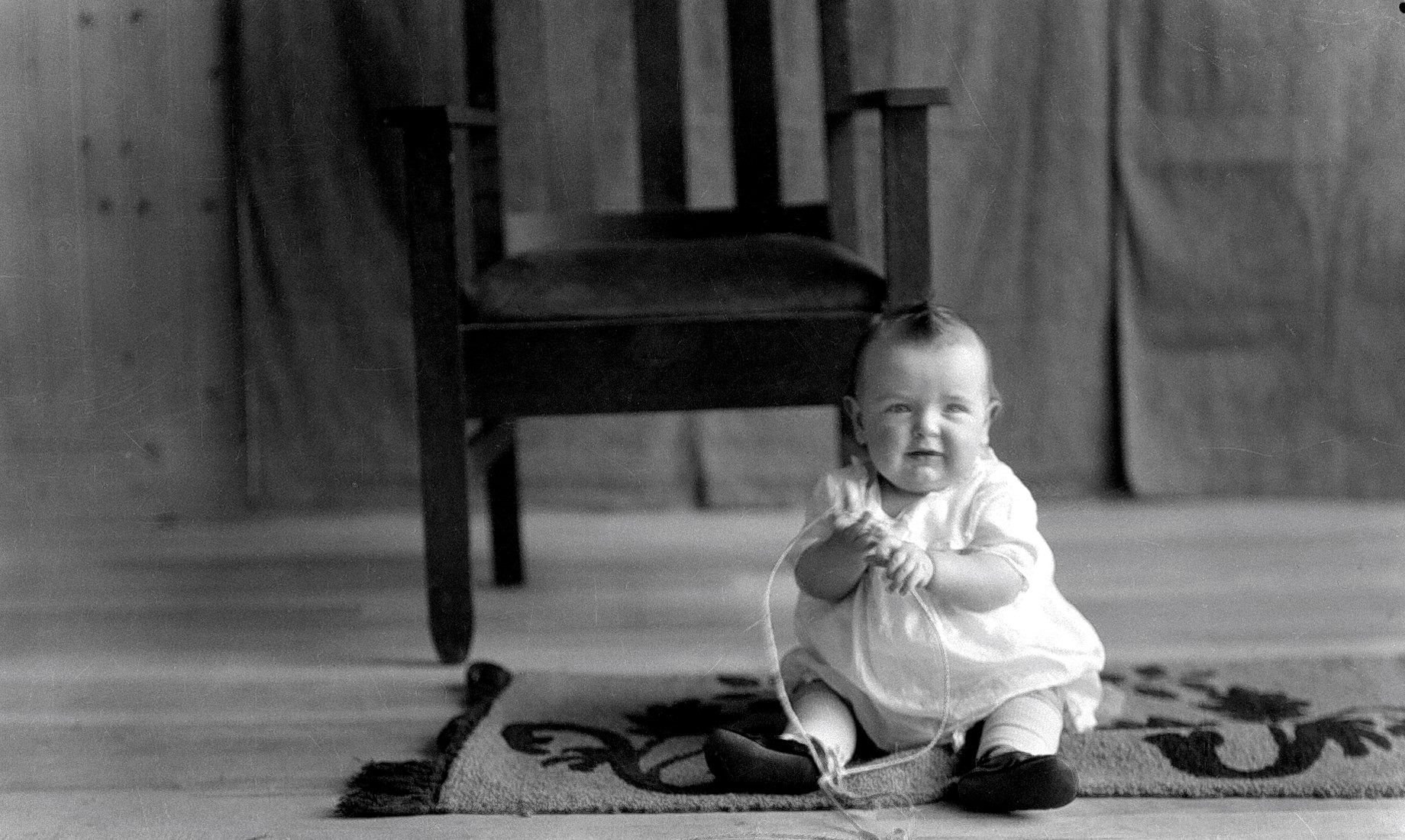
In the early 1920s, family, friends and neighbours came to be photographed by Dumont in a small studio she set up in the family home on the 5e Rang. At this point, she was still learning the craft of photography. Here, three children (likely cousins) serve as her subjects. In the background, we see the slatted wooden wall, the curtained window, the extra chair to the left, the picture frames and scattered toys. Despite the staged pose, the lack of backdrop and the domestic setting give the portrait the look and feel of a candid snapshot.

11 cm X 7 cmMarie-Alice Dumont collection, MBSL, d1177
Portrait of two young girls and a small boy sitting on wooden chairs in a domestic setting.

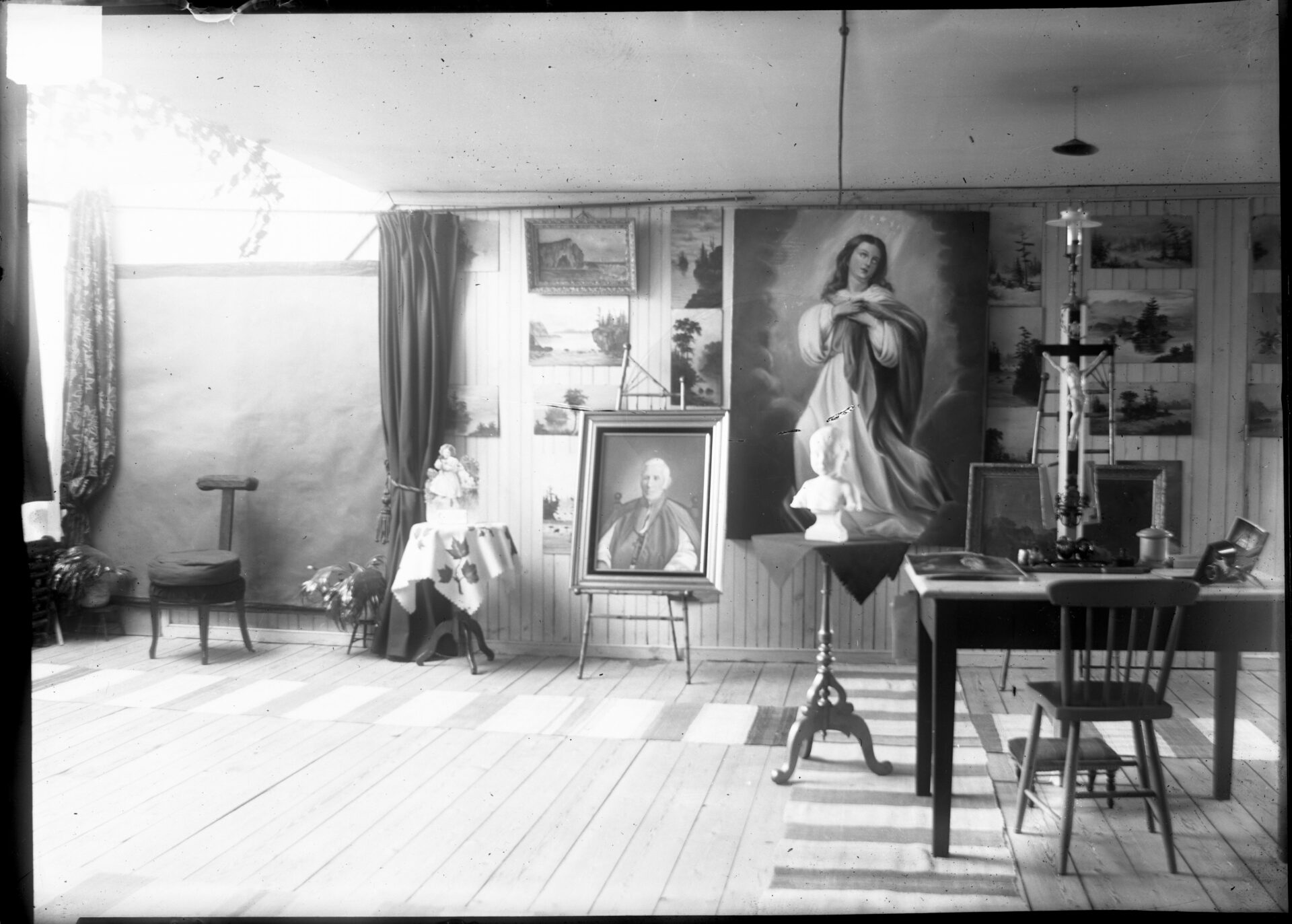
In the early 1920s, she learned to use her Kodak camera, carrying it everywhere she went. She took her first client portraits in the family home, where she transformed the ground floor into a makeshift studio, complete with a large curtain as a backdrop. Outdoors, she sharpened her skills by photographing landscapes—never an easy task, as working with natural light was anything but predictable.

She sometimes recruited family and friends to pose for her, though she especially loved capturing her relatives in candid, everyday moments. Always keen to learn, Marie-Alice developed her first photographs in the attic above the family’s small summer kitchen, using equipment provided by Napoléon.

III
Photography in the time of Marie-Alice Dumont

Born in 1892 and passing away in 1985, Marie-Alice Dumont lived through a period of remarkable changes in photography. The craft was becoming more accessible thanks to innovations such as portable cameras and photographic film. While colour photography emerged during her lifetime, Marie-Alice chose to stick with black-and-white images. Electricity, which arrived in most Quebec villages during the first half of the 20th century, also transformed how she worked as a photographer.

Quebec society was undergoing its own transformations. More and more women were joining the workforce and becoming actively engaged in political life.

The video and timeline below place Marie-Alice Dumont within the broader context of her era and the long history of photography.

“Going to the photographer was kind of a ritual—a way to mark life’s major milestone.”

Lucie Bureau, art and photography historian, shares insights into the history of photography during Marie-Alice Dumont’s time.

1838_Daguerre

About 1838Photographe: Photographer: Louis-Jacques Mandé Daguerre

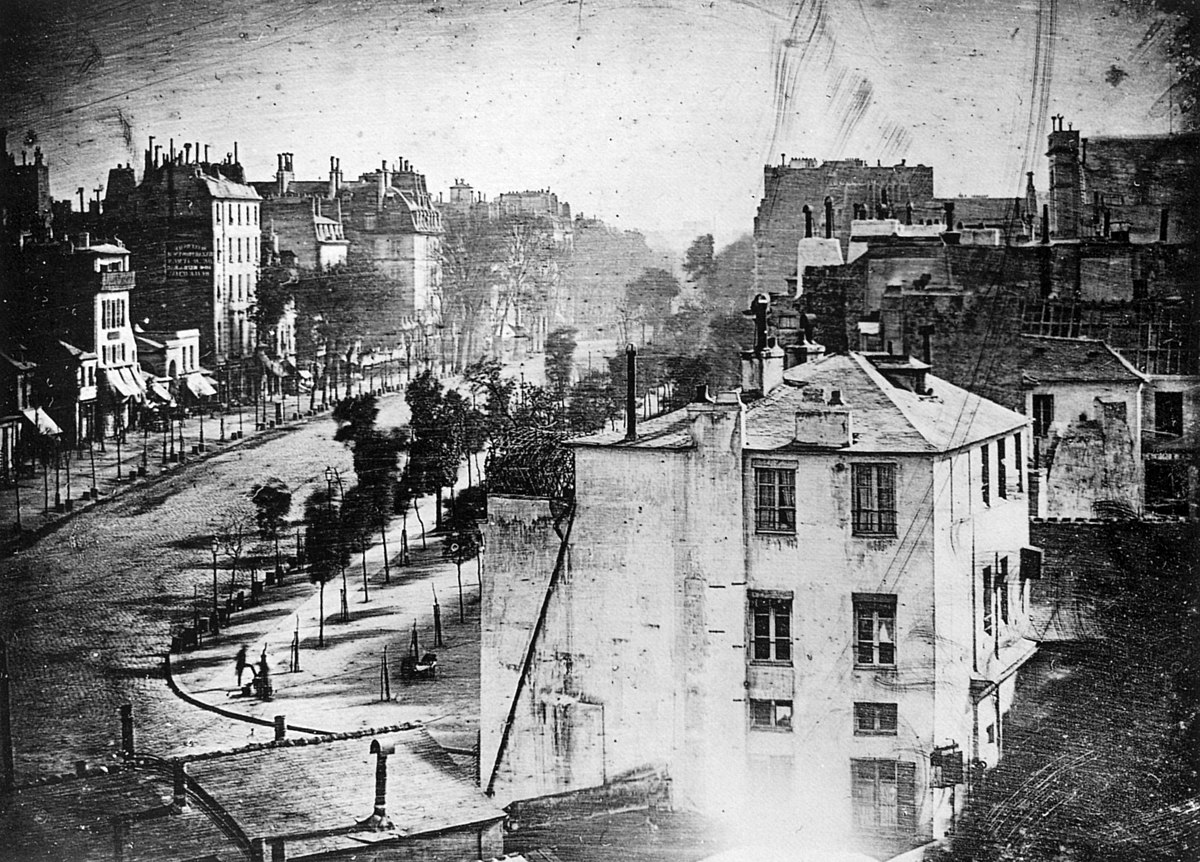
This photograph of a Paris boulevard is considered one of the very first to capture a living person. If you look closely, in the lower left corner, you can make out a figure standing, apparently having their shoes shined. Why is this bustling part of the French capital nearly deserted? The long exposure time (several minutes) required by the Daguerreotype process likely explains why only the silhouette of this client, who had to stay still for a while so the shoeshiner could do their work, was preserved in the image.

Wikimedia Commons, Public Domain
View of the Boulevard du Temple in Paris in 1838, taken from about fifteen meters up.
1839

The birth of photography: the Daguerreotype

In the late summer of 1839, Louis-Jacques-Mandé Daguerre (1787–1851) revealed his groundbreaking photographic process, developed with Nicéphore Niépce (1765–1833). To illustrate the magnitude of the discovery, historian Michel Lessard likens it to “the first man landing on the moon.” The world was utterly captivated! Since Daguerreotypes were impossible to reproduce, each photograph was truly one of a kind. Carefully framed, they were as revered as masterpieces by the great painters. That same fall, Pierre-Gustave Joly de Lotbinière became the first Canadian to create Daguerreotypes during a journey that took him from New York to the Middle East.

1841_Quebec Mercury

August 10, 1841Photographe: The Quebec Mercury

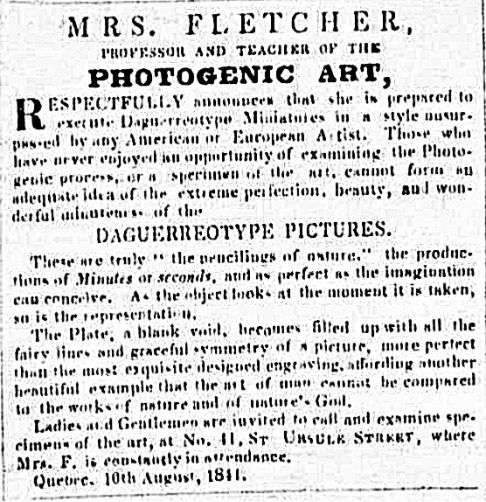
Today, it is hard for us to imagine the sense of wonder photography inspired when it was invented in the 19th century. After all, don’t photos render reality more faithfully than paintings or drawings? Would art be forever outdone by photography? In this advertisement by Mrs. Fletcher, the Daguerreotype is described as “the pencillings of nature” that is “as perfect as the imagination can conceive.” The ad also presents the Daguerreotype as proof of the superiority of God’s work and nature over human creation.
BAnQ, Public Domain
Advertisement in an old newspaper that notably reads "Mrs. Fletcher Professor and Teacher of the Photogenic Art."
1841

Mrs. Fletcher: Quebec’s first photographer

In August 1841, an American woman named Mrs. Fletcher made history by placing an ad in the Quebec Mercury for the first photography studio in Quebec. The province’s first professional photographer was a woman! Mrs. Fletcher travelled a lot: in July 1841, she was offering her services in Nova Scotia; by the fall, she had set up shop in Montréal. Her stay in the city was brief, and she returned to the United States just a few months later. Mrs. Fletcher is celebrated not only as a pioneer in Quebec but also as North America’s very first female Daguerreotypist.

1885-1887_Eugénie Pilon (Gagné)

1885-1887Photographe: Photographer: Eugénie Pilon (Gagné)

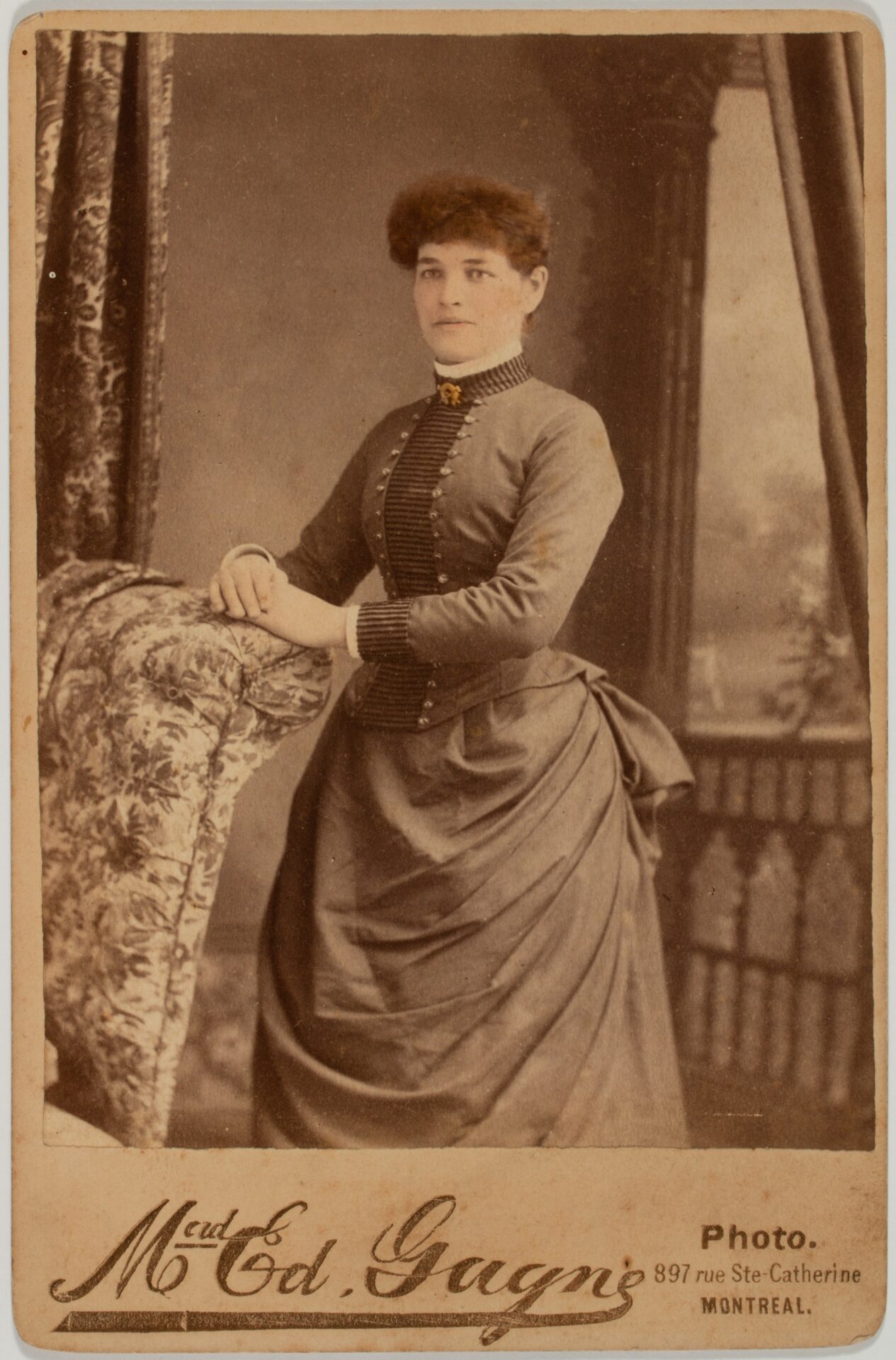
This portrait was taken in Montréal in the mid-1880s by Mrs. Gagné, also known as Eugénie Gagné or Eugénie Pilon (her maiden name). A professional photographer, she worked alongside her husband, Édouard Gagné, also a photographer, with whom she operated three studios in Montréal. She produced so-called “cabinet cards.” These portraits resembled carte-de-visite photographs but were slightly larger in format.

13,6 cm X 10,1 cmAllard collection, McCord Stewart Museum, M2017.46.2.2770
Studio portrait of a young woman printed in a cabinet card format and inscribed with "Mad Ed. Gagné Photo."
1854

The birth of the carte-de-visite

French photographer Eugène Disdéri (1819–1889) revolutionized photography with the invention of the carte-de-visite. These small portraits, mounted on playing-card-sized pieces of cardboard, were carefully crafted to impress. The innovation was an instant hit. People began collecting the cards of celebrities and ordinary individuals alike, trading them with family and friends much like modern sports cards. Photography was thus brought into everyday life. In fact, the carte-de-visite was so popular that some historians today view it as a precursor of today’s social media.

Notman_Groupe Findlay

1876Photographe: Photographer: William Notman

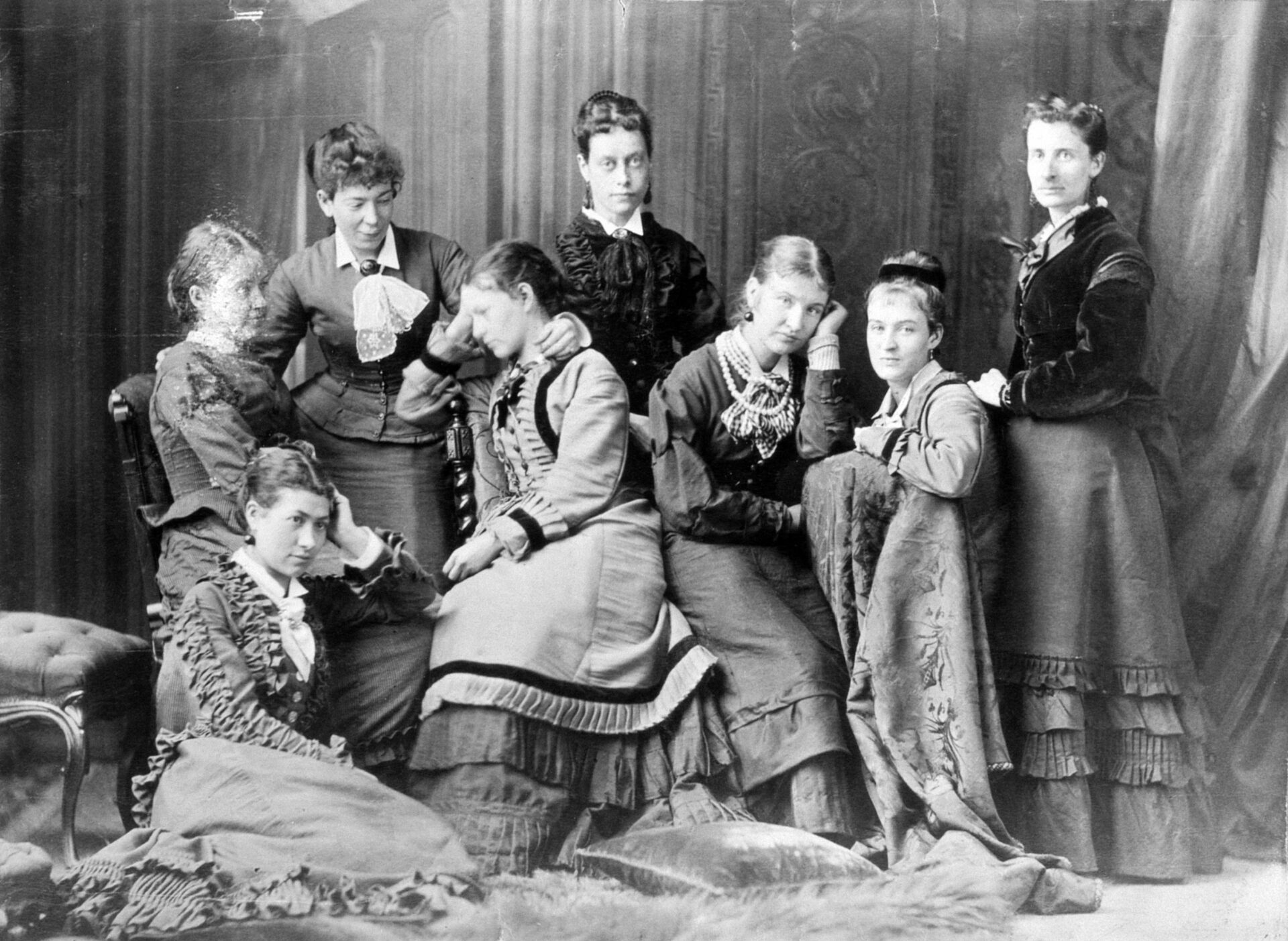
In 1876, the Notman Studio in Montréal employed 52 people, including 9 women. In this group portrait, taken that same year, eight women employees are pictured. Could the ninth listed in the company’s archives be the one behind the camera?

10 cm X 13,8 cmMcCord Stewart Museum, II-24323.1
Studio portrait of a group of eight women dressed in Victorian fashion.
1856

The Notman Studio opens in Montreal

In 1856, William Notman’s iconic photography studio opened its doors in Montreal. Over time, many women worked at the studio, although their numbers varied significantly from one year to the next. In 1864, only 1 in 29 employees was a woman, but by 1875, women made up over half the staff—18 out of 35 employees. Despite their strong presence, not one was hired as a photographer. As historian Colleen Skidmore highlights, women primarily handled technical and artistic tasks. They worked in the darkroom developing photos, took on printing and retouching duties, and managed sales and customer service.

Employées Livernois

1899Photographe: Photographer: sister Marie-de-l'Eucharistie (Elmina Lefebvre)

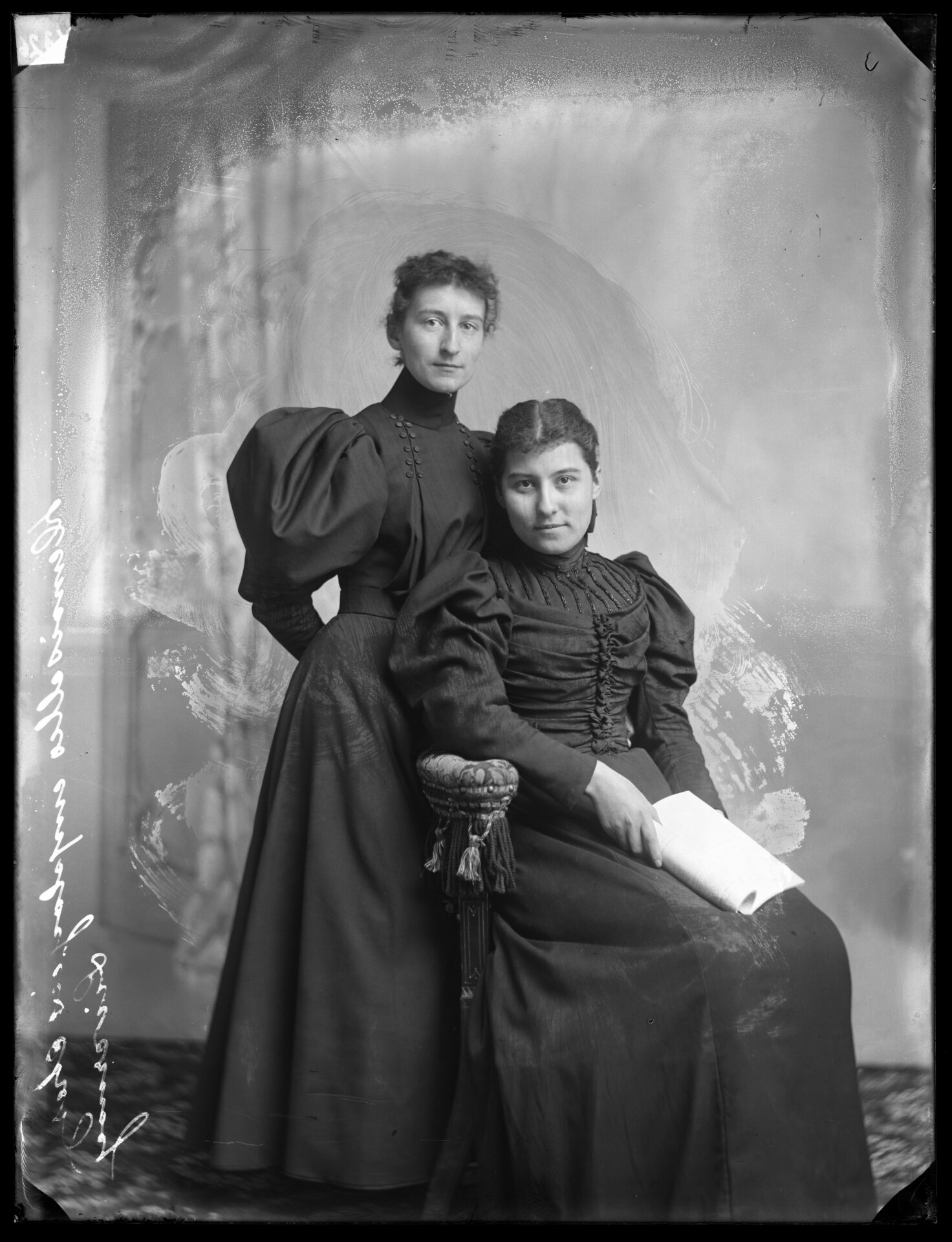
Very few portraits of the women working in Quebec photography studios in the 19th century have survived. This one, showing two young employees from the Livernois’s studio in Québec City, is especially significant. What roles did they play in the studio? Did they greet clients? Work in the darkroom? Handle retouching? Operate the camera? Whatever the case, historian Colleen Skidmore notes that Élise L’Heureux Livernois and her two young assistants produced here a portrait of remarkable quality. Thanks to skillful lighting, the colours and textures of the dresses, along with the pallor and detail of the faces, are clearly rendered.

Glass negativeLes Soeurs de la Charité de Québec collection, BAnQ-Québec, P910,S1,D4,P74
Portrait of two young women in dark dresses in a studio, one standing and the other seated in front, holding a book in her hands.
1865

Élise L’Heureux Livernois takes the helm

When her husband, Jules-Isaïe Livernois (1830–1865), passed away, Élise L’Heureux Livernois (1827–1896) took over the renowned Livernois photography studio in Québec City. Having already been involved in establishing a studio in 1854, she brought years of experience to the role. Élise worked as a photographer for 20 years, until 1874. She played a central role in running the studio—a rare occurrence for a woman of her era. In the early 1860s, it is estimated that there were only about 20 female photographers in Ontario. About the same number of women were holding a studio in the province of Quebec thirty years later, in 1891. Across Canada, around 200 women are believed to have run photography studios throughout the entire 19th century.

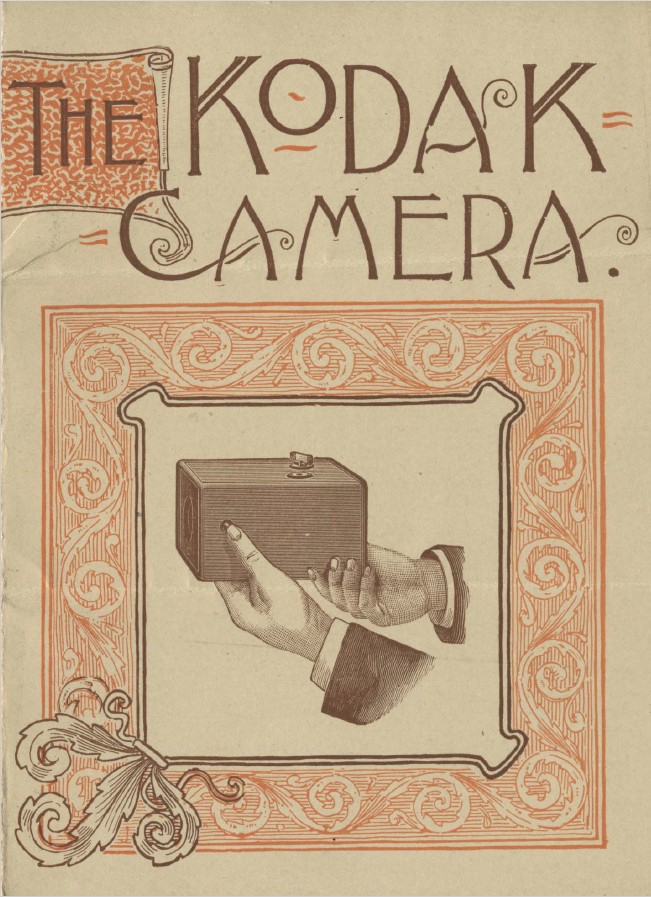
1888_Catalogue Kodak

1888Photographe: The Eastman Dry Plate and Film Co.

This image shows the cover page of one of the first catalogues published by the Eastman Dry Plate and Film Company of New York. Released in 1888, it promoted an invention by George Eastman that would revolutionize photography through its simplicity: the Brownie camera. The first lines of the catalogue read: “Anybody who can wind a watch can use the Kodak camera.”

The Digitized Kodak Catalog Project
Cover page of a magazine inscribed with "The Kodak Camera" and showing two hands holding a small rectangular camera.
1888

The Kodak revolution begins

The launch of the first Kodak camera in 1888 revolutionized the world of photography. After albumen paper (invented in 1847) made mass production of photos possible, Kodak’s portable camera made photography itself accessible to the masses. Compact and easy to use, the camera meant anyone could become a photographer. Kodak’s slogan said it all: “You press the button, we do the rest.” The American company even handled photo development, eliminating the need for a darkroom. Until the 1930s, Kodak had a near monopoly over the photography industry.

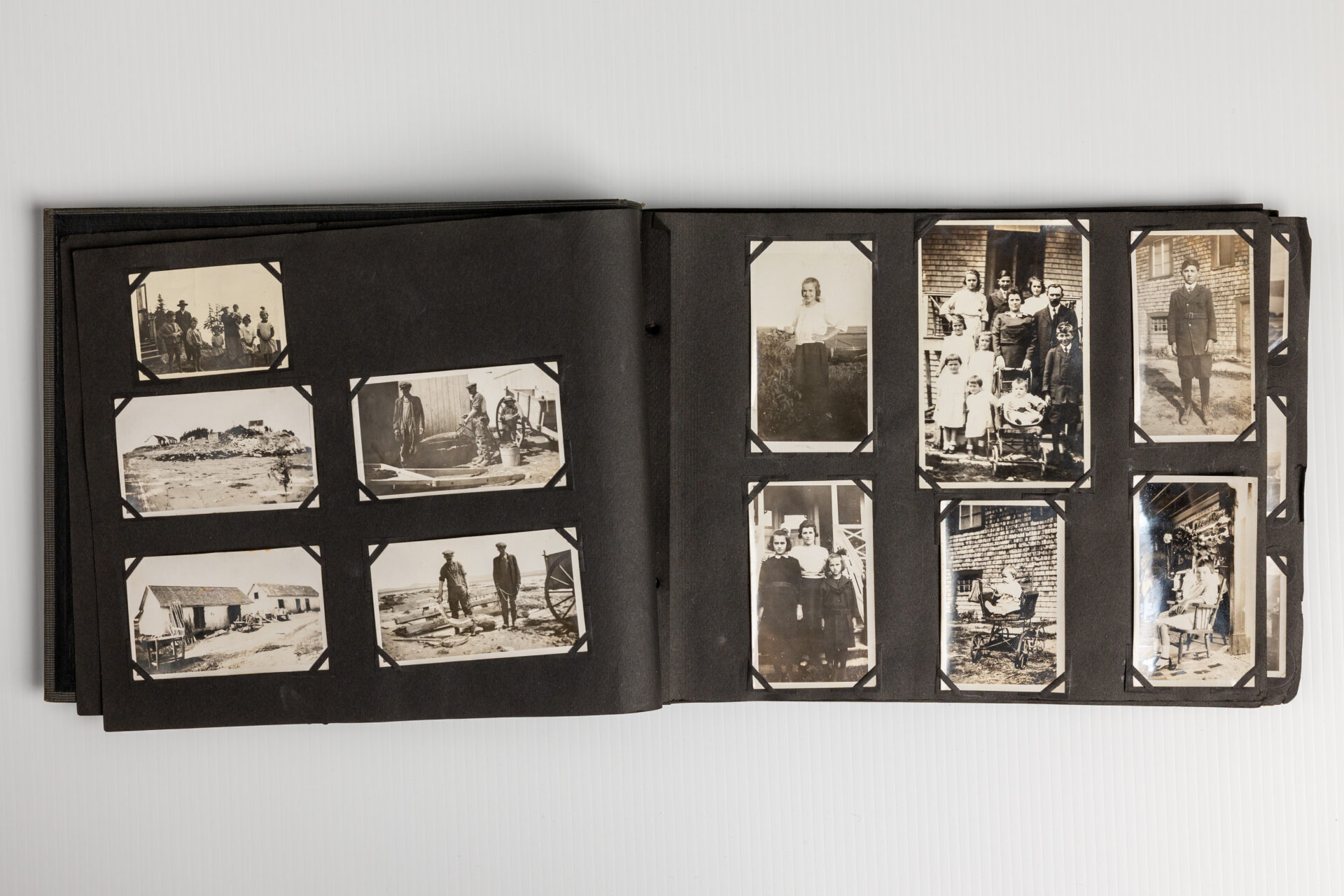
Album famille

2023Photographe: Photographer: Jean-François Lajoie

This photo album belongs to the Dumont family. Inside, studio portraits sit alongside candid snapshots documenting everyday family life. The album also contains several images of the fishing weirs operated by Flavius Ouellet and Émilia Dumont on Patins Island, across from Kamouraska.

Marie-Alice Dumont collection, MBSL, uncatalogued
Two pages of an album containing eleven photographs of Dumont family members taken outdoors or in front of a house.
1892

The birth of Marie-Alice Dumont

Marie-Alice Dumont was born on October 10, 1892, in Saint-Alexandre-de-Kamouraska, Quebec. By then, photographic images had already become commonplace in everyday life. Even in rural households like the Dumonts’—far removed from the urban hubs where photography studios thrived—family portraits were carefully preserved in albums passed down through generations. However, young Marie-Alice likely had no inkling of the central role photography would later play in her life! At the time of her birth, women photographers represented only about 7% of studio owners in Quebec.

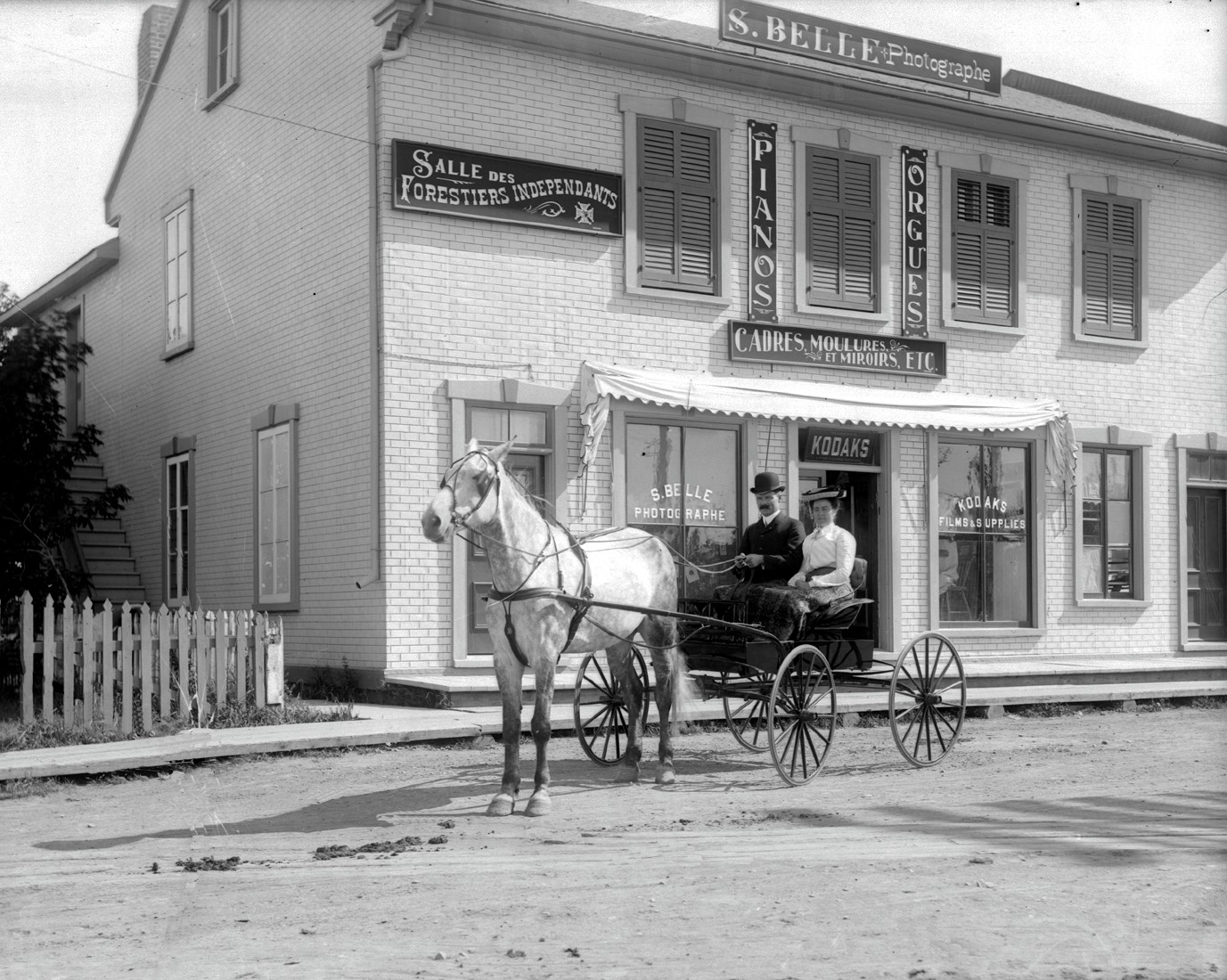
Studio Belle_bl0239

1894-1990 [between 1894 and 1914]Photographe: Photographer: Stanislas Belle

At the age of 15, Stanislas Belle emigrated to the United States with his parents. After a brief return to Montréal, Belle, drawn to the profession of photography, went back to New York for training. He went on to work in his hometown of Saint-Jean-sur-Richelieu in the late 1880s, then moved to Rivière-du-Loup in 1894, likely attracted by the town’s growing tourist trade. This photograph shows the storefront of his studio. Belle was a highly skilled portraitist, known across North America. He also produced postcards and documented the many changes Rivière-du-Loup underwent at the turn of the 20th century. At age 50, Belle left photography to focus on selling musical instruments.

25 cm X 20 cmBelle-Lavoie collection, MBSL, bl0239
View of the façade of Stanislas Belle's studio, in front of which a couple is posing, seated in a carriage pulled by a white horse.
1894

The first photography studio opens in Bas-Saint-Laurent

Stanislas Belle (1864–1936) established the Bas-Saint-Laurent region’s first professional photography studio in Fraserville (Rivière-du-Loup). At the time, Quebec was home to around 280 professional photographers, roughly 20 of whom were women. Thirty years later, an apprentice of Belle, Ulric Lavoie, would help Marie-Alice Dumont refine her photographic techniques.

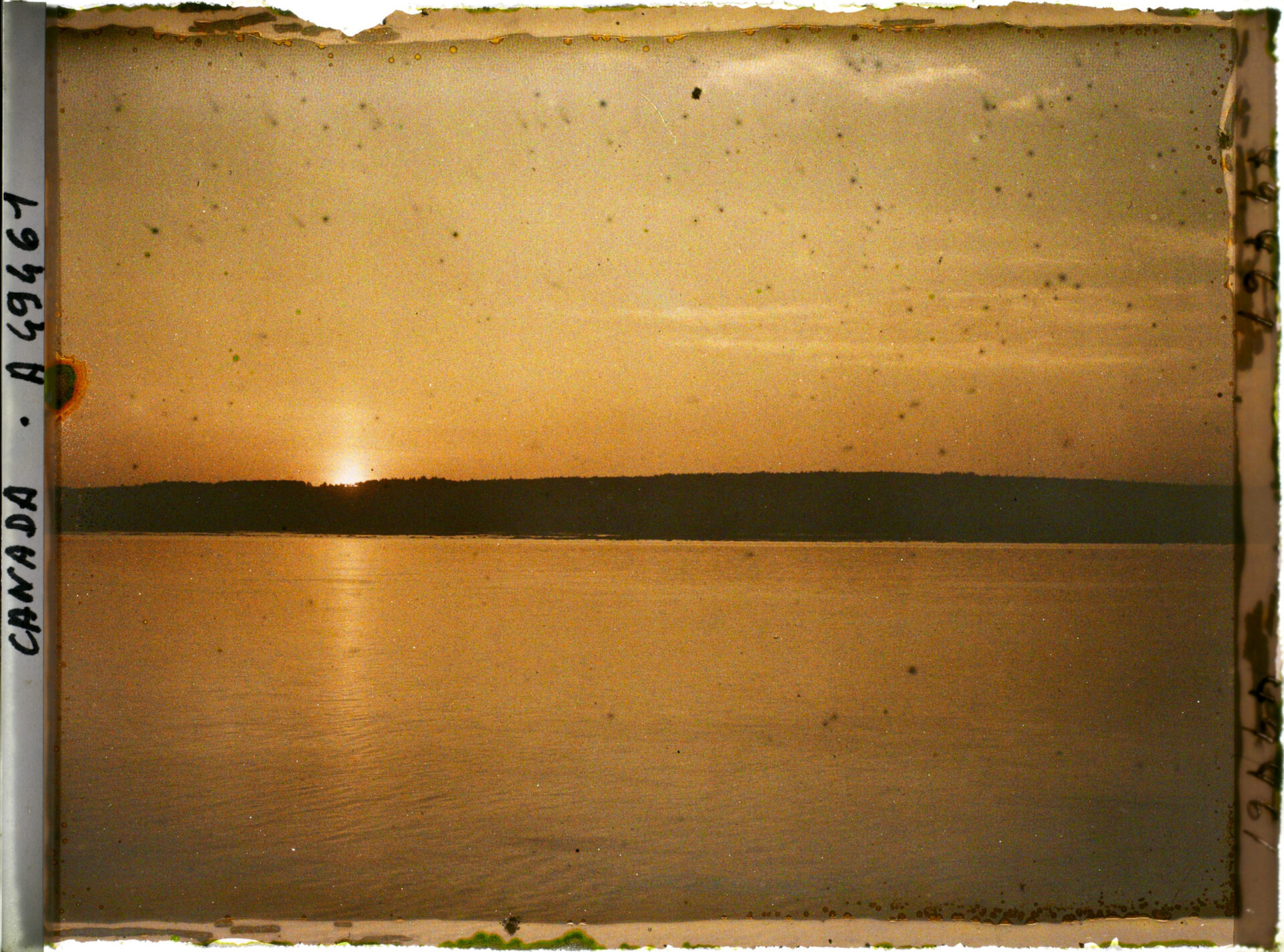
1926_Gadmer_Fleuve

June 16, 1926Photographe: Photographer: Frédéric Gadmer

This autochrome photograph was taken as part of a documentary mission sponsored by French banker and philanthropist Albert Kahn. Concerned with preserving true-to-life images of the human world before it “disappeared,” Kahn (1860–1940) hired photographers to create the “world’s archives,” what he called the Archives de la Planète. These photographers travelled the globe, equipped with cameras and film gear. Frédéric Gadmer was one of them, and in 1926 he made a stop in Canada. He photographed, among other sites, several iconic locations in the western provinces. He also visited what was then known as “la Belle Province” to capture city views of Montréal and Québec City. His travels eventually brought him down the St. Lawrence River aboard the Melita, where he immortalized one of the river’s famed sunsets.

AutochromeMusée Albert-Kahn, A49461
Sunset over the St. Lawrence River.
1907

The autochrome breakthrough

In 1907, brothers Louis and Auguste Lumière launched the first commercially available colour process: the autochrome. It was a huge success. Their stroke of brilliance? Potato starch! Finely ground starch grains were dyed blue, red and green, then spread across a glass plate coated with a photosensitive emulsion. This clever spud-based concoction captured and filtered light. By simplifying the process of colour photography, the Lumière brothers transformed both the art and business of photography. The autochrome became the go-to colour process, including in Quebec, right up until the late 1930s. However, Marie-Alice Dumont never embraced it, remaining loyal to black-and-white photography like many of her contemporaries.
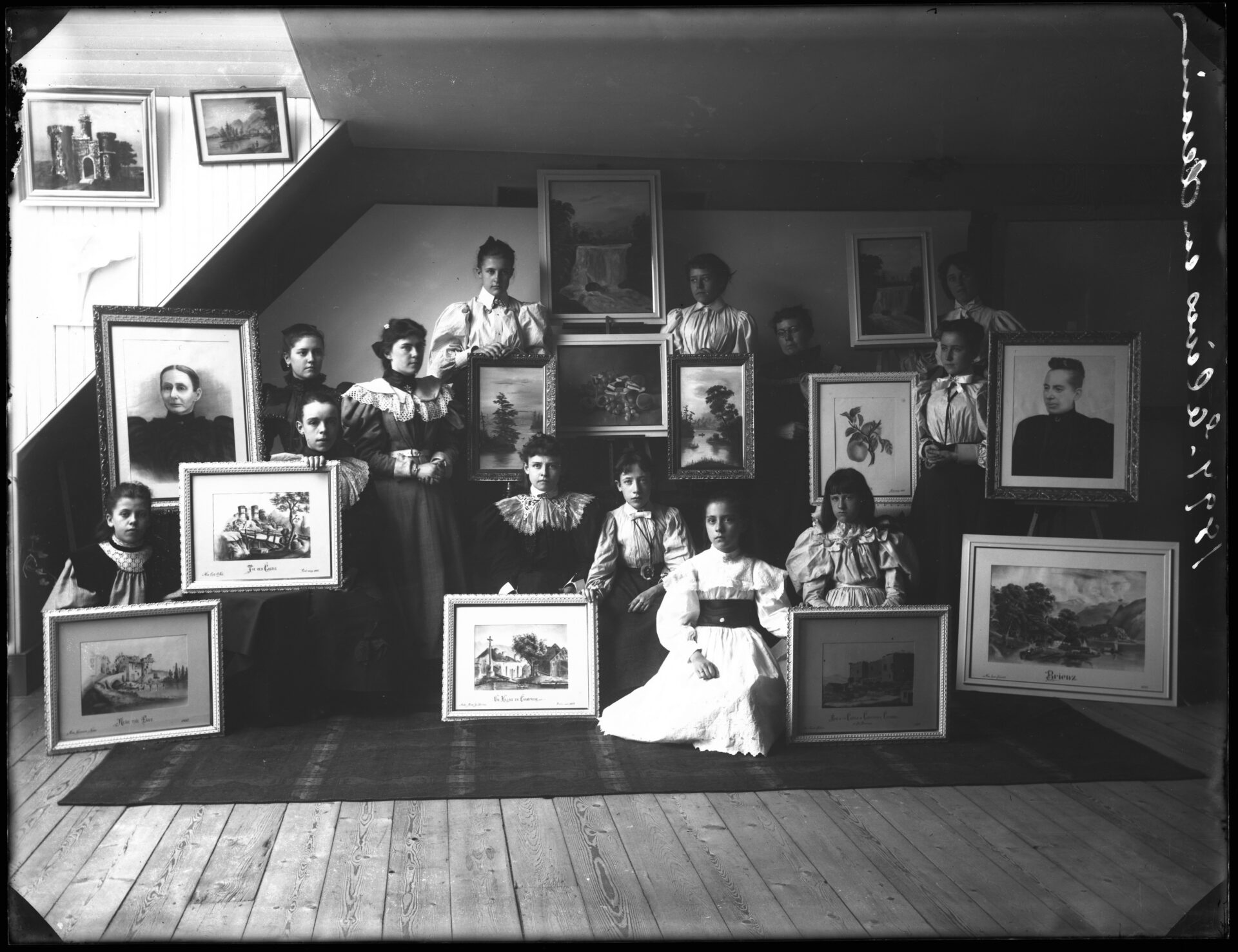
Noviciat_élèves peinture

1897Photographe: Photographer: sister Marie-de-l'Eucharistie (Elmina Lefebvre)

It would be easy to imagine Marie-Alice Dumont among these students at the novitiate of the Sisters of Charity of Québec, except that she attended the institution about 15 years after this portrait was taken. Like the young women pictured here, Dumont would have taken painting and drawing classes with the nuns during the time Sister Marie-de-l’Eucharistie (Elmina Lefebvre) was in charge of the painting and photography workshops.
Glass negativeLes Soeurs de la Charité de Québec collection, BAnQ-Québec, P910,S1,D3,P46
A group of thirteen students each showing a painting created in painting class.
1913-1915

Marie-Alice Dumont at the novitiate of the Sisters of Charity of Québec City

Around the age of 20, Marie-Alice Dumont spent time at the novitiate of the Sisters of Charity of Québec City, intending to become a teaching nun. At that time, the number of members of religious communities in Quebec was growing rapidly: while there were already more than 8,600 priests, brothers, and sisters in the province in 1901, by 1931 there were just over 25,000—a significant number! For many young women like Marie-Alice, entering religious life was seen as a natural and even an honourable path. Some may have viewed it as an alternative to marriage, while for others, it allowed them a certain amount of autonomy. Still, there is no denying the passion for religion that drove many at the time. A lot of women were eager to make a difference by dedicating themselves to one of the Catholic Church’s social missions, particularly in healthcare or education. Looking back, it is hard to grasp just how central Catholicism was to Quebecers’ lives a century ago. What we do know is that Marie-Alice’s decision to join the Sisters would have been met with strong support from her family.
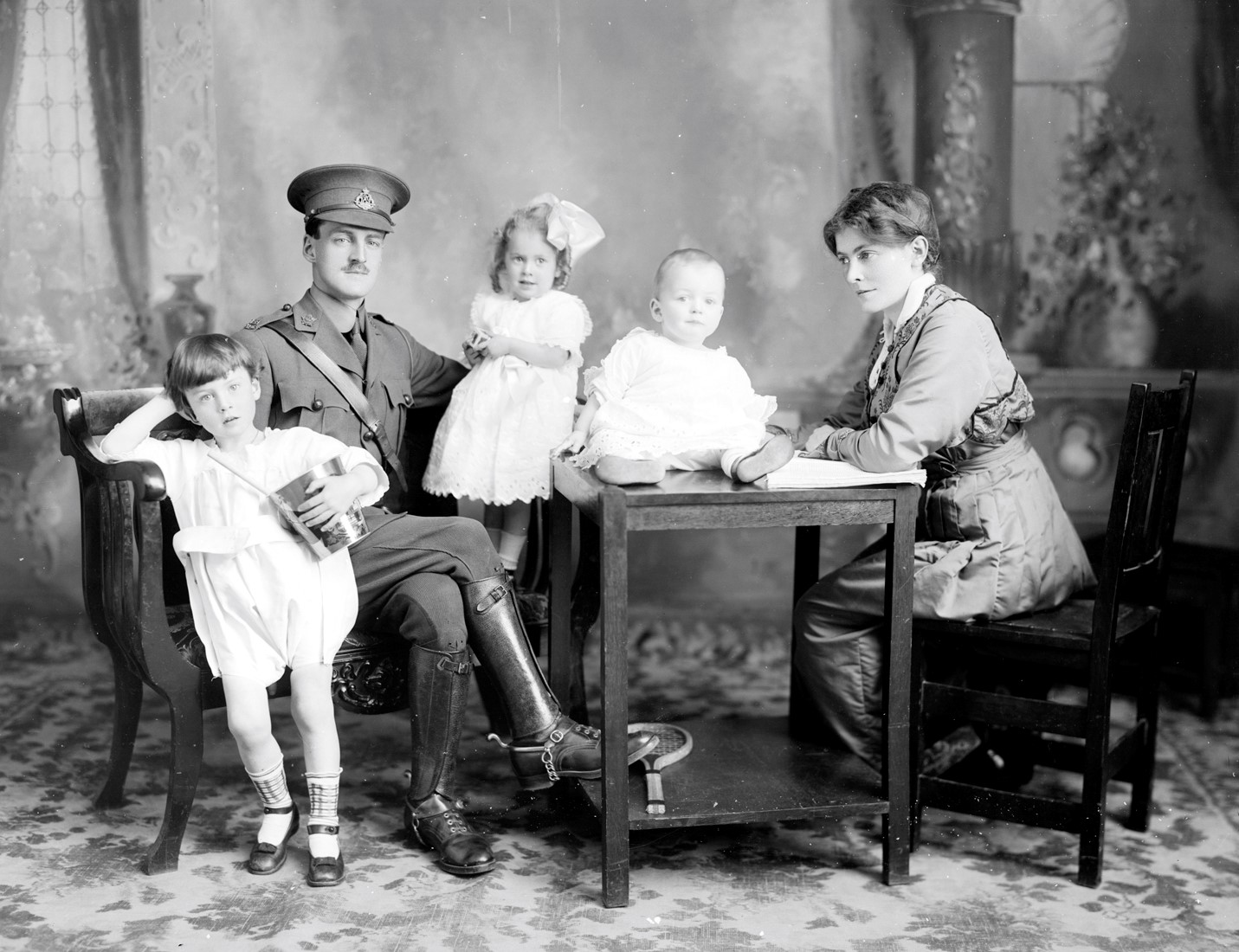
l01532a

1916Photographe: Photographer: Ulric Lavoie

In summer 1914, World War I broke out. The web of alliances among the major European powers was complex and so Canada, which was still part of the British Empire at the time, entered the war as well. Before conscription was introduced in 1917, thousands of Canadians volunteered to enlist. Philippe-Auguste Piuze was one of them. Born in 1888 in Fraserville, now Rivière-du-Loup, Piuze served during the Great War as a recruiting officer in the Lower Saint Lawrence and on the Gaspé Peninsula. He also raised a battalion and deployed overseas with it in 1916. That same year, newly promoted Lieutenant-Colonel Piuze, his wife, Anita Chassé, and their children visited photographer Ulric Lavoie for a portrait session. Did Piuze take this portrait with him to the front? Or was it meant as a keepsake for his family should the unthinkable come to be? Fortunately, Piuze returned safely from the war and lived a long life. He, Anita and their children even returned to Lavoie’s studio for another portrait. At the time of his death in September 1967, Piuze was described as “a distinguished French Canadian officer, deeply devoted to his military, family and religious duties.”

25 cm X 20 cmUlric Lavoie collection, MBSL, l01532A
Studio portrait of a family sitting at a table, including three young children and the father in military uniform.
1914-1918

World War I

From 1914 to 1918, World War I tore through Europe, with other countries including the United States and Canada joining in. As men were sent to the frontlines in large numbers and industry ramped up to supply the war, women were enlisted to join the workforce. In Québec alone, tens of thousands of women took on paid jobs, particularly in factories. The war does not seem to have slowed down the integration of women into photography. In 1901, female photographers accounted for around 11% of the profession, while in 1931 they accounted for around 15%. They therefore occupied an ever-growing place in the profession.

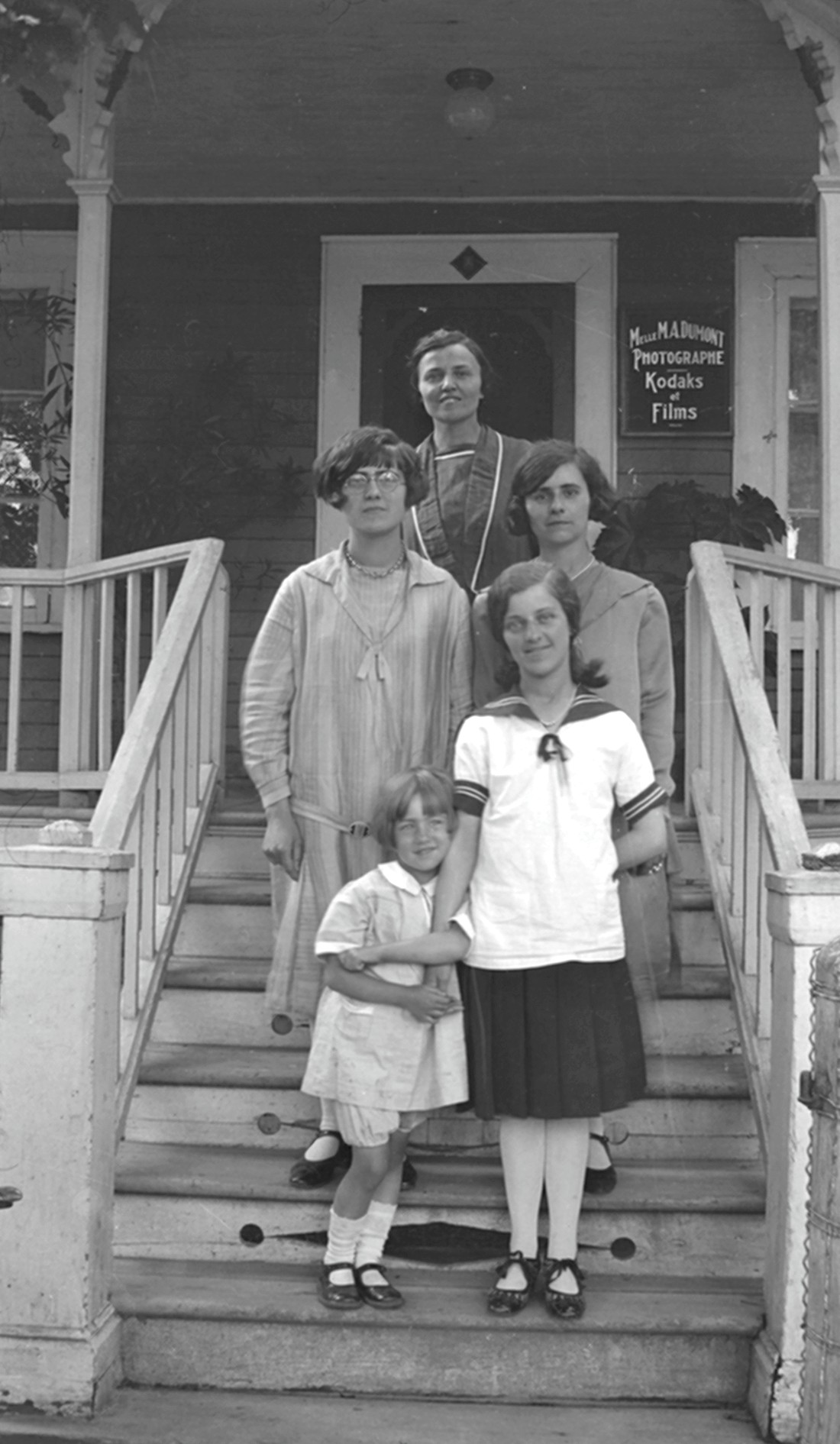
d1332

1923-1928 [not before fall of 1926]Photographe: Photographer: Marie-Alice Dumont

This portrait of Marie-Alice Dumont (at the top), accompanied by her younger sister Elizabeth (left) and three other young women, is one of the very first taken on the front steps of Dumont’s new studio. The studio sign is clearly visible, bearing the inscription: “Melle M.A. Dumont Photographe Kodaks et Films” [Miss M.A. Dumont photographer Kodaks and Films].

7 cm X 11 cmMarie-Alice Dumont collection, MBSL, d1332
A group of five women, including a little girl and Marie-Alice Dumont, on the porch of the Dumont Studio with a sign on the house façade reading "Melle M.A. Dumont Photographe Kodaks et Films."
1926

The opening of Studio Dumont

In fall 1926, the Dumont family moved into town, in Saint-Alexandre-de-Kamouraska. With the support of her parents, Marie-Alice set up a professional studio on the ground floor, complete with a large window that allowed her to capture portraits using natural light. This marked the start of her long career and established her as one of the first female professional photographers in eastern Quebec. However, she wasn’t alone—when she began her career, around 15% of photographers in Quebec were women.

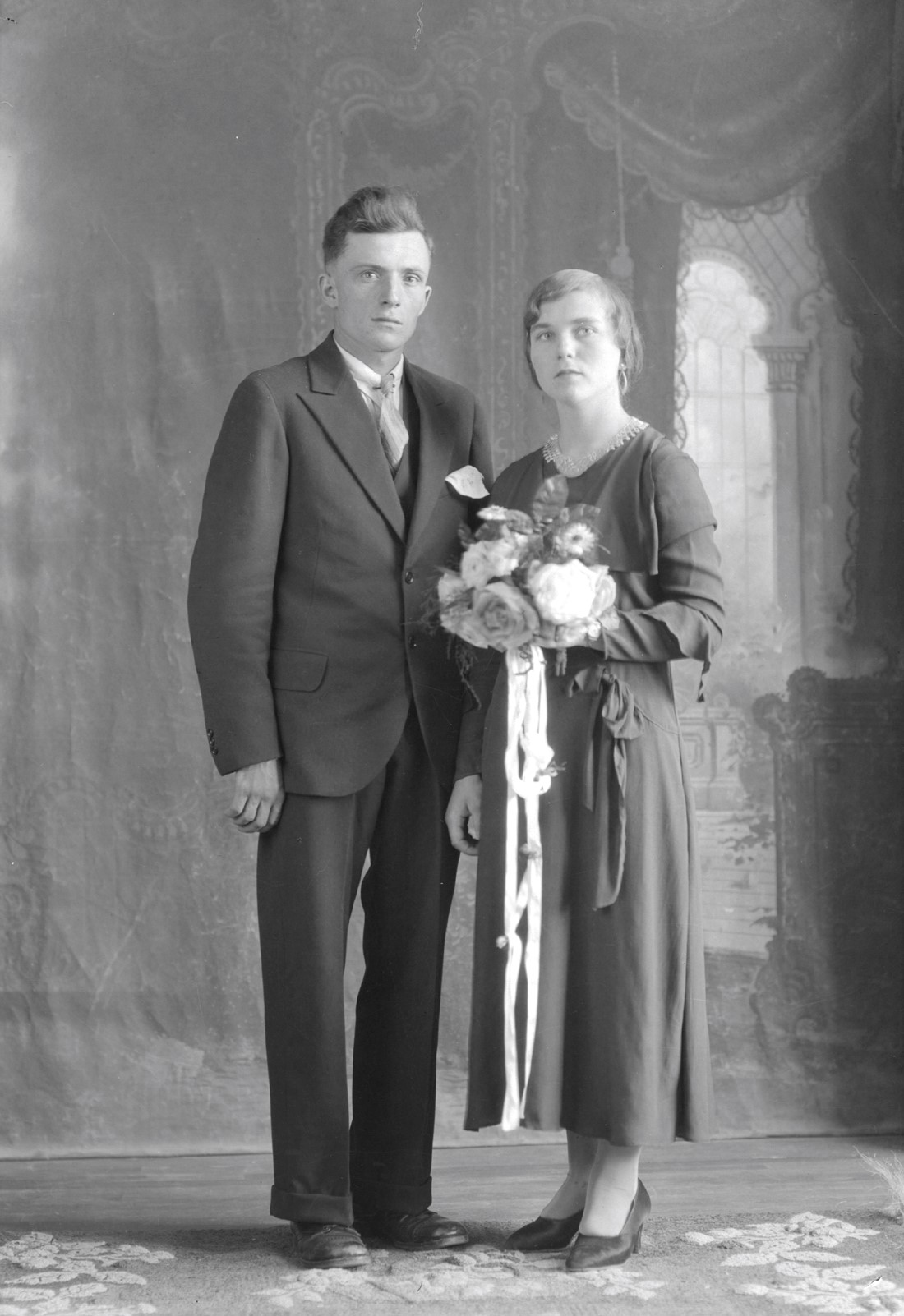
d7688

1932Photographe: Photographer: Marie-Alice Dumont

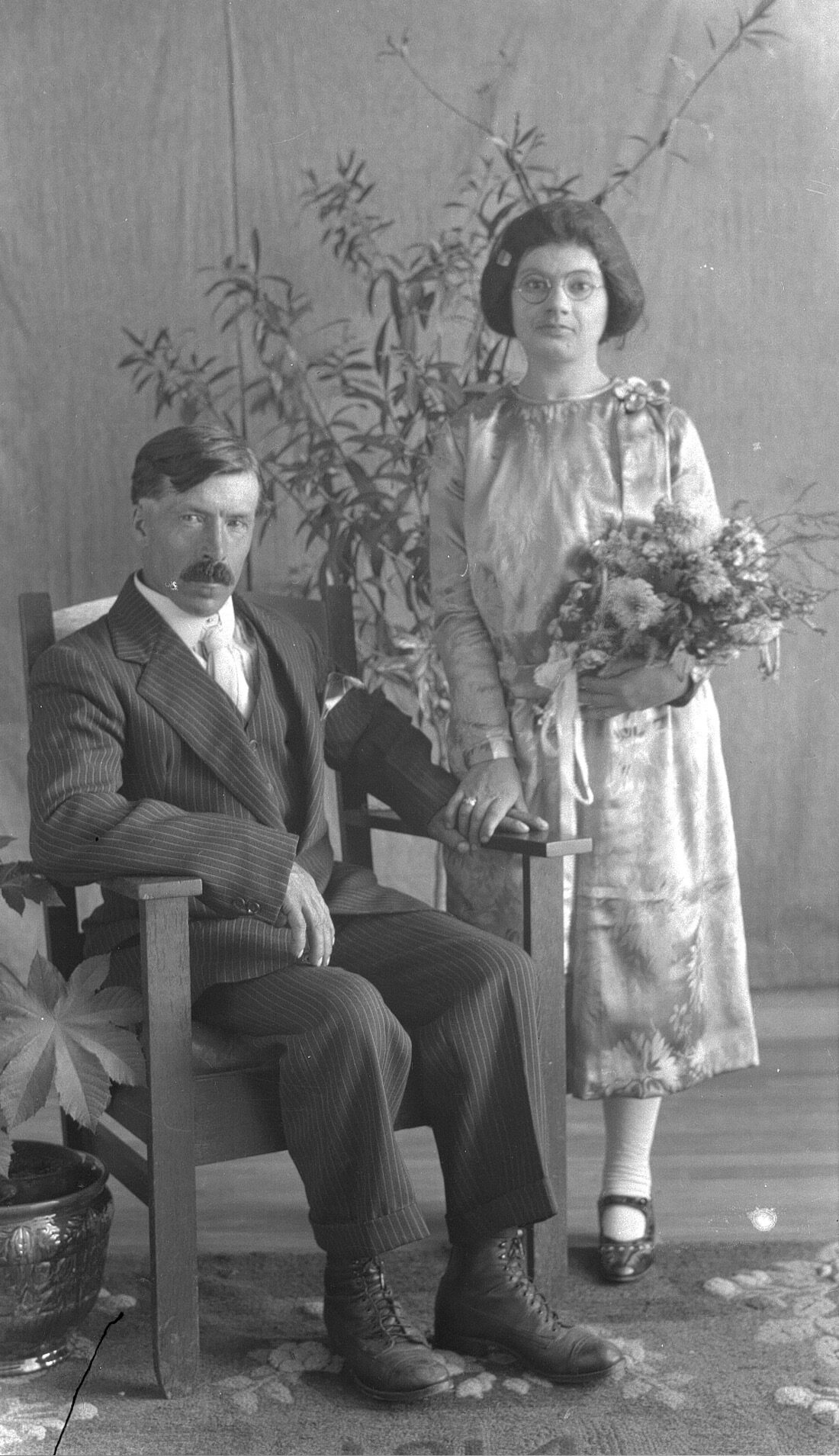
The Great Depression of the 1930s brought record levels of unemployment and severe hardship across Canada, so much so that “many people hesitated to take on the financial and social responsibilities of marriage.” Indeed, Statistics Canada data shows that, between 1928 and 1932, the country’s marriage rate fell sharply, from 7.5 to 5.9 per 1,000 people. What worries played on the minds of these young newlyweds as they posed for Marie-Alice Dumont in 1932?

10 cm X 15 cmMarie-Alice Dumont collection, MBSL, d7688
Studio portrait of a married couple, with the wife holding a bouquet of flowers at chest height.
1930s

The Great Depression

On Thursday, October 24, 1929, the New York Stock Exchange crashed, plunging Western countries into an economic and social crisis that would last until the early years of World War II. Quebec was not spared: unemployment soared across the province, bringing widespread hardship. In Canada, by the height of the Great Depression in 1933, 30% of the population was out of work. Unsurprisingly, Marie-Alice Dumont saw fewer commissions in the early 1930s. However, she never seemed to be completely without work; even during the hardest times, people still found a few coins to spend on a well-crafted studio portrait.

d1383a

1934-1939Photographe: Photographer: Marie-Alice Dumont

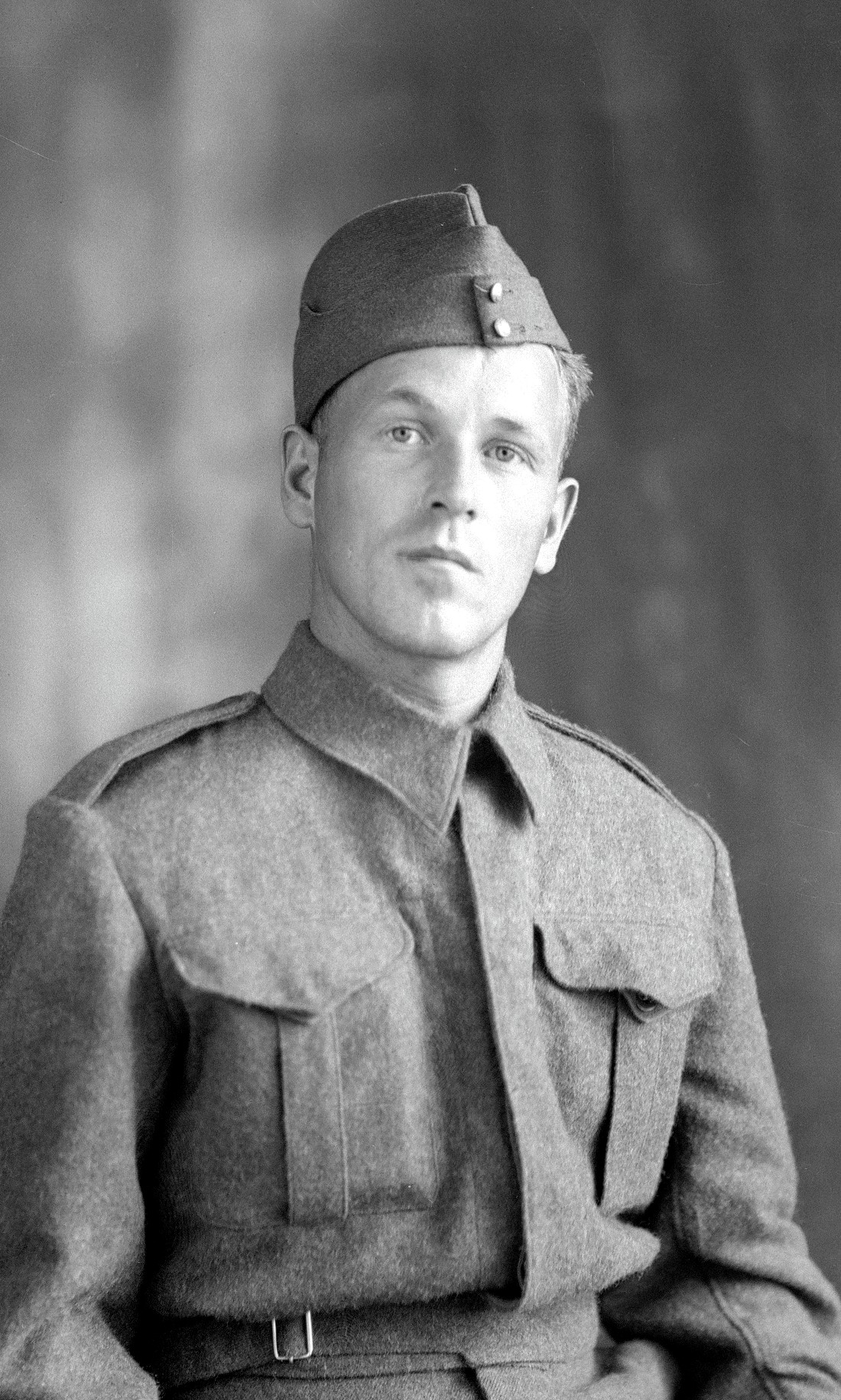
As World War II approached, and during the conflict itself, many soldiers came to Dumont’s studio to be photographed. Jos Michaud (known as “Ti-Jos”), a painter by trade, was one of them. Around 1940, he had several portraits taken: some alone (first in civilian clothing, then in uniform), others with Miss Alice Sirois (perhaps his girlfriend?), and on other occasions with Alexandre Dolbec, also known as “le zoute à Dolbec” (a friend?). Was Jos Michaud feeling the urgency of the moment?

9 cm X 15 cmMarie-Alice Dumont collection, MBSL, d1383a
Bust portrait of a young man in military uniform in a plain setting.
1939-1945

World War II

During World War II, women once again flooded the workforce. By 1941, nearly one in five women were employed, compared to one in ten in 1901. Domestic workers, teachers, garment workers, shop assistants, office staff and others filled tens of thousands of roles. Over the course of the war and in the post-war years, women’s place in the workforce became more firmly established in many sectors. The number of women working as photographers or in photography has been steadily increasing since the turn of the 20th century. However, in the middle of this century, they remain relatively few in number compared to men.

ma17785

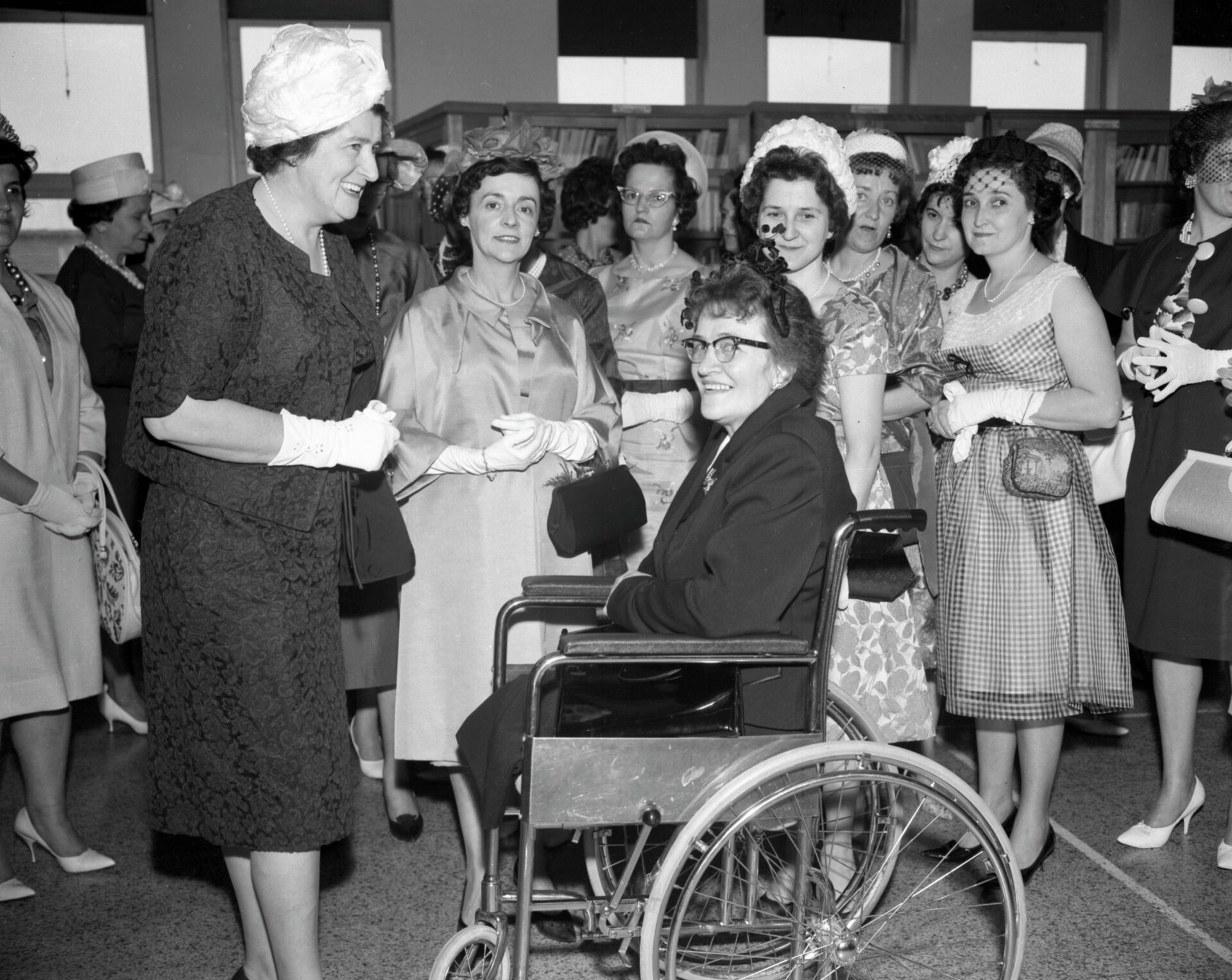
1963-1902 [sic]Photographe: Photographer: René Marmen

The Liberal Party was in power in Quebec between 1960 and 1966, during a period known as the Quiet Revolution. Under Jean Lesage’s leadership, major political, economic, social and cultural reforms reshaped Quebec’s public institutions. It was also a time marked by the growing emancipation of women. For example, in 1961, Marie-Claire Kirkland-Casgrain became the first woman elected to the Quebec National Assembly. In 1963, the newly created Ministry of Education gave women equal access to higher education and, in 1964, Bill 16 granted married women full legal capacity. Was it in the spirit of this liberation that these women lent their support to the Liberal Party and gathered in Rivière-du-Loup in 1963?
12 cm X 10 cmRené Marmen collection, MBSL, ma17785
Group of elegantly dressed women gathered in a library, one of whom, in the foreground, is in a wheelchair.
1940

Women get the right to vote in Quebec

On April 25, 1940, Quebec became the final province in Canada to grant women the right to vote. Journalist and suffragist Idola Saint-Jean had predicted this moment in 1930: “It’s as impossible for Quebec lawmakers to deny women their rightful and legitimate rights as it is to stop Niagara Falls.”

d7119a

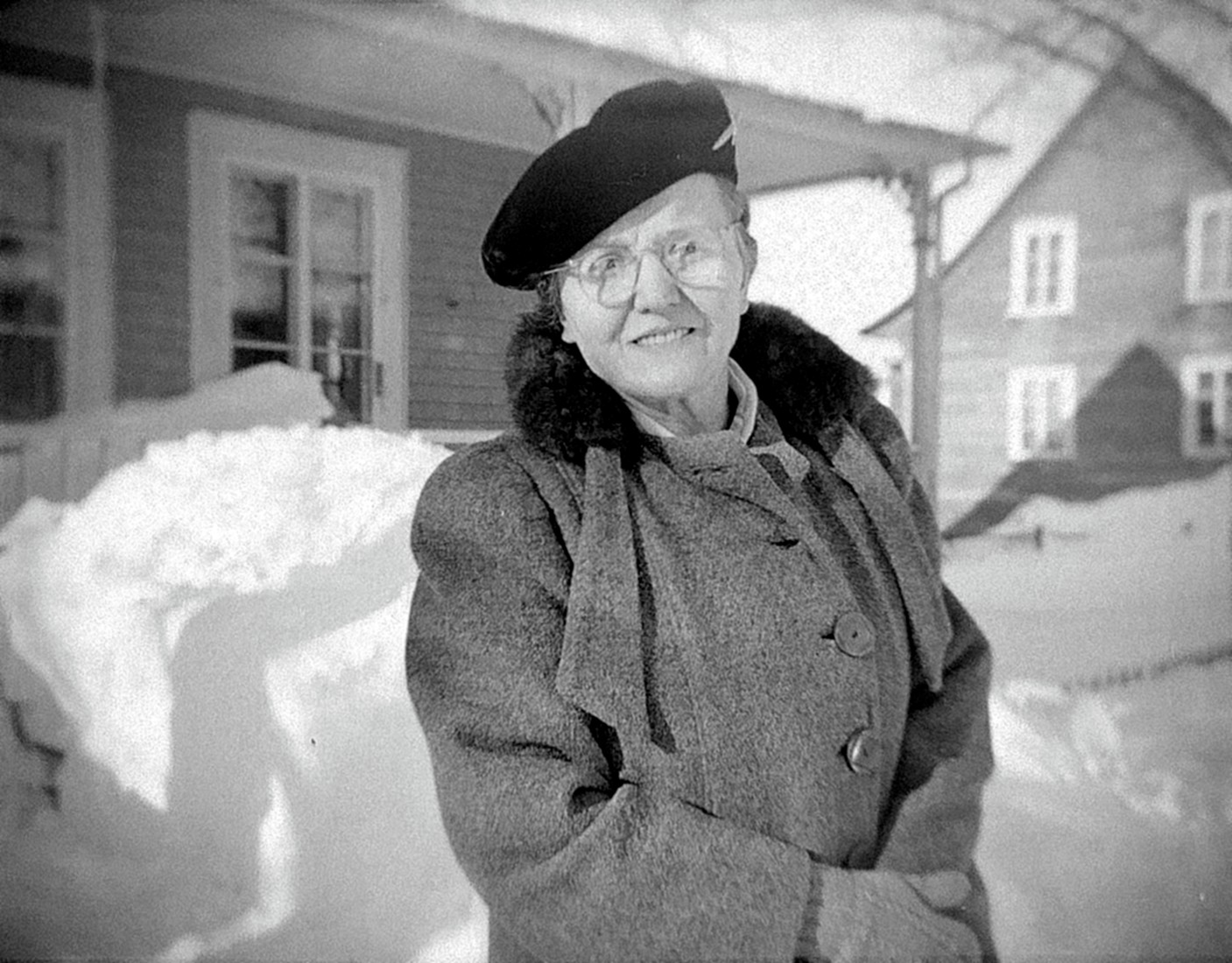
1920-1961 [probably 1950]Photographe: Photographer: probably Lucille Bérubé

This portrait was taken around 1950, near the end of Marie-Alice Dumont’s career. It appears to be part of a series created with Lucille Bérubé, who was Dumont’s assistant for about 10 years. (Bérubé left the studio in 1957). Were the two women preparing Christmas greetings for their family and clients?

4 cm X 6 cmMarie-Alice Dumont collection, MBSL, d7119a
Portrait of Marie-Alice Dumont, approximately 60 years old, in front of her house in winter.
1961

Marie-Alice Dumont retires

In the early 1960s, health issues forced Marie-Alice Dumont to retire. She stepped away from her career just as photography was about to undergo major changes.

On one hand, amateur photography boomed, driven by increasingly easy-to-use portable cameras, including the Polaroid instant camera introduced in 1948. As a result, fewer people visited photography studios, which may explain the drop in orders for Marie-Alice in her later years.

On the other hand, the creation of CEGEPs in 1967, some of which offered photography programs, meant professional photographers in Quebec no longer needed to train apprentices.

Finally, the cultural, political and social upheavals of the 1960s, both locally and worldwide, sparked a surge in photographic practices, especially in the artistic and documentary fields. The world around Marie-Alice was changing fast, but her camera would not get the chance to capture it.

IV
Photography in the Bas-Saint-Laurent region

In the second half of the 19th century, travelling photographers crisscrossed Quebec with all their bulky equipment in tow. Imagine them hauling their mobile labs, hitched to horses! Fortunately for Marie-Alice, by the time she began her career in the mid-1920s, studio photography had already been established in the Rivière-du-Loup and Kamouraska areas for 40 years. She was able to follow in the footsteps of a few predecessors, especially Stanislas Belle and Ulric Lavoie. That said, she was the only woman working in this field in the region.
“Marie-Alice Dumont was truly one-of-a-kind figure in the area.”

What was Marie-Alice Dumont’s role in the history of photography in the Bas-Saint-Laurent region? Historian Olivier Guimond answers this question.
Stanislas Belle

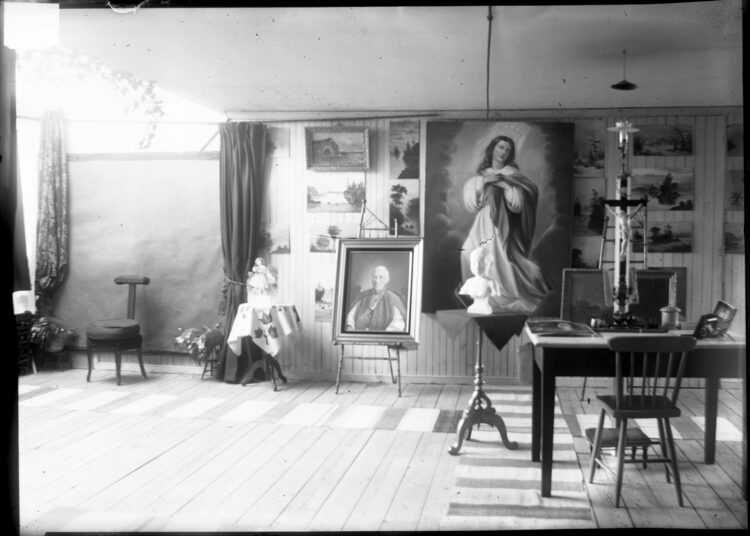
Stanislas Belle (1864–1936) was the first professional photographer to set up shop in Fraserville (Rivière-du-Loup). The Studio Belle, which opened in 1894, remained under his ownership until 1914.

Trained in New York, Belle initially worked in his hometown of Saint-Jean-sur-Richelieu before moving to Montréal, and then finally settling in the Bas-Saint-Laurent region, where tourism was booming. In a way, he laid the groundwork for the arrival of Marie-Alice Dumont a few decades later.

b20125

Between 1894 and 1914Photographe: Photographer: Stanislas Belle

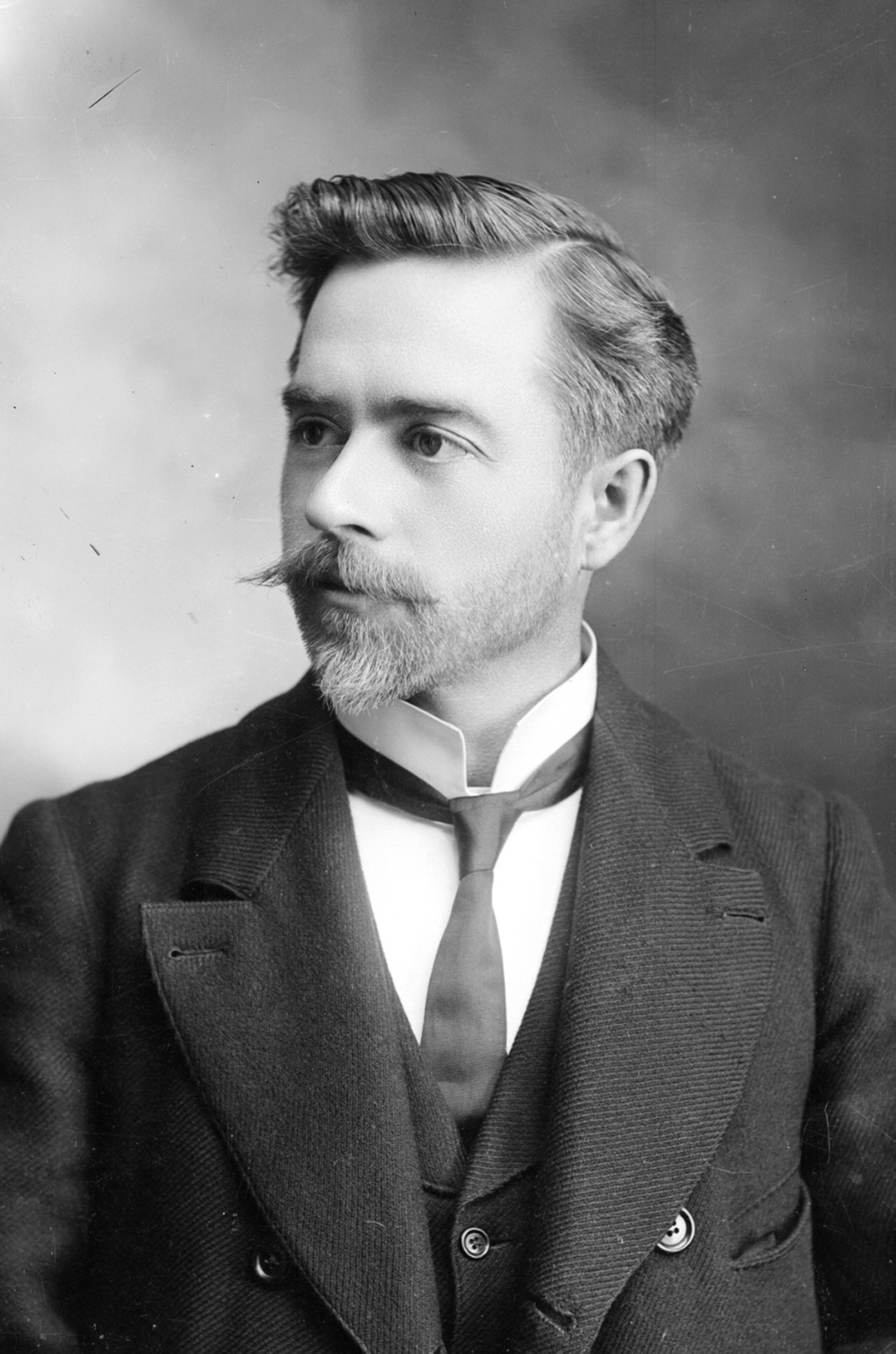
In addition to being a photographer, Stanislas Belle served as a city councillor, churchwarden and founding member of the chamber of commerce in Rivière-du-Loup. A street in the city has borne his name since 2008.

Stanislas Belle collection, MBSL, b20125
Bust portrait of Stanislas Belle, approximately 30 years old, in a plain studio setting.

b12251b

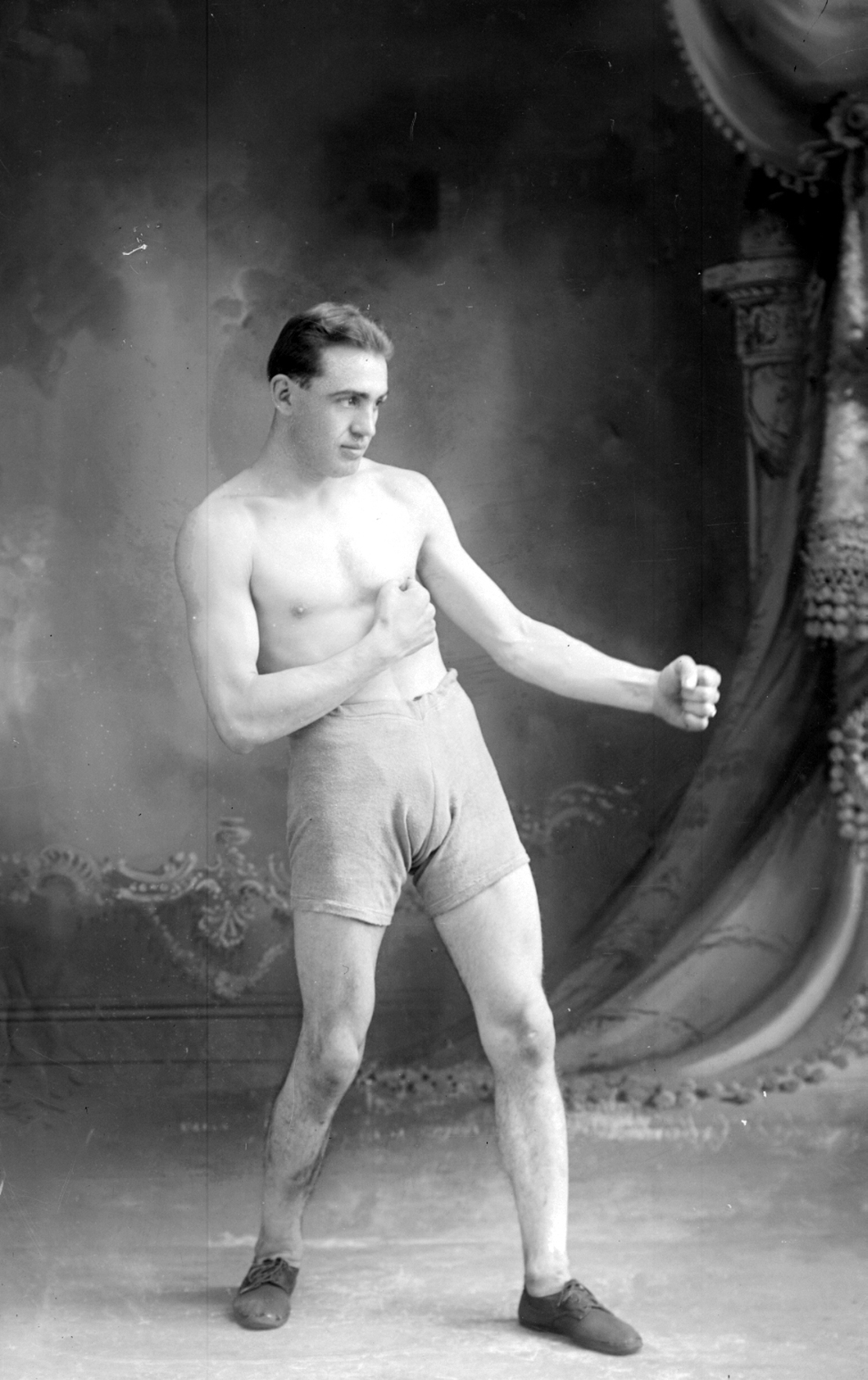
1908Photographe: Photographer: Stanislas Belle

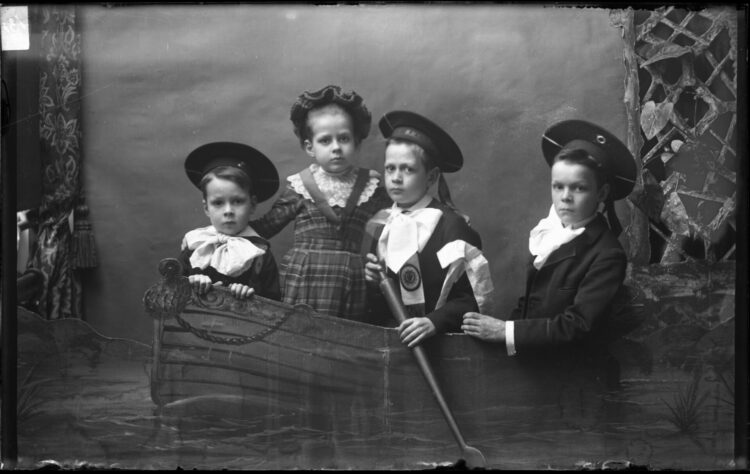
At times, Stanislas Belle welcomed athletes into his studio. For instance, hockey clubs from around Rivière-du-Loup would come to have their team portraits taken. Surprising? Not really. Hockey was already hugely popular by the early 20th century. But this portrait of George Lepage points to the growing popularity of another sport: boxing. Practised in Quebec since the 1820s, boxing was long frowned upon. For most of the 19th century, civil authorities deemed it too violent, while the Church considered it morally dubious. Boxers were often seen as thugs, and it was not unusual for matches to spiral into full-blown brawls among spectators. However, by the time George Lepage posed for Belle’s camera, boxing had been governed for several decades by stricter rules, helping to legitimize what came to be known as the “noble art.” Although his fists are bare in the photo, Lepage would have worn gloves in the ring. A knowledgeable practitioner of the sport, he would later go on to become a boxing referee himself.
12 cm X 16 cmStanislas Belle collection, MBSL, b12251b
Studio portrait of a man, bare-chested and in shorts, simulating a boxing match with clenched fists.

b03433

1899Photographe: Photographer: Stanislas Belle

Stanislas Belle also enjoyed photographing the town he came to call home. This image offers a view of Lafontaine Street, one of Rivière-du-Loup’s main arteries. At the same time, it documents the early days of electrification in the region. Electricity was first introduced in 1888 in Fraserville, but it was not until 1945 that the area’s towns and villages were fully electrified, with the village of Rivière-Bleue in Témiscouata being the last to join the network. Electrification progressed more slowly in rural areas and on farms, however. By 1951, less than half were hooked up to the grid but, by 1956, the figure had climbed to 85%. By 1961, with nearly 99% of farms in the region having electricity, the Lower St. Lawrence countryside was even ahead of the average for rural Quebec (97.3%). The arrival of electricity significantly facilitated the work of photographers like Stanislas Belle and Marie-Alice Dumont!

12 cm X 16 cmStanislas Belle collection, MBSL, b03433
Distant view of a Rivière-du-Loup street lined with commercial buildings and featuring horse-drawn carriages.

Ulric Lavoie

Aside from her brother Napoléon, Marie-Alice Dumont was mentored by another important figure: the photographer Ulric Lavoie (1886–1940). In the early 1920s, Lavoie helped her hone her photo development skills.

In 1914, Lavoie took over the studio of his mentor, Stanislas Belle. Despite gradually losing his sight, he continued to work as a photographer until 1942.

b20462

About 1930Photographe: Photographer: probably Ulric Lavoie

Ulric Lavoie, a native of Rivière-du-Loup, began his photography career in his hometown in 1914 when he took over Stanislas Belle’s studio. Lavoie offered guidance to Marie-Alice Dumont when she decided to launch her own business. Sadly, an eye disease eventually forced Lavoie to confront the inevitable: He was going blind. What a cruel twist of fate for a photographer! To help him in the meantime and, ultimately, to take over his studio, he hired an assistant, Antonio Pelletier, who would purchase Lavoie’s studio in 1942.

Stanislas Belle collection, MBSL, b20462
Bust portrait of Ulric Lavoie, approximately 45 years old, in a studio.

l00765b

1915Photographe: Photographer: Ulric Lavoie

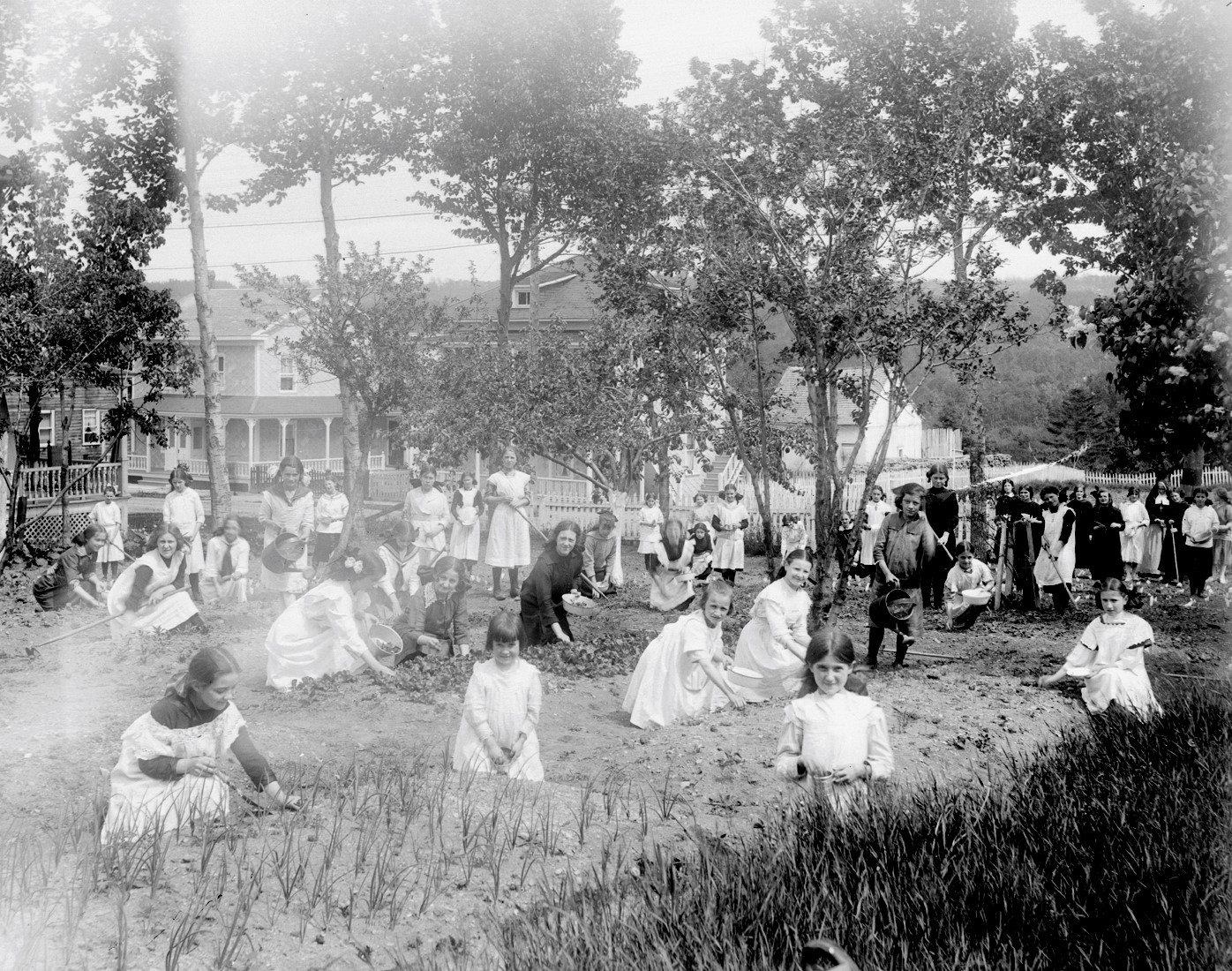
Professional photographers were often called upon to work outside their studios. Sometimes it was out of personal interest; at other times, clients requested their services to document special events. Was it Lavoie’s own idea, or did the Sisters of the Good Shepherd of Rivière-du-Loup invite him to Du Rocher Street on this beautiful spring day in 1915? Either way, the photographer captured a group of young girls tending the convent garden. Each seems to have a specific chore: we see some hoeing the soil, others sowing seeds or transplanting seedlings, with others yet watering the plants. The nuns clearly trusted their convent girls; only one supervisor is visible, far off to the right. The boys are also hard at work, but separately, at the opposite end of the garden.

25 cm X 20 cmUlric Lavoie collection, MBSL, l00765b
Very large group of convent girls busy maintaining a large garden.

l07118

1922Photographe: Photographer: Ulric Lavoie

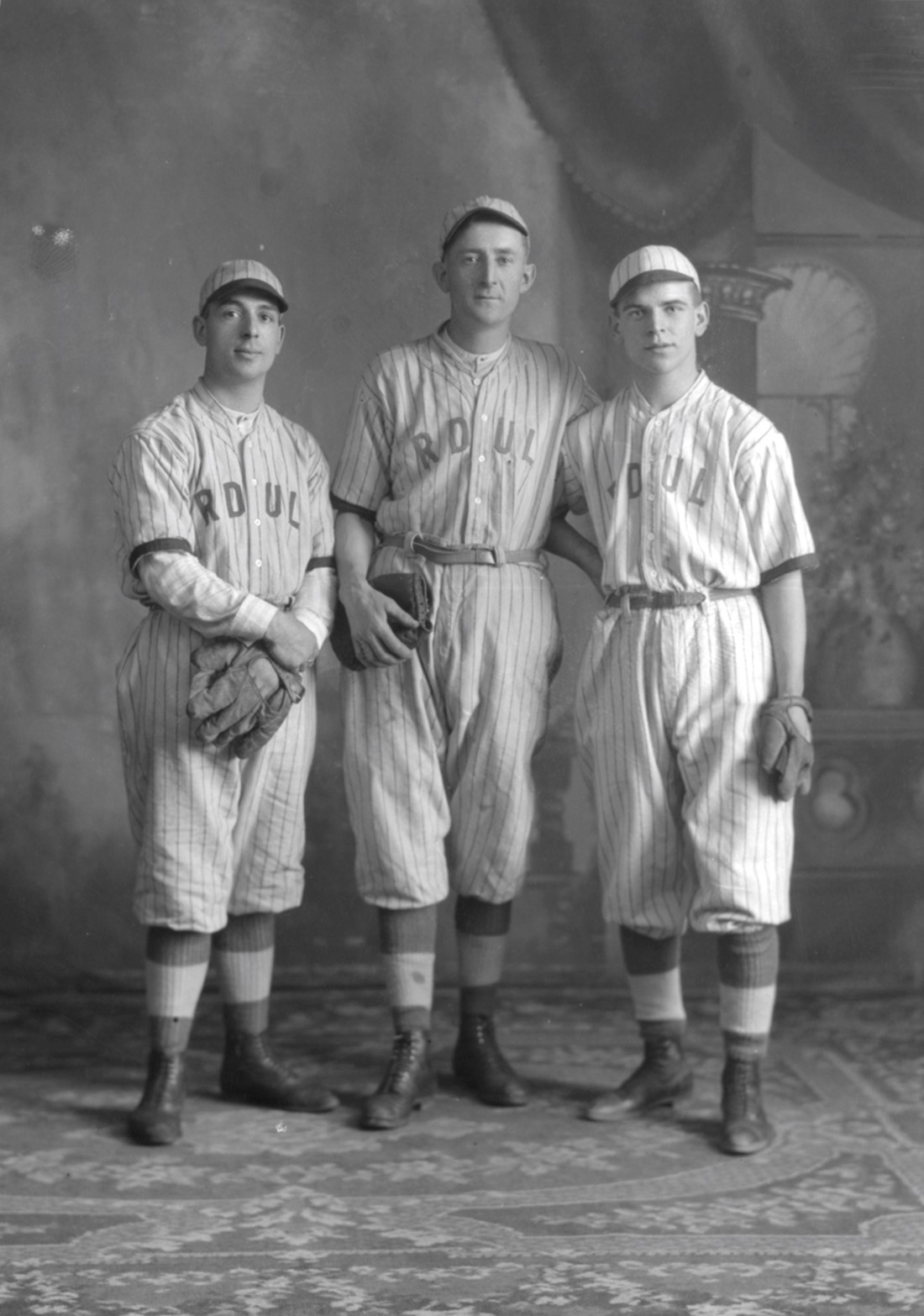
In early 20th-century Quebec, American culture had a growing influence in many areas, including sports. One clear sign of this was the rising popularity of baseball. In 1922, when these three proud young baseball players from Rivière-du-Loup posed for a portrait in Lavoie’s studio, more and more Quebecers were taking up the sport. Amateur leagues had sprung up throughout the province, and some French Canadians even played for major professional teams in the United States. Did you know that baseball has been played in Quebec since the 1860s?

12 cm X 16 cmUlric Lavoie collection, MBSL, l07118
Studio portrait of three men in baseball uniforms inscribed with "RDUL."

b20036

About 1910Photographe: Photographer: Stanislas Belle

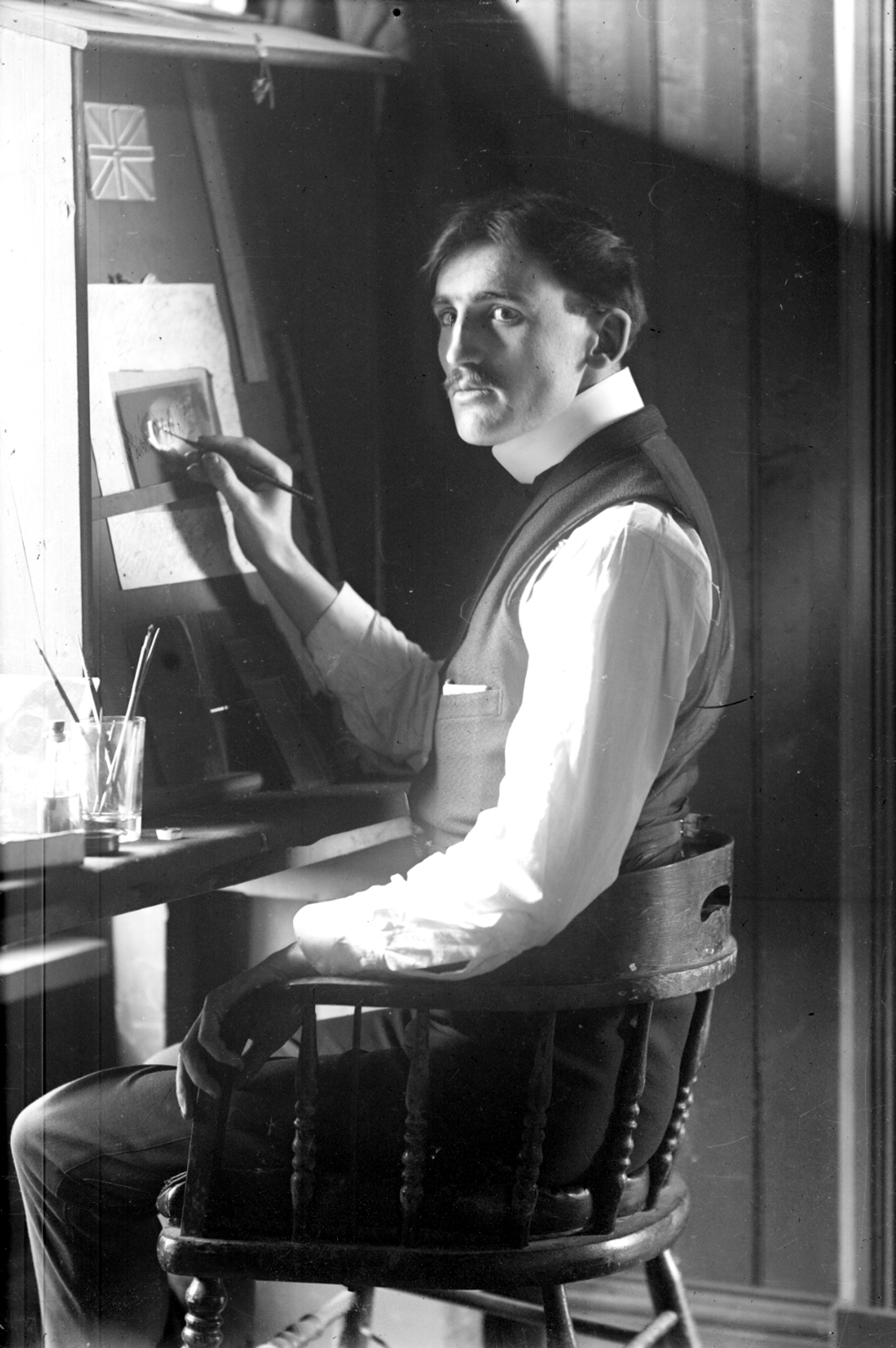
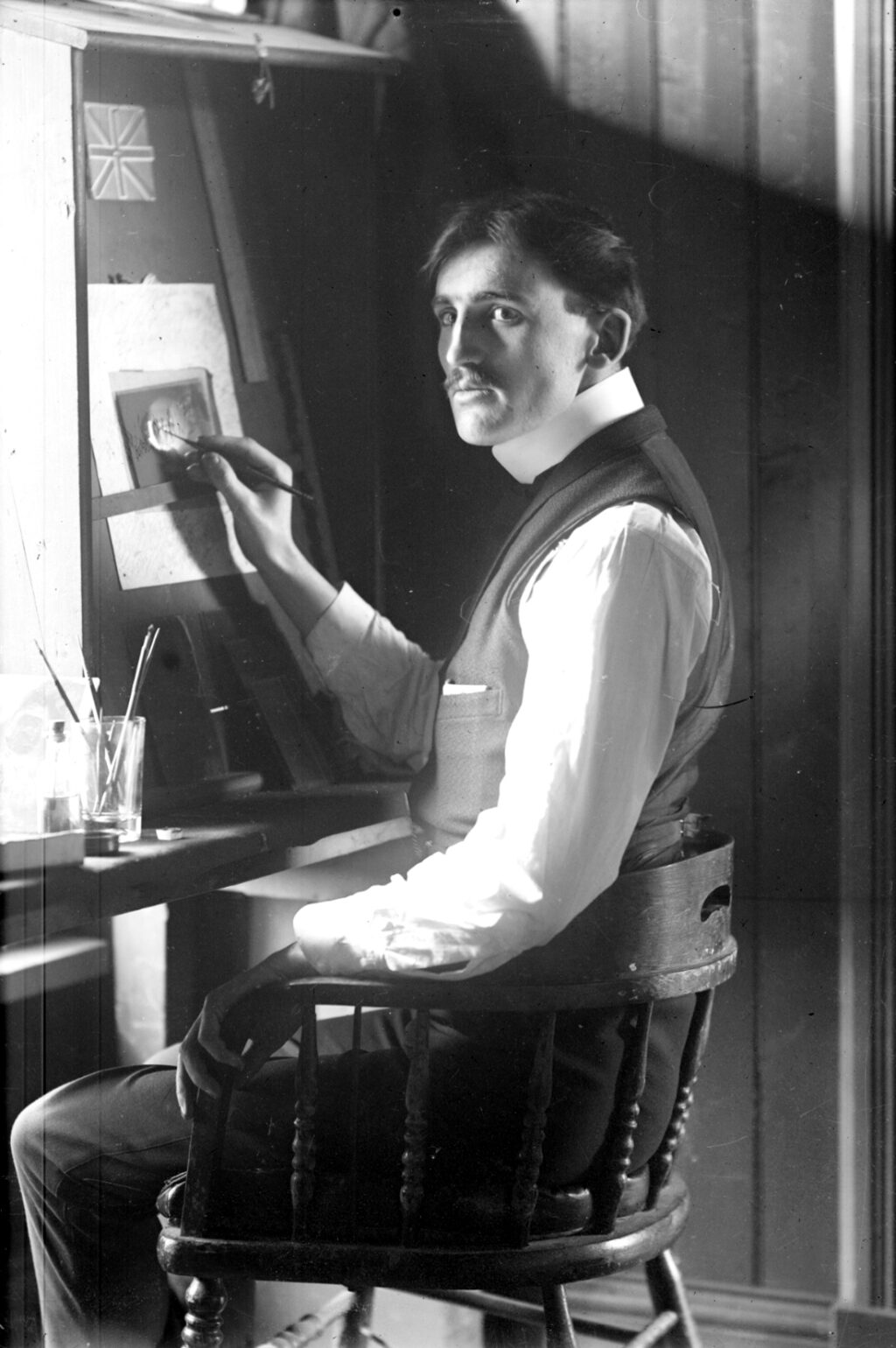
Ulric Lavoie was a skilled photo retoucher. By scraping the negative, he could erase certain details from a portrait. With pencil or paint, he would then modify an image to make it more appealing. Here we see him at work, seated like a painter before his canvas, likely during his time as Belle’s apprentice.

12 cm X 16 cmStanislas Belle collection, MBSL, b20036
Portrait of Ulric Lavoie, approximately 30 years old, retouching a negative, brush in hand.

Aline Cloutier

Although Marie-Alice Dumont stood out as a woman photographer, she was not the only professional: several male counterparts were working in Kamouraska and Rivière-du-Loup at the time.

That is not to say that women were any less passionate about photography than men. In fact, many women practised amateur photography, such as Aline Cloutier (1897-1987) from Témiscouata.

c115

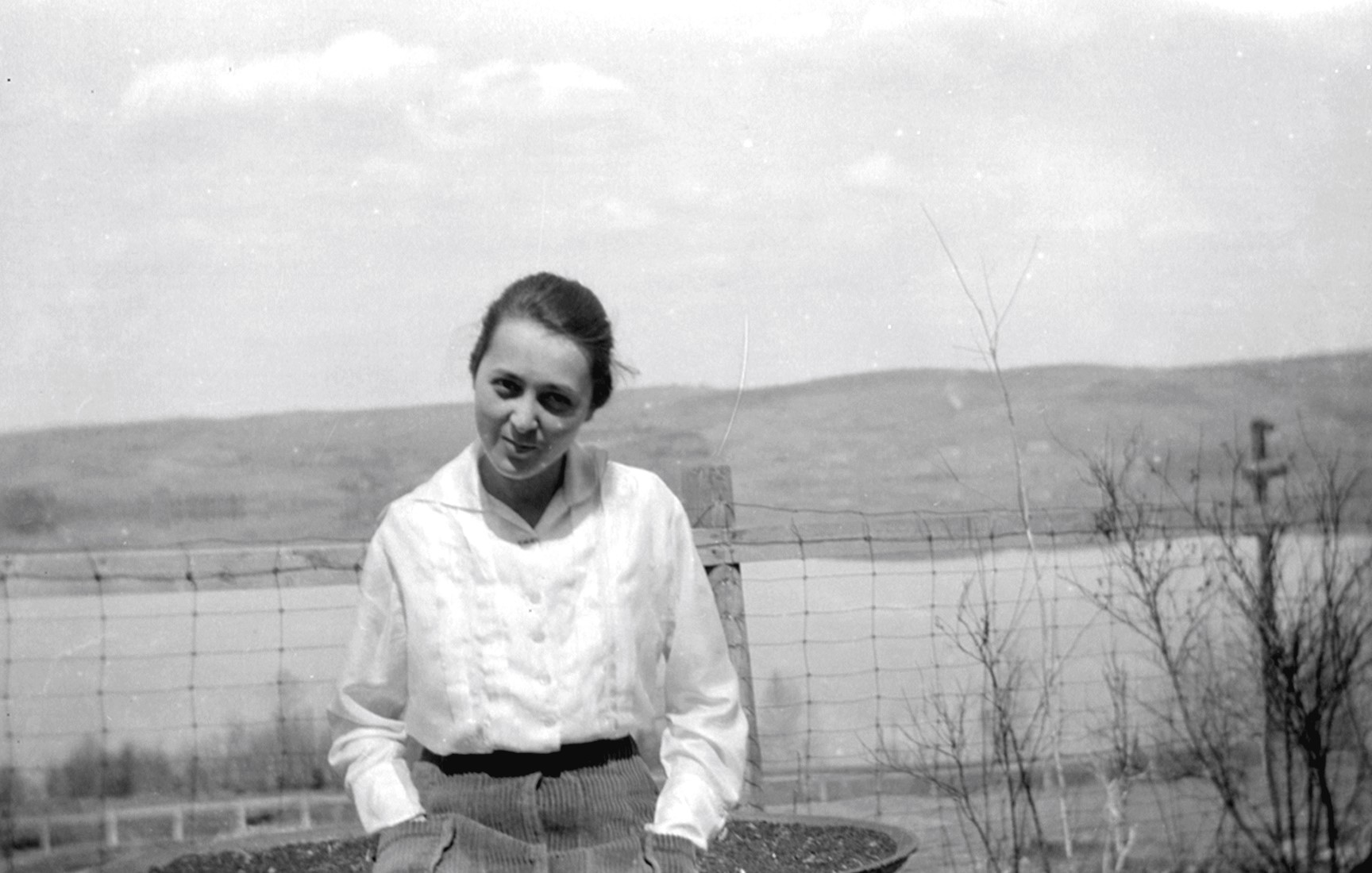
1894-1990 [probably between 1910 and 1920]Photographe: Photographer: unknown

The eldest of eight children, Aline Cloutier helped her mother run the hotel in Notre-Dame-du-Lac, which her father had operated in the Témiscouata region successfully until his death in 1913. Summers were spent working for her family, but she also used the time to photograph everyday life. Her archive includes images from other vacation spots as well, such as the Gaspé Peninsula and its famed rock, the Rocher Percé. Outdoor activities figure prominently in the photographs she left behind.

15 cm X 9 cmAline Cloutier collection, MBSL, c115
Portrait of Aline Cloutier, approximately 15 years old, with a lake and hills in the background.

c705

1894-1990Photographe: Photographer: Aline Cloutier

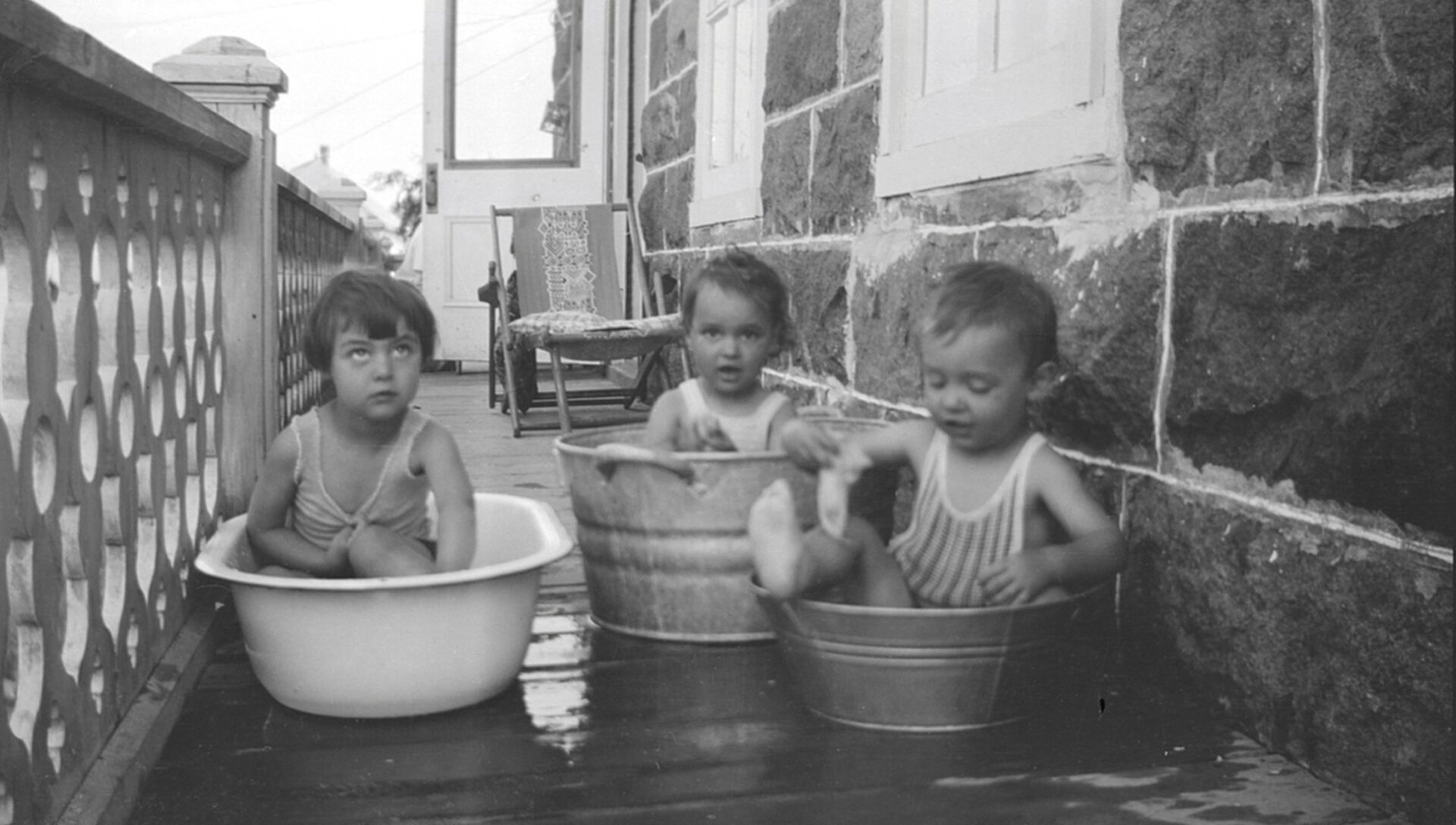
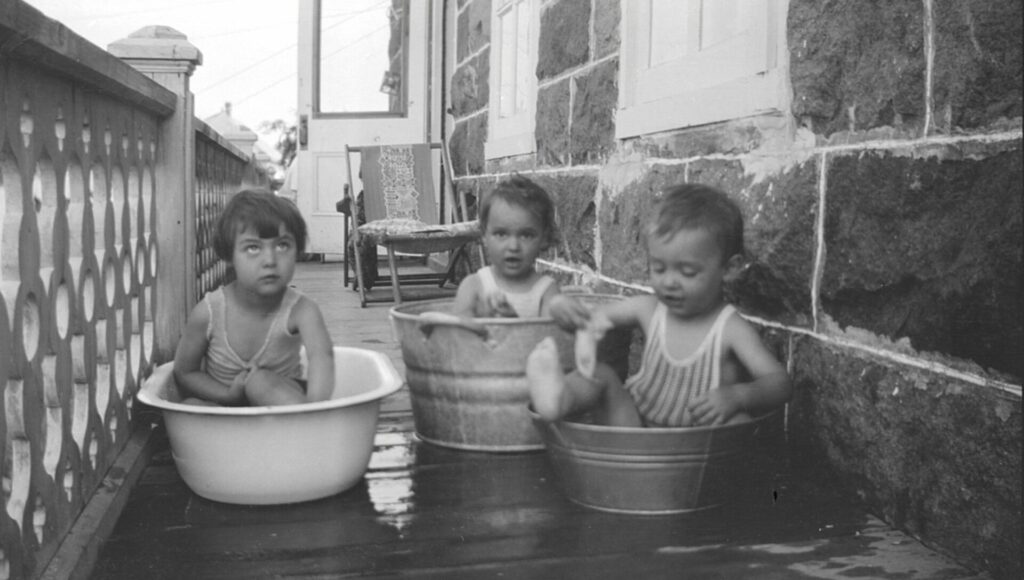
As a chronicler of daily life, Aline Cloutier captured moments that are sometimes surprising, sometimes touching, like this one of three small children taking a bath in basins barely large enough to hold them, set out on the front porch of a house. The portrait is especially lively: we can see movement in the blurred gestures of the little bathers and in the way their gazes each point in a different direction.

15 cm X 9 cmAline Cloutier collection, MBSL, c705
Three young children placed in wash basins on the porch of a house made of large rectangular stones.

c234

1894-1990Photographe: Photographer: Aline Cloutier

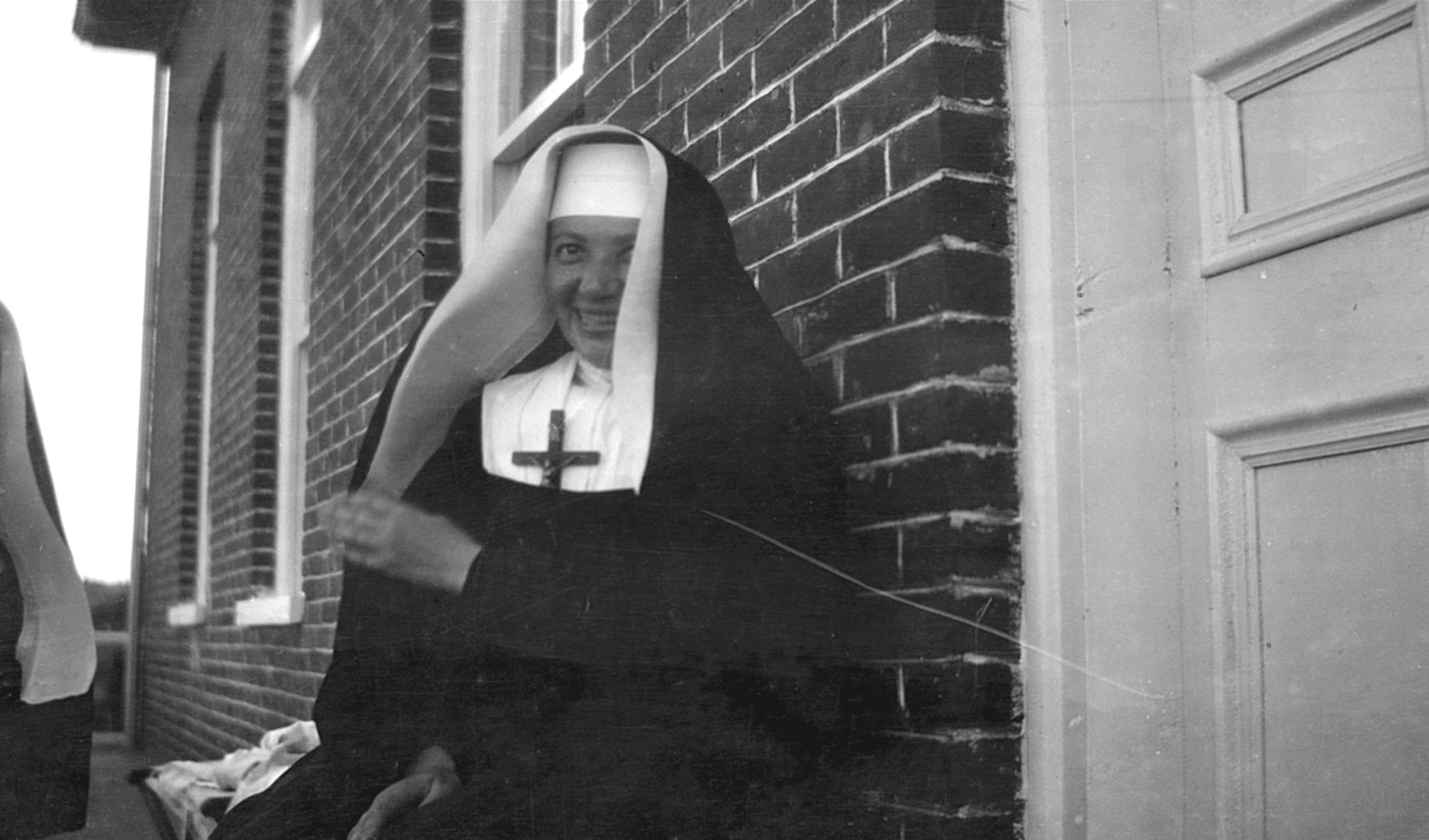
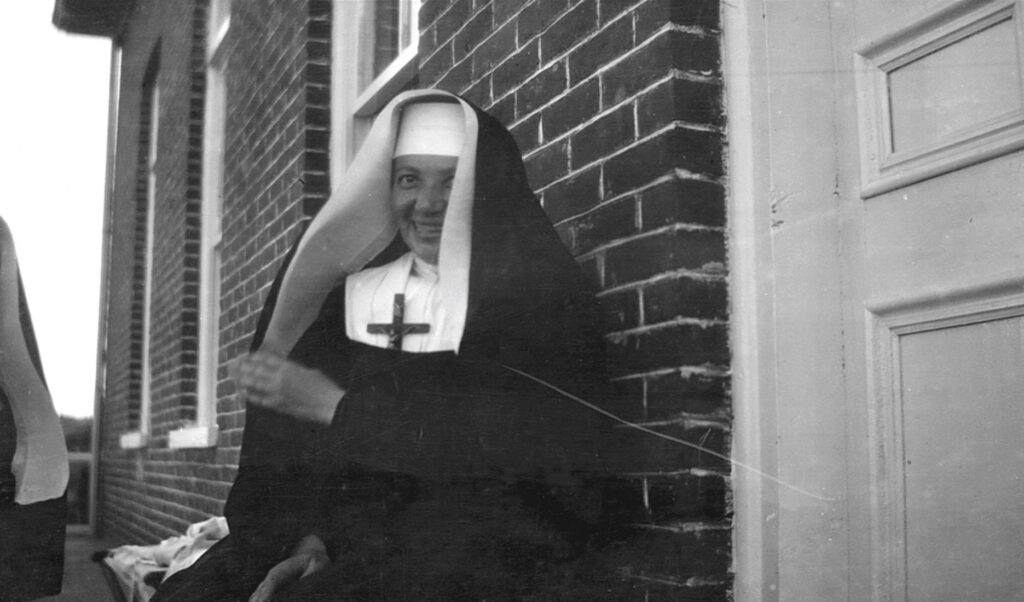
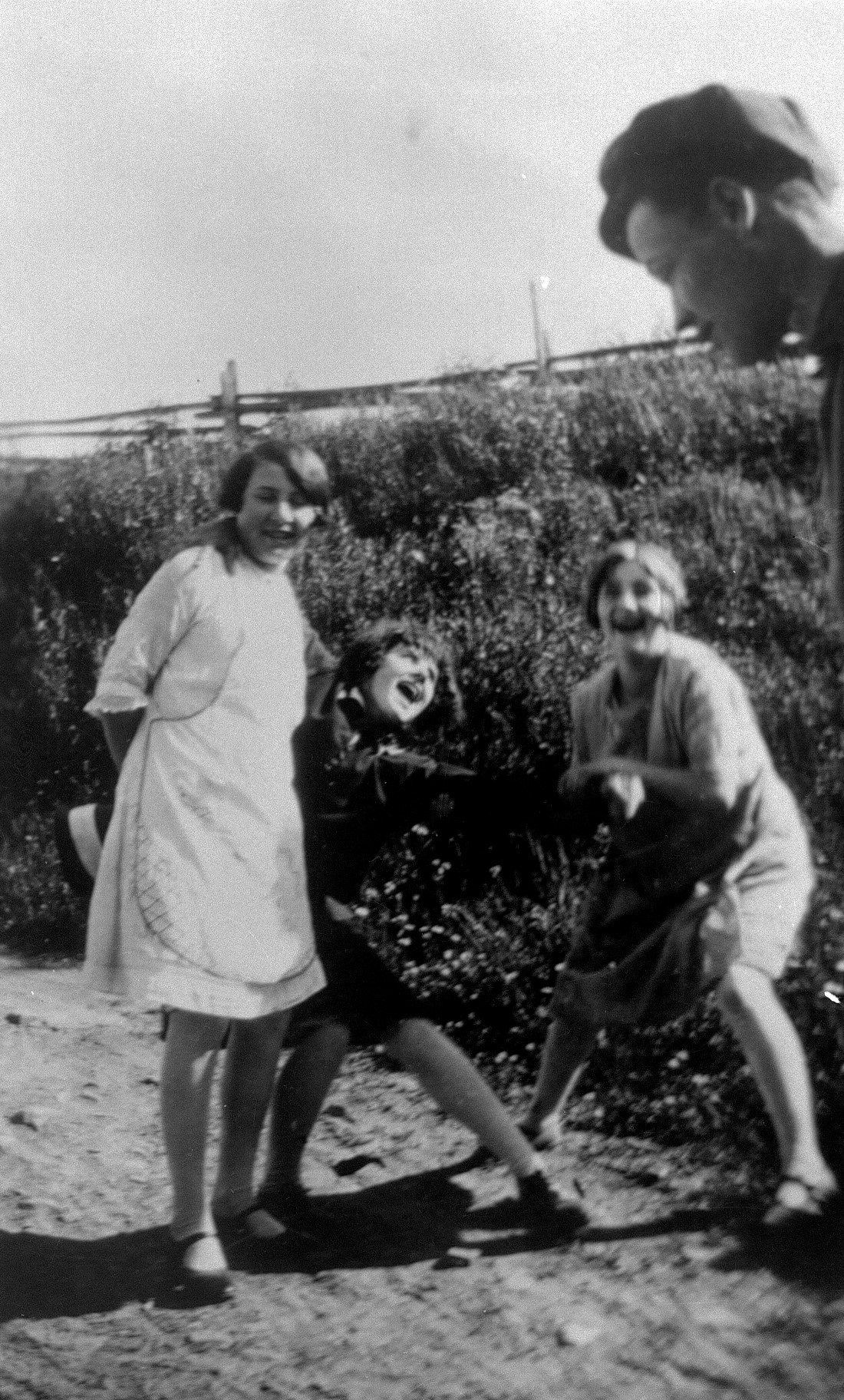
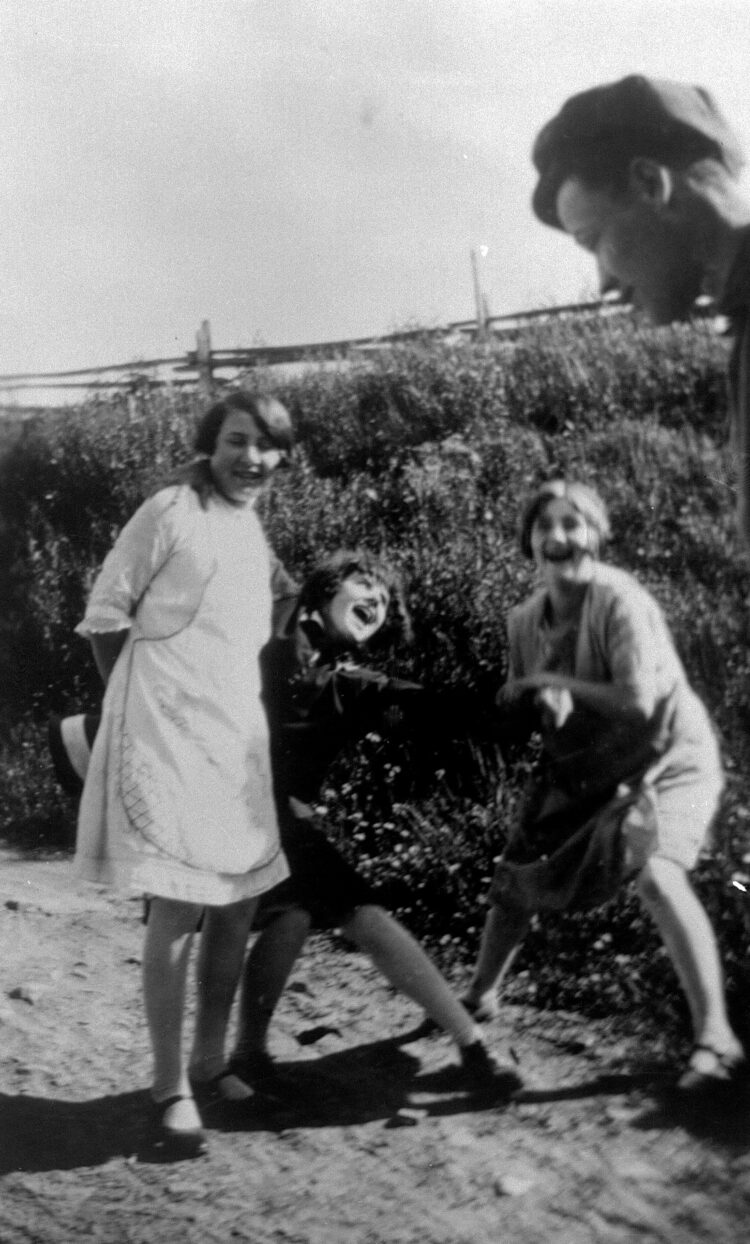
Are amateur women photographers more inclined to keep images that are less polished or less formal? Do they have a special appreciation for photos that are more spontaneous or intimate, the kind we often save today on our phones? That may well be true for Aline Cloutier. After all, she took pictures for her own enjoyment, to preserve memories, not to satisfy clients, as was mostly Marie-Alice Dumont’s case. Take, for instance, this candid and slightly blurry portrait. Cloutier managed to capture a smile, and perhaps even a laugh, from Sister Sainte-Germaine, the superior of the Daughters of Jesus, whose convent was located in Notre-Dame-du-Lac. Perhaps Cloutier had a good relationship with the nuns in her village, something that made this rare moment of joy possible. It is a kind of moment seldom found in the archives related to religious communities.

15 cm X 9 cmAline Cloutier collection, MBSL, c234
Portrait of a nun smiling at the camera on the porch of a brick building.

c678

1894-1990Photographe: Photographer: Aline Cloutier

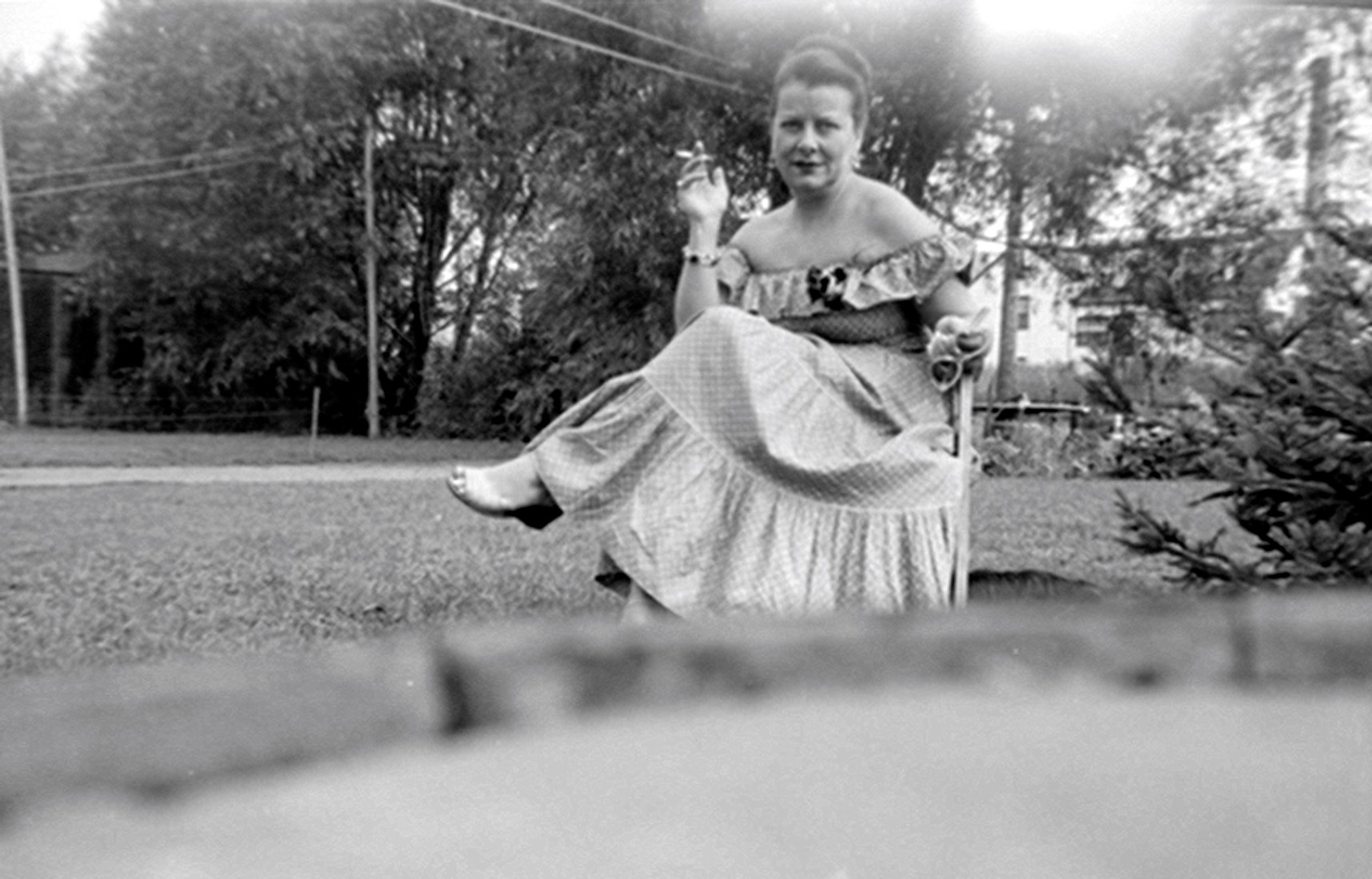
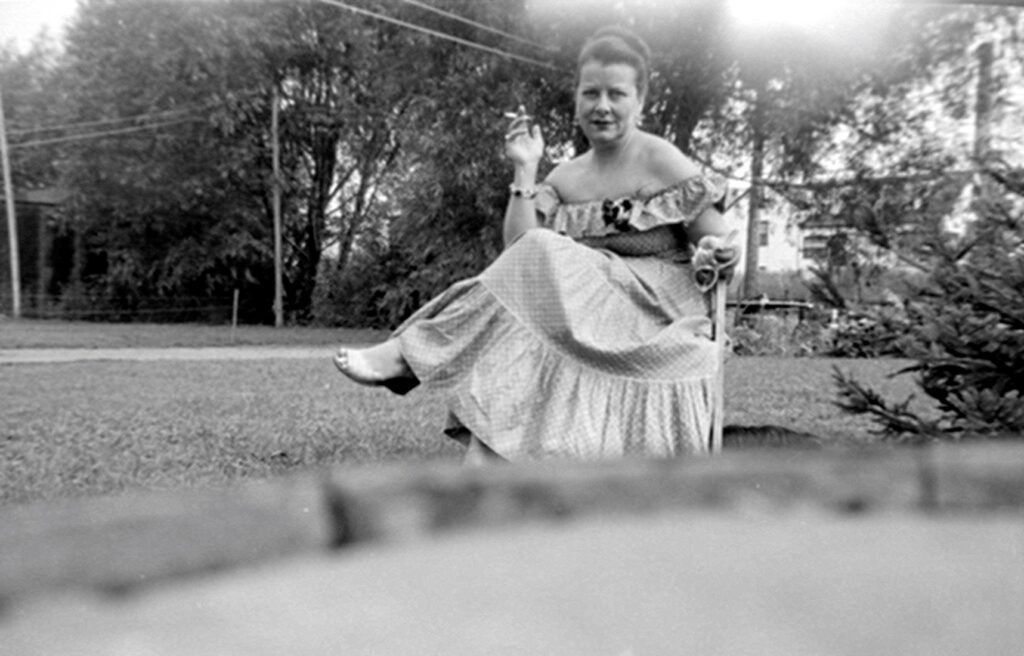
Do you think the quality of this photograph reveals that it was taken by an amateur? The harsh light filtering through the treetops creates a distracting blur, and the barrel used to support the camera clumsily obscures part of the subject, while also revealing the improvised set up the photographer used to take the portrait. Could these compositional elements have been deliberate choices? Whatever the case, Aline Cloutier offers us a window into the private world of a young woman living through the social change of the early 1940s. The bare shoulders exposed by the design of the dress are a hint of how women’s fashion was evolving at the time. What’s more, the subject is smoking a cigarette, which had become increasingly socially acceptable since World War II. And if you look closely, you will notice electrical wires in the background, a clear sign of the modernization of rural areas in the early 20th century. In photographing those around her like this, could Aline Cloutier have known she was also documenting a society in transformation?

6 cm X 4 cmAline Cloutier collection, MBSL, c678
Outdoor portrait of a woman in a scoop-necked dress sitting on a chair with crossed legs and smoking a cigarette.

V
Other women photographers

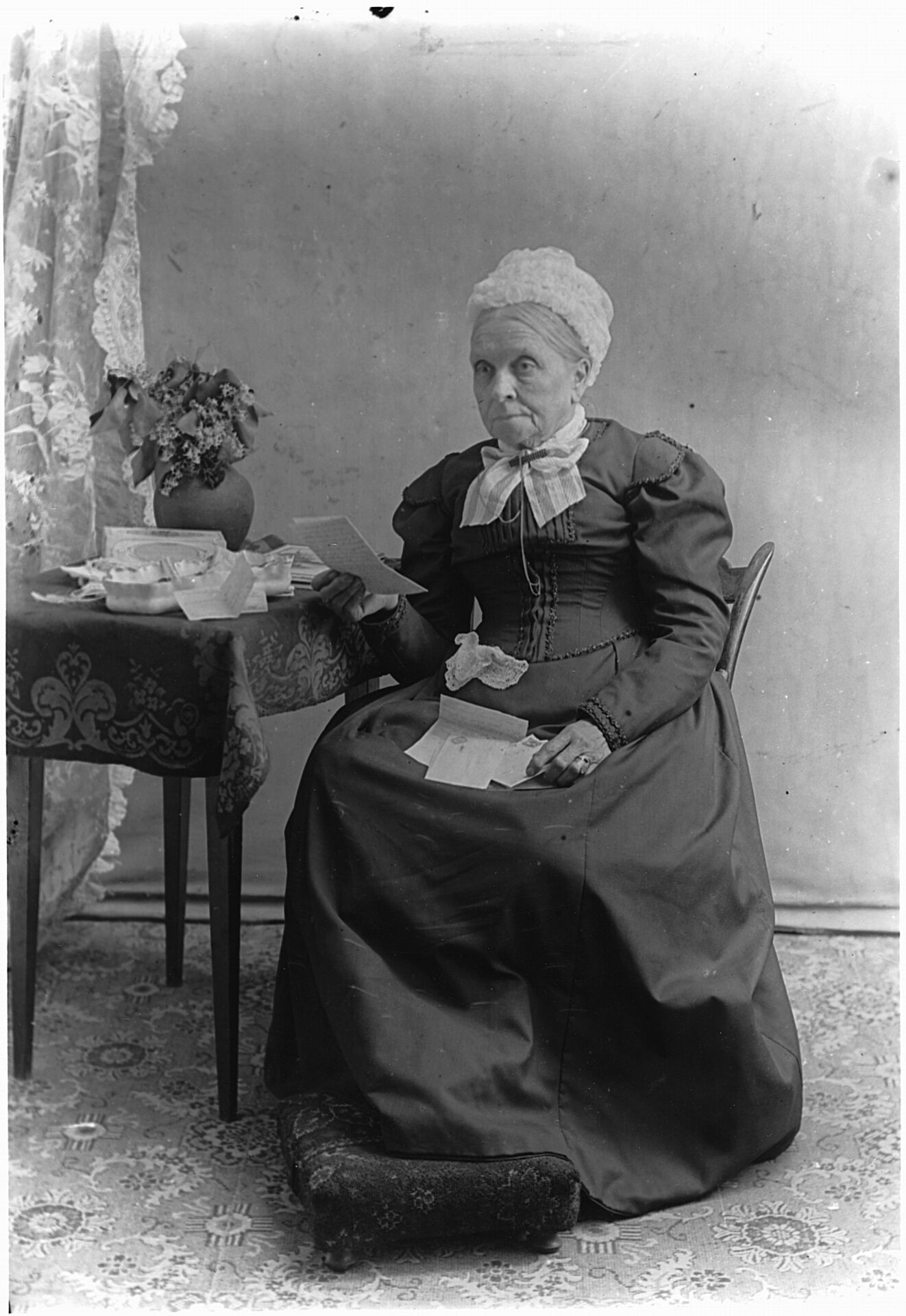
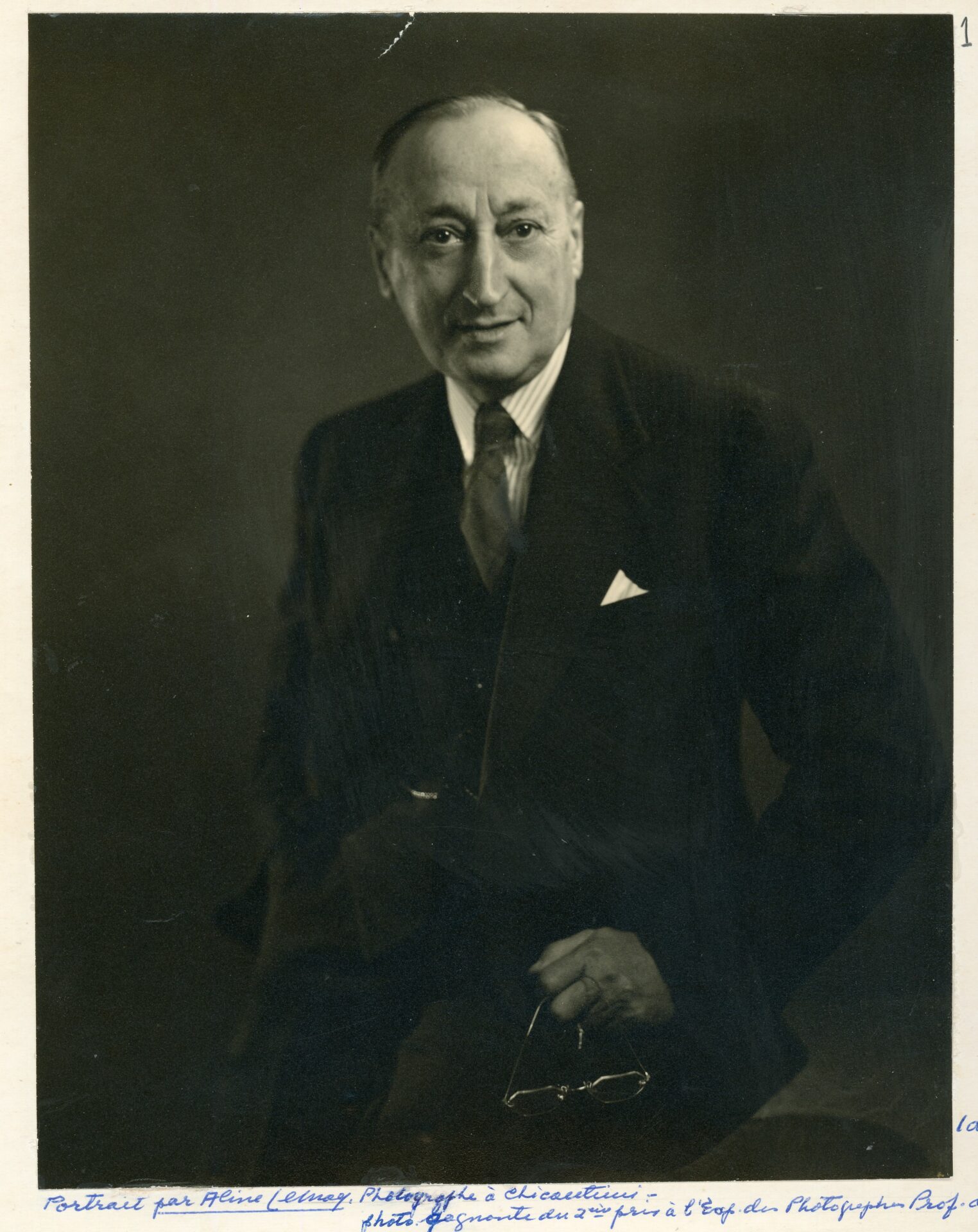
From the moment photography was invented in 1839, women steadily made their mark in this new field requiring both technical and artistic skill. In Quebec, many worked in prominent studios, such as Notman’s in Montréal and Livernois’ in Québec City, while others ran smaller rural studios alongside their husbands. Some women, including Sally E. Wood in Knowlton (1897), Marie-Alice Dumont in Saint-Alexandre-de-Kamouraska (1926) and Aline Lemay in Chicoutimi (1947), went on to establish their own businesses. Even religious communities embraced photography, with some, like the Sisters of Charity of Québec City, operating their own studios starting in the late 19th century.

“To be a photographer, a woman had to work independently and own her own studio.”

Art historian Lucie Bureau offers a fascinating look into the history of professional women photographers, including Marie-Alice Dumont.

Other women photographers

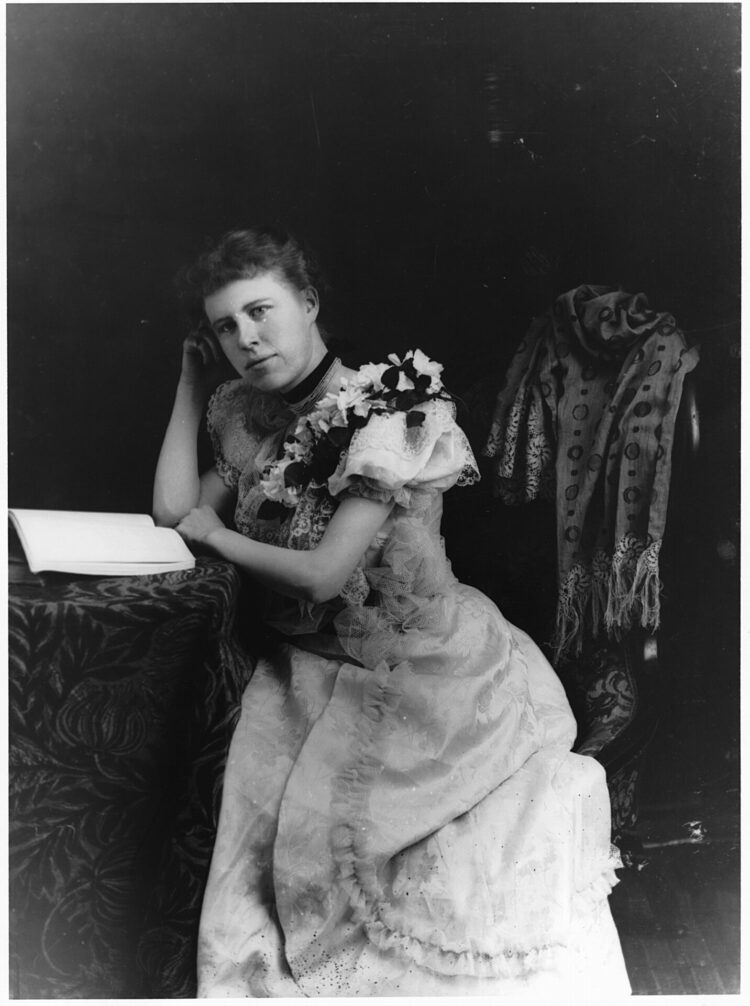
Sally Wood

About 1915Photographe: Photographer: Sally Wood

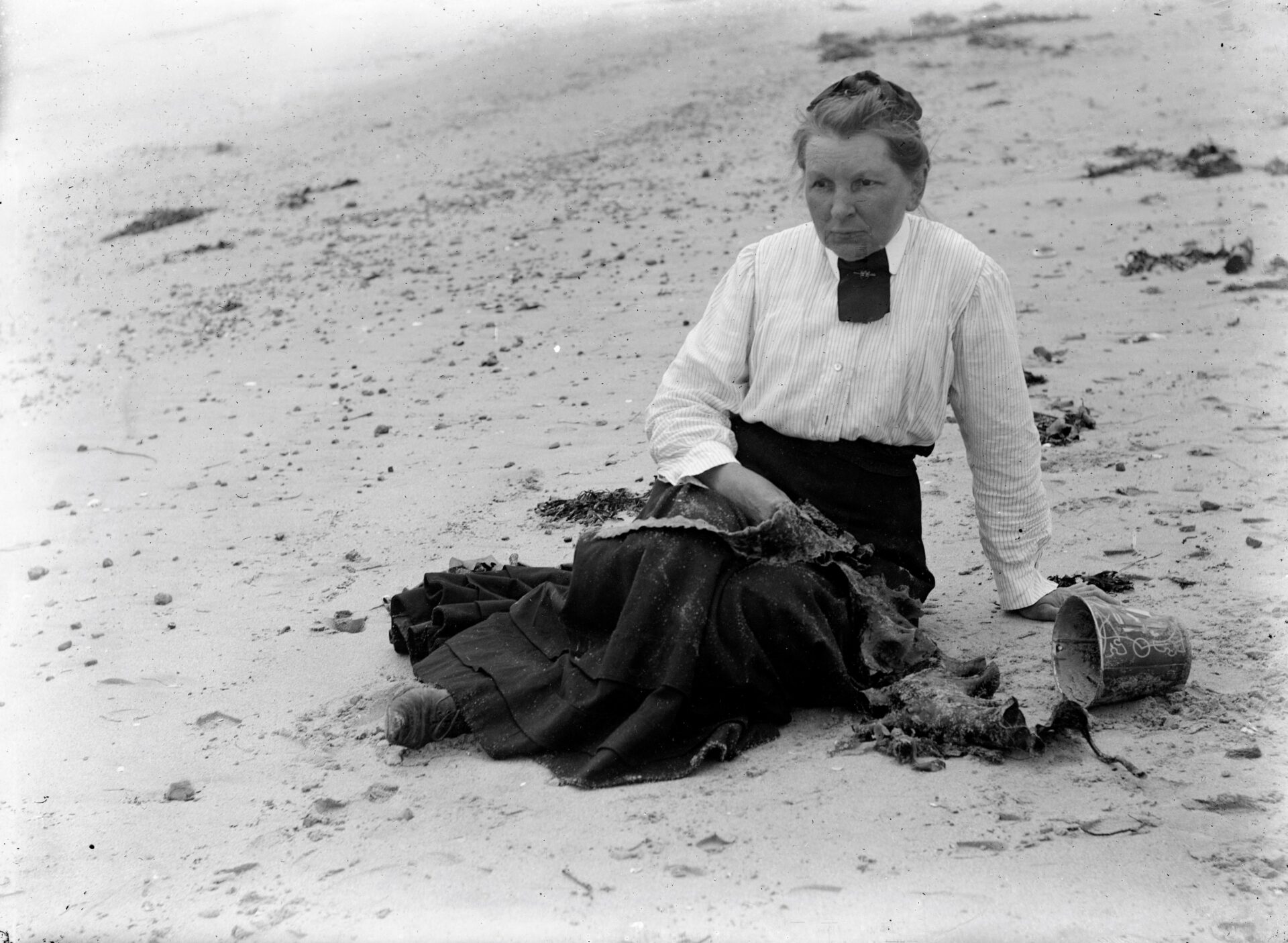
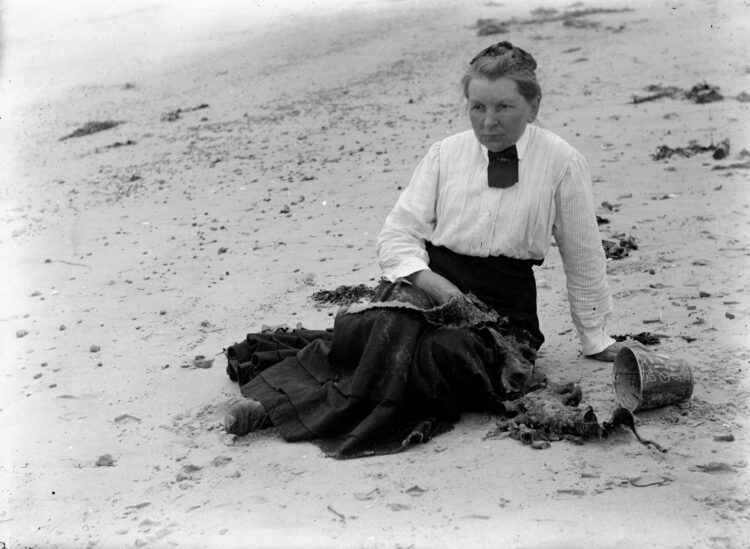
In this self-portrait, Sally E. Wood, who was nearly 60 years old at the time, appears to be using a clever trick to photograph herself: a remote shutter release, likely hidden in her right hand (concealed beneath seaweed), is kept out of sight, possibly buried in the sand. According to art historian Luce Vallières, this self-portrait challenges Victorian-era norms. Taken outdoors, it critiques the “confinement of women to the domestic sphere, as imposed by those in power in Western society at the time” [our translation]. Whether or not this was Wood’s intention, what is clear in this photo, taken on Long Island, New York, is that she is engaging in an activity long popular among Quebec’s upper classes: relaxing along the coast of the eastern United States.

Gelatine dry plate, 11,43 cm X 16,51 cmSally E. Wood collection, Lac-Brome Museum, BCHS202-S1-D8-P12
Sally Wood on the beach, wearing a dark skirt and a white shirt.

Sally E. Wood

(1857-1928)

Sally E. Wood (1857–1928), an apprentice of renowned photographer John A. Wheeler, was likely also mentored by William Notman. At 40, she opened her own photography studio in Knowlton in the Eastern Townships region of Quebec, running it from 1897 to 1907. Like Marie-Alice Dumont, Wood remained single, did not have children and lived in the family home, which doubled as her workplace. However, she came from a wealthy, Anglophone background, much like the men and women who frequented her studio.

Other women photographers

Noviciat_Elmina Lefebvre

1912Photographe: Photographer: unknown

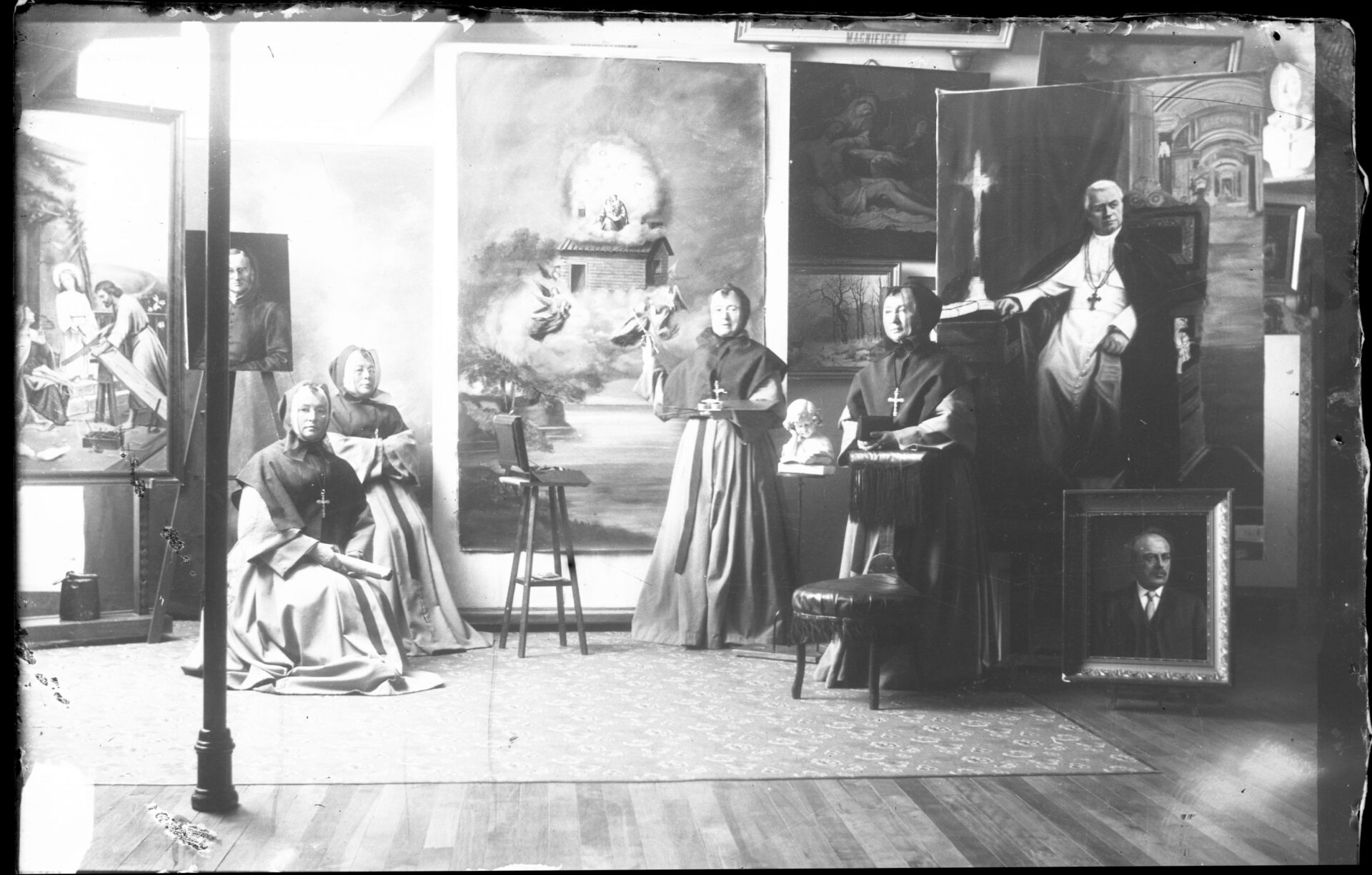
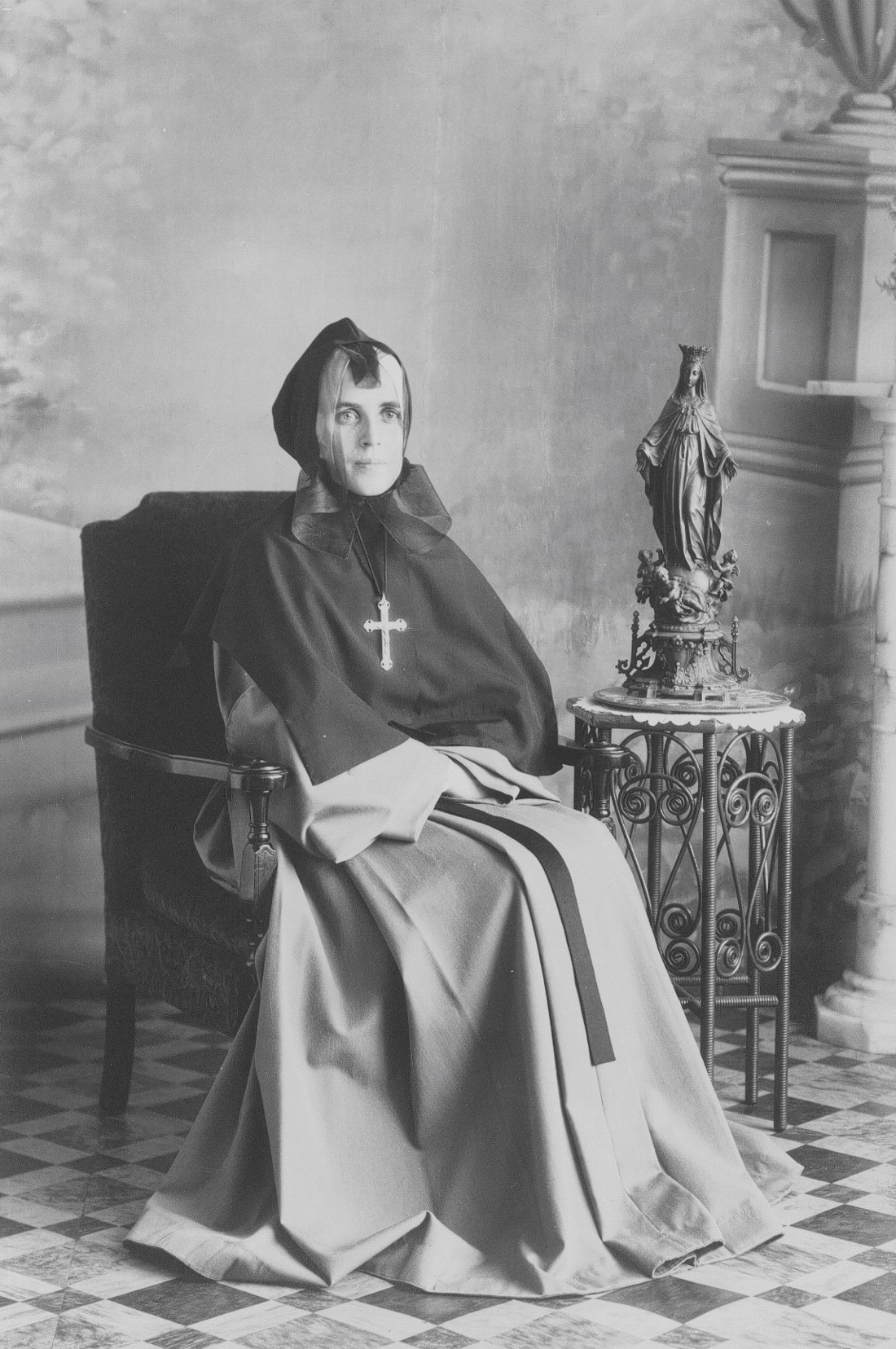
This photograph shows the interior of the painting studio at the novitiate of the Sisters of Charity of Québec. At the centre of the composition is Elmina Lefebvre, flanked by three other nuns and posed with a brush and palette, as if working on her painting La Maison de Lorette.

Glass negativeLes Sœurs de la Charité de Québec collection, BAnQ-Québec, P910,S3,D3,P45
Sister Marie-de-l’Eucharistie and three other Sisters surrounded by large canvases in the middle of the painting studio of the Sisters of Charity of Quebec.

Sister Marie-de-l’Eucharistie (Elmina Lefebvre)

(1862 -1946)

Originally from the Gaspé Peninsula, Sister Marie-de-l’Eucharistie (1862–1946), born Elmina Lefebvre, was a talented art restorer, teacher, fine arts professor and poet. She is particularly recognized as a gifted painter and portrait artist, and later as a photographer within her religious community. Lefebvre oversaw the Sisters of Charity’s painting studio, which also housed a photography workshop. Could Marie-Alice Dumont have learned her early photography skills here?

Other women photographers

Lemay et photographes

1954Photographe: Photographer: unknown

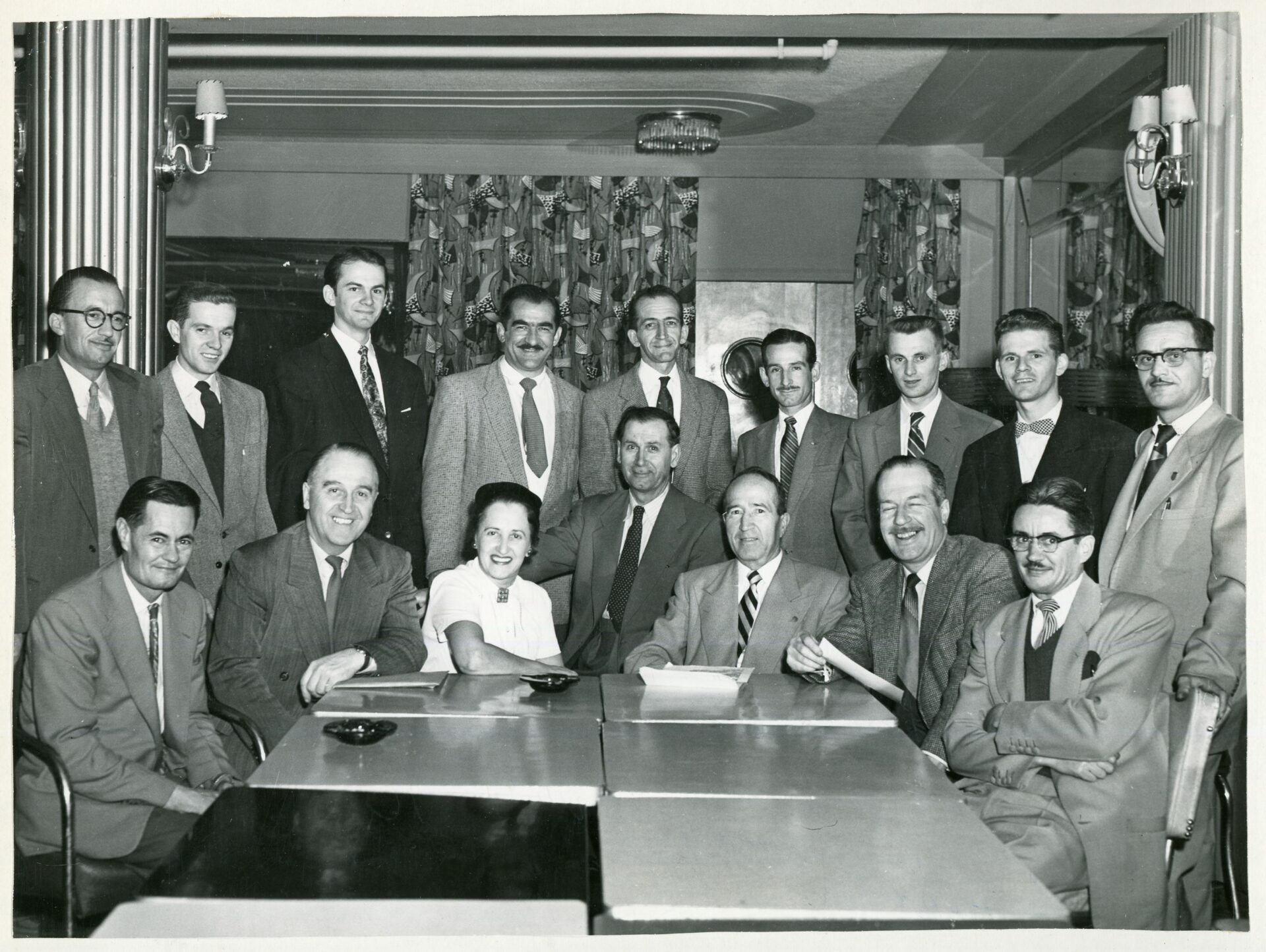
If visual proof were needed that men far outnumbered women in professional photography during Marie-Alice Dumont’s time, this group portrait would provide it. Taken in 1954 in Chicoutimi, it shows all the studio owners from the Saguenay region gathered as a “professional association of photographers.” Aline Lemay, dressed in white and seated in the front row, is the only woman.

19 cm X 24 cmSociété historique du Saguenay, P002, S07, SS1, P06642-1
Group of sixteen photographers, among whom Aline Lemay is the only woman.

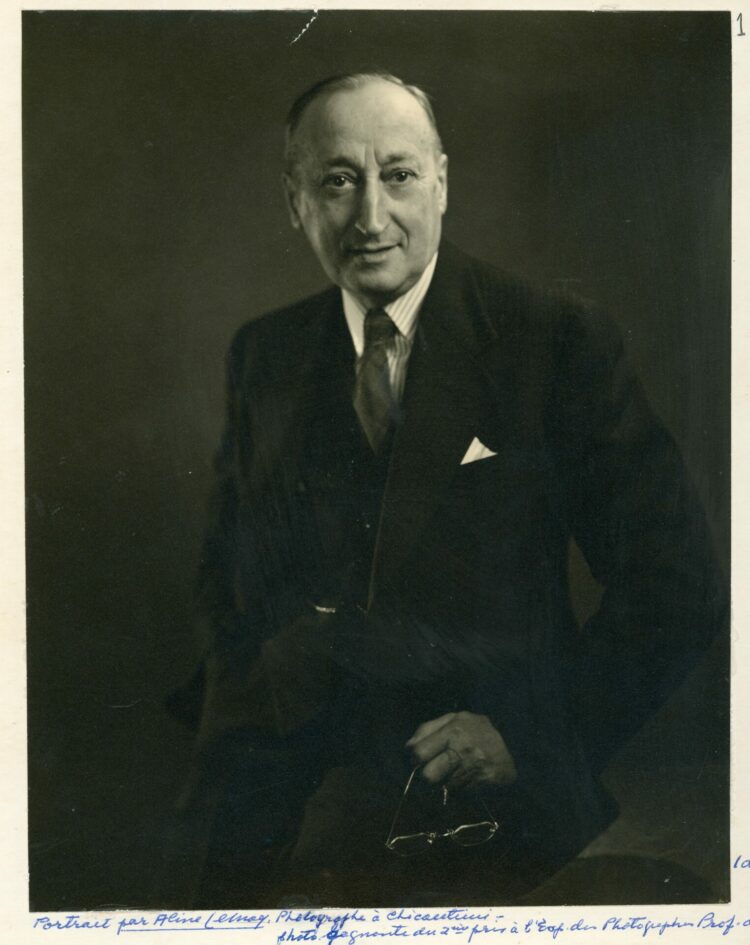
Aline Lemay

(1904-1996)

In the early 1920s, Aline Lemay (1904–1996) became an assistant to her father, Joseph-Eudore Lemay, who had run a photography studio in Chicoutimi since 1906. After his death in 1947, she took over the studio and managed it for the next 20 years, becoming the first woman in the Saguenay region of Quebec to work in a photography studio. Aline excelled in the darkroom and in retouching.

VI
Interview with Marie-Alice Dumont

In 1981, Marie-Alice Dumont moved out of the house that had been her photography studio to live at the Villa Maria home. That same year, her friends collaborated with the Centre d’animation et de diffusion culturelles du Bas-St-Laurent to organize an exhibition of 50 of her works. This was an occasion for Dumont to give a television interview during which she offered an invaluable testimony of her career. This footage (previously kept only on VHS reels) is the only we have of her, and it shows a friendly, down-to-earth woman who was proud of her work as a photographer. The video was directed by Yvan Roy and Andrée Dionne.

Interview with Marie-Alice Dumont