
d1553
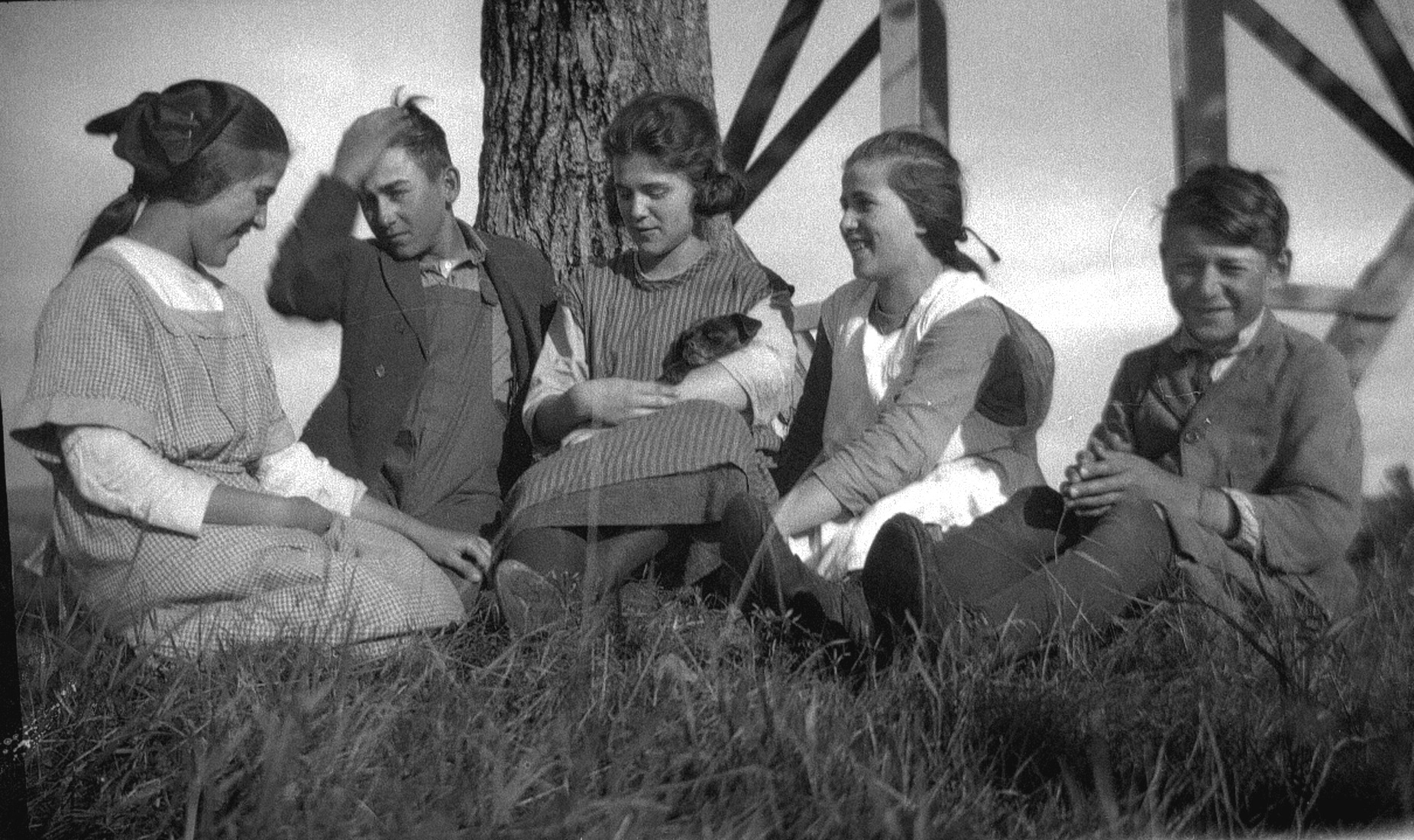
1925Photographe: Photographer: Marie-Alice DumontOne of the Dumont family’s favourite pastimes was visiting relatives on the weekends. In this photo, Marie-Alice Dumont captures one of those cherished moments between cousins.
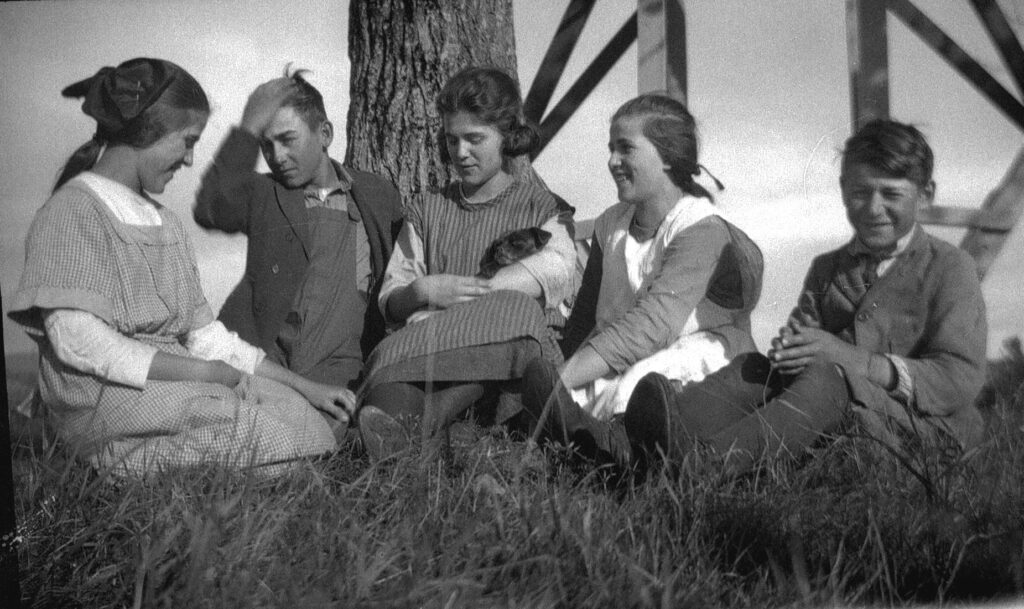


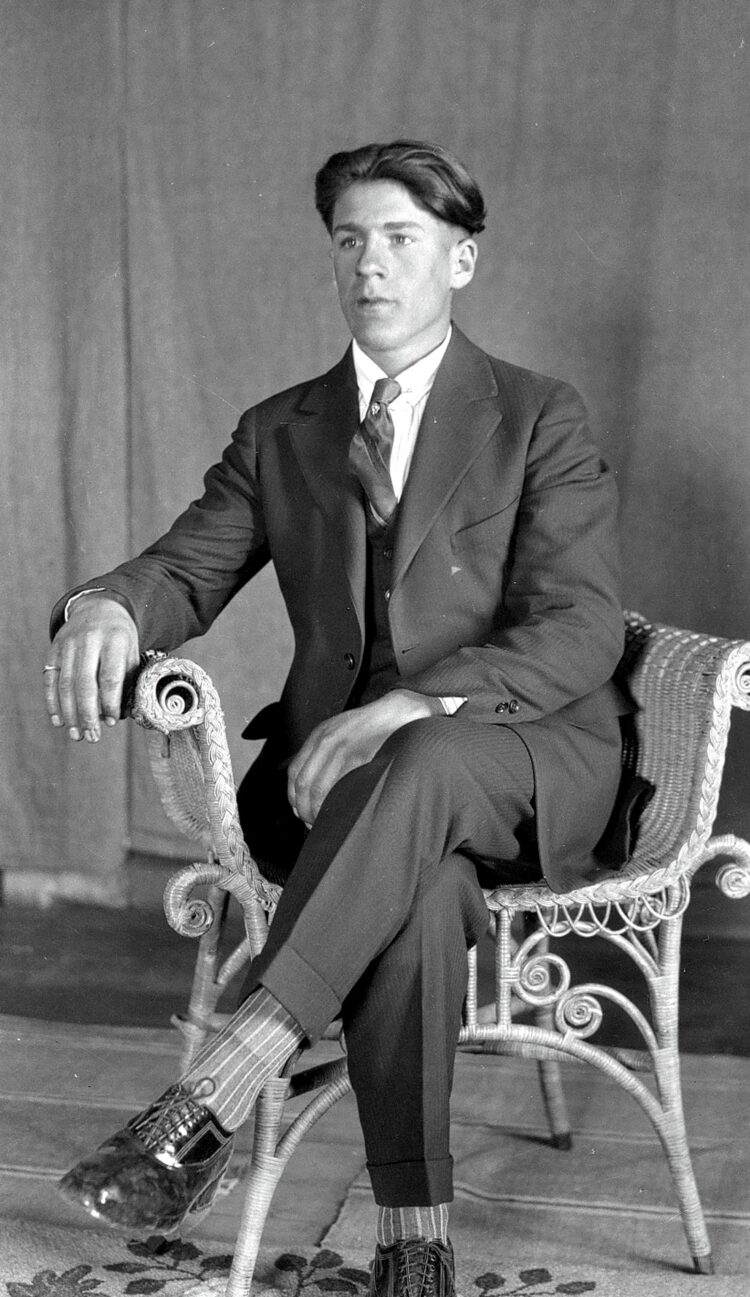
One of the Dumont family’s favourite pastimes was visiting relatives on the weekends. In this photo, Marie-Alice Dumont captures one of those cherished moments between cousins.
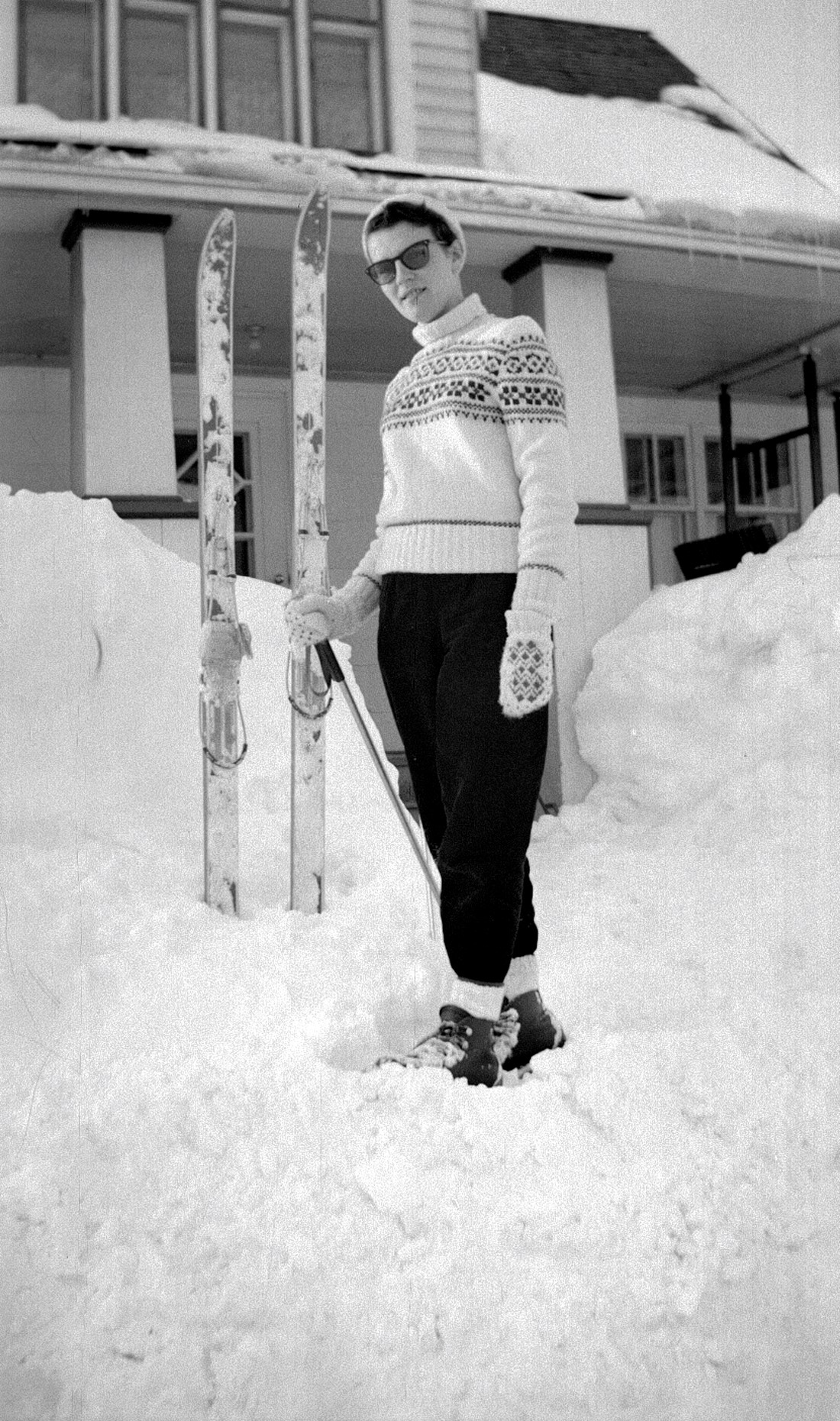
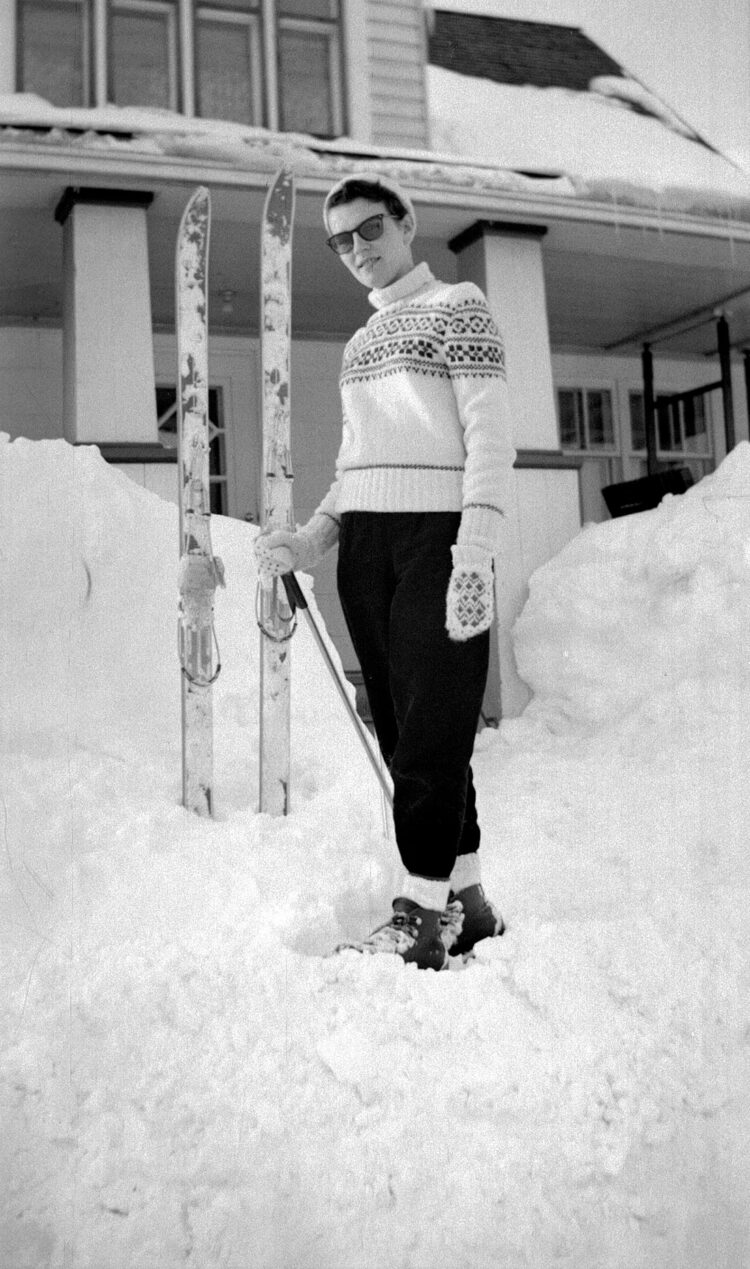
Skiing has been practised in Quebec since the late 19th century. By the time this photo was taken, in the 1920s, the sport was rapidly gaining popularity across the province, and the Bas-Saint-Laurent region was no exception.
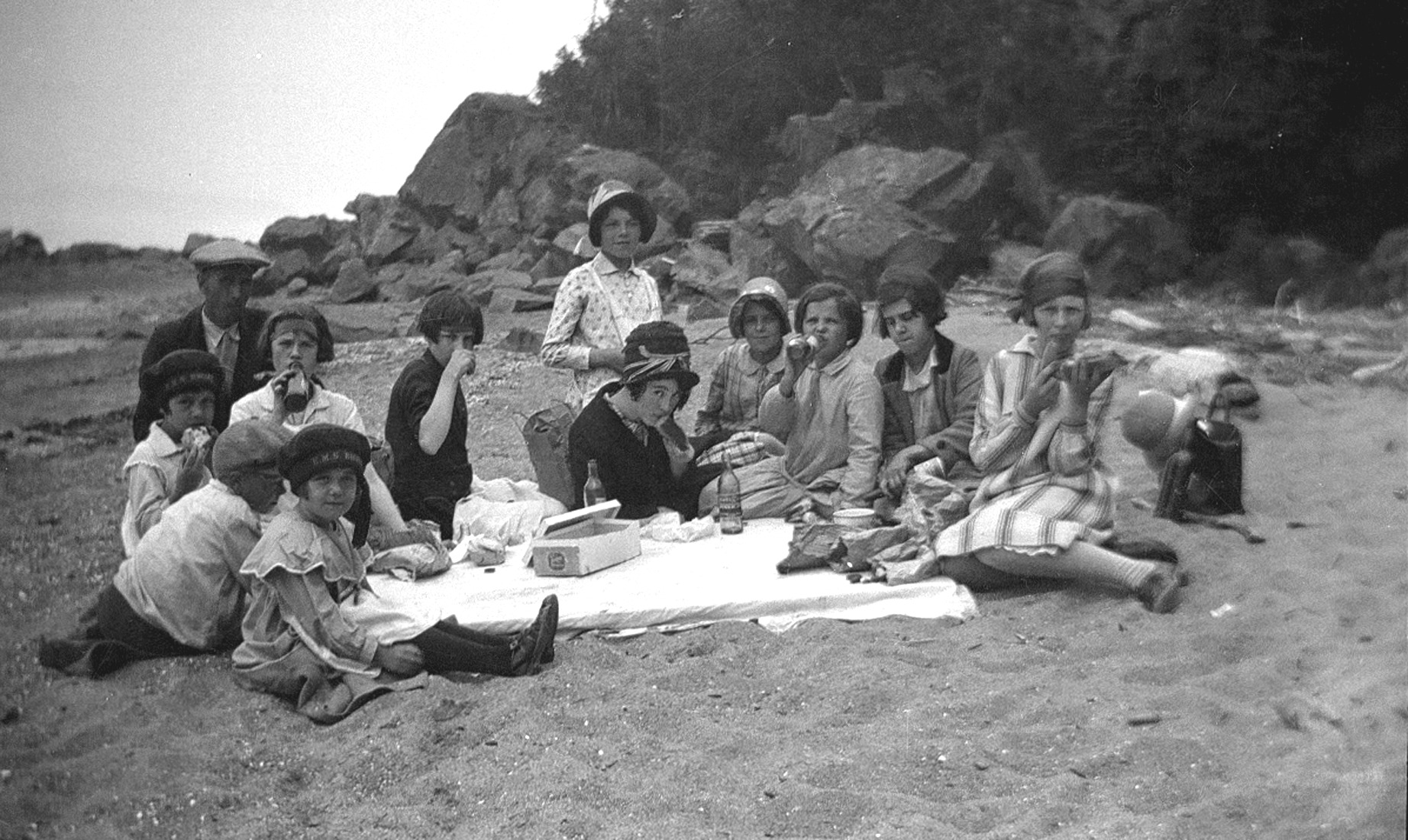
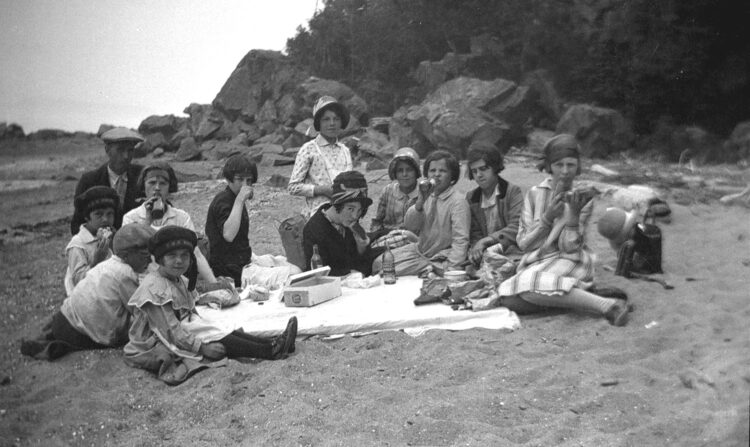
Picnicking on the shoreline was one of the most popular summer activities in Kamouraska during Dumont’s time. At the centre of this photo, lying down, is Rosalie Bergeron, the photographer’s adopted sister.
Marie-Alice Dumont’s photography is just as valuable for its artistic beauty as its historical significance. Beyond their visual appeal, her images allow us to step into a bygone era to explore a particular time and place. This section, organized by themes, invites us to discover Marie-Alice Dumont’s Kamouraska: religious life and life in the village, leisure activities and family moments, children, men and women—not to mention the breathtaking landscapes that the region is known for.
In early 20th-century Kamouraska, most of the community was made up of large French Canadian families living in rural or small-town settings. For these residents, having a portrait taken by a photographer was a big event, and they would often dress up in their finest outfits for a visit to Marie-Alice Dumont. When visiting her siblings, Marie-Alice often brought her camera along to capture them on their land or in front of their home. Families really were the cornerstone of her work.
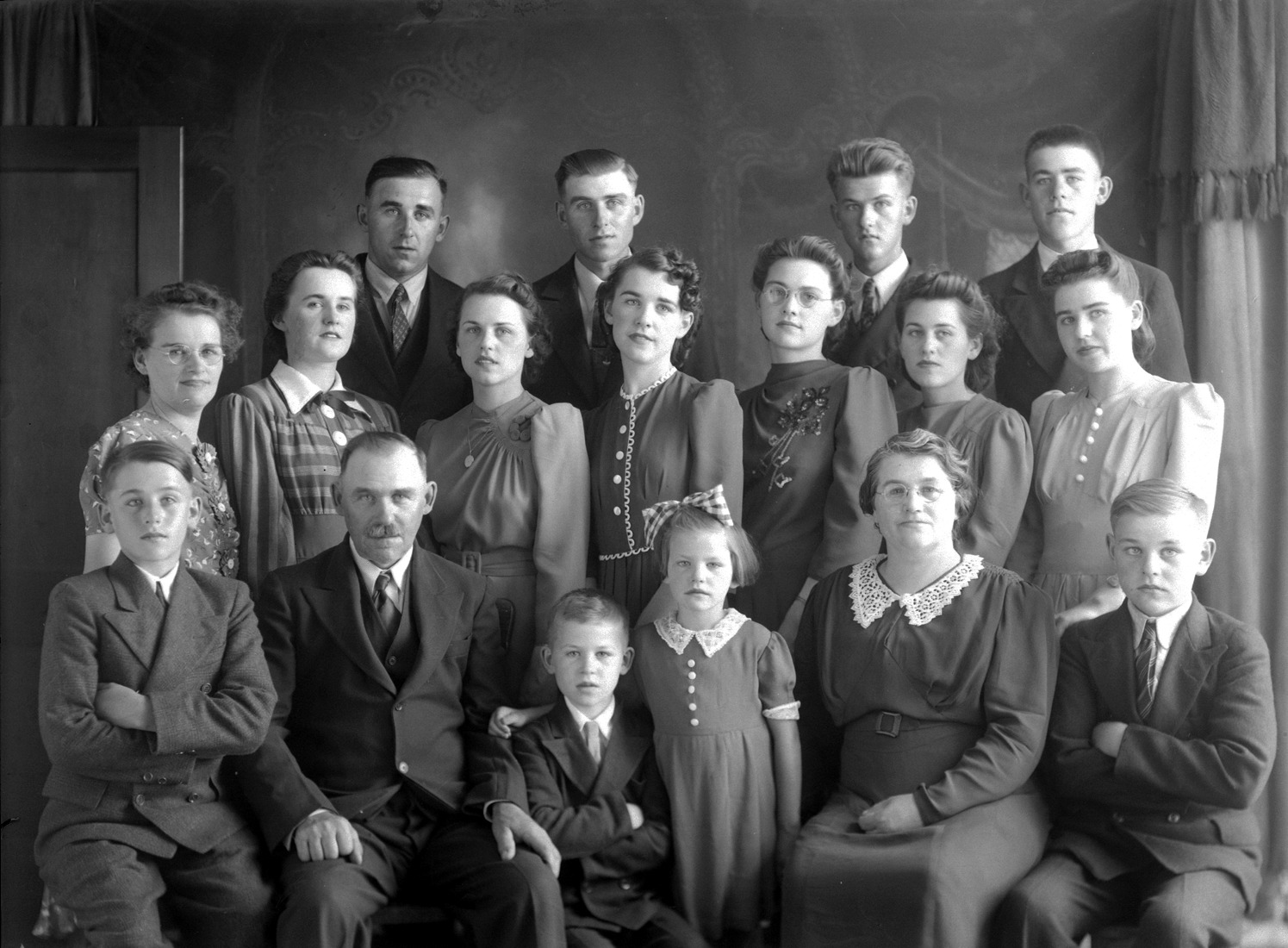
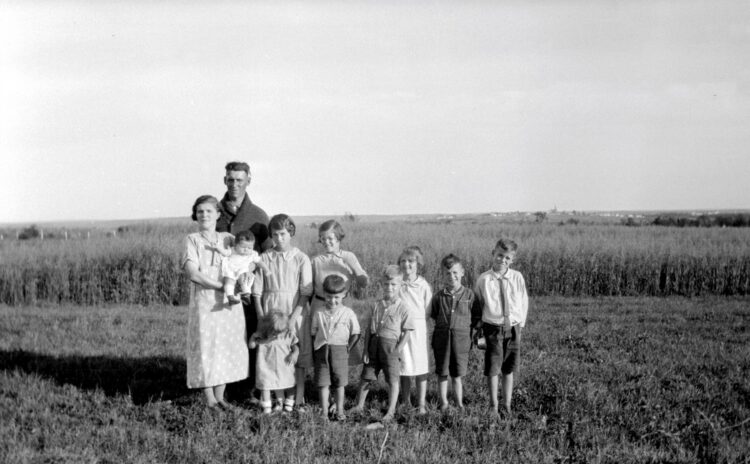
In rural Quebec, large families remained the norm well into the 1950s. So-called “complete” families, where both parents lived to at least age 50, had, on average, eight or nine children. Marie-Alice Dumont did not have to look far for examples; one of such family was that of her sister Émilia and husband, Flavius Ouellet.
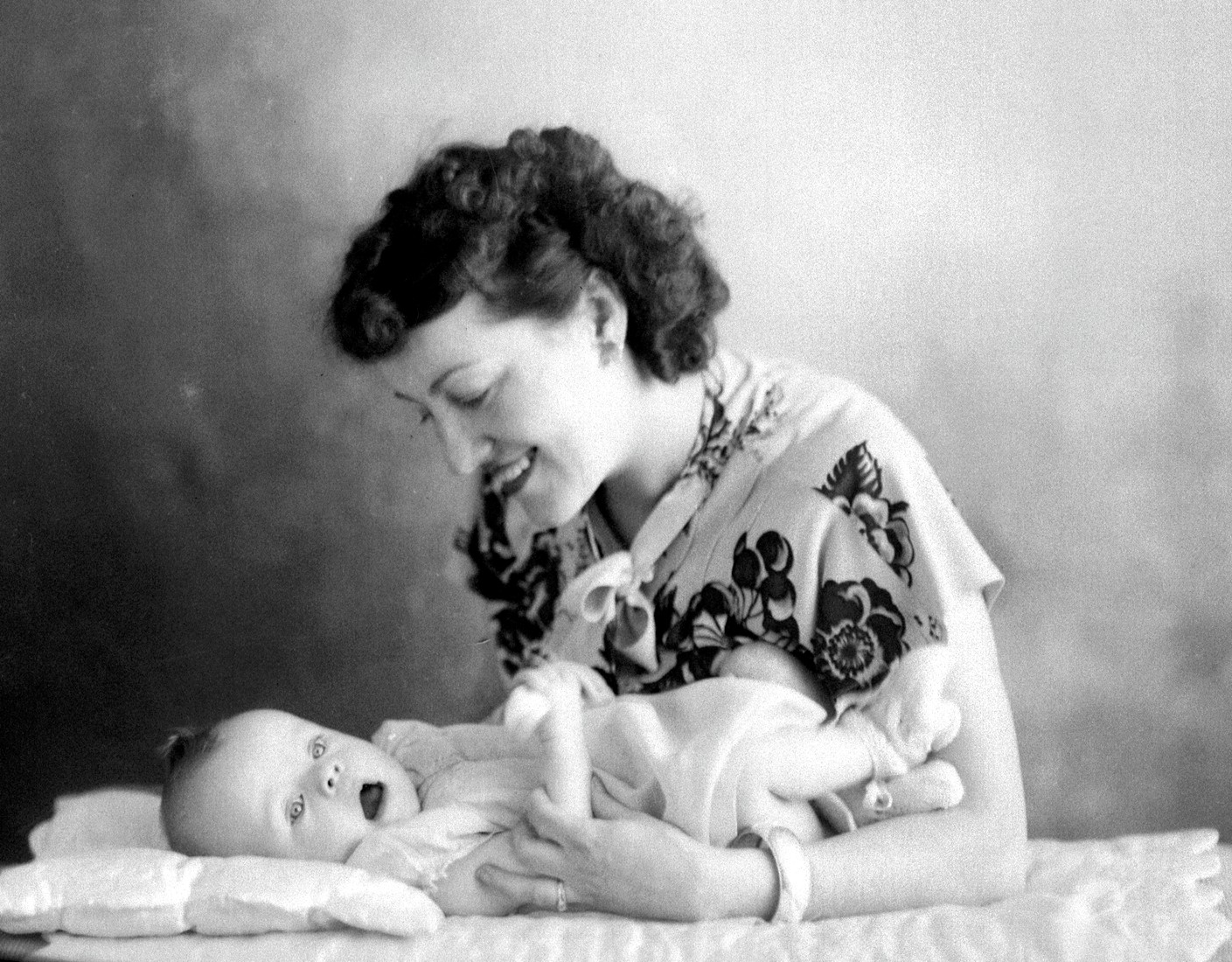
It was common for women to come alone with a baby or young child to be photographed in Dumont’s studio. Here, Mrs. Camille Soucy is pictured with her daughter Françine, who was visiting the studio for the first time. They would return four years later.
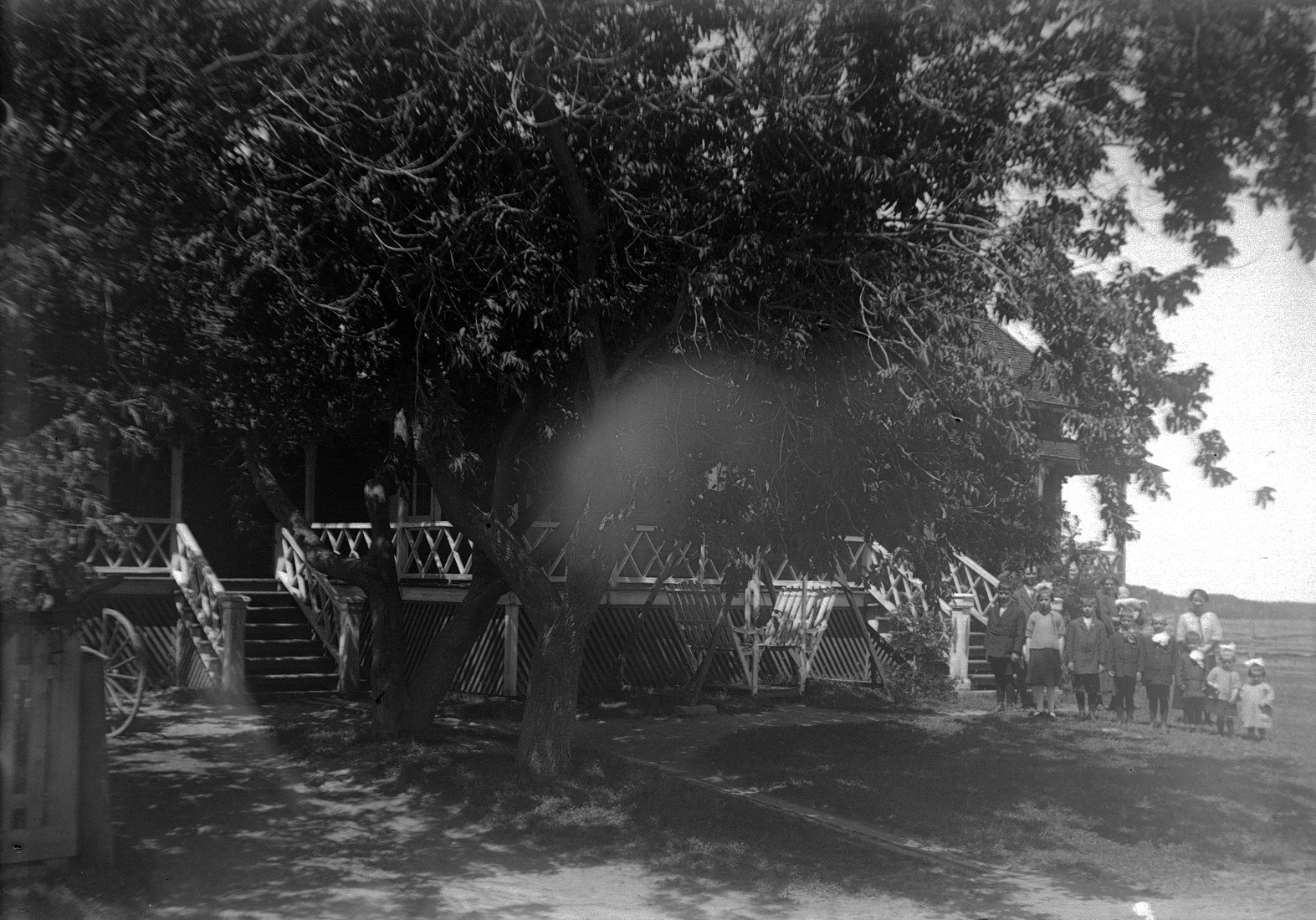
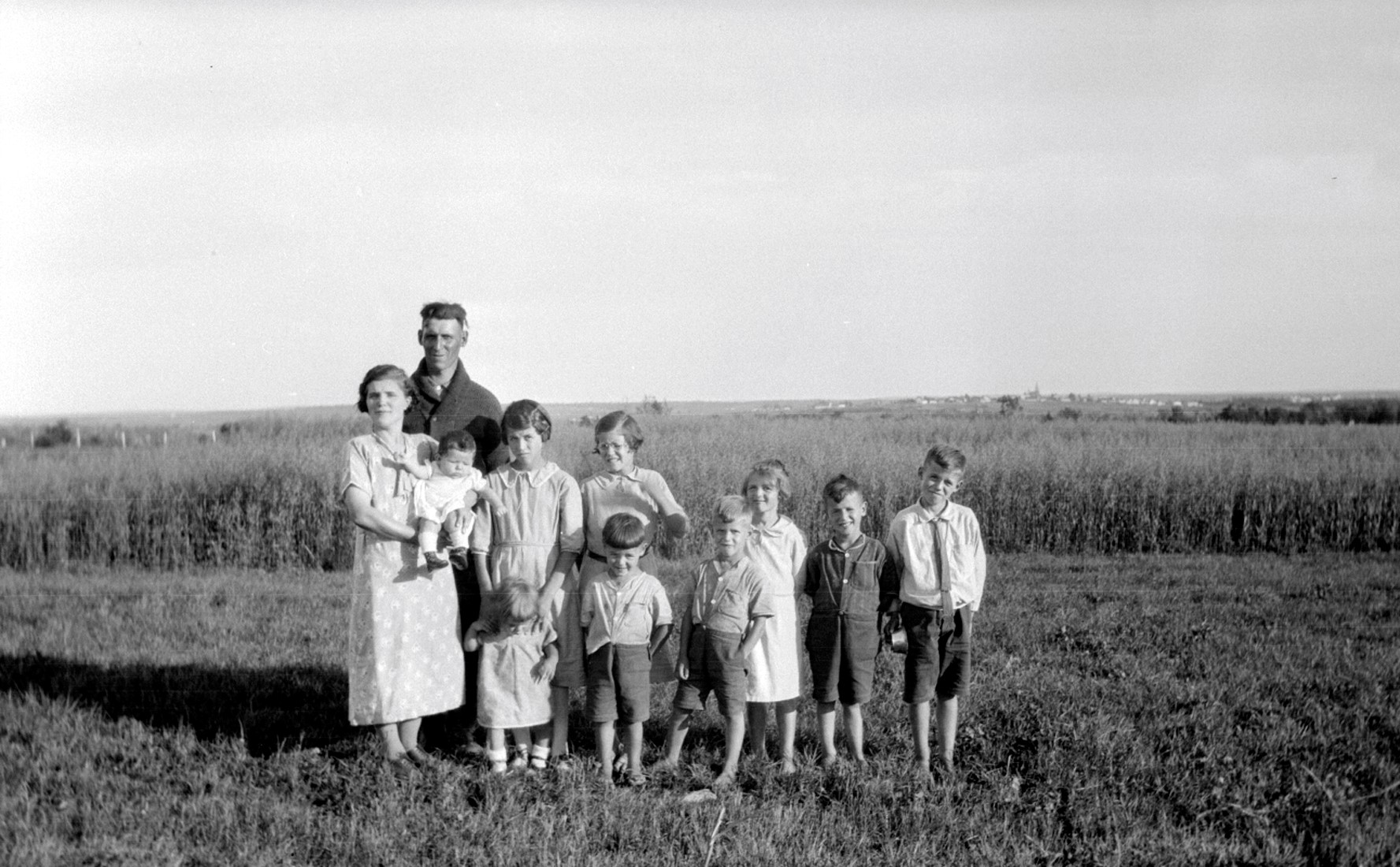
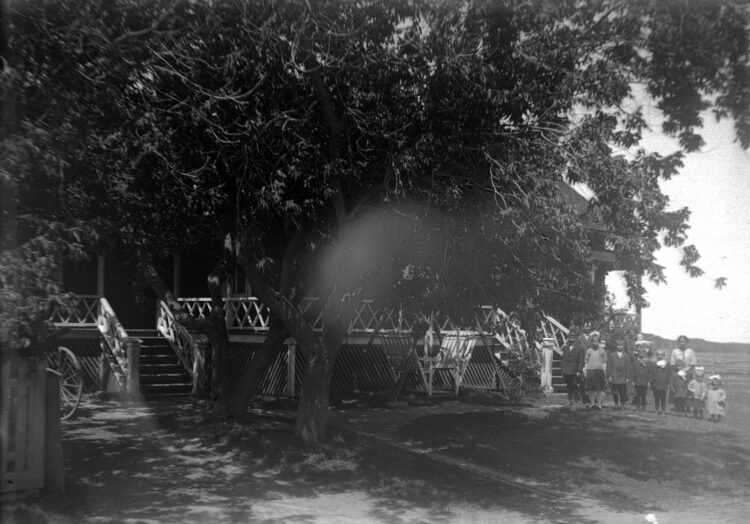
This family of 10 children stands proudly in front of their home. One might wonder about the intention behind the composition: nearly half the image is taken up by a large tree!
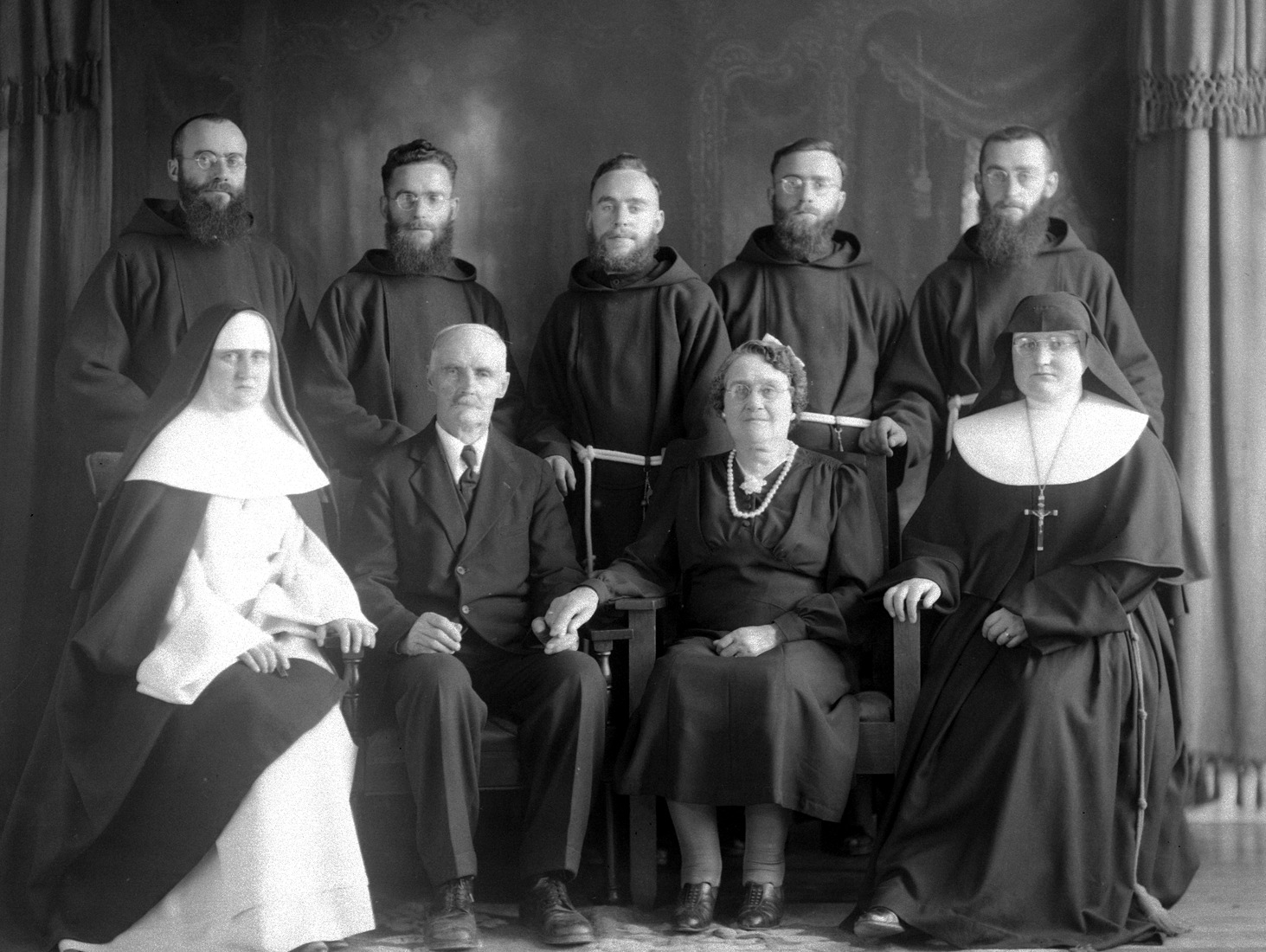
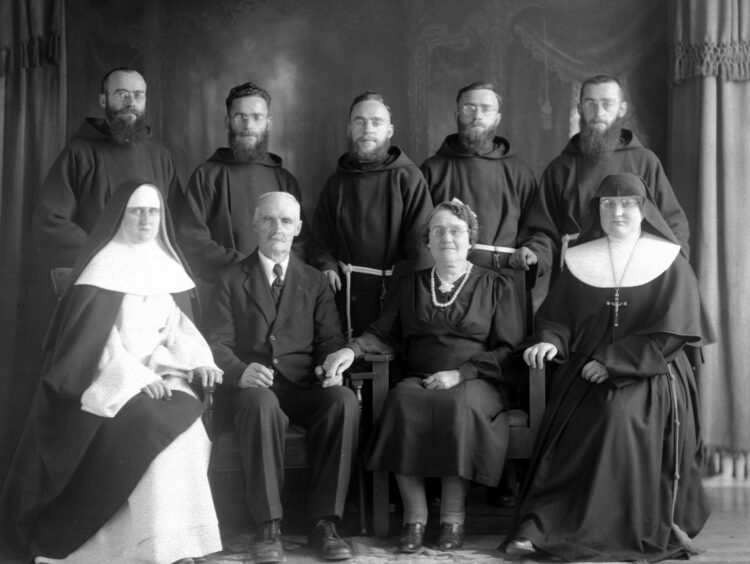
Here is another example of a large family from Marie-Alice Dumont’s circle: her sister Albertine and husband, Ludger Bérubé. The seven adults standing with them are their children who went on to pursue religious vocations.
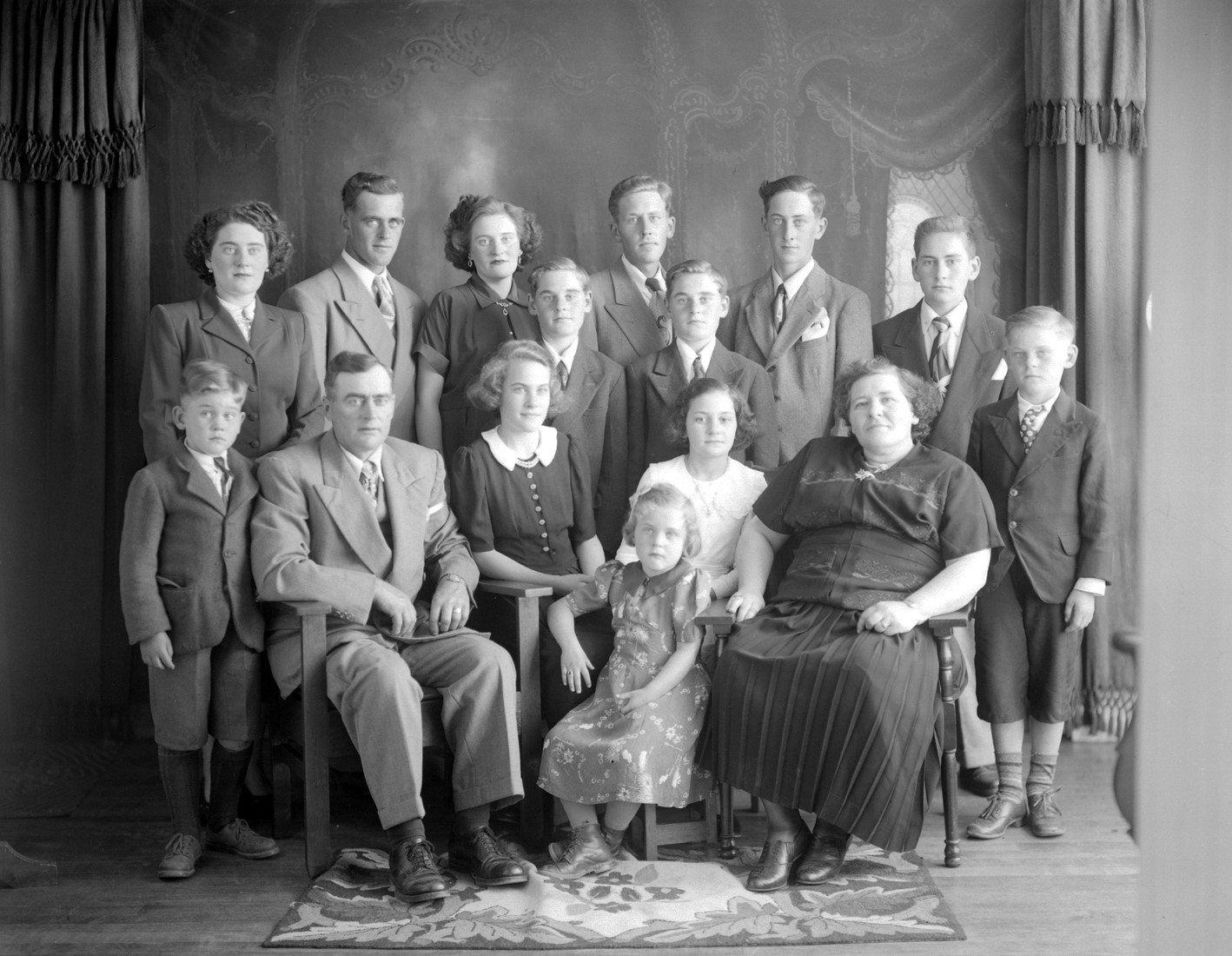
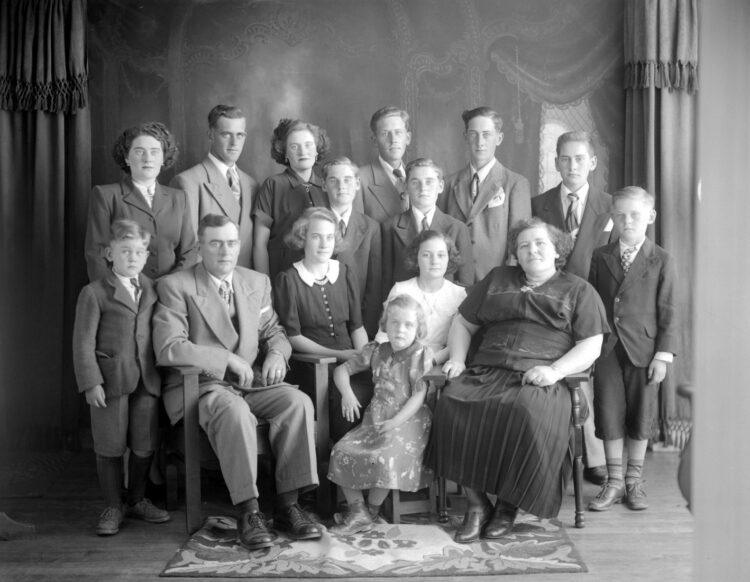
Émile Boucher and Gabrielle Dumont, another of the photographer’s sisters, are shown here with their first nine children. (They would eventually have 16). Remarkably, among their children, eight daughters became nuns and one son became a priest.
Alexandre Bérubé and Yvonne Léveillé, pictured here with their children, used this photograph in their “homage to local families,” featured in the centennial album of Saint-Alexandre in 1952.
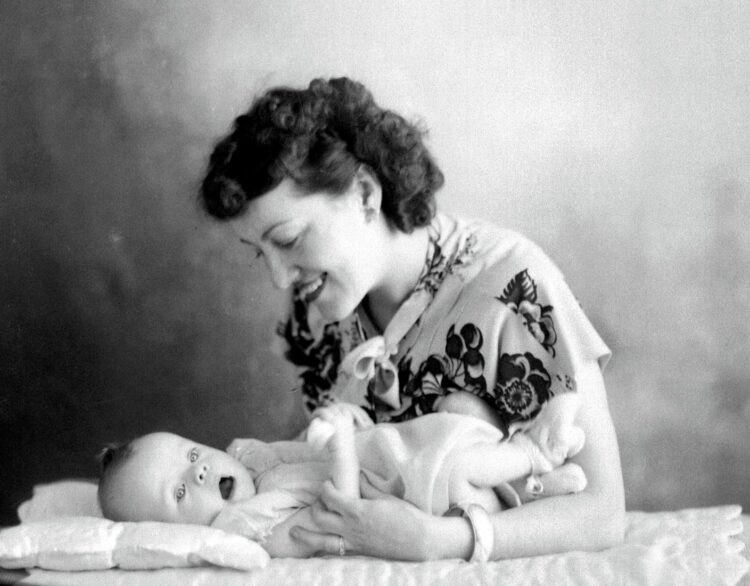
It was common for women to come alone with a baby or young child to be photographed in Dumont’s studio. Here, Mrs. Camille Soucy is pictured with her daughter Françine, who was visiting the studio for the first time. They would return four years later.
This family of 10 children stands proudly in front of their home. One might wonder about the intention behind the composition: nearly half the image is taken up by a large tree!
Here is another example of a large family from Marie-Alice Dumont’s circle: her sister Albertine and husband, Ludger Bérubé. The seven adults standing with them are their children who went on to pursue religious vocations.
Émile Boucher and Gabrielle Dumont, another of the photographer’s sisters, are shown here with their first nine children. (They would eventually have 16). Remarkably, among their children, eight daughters became nuns and one son became a priest.
Alexandre Bérubé and Yvonne Léveillé, pictured here with their children, used this photograph in their “homage to local families,” featured in the centennial album of Saint-Alexandre in 1952.
It was common for women to come alone with a baby or young child to be photographed in Dumont’s studio. Here, Mrs. Camille Soucy is pictured with her daughter Françine, who was visiting the studio for the first time. They would return four years later.
This family of 10 children stands proudly in front of their home. One might wonder about the intention behind the composition: nearly half the image is taken up by a large tree!
Here is another example of a large family from Marie-Alice Dumont’s circle: her sister Albertine and husband, Ludger Bérubé. The seven adults standing with them are their children who went on to pursue religious vocations.
Émile Boucher and Gabrielle Dumont, another of the photographer’s sisters, are shown here with their first nine children. (They would eventually have 16). Remarkably, among their children, eight daughters became nuns and one son became a priest.
Alexandre Bérubé and Yvonne Léveillé, pictured here with their children, used this photograph in their “homage to local families,” featured in the centennial album of Saint-Alexandre in 1952.
It was common for women to come alone with a baby or young child to be photographed in Dumont’s studio. Here, Mrs. Camille Soucy is pictured with her daughter Françine, who was visiting the studio for the first time. They would return four years later.
This family of 10 children stands proudly in front of their home. One might wonder about the intention behind the composition: nearly half the image is taken up by a large tree!
Here is another example of a large family from Marie-Alice Dumont’s circle: her sister Albertine and husband, Ludger Bérubé. The seven adults standing with them are their children who went on to pursue religious vocations.
Émile Boucher and Gabrielle Dumont, another of the photographer’s sisters, are shown here with their first nine children. (They would eventually have 16). Remarkably, among their children, eight daughters became nuns and one son became a priest.
Alexandre Bérubé and Yvonne Léveillé, pictured here with their children, used this photograph in their “homage to local families,” featured in the centennial album of Saint-Alexandre in 1952.
It was common for women to come alone with a baby or young child to be photographed in Dumont’s studio. Here, Mrs. Camille Soucy is pictured with her daughter Françine, who was visiting the studio for the first time. They would return four years later.
This family of 10 children stands proudly in front of their home. One might wonder about the intention behind the composition: nearly half the image is taken up by a large tree!
Here is another example of a large family from Marie-Alice Dumont’s circle: her sister Albertine and husband, Ludger Bérubé. The seven adults standing with them are their children who went on to pursue religious vocations.
Émile Boucher and Gabrielle Dumont, another of the photographer’s sisters, are shown here with their first nine children. (They would eventually have 16). Remarkably, among their children, eight daughters became nuns and one son became a priest.
Alexandre Bérubé and Yvonne Léveillé, pictured here with their children, used this photograph in their “homage to local families,” featured in the centennial album of Saint-Alexandre in 1952.
Women held a central role in Marie-Alice Dumont’s photography. As the backbone of family life in early 20th-century Kamouraska, they frequently starred in studio portraits celebrating motherhood and family ties. But her focus was not only on domestic life—she also captured women in other contexts. In some images, they can be seen working or at leisure. As a versatile photographer, Dumont offers us precious snapshots of daily life from a woman’s perspective.
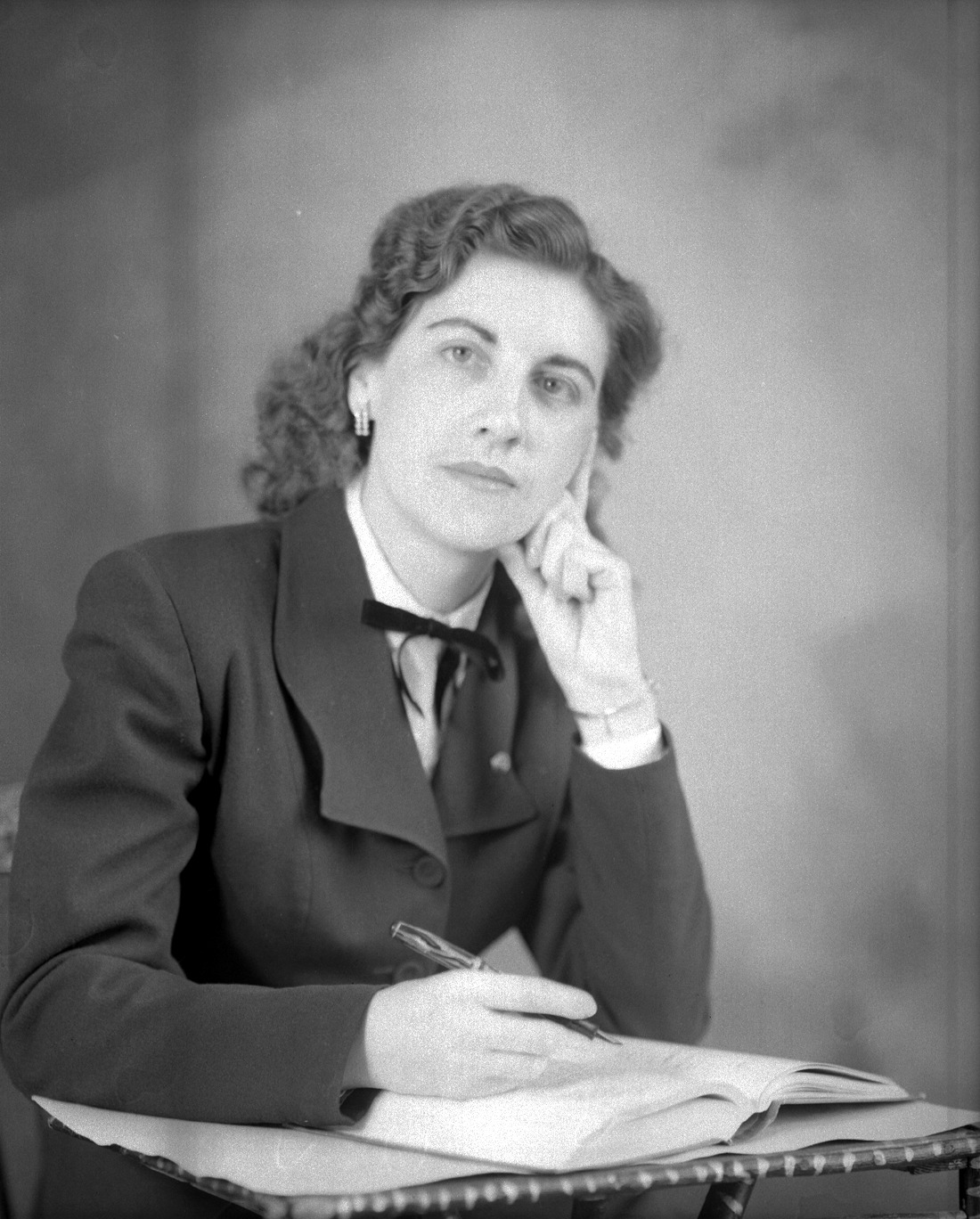
The photographer chose to portray Dolorès Garneau in a pose that reflects her profession. With pencil in hand, an open book in front of her and a thoughtful posture, the schoolteacher appears to be preparing a lesson.
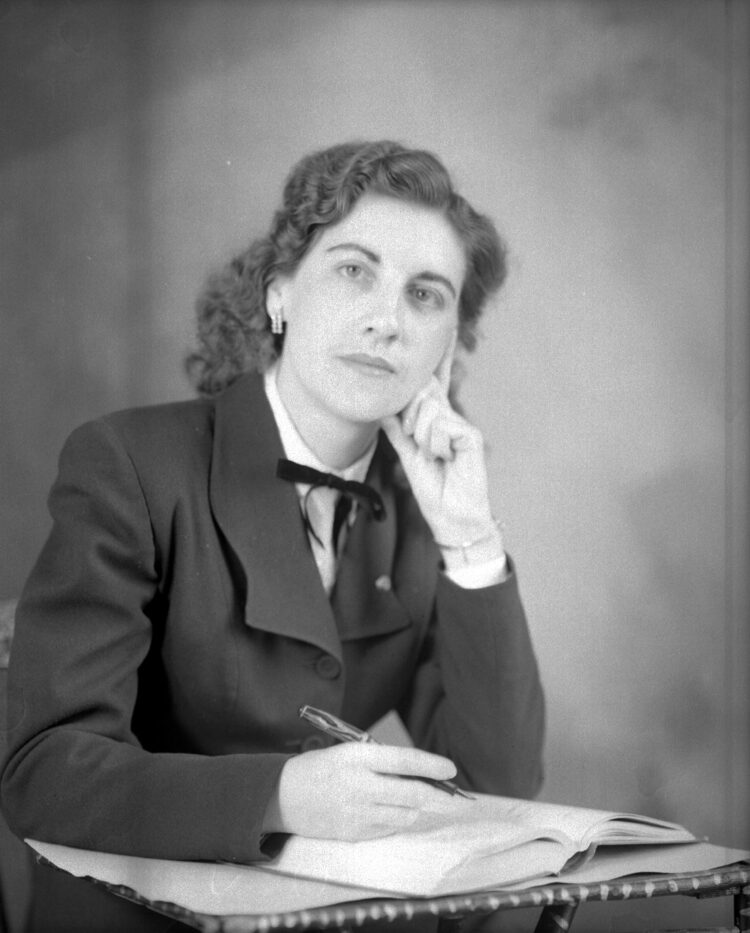
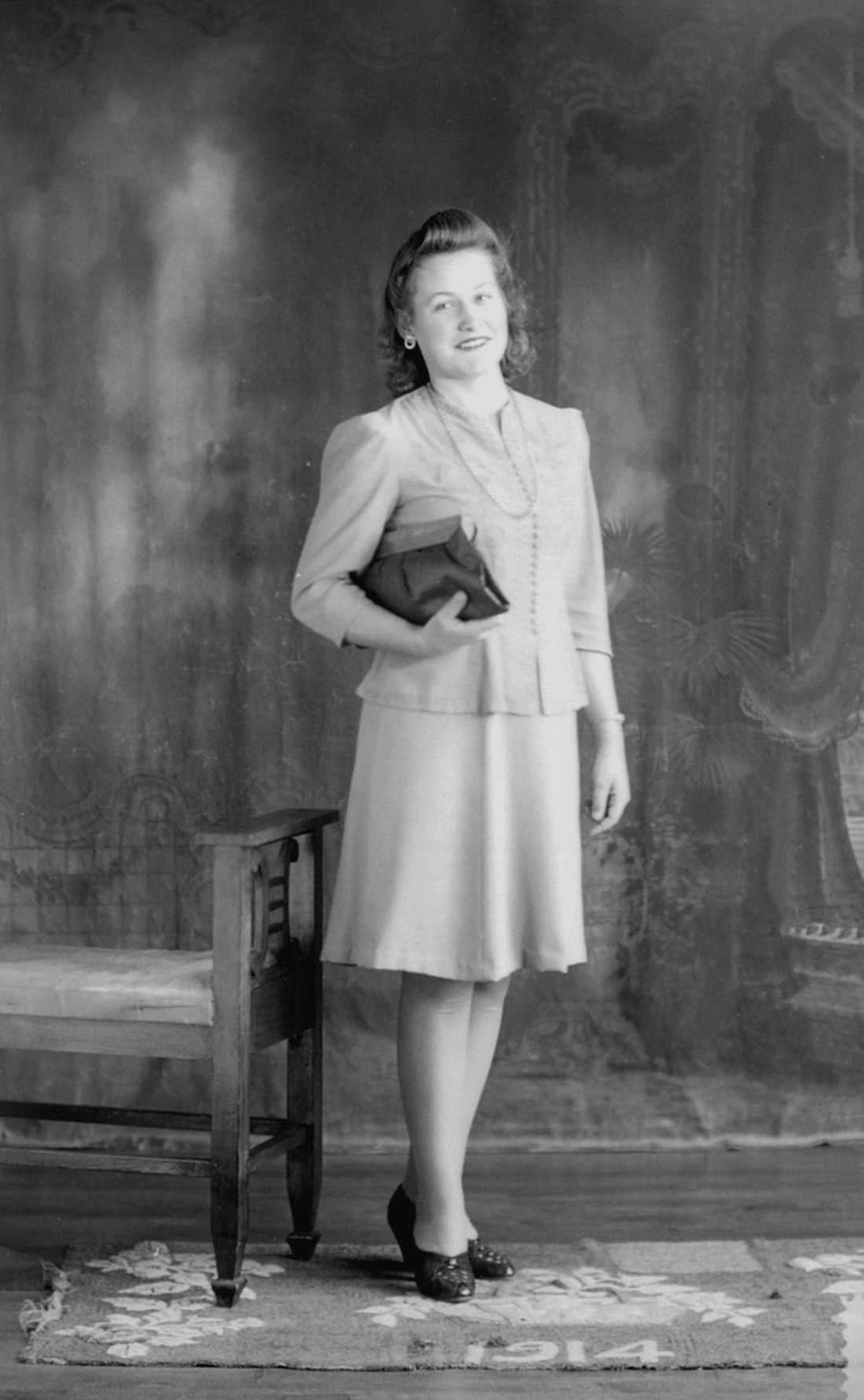
Marie-Anne St-Pierre, also a teacher, likely worked in one of the one-room schoolhouses of Saint-Alexandre. Her job was a challenging one: limited teaching materials, a poorly heated classroom, meagre pay, a large class, students of various grade levels, and an often solitary life. Such was the daily reality of rural schoolteachers.
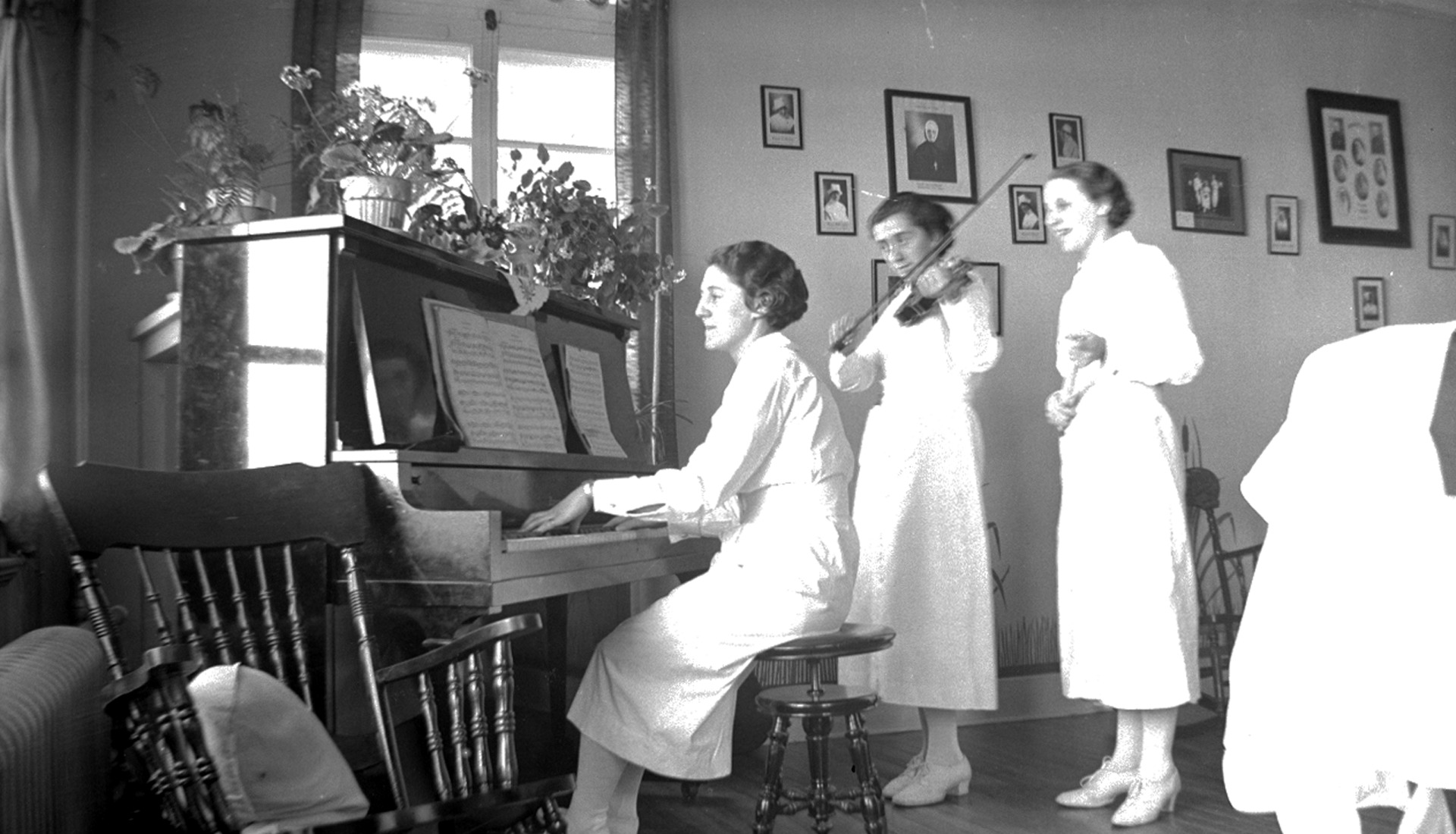
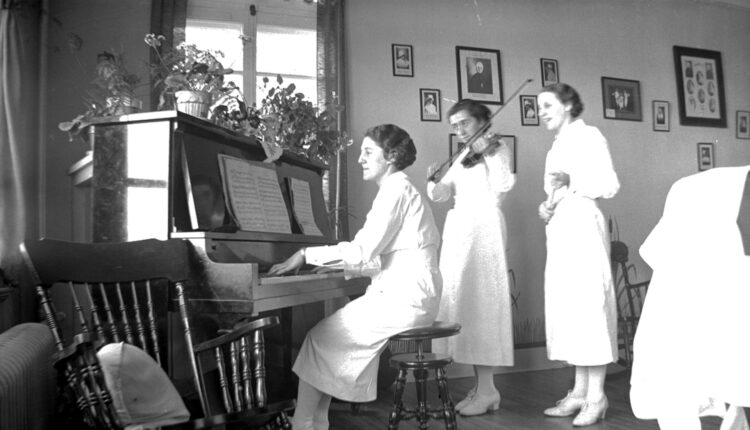
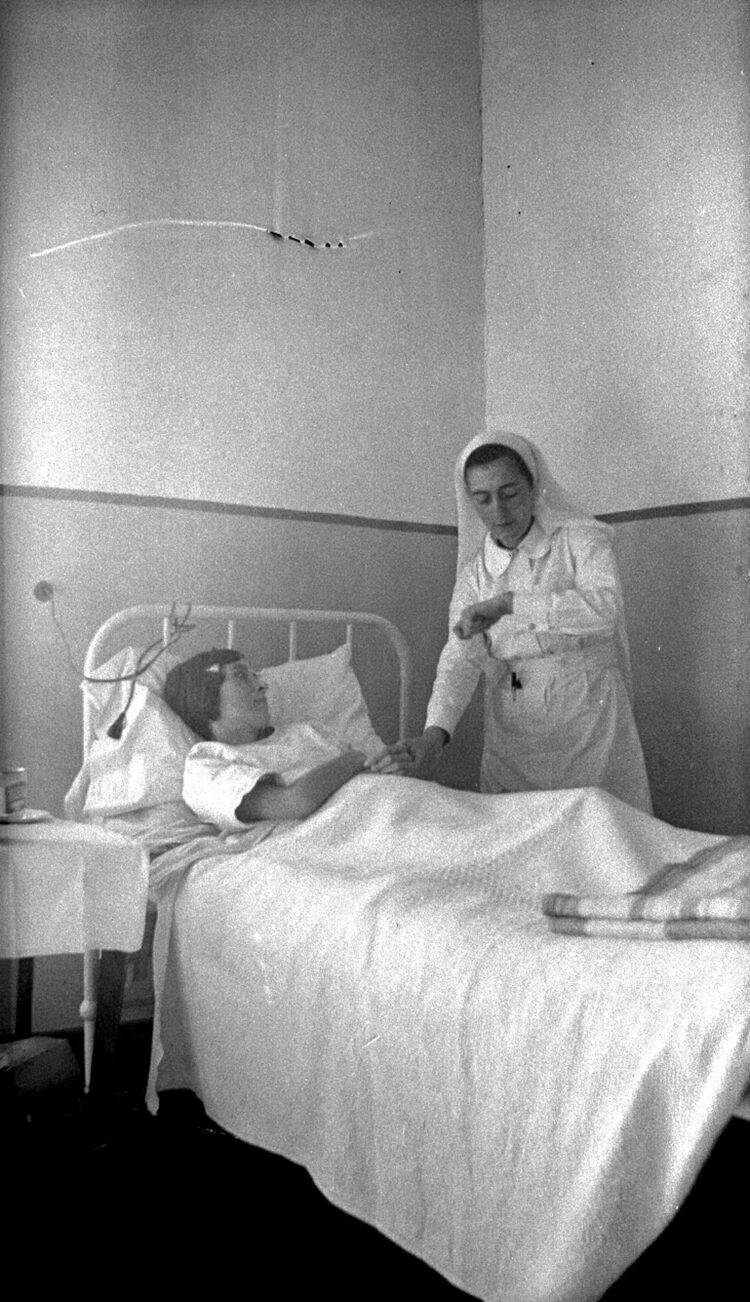
When Marie-Alice Dumont was hospitalized in Rivière-du-Loup in 1936, she took the opportunity to document the daily life of the nursing staff. Beyond the medical care, there were also moments of amusement like this one, where three nurses are caught mid-performance: one at the piano, another on the violin and the third playing the flute.
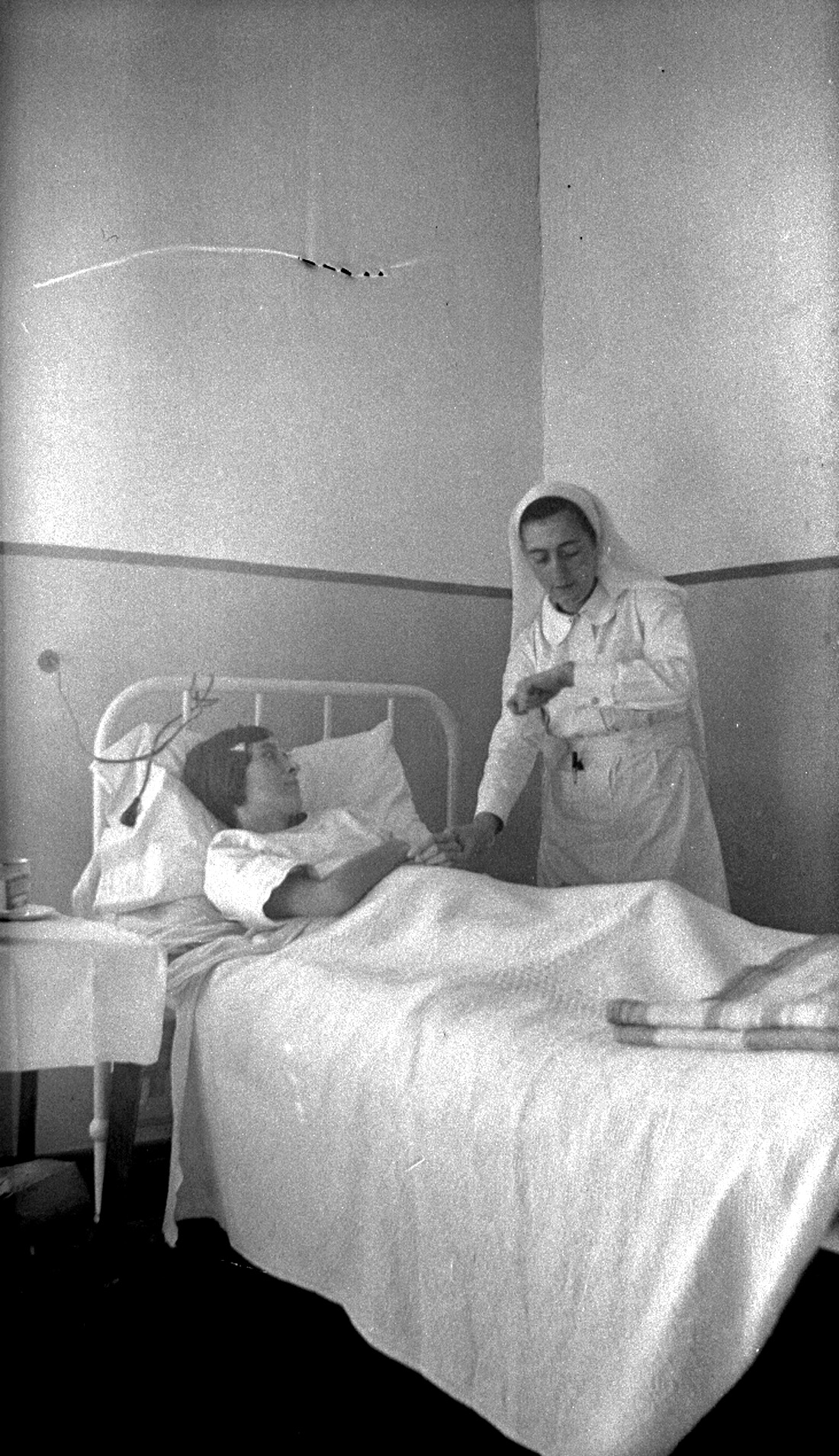
The photographs Dumont took at the Rivière-du-Loup hospital in 1936 provide valuable insight into the work of healthcare staff in early 20th-century Quebec. This image is a beautiful example.
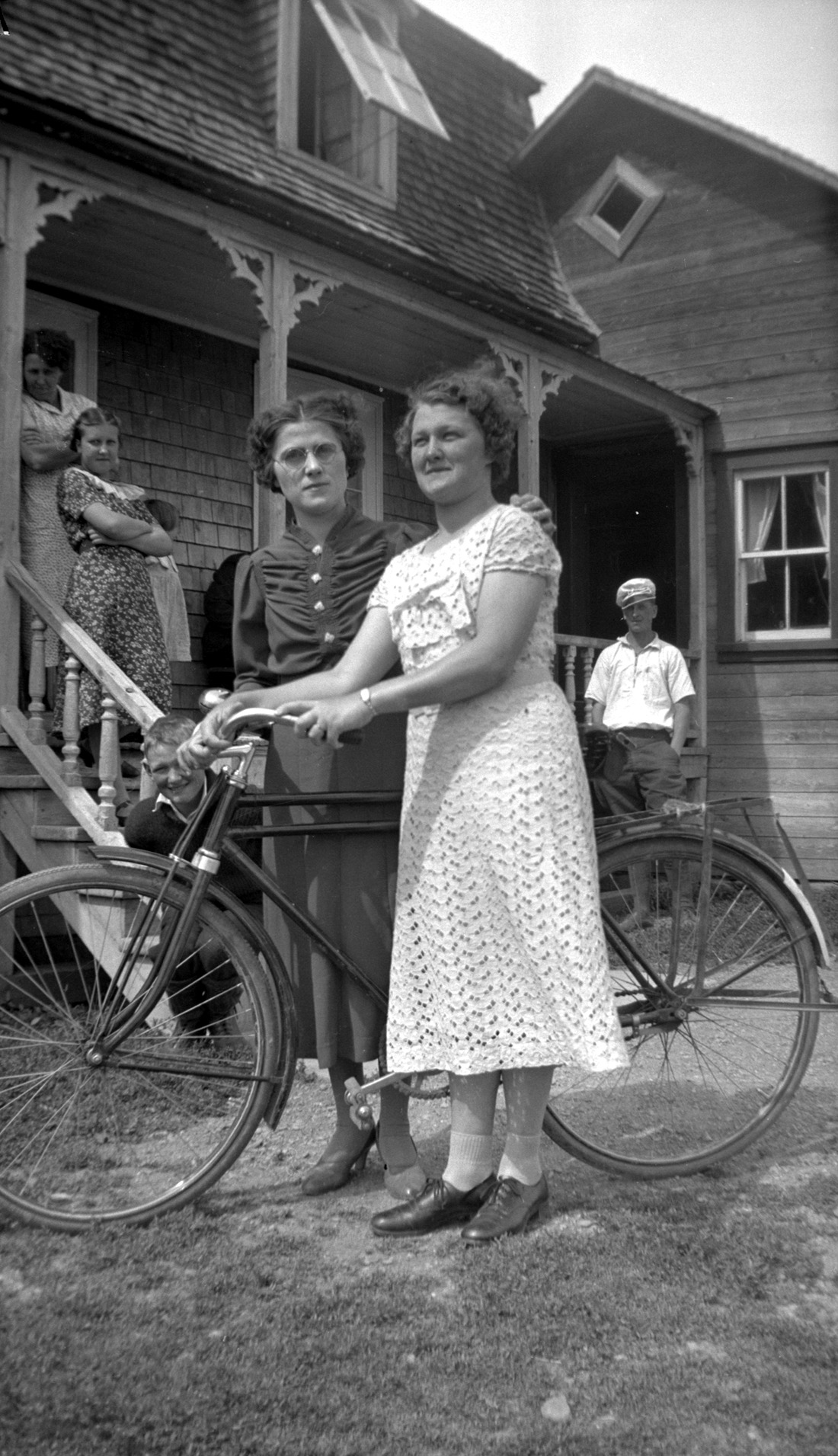
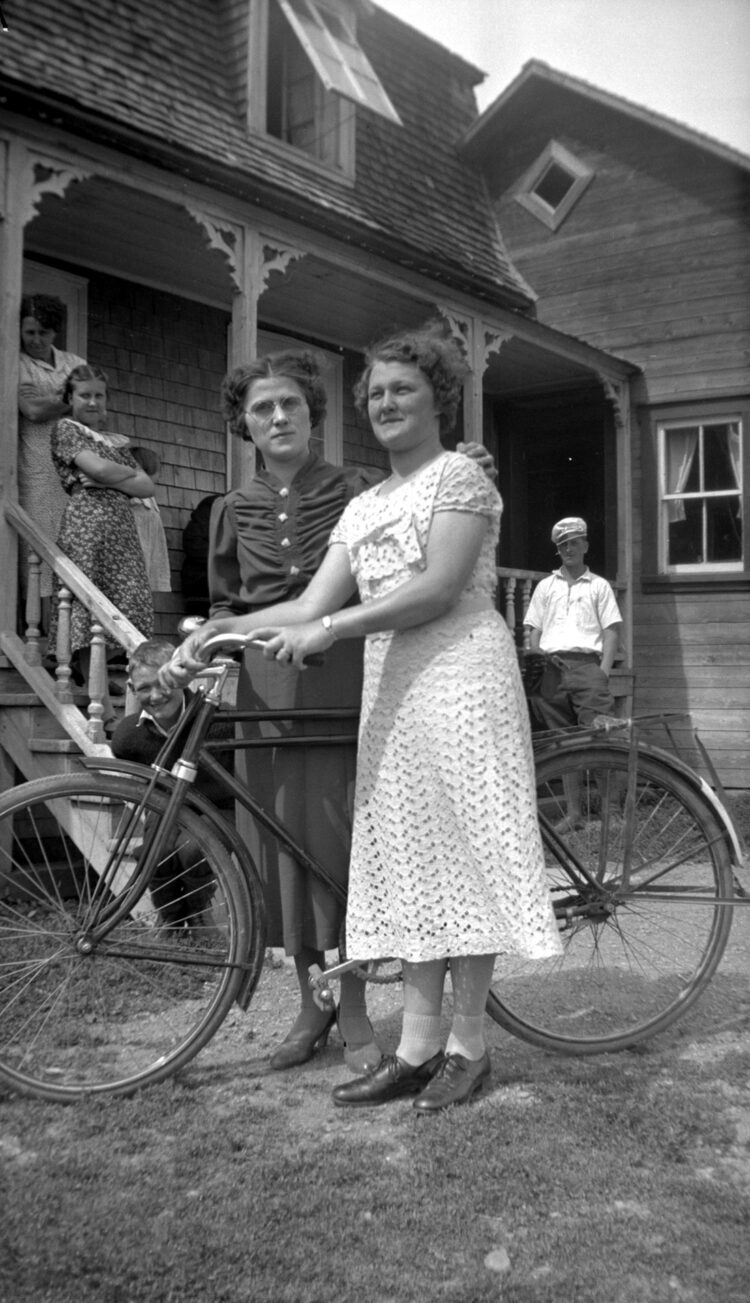
According to some historians, the bicycle, which gained popularity around the turn of the 20th century, offered women a temporary escape from the domestic sphere. In the 1930s and 1940s, cycling was the most accessible means of transportation for women in rural areas, since it was still only men who drove cars!
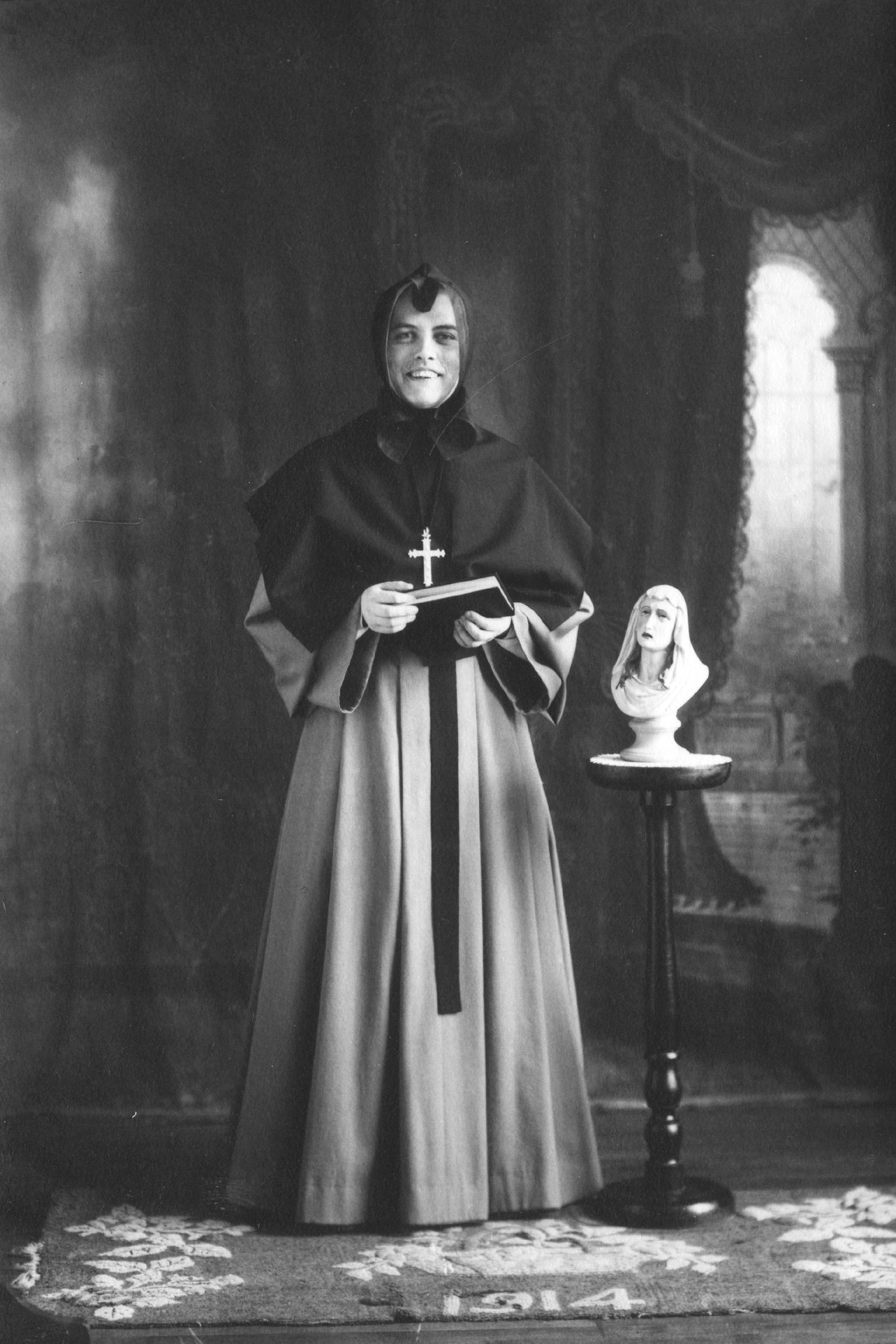
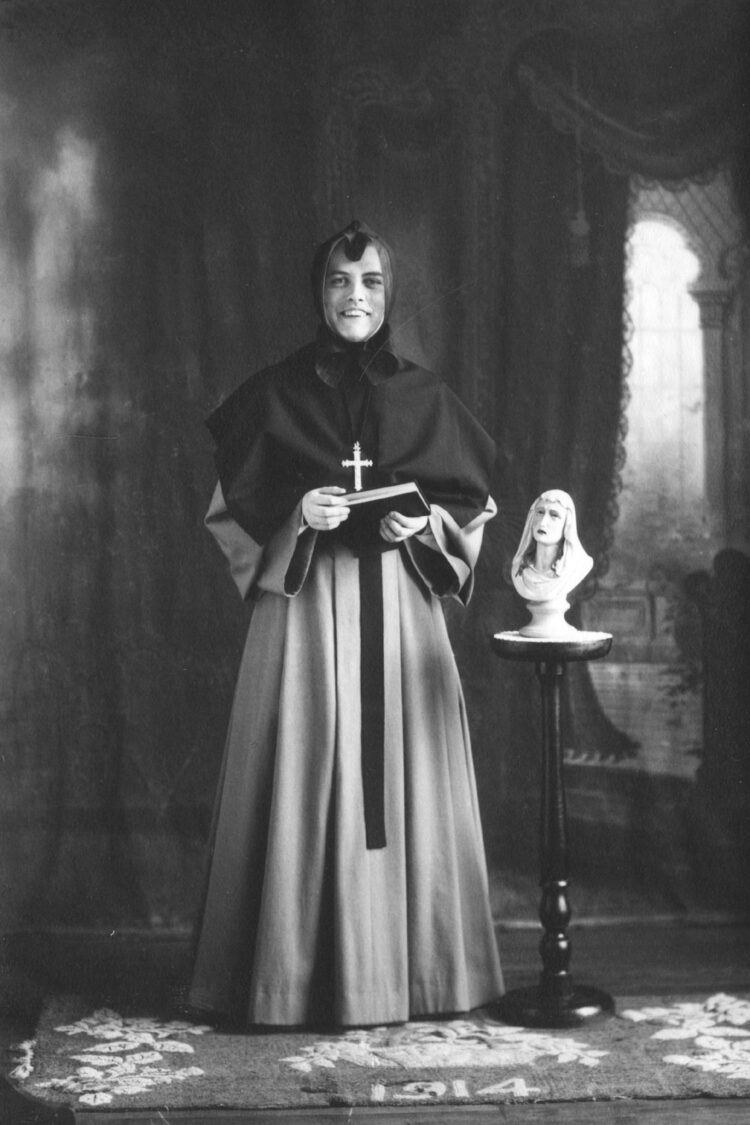
Sister Jeanne-de-la-Trinité, a Sister of Charity, smiles warmly at Dumont’s camera. She was part of the teaching staff at the convent in Saint-Alexandre.
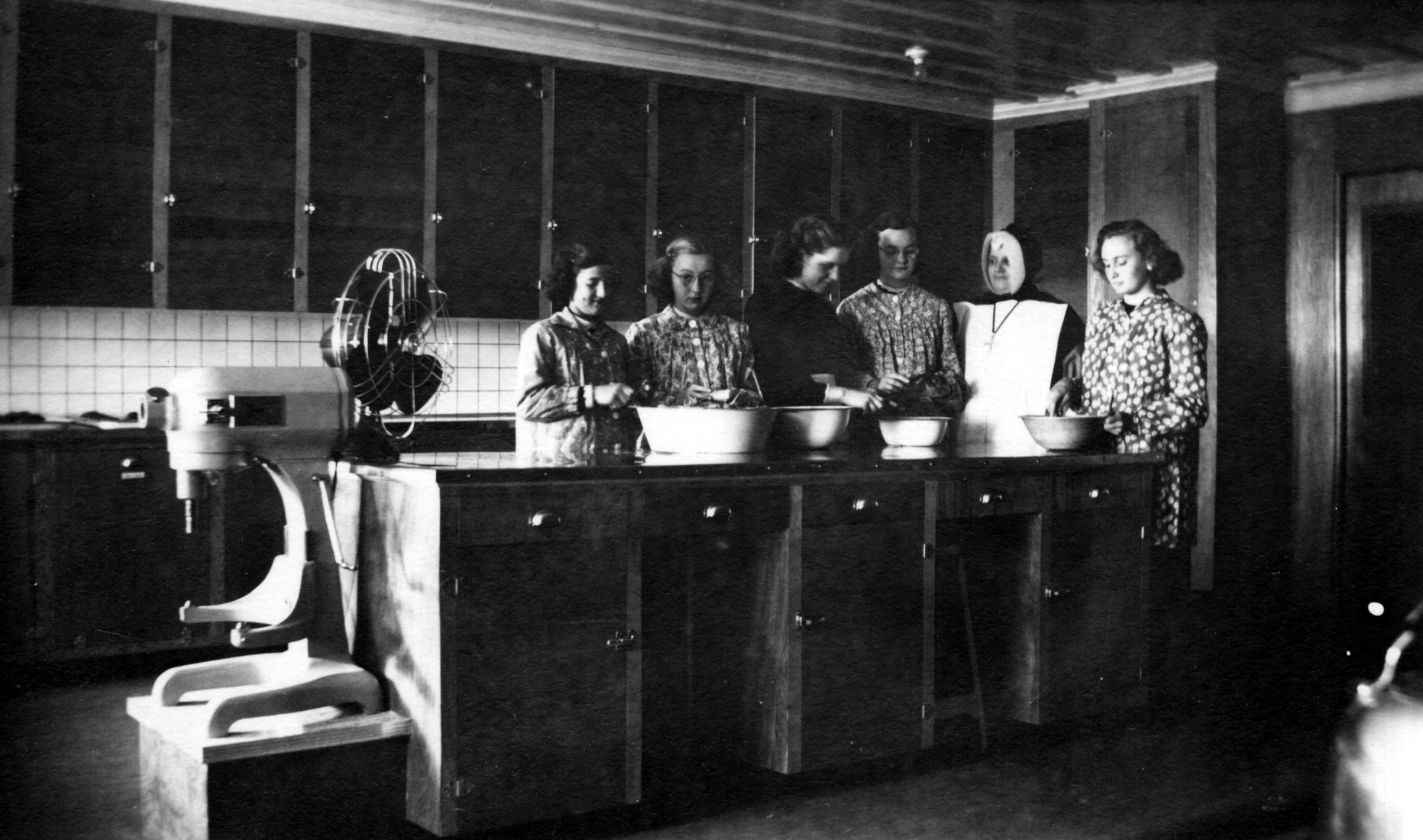
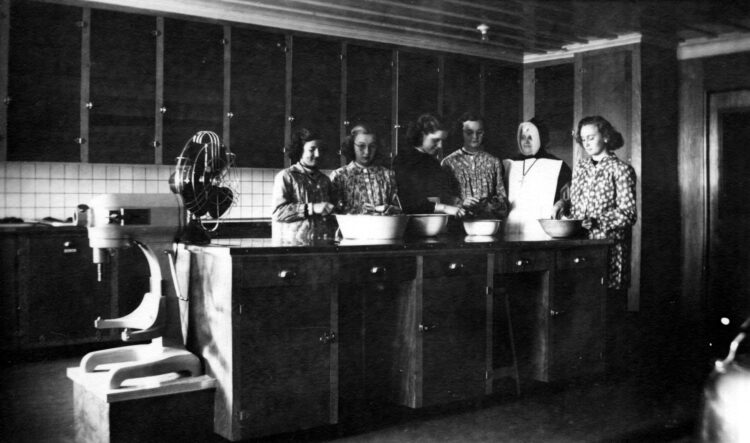
In Quebec’s convents, girls were taught the basics of the “domestic arts” until the 1960s. This curriculum later evolved into home economics, which was offered to both boys and girls in secondary schools until 2006.
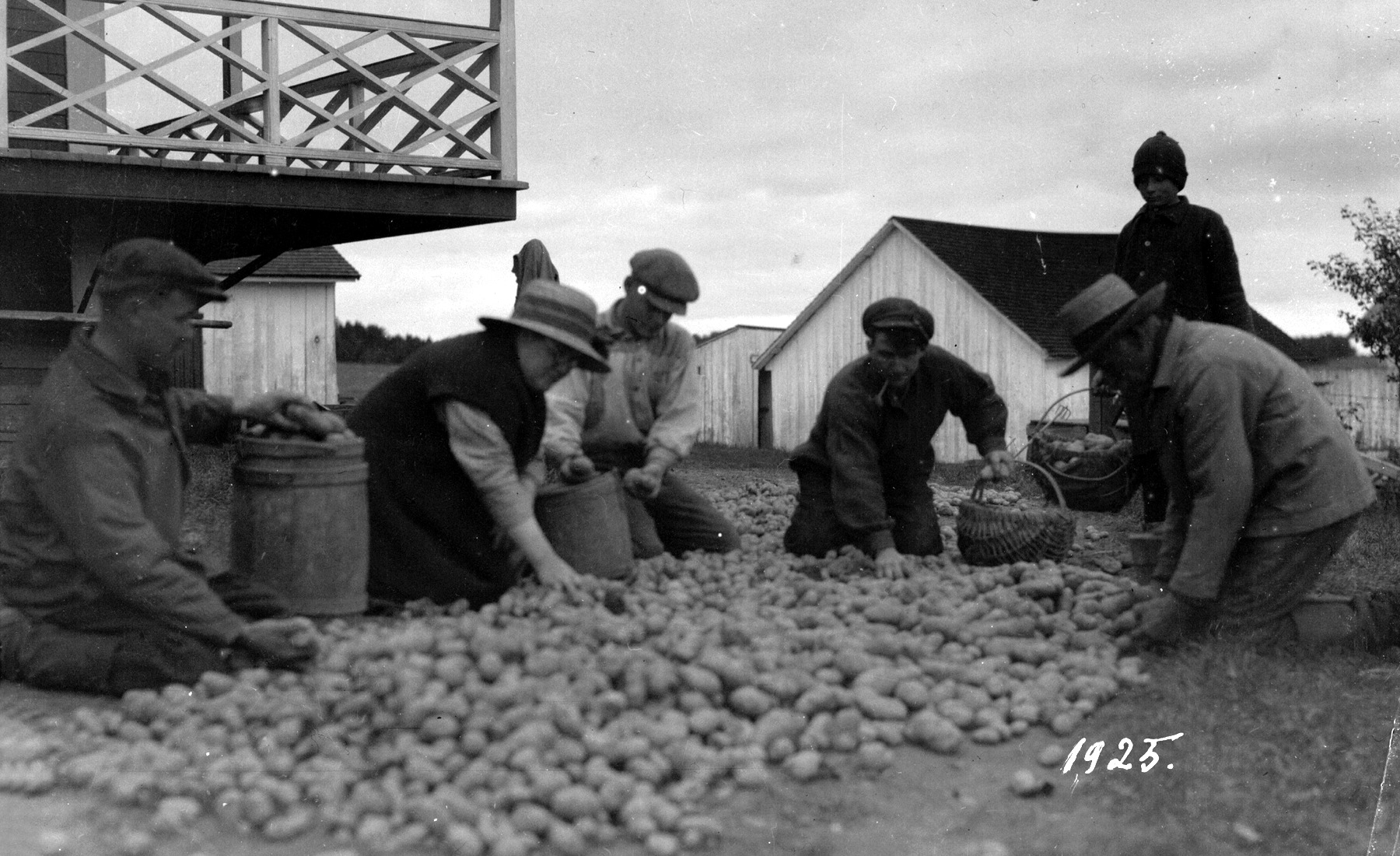
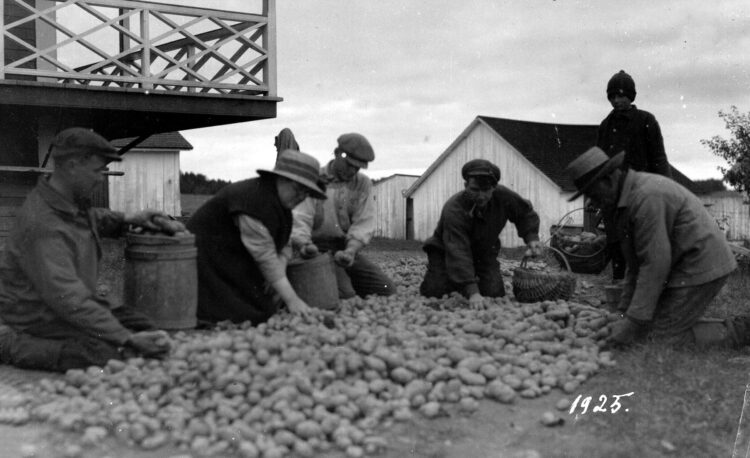
The women of the Dumont family took part in farm work. In this photo, Marie Pelletier (second from the left) stands among the men, sorting potatoes.
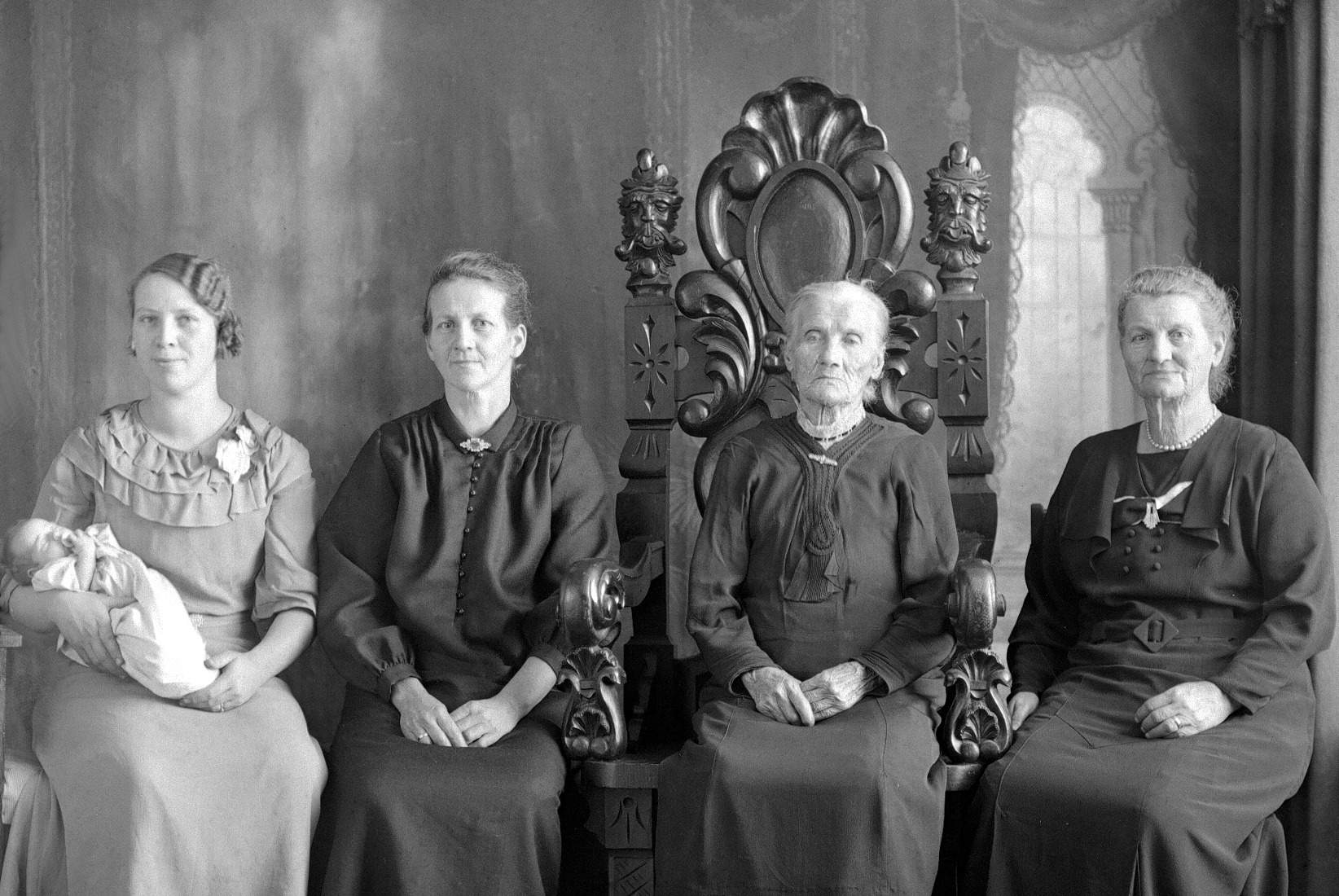
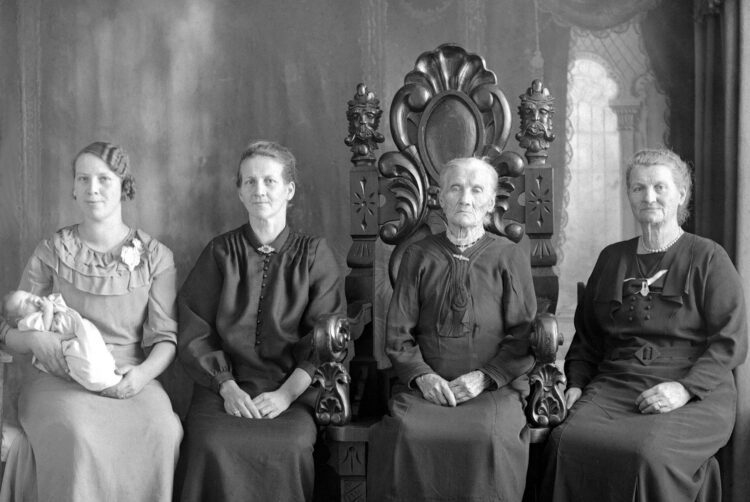
As this multigenerational portrait shows, many of Dumont’s clients could proudly say they had known their great-grandmother, or even their great-great-grandmother.
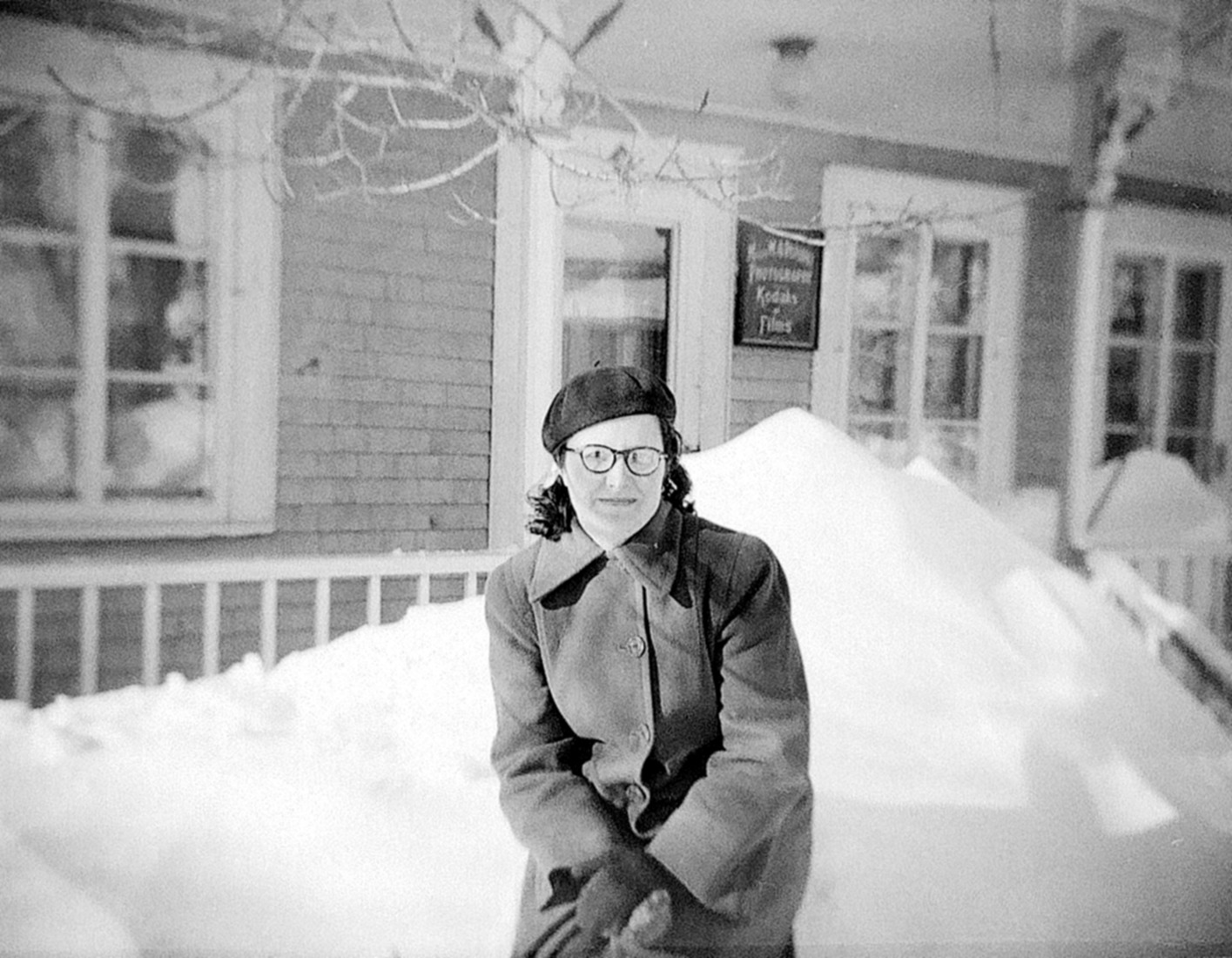
Dumont worked in a profession that was quite unusual for a woman of her time. The same could be said of her three assistants, including Lucille Bérubé, shown here standing in front of Dumont’s studio.
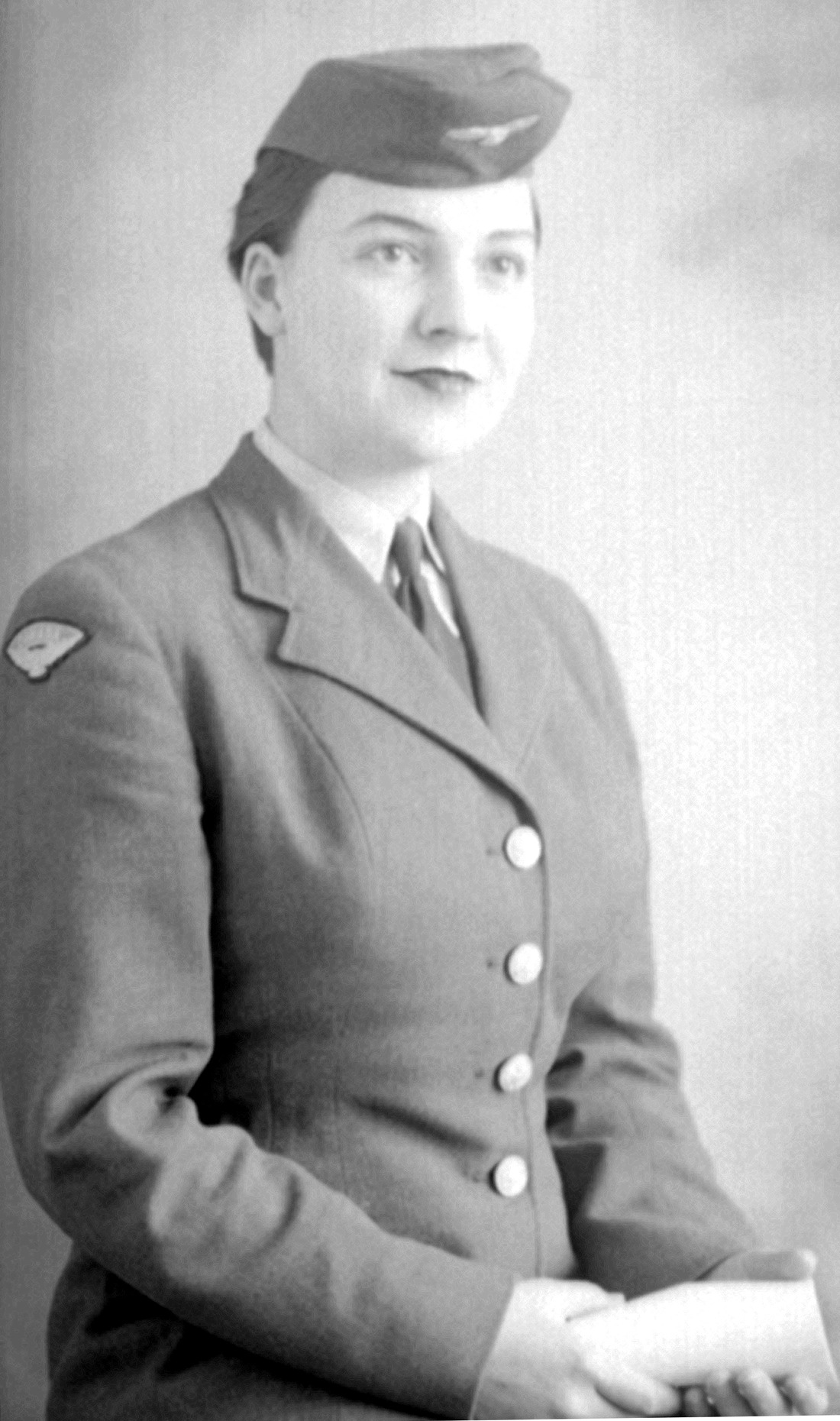
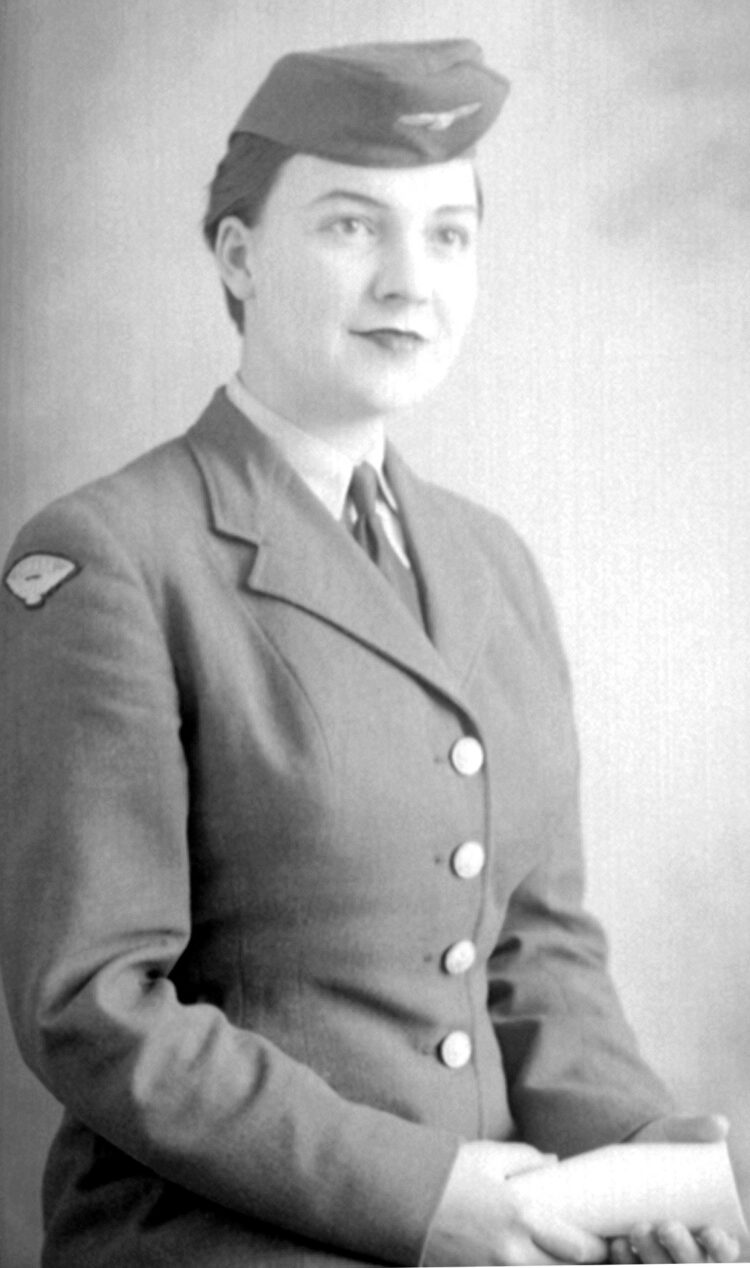
Here is a striking portrait of Pierrette Lavoie in her flight attendant uniform. Up until at least the 1960s, the hiring criteria for stewardesses were extremely strict. At Trans-Canada Air Lines, for instance, candidates had to be young, attractive, single, bilingual, slender, healthy and neither too tall nor too short.
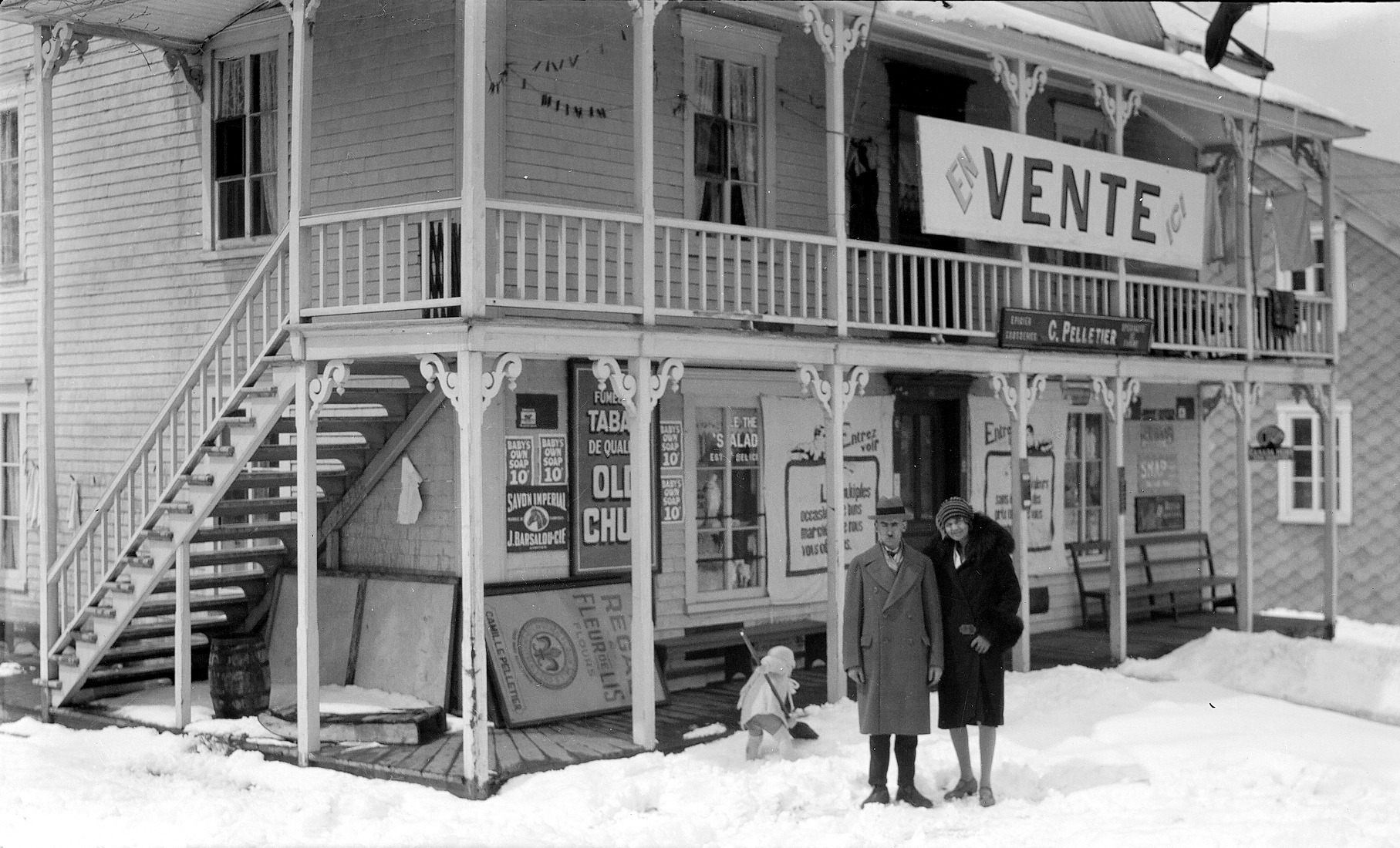
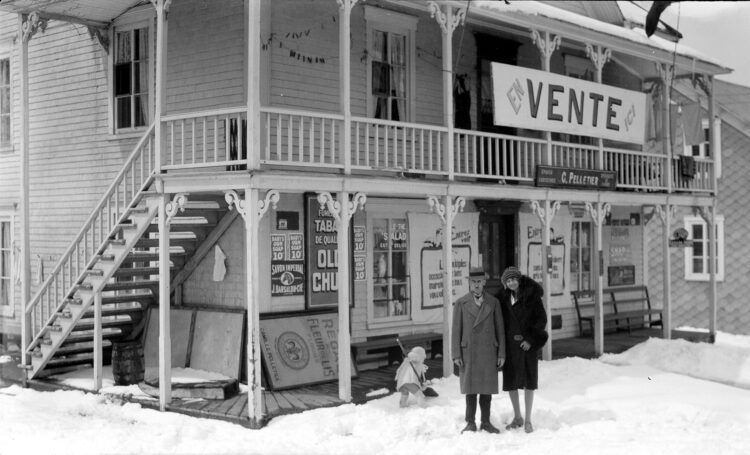
Marie-Alice Dumont photographed many of the local shopkeepers in her village. Here, Camille Pelletier and his wife pose in front of their store, the oldest shop in Saint-Alexandre parish.
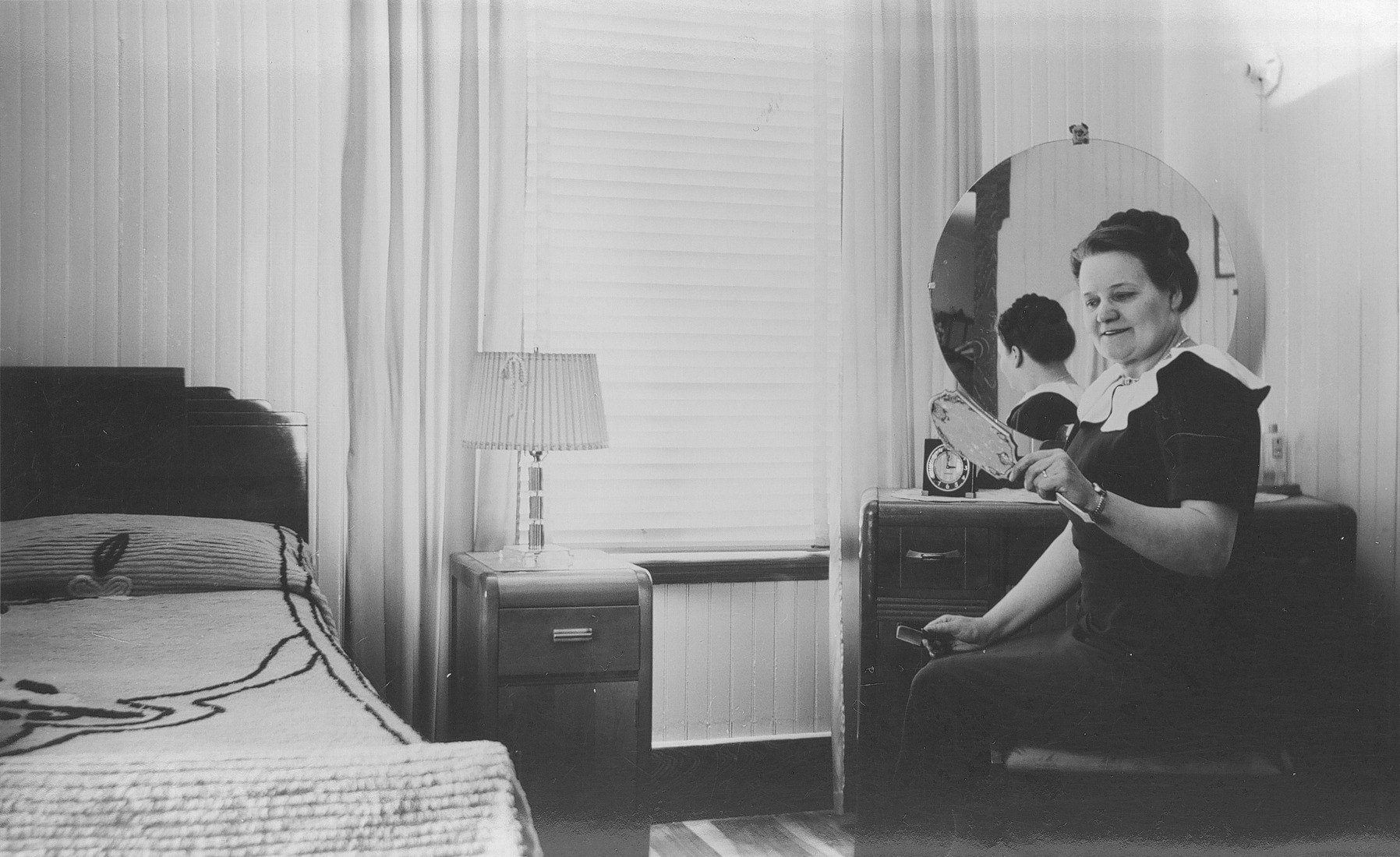
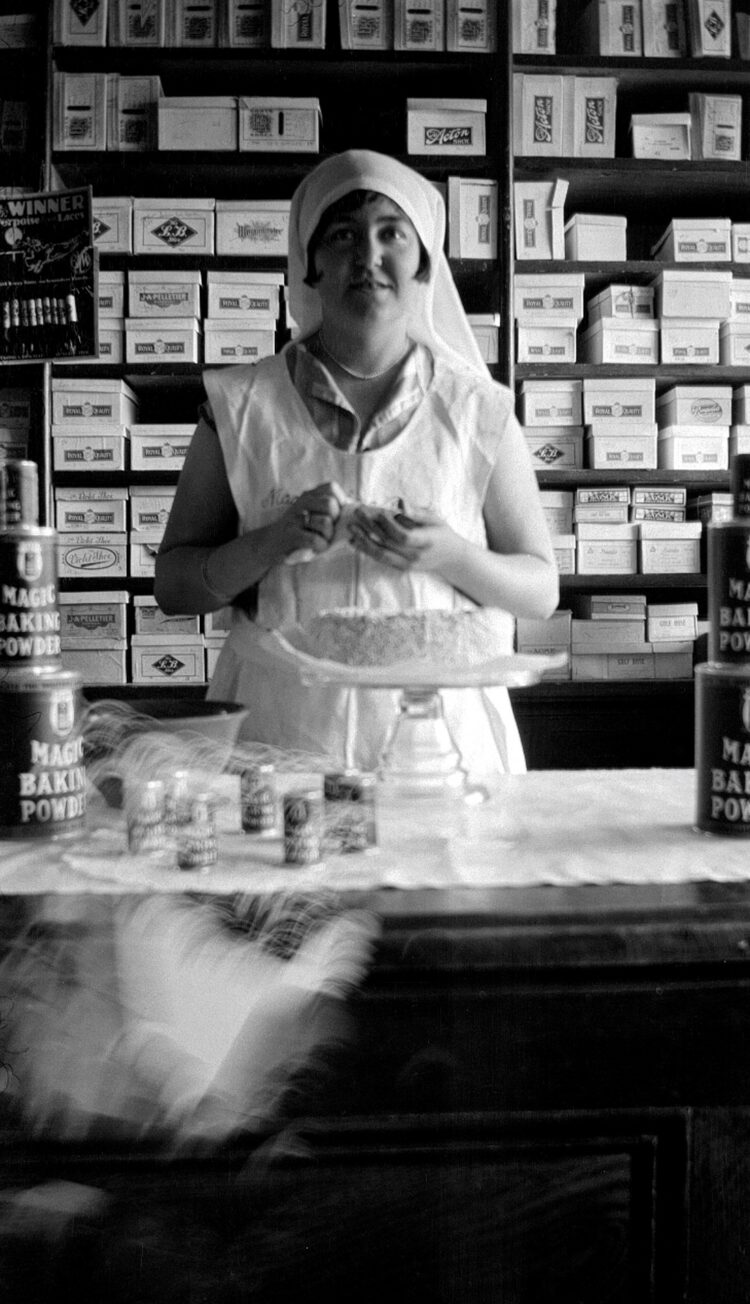
On a sunny afternoon in 1950, Marie-Alice Dumont visited the Pelletier store for a photo session with the women of the household. Mrs. Camille Pelletier and her daughters posed alone or together, in various settings that reflected their daily lives. In this scene, Mrs. Pelletier sits at her vanity in the modern comfort of her bedroom.
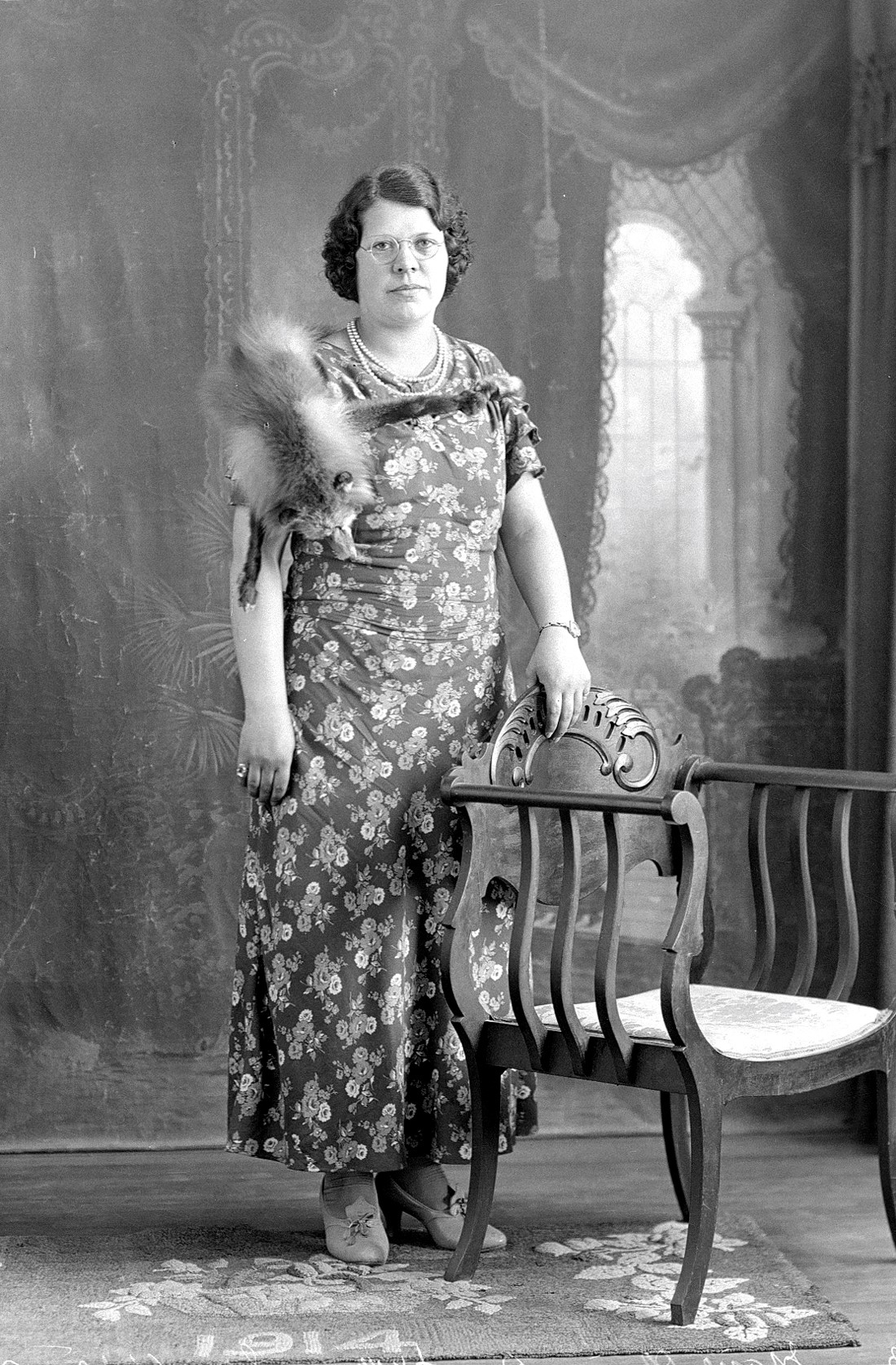
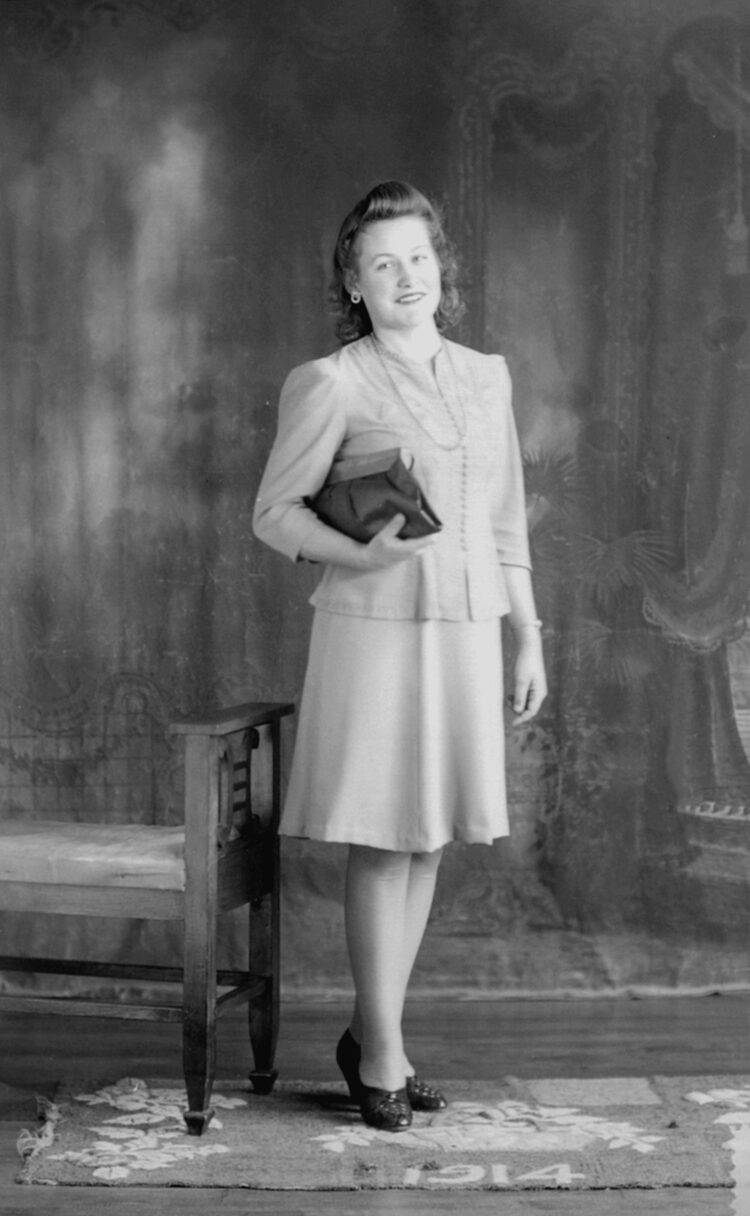
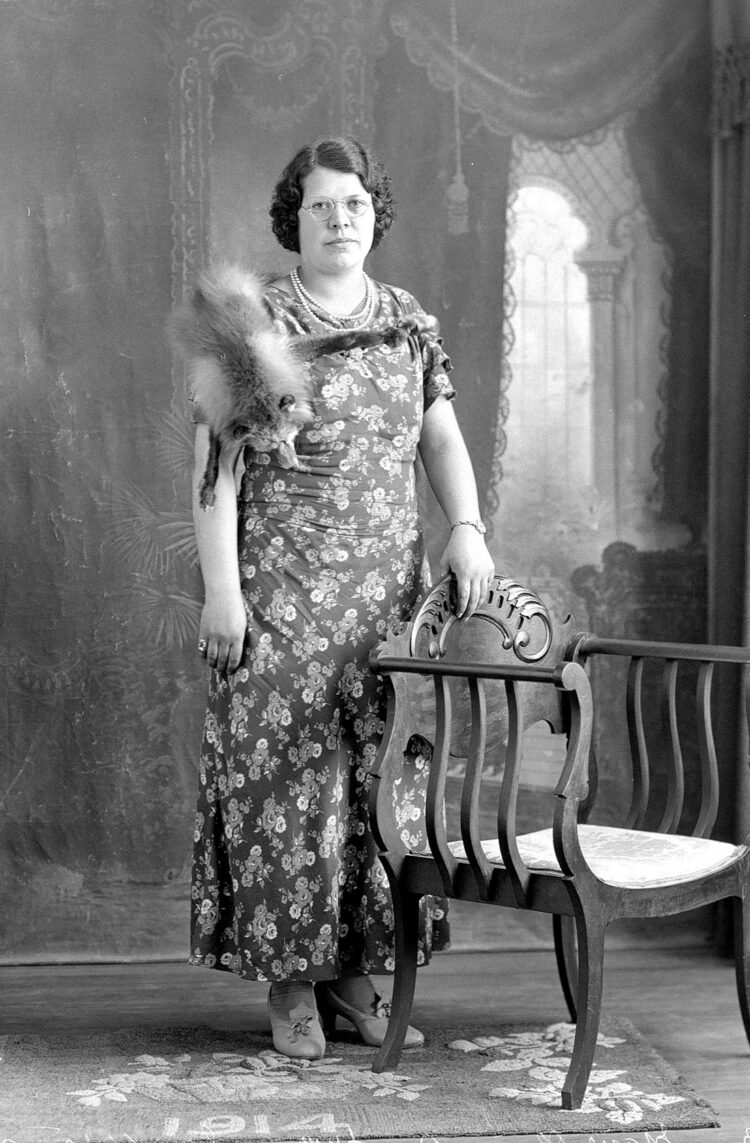
The people who posed for Dumont’s camera often wore their finest clothes. Here, Marie-Claire Landry is dressed in a fox fur stole, a fashion staple of the time. In fact, during the 1930s, fox farming contributed to the local economy in Kamouraska.
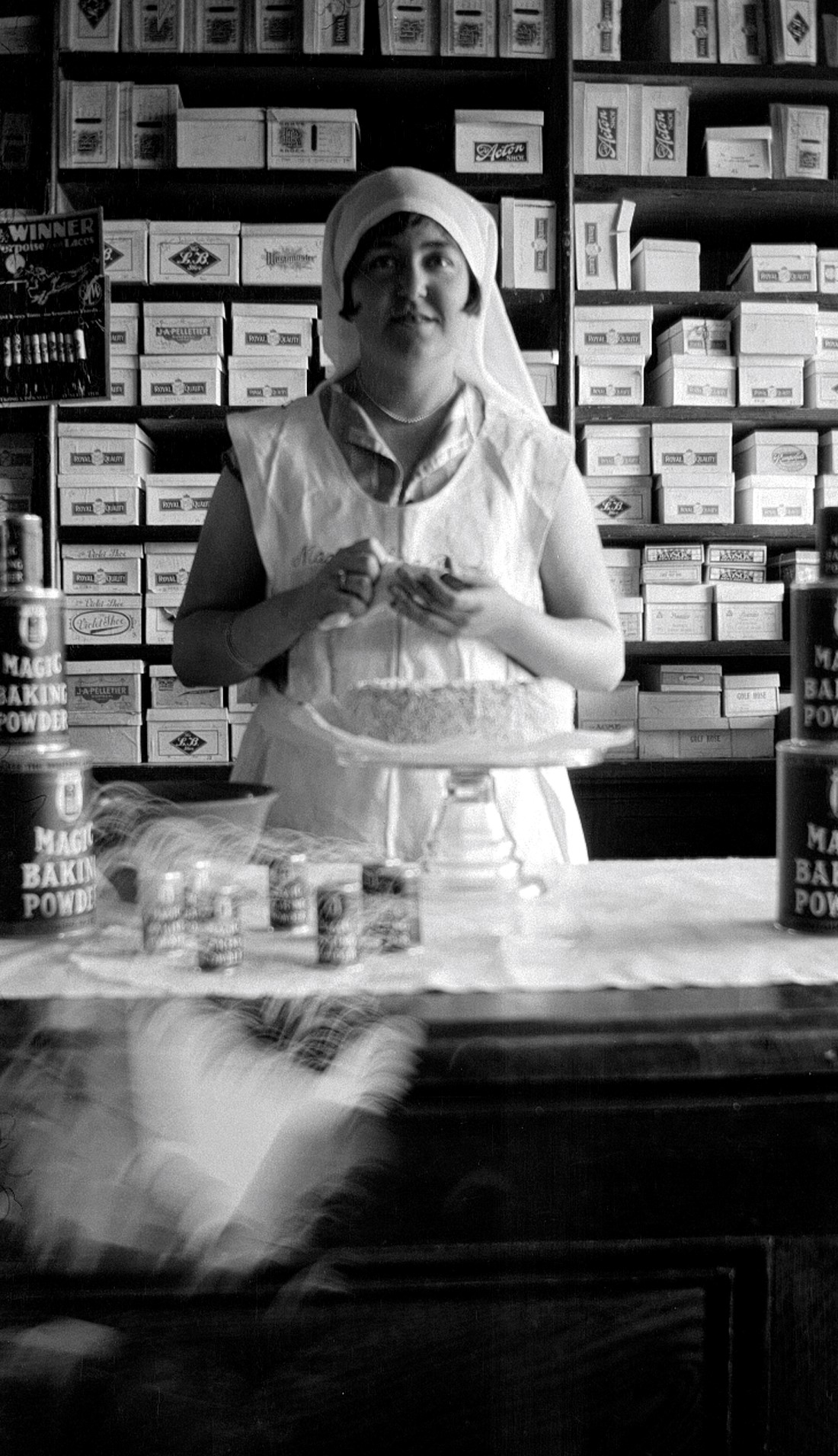
From the very beginning of her photography career, Marie-Alice Dumont documented the life of her community with a particular focus on local trades and traditions, as if she were paying tribute to them. Many of these images, like this one, are marked by their simplicity and authenticity.
Marie-Anne St-Pierre, also a teacher, likely worked in one of the one-room schoolhouses of Saint-Alexandre. Her job was a challenging one: limited teaching materials, a poorly heated classroom, meagre pay, a large class, students of various grade levels, and an often solitary life. Such was the daily reality of rural schoolteachers.
When Marie-Alice Dumont was hospitalized in Rivière-du-Loup in 1936, she took the opportunity to document the daily life of the nursing staff. Beyond the medical care, there were also moments of amusement like this one, where three nurses are caught mid-performance: one at the piano, another on the violin and the third playing the flute.
The photographs Dumont took at the Rivière-du-Loup hospital in 1936 provide valuable insight into the work of healthcare staff in early 20th-century Quebec. This image is a beautiful example.
According to some historians, the bicycle, which gained popularity around the turn of the 20th century, offered women a temporary escape from the domestic sphere. In the 1930s and 1940s, cycling was the most accessible means of transportation for women in rural areas, since it was still only men who drove cars!
Sister Jeanne-de-la-Trinité, a Sister of Charity, smiles warmly at Dumont’s camera. She was part of the teaching staff at the convent in Saint-Alexandre.
In Quebec’s convents, girls were taught the basics of the “domestic arts” until the 1960s. This curriculum later evolved into home economics, which was offered to both boys and girls in secondary schools until 2006.
The women of the Dumont family took part in farm work. In this photo, Marie Pelletier (second from the left) stands among the men, sorting potatoes.
As this multigenerational portrait shows, many of Dumont’s clients could proudly say they had known their great-grandmother, or even their great-great-grandmother.
Dumont worked in a profession that was quite unusual for a woman of her time. The same could be said of her three assistants, including Lucille Bérubé, shown here standing in front of Dumont’s studio.
Here is a striking portrait of Pierrette Lavoie in her flight attendant uniform. Up until at least the 1960s, the hiring criteria for stewardesses were extremely strict. At Trans-Canada Air Lines, for instance, candidates had to be young, attractive, single, bilingual, slender, healthy and neither too tall nor too short.
Marie-Alice Dumont photographed many of the local shopkeepers in her village. Here, Camille Pelletier and his wife pose in front of their store, the oldest shop in Saint-Alexandre parish.
On a sunny afternoon in 1950, Marie-Alice Dumont visited the Pelletier store for a photo session with the women of the household. Mrs. Camille Pelletier and her daughters posed alone or together, in various settings that reflected their daily lives. In this scene, Mrs. Pelletier sits at her vanity in the modern comfort of her bedroom.
The people who posed for Dumont’s camera often wore their finest clothes. Here, Marie-Claire Landry is dressed in a fox fur stole, a fashion staple of the time. In fact, during the 1930s, fox farming contributed to the local economy in Kamouraska.
From the very beginning of her photography career, Marie-Alice Dumont documented the life of her community with a particular focus on local trades and traditions, as if she were paying tribute to them. Many of these images, like this one, are marked by their simplicity and authenticity.
Marie-Anne St-Pierre, also a teacher, likely worked in one of the one-room schoolhouses of Saint-Alexandre. Her job was a challenging one: limited teaching materials, a poorly heated classroom, meagre pay, a large class, students of various grade levels, and an often solitary life. Such was the daily reality of rural schoolteachers.
When Marie-Alice Dumont was hospitalized in Rivière-du-Loup in 1936, she took the opportunity to document the daily life of the nursing staff. Beyond the medical care, there were also moments of amusement like this one, where three nurses are caught mid-performance: one at the piano, another on the violin and the third playing the flute.
The photographs Dumont took at the Rivière-du-Loup hospital in 1936 provide valuable insight into the work of healthcare staff in early 20th-century Quebec. This image is a beautiful example.
According to some historians, the bicycle, which gained popularity around the turn of the 20th century, offered women a temporary escape from the domestic sphere. In the 1930s and 1940s, cycling was the most accessible means of transportation for women in rural areas, since it was still only men who drove cars!
Sister Jeanne-de-la-Trinité, a Sister of Charity, smiles warmly at Dumont’s camera. She was part of the teaching staff at the convent in Saint-Alexandre.
In Quebec’s convents, girls were taught the basics of the “domestic arts” until the 1960s. This curriculum later evolved into home economics, which was offered to both boys and girls in secondary schools until 2006.
The women of the Dumont family took part in farm work. In this photo, Marie Pelletier (second from the left) stands among the men, sorting potatoes.
As this multigenerational portrait shows, many of Dumont’s clients could proudly say they had known their great-grandmother, or even their great-great-grandmother.
Dumont worked in a profession that was quite unusual for a woman of her time. The same could be said of her three assistants, including Lucille Bérubé, shown here standing in front of Dumont’s studio.
Here is a striking portrait of Pierrette Lavoie in her flight attendant uniform. Up until at least the 1960s, the hiring criteria for stewardesses were extremely strict. At Trans-Canada Air Lines, for instance, candidates had to be young, attractive, single, bilingual, slender, healthy and neither too tall nor too short.
Marie-Alice Dumont photographed many of the local shopkeepers in her village. Here, Camille Pelletier and his wife pose in front of their store, the oldest shop in Saint-Alexandre parish.
On a sunny afternoon in 1950, Marie-Alice Dumont visited the Pelletier store for a photo session with the women of the household. Mrs. Camille Pelletier and her daughters posed alone or together, in various settings that reflected their daily lives. In this scene, Mrs. Pelletier sits at her vanity in the modern comfort of her bedroom.
The people who posed for Dumont’s camera often wore their finest clothes. Here, Marie-Claire Landry is dressed in a fox fur stole, a fashion staple of the time. In fact, during the 1930s, fox farming contributed to the local economy in Kamouraska.
From the very beginning of her photography career, Marie-Alice Dumont documented the life of her community with a particular focus on local trades and traditions, as if she were paying tribute to them. Many of these images, like this one, are marked by their simplicity and authenticity.
Marie-Anne St-Pierre, also a teacher, likely worked in one of the one-room schoolhouses of Saint-Alexandre. Her job was a challenging one: limited teaching materials, a poorly heated classroom, meagre pay, a large class, students of various grade levels, and an often solitary life. Such was the daily reality of rural schoolteachers.
When Marie-Alice Dumont was hospitalized in Rivière-du-Loup in 1936, she took the opportunity to document the daily life of the nursing staff. Beyond the medical care, there were also moments of amusement like this one, where three nurses are caught mid-performance: one at the piano, another on the violin and the third playing the flute.
The photographs Dumont took at the Rivière-du-Loup hospital in 1936 provide valuable insight into the work of healthcare staff in early 20th-century Quebec. This image is a beautiful example.
According to some historians, the bicycle, which gained popularity around the turn of the 20th century, offered women a temporary escape from the domestic sphere. In the 1930s and 1940s, cycling was the most accessible means of transportation for women in rural areas, since it was still only men who drove cars!
Sister Jeanne-de-la-Trinité, a Sister of Charity, smiles warmly at Dumont’s camera. She was part of the teaching staff at the convent in Saint-Alexandre.
In Quebec’s convents, girls were taught the basics of the “domestic arts” until the 1960s. This curriculum later evolved into home economics, which was offered to both boys and girls in secondary schools until 2006.
The women of the Dumont family took part in farm work. In this photo, Marie Pelletier (second from the left) stands among the men, sorting potatoes.
As this multigenerational portrait shows, many of Dumont’s clients could proudly say they had known their great-grandmother, or even their great-great-grandmother.
Dumont worked in a profession that was quite unusual for a woman of her time. The same could be said of her three assistants, including Lucille Bérubé, shown here standing in front of Dumont’s studio.
Here is a striking portrait of Pierrette Lavoie in her flight attendant uniform. Up until at least the 1960s, the hiring criteria for stewardesses were extremely strict. At Trans-Canada Air Lines, for instance, candidates had to be young, attractive, single, bilingual, slender, healthy and neither too tall nor too short.
Marie-Alice Dumont photographed many of the local shopkeepers in her village. Here, Camille Pelletier and his wife pose in front of their store, the oldest shop in Saint-Alexandre parish.
On a sunny afternoon in 1950, Marie-Alice Dumont visited the Pelletier store for a photo session with the women of the household. Mrs. Camille Pelletier and her daughters posed alone or together, in various settings that reflected their daily lives. In this scene, Mrs. Pelletier sits at her vanity in the modern comfort of her bedroom.
The people who posed for Dumont’s camera often wore their finest clothes. Here, Marie-Claire Landry is dressed in a fox fur stole, a fashion staple of the time. In fact, during the 1930s, fox farming contributed to the local economy in Kamouraska.
From the very beginning of her photography career, Marie-Alice Dumont documented the life of her community with a particular focus on local trades and traditions, as if she were paying tribute to them. Many of these images, like this one, are marked by their simplicity and authenticity.
Marie-Anne St-Pierre, also a teacher, likely worked in one of the one-room schoolhouses of Saint-Alexandre. Her job was a challenging one: limited teaching materials, a poorly heated classroom, meagre pay, a large class, students of various grade levels, and an often solitary life. Such was the daily reality of rural schoolteachers.
When Marie-Alice Dumont was hospitalized in Rivière-du-Loup in 1936, she took the opportunity to document the daily life of the nursing staff. Beyond the medical care, there were also moments of amusement like this one, where three nurses are caught mid-performance: one at the piano, another on the violin and the third playing the flute.
The photographs Dumont took at the Rivière-du-Loup hospital in 1936 provide valuable insight into the work of healthcare staff in early 20th-century Quebec. This image is a beautiful example.
According to some historians, the bicycle, which gained popularity around the turn of the 20th century, offered women a temporary escape from the domestic sphere. In the 1930s and 1940s, cycling was the most accessible means of transportation for women in rural areas, since it was still only men who drove cars!
Sister Jeanne-de-la-Trinité, a Sister of Charity, smiles warmly at Dumont’s camera. She was part of the teaching staff at the convent in Saint-Alexandre.
In Quebec’s convents, girls were taught the basics of the “domestic arts” until the 1960s. This curriculum later evolved into home economics, which was offered to both boys and girls in secondary schools until 2006.
The women of the Dumont family took part in farm work. In this photo, Marie Pelletier (second from the left) stands among the men, sorting potatoes.
As this multigenerational portrait shows, many of Dumont’s clients could proudly say they had known their great-grandmother, or even their great-great-grandmother.
Dumont worked in a profession that was quite unusual for a woman of her time. The same could be said of her three assistants, including Lucille Bérubé, shown here standing in front of Dumont’s studio.
Here is a striking portrait of Pierrette Lavoie in her flight attendant uniform. Up until at least the 1960s, the hiring criteria for stewardesses were extremely strict. At Trans-Canada Air Lines, for instance, candidates had to be young, attractive, single, bilingual, slender, healthy and neither too tall nor too short.
Marie-Alice Dumont photographed many of the local shopkeepers in her village. Here, Camille Pelletier and his wife pose in front of their store, the oldest shop in Saint-Alexandre parish.
On a sunny afternoon in 1950, Marie-Alice Dumont visited the Pelletier store for a photo session with the women of the household. Mrs. Camille Pelletier and her daughters posed alone or together, in various settings that reflected their daily lives. In this scene, Mrs. Pelletier sits at her vanity in the modern comfort of her bedroom.
The people who posed for Dumont’s camera often wore their finest clothes. Here, Marie-Claire Landry is dressed in a fox fur stole, a fashion staple of the time. In fact, during the 1930s, fox farming contributed to the local economy in Kamouraska.
From the very beginning of her photography career, Marie-Alice Dumont documented the life of her community with a particular focus on local trades and traditions, as if she were paying tribute to them. Many of these images, like this one, are marked by their simplicity and authenticity.
Marie-Anne St-Pierre, also a teacher, likely worked in one of the one-room schoolhouses of Saint-Alexandre. Her job was a challenging one: limited teaching materials, a poorly heated classroom, meagre pay, a large class, students of various grade levels, and an often solitary life. Such was the daily reality of rural schoolteachers.
When Marie-Alice Dumont was hospitalized in Rivière-du-Loup in 1936, she took the opportunity to document the daily life of the nursing staff. Beyond the medical care, there were also moments of amusement like this one, where three nurses are caught mid-performance: one at the piano, another on the violin and the third playing the flute.
The photographs Dumont took at the Rivière-du-Loup hospital in 1936 provide valuable insight into the work of healthcare staff in early 20th-century Quebec. This image is a beautiful example.
According to some historians, the bicycle, which gained popularity around the turn of the 20th century, offered women a temporary escape from the domestic sphere. In the 1930s and 1940s, cycling was the most accessible means of transportation for women in rural areas, since it was still only men who drove cars!
Sister Jeanne-de-la-Trinité, a Sister of Charity, smiles warmly at Dumont’s camera. She was part of the teaching staff at the convent in Saint-Alexandre.
In Quebec’s convents, girls were taught the basics of the “domestic arts” until the 1960s. This curriculum later evolved into home economics, which was offered to both boys and girls in secondary schools until 2006.
The women of the Dumont family took part in farm work. In this photo, Marie Pelletier (second from the left) stands among the men, sorting potatoes.
As this multigenerational portrait shows, many of Dumont’s clients could proudly say they had known their great-grandmother, or even their great-great-grandmother.
Dumont worked in a profession that was quite unusual for a woman of her time. The same could be said of her three assistants, including Lucille Bérubé, shown here standing in front of Dumont’s studio.
Here is a striking portrait of Pierrette Lavoie in her flight attendant uniform. Up until at least the 1960s, the hiring criteria for stewardesses were extremely strict. At Trans-Canada Air Lines, for instance, candidates had to be young, attractive, single, bilingual, slender, healthy and neither too tall nor too short.
Marie-Alice Dumont photographed many of the local shopkeepers in her village. Here, Camille Pelletier and his wife pose in front of their store, the oldest shop in Saint-Alexandre parish.
On a sunny afternoon in 1950, Marie-Alice Dumont visited the Pelletier store for a photo session with the women of the household. Mrs. Camille Pelletier and her daughters posed alone or together, in various settings that reflected their daily lives. In this scene, Mrs. Pelletier sits at her vanity in the modern comfort of her bedroom.
The people who posed for Dumont’s camera often wore their finest clothes. Here, Marie-Claire Landry is dressed in a fox fur stole, a fashion staple of the time. In fact, during the 1930s, fox farming contributed to the local economy in Kamouraska.
From the very beginning of her photography career, Marie-Alice Dumont documented the life of her community with a particular focus on local trades and traditions, as if she were paying tribute to them. Many of these images, like this one, are marked by their simplicity and authenticity.
Marie-Anne St-Pierre, also a teacher, likely worked in one of the one-room schoolhouses of Saint-Alexandre. Her job was a challenging one: limited teaching materials, a poorly heated classroom, meagre pay, a large class, students of various grade levels, and an often solitary life. Such was the daily reality of rural schoolteachers.
When Marie-Alice Dumont was hospitalized in Rivière-du-Loup in 1936, she took the opportunity to document the daily life of the nursing staff. Beyond the medical care, there were also moments of amusement like this one, where three nurses are caught mid-performance: one at the piano, another on the violin and the third playing the flute.
The photographs Dumont took at the Rivière-du-Loup hospital in 1936 provide valuable insight into the work of healthcare staff in early 20th-century Quebec. This image is a beautiful example.
According to some historians, the bicycle, which gained popularity around the turn of the 20th century, offered women a temporary escape from the domestic sphere. In the 1930s and 1940s, cycling was the most accessible means of transportation for women in rural areas, since it was still only men who drove cars!
Sister Jeanne-de-la-Trinité, a Sister of Charity, smiles warmly at Dumont’s camera. She was part of the teaching staff at the convent in Saint-Alexandre.
In Quebec’s convents, girls were taught the basics of the “domestic arts” until the 1960s. This curriculum later evolved into home economics, which was offered to both boys and girls in secondary schools until 2006.
The women of the Dumont family took part in farm work. In this photo, Marie Pelletier (second from the left) stands among the men, sorting potatoes.
As this multigenerational portrait shows, many of Dumont’s clients could proudly say they had known their great-grandmother, or even their great-great-grandmother.
Dumont worked in a profession that was quite unusual for a woman of her time. The same could be said of her three assistants, including Lucille Bérubé, shown here standing in front of Dumont’s studio.
Here is a striking portrait of Pierrette Lavoie in her flight attendant uniform. Up until at least the 1960s, the hiring criteria for stewardesses were extremely strict. At Trans-Canada Air Lines, for instance, candidates had to be young, attractive, single, bilingual, slender, healthy and neither too tall nor too short.
Marie-Alice Dumont photographed many of the local shopkeepers in her village. Here, Camille Pelletier and his wife pose in front of their store, the oldest shop in Saint-Alexandre parish.
On a sunny afternoon in 1950, Marie-Alice Dumont visited the Pelletier store for a photo session with the women of the household. Mrs. Camille Pelletier and her daughters posed alone or together, in various settings that reflected their daily lives. In this scene, Mrs. Pelletier sits at her vanity in the modern comfort of her bedroom.
The people who posed for Dumont’s camera often wore their finest clothes. Here, Marie-Claire Landry is dressed in a fox fur stole, a fashion staple of the time. In fact, during the 1930s, fox farming contributed to the local economy in Kamouraska.
From the very beginning of her photography career, Marie-Alice Dumont documented the life of her community with a particular focus on local trades and traditions, as if she were paying tribute to them. Many of these images, like this one, are marked by their simplicity and authenticity.
Marie-Anne St-Pierre, also a teacher, likely worked in one of the one-room schoolhouses of Saint-Alexandre. Her job was a challenging one: limited teaching materials, a poorly heated classroom, meagre pay, a large class, students of various grade levels, and an often solitary life. Such was the daily reality of rural schoolteachers.
When Marie-Alice Dumont was hospitalized in Rivière-du-Loup in 1936, she took the opportunity to document the daily life of the nursing staff. Beyond the medical care, there were also moments of amusement like this one, where three nurses are caught mid-performance: one at the piano, another on the violin and the third playing the flute.
The photographs Dumont took at the Rivière-du-Loup hospital in 1936 provide valuable insight into the work of healthcare staff in early 20th-century Quebec. This image is a beautiful example.
According to some historians, the bicycle, which gained popularity around the turn of the 20th century, offered women a temporary escape from the domestic sphere. In the 1930s and 1940s, cycling was the most accessible means of transportation for women in rural areas, since it was still only men who drove cars!
Sister Jeanne-de-la-Trinité, a Sister of Charity, smiles warmly at Dumont’s camera. She was part of the teaching staff at the convent in Saint-Alexandre.
In Quebec’s convents, girls were taught the basics of the “domestic arts” until the 1960s. This curriculum later evolved into home economics, which was offered to both boys and girls in secondary schools until 2006.
The women of the Dumont family took part in farm work. In this photo, Marie Pelletier (second from the left) stands among the men, sorting potatoes.
As this multigenerational portrait shows, many of Dumont’s clients could proudly say they had known their great-grandmother, or even their great-great-grandmother.
Dumont worked in a profession that was quite unusual for a woman of her time. The same could be said of her three assistants, including Lucille Bérubé, shown here standing in front of Dumont’s studio.
Here is a striking portrait of Pierrette Lavoie in her flight attendant uniform. Up until at least the 1960s, the hiring criteria for stewardesses were extremely strict. At Trans-Canada Air Lines, for instance, candidates had to be young, attractive, single, bilingual, slender, healthy and neither too tall nor too short.
Marie-Alice Dumont photographed many of the local shopkeepers in her village. Here, Camille Pelletier and his wife pose in front of their store, the oldest shop in Saint-Alexandre parish.
On a sunny afternoon in 1950, Marie-Alice Dumont visited the Pelletier store for a photo session with the women of the household. Mrs. Camille Pelletier and her daughters posed alone or together, in various settings that reflected their daily lives. In this scene, Mrs. Pelletier sits at her vanity in the modern comfort of her bedroom.
The people who posed for Dumont’s camera often wore their finest clothes. Here, Marie-Claire Landry is dressed in a fox fur stole, a fashion staple of the time. In fact, during the 1930s, fox farming contributed to the local economy in Kamouraska.
From the very beginning of her photography career, Marie-Alice Dumont documented the life of her community with a particular focus on local trades and traditions, as if she were paying tribute to them. Many of these images, like this one, are marked by their simplicity and authenticity.
Marie-Anne St-Pierre, also a teacher, likely worked in one of the one-room schoolhouses of Saint-Alexandre. Her job was a challenging one: limited teaching materials, a poorly heated classroom, meagre pay, a large class, students of various grade levels, and an often solitary life. Such was the daily reality of rural schoolteachers.
When Marie-Alice Dumont was hospitalized in Rivière-du-Loup in 1936, she took the opportunity to document the daily life of the nursing staff. Beyond the medical care, there were also moments of amusement like this one, where three nurses are caught mid-performance: one at the piano, another on the violin and the third playing the flute.
The photographs Dumont took at the Rivière-du-Loup hospital in 1936 provide valuable insight into the work of healthcare staff in early 20th-century Quebec. This image is a beautiful example.
According to some historians, the bicycle, which gained popularity around the turn of the 20th century, offered women a temporary escape from the domestic sphere. In the 1930s and 1940s, cycling was the most accessible means of transportation for women in rural areas, since it was still only men who drove cars!
Sister Jeanne-de-la-Trinité, a Sister of Charity, smiles warmly at Dumont’s camera. She was part of the teaching staff at the convent in Saint-Alexandre.
In Quebec’s convents, girls were taught the basics of the “domestic arts” until the 1960s. This curriculum later evolved into home economics, which was offered to both boys and girls in secondary schools until 2006.
The women of the Dumont family took part in farm work. In this photo, Marie Pelletier (second from the left) stands among the men, sorting potatoes.
As this multigenerational portrait shows, many of Dumont’s clients could proudly say they had known their great-grandmother, or even their great-great-grandmother.
Dumont worked in a profession that was quite unusual for a woman of her time. The same could be said of her three assistants, including Lucille Bérubé, shown here standing in front of Dumont’s studio.
Here is a striking portrait of Pierrette Lavoie in her flight attendant uniform. Up until at least the 1960s, the hiring criteria for stewardesses were extremely strict. At Trans-Canada Air Lines, for instance, candidates had to be young, attractive, single, bilingual, slender, healthy and neither too tall nor too short.
Marie-Alice Dumont photographed many of the local shopkeepers in her village. Here, Camille Pelletier and his wife pose in front of their store, the oldest shop in Saint-Alexandre parish.
On a sunny afternoon in 1950, Marie-Alice Dumont visited the Pelletier store for a photo session with the women of the household. Mrs. Camille Pelletier and her daughters posed alone or together, in various settings that reflected their daily lives. In this scene, Mrs. Pelletier sits at her vanity in the modern comfort of her bedroom.
The people who posed for Dumont’s camera often wore their finest clothes. Here, Marie-Claire Landry is dressed in a fox fur stole, a fashion staple of the time. In fact, during the 1930s, fox farming contributed to the local economy in Kamouraska.
From the very beginning of her photography career, Marie-Alice Dumont documented the life of her community with a particular focus on local trades and traditions, as if she were paying tribute to them. Many of these images, like this one, are marked by their simplicity and authenticity.
Marie-Anne St-Pierre, also a teacher, likely worked in one of the one-room schoolhouses of Saint-Alexandre. Her job was a challenging one: limited teaching materials, a poorly heated classroom, meagre pay, a large class, students of various grade levels, and an often solitary life. Such was the daily reality of rural schoolteachers.
When Marie-Alice Dumont was hospitalized in Rivière-du-Loup in 1936, she took the opportunity to document the daily life of the nursing staff. Beyond the medical care, there were also moments of amusement like this one, where three nurses are caught mid-performance: one at the piano, another on the violin and the third playing the flute.
The photographs Dumont took at the Rivière-du-Loup hospital in 1936 provide valuable insight into the work of healthcare staff in early 20th-century Quebec. This image is a beautiful example.
According to some historians, the bicycle, which gained popularity around the turn of the 20th century, offered women a temporary escape from the domestic sphere. In the 1930s and 1940s, cycling was the most accessible means of transportation for women in rural areas, since it was still only men who drove cars!
Sister Jeanne-de-la-Trinité, a Sister of Charity, smiles warmly at Dumont’s camera. She was part of the teaching staff at the convent in Saint-Alexandre.
In Quebec’s convents, girls were taught the basics of the “domestic arts” until the 1960s. This curriculum later evolved into home economics, which was offered to both boys and girls in secondary schools until 2006.
The women of the Dumont family took part in farm work. In this photo, Marie Pelletier (second from the left) stands among the men, sorting potatoes.
As this multigenerational portrait shows, many of Dumont’s clients could proudly say they had known their great-grandmother, or even their great-great-grandmother.
Dumont worked in a profession that was quite unusual for a woman of her time. The same could be said of her three assistants, including Lucille Bérubé, shown here standing in front of Dumont’s studio.
Here is a striking portrait of Pierrette Lavoie in her flight attendant uniform. Up until at least the 1960s, the hiring criteria for stewardesses were extremely strict. At Trans-Canada Air Lines, for instance, candidates had to be young, attractive, single, bilingual, slender, healthy and neither too tall nor too short.
Marie-Alice Dumont photographed many of the local shopkeepers in her village. Here, Camille Pelletier and his wife pose in front of their store, the oldest shop in Saint-Alexandre parish.
On a sunny afternoon in 1950, Marie-Alice Dumont visited the Pelletier store for a photo session with the women of the household. Mrs. Camille Pelletier and her daughters posed alone or together, in various settings that reflected their daily lives. In this scene, Mrs. Pelletier sits at her vanity in the modern comfort of her bedroom.
The people who posed for Dumont’s camera often wore their finest clothes. Here, Marie-Claire Landry is dressed in a fox fur stole, a fashion staple of the time. In fact, during the 1930s, fox farming contributed to the local economy in Kamouraska.
From the very beginning of her photography career, Marie-Alice Dumont documented the life of her community with a particular focus on local trades and traditions, as if she were paying tribute to them. Many of these images, like this one, are marked by their simplicity and authenticity.
Marie-Anne St-Pierre, also a teacher, likely worked in one of the one-room schoolhouses of Saint-Alexandre. Her job was a challenging one: limited teaching materials, a poorly heated classroom, meagre pay, a large class, students of various grade levels, and an often solitary life. Such was the daily reality of rural schoolteachers.
When Marie-Alice Dumont was hospitalized in Rivière-du-Loup in 1936, she took the opportunity to document the daily life of the nursing staff. Beyond the medical care, there were also moments of amusement like this one, where three nurses are caught mid-performance: one at the piano, another on the violin and the third playing the flute.
The photographs Dumont took at the Rivière-du-Loup hospital in 1936 provide valuable insight into the work of healthcare staff in early 20th-century Quebec. This image is a beautiful example.
According to some historians, the bicycle, which gained popularity around the turn of the 20th century, offered women a temporary escape from the domestic sphere. In the 1930s and 1940s, cycling was the most accessible means of transportation for women in rural areas, since it was still only men who drove cars!
Sister Jeanne-de-la-Trinité, a Sister of Charity, smiles warmly at Dumont’s camera. She was part of the teaching staff at the convent in Saint-Alexandre.
In Quebec’s convents, girls were taught the basics of the “domestic arts” until the 1960s. This curriculum later evolved into home economics, which was offered to both boys and girls in secondary schools until 2006.
The women of the Dumont family took part in farm work. In this photo, Marie Pelletier (second from the left) stands among the men, sorting potatoes.
As this multigenerational portrait shows, many of Dumont’s clients could proudly say they had known their great-grandmother, or even their great-great-grandmother.
Dumont worked in a profession that was quite unusual for a woman of her time. The same could be said of her three assistants, including Lucille Bérubé, shown here standing in front of Dumont’s studio.
Here is a striking portrait of Pierrette Lavoie in her flight attendant uniform. Up until at least the 1960s, the hiring criteria for stewardesses were extremely strict. At Trans-Canada Air Lines, for instance, candidates had to be young, attractive, single, bilingual, slender, healthy and neither too tall nor too short.
Marie-Alice Dumont photographed many of the local shopkeepers in her village. Here, Camille Pelletier and his wife pose in front of their store, the oldest shop in Saint-Alexandre parish.
On a sunny afternoon in 1950, Marie-Alice Dumont visited the Pelletier store for a photo session with the women of the household. Mrs. Camille Pelletier and her daughters posed alone or together, in various settings that reflected their daily lives. In this scene, Mrs. Pelletier sits at her vanity in the modern comfort of her bedroom.
The people who posed for Dumont’s camera often wore their finest clothes. Here, Marie-Claire Landry is dressed in a fox fur stole, a fashion staple of the time. In fact, during the 1930s, fox farming contributed to the local economy in Kamouraska.
From the very beginning of her photography career, Marie-Alice Dumont documented the life of her community with a particular focus on local trades and traditions, as if she were paying tribute to them. Many of these images, like this one, are marked by their simplicity and authenticity.
Marie-Anne St-Pierre, also a teacher, likely worked in one of the one-room schoolhouses of Saint-Alexandre. Her job was a challenging one: limited teaching materials, a poorly heated classroom, meagre pay, a large class, students of various grade levels, and an often solitary life. Such was the daily reality of rural schoolteachers.
When Marie-Alice Dumont was hospitalized in Rivière-du-Loup in 1936, she took the opportunity to document the daily life of the nursing staff. Beyond the medical care, there were also moments of amusement like this one, where three nurses are caught mid-performance: one at the piano, another on the violin and the third playing the flute.
The photographs Dumont took at the Rivière-du-Loup hospital in 1936 provide valuable insight into the work of healthcare staff in early 20th-century Quebec. This image is a beautiful example.
According to some historians, the bicycle, which gained popularity around the turn of the 20th century, offered women a temporary escape from the domestic sphere. In the 1930s and 1940s, cycling was the most accessible means of transportation for women in rural areas, since it was still only men who drove cars!
Sister Jeanne-de-la-Trinité, a Sister of Charity, smiles warmly at Dumont’s camera. She was part of the teaching staff at the convent in Saint-Alexandre.
In Quebec’s convents, girls were taught the basics of the “domestic arts” until the 1960s. This curriculum later evolved into home economics, which was offered to both boys and girls in secondary schools until 2006.
The women of the Dumont family took part in farm work. In this photo, Marie Pelletier (second from the left) stands among the men, sorting potatoes.
As this multigenerational portrait shows, many of Dumont’s clients could proudly say they had known their great-grandmother, or even their great-great-grandmother.
Dumont worked in a profession that was quite unusual for a woman of her time. The same could be said of her three assistants, including Lucille Bérubé, shown here standing in front of Dumont’s studio.
Here is a striking portrait of Pierrette Lavoie in her flight attendant uniform. Up until at least the 1960s, the hiring criteria for stewardesses were extremely strict. At Trans-Canada Air Lines, for instance, candidates had to be young, attractive, single, bilingual, slender, healthy and neither too tall nor too short.
Marie-Alice Dumont photographed many of the local shopkeepers in her village. Here, Camille Pelletier and his wife pose in front of their store, the oldest shop in Saint-Alexandre parish.
On a sunny afternoon in 1950, Marie-Alice Dumont visited the Pelletier store for a photo session with the women of the household. Mrs. Camille Pelletier and her daughters posed alone or together, in various settings that reflected their daily lives. In this scene, Mrs. Pelletier sits at her vanity in the modern comfort of her bedroom.
The people who posed for Dumont’s camera often wore their finest clothes. Here, Marie-Claire Landry is dressed in a fox fur stole, a fashion staple of the time. In fact, during the 1930s, fox farming contributed to the local economy in Kamouraska.
From the very beginning of her photography career, Marie-Alice Dumont documented the life of her community with a particular focus on local trades and traditions, as if she were paying tribute to them. Many of these images, like this one, are marked by their simplicity and authenticity.
Marie-Anne St-Pierre, also a teacher, likely worked in one of the one-room schoolhouses of Saint-Alexandre. Her job was a challenging one: limited teaching materials, a poorly heated classroom, meagre pay, a large class, students of various grade levels, and an often solitary life. Such was the daily reality of rural schoolteachers.
When Marie-Alice Dumont was hospitalized in Rivière-du-Loup in 1936, she took the opportunity to document the daily life of the nursing staff. Beyond the medical care, there were also moments of amusement like this one, where three nurses are caught mid-performance: one at the piano, another on the violin and the third playing the flute.
The photographs Dumont took at the Rivière-du-Loup hospital in 1936 provide valuable insight into the work of healthcare staff in early 20th-century Quebec. This image is a beautiful example.
According to some historians, the bicycle, which gained popularity around the turn of the 20th century, offered women a temporary escape from the domestic sphere. In the 1930s and 1940s, cycling was the most accessible means of transportation for women in rural areas, since it was still only men who drove cars!
Sister Jeanne-de-la-Trinité, a Sister of Charity, smiles warmly at Dumont’s camera. She was part of the teaching staff at the convent in Saint-Alexandre.
In Quebec’s convents, girls were taught the basics of the “domestic arts” until the 1960s. This curriculum later evolved into home economics, which was offered to both boys and girls in secondary schools until 2006.
The women of the Dumont family took part in farm work. In this photo, Marie Pelletier (second from the left) stands among the men, sorting potatoes.
As this multigenerational portrait shows, many of Dumont’s clients could proudly say they had known their great-grandmother, or even their great-great-grandmother.
Dumont worked in a profession that was quite unusual for a woman of her time. The same could be said of her three assistants, including Lucille Bérubé, shown here standing in front of Dumont’s studio.
Here is a striking portrait of Pierrette Lavoie in her flight attendant uniform. Up until at least the 1960s, the hiring criteria for stewardesses were extremely strict. At Trans-Canada Air Lines, for instance, candidates had to be young, attractive, single, bilingual, slender, healthy and neither too tall nor too short.
Marie-Alice Dumont photographed many of the local shopkeepers in her village. Here, Camille Pelletier and his wife pose in front of their store, the oldest shop in Saint-Alexandre parish.
On a sunny afternoon in 1950, Marie-Alice Dumont visited the Pelletier store for a photo session with the women of the household. Mrs. Camille Pelletier and her daughters posed alone or together, in various settings that reflected their daily lives. In this scene, Mrs. Pelletier sits at her vanity in the modern comfort of her bedroom.
The people who posed for Dumont’s camera often wore their finest clothes. Here, Marie-Claire Landry is dressed in a fox fur stole, a fashion staple of the time. In fact, during the 1930s, fox farming contributed to the local economy in Kamouraska.
From the very beginning of her photography career, Marie-Alice Dumont documented the life of her community with a particular focus on local trades and traditions, as if she were paying tribute to them. Many of these images, like this one, are marked by their simplicity and authenticity.
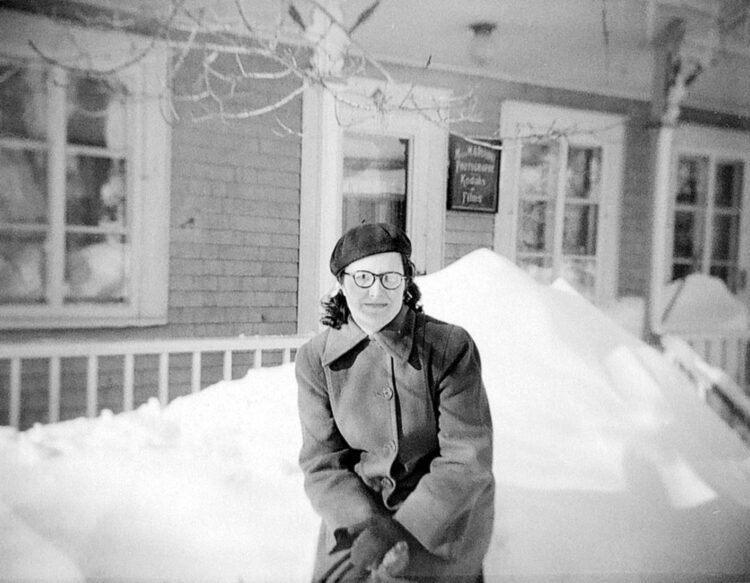
Marie-Anne St-Pierre, also a teacher, likely worked in one of the one-room schoolhouses of Saint-Alexandre. Her job was a challenging one: limited teaching materials, a poorly heated classroom, meagre pay, a large class, students of various grade levels, and an often solitary life. Such was the daily reality of rural schoolteachers.
When Marie-Alice Dumont was hospitalized in Rivière-du-Loup in 1936, she took the opportunity to document the daily life of the nursing staff. Beyond the medical care, there were also moments of amusement like this one, where three nurses are caught mid-performance: one at the piano, another on the violin and the third playing the flute.
The photographs Dumont took at the Rivière-du-Loup hospital in 1936 provide valuable insight into the work of healthcare staff in early 20th-century Quebec. This image is a beautiful example.
According to some historians, the bicycle, which gained popularity around the turn of the 20th century, offered women a temporary escape from the domestic sphere. In the 1930s and 1940s, cycling was the most accessible means of transportation for women in rural areas, since it was still only men who drove cars!
Sister Jeanne-de-la-Trinité, a Sister of Charity, smiles warmly at Dumont’s camera. She was part of the teaching staff at the convent in Saint-Alexandre.
In Quebec’s convents, girls were taught the basics of the “domestic arts” until the 1960s. This curriculum later evolved into home economics, which was offered to both boys and girls in secondary schools until 2006.
The women of the Dumont family took part in farm work. In this photo, Marie Pelletier (second from the left) stands among the men, sorting potatoes.
As this multigenerational portrait shows, many of Dumont’s clients could proudly say they had known their great-grandmother, or even their great-great-grandmother.
Dumont worked in a profession that was quite unusual for a woman of her time. The same could be said of her three assistants, including Lucille Bérubé, shown here standing in front of Dumont’s studio.
Here is a striking portrait of Pierrette Lavoie in her flight attendant uniform. Up until at least the 1960s, the hiring criteria for stewardesses were extremely strict. At Trans-Canada Air Lines, for instance, candidates had to be young, attractive, single, bilingual, slender, healthy and neither too tall nor too short.
Marie-Alice Dumont photographed many of the local shopkeepers in her village. Here, Camille Pelletier and his wife pose in front of their store, the oldest shop in Saint-Alexandre parish.
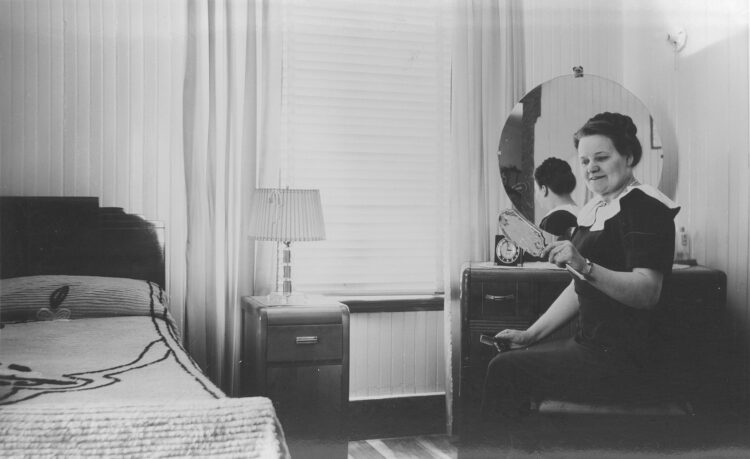
On a sunny afternoon in 1950, Marie-Alice Dumont visited the Pelletier store for a photo session with the women of the household. Mrs. Camille Pelletier and her daughters posed alone or together, in various settings that reflected their daily lives. In this scene, Mrs. Pelletier sits at her vanity in the modern comfort of her bedroom.
The people who posed for Dumont’s camera often wore their finest clothes. Here, Marie-Claire Landry is dressed in a fox fur stole, a fashion staple of the time. In fact, during the 1930s, fox farming contributed to the local economy in Kamouraska.
From the very beginning of her photography career, Marie-Alice Dumont documented the life of her community with a particular focus on local trades and traditions, as if she were paying tribute to them. Many of these images, like this one, are marked by their simplicity and authenticity.
The men in Marie-Alice Dumont’s photographs were often her family, neighbours or close friends. Her portraits reflect her connection to her subjects and her community. Beyond the studio, her camera, guided by her curiosity, captured everything: road workers, the local doctor caring for patients, and her father, Uldéric, tackling day-to-day chores. In the studio, she photographed fathers, friends, sons, suitors and workers.
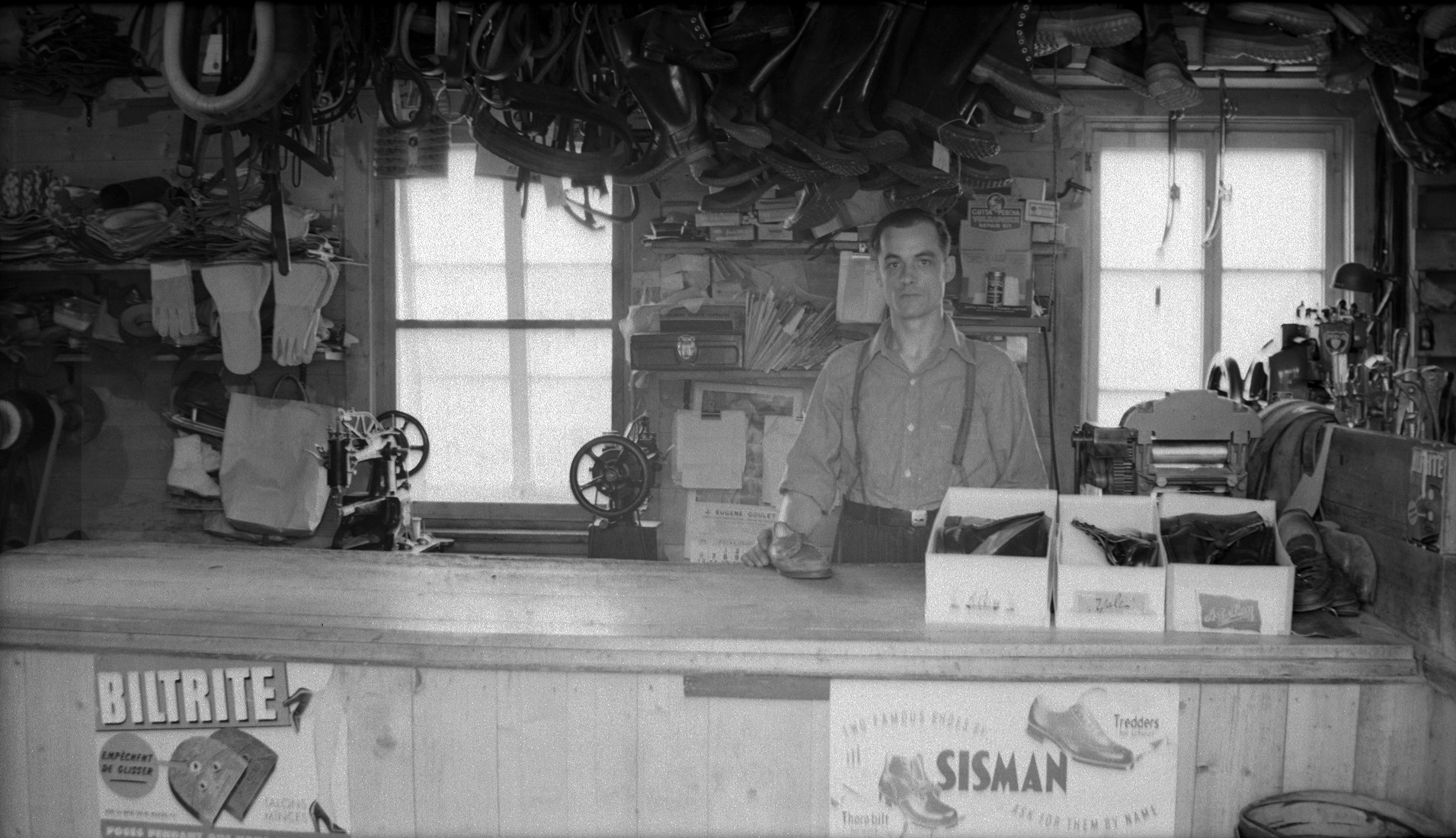
Many men in Dumont’s era were skilled tradesmen who played vital roles in their community. In 1952, during the creation of Saint-Alexandre’s centennial souvenir album, the family of Ludger Chouinard used this photograph to pay tribute to the local shoemakers, their “homage to cobblers.”
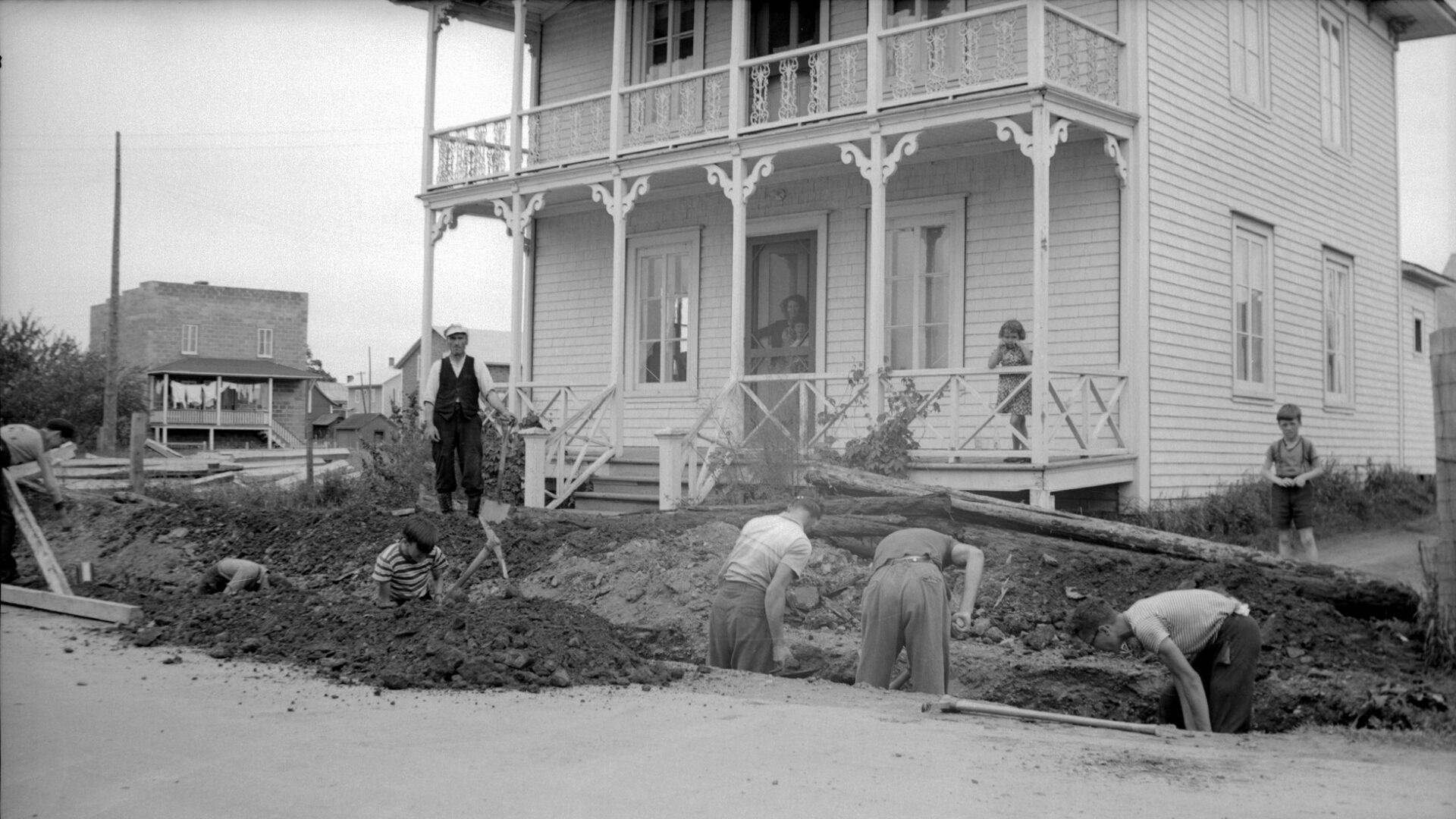
Armed with pickaxes and shovels, the men and boys of the village built and maintained essential public infrastructure, including sewers and aqueducts. This is how towns and villages across Quebec began to modernize in the early 20th century.
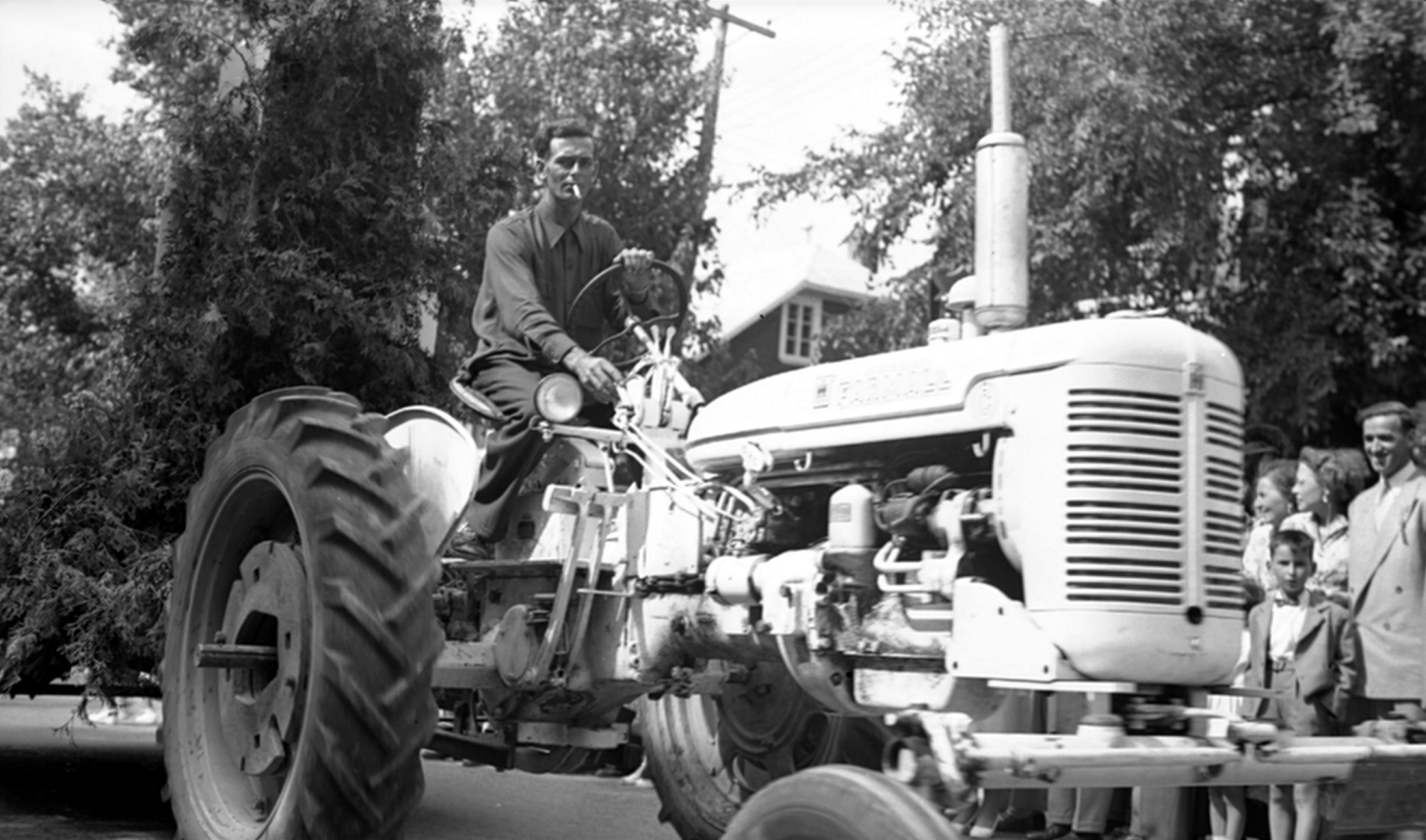
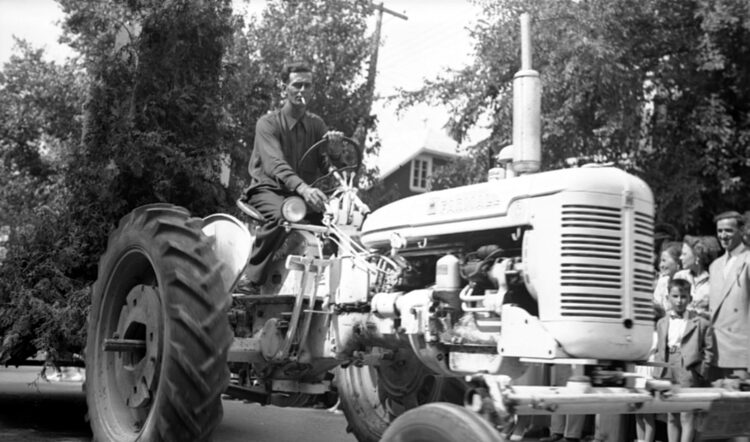
The entire village took part in the Saint-Alexandre centennial celebrations. The man behind the wheel of this tractor was no doubt proud to play a part in the event and to have loaned his machine for the parade of decorated floats.
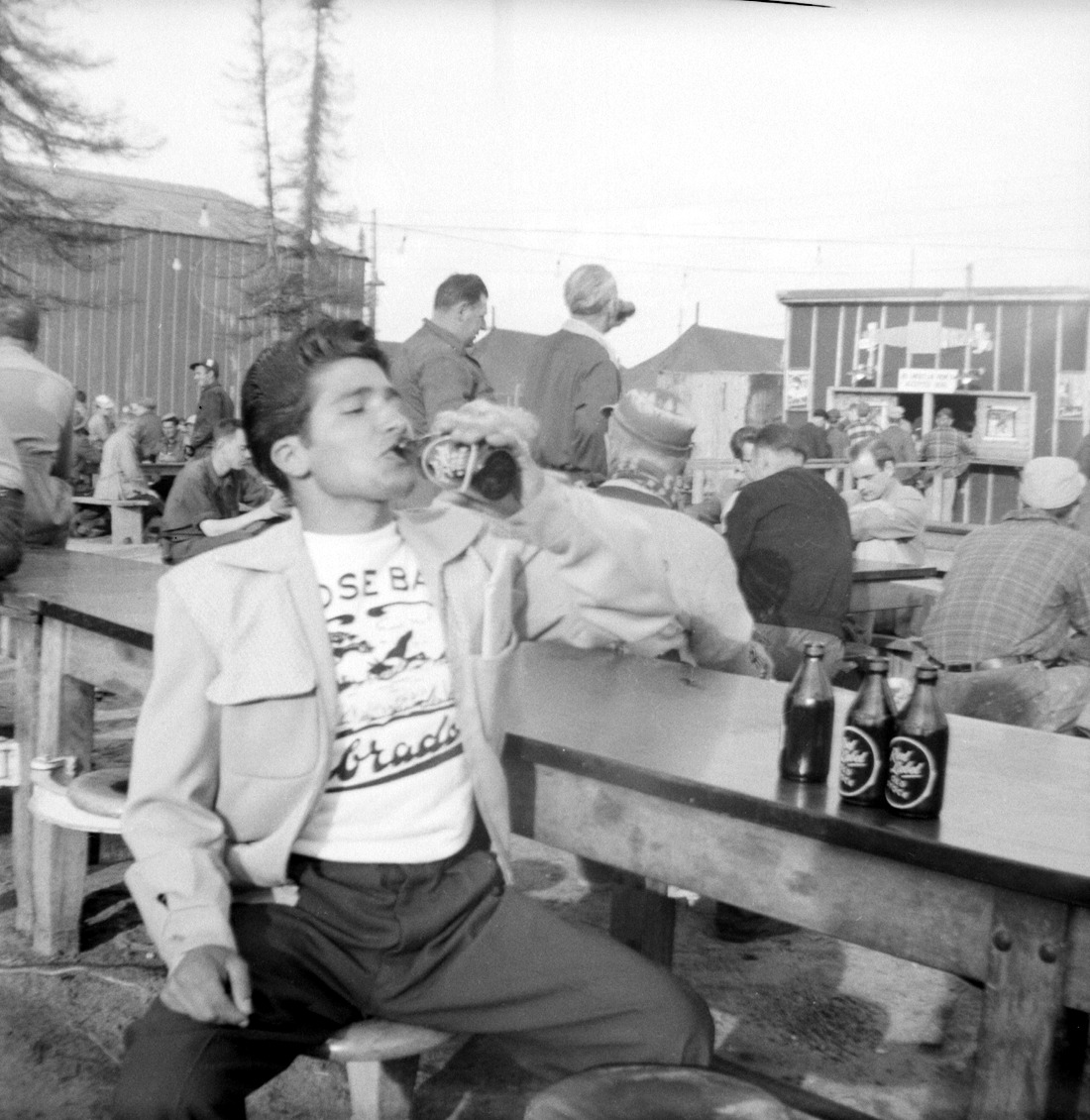
Several negatives preserved by Dumont appear to have been taken by amateur photographers who brought them in for development. In this image, a young man is pictured drinking a Red Label beer. It is part of a series of candid shots taken by two friends at a male-only worksite. It would have been surprising to see Dumont herself in such a setting like, for instance, an all-male dormitory!
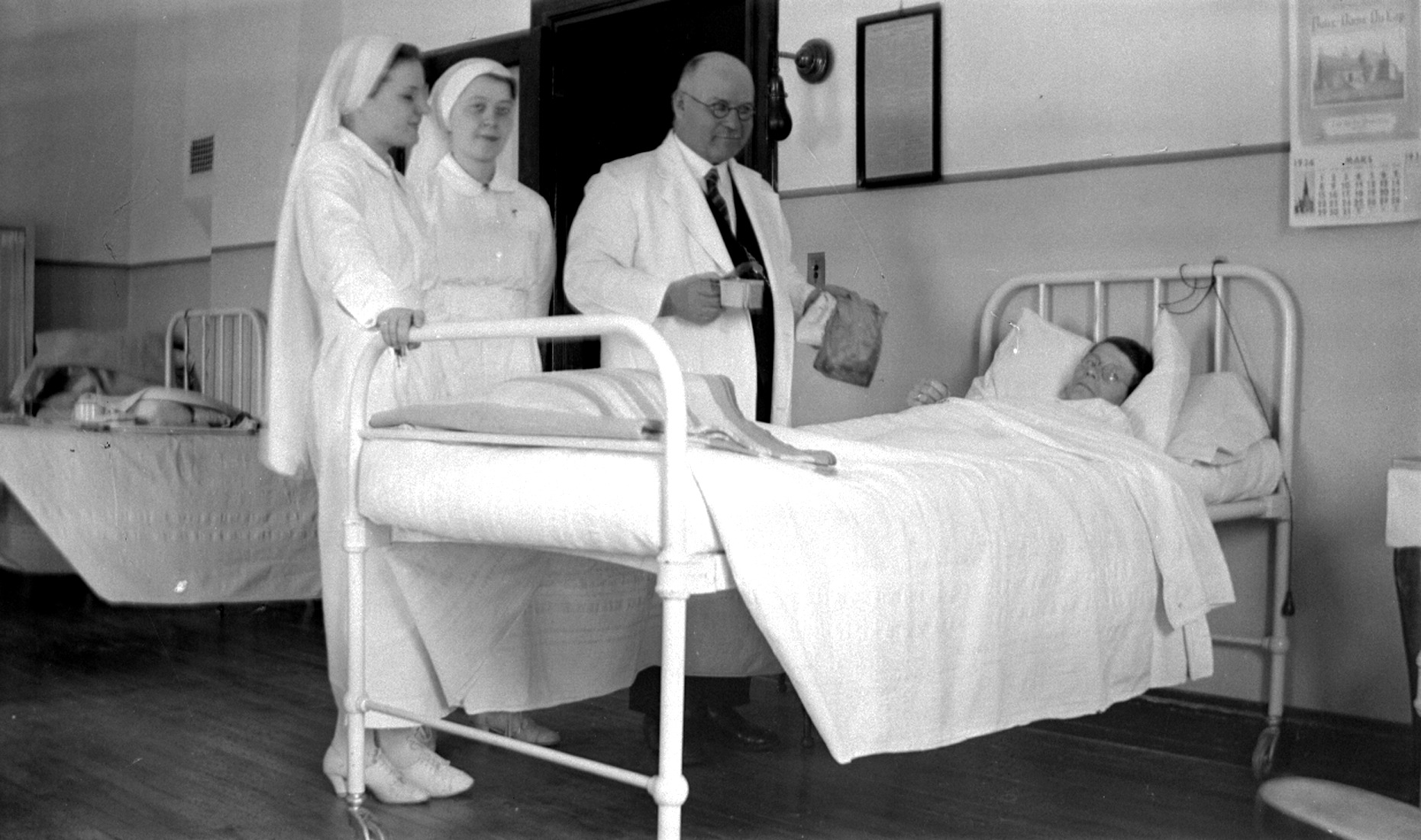
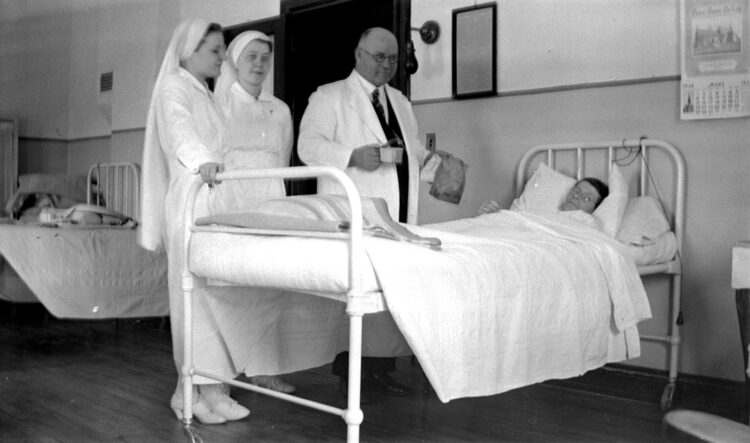
In Dumont’s time, it was mostly men, like this physician, who held professional occupations: lawyers, accountants, engineers, doctors and notaries. In 1971, 35 years after this photo was taken, women still account for only 11% of those professions. But that number rose dramatically in the decades that followed, reaching 51% by 2006.
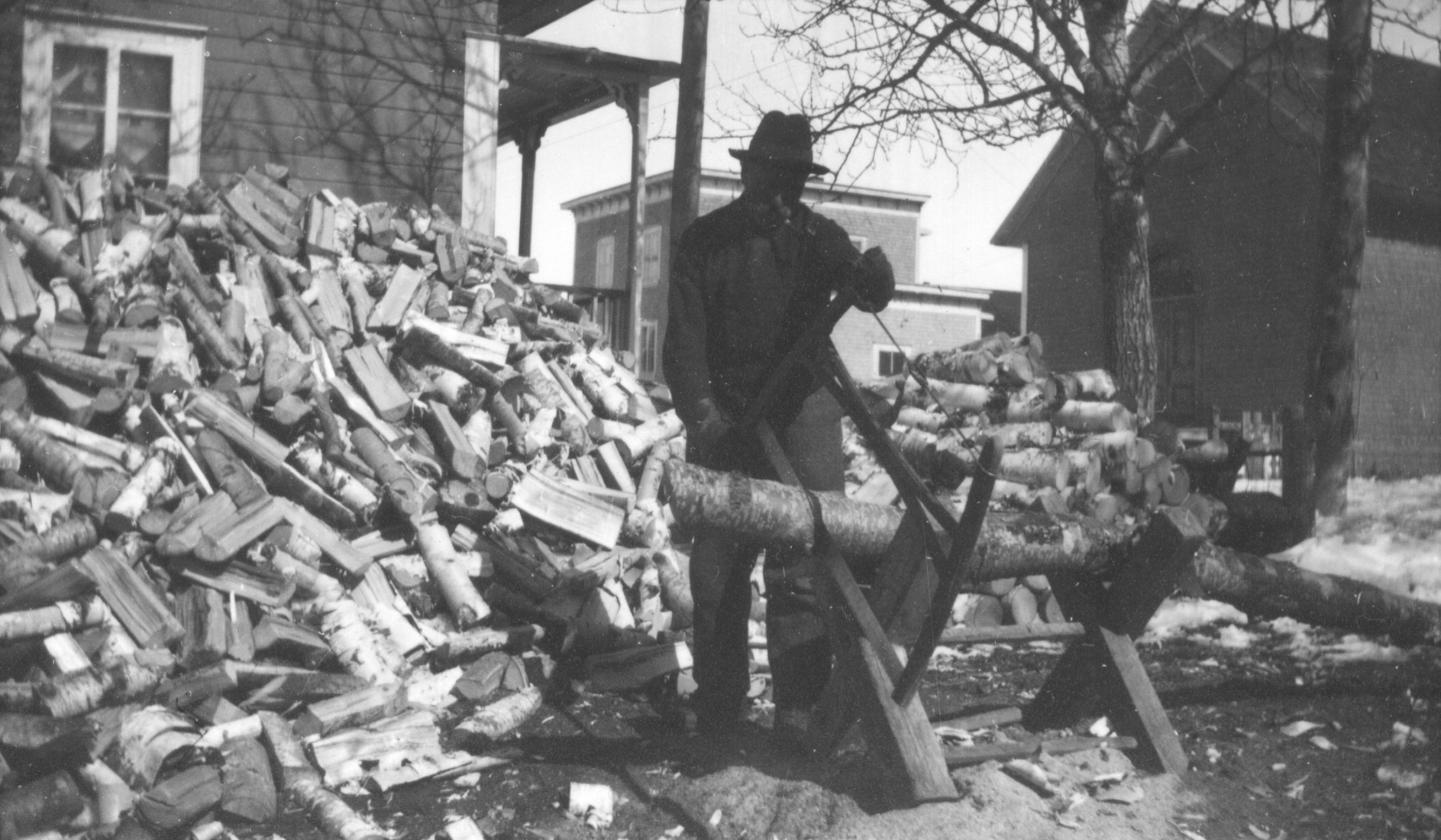
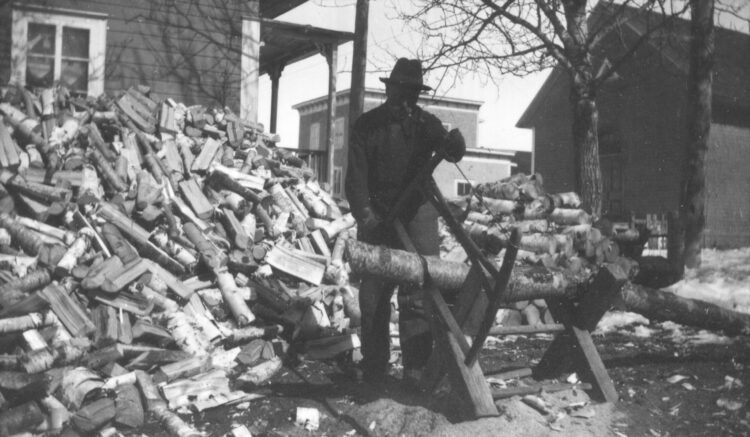
Uldéric Dumont had always taken care of his family’s firewood needs by harvesting this precious resource from his own land. Cutting firewood by hand saw was an enormous task.
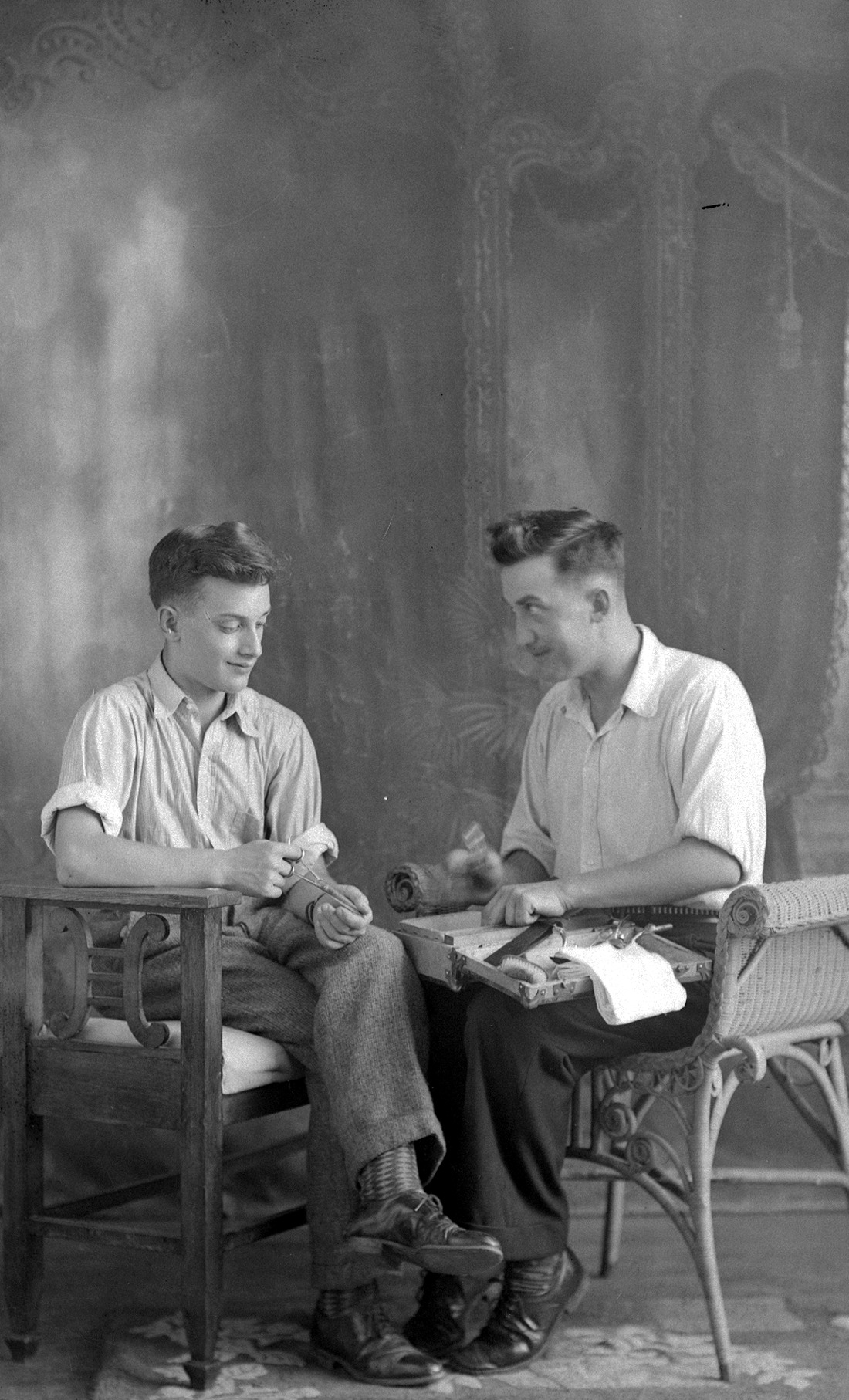
Among families of craftspeople, trades were often passed from father to son, or sometimes from uncle to nephew. Is that what this image shows? In it, Roméo Blier appears to be explaining to his nephew the use of various tools—perhaps a barber’s tools?—from his kit.
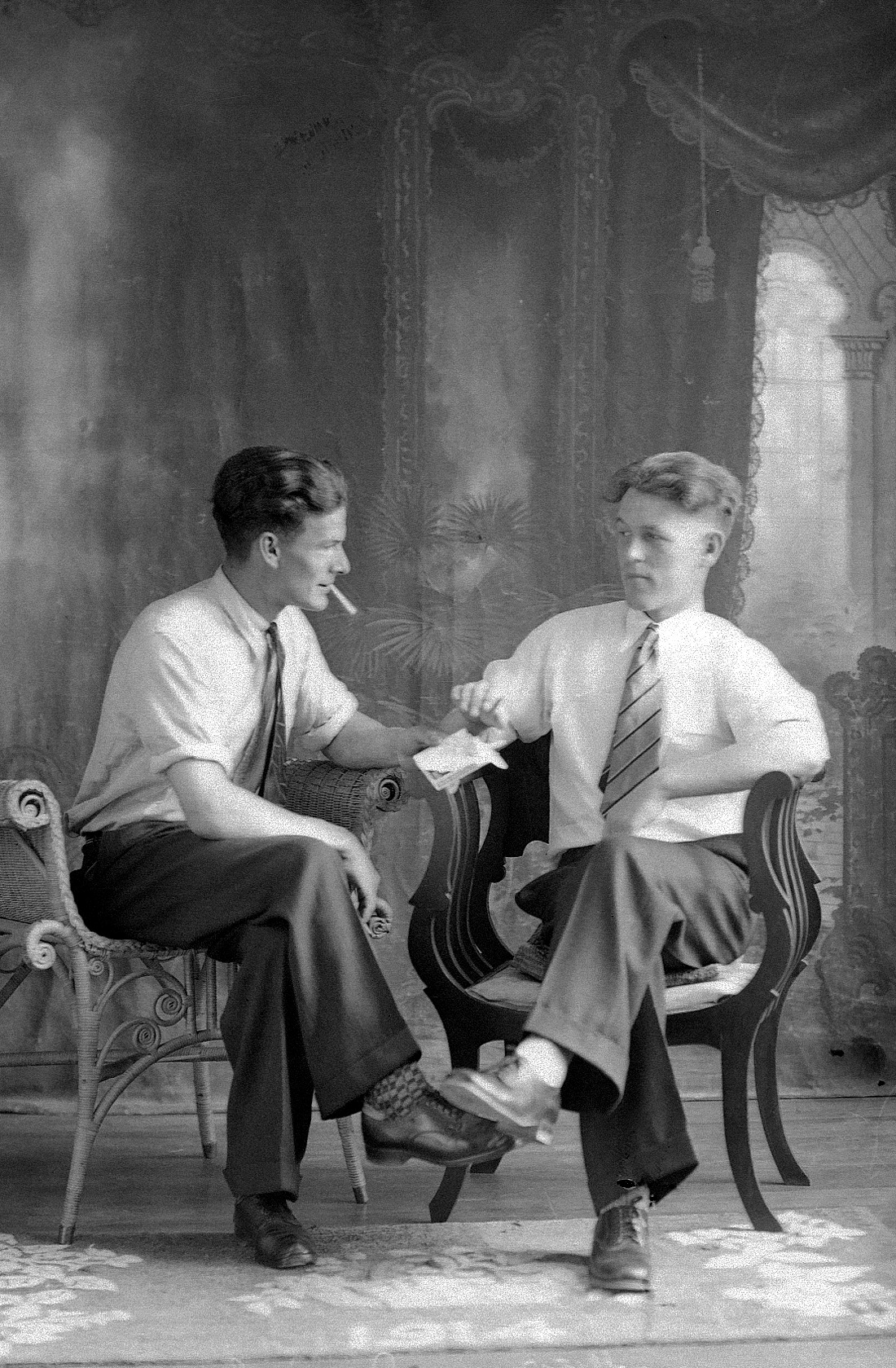
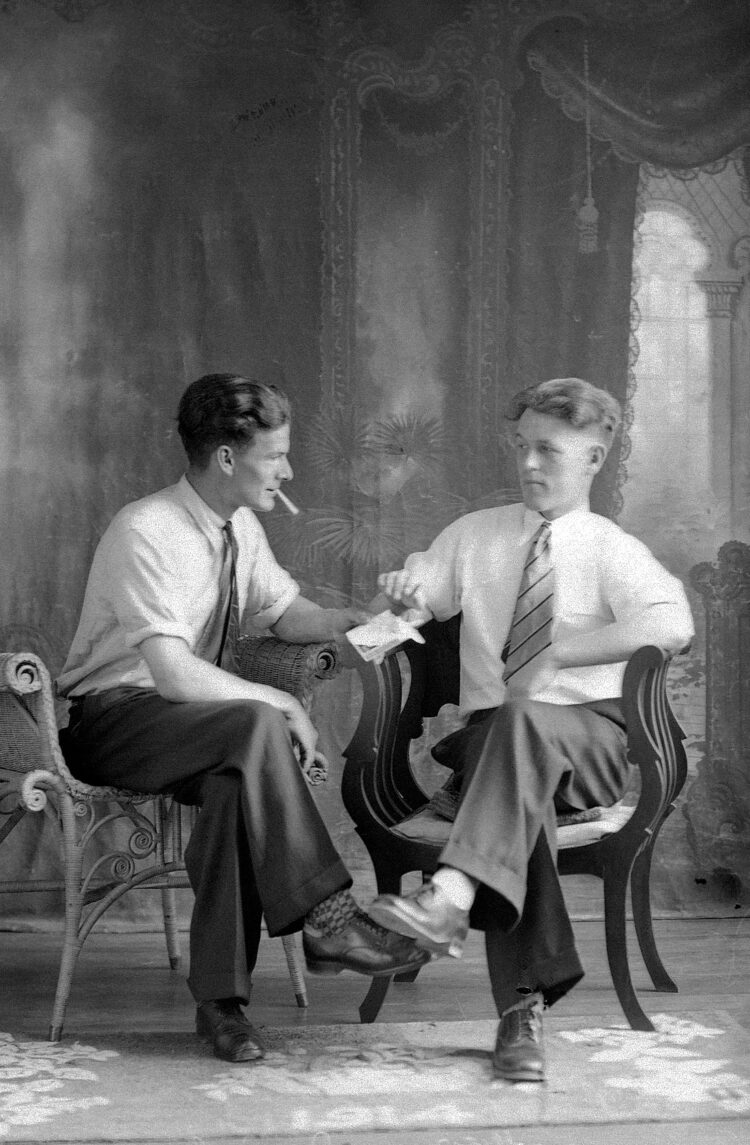
In the first half of the 20th century, cigarettes symbolized masculinity and manliness. A few of Dumont’s clients had no hesitation in posing with a cigarette in hand or between their lips. Who came up with the idea for this scene: the two friends in the photo or Dumont herself?
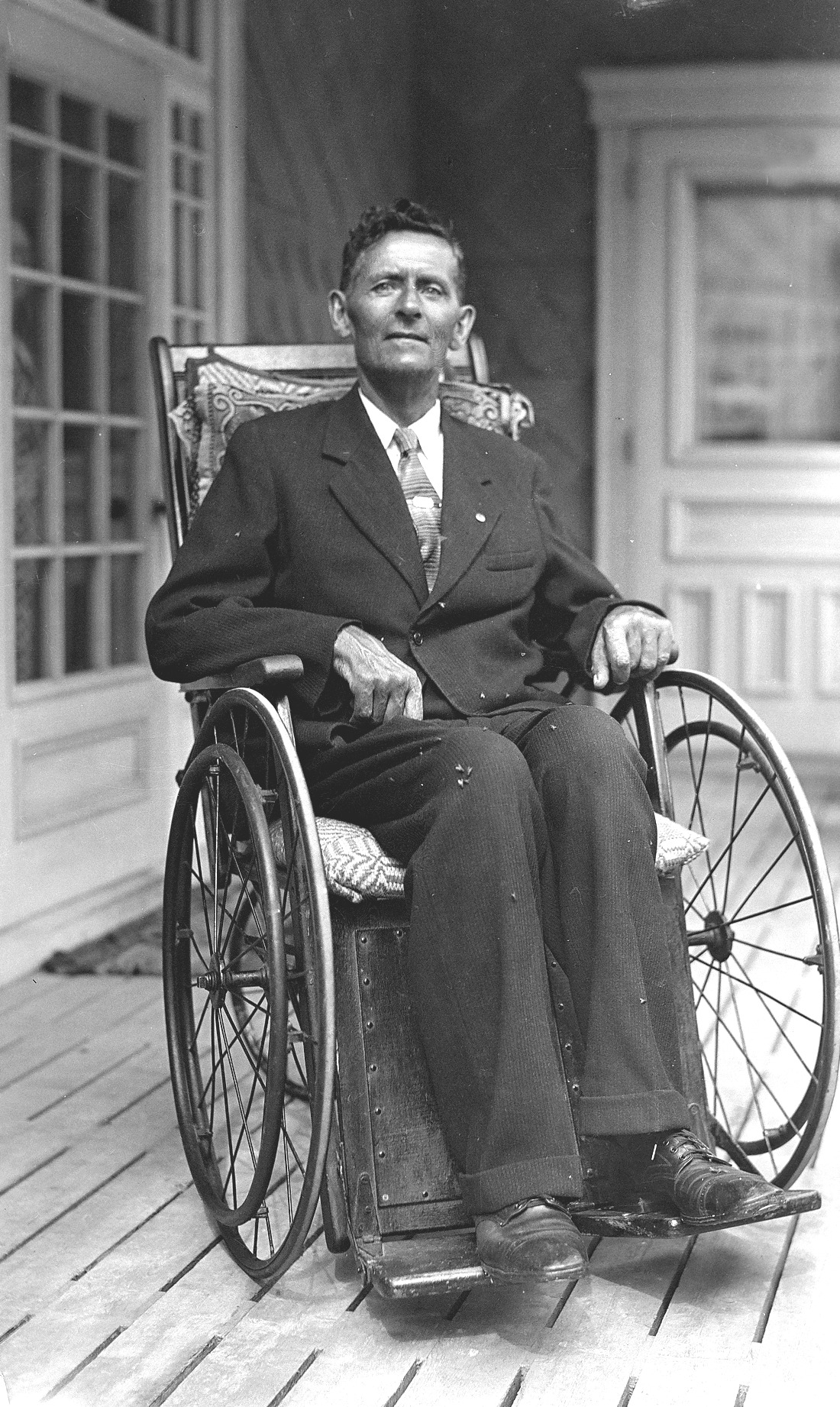
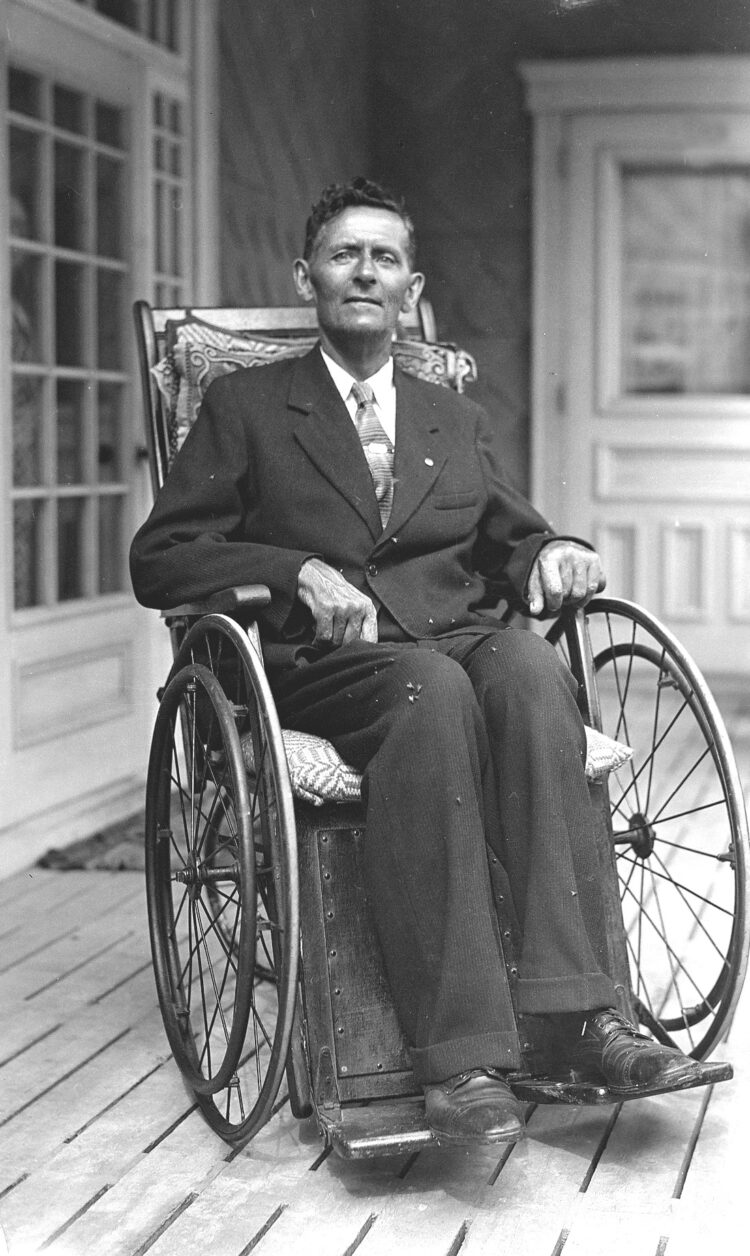
Jean-Baptiste Soucy is shown here on the porch of his house. In the village’s 1952 centennial album, Camille Soucy, a manufacturer and lumber merchant, pays tribute to both Jean-Baptiste and Joseph Soucy with these words: “Thanks to our Fathers. They left us a legacy of ‘Justice and Charity.’ Let us preserve it and pass it on to our children!” [our translation]
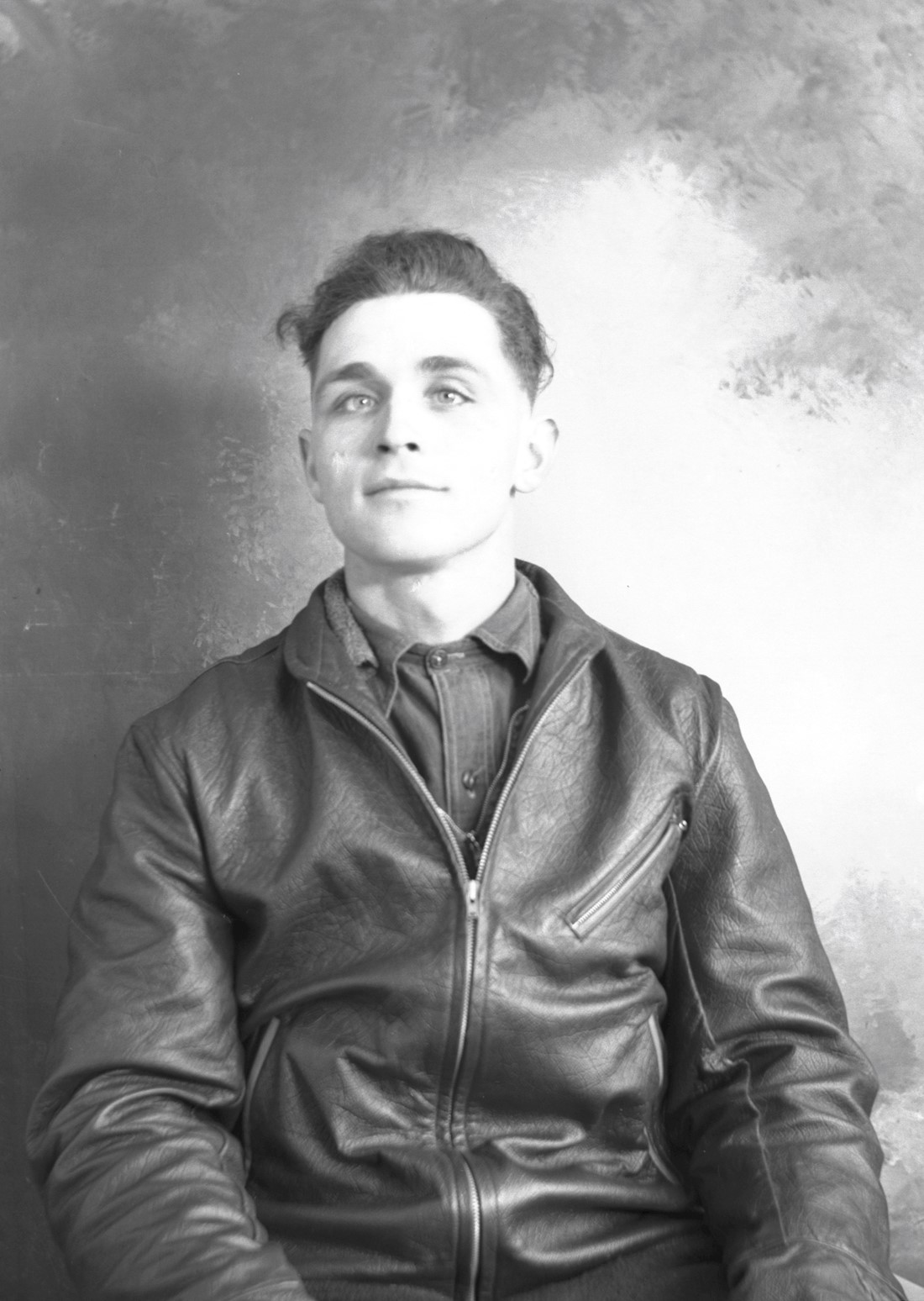
The church beadle is a crucial role in any parish. These laymen, like Donat Lamarre, are responsible for maintaining the church. They must be devout and good with their hands.
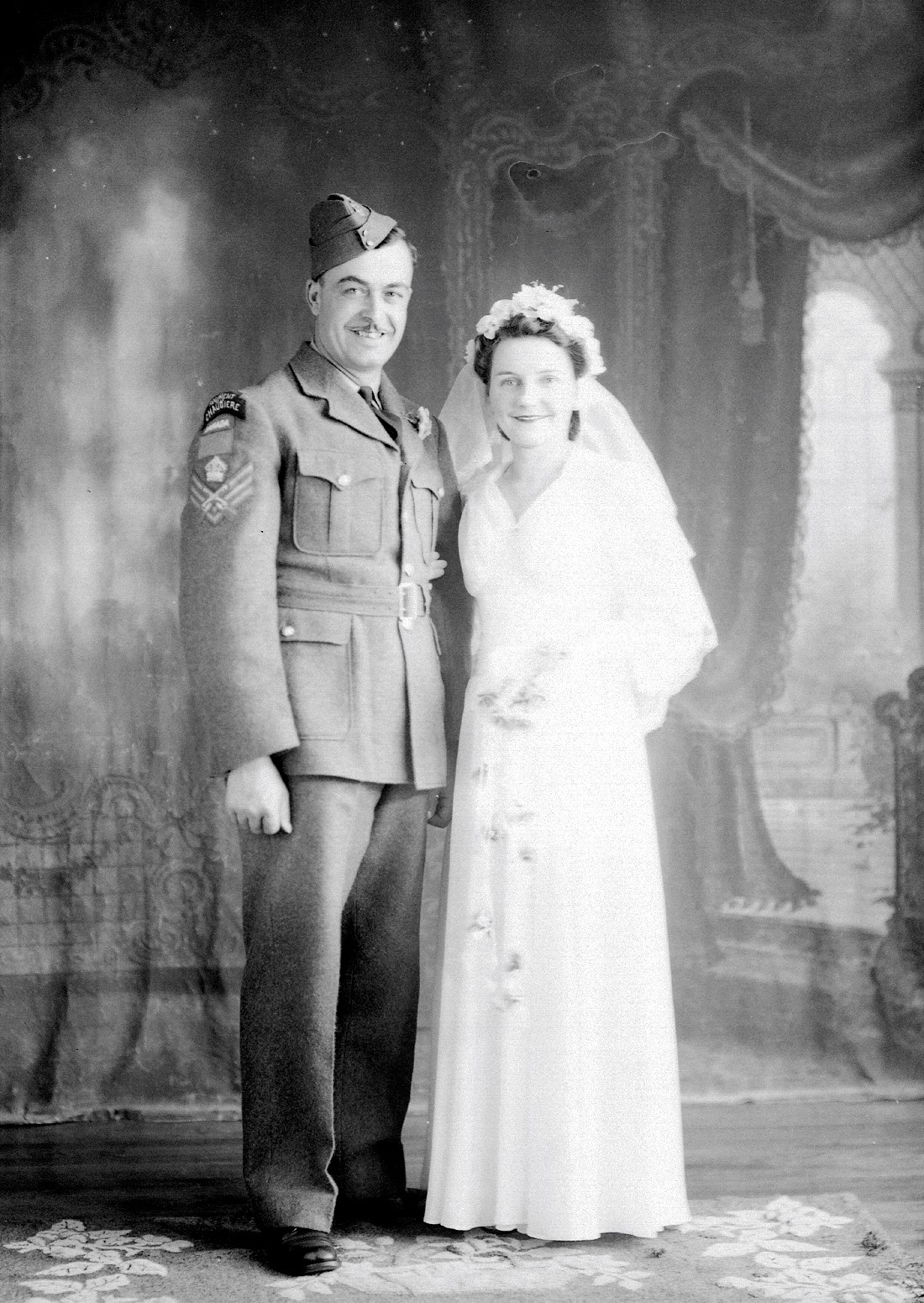
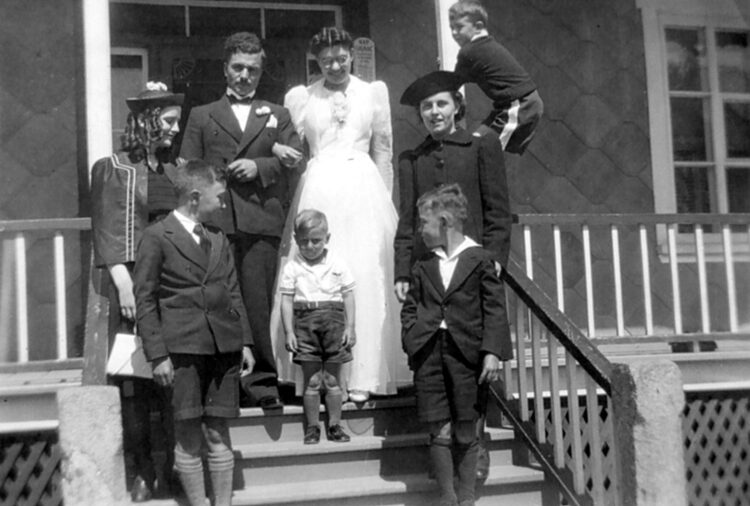
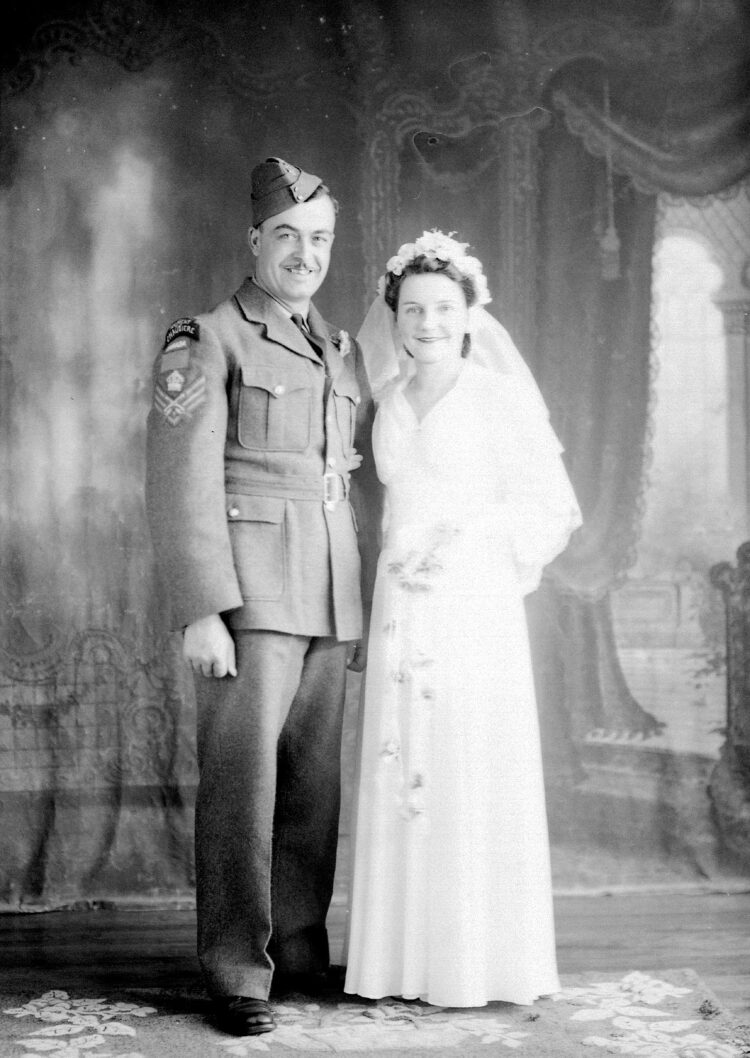
André Pelletier was a member of the Régiment de la Chaudière, which took part in World War II, including the Normandy landings. He is photographed here with his bride in 1944, the year of the D-Day invasion in which his regiment was involved. Did he go to the front? If so, we can assume this wedding portrait was taken just before his departure, since his regiment continued fighting in Europe until the end of the war.
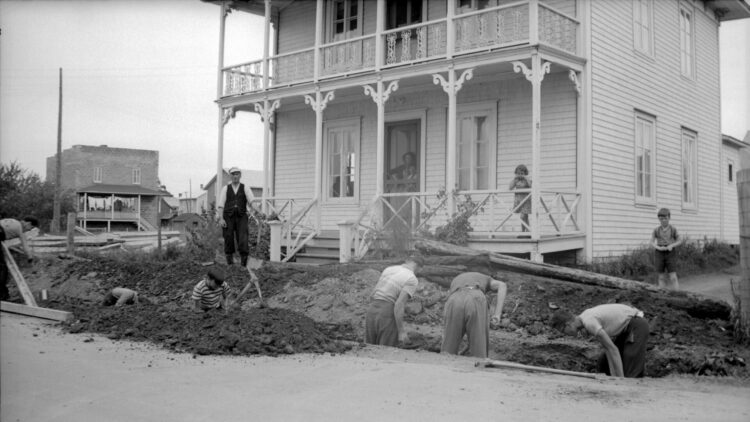
Armed with pickaxes and shovels, the men and boys of the village built and maintained essential public infrastructure, including sewers and aqueducts. This is how towns and villages across Quebec began to modernize in the early 20th century.
The entire village took part in the Saint-Alexandre centennial celebrations. The man behind the wheel of this tractor was no doubt proud to play a part in the event and to have loaned his machine for the parade of decorated floats.
Several negatives preserved by Dumont appear to have been taken by amateur photographers who brought them in for development. In this image, a young man is pictured drinking a Red Label beer. It is part of a series of candid shots taken by two friends at a male-only worksite. It would have been surprising to see Dumont herself in such a setting like, for instance, an all-male dormitory!
In Dumont’s time, it was mostly men, like this physician, who held professional occupations: lawyers, accountants, engineers, doctors and notaries. In 1971, 35 years after this photo was taken, women still account for only 11% of those professions. But that number rose dramatically in the decades that followed, reaching 51% by 2006.
Uldéric Dumont had always taken care of his family’s firewood needs by harvesting this precious resource from his own land. Cutting firewood by hand saw was an enormous task.
Among families of craftspeople, trades were often passed from father to son, or sometimes from uncle to nephew. Is that what this image shows? In it, Roméo Blier appears to be explaining to his nephew the use of various tools—perhaps a barber’s tools?—from his kit.
In the first half of the 20th century, cigarettes symbolized masculinity and manliness. A few of Dumont’s clients had no hesitation in posing with a cigarette in hand or between their lips. Who came up with the idea for this scene: the two friends in the photo or Dumont herself?
Jean-Baptiste Soucy is shown here on the porch of his house. In the village’s 1952 centennial album, Camille Soucy, a manufacturer and lumber merchant, pays tribute to both Jean-Baptiste and Joseph Soucy with these words: “Thanks to our Fathers. They left us a legacy of ‘Justice and Charity.’ Let us preserve it and pass it on to our children!” [our translation]
The church beadle is a crucial role in any parish. These laymen, like Donat Lamarre, are responsible for maintaining the church. They must be devout and good with their hands.
André Pelletier was a member of the Régiment de la Chaudière, which took part in World War II, including the Normandy landings. He is photographed here with his bride in 1944, the year of the D-Day invasion in which his regiment was involved. Did he go to the front? If so, we can assume this wedding portrait was taken just before his departure, since his regiment continued fighting in Europe until the end of the war.
Armed with pickaxes and shovels, the men and boys of the village built and maintained essential public infrastructure, including sewers and aqueducts. This is how towns and villages across Quebec began to modernize in the early 20th century.
The entire village took part in the Saint-Alexandre centennial celebrations. The man behind the wheel of this tractor was no doubt proud to play a part in the event and to have loaned his machine for the parade of decorated floats.
Several negatives preserved by Dumont appear to have been taken by amateur photographers who brought them in for development. In this image, a young man is pictured drinking a Red Label beer. It is part of a series of candid shots taken by two friends at a male-only worksite. It would have been surprising to see Dumont herself in such a setting like, for instance, an all-male dormitory!
In Dumont’s time, it was mostly men, like this physician, who held professional occupations: lawyers, accountants, engineers, doctors and notaries. In 1971, 35 years after this photo was taken, women still account for only 11% of those professions. But that number rose dramatically in the decades that followed, reaching 51% by 2006.
Uldéric Dumont had always taken care of his family’s firewood needs by harvesting this precious resource from his own land. Cutting firewood by hand saw was an enormous task.
Among families of craftspeople, trades were often passed from father to son, or sometimes from uncle to nephew. Is that what this image shows? In it, Roméo Blier appears to be explaining to his nephew the use of various tools—perhaps a barber’s tools?—from his kit.
In the first half of the 20th century, cigarettes symbolized masculinity and manliness. A few of Dumont’s clients had no hesitation in posing with a cigarette in hand or between their lips. Who came up with the idea for this scene: the two friends in the photo or Dumont herself?
Jean-Baptiste Soucy is shown here on the porch of his house. In the village’s 1952 centennial album, Camille Soucy, a manufacturer and lumber merchant, pays tribute to both Jean-Baptiste and Joseph Soucy with these words: “Thanks to our Fathers. They left us a legacy of ‘Justice and Charity.’ Let us preserve it and pass it on to our children!” [our translation]
The church beadle is a crucial role in any parish. These laymen, like Donat Lamarre, are responsible for maintaining the church. They must be devout and good with their hands.
André Pelletier was a member of the Régiment de la Chaudière, which took part in World War II, including the Normandy landings. He is photographed here with his bride in 1944, the year of the D-Day invasion in which his regiment was involved. Did he go to the front? If so, we can assume this wedding portrait was taken just before his departure, since his regiment continued fighting in Europe until the end of the war.
Armed with pickaxes and shovels, the men and boys of the village built and maintained essential public infrastructure, including sewers and aqueducts. This is how towns and villages across Quebec began to modernize in the early 20th century.
The entire village took part in the Saint-Alexandre centennial celebrations. The man behind the wheel of this tractor was no doubt proud to play a part in the event and to have loaned his machine for the parade of decorated floats.
Several negatives preserved by Dumont appear to have been taken by amateur photographers who brought them in for development. In this image, a young man is pictured drinking a Red Label beer. It is part of a series of candid shots taken by two friends at a male-only worksite. It would have been surprising to see Dumont herself in such a setting like, for instance, an all-male dormitory!
In Dumont’s time, it was mostly men, like this physician, who held professional occupations: lawyers, accountants, engineers, doctors and notaries. In 1971, 35 years after this photo was taken, women still account for only 11% of those professions. But that number rose dramatically in the decades that followed, reaching 51% by 2006.
Uldéric Dumont had always taken care of his family’s firewood needs by harvesting this precious resource from his own land. Cutting firewood by hand saw was an enormous task.
Among families of craftspeople, trades were often passed from father to son, or sometimes from uncle to nephew. Is that what this image shows? In it, Roméo Blier appears to be explaining to his nephew the use of various tools—perhaps a barber’s tools?—from his kit.
In the first half of the 20th century, cigarettes symbolized masculinity and manliness. A few of Dumont’s clients had no hesitation in posing with a cigarette in hand or between their lips. Who came up with the idea for this scene: the two friends in the photo or Dumont herself?
Jean-Baptiste Soucy is shown here on the porch of his house. In the village’s 1952 centennial album, Camille Soucy, a manufacturer and lumber merchant, pays tribute to both Jean-Baptiste and Joseph Soucy with these words: “Thanks to our Fathers. They left us a legacy of ‘Justice and Charity.’ Let us preserve it and pass it on to our children!” [our translation]
The church beadle is a crucial role in any parish. These laymen, like Donat Lamarre, are responsible for maintaining the church. They must be devout and good with their hands.
André Pelletier was a member of the Régiment de la Chaudière, which took part in World War II, including the Normandy landings. He is photographed here with his bride in 1944, the year of the D-Day invasion in which his regiment was involved. Did he go to the front? If so, we can assume this wedding portrait was taken just before his departure, since his regiment continued fighting in Europe until the end of the war.
Armed with pickaxes and shovels, the men and boys of the village built and maintained essential public infrastructure, including sewers and aqueducts. This is how towns and villages across Quebec began to modernize in the early 20th century.
The entire village took part in the Saint-Alexandre centennial celebrations. The man behind the wheel of this tractor was no doubt proud to play a part in the event and to have loaned his machine for the parade of decorated floats.
Several negatives preserved by Dumont appear to have been taken by amateur photographers who brought them in for development. In this image, a young man is pictured drinking a Red Label beer. It is part of a series of candid shots taken by two friends at a male-only worksite. It would have been surprising to see Dumont herself in such a setting like, for instance, an all-male dormitory!
In Dumont’s time, it was mostly men, like this physician, who held professional occupations: lawyers, accountants, engineers, doctors and notaries. In 1971, 35 years after this photo was taken, women still account for only 11% of those professions. But that number rose dramatically in the decades that followed, reaching 51% by 2006.
Uldéric Dumont had always taken care of his family’s firewood needs by harvesting this precious resource from his own land. Cutting firewood by hand saw was an enormous task.
Among families of craftspeople, trades were often passed from father to son, or sometimes from uncle to nephew. Is that what this image shows? In it, Roméo Blier appears to be explaining to his nephew the use of various tools—perhaps a barber’s tools?—from his kit.
In the first half of the 20th century, cigarettes symbolized masculinity and manliness. A few of Dumont’s clients had no hesitation in posing with a cigarette in hand or between their lips. Who came up with the idea for this scene: the two friends in the photo or Dumont herself?
Jean-Baptiste Soucy is shown here on the porch of his house. In the village’s 1952 centennial album, Camille Soucy, a manufacturer and lumber merchant, pays tribute to both Jean-Baptiste and Joseph Soucy with these words: “Thanks to our Fathers. They left us a legacy of ‘Justice and Charity.’ Let us preserve it and pass it on to our children!” [our translation]
The church beadle is a crucial role in any parish. These laymen, like Donat Lamarre, are responsible for maintaining the church. They must be devout and good with their hands.
André Pelletier was a member of the Régiment de la Chaudière, which took part in World War II, including the Normandy landings. He is photographed here with his bride in 1944, the year of the D-Day invasion in which his regiment was involved. Did he go to the front? If so, we can assume this wedding portrait was taken just before his departure, since his regiment continued fighting in Europe until the end of the war.
Armed with pickaxes and shovels, the men and boys of the village built and maintained essential public infrastructure, including sewers and aqueducts. This is how towns and villages across Quebec began to modernize in the early 20th century.
The entire village took part in the Saint-Alexandre centennial celebrations. The man behind the wheel of this tractor was no doubt proud to play a part in the event and to have loaned his machine for the parade of decorated floats.
Several negatives preserved by Dumont appear to have been taken by amateur photographers who brought them in for development. In this image, a young man is pictured drinking a Red Label beer. It is part of a series of candid shots taken by two friends at a male-only worksite. It would have been surprising to see Dumont herself in such a setting like, for instance, an all-male dormitory!
In Dumont’s time, it was mostly men, like this physician, who held professional occupations: lawyers, accountants, engineers, doctors and notaries. In 1971, 35 years after this photo was taken, women still account for only 11% of those professions. But that number rose dramatically in the decades that followed, reaching 51% by 2006.
Uldéric Dumont had always taken care of his family’s firewood needs by harvesting this precious resource from his own land. Cutting firewood by hand saw was an enormous task.
Among families of craftspeople, trades were often passed from father to son, or sometimes from uncle to nephew. Is that what this image shows? In it, Roméo Blier appears to be explaining to his nephew the use of various tools—perhaps a barber’s tools?—from his kit.
In the first half of the 20th century, cigarettes symbolized masculinity and manliness. A few of Dumont’s clients had no hesitation in posing with a cigarette in hand or between their lips. Who came up with the idea for this scene: the two friends in the photo or Dumont herself?
Jean-Baptiste Soucy is shown here on the porch of his house. In the village’s 1952 centennial album, Camille Soucy, a manufacturer and lumber merchant, pays tribute to both Jean-Baptiste and Joseph Soucy with these words: “Thanks to our Fathers. They left us a legacy of ‘Justice and Charity.’ Let us preserve it and pass it on to our children!” [our translation]
The church beadle is a crucial role in any parish. These laymen, like Donat Lamarre, are responsible for maintaining the church. They must be devout and good with their hands.
André Pelletier was a member of the Régiment de la Chaudière, which took part in World War II, including the Normandy landings. He is photographed here with his bride in 1944, the year of the D-Day invasion in which his regiment was involved. Did he go to the front? If so, we can assume this wedding portrait was taken just before his departure, since his regiment continued fighting in Europe until the end of the war.
Armed with pickaxes and shovels, the men and boys of the village built and maintained essential public infrastructure, including sewers and aqueducts. This is how towns and villages across Quebec began to modernize in the early 20th century.
The entire village took part in the Saint-Alexandre centennial celebrations. The man behind the wheel of this tractor was no doubt proud to play a part in the event and to have loaned his machine for the parade of decorated floats.
Several negatives preserved by Dumont appear to have been taken by amateur photographers who brought them in for development. In this image, a young man is pictured drinking a Red Label beer. It is part of a series of candid shots taken by two friends at a male-only worksite. It would have been surprising to see Dumont herself in such a setting like, for instance, an all-male dormitory!
In Dumont’s time, it was mostly men, like this physician, who held professional occupations: lawyers, accountants, engineers, doctors and notaries. In 1971, 35 years after this photo was taken, women still account for only 11% of those professions. But that number rose dramatically in the decades that followed, reaching 51% by 2006.
Uldéric Dumont had always taken care of his family’s firewood needs by harvesting this precious resource from his own land. Cutting firewood by hand saw was an enormous task.
Among families of craftspeople, trades were often passed from father to son, or sometimes from uncle to nephew. Is that what this image shows? In it, Roméo Blier appears to be explaining to his nephew the use of various tools—perhaps a barber’s tools?—from his kit.
In the first half of the 20th century, cigarettes symbolized masculinity and manliness. A few of Dumont’s clients had no hesitation in posing with a cigarette in hand or between their lips. Who came up with the idea for this scene: the two friends in the photo or Dumont herself?
Jean-Baptiste Soucy is shown here on the porch of his house. In the village’s 1952 centennial album, Camille Soucy, a manufacturer and lumber merchant, pays tribute to both Jean-Baptiste and Joseph Soucy with these words: “Thanks to our Fathers. They left us a legacy of ‘Justice and Charity.’ Let us preserve it and pass it on to our children!” [our translation]
The church beadle is a crucial role in any parish. These laymen, like Donat Lamarre, are responsible for maintaining the church. They must be devout and good with their hands.
André Pelletier was a member of the Régiment de la Chaudière, which took part in World War II, including the Normandy landings. He is photographed here with his bride in 1944, the year of the D-Day invasion in which his regiment was involved. Did he go to the front? If so, we can assume this wedding portrait was taken just before his departure, since his regiment continued fighting in Europe until the end of the war.
Armed with pickaxes and shovels, the men and boys of the village built and maintained essential public infrastructure, including sewers and aqueducts. This is how towns and villages across Quebec began to modernize in the early 20th century.
The entire village took part in the Saint-Alexandre centennial celebrations. The man behind the wheel of this tractor was no doubt proud to play a part in the event and to have loaned his machine for the parade of decorated floats.
Several negatives preserved by Dumont appear to have been taken by amateur photographers who brought them in for development. In this image, a young man is pictured drinking a Red Label beer. It is part of a series of candid shots taken by two friends at a male-only worksite. It would have been surprising to see Dumont herself in such a setting like, for instance, an all-male dormitory!
In Dumont’s time, it was mostly men, like this physician, who held professional occupations: lawyers, accountants, engineers, doctors and notaries. In 1971, 35 years after this photo was taken, women still account for only 11% of those professions. But that number rose dramatically in the decades that followed, reaching 51% by 2006.
Uldéric Dumont had always taken care of his family’s firewood needs by harvesting this precious resource from his own land. Cutting firewood by hand saw was an enormous task.
Among families of craftspeople, trades were often passed from father to son, or sometimes from uncle to nephew. Is that what this image shows? In it, Roméo Blier appears to be explaining to his nephew the use of various tools—perhaps a barber’s tools?—from his kit.
In the first half of the 20th century, cigarettes symbolized masculinity and manliness. A few of Dumont’s clients had no hesitation in posing with a cigarette in hand or between their lips. Who came up with the idea for this scene: the two friends in the photo or Dumont herself?
Jean-Baptiste Soucy is shown here on the porch of his house. In the village’s 1952 centennial album, Camille Soucy, a manufacturer and lumber merchant, pays tribute to both Jean-Baptiste and Joseph Soucy with these words: “Thanks to our Fathers. They left us a legacy of ‘Justice and Charity.’ Let us preserve it and pass it on to our children!” [our translation]
The church beadle is a crucial role in any parish. These laymen, like Donat Lamarre, are responsible for maintaining the church. They must be devout and good with their hands.
André Pelletier was a member of the Régiment de la Chaudière, which took part in World War II, including the Normandy landings. He is photographed here with his bride in 1944, the year of the D-Day invasion in which his regiment was involved. Did he go to the front? If so, we can assume this wedding portrait was taken just before his departure, since his regiment continued fighting in Europe until the end of the war.
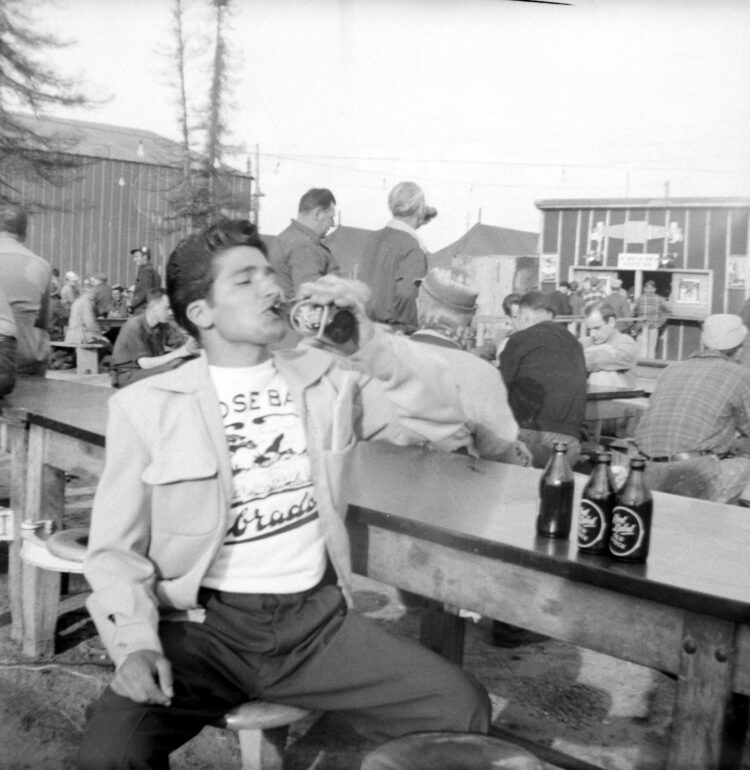
Armed with pickaxes and shovels, the men and boys of the village built and maintained essential public infrastructure, including sewers and aqueducts. This is how towns and villages across Quebec began to modernize in the early 20th century.
The entire village took part in the Saint-Alexandre centennial celebrations. The man behind the wheel of this tractor was no doubt proud to play a part in the event and to have loaned his machine for the parade of decorated floats.
Several negatives preserved by Dumont appear to have been taken by amateur photographers who brought them in for development. In this image, a young man is pictured drinking a Red Label beer. It is part of a series of candid shots taken by two friends at a male-only worksite. It would have been surprising to see Dumont herself in such a setting like, for instance, an all-male dormitory!
In Dumont’s time, it was mostly men, like this physician, who held professional occupations: lawyers, accountants, engineers, doctors and notaries. In 1971, 35 years after this photo was taken, women still account for only 11% of those professions. But that number rose dramatically in the decades that followed, reaching 51% by 2006.
Uldéric Dumont had always taken care of his family’s firewood needs by harvesting this precious resource from his own land. Cutting firewood by hand saw was an enormous task.
Among families of craftspeople, trades were often passed from father to son, or sometimes from uncle to nephew. Is that what this image shows? In it, Roméo Blier appears to be explaining to his nephew the use of various tools—perhaps a barber’s tools?—from his kit.
In the first half of the 20th century, cigarettes symbolized masculinity and manliness. A few of Dumont’s clients had no hesitation in posing with a cigarette in hand or between their lips. Who came up with the idea for this scene: the two friends in the photo or Dumont herself?
Jean-Baptiste Soucy is shown here on the porch of his house. In the village’s 1952 centennial album, Camille Soucy, a manufacturer and lumber merchant, pays tribute to both Jean-Baptiste and Joseph Soucy with these words: “Thanks to our Fathers. They left us a legacy of ‘Justice and Charity.’ Let us preserve it and pass it on to our children!” [our translation]
The church beadle is a crucial role in any parish. These laymen, like Donat Lamarre, are responsible for maintaining the church. They must be devout and good with their hands.
André Pelletier was a member of the Régiment de la Chaudière, which took part in World War II, including the Normandy landings. He is photographed here with his bride in 1944, the year of the D-Day invasion in which his regiment was involved. Did he go to the front? If so, we can assume this wedding portrait was taken just before his departure, since his regiment continued fighting in Europe until the end of the war.
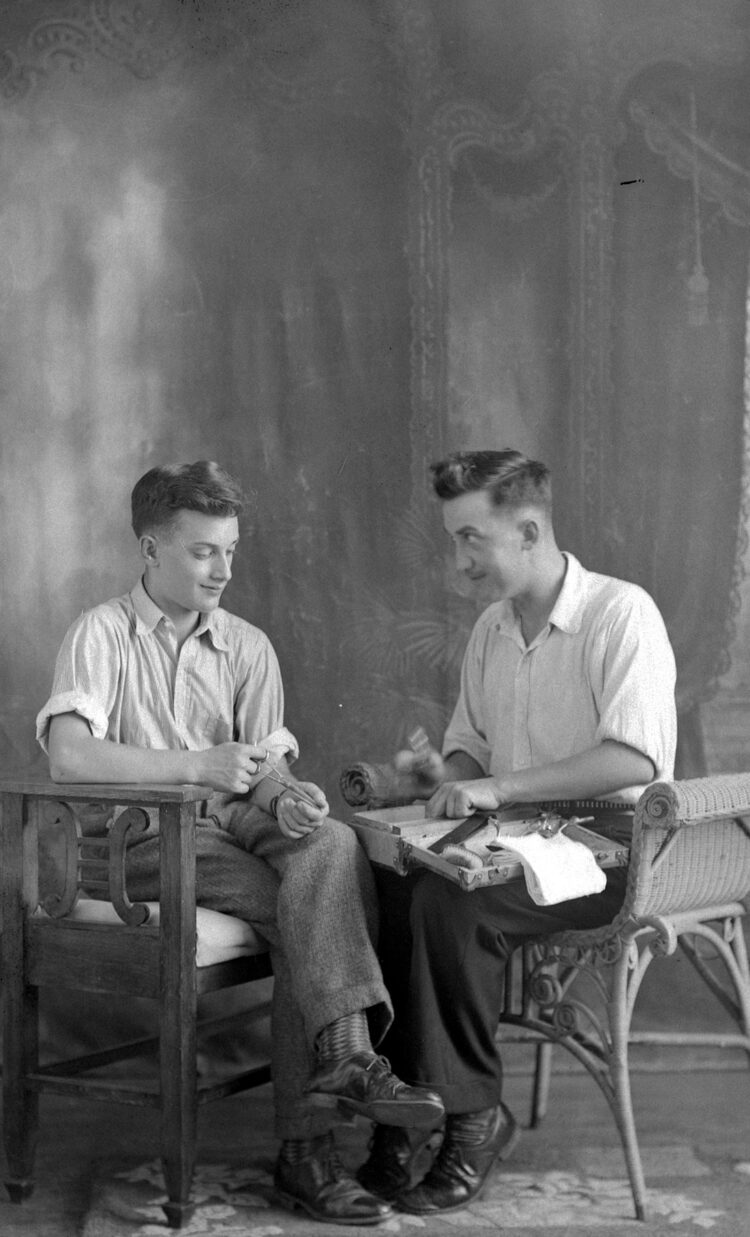
Armed with pickaxes and shovels, the men and boys of the village built and maintained essential public infrastructure, including sewers and aqueducts. This is how towns and villages across Quebec began to modernize in the early 20th century.
The entire village took part in the Saint-Alexandre centennial celebrations. The man behind the wheel of this tractor was no doubt proud to play a part in the event and to have loaned his machine for the parade of decorated floats.
Several negatives preserved by Dumont appear to have been taken by amateur photographers who brought them in for development. In this image, a young man is pictured drinking a Red Label beer. It is part of a series of candid shots taken by two friends at a male-only worksite. It would have been surprising to see Dumont herself in such a setting like, for instance, an all-male dormitory!
In Dumont’s time, it was mostly men, like this physician, who held professional occupations: lawyers, accountants, engineers, doctors and notaries. In 1971, 35 years after this photo was taken, women still account for only 11% of those professions. But that number rose dramatically in the decades that followed, reaching 51% by 2006.
Uldéric Dumont had always taken care of his family’s firewood needs by harvesting this precious resource from his own land. Cutting firewood by hand saw was an enormous task.
Among families of craftspeople, trades were often passed from father to son, or sometimes from uncle to nephew. Is that what this image shows? In it, Roméo Blier appears to be explaining to his nephew the use of various tools—perhaps a barber’s tools?—from his kit.
In the first half of the 20th century, cigarettes symbolized masculinity and manliness. A few of Dumont’s clients had no hesitation in posing with a cigarette in hand or between their lips. Who came up with the idea for this scene: the two friends in the photo or Dumont herself?
Jean-Baptiste Soucy is shown here on the porch of his house. In the village’s 1952 centennial album, Camille Soucy, a manufacturer and lumber merchant, pays tribute to both Jean-Baptiste and Joseph Soucy with these words: “Thanks to our Fathers. They left us a legacy of ‘Justice and Charity.’ Let us preserve it and pass it on to our children!” [our translation]
The church beadle is a crucial role in any parish. These laymen, like Donat Lamarre, are responsible for maintaining the church. They must be devout and good with their hands.
André Pelletier was a member of the Régiment de la Chaudière, which took part in World War II, including the Normandy landings. He is photographed here with his bride in 1944, the year of the D-Day invasion in which his regiment was involved. Did he go to the front? If so, we can assume this wedding portrait was taken just before his departure, since his regiment continued fighting in Europe until the end of the war.
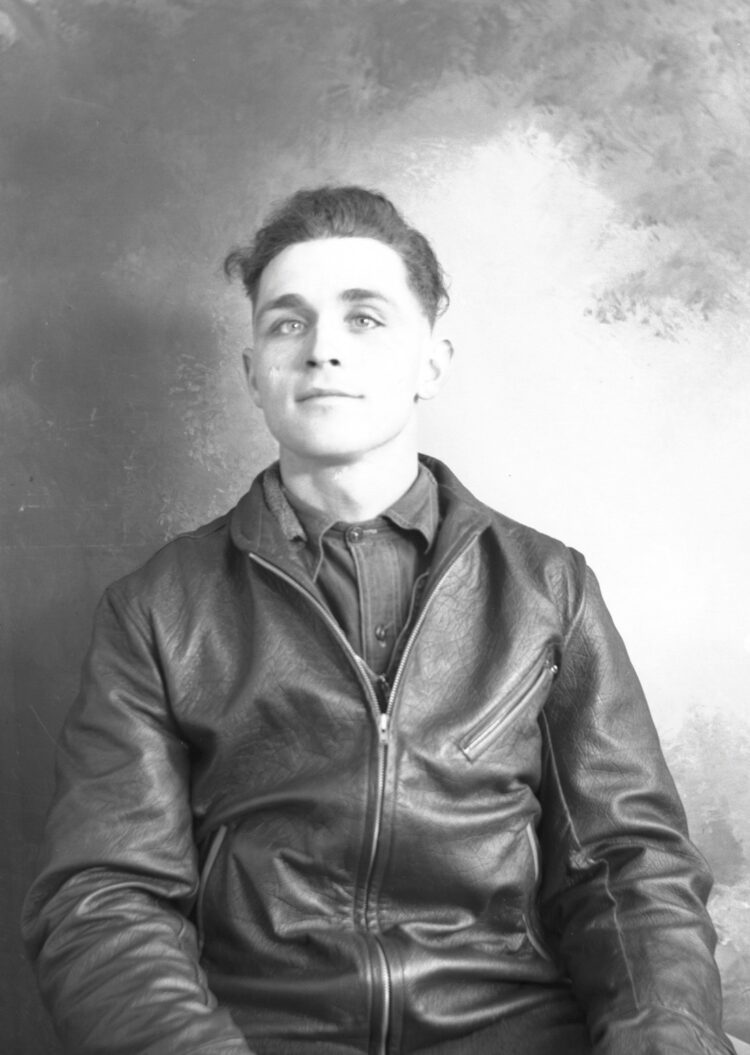
Marie-Alice Dumont’s photos reveal just how much she and her contemporaries valued young people. Many portraits of boys and girls were taken in her studio to mark formal occasions, such as first communions, confirmations or graduations. In a more casual setting, babies and children from Kamouraska families frequently found themselves in front of the photographer’s lens. Small babies were photographed alone or with their mothers. Outside the studio, Marie-Alice regularly captured the young people around her, including her many nieces and nephews. Occasionally, she gives us a glimpse of the pastimes and hobbies of Kamouraska’s youth: a picnic here, a group of friends playing in the village there, or simple everyday moments when visiting her loved ones.
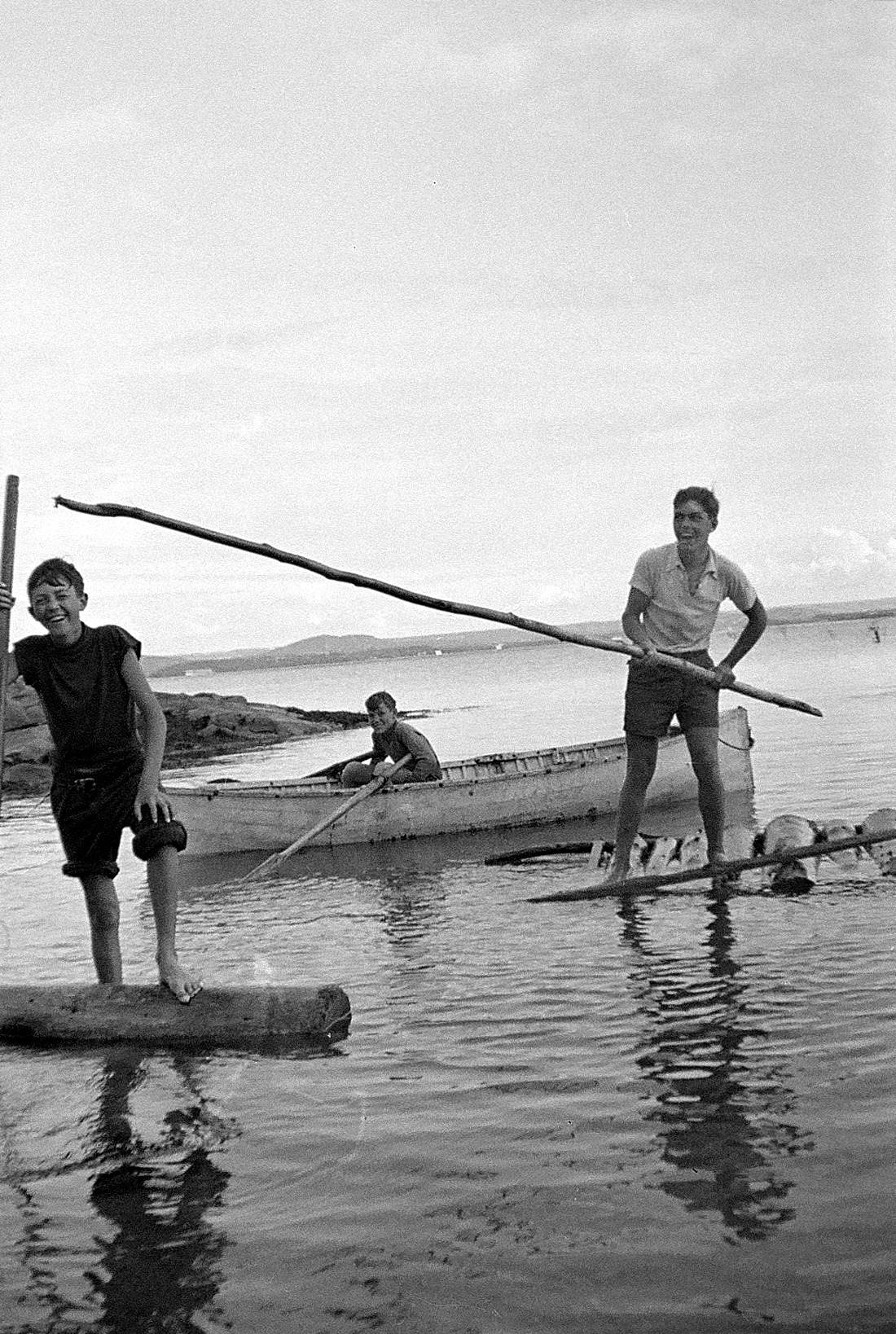
The St. Lawrence River has always been part of daily life for young people in Kamouraska. Today, just as in the early 20th century, it is a place to swim, play and spend time outdoors. The boys in this image are likely Marie-Alice Dumont’s nephews.
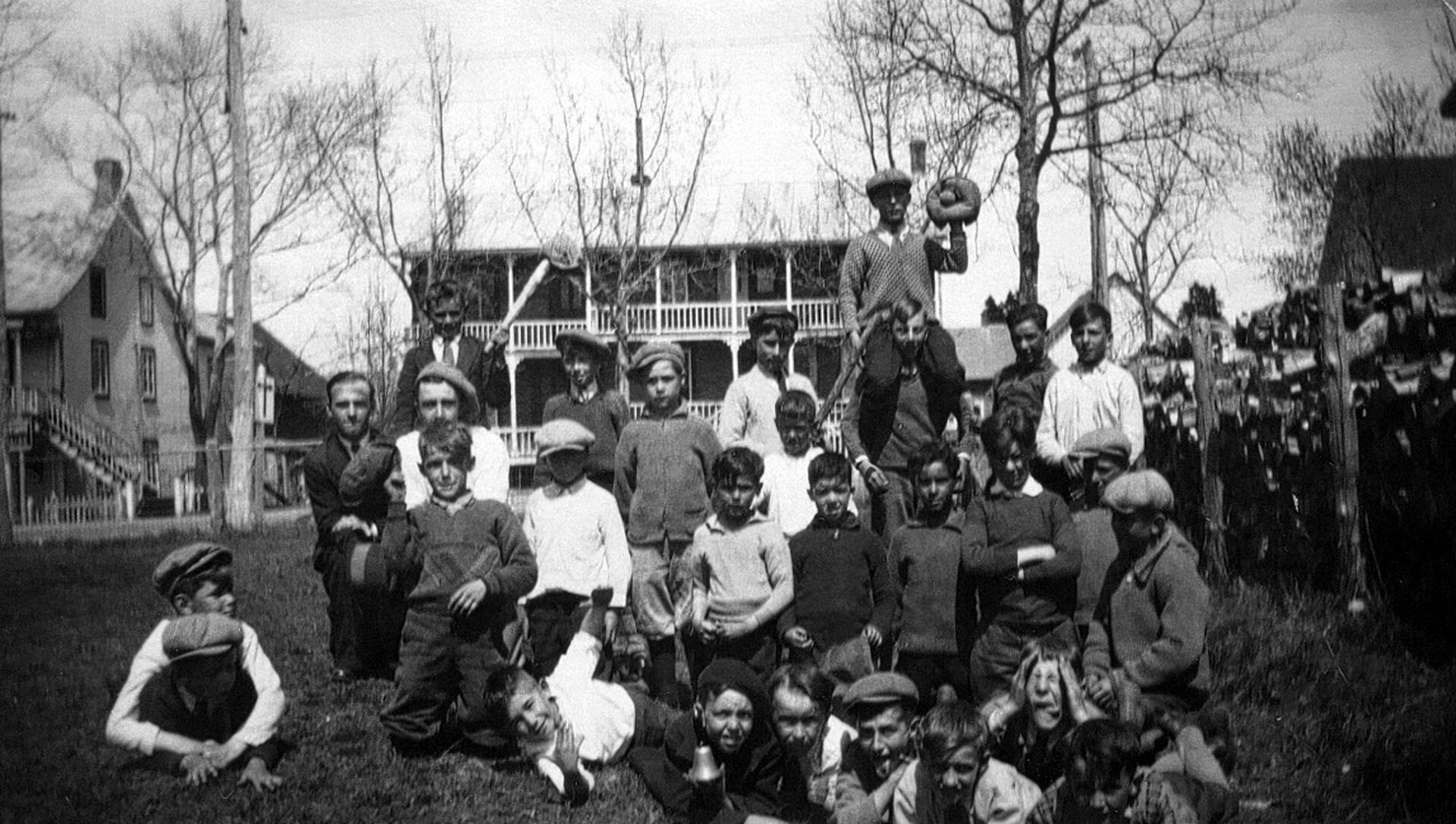
At the time this playful photo was taken, literacy was on the rise in Quebec, despite a decline in school attendance and the fact that compulsory schooling for all children up to age 14 would not be enacted until 1943.
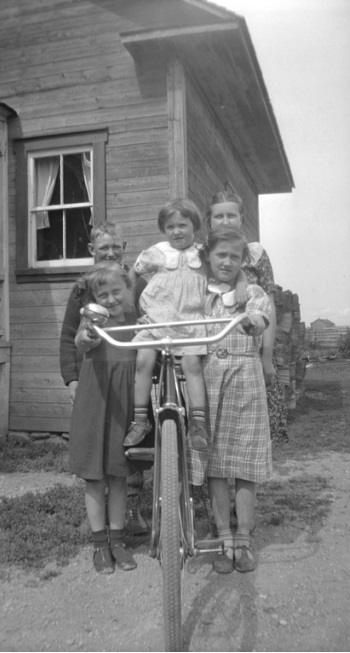
What a joy to receive a bicycle as a gift! Even though the new bike was gifted to the older sister, the whole family was thrilled and wanted to pose for Aunt Alice’s camera to mark the occasion.
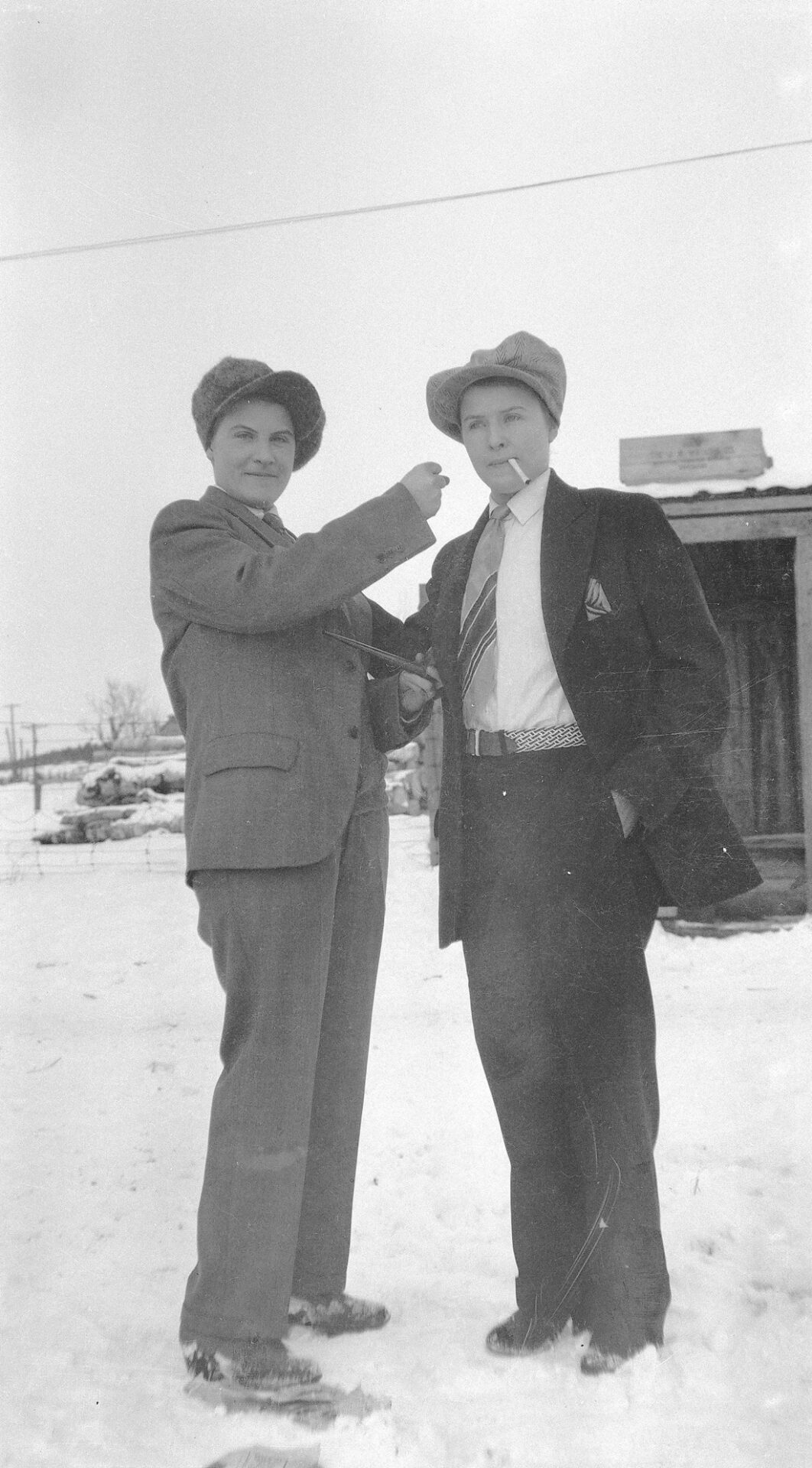
These two girls, dressed as men, chose props like a cigarette and a pipe, mocking a punch to the face to mimic the behaviour of their male counterparts. Is it just a caricature or a subtle commentary on masculinity in their time?
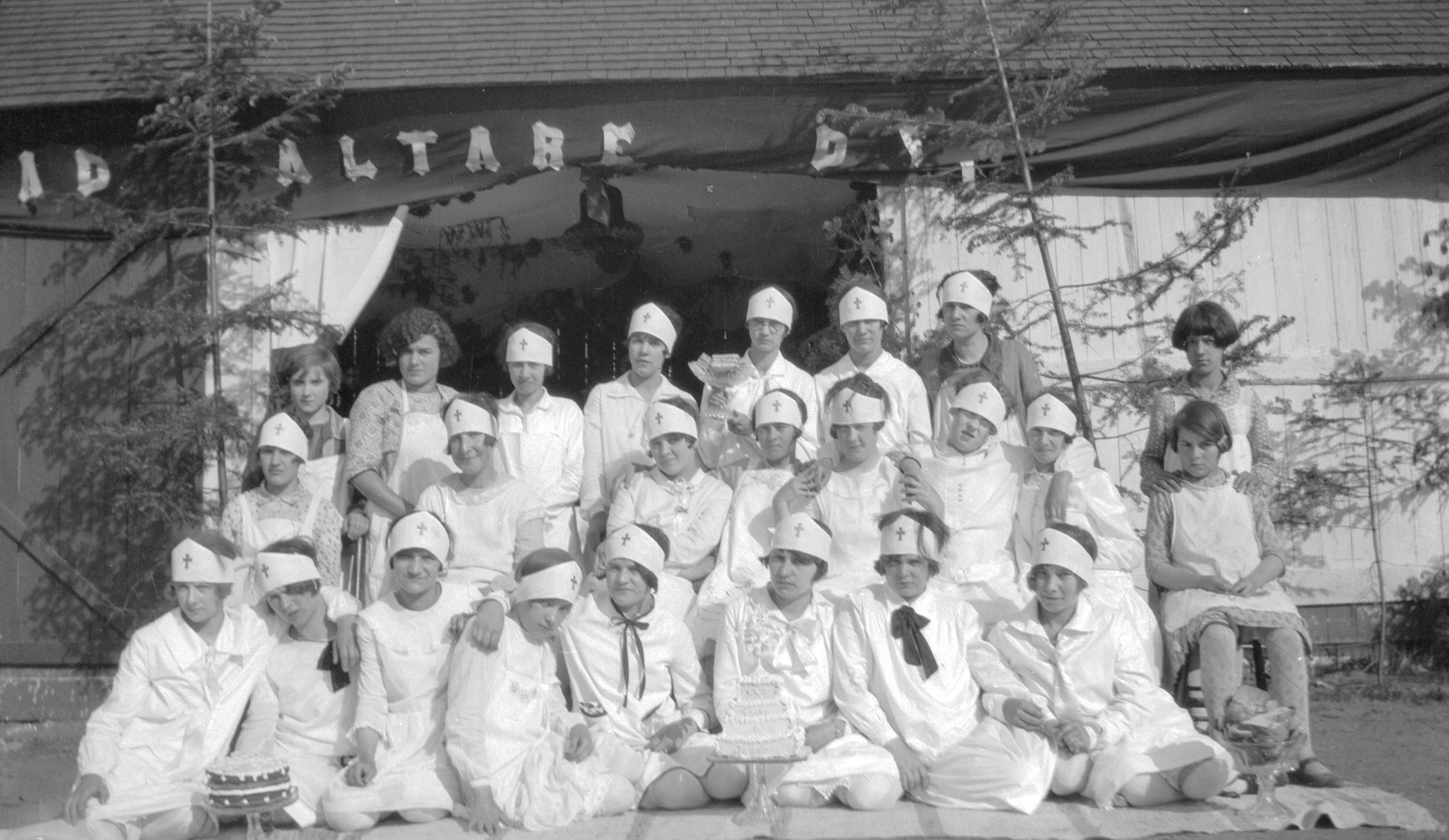
Scouting was a popular Catholic youth movement in French Canada during the 1930s. It served as a way for the Church to guide young people and pass on Christian values during a time of significant social and economic upheaval.
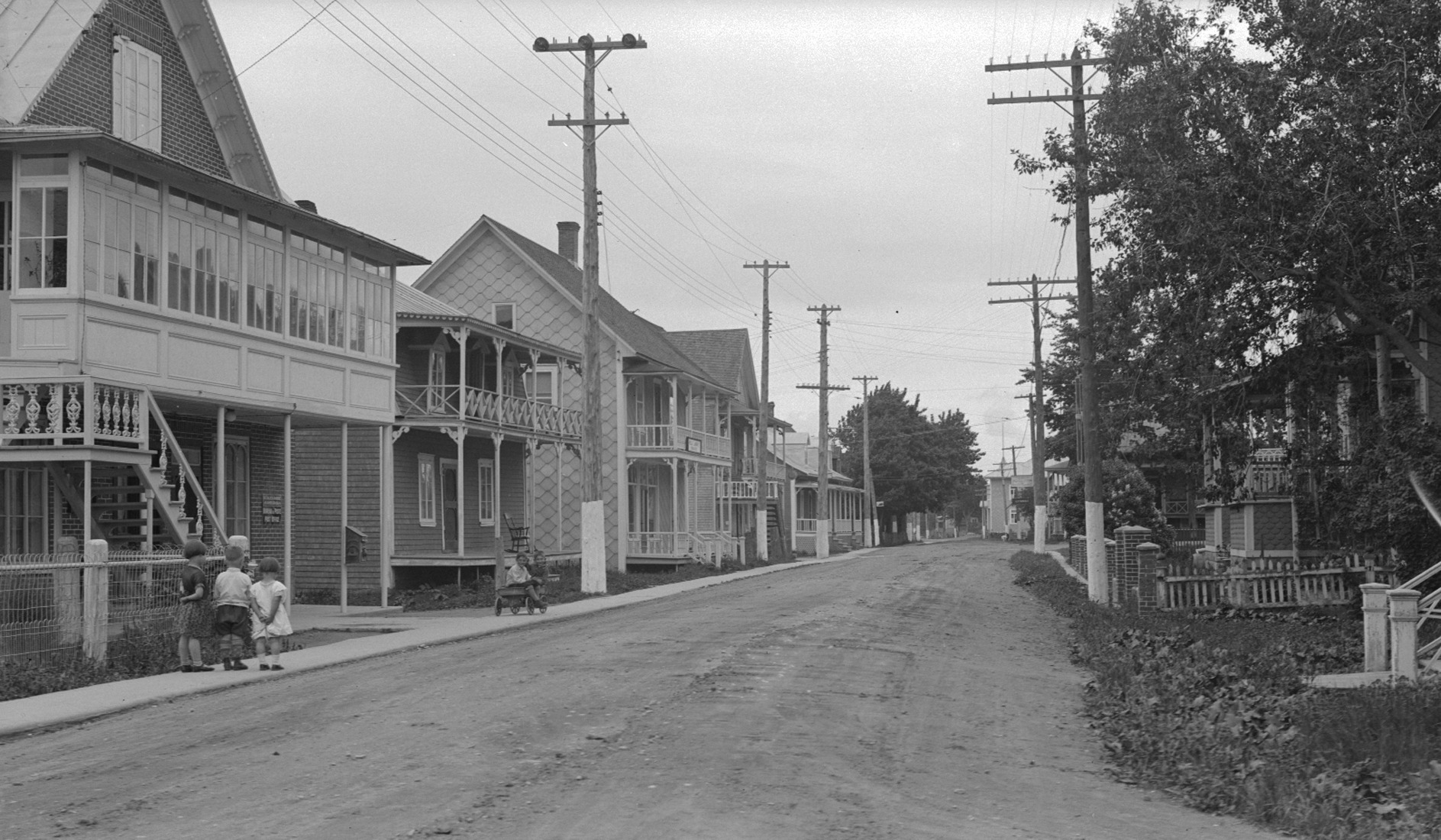
This street scene is one of Dumont’s most striking images. In addition to offering a beautiful view of this area of Saint-Alexandre, it captures a quiet moment of pause in the midst of children’s sidewalk play.
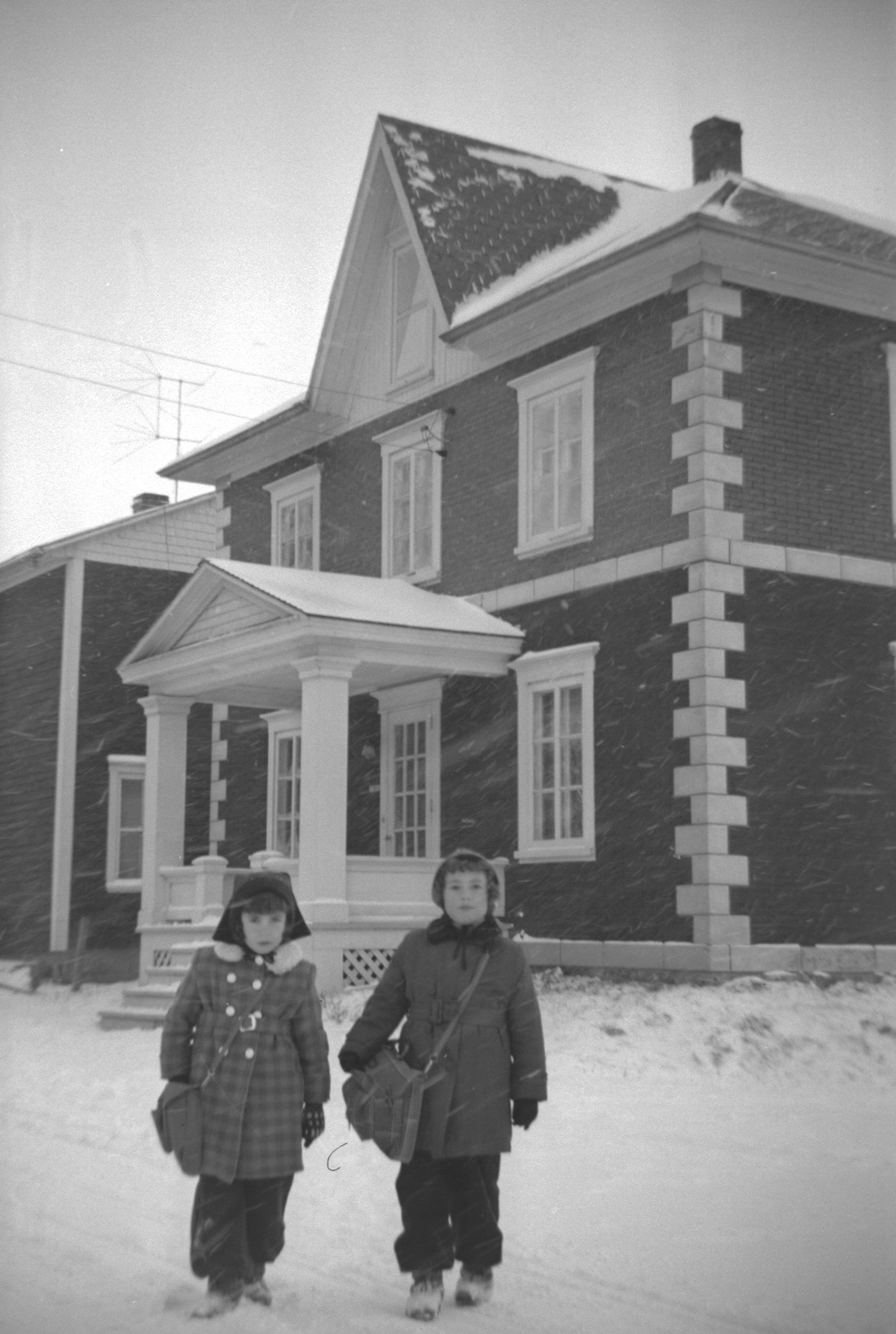
“In my day, we walked miles to school, even in a snowstorm!” You can easily imagine Céline and Pierrette Dumont, nieces of the photographer, sharing this story in their later years.
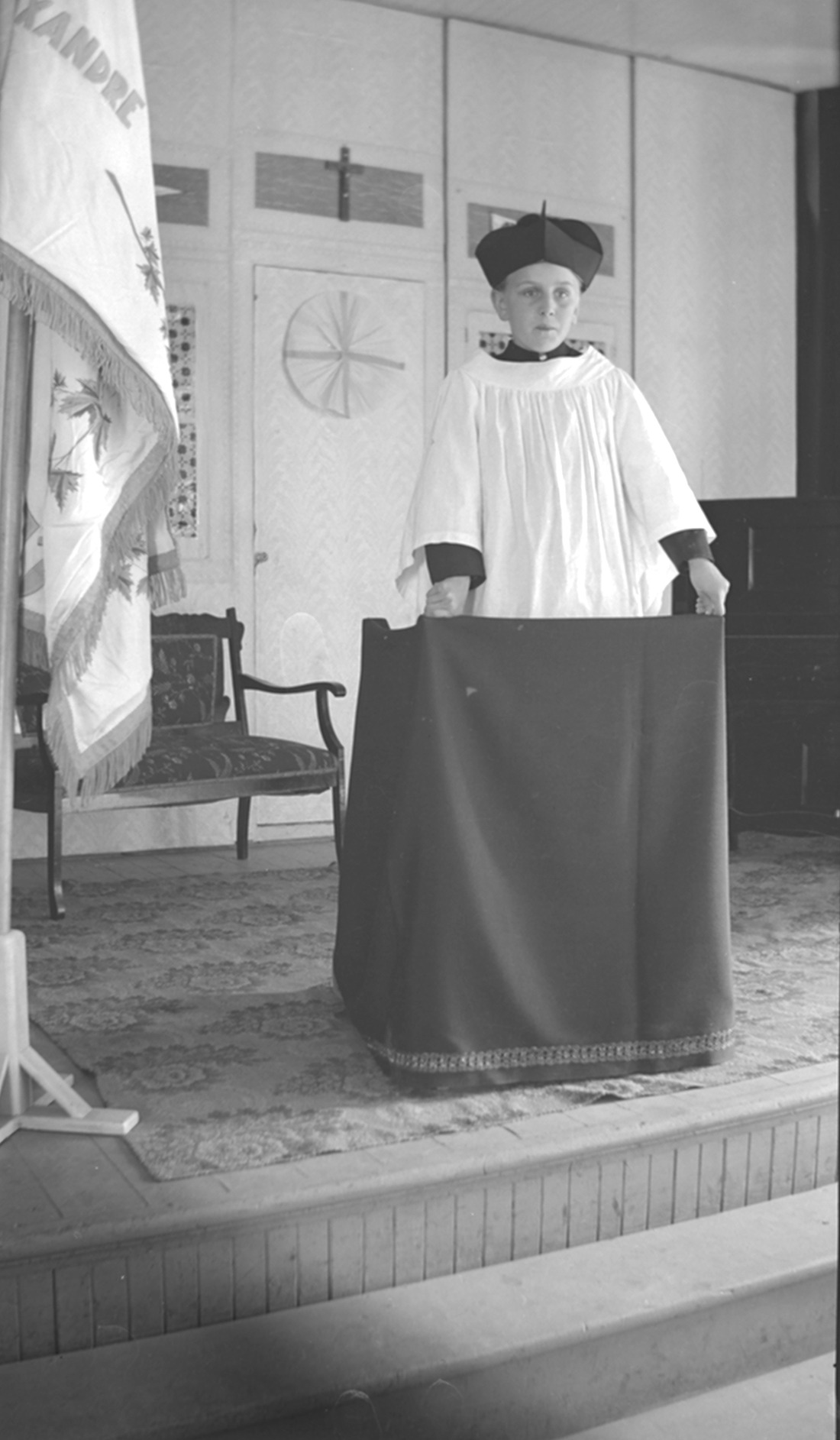
In Dumont’s era, many young boys served as altar boys during Mass or sang in the choir. Their role assisting the priest during religious ceremonies was important.
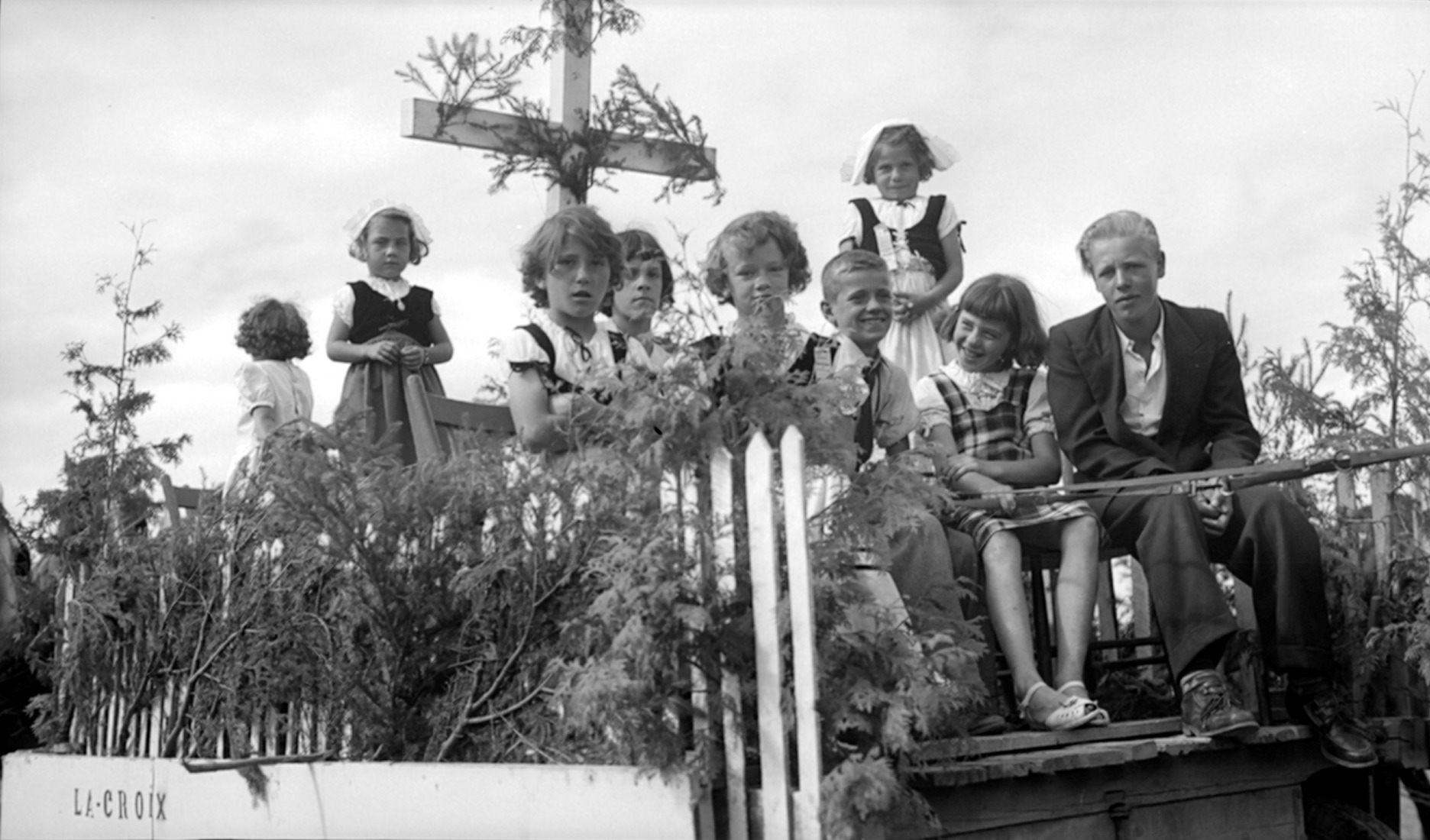
Many youth groups were involved in the parade of decorated floats for Saint-Alexandre’s centennial celebrations. In this one, about 10 participants staged a representation of the Cross, perhaps a roadside cross, a common feature of Catholic popular devotion.
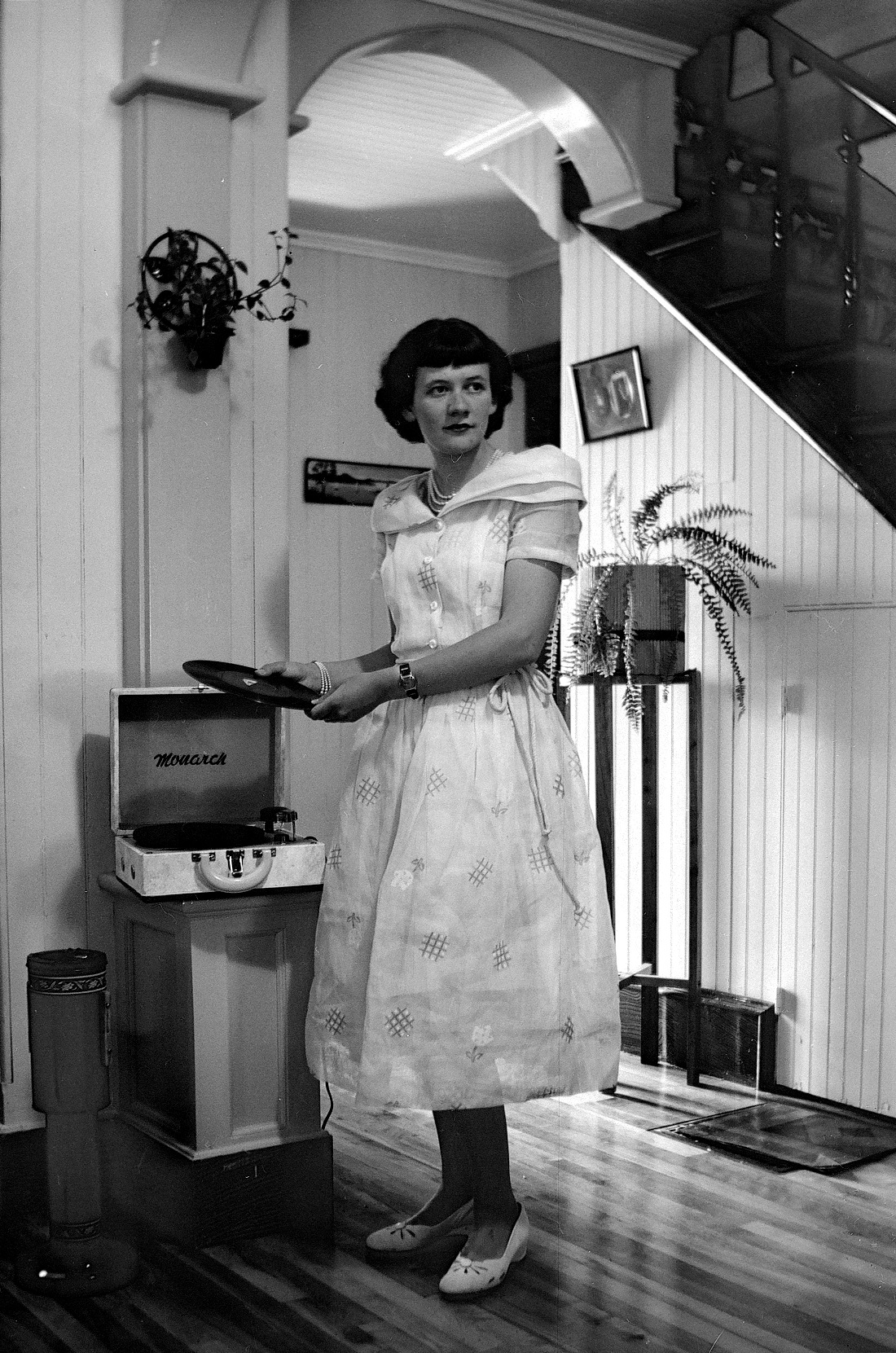
Louise Pelletier and her sister Denise proudly show off their vinyl record collection. When the photographer visited their home, not only did they put on their finest dresses, but they also asked Dumont to take their portrait with their treasured records.
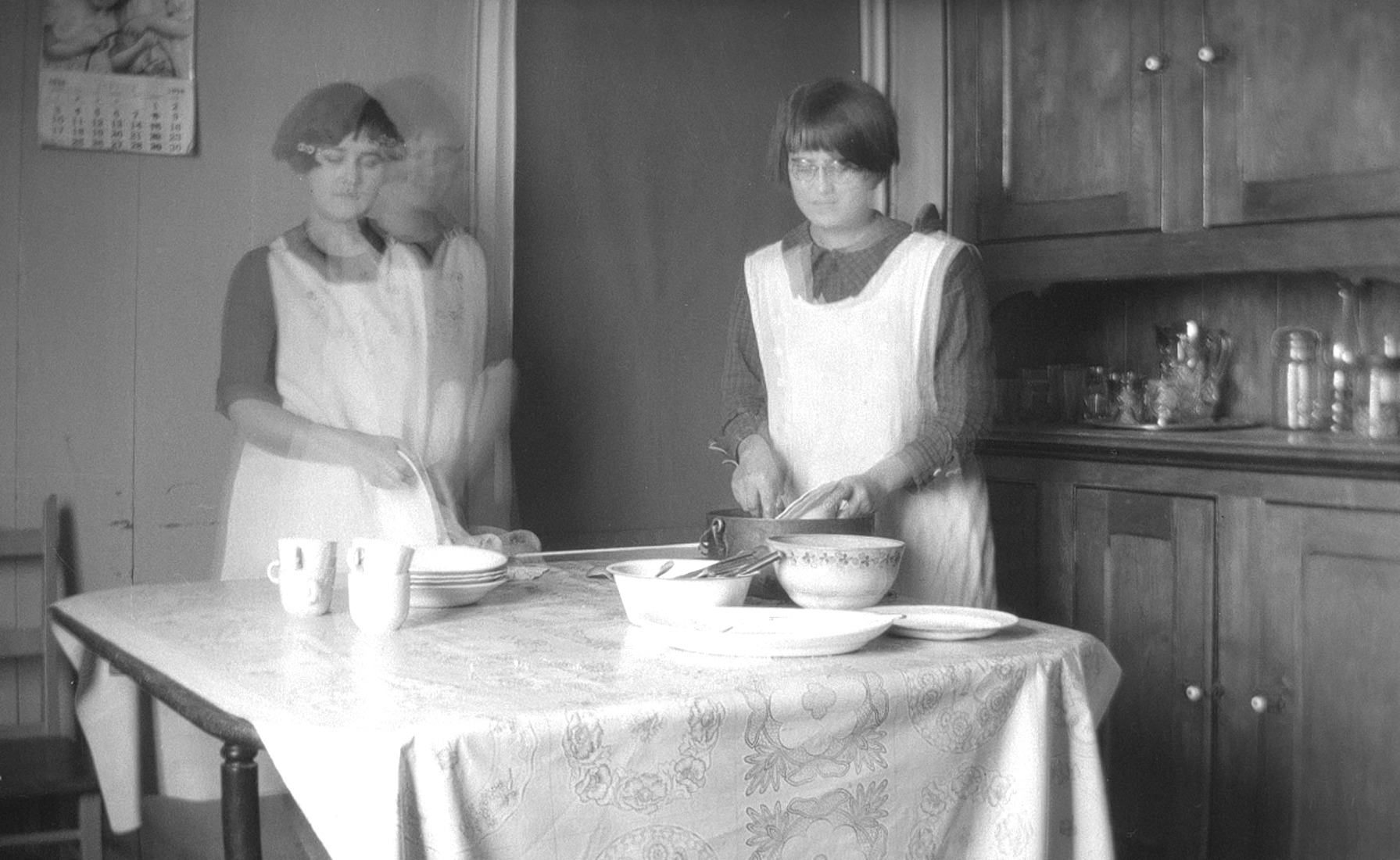
In the Dumont family, young girls were involved in domestic chores from an early age, like doing the dishes. In a household that large, everyone had to pitch in!
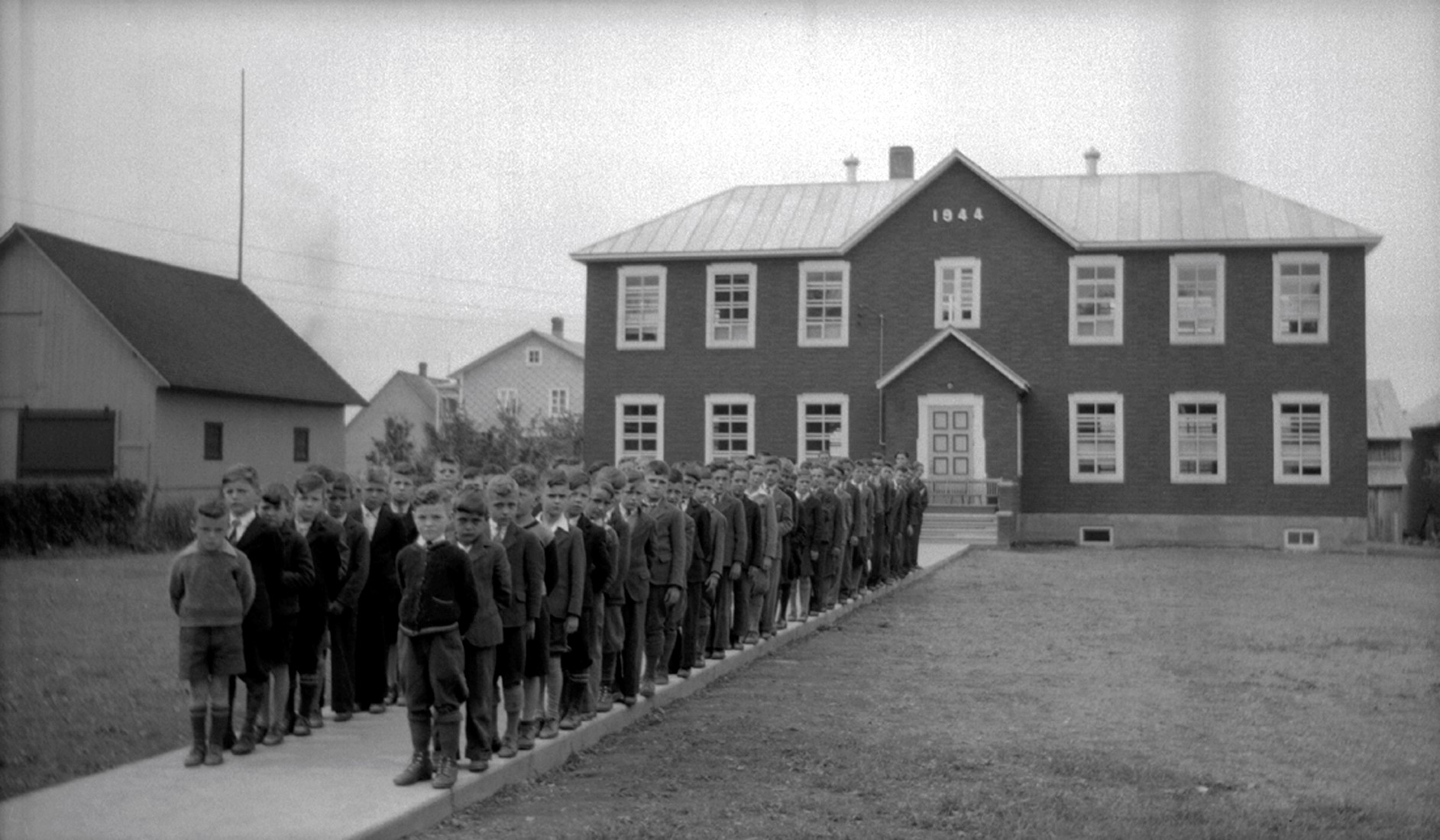
Who does not remember lining up in formation at school to the sound of the bell? The 60 or so boys patiently waiting here for the photographer to finish her work were likely among the first students at this newly built school.
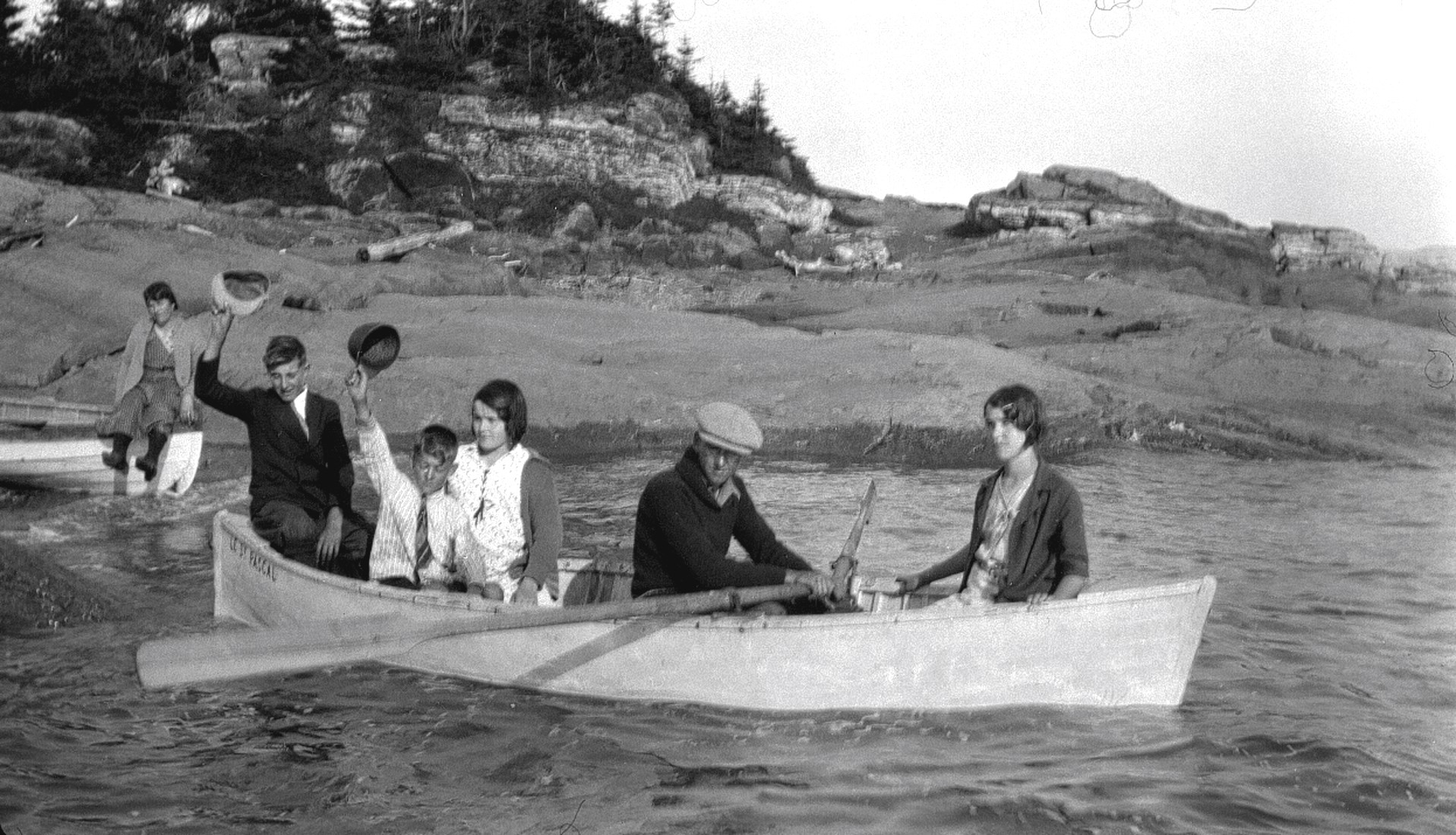
What are these five Ouellet nieces and nephews doing aboard the boat named Le St-Pascal? Under the watchful eye of their mother, Émilia, are they welcoming Aunt Alice to Patins Island or perhaps bidding her farewell?
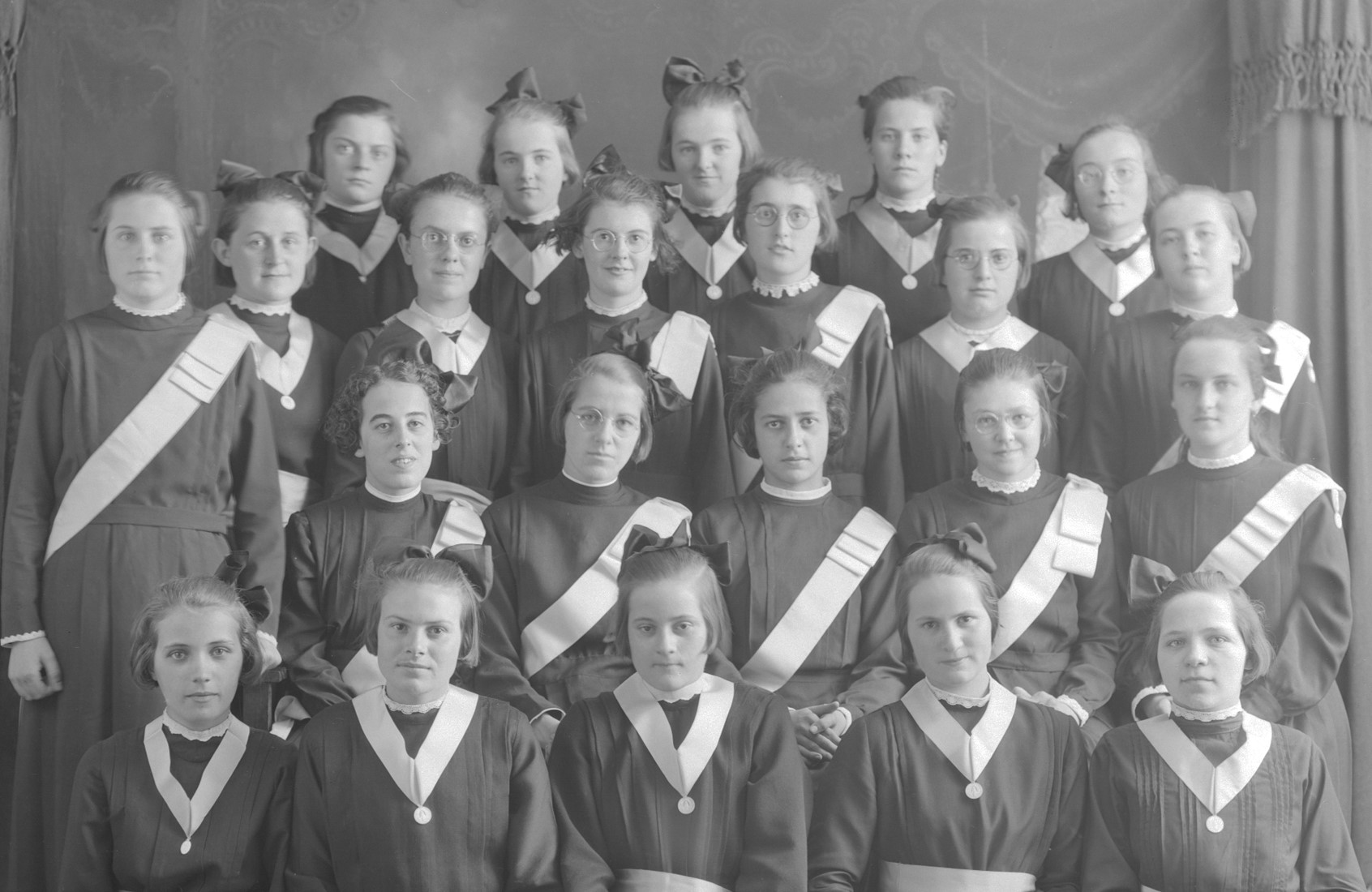
When Abbot Joseph-Napoléon Dumont addressed young women about careers and vocations, the options were limited. Marriage was, of course, one such option; though it usually meant being confined to the home. As for single women, he said they had “great value on this Earth,” as they could raise younger siblings, become teachers or serve as housekeepers. Napoléon did not mention the case of his own sister, who became a professional photographer. This is a telling omission, both of the exceptional nature of her career and of the narrow paths available to women at the time! What kind of future did these 1935 graduates imagine for themselves?
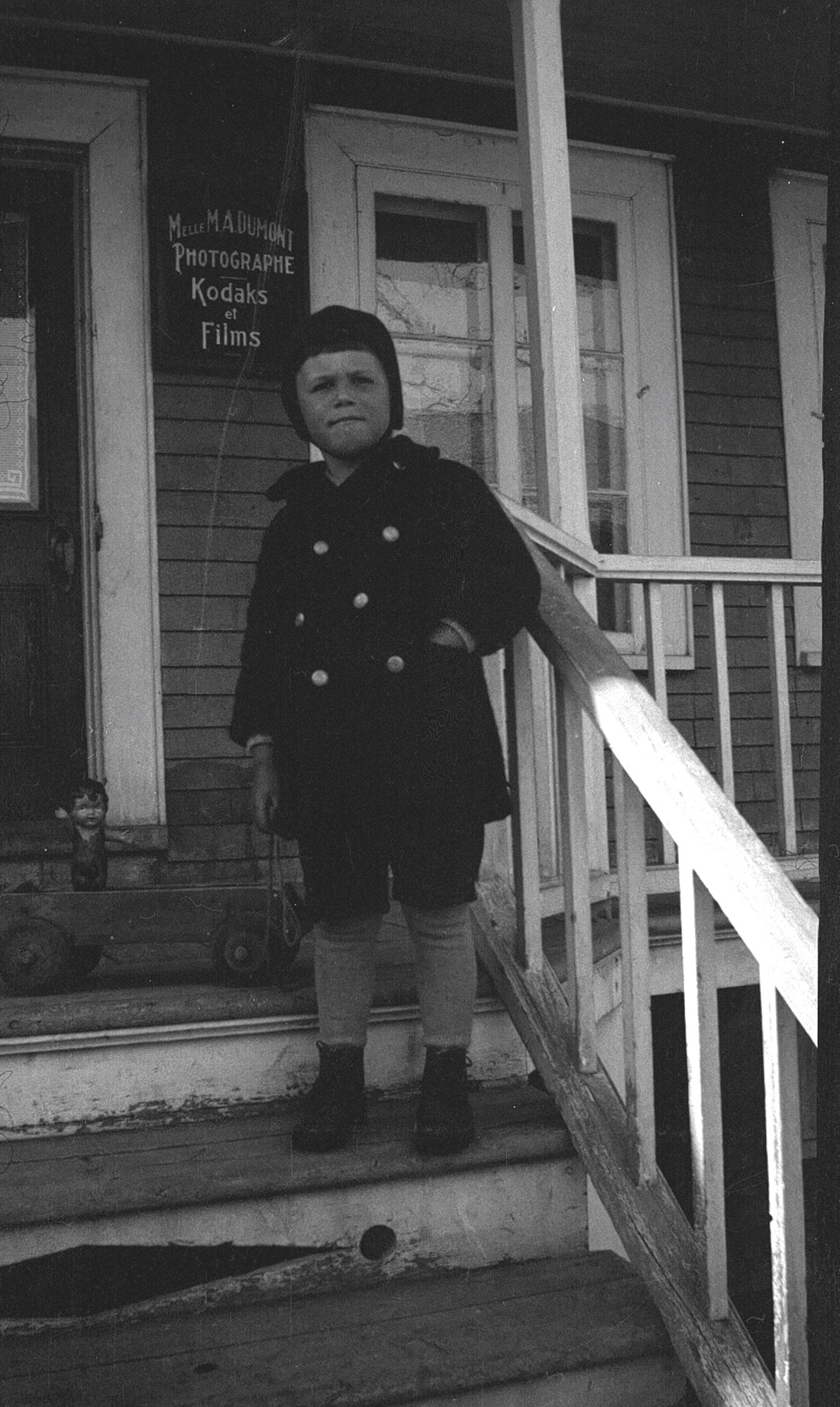
Marcel Boucher stands proudly on the steps of his aunt’s studio, with her shop sign clearly visible in the background.
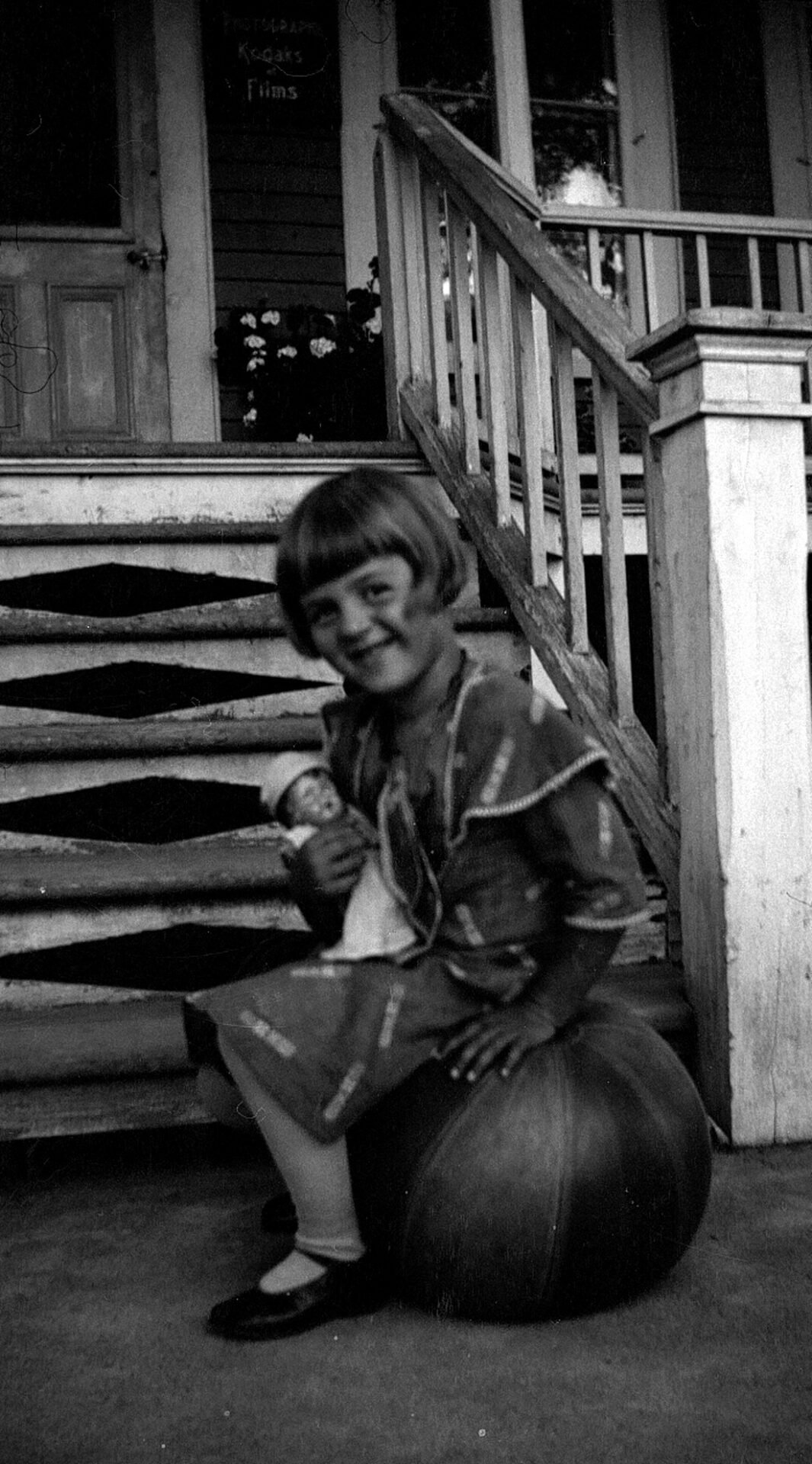
For Dumont, any occasion seemed like a good one to photograph children, or at least, that is the impression her archive gives. In this image, she captures a candid moment as a visiting niece plays in the studio.
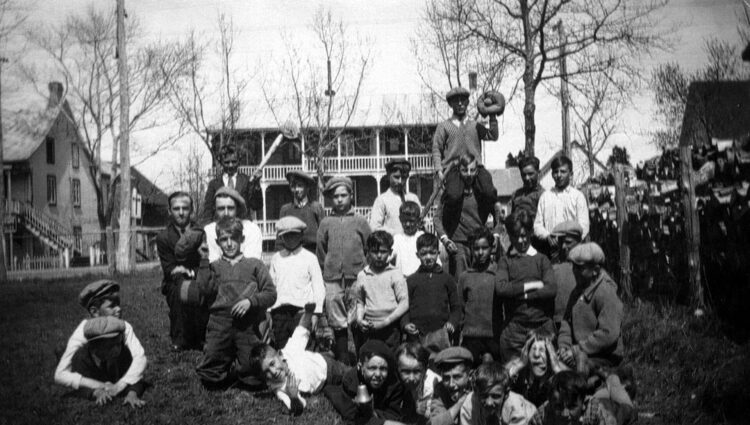
At the time this playful photo was taken, literacy was on the rise in Quebec, despite a decline in school attendance and the fact that compulsory schooling for all children up to age 14 would not be enacted until 1943.
What a joy to receive a bicycle as a gift! Even though the new bike was gifted to the older sister, the whole family was thrilled and wanted to pose for Aunt Alice’s camera to mark the occasion.
These two girls, dressed as men, chose props like a cigarette and a pipe, mocking a punch to the face to mimic the behaviour of their male counterparts. Is it just a caricature or a subtle commentary on masculinity in their time?
Scouting was a popular Catholic youth movement in French Canada during the 1930s. It served as a way for the Church to guide young people and pass on Christian values during a time of significant social and economic upheaval.
This street scene is one of Dumont’s most striking images. In addition to offering a beautiful view of this area of Saint-Alexandre, it captures a quiet moment of pause in the midst of children’s sidewalk play.
“In my day, we walked miles to school, even in a snowstorm!” You can easily imagine Céline and Pierrette Dumont, nieces of the photographer, sharing this story in their later years.
In Dumont’s era, many young boys served as altar boys during Mass or sang in the choir. Their role assisting the priest during religious ceremonies was important.
Many youth groups were involved in the parade of decorated floats for Saint-Alexandre’s centennial celebrations. In this one, about 10 participants staged a representation of the Cross, perhaps a roadside cross, a common feature of Catholic popular devotion.
Louise Pelletier and her sister Denise proudly show off their vinyl record collection. When the photographer visited their home, not only did they put on their finest dresses, but they also asked Dumont to take their portrait with their treasured records.
In the Dumont family, young girls were involved in domestic chores from an early age, like doing the dishes. In a household that large, everyone had to pitch in!
Who does not remember lining up in formation at school to the sound of the bell? The 60 or so boys patiently waiting here for the photographer to finish her work were likely among the first students at this newly built school.
What are these five Ouellet nieces and nephews doing aboard the boat named Le St-Pascal? Under the watchful eye of their mother, Émilia, are they welcoming Aunt Alice to Patins Island or perhaps bidding her farewell?
When Abbot Joseph-Napoléon Dumont addressed young women about careers and vocations, the options were limited. Marriage was, of course, one such option; though it usually meant being confined to the home. As for single women, he said they had “great value on this Earth,” as they could raise younger siblings, become teachers or serve as housekeepers. Napoléon did not mention the case of his own sister, who became a professional photographer. This is a telling omission, both of the exceptional nature of her career and of the narrow paths available to women at the time! What kind of future did these 1935 graduates imagine for themselves?
Marcel Boucher stands proudly on the steps of his aunt’s studio, with her shop sign clearly visible in the background.
For Dumont, any occasion seemed like a good one to photograph children, or at least, that is the impression her archive gives. In this image, she captures a candid moment as a visiting niece plays in the studio.
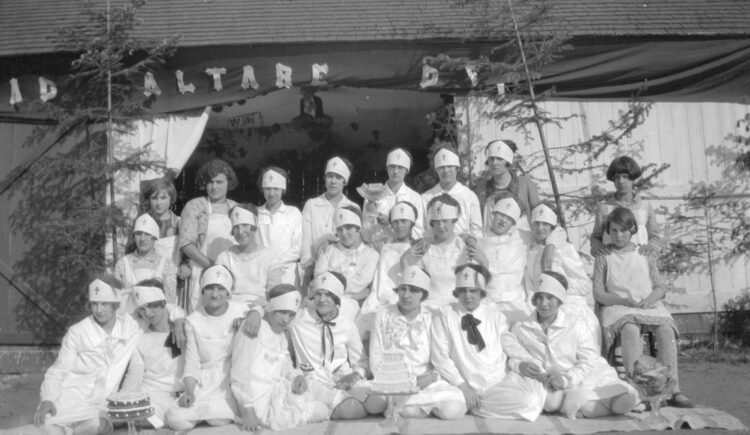
At the time this playful photo was taken, literacy was on the rise in Quebec, despite a decline in school attendance and the fact that compulsory schooling for all children up to age 14 would not be enacted until 1943.
What a joy to receive a bicycle as a gift! Even though the new bike was gifted to the older sister, the whole family was thrilled and wanted to pose for Aunt Alice’s camera to mark the occasion.
These two girls, dressed as men, chose props like a cigarette and a pipe, mocking a punch to the face to mimic the behaviour of their male counterparts. Is it just a caricature or a subtle commentary on masculinity in their time?
Scouting was a popular Catholic youth movement in French Canada during the 1930s. It served as a way for the Church to guide young people and pass on Christian values during a time of significant social and economic upheaval.
This street scene is one of Dumont’s most striking images. In addition to offering a beautiful view of this area of Saint-Alexandre, it captures a quiet moment of pause in the midst of children’s sidewalk play.
“In my day, we walked miles to school, even in a snowstorm!” You can easily imagine Céline and Pierrette Dumont, nieces of the photographer, sharing this story in their later years.
In Dumont’s era, many young boys served as altar boys during Mass or sang in the choir. Their role assisting the priest during religious ceremonies was important.
Many youth groups were involved in the parade of decorated floats for Saint-Alexandre’s centennial celebrations. In this one, about 10 participants staged a representation of the Cross, perhaps a roadside cross, a common feature of Catholic popular devotion.
Louise Pelletier and her sister Denise proudly show off their vinyl record collection. When the photographer visited their home, not only did they put on their finest dresses, but they also asked Dumont to take their portrait with their treasured records.
In the Dumont family, young girls were involved in domestic chores from an early age, like doing the dishes. In a household that large, everyone had to pitch in!
Who does not remember lining up in formation at school to the sound of the bell? The 60 or so boys patiently waiting here for the photographer to finish her work were likely among the first students at this newly built school.
What are these five Ouellet nieces and nephews doing aboard the boat named Le St-Pascal? Under the watchful eye of their mother, Émilia, are they welcoming Aunt Alice to Patins Island or perhaps bidding her farewell?
When Abbot Joseph-Napoléon Dumont addressed young women about careers and vocations, the options were limited. Marriage was, of course, one such option; though it usually meant being confined to the home. As for single women, he said they had “great value on this Earth,” as they could raise younger siblings, become teachers or serve as housekeepers. Napoléon did not mention the case of his own sister, who became a professional photographer. This is a telling omission, both of the exceptional nature of her career and of the narrow paths available to women at the time! What kind of future did these 1935 graduates imagine for themselves?
Marcel Boucher stands proudly on the steps of his aunt’s studio, with her shop sign clearly visible in the background.
For Dumont, any occasion seemed like a good one to photograph children, or at least, that is the impression her archive gives. In this image, she captures a candid moment as a visiting niece plays in the studio.
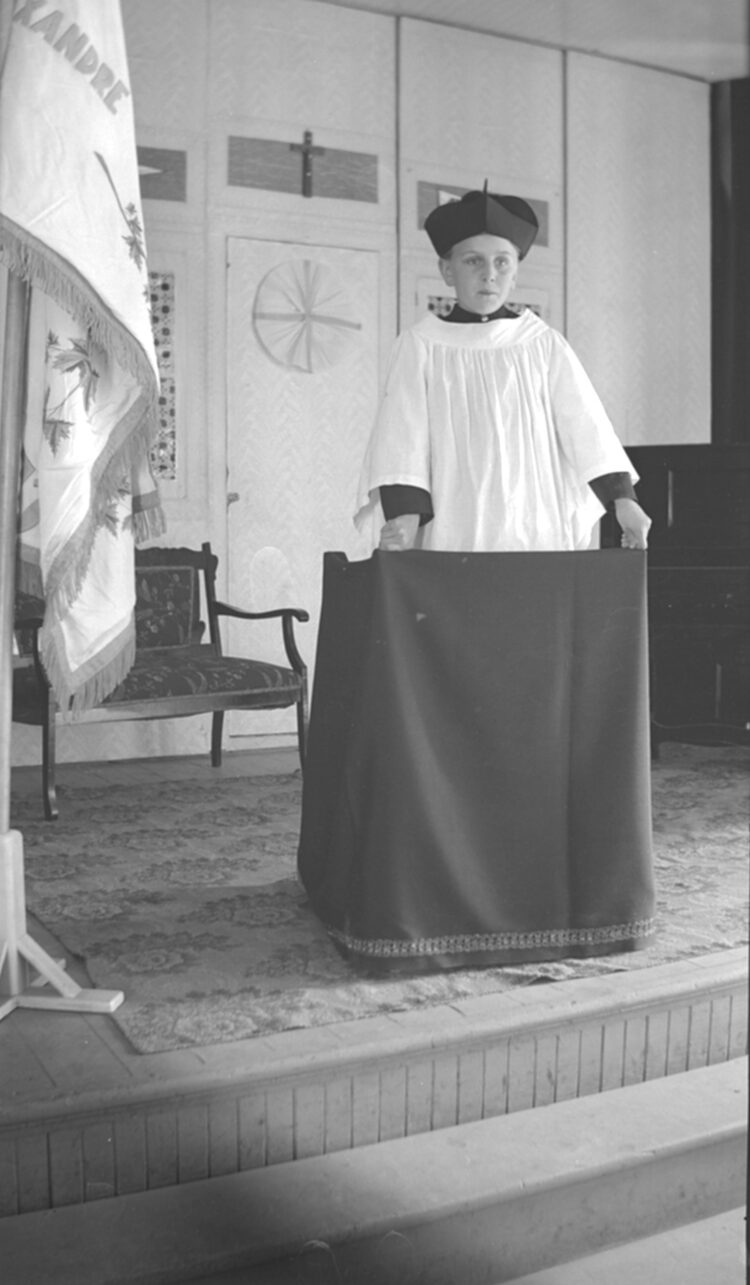
At the time this playful photo was taken, literacy was on the rise in Quebec, despite a decline in school attendance and the fact that compulsory schooling for all children up to age 14 would not be enacted until 1943.
What a joy to receive a bicycle as a gift! Even though the new bike was gifted to the older sister, the whole family was thrilled and wanted to pose for Aunt Alice’s camera to mark the occasion.
These two girls, dressed as men, chose props like a cigarette and a pipe, mocking a punch to the face to mimic the behaviour of their male counterparts. Is it just a caricature or a subtle commentary on masculinity in their time?
Scouting was a popular Catholic youth movement in French Canada during the 1930s. It served as a way for the Church to guide young people and pass on Christian values during a time of significant social and economic upheaval.
This street scene is one of Dumont’s most striking images. In addition to offering a beautiful view of this area of Saint-Alexandre, it captures a quiet moment of pause in the midst of children’s sidewalk play.
“In my day, we walked miles to school, even in a snowstorm!” You can easily imagine Céline and Pierrette Dumont, nieces of the photographer, sharing this story in their later years.
In Dumont’s era, many young boys served as altar boys during Mass or sang in the choir. Their role assisting the priest during religious ceremonies was important.
Many youth groups were involved in the parade of decorated floats for Saint-Alexandre’s centennial celebrations. In this one, about 10 participants staged a representation of the Cross, perhaps a roadside cross, a common feature of Catholic popular devotion.
Louise Pelletier and her sister Denise proudly show off their vinyl record collection. When the photographer visited their home, not only did they put on their finest dresses, but they also asked Dumont to take their portrait with their treasured records.
In the Dumont family, young girls were involved in domestic chores from an early age, like doing the dishes. In a household that large, everyone had to pitch in!
Who does not remember lining up in formation at school to the sound of the bell? The 60 or so boys patiently waiting here for the photographer to finish her work were likely among the first students at this newly built school.
What are these five Ouellet nieces and nephews doing aboard the boat named Le St-Pascal? Under the watchful eye of their mother, Émilia, are they welcoming Aunt Alice to Patins Island or perhaps bidding her farewell?
When Abbot Joseph-Napoléon Dumont addressed young women about careers and vocations, the options were limited. Marriage was, of course, one such option; though it usually meant being confined to the home. As for single women, he said they had “great value on this Earth,” as they could raise younger siblings, become teachers or serve as housekeepers. Napoléon did not mention the case of his own sister, who became a professional photographer. This is a telling omission, both of the exceptional nature of her career and of the narrow paths available to women at the time! What kind of future did these 1935 graduates imagine for themselves?
Marcel Boucher stands proudly on the steps of his aunt’s studio, with her shop sign clearly visible in the background.
For Dumont, any occasion seemed like a good one to photograph children, or at least, that is the impression her archive gives. In this image, she captures a candid moment as a visiting niece plays in the studio.
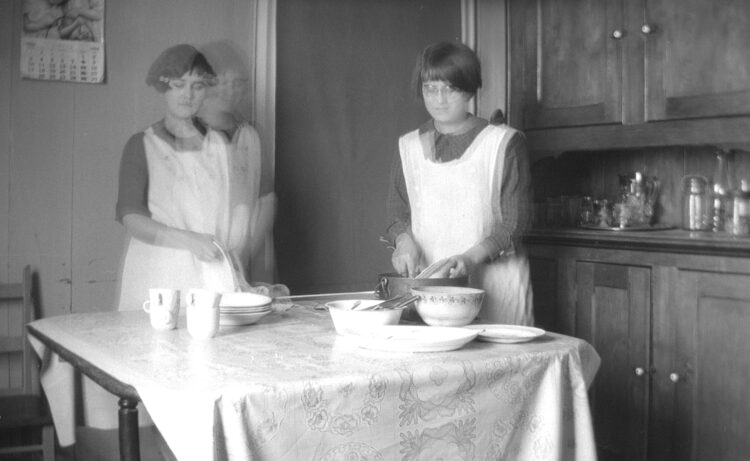
At the time this playful photo was taken, literacy was on the rise in Quebec, despite a decline in school attendance and the fact that compulsory schooling for all children up to age 14 would not be enacted until 1943.
What a joy to receive a bicycle as a gift! Even though the new bike was gifted to the older sister, the whole family was thrilled and wanted to pose for Aunt Alice’s camera to mark the occasion.
These two girls, dressed as men, chose props like a cigarette and a pipe, mocking a punch to the face to mimic the behaviour of their male counterparts. Is it just a caricature or a subtle commentary on masculinity in their time?
Scouting was a popular Catholic youth movement in French Canada during the 1930s. It served as a way for the Church to guide young people and pass on Christian values during a time of significant social and economic upheaval.
This street scene is one of Dumont’s most striking images. In addition to offering a beautiful view of this area of Saint-Alexandre, it captures a quiet moment of pause in the midst of children’s sidewalk play.
“In my day, we walked miles to school, even in a snowstorm!” You can easily imagine Céline and Pierrette Dumont, nieces of the photographer, sharing this story in their later years.
In Dumont’s era, many young boys served as altar boys during Mass or sang in the choir. Their role assisting the priest during religious ceremonies was important.
Many youth groups were involved in the parade of decorated floats for Saint-Alexandre’s centennial celebrations. In this one, about 10 participants staged a representation of the Cross, perhaps a roadside cross, a common feature of Catholic popular devotion.
Louise Pelletier and her sister Denise proudly show off their vinyl record collection. When the photographer visited their home, not only did they put on their finest dresses, but they also asked Dumont to take their portrait with their treasured records.
In the Dumont family, young girls were involved in domestic chores from an early age, like doing the dishes. In a household that large, everyone had to pitch in!
Who does not remember lining up in formation at school to the sound of the bell? The 60 or so boys patiently waiting here for the photographer to finish her work were likely among the first students at this newly built school.
What are these five Ouellet nieces and nephews doing aboard the boat named Le St-Pascal? Under the watchful eye of their mother, Émilia, are they welcoming Aunt Alice to Patins Island or perhaps bidding her farewell?
When Abbot Joseph-Napoléon Dumont addressed young women about careers and vocations, the options were limited. Marriage was, of course, one such option; though it usually meant being confined to the home. As for single women, he said they had “great value on this Earth,” as they could raise younger siblings, become teachers or serve as housekeepers. Napoléon did not mention the case of his own sister, who became a professional photographer. This is a telling omission, both of the exceptional nature of her career and of the narrow paths available to women at the time! What kind of future did these 1935 graduates imagine for themselves?
Marcel Boucher stands proudly on the steps of his aunt’s studio, with her shop sign clearly visible in the background.
For Dumont, any occasion seemed like a good one to photograph children, or at least, that is the impression her archive gives. In this image, she captures a candid moment as a visiting niece plays in the studio.
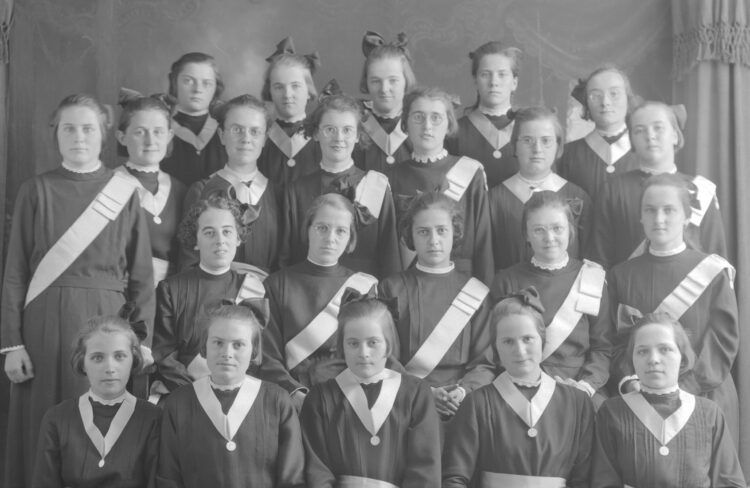
At the time this playful photo was taken, literacy was on the rise in Quebec, despite a decline in school attendance and the fact that compulsory schooling for all children up to age 14 would not be enacted until 1943.
What a joy to receive a bicycle as a gift! Even though the new bike was gifted to the older sister, the whole family was thrilled and wanted to pose for Aunt Alice’s camera to mark the occasion.
These two girls, dressed as men, chose props like a cigarette and a pipe, mocking a punch to the face to mimic the behaviour of their male counterparts. Is it just a caricature or a subtle commentary on masculinity in their time?
Scouting was a popular Catholic youth movement in French Canada during the 1930s. It served as a way for the Church to guide young people and pass on Christian values during a time of significant social and economic upheaval.
This street scene is one of Dumont’s most striking images. In addition to offering a beautiful view of this area of Saint-Alexandre, it captures a quiet moment of pause in the midst of children’s sidewalk play.
“In my day, we walked miles to school, even in a snowstorm!” You can easily imagine Céline and Pierrette Dumont, nieces of the photographer, sharing this story in their later years.
In Dumont’s era, many young boys served as altar boys during Mass or sang in the choir. Their role assisting the priest during religious ceremonies was important.
Many youth groups were involved in the parade of decorated floats for Saint-Alexandre’s centennial celebrations. In this one, about 10 participants staged a representation of the Cross, perhaps a roadside cross, a common feature of Catholic popular devotion.
Louise Pelletier and her sister Denise proudly show off their vinyl record collection. When the photographer visited their home, not only did they put on their finest dresses, but they also asked Dumont to take their portrait with their treasured records.
In the Dumont family, young girls were involved in domestic chores from an early age, like doing the dishes. In a household that large, everyone had to pitch in!
Who does not remember lining up in formation at school to the sound of the bell? The 60 or so boys patiently waiting here for the photographer to finish her work were likely among the first students at this newly built school.
What are these five Ouellet nieces and nephews doing aboard the boat named Le St-Pascal? Under the watchful eye of their mother, Émilia, are they welcoming Aunt Alice to Patins Island or perhaps bidding her farewell?
When Abbot Joseph-Napoléon Dumont addressed young women about careers and vocations, the options were limited. Marriage was, of course, one such option; though it usually meant being confined to the home. As for single women, he said they had “great value on this Earth,” as they could raise younger siblings, become teachers or serve as housekeepers. Napoléon did not mention the case of his own sister, who became a professional photographer. This is a telling omission, both of the exceptional nature of her career and of the narrow paths available to women at the time! What kind of future did these 1935 graduates imagine for themselves?
Marcel Boucher stands proudly on the steps of his aunt’s studio, with her shop sign clearly visible in the background.
For Dumont, any occasion seemed like a good one to photograph children, or at least, that is the impression her archive gives. In this image, she captures a candid moment as a visiting niece plays in the studio.
At the time this playful photo was taken, literacy was on the rise in Quebec, despite a decline in school attendance and the fact that compulsory schooling for all children up to age 14 would not be enacted until 1943.
What a joy to receive a bicycle as a gift! Even though the new bike was gifted to the older sister, the whole family was thrilled and wanted to pose for Aunt Alice’s camera to mark the occasion.
These two girls, dressed as men, chose props like a cigarette and a pipe, mocking a punch to the face to mimic the behaviour of their male counterparts. Is it just a caricature or a subtle commentary on masculinity in their time?
Scouting was a popular Catholic youth movement in French Canada during the 1930s. It served as a way for the Church to guide young people and pass on Christian values during a time of significant social and economic upheaval.
This street scene is one of Dumont’s most striking images. In addition to offering a beautiful view of this area of Saint-Alexandre, it captures a quiet moment of pause in the midst of children’s sidewalk play.
“In my day, we walked miles to school, even in a snowstorm!” You can easily imagine Céline and Pierrette Dumont, nieces of the photographer, sharing this story in their later years.
In Dumont’s era, many young boys served as altar boys during Mass or sang in the choir. Their role assisting the priest during religious ceremonies was important.
Many youth groups were involved in the parade of decorated floats for Saint-Alexandre’s centennial celebrations. In this one, about 10 participants staged a representation of the Cross, perhaps a roadside cross, a common feature of Catholic popular devotion.
Louise Pelletier and her sister Denise proudly show off their vinyl record collection. When the photographer visited their home, not only did they put on their finest dresses, but they also asked Dumont to take their portrait with their treasured records.
In the Dumont family, young girls were involved in domestic chores from an early age, like doing the dishes. In a household that large, everyone had to pitch in!
Who does not remember lining up in formation at school to the sound of the bell? The 60 or so boys patiently waiting here for the photographer to finish her work were likely among the first students at this newly built school.
What are these five Ouellet nieces and nephews doing aboard the boat named Le St-Pascal? Under the watchful eye of their mother, Émilia, are they welcoming Aunt Alice to Patins Island or perhaps bidding her farewell?
When Abbot Joseph-Napoléon Dumont addressed young women about careers and vocations, the options were limited. Marriage was, of course, one such option; though it usually meant being confined to the home. As for single women, he said they had “great value on this Earth,” as they could raise younger siblings, become teachers or serve as housekeepers. Napoléon did not mention the case of his own sister, who became a professional photographer. This is a telling omission, both of the exceptional nature of her career and of the narrow paths available to women at the time! What kind of future did these 1935 graduates imagine for themselves?
Marcel Boucher stands proudly on the steps of his aunt’s studio, with her shop sign clearly visible in the background.
For Dumont, any occasion seemed like a good one to photograph children, or at least, that is the impression her archive gives. In this image, she captures a candid moment as a visiting niece plays in the studio.
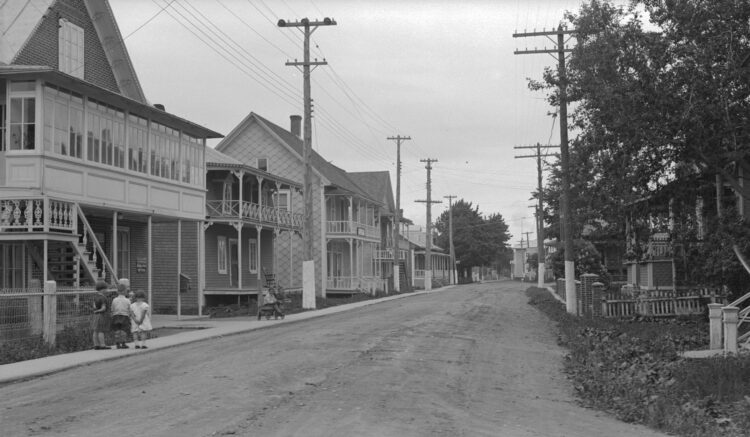
At the time this playful photo was taken, literacy was on the rise in Quebec, despite a decline in school attendance and the fact that compulsory schooling for all children up to age 14 would not be enacted until 1943.
What a joy to receive a bicycle as a gift! Even though the new bike was gifted to the older sister, the whole family was thrilled and wanted to pose for Aunt Alice’s camera to mark the occasion.
These two girls, dressed as men, chose props like a cigarette and a pipe, mocking a punch to the face to mimic the behaviour of their male counterparts. Is it just a caricature or a subtle commentary on masculinity in their time?
Scouting was a popular Catholic youth movement in French Canada during the 1930s. It served as a way for the Church to guide young people and pass on Christian values during a time of significant social and economic upheaval.
This street scene is one of Dumont’s most striking images. In addition to offering a beautiful view of this area of Saint-Alexandre, it captures a quiet moment of pause in the midst of children’s sidewalk play.
“In my day, we walked miles to school, even in a snowstorm!” You can easily imagine Céline and Pierrette Dumont, nieces of the photographer, sharing this story in their later years.
In Dumont’s era, many young boys served as altar boys during Mass or sang in the choir. Their role assisting the priest during religious ceremonies was important.
Many youth groups were involved in the parade of decorated floats for Saint-Alexandre’s centennial celebrations. In this one, about 10 participants staged a representation of the Cross, perhaps a roadside cross, a common feature of Catholic popular devotion.
Louise Pelletier and her sister Denise proudly show off their vinyl record collection. When the photographer visited their home, not only did they put on their finest dresses, but they also asked Dumont to take their portrait with their treasured records.
In the Dumont family, young girls were involved in domestic chores from an early age, like doing the dishes. In a household that large, everyone had to pitch in!
Who does not remember lining up in formation at school to the sound of the bell? The 60 or so boys patiently waiting here for the photographer to finish her work were likely among the first students at this newly built school.
What are these five Ouellet nieces and nephews doing aboard the boat named Le St-Pascal? Under the watchful eye of their mother, Émilia, are they welcoming Aunt Alice to Patins Island or perhaps bidding her farewell?
When Abbot Joseph-Napoléon Dumont addressed young women about careers and vocations, the options were limited. Marriage was, of course, one such option; though it usually meant being confined to the home. As for single women, he said they had “great value on this Earth,” as they could raise younger siblings, become teachers or serve as housekeepers. Napoléon did not mention the case of his own sister, who became a professional photographer. This is a telling omission, both of the exceptional nature of her career and of the narrow paths available to women at the time! What kind of future did these 1935 graduates imagine for themselves?
Marcel Boucher stands proudly on the steps of his aunt’s studio, with her shop sign clearly visible in the background.
For Dumont, any occasion seemed like a good one to photograph children, or at least, that is the impression her archive gives. In this image, she captures a candid moment as a visiting niece plays in the studio.
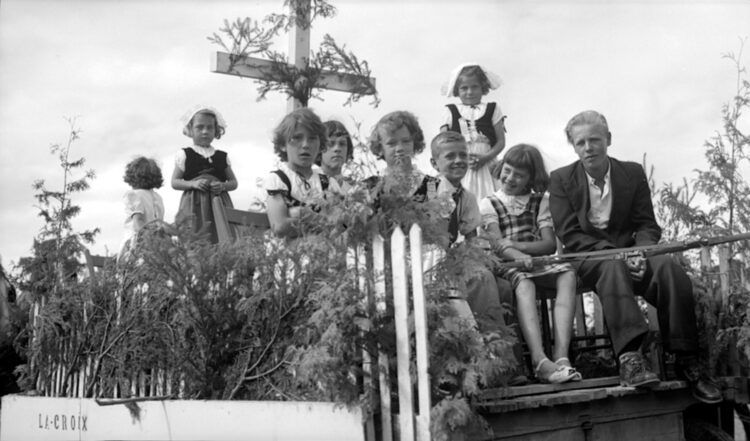
At the time this playful photo was taken, literacy was on the rise in Quebec, despite a decline in school attendance and the fact that compulsory schooling for all children up to age 14 would not be enacted until 1943.
What a joy to receive a bicycle as a gift! Even though the new bike was gifted to the older sister, the whole family was thrilled and wanted to pose for Aunt Alice’s camera to mark the occasion.
These two girls, dressed as men, chose props like a cigarette and a pipe, mocking a punch to the face to mimic the behaviour of their male counterparts. Is it just a caricature or a subtle commentary on masculinity in their time?
Scouting was a popular Catholic youth movement in French Canada during the 1930s. It served as a way for the Church to guide young people and pass on Christian values during a time of significant social and economic upheaval.
This street scene is one of Dumont’s most striking images. In addition to offering a beautiful view of this area of Saint-Alexandre, it captures a quiet moment of pause in the midst of children’s sidewalk play.
“In my day, we walked miles to school, even in a snowstorm!” You can easily imagine Céline and Pierrette Dumont, nieces of the photographer, sharing this story in their later years.
In Dumont’s era, many young boys served as altar boys during Mass or sang in the choir. Their role assisting the priest during religious ceremonies was important.
Many youth groups were involved in the parade of decorated floats for Saint-Alexandre’s centennial celebrations. In this one, about 10 participants staged a representation of the Cross, perhaps a roadside cross, a common feature of Catholic popular devotion.
Louise Pelletier and her sister Denise proudly show off their vinyl record collection. When the photographer visited their home, not only did they put on their finest dresses, but they also asked Dumont to take their portrait with their treasured records.
In the Dumont family, young girls were involved in domestic chores from an early age, like doing the dishes. In a household that large, everyone had to pitch in!
Who does not remember lining up in formation at school to the sound of the bell? The 60 or so boys patiently waiting here for the photographer to finish her work were likely among the first students at this newly built school.
What are these five Ouellet nieces and nephews doing aboard the boat named Le St-Pascal? Under the watchful eye of their mother, Émilia, are they welcoming Aunt Alice to Patins Island or perhaps bidding her farewell?
When Abbot Joseph-Napoléon Dumont addressed young women about careers and vocations, the options were limited. Marriage was, of course, one such option; though it usually meant being confined to the home. As for single women, he said they had “great value on this Earth,” as they could raise younger siblings, become teachers or serve as housekeepers. Napoléon did not mention the case of his own sister, who became a professional photographer. This is a telling omission, both of the exceptional nature of her career and of the narrow paths available to women at the time! What kind of future did these 1935 graduates imagine for themselves?
Marcel Boucher stands proudly on the steps of his aunt’s studio, with her shop sign clearly visible in the background.
For Dumont, any occasion seemed like a good one to photograph children, or at least, that is the impression her archive gives. In this image, she captures a candid moment as a visiting niece plays in the studio.
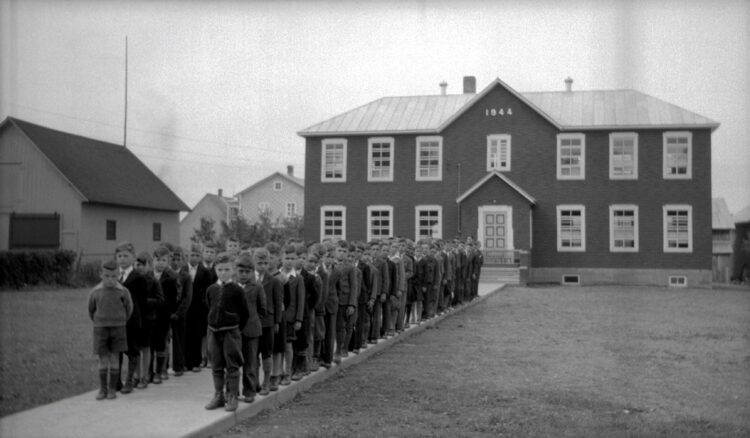
At the time this playful photo was taken, literacy was on the rise in Quebec, despite a decline in school attendance and the fact that compulsory schooling for all children up to age 14 would not be enacted until 1943.
What a joy to receive a bicycle as a gift! Even though the new bike was gifted to the older sister, the whole family was thrilled and wanted to pose for Aunt Alice’s camera to mark the occasion.
These two girls, dressed as men, chose props like a cigarette and a pipe, mocking a punch to the face to mimic the behaviour of their male counterparts. Is it just a caricature or a subtle commentary on masculinity in their time?
Scouting was a popular Catholic youth movement in French Canada during the 1930s. It served as a way for the Church to guide young people and pass on Christian values during a time of significant social and economic upheaval.
This street scene is one of Dumont’s most striking images. In addition to offering a beautiful view of this area of Saint-Alexandre, it captures a quiet moment of pause in the midst of children’s sidewalk play.
“In my day, we walked miles to school, even in a snowstorm!” You can easily imagine Céline and Pierrette Dumont, nieces of the photographer, sharing this story in their later years.
In Dumont’s era, many young boys served as altar boys during Mass or sang in the choir. Their role assisting the priest during religious ceremonies was important.
Many youth groups were involved in the parade of decorated floats for Saint-Alexandre’s centennial celebrations. In this one, about 10 participants staged a representation of the Cross, perhaps a roadside cross, a common feature of Catholic popular devotion.
Louise Pelletier and her sister Denise proudly show off their vinyl record collection. When the photographer visited their home, not only did they put on their finest dresses, but they also asked Dumont to take their portrait with their treasured records.
In the Dumont family, young girls were involved in domestic chores from an early age, like doing the dishes. In a household that large, everyone had to pitch in!
Who does not remember lining up in formation at school to the sound of the bell? The 60 or so boys patiently waiting here for the photographer to finish her work were likely among the first students at this newly built school.
What are these five Ouellet nieces and nephews doing aboard the boat named Le St-Pascal? Under the watchful eye of their mother, Émilia, are they welcoming Aunt Alice to Patins Island or perhaps bidding her farewell?
When Abbot Joseph-Napoléon Dumont addressed young women about careers and vocations, the options were limited. Marriage was, of course, one such option; though it usually meant being confined to the home. As for single women, he said they had “great value on this Earth,” as they could raise younger siblings, become teachers or serve as housekeepers. Napoléon did not mention the case of his own sister, who became a professional photographer. This is a telling omission, both of the exceptional nature of her career and of the narrow paths available to women at the time! What kind of future did these 1935 graduates imagine for themselves?
Marcel Boucher stands proudly on the steps of his aunt’s studio, with her shop sign clearly visible in the background.
For Dumont, any occasion seemed like a good one to photograph children, or at least, that is the impression her archive gives. In this image, she captures a candid moment as a visiting niece plays in the studio.
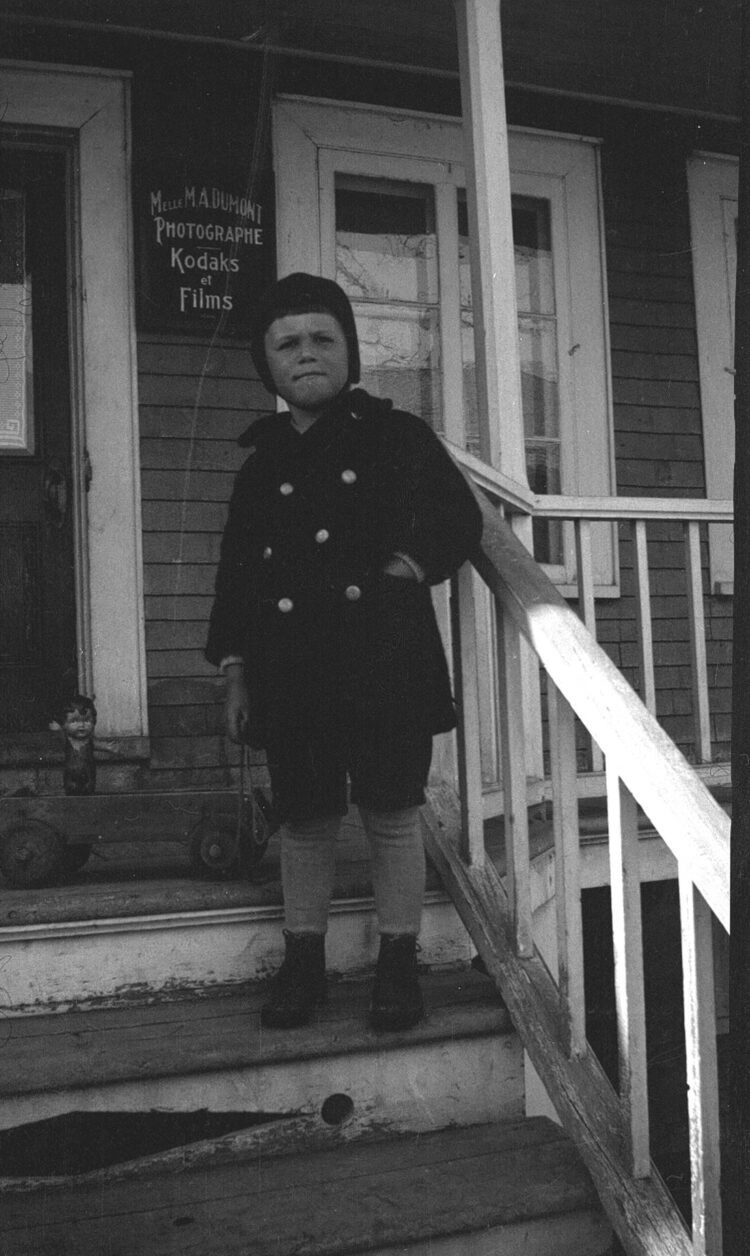
At the time this playful photo was taken, literacy was on the rise in Quebec, despite a decline in school attendance and the fact that compulsory schooling for all children up to age 14 would not be enacted until 1943.
What a joy to receive a bicycle as a gift! Even though the new bike was gifted to the older sister, the whole family was thrilled and wanted to pose for Aunt Alice’s camera to mark the occasion.
These two girls, dressed as men, chose props like a cigarette and a pipe, mocking a punch to the face to mimic the behaviour of their male counterparts. Is it just a caricature or a subtle commentary on masculinity in their time?
Scouting was a popular Catholic youth movement in French Canada during the 1930s. It served as a way for the Church to guide young people and pass on Christian values during a time of significant social and economic upheaval.
This street scene is one of Dumont’s most striking images. In addition to offering a beautiful view of this area of Saint-Alexandre, it captures a quiet moment of pause in the midst of children’s sidewalk play.
“In my day, we walked miles to school, even in a snowstorm!” You can easily imagine Céline and Pierrette Dumont, nieces of the photographer, sharing this story in their later years.
In Dumont’s era, many young boys served as altar boys during Mass or sang in the choir. Their role assisting the priest during religious ceremonies was important.
Many youth groups were involved in the parade of decorated floats for Saint-Alexandre’s centennial celebrations. In this one, about 10 participants staged a representation of the Cross, perhaps a roadside cross, a common feature of Catholic popular devotion.
Louise Pelletier and her sister Denise proudly show off their vinyl record collection. When the photographer visited their home, not only did they put on their finest dresses, but they also asked Dumont to take their portrait with their treasured records.
In the Dumont family, young girls were involved in domestic chores from an early age, like doing the dishes. In a household that large, everyone had to pitch in!
Who does not remember lining up in formation at school to the sound of the bell? The 60 or so boys patiently waiting here for the photographer to finish her work were likely among the first students at this newly built school.
What are these five Ouellet nieces and nephews doing aboard the boat named Le St-Pascal? Under the watchful eye of their mother, Émilia, are they welcoming Aunt Alice to Patins Island or perhaps bidding her farewell?
When Abbot Joseph-Napoléon Dumont addressed young women about careers and vocations, the options were limited. Marriage was, of course, one such option; though it usually meant being confined to the home. As for single women, he said they had “great value on this Earth,” as they could raise younger siblings, become teachers or serve as housekeepers. Napoléon did not mention the case of his own sister, who became a professional photographer. This is a telling omission, both of the exceptional nature of her career and of the narrow paths available to women at the time! What kind of future did these 1935 graduates imagine for themselves?
Marcel Boucher stands proudly on the steps of his aunt’s studio, with her shop sign clearly visible in the background.
For Dumont, any occasion seemed like a good one to photograph children, or at least, that is the impression her archive gives. In this image, she captures a candid moment as a visiting niece plays in the studio.
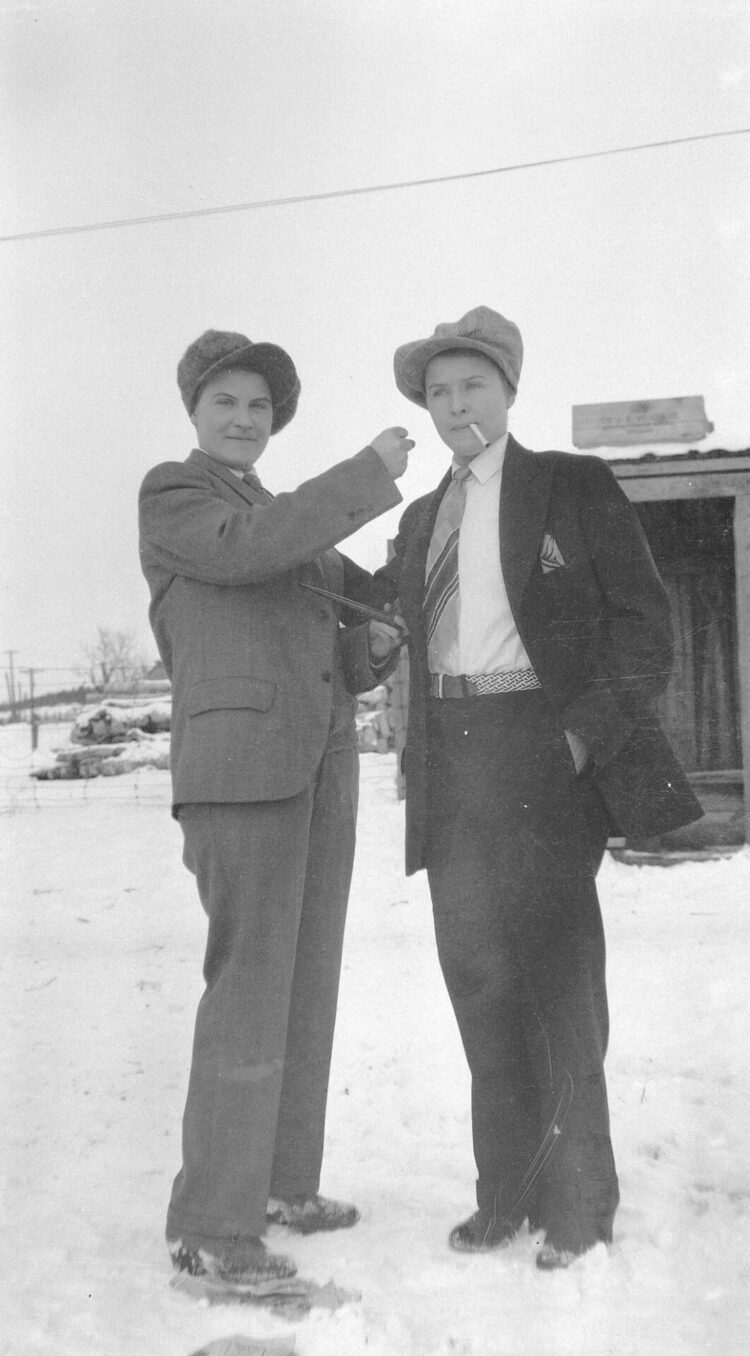
At the time this playful photo was taken, literacy was on the rise in Quebec, despite a decline in school attendance and the fact that compulsory schooling for all children up to age 14 would not be enacted until 1943.
What a joy to receive a bicycle as a gift! Even though the new bike was gifted to the older sister, the whole family was thrilled and wanted to pose for Aunt Alice’s camera to mark the occasion.
These two girls, dressed as men, chose props like a cigarette and a pipe, mocking a punch to the face to mimic the behaviour of their male counterparts. Is it just a caricature or a subtle commentary on masculinity in their time?
Scouting was a popular Catholic youth movement in French Canada during the 1930s. It served as a way for the Church to guide young people and pass on Christian values during a time of significant social and economic upheaval.
This street scene is one of Dumont’s most striking images. In addition to offering a beautiful view of this area of Saint-Alexandre, it captures a quiet moment of pause in the midst of children’s sidewalk play.
“In my day, we walked miles to school, even in a snowstorm!” You can easily imagine Céline and Pierrette Dumont, nieces of the photographer, sharing this story in their later years.
In Dumont’s era, many young boys served as altar boys during Mass or sang in the choir. Their role assisting the priest during religious ceremonies was important.
Many youth groups were involved in the parade of decorated floats for Saint-Alexandre’s centennial celebrations. In this one, about 10 participants staged a representation of the Cross, perhaps a roadside cross, a common feature of Catholic popular devotion.
Louise Pelletier and her sister Denise proudly show off their vinyl record collection. When the photographer visited their home, not only did they put on their finest dresses, but they also asked Dumont to take their portrait with their treasured records.
In the Dumont family, young girls were involved in domestic chores from an early age, like doing the dishes. In a household that large, everyone had to pitch in!
Who does not remember lining up in formation at school to the sound of the bell? The 60 or so boys patiently waiting here for the photographer to finish her work were likely among the first students at this newly built school.
What are these five Ouellet nieces and nephews doing aboard the boat named Le St-Pascal? Under the watchful eye of their mother, Émilia, are they welcoming Aunt Alice to Patins Island or perhaps bidding her farewell?
When Abbot Joseph-Napoléon Dumont addressed young women about careers and vocations, the options were limited. Marriage was, of course, one such option; though it usually meant being confined to the home. As for single women, he said they had “great value on this Earth,” as they could raise younger siblings, become teachers or serve as housekeepers. Napoléon did not mention the case of his own sister, who became a professional photographer. This is a telling omission, both of the exceptional nature of her career and of the narrow paths available to women at the time! What kind of future did these 1935 graduates imagine for themselves?
Marcel Boucher stands proudly on the steps of his aunt’s studio, with her shop sign clearly visible in the background.
For Dumont, any occasion seemed like a good one to photograph children, or at least, that is the impression her archive gives. In this image, she captures a candid moment as a visiting niece plays in the studio.
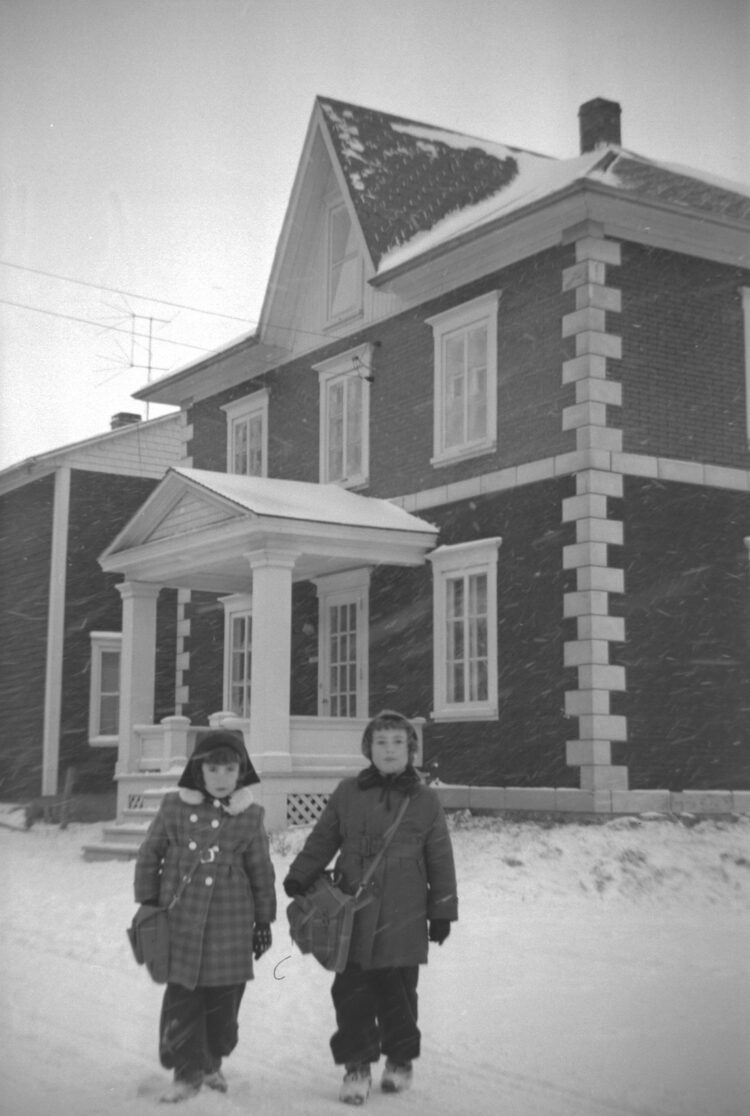
At the time this playful photo was taken, literacy was on the rise in Quebec, despite a decline in school attendance and the fact that compulsory schooling for all children up to age 14 would not be enacted until 1943.
What a joy to receive a bicycle as a gift! Even though the new bike was gifted to the older sister, the whole family was thrilled and wanted to pose for Aunt Alice’s camera to mark the occasion.
These two girls, dressed as men, chose props like a cigarette and a pipe, mocking a punch to the face to mimic the behaviour of their male counterparts. Is it just a caricature or a subtle commentary on masculinity in their time?
Scouting was a popular Catholic youth movement in French Canada during the 1930s. It served as a way for the Church to guide young people and pass on Christian values during a time of significant social and economic upheaval.
This street scene is one of Dumont’s most striking images. In addition to offering a beautiful view of this area of Saint-Alexandre, it captures a quiet moment of pause in the midst of children’s sidewalk play.
“In my day, we walked miles to school, even in a snowstorm!” You can easily imagine Céline and Pierrette Dumont, nieces of the photographer, sharing this story in their later years.
In Dumont’s era, many young boys served as altar boys during Mass or sang in the choir. Their role assisting the priest during religious ceremonies was important.
Many youth groups were involved in the parade of decorated floats for Saint-Alexandre’s centennial celebrations. In this one, about 10 participants staged a representation of the Cross, perhaps a roadside cross, a common feature of Catholic popular devotion.
Louise Pelletier and her sister Denise proudly show off their vinyl record collection. When the photographer visited their home, not only did they put on their finest dresses, but they also asked Dumont to take their portrait with their treasured records.
In the Dumont family, young girls were involved in domestic chores from an early age, like doing the dishes. In a household that large, everyone had to pitch in!
Who does not remember lining up in formation at school to the sound of the bell? The 60 or so boys patiently waiting here for the photographer to finish her work were likely among the first students at this newly built school.
What are these five Ouellet nieces and nephews doing aboard the boat named Le St-Pascal? Under the watchful eye of their mother, Émilia, are they welcoming Aunt Alice to Patins Island or perhaps bidding her farewell?
When Abbot Joseph-Napoléon Dumont addressed young women about careers and vocations, the options were limited. Marriage was, of course, one such option; though it usually meant being confined to the home. As for single women, he said they had “great value on this Earth,” as they could raise younger siblings, become teachers or serve as housekeepers. Napoléon did not mention the case of his own sister, who became a professional photographer. This is a telling omission, both of the exceptional nature of her career and of the narrow paths available to women at the time! What kind of future did these 1935 graduates imagine for themselves?
Marcel Boucher stands proudly on the steps of his aunt’s studio, with her shop sign clearly visible in the background.
For Dumont, any occasion seemed like a good one to photograph children, or at least, that is the impression her archive gives. In this image, she captures a candid moment as a visiting niece plays in the studio.
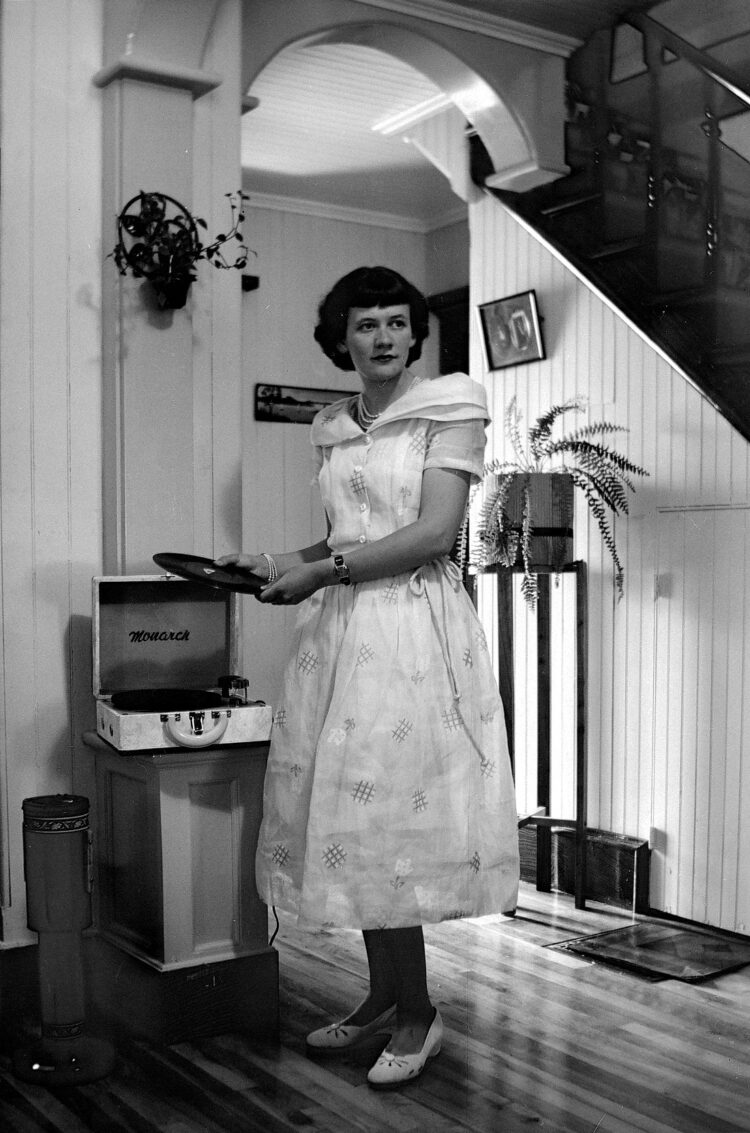
At the time this playful photo was taken, literacy was on the rise in Quebec, despite a decline in school attendance and the fact that compulsory schooling for all children up to age 14 would not be enacted until 1943.
What a joy to receive a bicycle as a gift! Even though the new bike was gifted to the older sister, the whole family was thrilled and wanted to pose for Aunt Alice’s camera to mark the occasion.
These two girls, dressed as men, chose props like a cigarette and a pipe, mocking a punch to the face to mimic the behaviour of their male counterparts. Is it just a caricature or a subtle commentary on masculinity in their time?
Scouting was a popular Catholic youth movement in French Canada during the 1930s. It served as a way for the Church to guide young people and pass on Christian values during a time of significant social and economic upheaval.
This street scene is one of Dumont’s most striking images. In addition to offering a beautiful view of this area of Saint-Alexandre, it captures a quiet moment of pause in the midst of children’s sidewalk play.
“In my day, we walked miles to school, even in a snowstorm!” You can easily imagine Céline and Pierrette Dumont, nieces of the photographer, sharing this story in their later years.
In Dumont’s era, many young boys served as altar boys during Mass or sang in the choir. Their role assisting the priest during religious ceremonies was important.
Many youth groups were involved in the parade of decorated floats for Saint-Alexandre’s centennial celebrations. In this one, about 10 participants staged a representation of the Cross, perhaps a roadside cross, a common feature of Catholic popular devotion.
Louise Pelletier and her sister Denise proudly show off their vinyl record collection. When the photographer visited their home, not only did they put on their finest dresses, but they also asked Dumont to take their portrait with their treasured records.
In the Dumont family, young girls were involved in domestic chores from an early age, like doing the dishes. In a household that large, everyone had to pitch in!
Who does not remember lining up in formation at school to the sound of the bell? The 60 or so boys patiently waiting here for the photographer to finish her work were likely among the first students at this newly built school.
What are these five Ouellet nieces and nephews doing aboard the boat named Le St-Pascal? Under the watchful eye of their mother, Émilia, are they welcoming Aunt Alice to Patins Island or perhaps bidding her farewell?
When Abbot Joseph-Napoléon Dumont addressed young women about careers and vocations, the options were limited. Marriage was, of course, one such option; though it usually meant being confined to the home. As for single women, he said they had “great value on this Earth,” as they could raise younger siblings, become teachers or serve as housekeepers. Napoléon did not mention the case of his own sister, who became a professional photographer. This is a telling omission, both of the exceptional nature of her career and of the narrow paths available to women at the time! What kind of future did these 1935 graduates imagine for themselves?
Marcel Boucher stands proudly on the steps of his aunt’s studio, with her shop sign clearly visible in the background.
For Dumont, any occasion seemed like a good one to photograph children, or at least, that is the impression her archive gives. In this image, she captures a candid moment as a visiting niece plays in the studio.
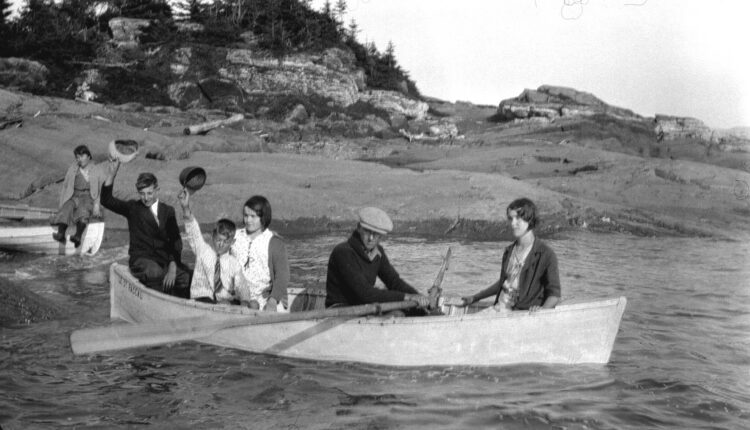
At the time this playful photo was taken, literacy was on the rise in Quebec, despite a decline in school attendance and the fact that compulsory schooling for all children up to age 14 would not be enacted until 1943.
What a joy to receive a bicycle as a gift! Even though the new bike was gifted to the older sister, the whole family was thrilled and wanted to pose for Aunt Alice’s camera to mark the occasion.
These two girls, dressed as men, chose props like a cigarette and a pipe, mocking a punch to the face to mimic the behaviour of their male counterparts. Is it just a caricature or a subtle commentary on masculinity in their time?
Scouting was a popular Catholic youth movement in French Canada during the 1930s. It served as a way for the Church to guide young people and pass on Christian values during a time of significant social and economic upheaval.
This street scene is one of Dumont’s most striking images. In addition to offering a beautiful view of this area of Saint-Alexandre, it captures a quiet moment of pause in the midst of children’s sidewalk play.
“In my day, we walked miles to school, even in a snowstorm!” You can easily imagine Céline and Pierrette Dumont, nieces of the photographer, sharing this story in their later years.
In Dumont’s era, many young boys served as altar boys during Mass or sang in the choir. Their role assisting the priest during religious ceremonies was important.
Many youth groups were involved in the parade of decorated floats for Saint-Alexandre’s centennial celebrations. In this one, about 10 participants staged a representation of the Cross, perhaps a roadside cross, a common feature of Catholic popular devotion.
Louise Pelletier and her sister Denise proudly show off their vinyl record collection. When the photographer visited their home, not only did they put on their finest dresses, but they also asked Dumont to take their portrait with their treasured records.
In the Dumont family, young girls were involved in domestic chores from an early age, like doing the dishes. In a household that large, everyone had to pitch in!
Who does not remember lining up in formation at school to the sound of the bell? The 60 or so boys patiently waiting here for the photographer to finish her work were likely among the first students at this newly built school.
What are these five Ouellet nieces and nephews doing aboard the boat named Le St-Pascal? Under the watchful eye of their mother, Émilia, are they welcoming Aunt Alice to Patins Island or perhaps bidding her farewell?
When Abbot Joseph-Napoléon Dumont addressed young women about careers and vocations, the options were limited. Marriage was, of course, one such option; though it usually meant being confined to the home. As for single women, he said they had “great value on this Earth,” as they could raise younger siblings, become teachers or serve as housekeepers. Napoléon did not mention the case of his own sister, who became a professional photographer. This is a telling omission, both of the exceptional nature of her career and of the narrow paths available to women at the time! What kind of future did these 1935 graduates imagine for themselves?
Marcel Boucher stands proudly on the steps of his aunt’s studio, with her shop sign clearly visible in the background.
For Dumont, any occasion seemed like a good one to photograph children, or at least, that is the impression her archive gives. In this image, she captures a candid moment as a visiting niece plays in the studio.
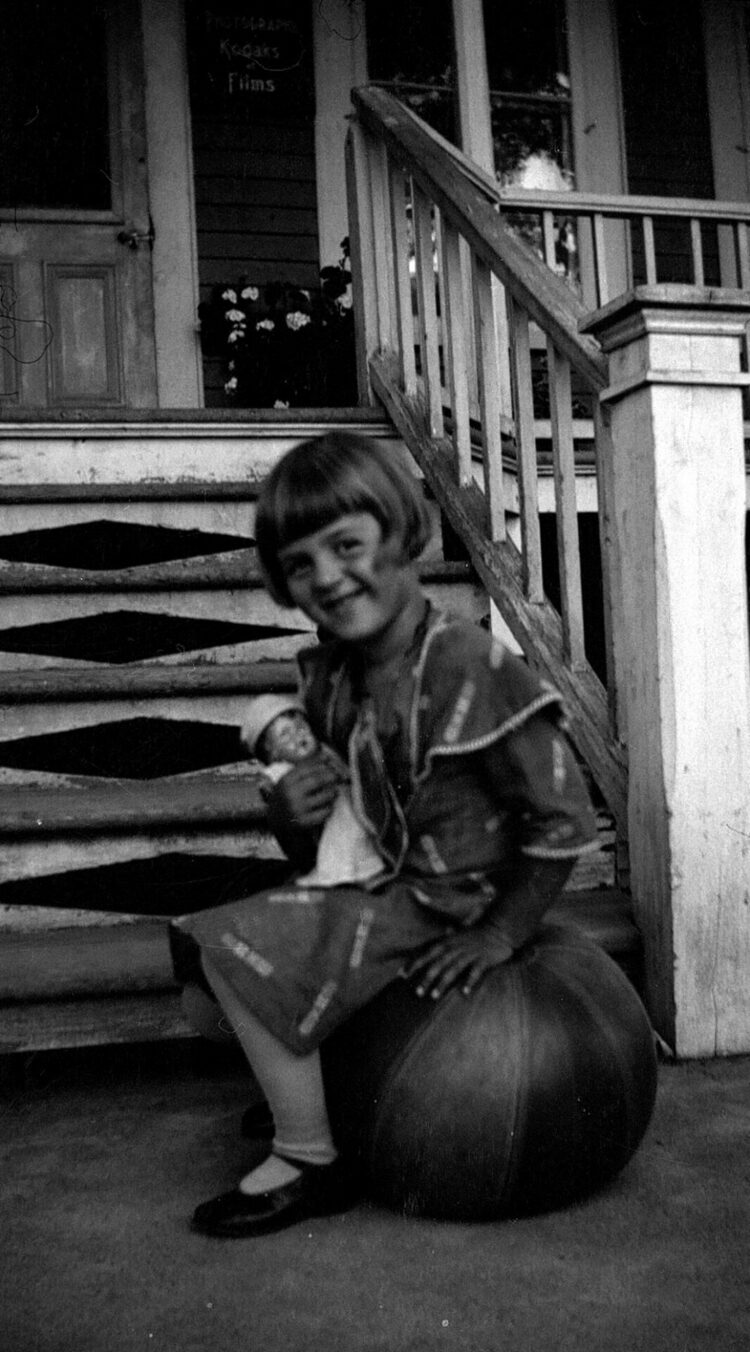
Marie-Alice Dumont had endless opportunities to document the rhythms of rural and village life. Her photographs vividly capture quintessential moments: the sugaring off season, a tractor parade, relatives arriving by horse-drawn sleigh and visits from travelling merchants. These snapshots show us the everyday life of Kamouraska’s residents during the first half of the 20th century.
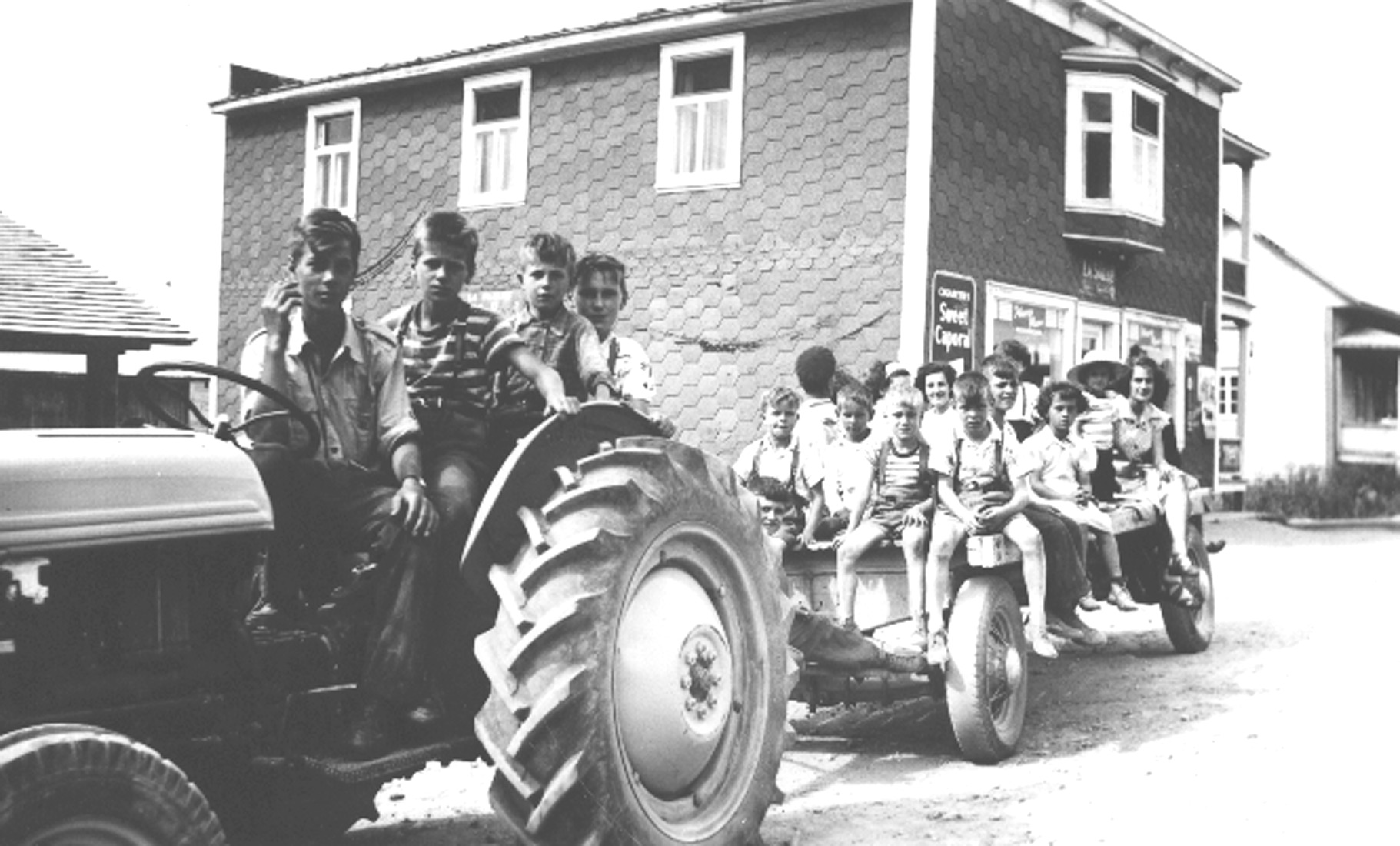
Where might this group of young people be headed, piled onto a tractor and the trailer it is pulling? It must have been a special occasion, although it was hardly unusual to see people of all ages getting around town or country this way.
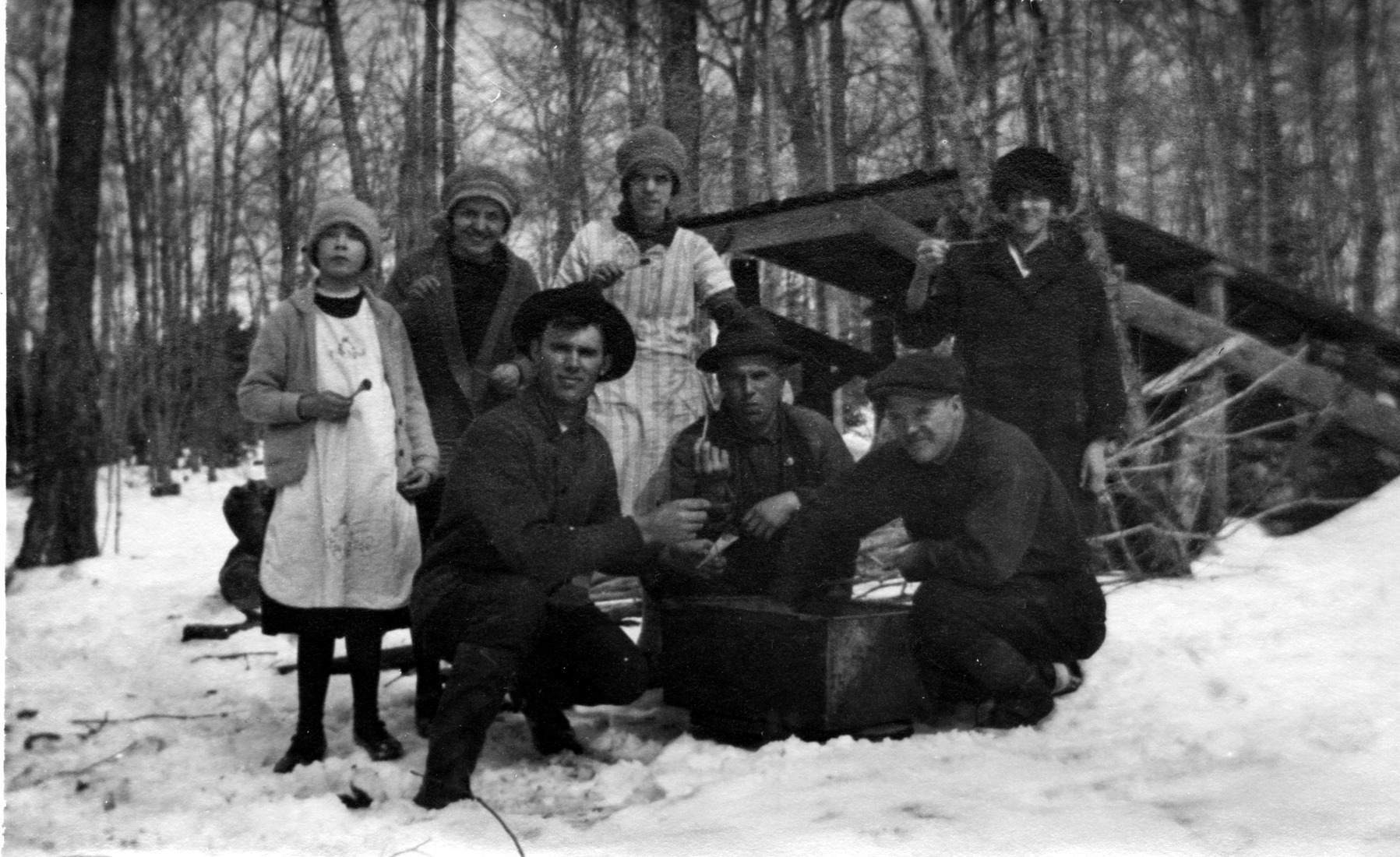
Living in Kamouraska meant having a sugar shack close to home. That was certainly the case for Rosalie Bergeron and Marie-Alice Dumont, seen here on the left, ready to enjoy some maple taffy.
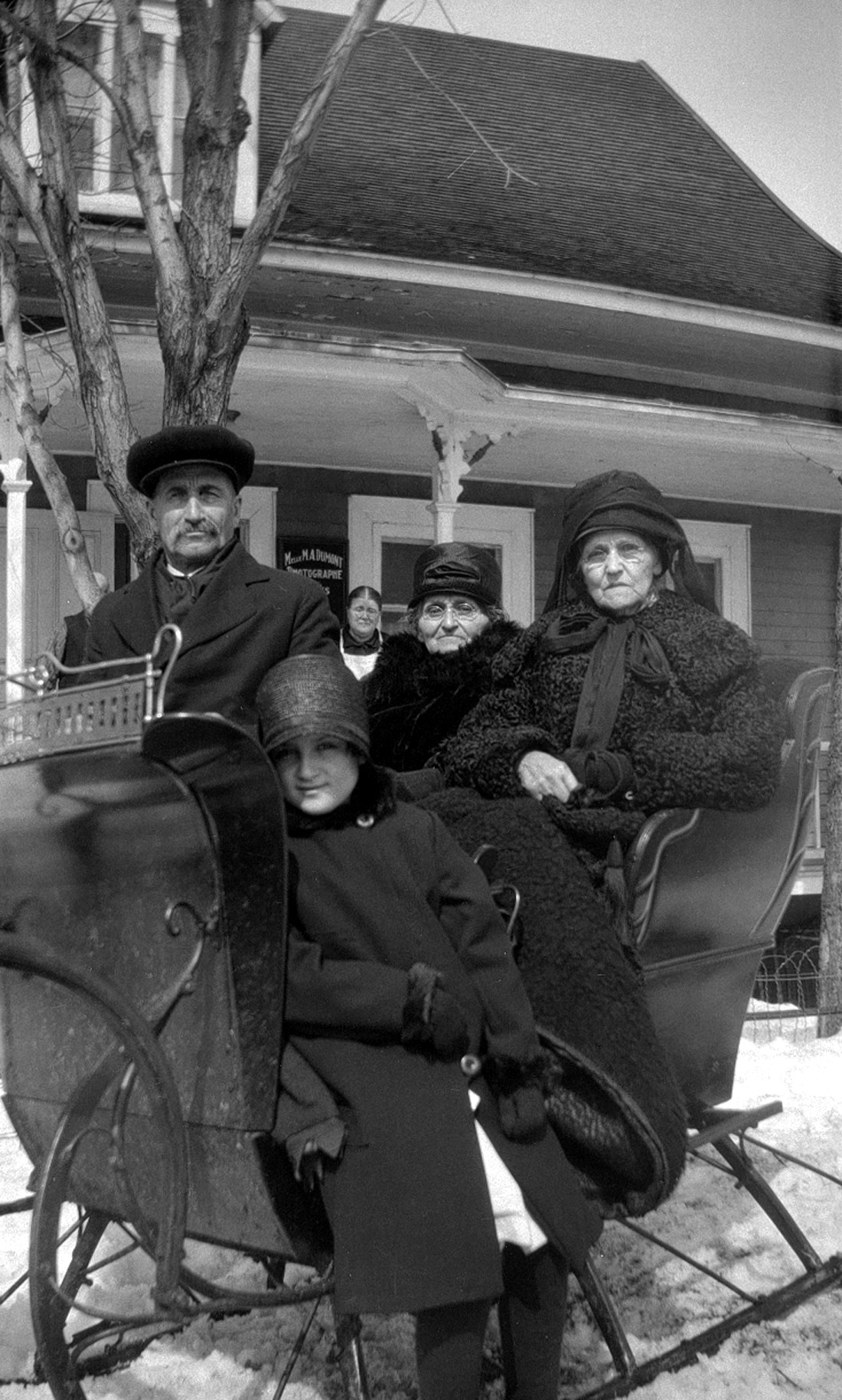
This photograph was taken during a visit from Uncle Georges to the village. Visits from family were practically a part of daily life for the Dumont family. As François, the photographer’s brother, once recalled, in the days before television, radio or cars, it was family and neighbours who provided most of the “entertainment.”
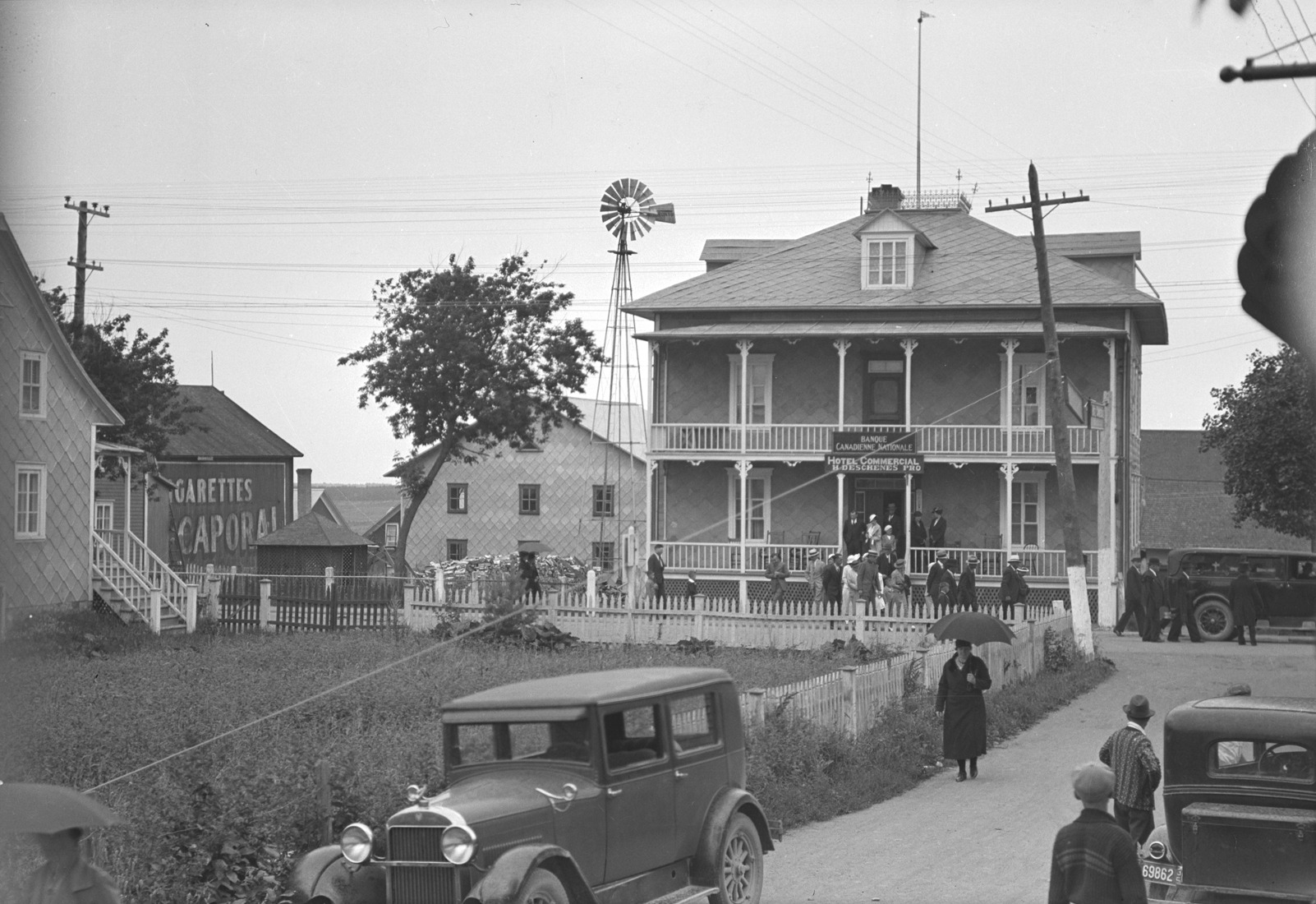
The real star of this village scene is undoubtedly the building owned by Henri Deschênes, which housed the local inn and a branch of the National Bank of Canada.
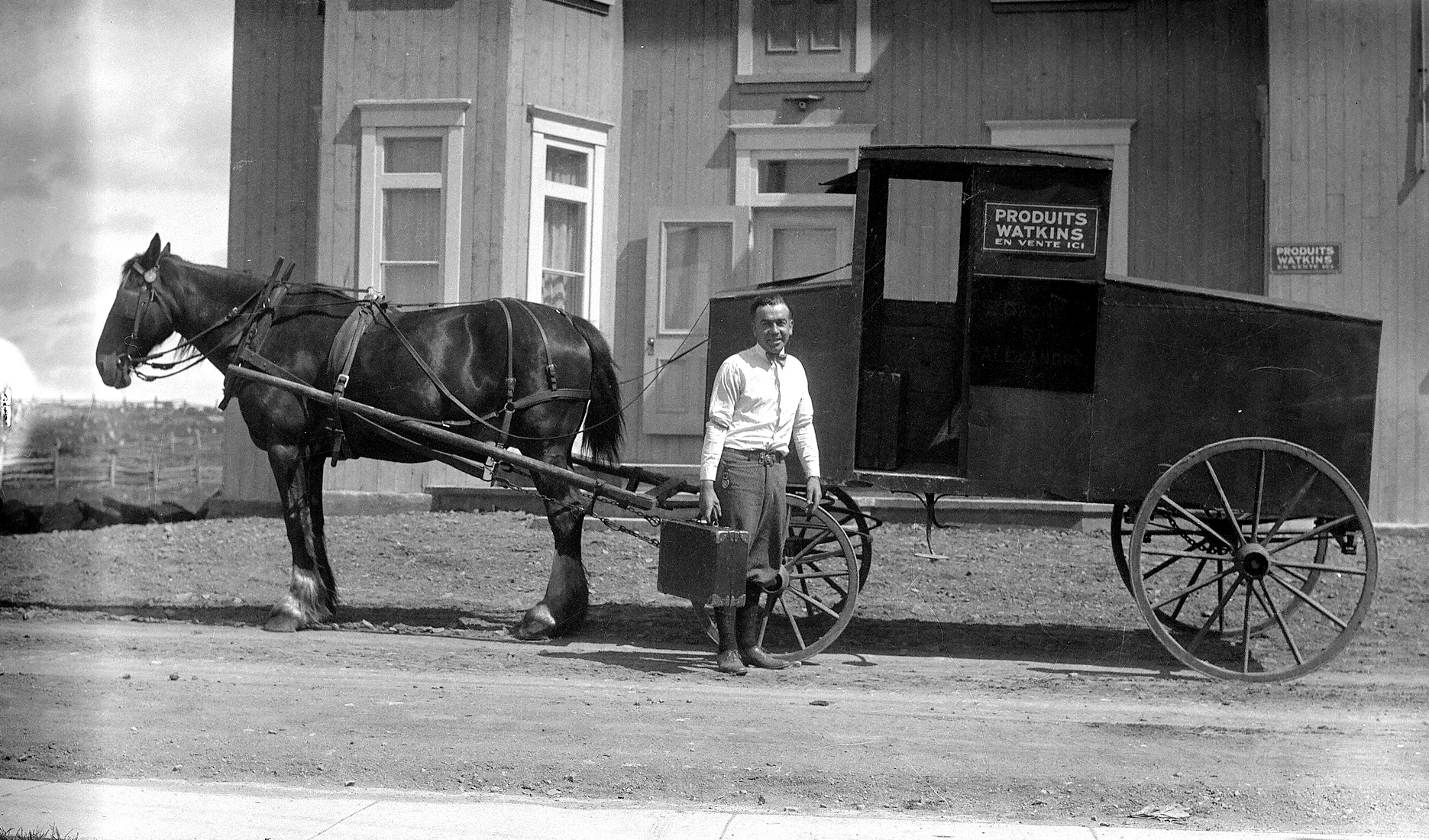
The travelling salesman was a familiar figure in rural Quebec in the early 20th century. For people living in the countryside, far from commercial centres, these door-to-door vendors were not just welcome, they were a necessity.
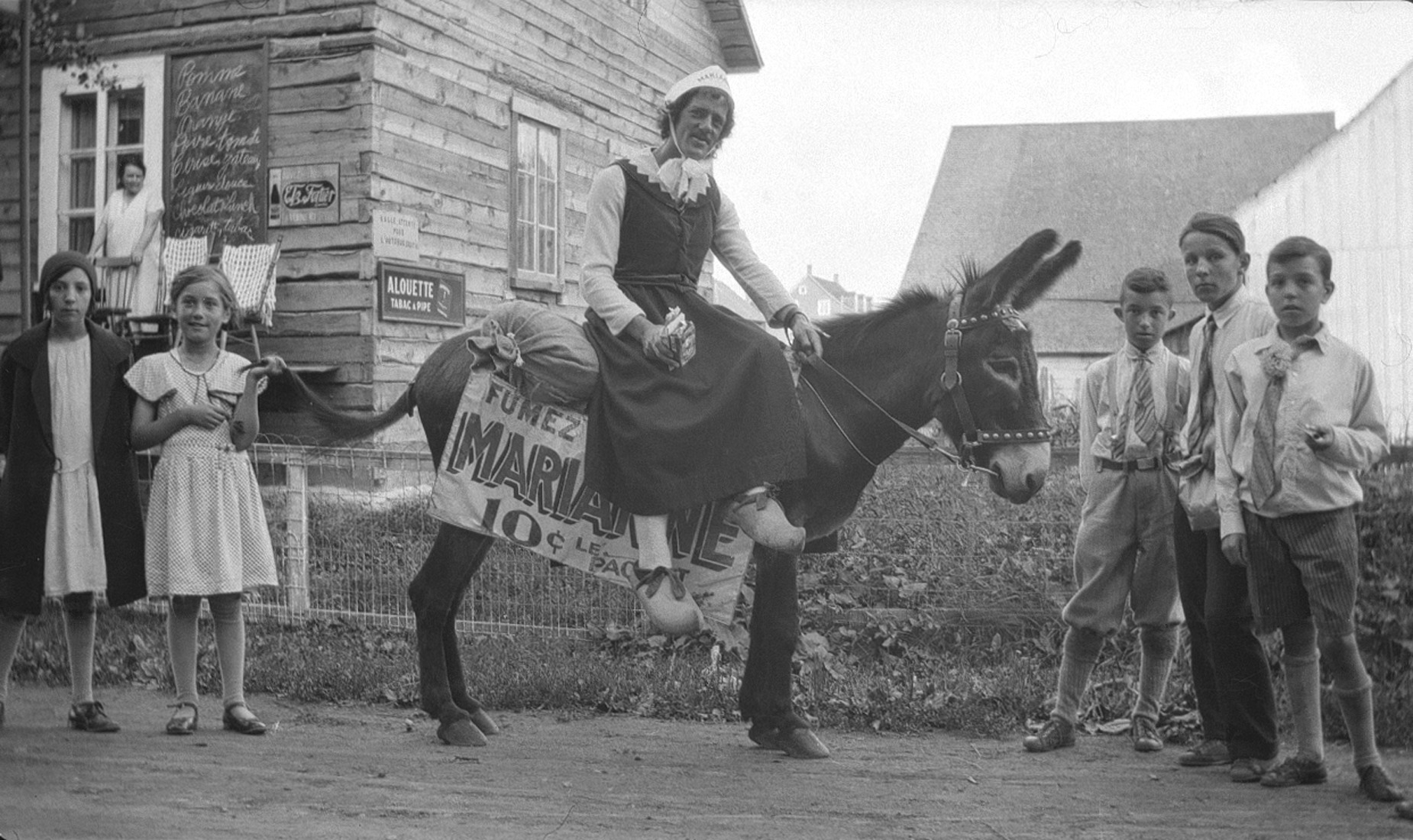
Here is another type of travelling merchant: this time, a tobacco seller. Outfitted in a deliberately comical costume, this salesman leaned into the wordplay associated with the product’s brand. Pulling a donkey and dressed as Marianne, he calls to mind Marianne s’en va au moulin, a popular nursery rhyme in French that the local children surely knew and found amusing!
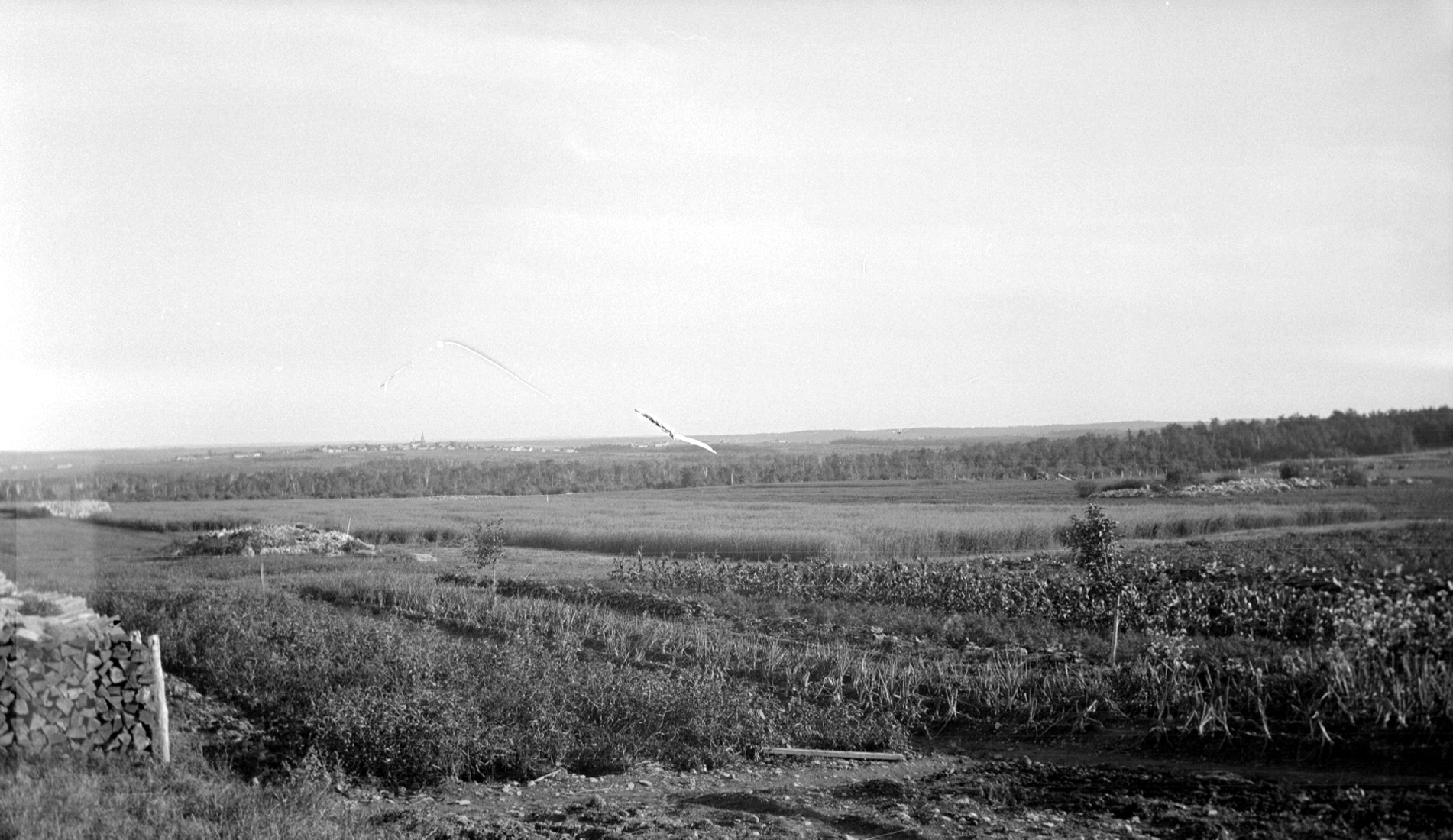
Is that a bird flying over the Dumont garden or simply damage to the negative? It is fun to imagine it might be one of the “horrible and pesky” crows that Marie-Alice’s siblings once tamed.
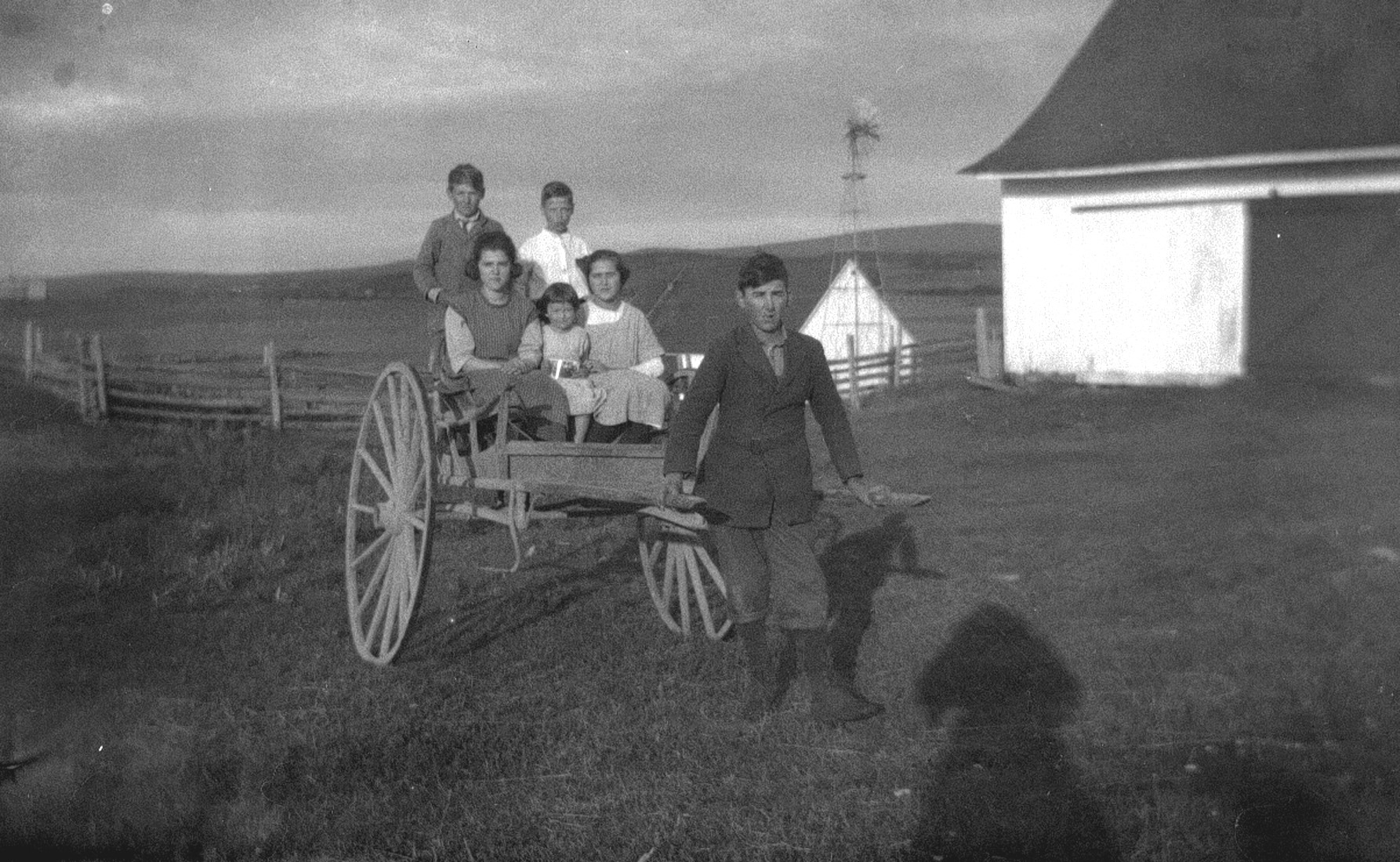
This lovely snapshot captures a joyful moment shared by Ouellet and Dumont cousins on the Dumont family land, on the 5e Rang.
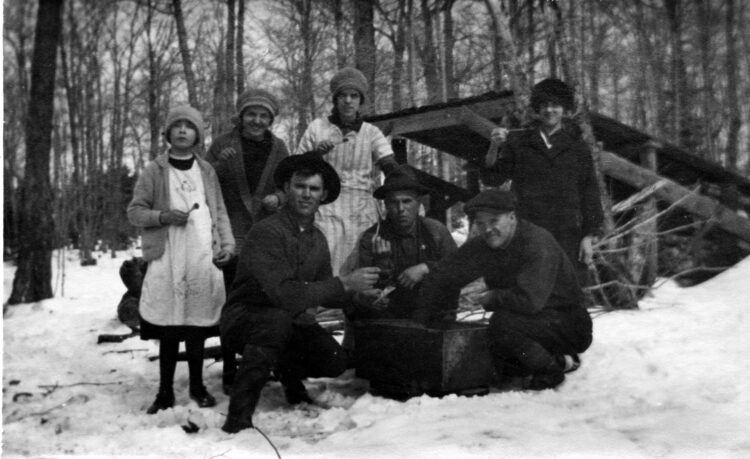
Living in Kamouraska meant having a sugar shack close to home. That was certainly the case for Rosalie Bergeron and Marie-Alice Dumont, seen here on the left, ready to enjoy some maple taffy.
This photograph was taken during a visit from Uncle Georges to the village. Visits from family were practically a part of daily life for the Dumont family. As François, the photographer’s brother, once recalled, in the days before television, radio or cars, it was family and neighbours who provided most of the “entertainment.”
The real star of this village scene is undoubtedly the building owned by Henri Deschênes, which housed the local inn and a branch of the National Bank of Canada.
The travelling salesman was a familiar figure in rural Quebec in the early 20th century. For people living in the countryside, far from commercial centres, these door-to-door vendors were not just welcome, they were a necessity.
Here is another type of travelling merchant: this time, a tobacco seller. Outfitted in a deliberately comical costume, this salesman leaned into the wordplay associated with the product’s brand. Pulling a donkey and dressed as Marianne, he calls to mind Marianne s’en va au moulin, a popular nursery rhyme in French that the local children surely knew and found amusing!
Is that a bird flying over the Dumont garden or simply damage to the negative? It is fun to imagine it might be one of the “horrible and pesky” crows that Marie-Alice’s siblings once tamed.
This lovely snapshot captures a joyful moment shared by Ouellet and Dumont cousins on the Dumont family land, on the 5e Rang.
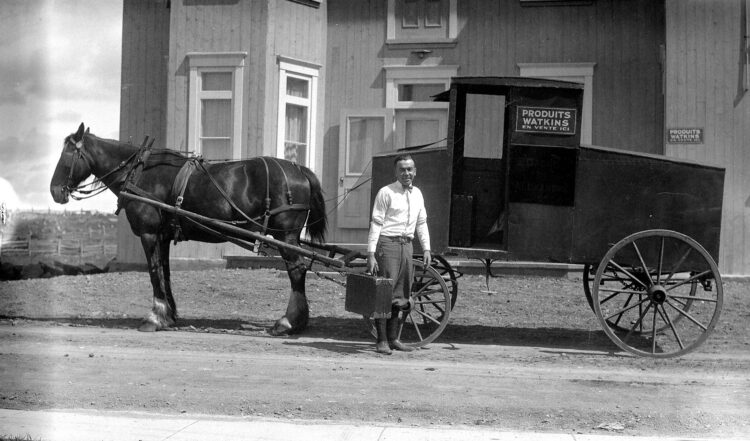
Living in Kamouraska meant having a sugar shack close to home. That was certainly the case for Rosalie Bergeron and Marie-Alice Dumont, seen here on the left, ready to enjoy some maple taffy.
This photograph was taken during a visit from Uncle Georges to the village. Visits from family were practically a part of daily life for the Dumont family. As François, the photographer’s brother, once recalled, in the days before television, radio or cars, it was family and neighbours who provided most of the “entertainment.”
The real star of this village scene is undoubtedly the building owned by Henri Deschênes, which housed the local inn and a branch of the National Bank of Canada.
The travelling salesman was a familiar figure in rural Quebec in the early 20th century. For people living in the countryside, far from commercial centres, these door-to-door vendors were not just welcome, they were a necessity.
Here is another type of travelling merchant: this time, a tobacco seller. Outfitted in a deliberately comical costume, this salesman leaned into the wordplay associated with the product’s brand. Pulling a donkey and dressed as Marianne, he calls to mind Marianne s’en va au moulin, a popular nursery rhyme in French that the local children surely knew and found amusing!
Is that a bird flying over the Dumont garden or simply damage to the negative? It is fun to imagine it might be one of the “horrible and pesky” crows that Marie-Alice’s siblings once tamed.
This lovely snapshot captures a joyful moment shared by Ouellet and Dumont cousins on the Dumont family land, on the 5e Rang.
Living in Kamouraska meant having a sugar shack close to home. That was certainly the case for Rosalie Bergeron and Marie-Alice Dumont, seen here on the left, ready to enjoy some maple taffy.
This photograph was taken during a visit from Uncle Georges to the village. Visits from family were practically a part of daily life for the Dumont family. As François, the photographer’s brother, once recalled, in the days before television, radio or cars, it was family and neighbours who provided most of the “entertainment.”
The real star of this village scene is undoubtedly the building owned by Henri Deschênes, which housed the local inn and a branch of the National Bank of Canada.
The travelling salesman was a familiar figure in rural Quebec in the early 20th century. For people living in the countryside, far from commercial centres, these door-to-door vendors were not just welcome, they were a necessity.
Here is another type of travelling merchant: this time, a tobacco seller. Outfitted in a deliberately comical costume, this salesman leaned into the wordplay associated with the product’s brand. Pulling a donkey and dressed as Marianne, he calls to mind Marianne s’en va au moulin, a popular nursery rhyme in French that the local children surely knew and found amusing!
Is that a bird flying over the Dumont garden or simply damage to the negative? It is fun to imagine it might be one of the “horrible and pesky” crows that Marie-Alice’s siblings once tamed.
This lovely snapshot captures a joyful moment shared by Ouellet and Dumont cousins on the Dumont family land, on the 5e Rang.
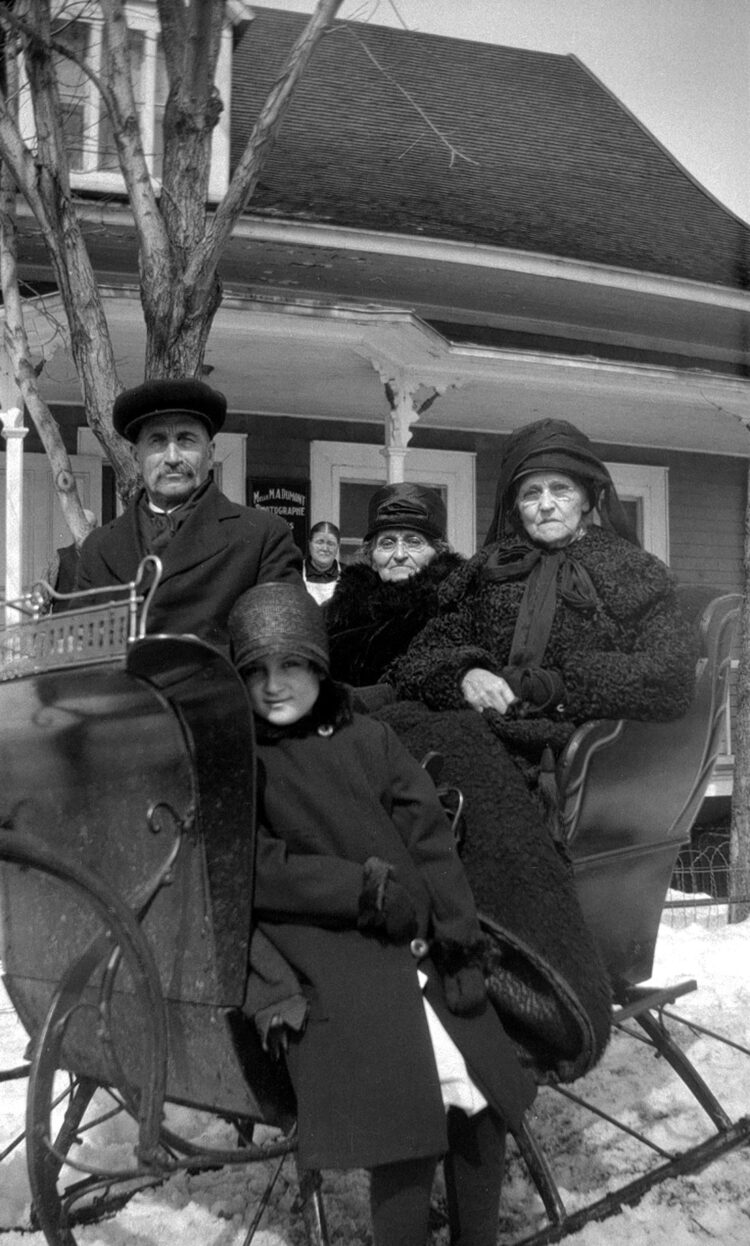
Living in Kamouraska meant having a sugar shack close to home. That was certainly the case for Rosalie Bergeron and Marie-Alice Dumont, seen here on the left, ready to enjoy some maple taffy.
This photograph was taken during a visit from Uncle Georges to the village. Visits from family were practically a part of daily life for the Dumont family. As François, the photographer’s brother, once recalled, in the days before television, radio or cars, it was family and neighbours who provided most of the “entertainment.”
The real star of this village scene is undoubtedly the building owned by Henri Deschênes, which housed the local inn and a branch of the National Bank of Canada.
The travelling salesman was a familiar figure in rural Quebec in the early 20th century. For people living in the countryside, far from commercial centres, these door-to-door vendors were not just welcome, they were a necessity.
Here is another type of travelling merchant: this time, a tobacco seller. Outfitted in a deliberately comical costume, this salesman leaned into the wordplay associated with the product’s brand. Pulling a donkey and dressed as Marianne, he calls to mind Marianne s’en va au moulin, a popular nursery rhyme in French that the local children surely knew and found amusing!
Is that a bird flying over the Dumont garden or simply damage to the negative? It is fun to imagine it might be one of the “horrible and pesky” crows that Marie-Alice’s siblings once tamed.
This lovely snapshot captures a joyful moment shared by Ouellet and Dumont cousins on the Dumont family land, on the 5e Rang.
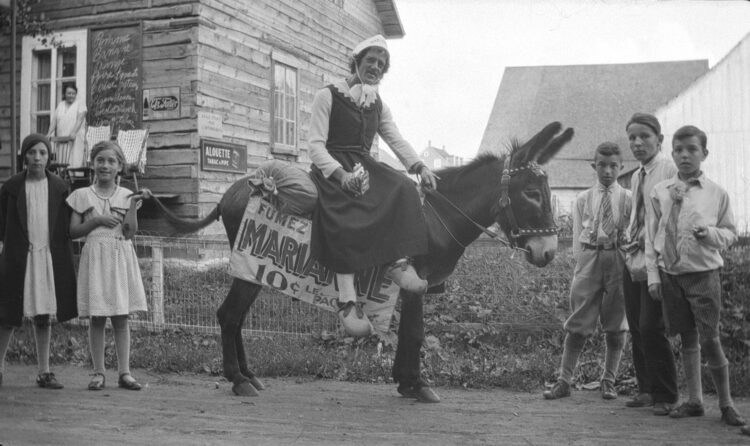
Living in Kamouraska meant having a sugar shack close to home. That was certainly the case for Rosalie Bergeron and Marie-Alice Dumont, seen here on the left, ready to enjoy some maple taffy.
This photograph was taken during a visit from Uncle Georges to the village. Visits from family were practically a part of daily life for the Dumont family. As François, the photographer’s brother, once recalled, in the days before television, radio or cars, it was family and neighbours who provided most of the “entertainment.”
The real star of this village scene is undoubtedly the building owned by Henri Deschênes, which housed the local inn and a branch of the National Bank of Canada.
The travelling salesman was a familiar figure in rural Quebec in the early 20th century. For people living in the countryside, far from commercial centres, these door-to-door vendors were not just welcome, they were a necessity.
Here is another type of travelling merchant: this time, a tobacco seller. Outfitted in a deliberately comical costume, this salesman leaned into the wordplay associated with the product’s brand. Pulling a donkey and dressed as Marianne, he calls to mind Marianne s’en va au moulin, a popular nursery rhyme in French that the local children surely knew and found amusing!
Is that a bird flying over the Dumont garden or simply damage to the negative? It is fun to imagine it might be one of the “horrible and pesky” crows that Marie-Alice’s siblings once tamed.
This lovely snapshot captures a joyful moment shared by Ouellet and Dumont cousins on the Dumont family land, on the 5e Rang.
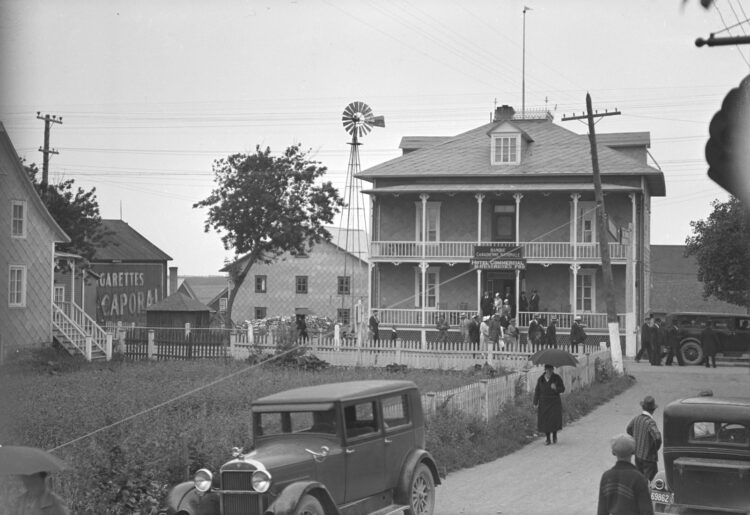
Living in Kamouraska meant having a sugar shack close to home. That was certainly the case for Rosalie Bergeron and Marie-Alice Dumont, seen here on the left, ready to enjoy some maple taffy.
This photograph was taken during a visit from Uncle Georges to the village. Visits from family were practically a part of daily life for the Dumont family. As François, the photographer’s brother, once recalled, in the days before television, radio or cars, it was family and neighbours who provided most of the “entertainment.”
The real star of this village scene is undoubtedly the building owned by Henri Deschênes, which housed the local inn and a branch of the National Bank of Canada.
The travelling salesman was a familiar figure in rural Quebec in the early 20th century. For people living in the countryside, far from commercial centres, these door-to-door vendors were not just welcome, they were a necessity.
Here is another type of travelling merchant: this time, a tobacco seller. Outfitted in a deliberately comical costume, this salesman leaned into the wordplay associated with the product’s brand. Pulling a donkey and dressed as Marianne, he calls to mind Marianne s’en va au moulin, a popular nursery rhyme in French that the local children surely knew and found amusing!
Is that a bird flying over the Dumont garden or simply damage to the negative? It is fun to imagine it might be one of the “horrible and pesky” crows that Marie-Alice’s siblings once tamed.
This lovely snapshot captures a joyful moment shared by Ouellet and Dumont cousins on the Dumont family land, on the 5e Rang.
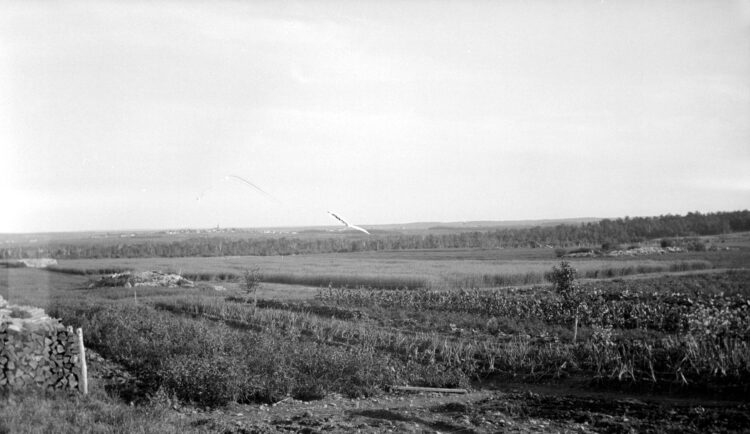
In Marie-Alice Dumont’s time, Catholicism was a cornerstone of Francophone Quebec society. How many young communicants did she photograph? How many ceremonies? How many priests and nuns posed in her studio? Her photographs abound with religious symbols and imagery, underscoring the profound role faith played in the community. A devout believer herself, Marie-Alice’s work is steeped in the deeply religious atmosphere of her time.
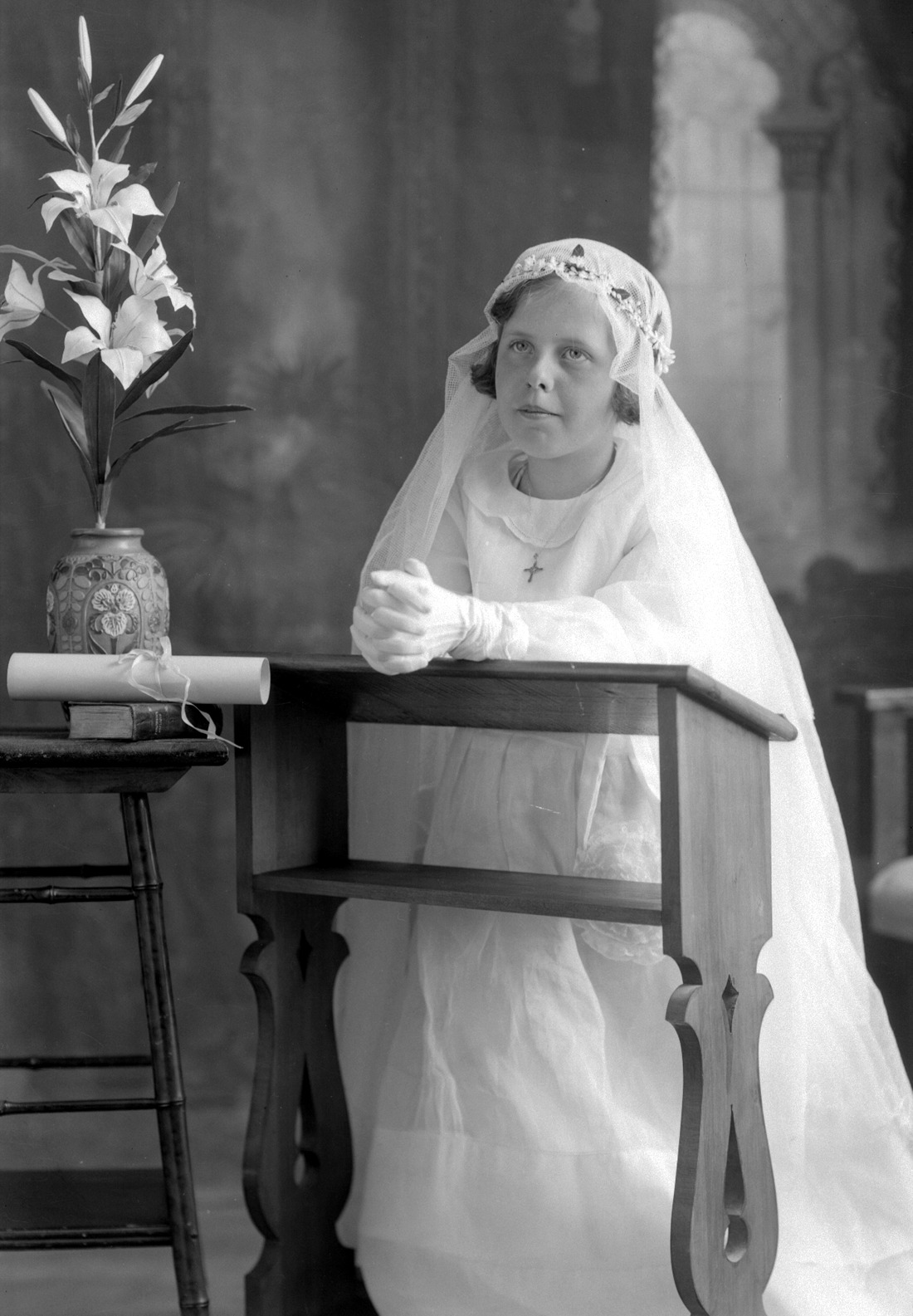
At the time this photo was taken, most Catholic families observed the sacraments faithfully. Miss Gisèle Soucy poses here with confidence, as the photographer is well practised in capturing beautiful confirmation portraits.
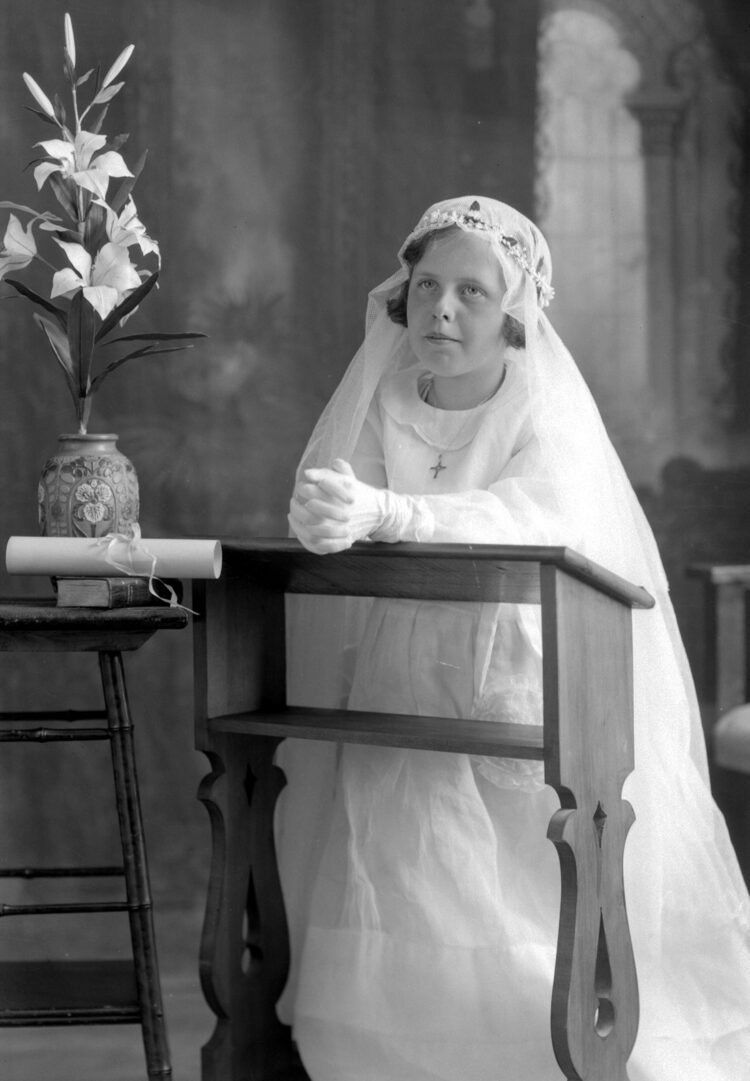
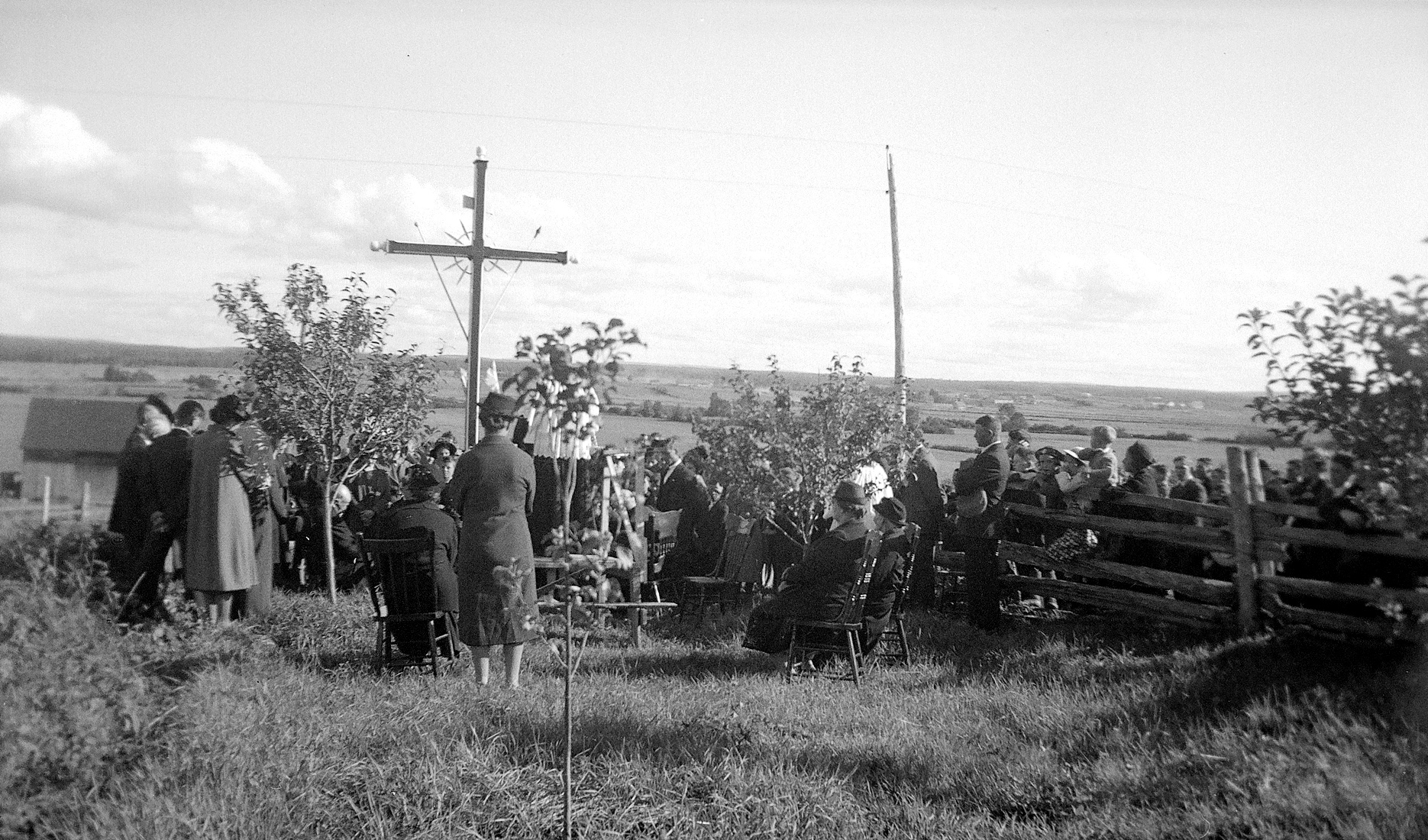
This image documents the blessing ceremony held on September 14, 1940, for a newly built roadside cross constructed by Origène Dumont. In the words of Joseph-Napoléon, such a cross “expresses the Christian spirit that inspired our ancestors.”
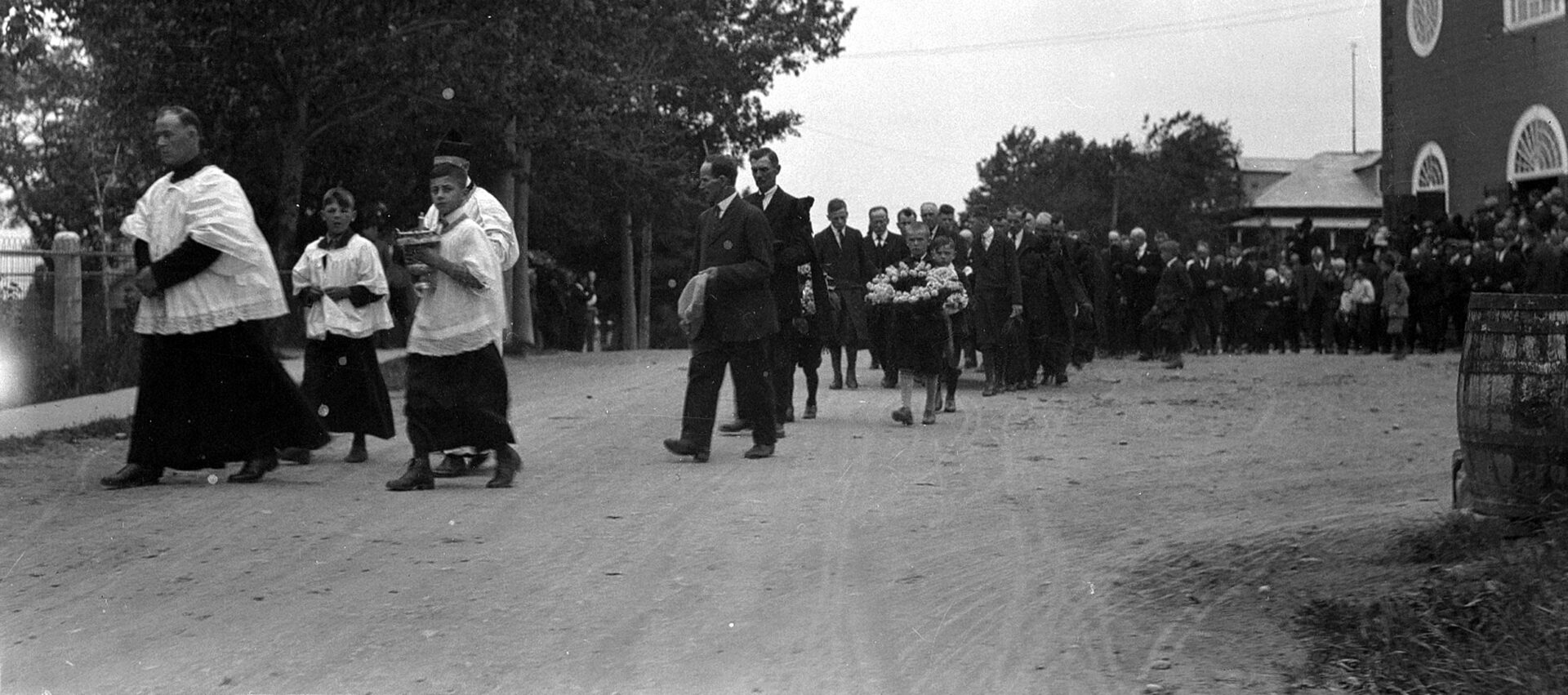
Funerals, by their very nature, are solemn events. In this scene, the mood is heavy as the crowd exits the church, following the priest in procession toward the cemetery in Saint-Alexandre. The image conveys a deep sense of gravity and reverence.
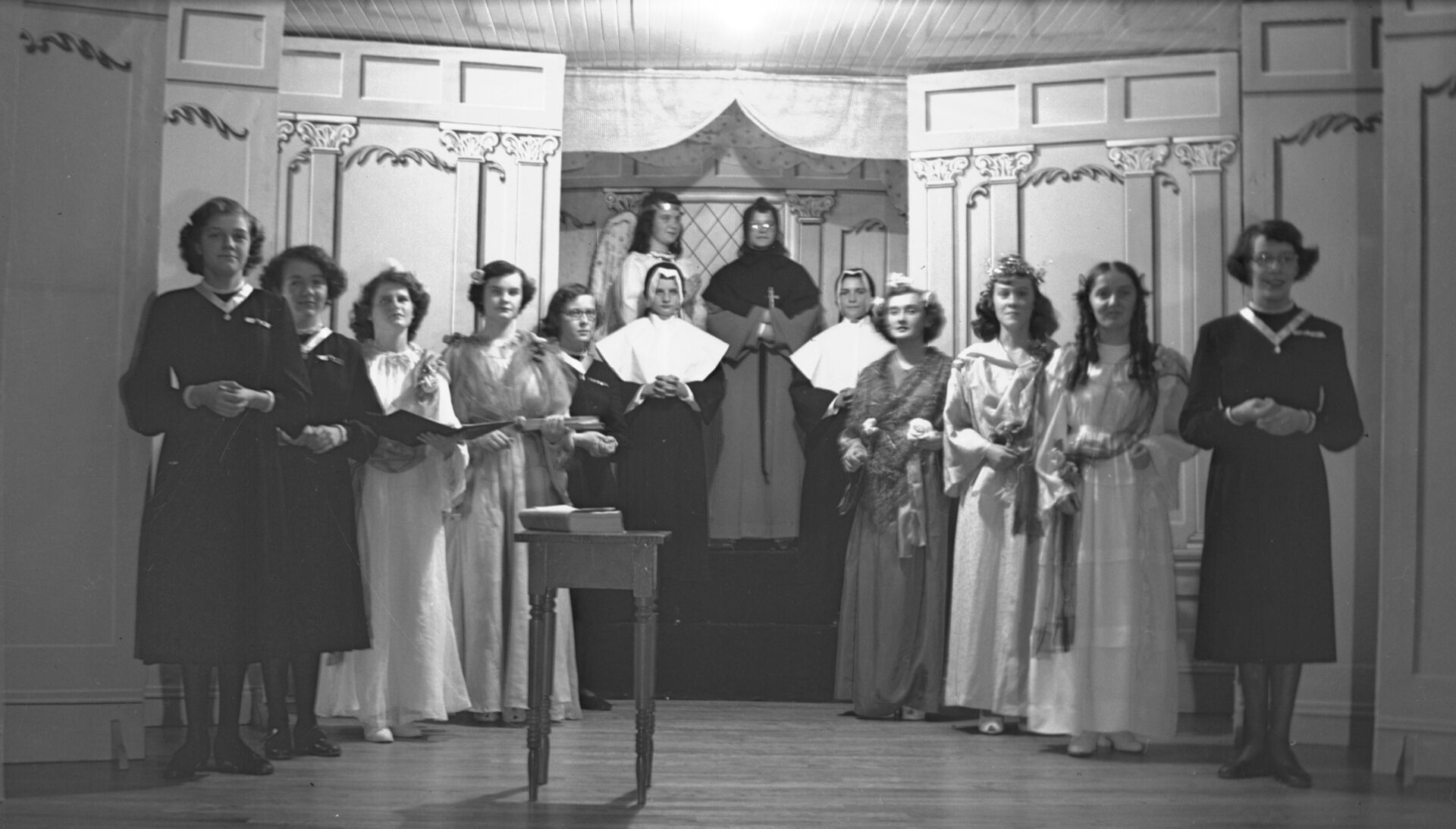
In the first half of the 20th century, French-language theatre in Quebec was deeply influenced by Catholic culture. Here, a group of convent students rehearses a play in honour of Mother Mallet, founder of the Sisters of Charity of Québec, on the occasion of the congregation’s centennial.
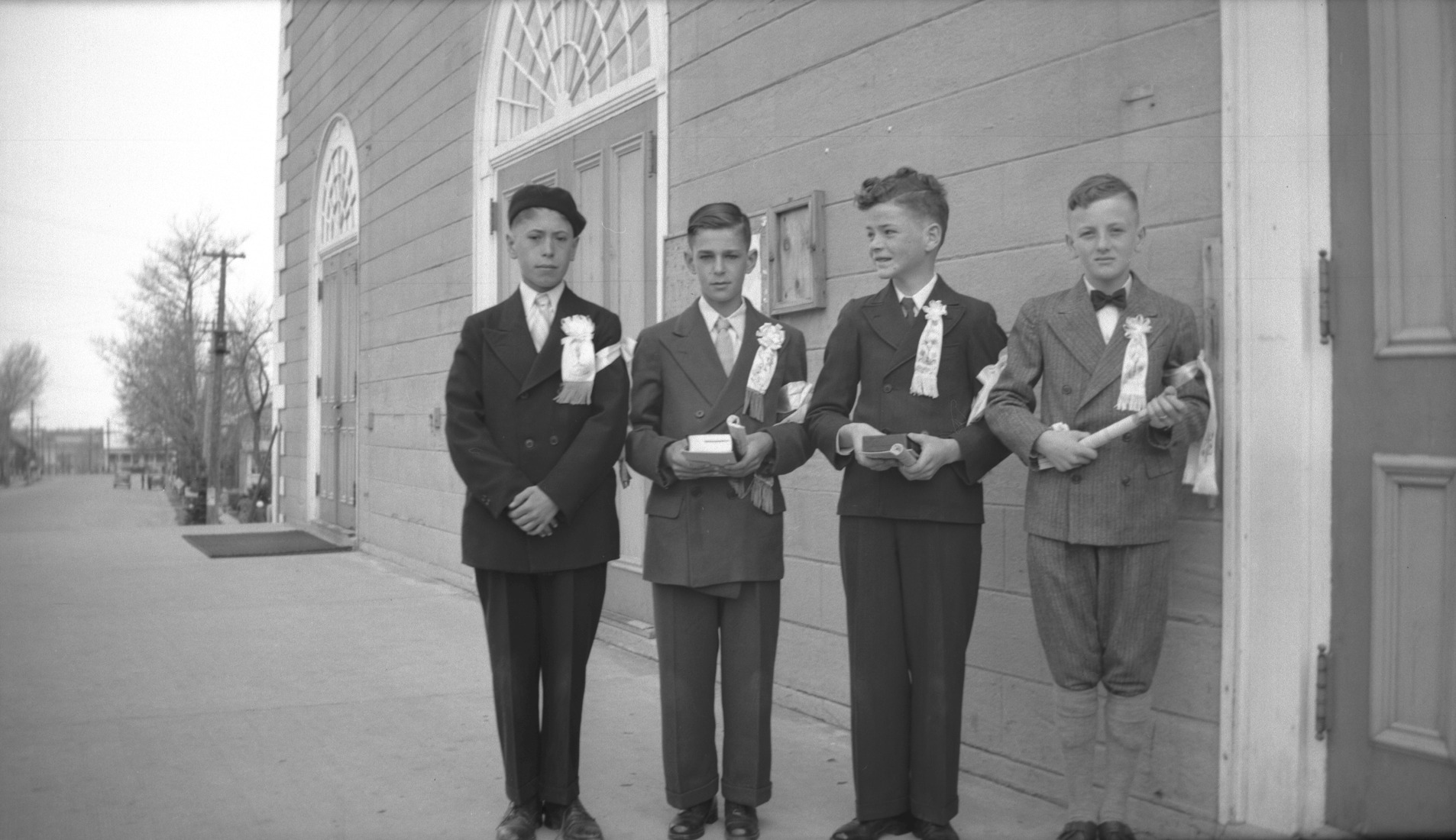
In her studio, Dumont frequently documented the religious sacraments of Saint-Alexandre’s youth. At times, she would also go to the church to photograph young celebrants on the front steps.
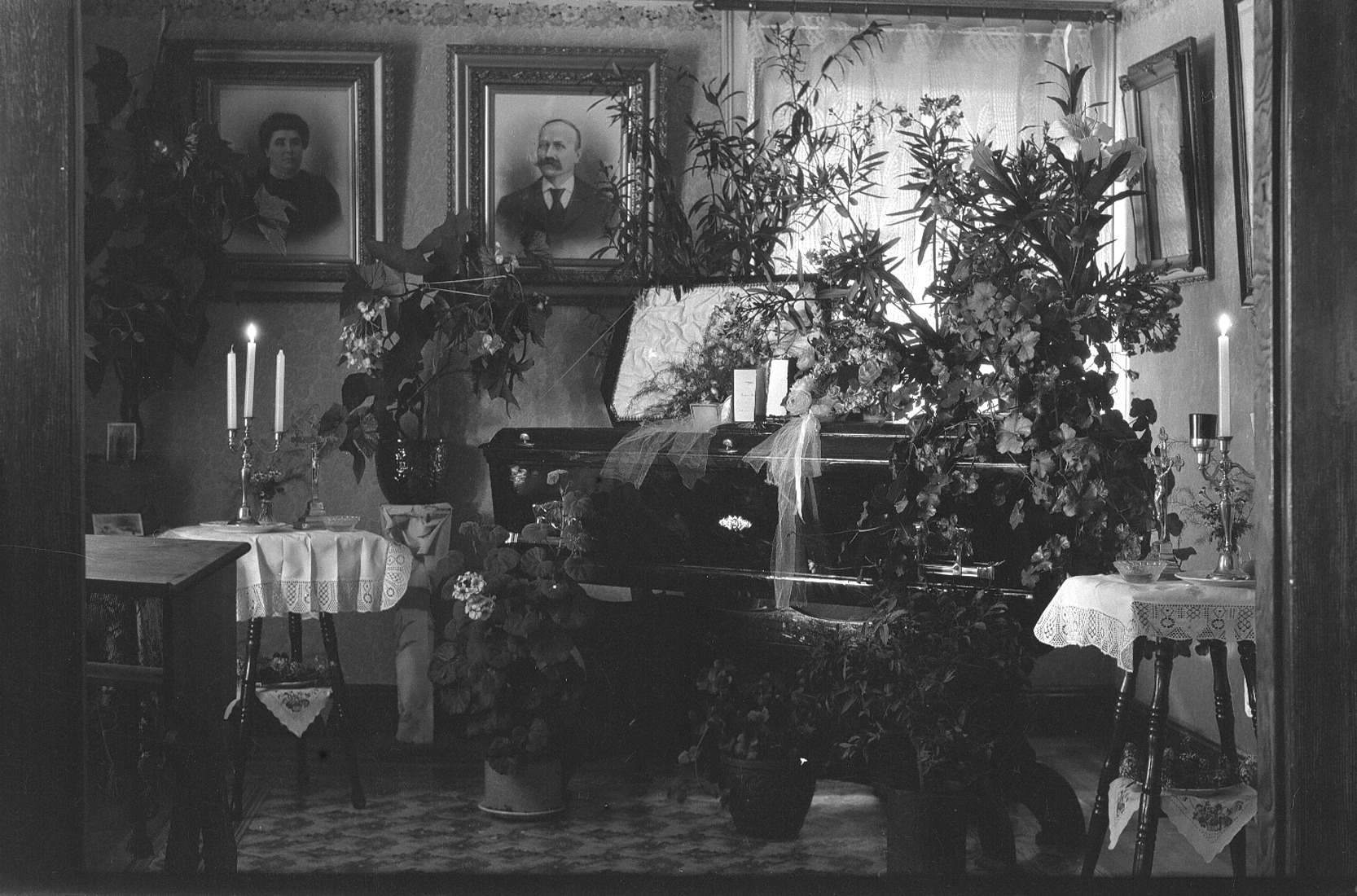
At the time, it was customary to hold wakes at home. Here, the body of Marie-Louise Dumont lies in repose, under the watchful gaze of her parents, whose portraits are displayed on the wall behind her.
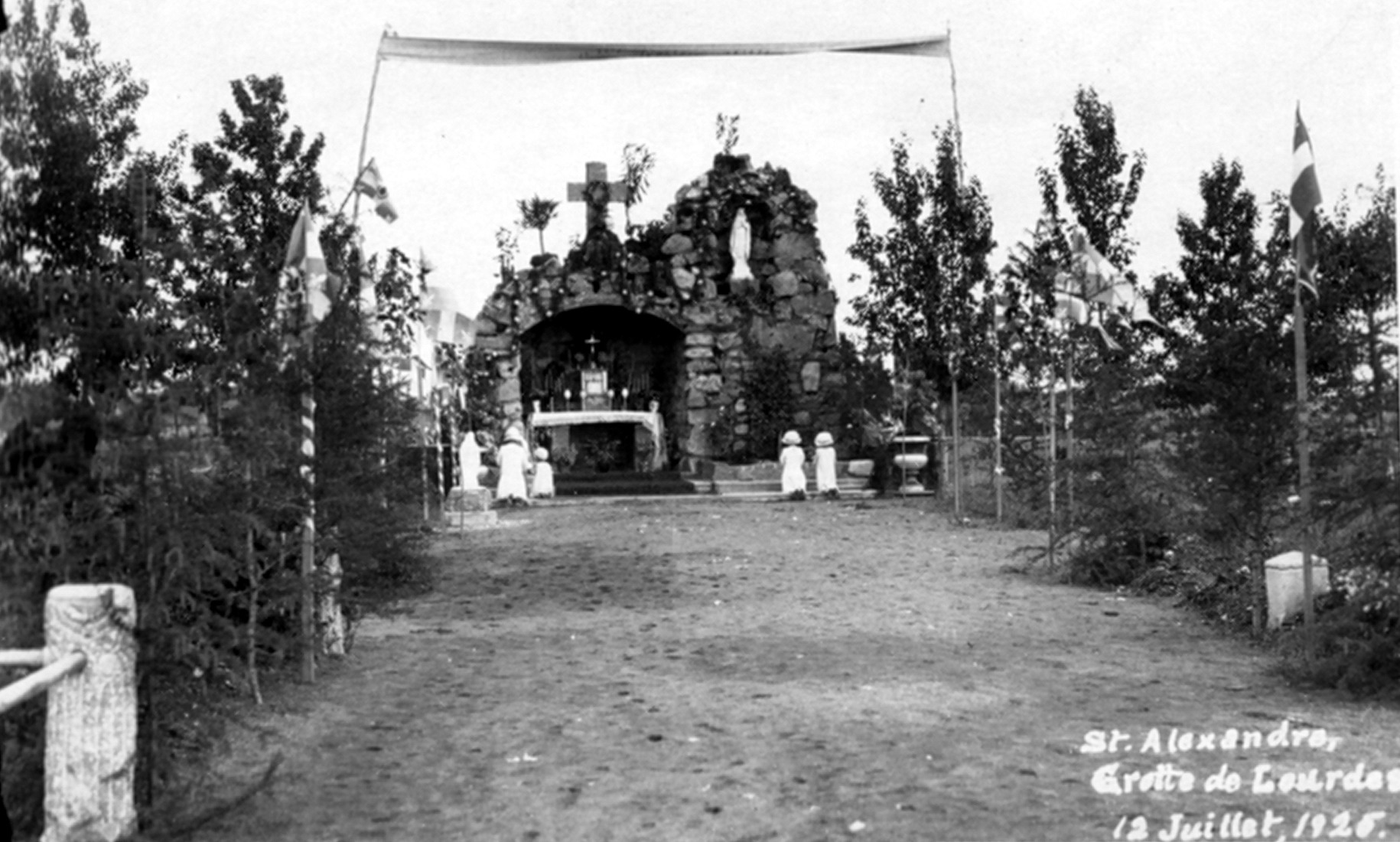
The Saint-Alexandre cemetery featured long, tree-lined paths, a calvary, an oratory and a Lourdes grotto that attracted many visitors to the village. The photographer even included an image of it in the booklet of postcards she published and sold.
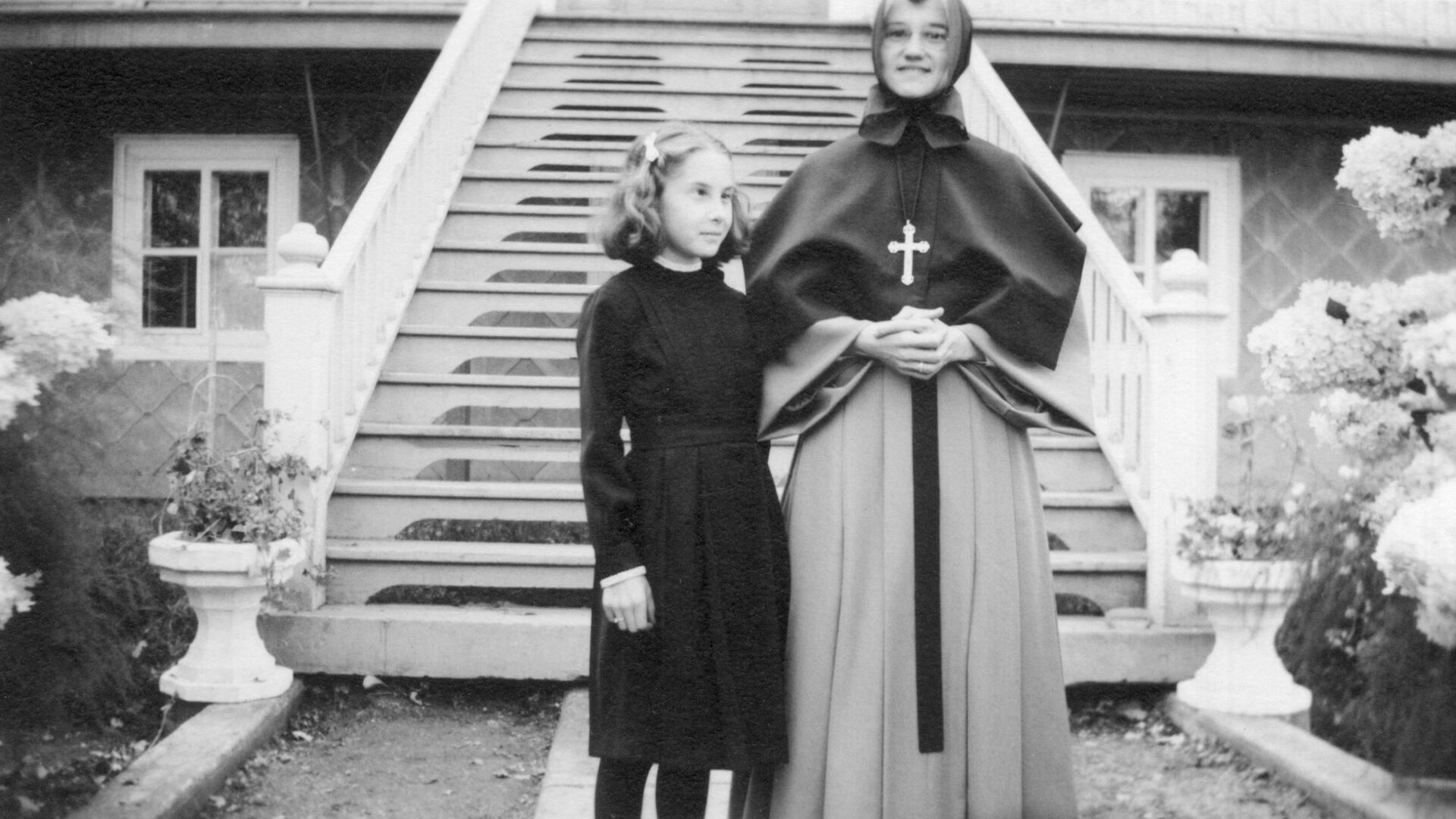
This striking portrait of Sister Saint-Joseph-de-la-Présentation and a convent student who appears to be blind was taken in front of the steps of the Saint-Alexandre convent.
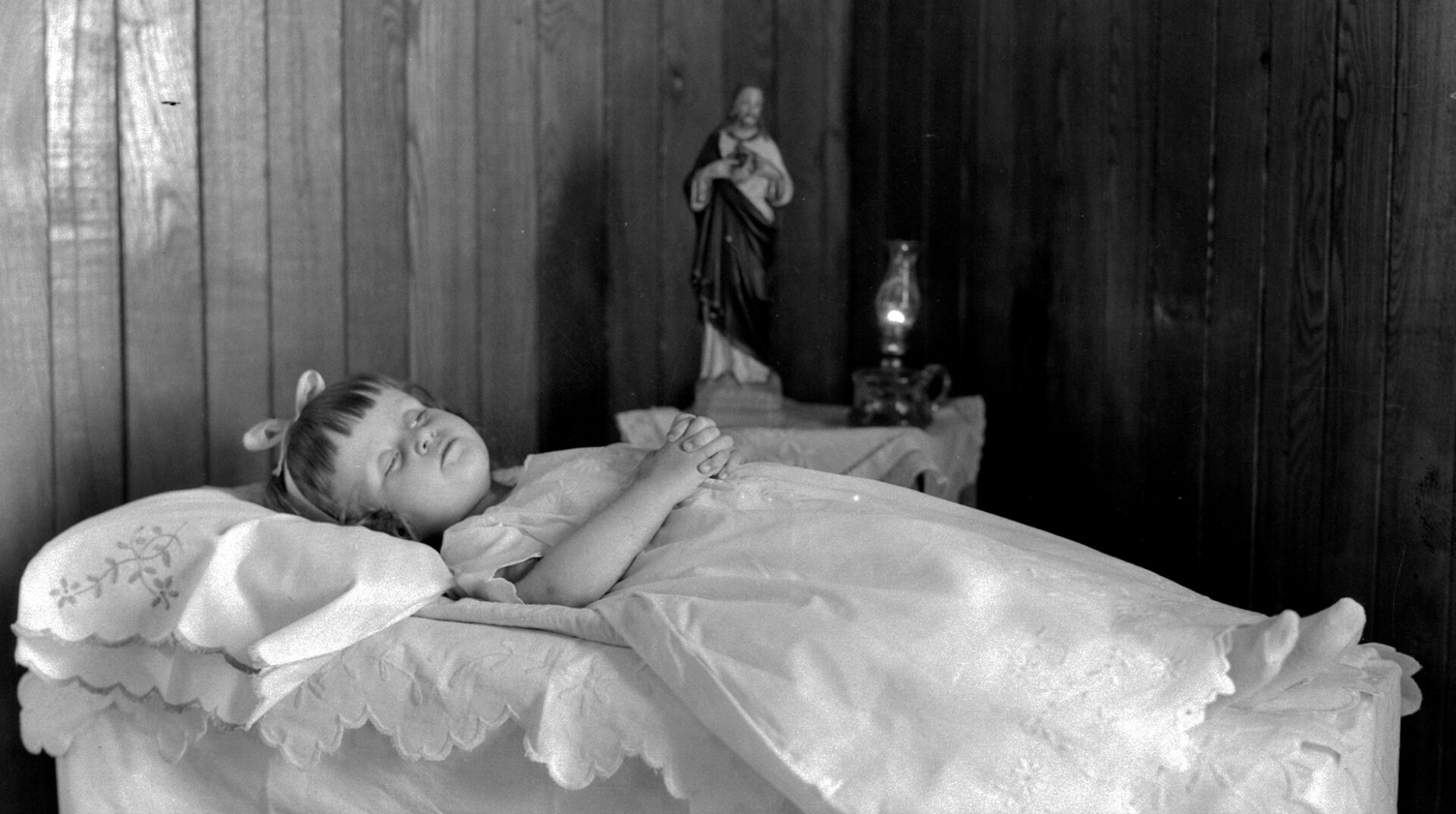
It was common in Dumont’s era to photograph the deceased. Babies, in particular, were dressed in white and posed with their hands clasped, in a way meant to evoke peaceful rest. The effect was intended to feel natural, although in some cases, the babies look more like dolls.
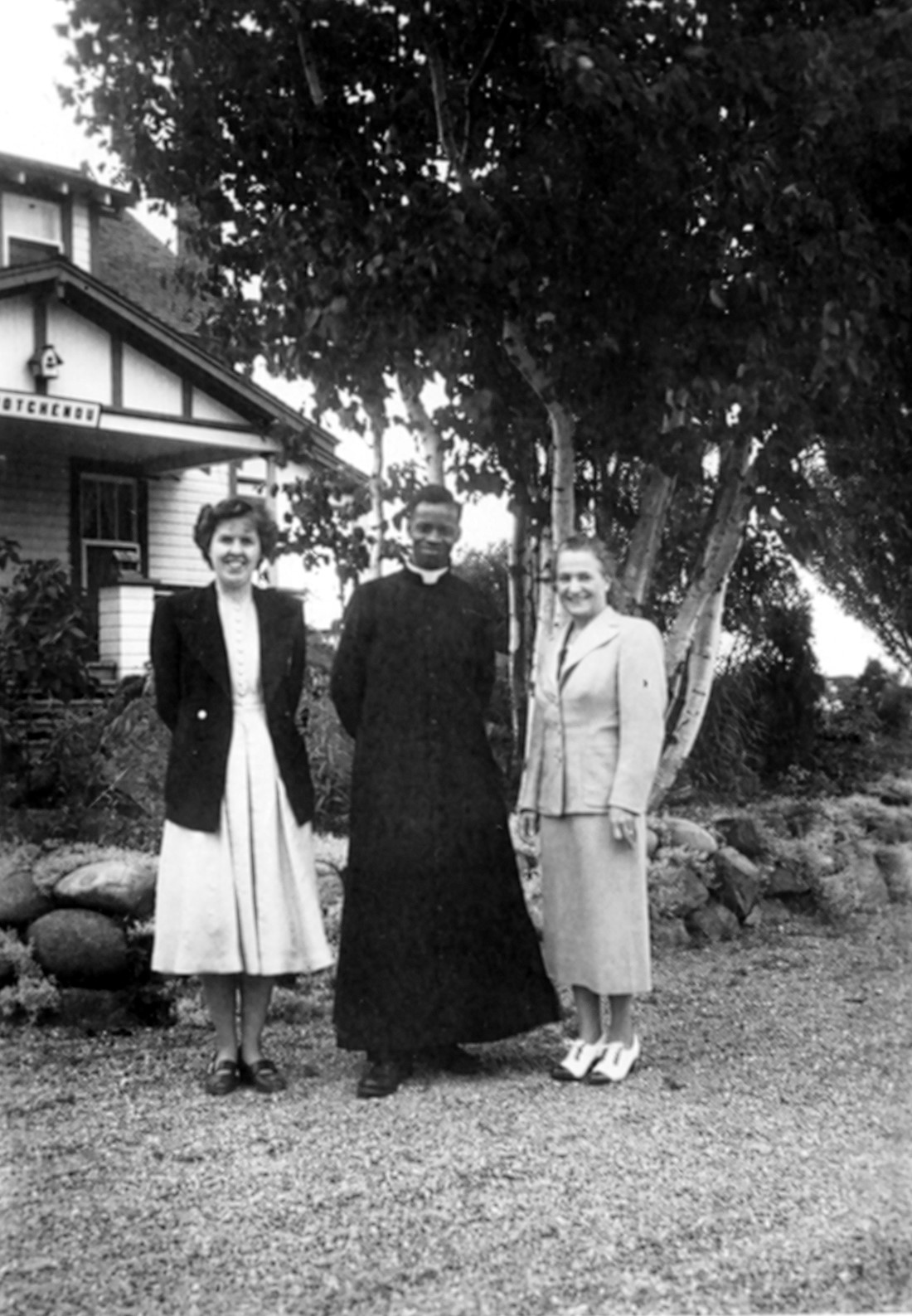
Abbot James Sanga was a priest with the White Fathers Mission in Tanganyika. In 1950, he visited Saint-Alexandre during a vacation spent with the family of his “benefactor,” Ernest Soucy. He is the only Black person to appear in the photographs Dumont left behind.
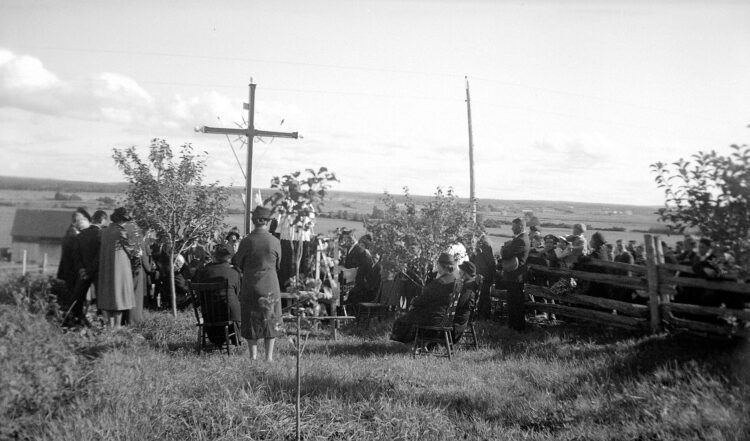
This image documents the blessing ceremony held on September 14, 1940, for a newly built roadside cross constructed by Origène Dumont. In the words of Joseph-Napoléon, such a cross “expresses the Christian spirit that inspired our ancestors.”
Funerals, by their very nature, are solemn events. In this scene, the mood is heavy as the crowd exits the church, following the priest in procession toward the cemetery in Saint-Alexandre. The image conveys a deep sense of gravity and reverence.
In the first half of the 20th century, French-language theatre in Quebec was deeply influenced by Catholic culture. Here, a group of convent students rehearses a play in honour of Mother Mallet, founder of the Sisters of Charity of Québec, on the occasion of the congregation’s centennial.
In her studio, Dumont frequently documented the religious sacraments of Saint-Alexandre’s youth. At times, she would also go to the church to photograph young celebrants on the front steps.
At the time, it was customary to hold wakes at home. Here, the body of Marie-Louise Dumont lies in repose, under the watchful gaze of her parents, whose portraits are displayed on the wall behind her.
The Saint-Alexandre cemetery featured long, tree-lined paths, a calvary, an oratory and a Lourdes grotto that attracted many visitors to the village. The photographer even included an image of it in the booklet of postcards she published and sold.
This striking portrait of Sister Saint-Joseph-de-la-Présentation and a convent student who appears to be blind was taken in front of the steps of the Saint-Alexandre convent.
It was common in Dumont’s era to photograph the deceased. Babies, in particular, were dressed in white and posed with their hands clasped, in a way meant to evoke peaceful rest. The effect was intended to feel natural, although in some cases, the babies look more like dolls.
Abbot James Sanga was a priest with the White Fathers Mission in Tanganyika. In 1950, he visited Saint-Alexandre during a vacation spent with the family of his “benefactor,” Ernest Soucy. He is the only Black person to appear in the photographs Dumont left behind.
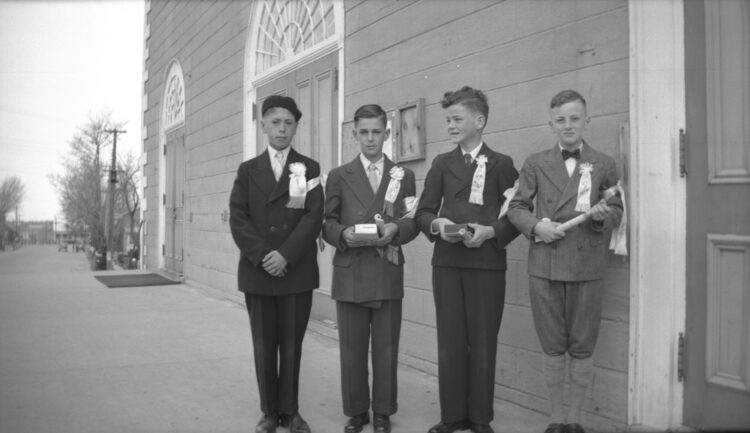
This image documents the blessing ceremony held on September 14, 1940, for a newly built roadside cross constructed by Origène Dumont. In the words of Joseph-Napoléon, such a cross “expresses the Christian spirit that inspired our ancestors.”
Funerals, by their very nature, are solemn events. In this scene, the mood is heavy as the crowd exits the church, following the priest in procession toward the cemetery in Saint-Alexandre. The image conveys a deep sense of gravity and reverence.
In the first half of the 20th century, French-language theatre in Quebec was deeply influenced by Catholic culture. Here, a group of convent students rehearses a play in honour of Mother Mallet, founder of the Sisters of Charity of Québec, on the occasion of the congregation’s centennial.
In her studio, Dumont frequently documented the religious sacraments of Saint-Alexandre’s youth. At times, she would also go to the church to photograph young celebrants on the front steps.
At the time, it was customary to hold wakes at home. Here, the body of Marie-Louise Dumont lies in repose, under the watchful gaze of her parents, whose portraits are displayed on the wall behind her.
The Saint-Alexandre cemetery featured long, tree-lined paths, a calvary, an oratory and a Lourdes grotto that attracted many visitors to the village. The photographer even included an image of it in the booklet of postcards she published and sold.
This striking portrait of Sister Saint-Joseph-de-la-Présentation and a convent student who appears to be blind was taken in front of the steps of the Saint-Alexandre convent.
It was common in Dumont’s era to photograph the deceased. Babies, in particular, were dressed in white and posed with their hands clasped, in a way meant to evoke peaceful rest. The effect was intended to feel natural, although in some cases, the babies look more like dolls.
Abbot James Sanga was a priest with the White Fathers Mission in Tanganyika. In 1950, he visited Saint-Alexandre during a vacation spent with the family of his “benefactor,” Ernest Soucy. He is the only Black person to appear in the photographs Dumont left behind.
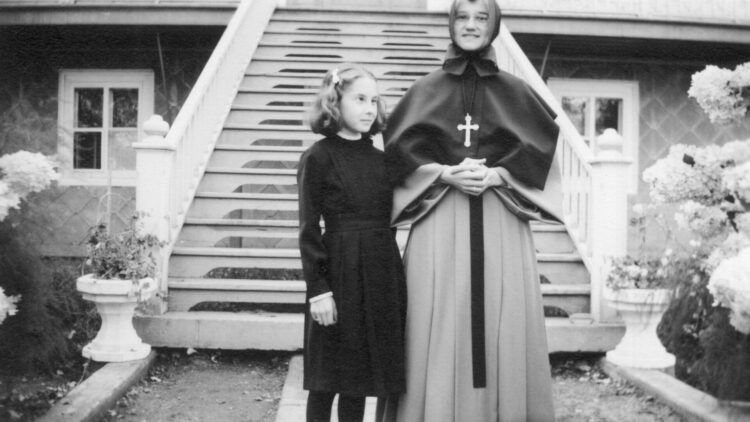
This image documents the blessing ceremony held on September 14, 1940, for a newly built roadside cross constructed by Origène Dumont. In the words of Joseph-Napoléon, such a cross “expresses the Christian spirit that inspired our ancestors.”
Funerals, by their very nature, are solemn events. In this scene, the mood is heavy as the crowd exits the church, following the priest in procession toward the cemetery in Saint-Alexandre. The image conveys a deep sense of gravity and reverence.
In the first half of the 20th century, French-language theatre in Quebec was deeply influenced by Catholic culture. Here, a group of convent students rehearses a play in honour of Mother Mallet, founder of the Sisters of Charity of Québec, on the occasion of the congregation’s centennial.
In her studio, Dumont frequently documented the religious sacraments of Saint-Alexandre’s youth. At times, she would also go to the church to photograph young celebrants on the front steps.
At the time, it was customary to hold wakes at home. Here, the body of Marie-Louise Dumont lies in repose, under the watchful gaze of her parents, whose portraits are displayed on the wall behind her.
The Saint-Alexandre cemetery featured long, tree-lined paths, a calvary, an oratory and a Lourdes grotto that attracted many visitors to the village. The photographer even included an image of it in the booklet of postcards she published and sold.
This striking portrait of Sister Saint-Joseph-de-la-Présentation and a convent student who appears to be blind was taken in front of the steps of the Saint-Alexandre convent.
It was common in Dumont’s era to photograph the deceased. Babies, in particular, were dressed in white and posed with their hands clasped, in a way meant to evoke peaceful rest. The effect was intended to feel natural, although in some cases, the babies look more like dolls.
Abbot James Sanga was a priest with the White Fathers Mission in Tanganyika. In 1950, he visited Saint-Alexandre during a vacation spent with the family of his “benefactor,” Ernest Soucy. He is the only Black person to appear in the photographs Dumont left behind.
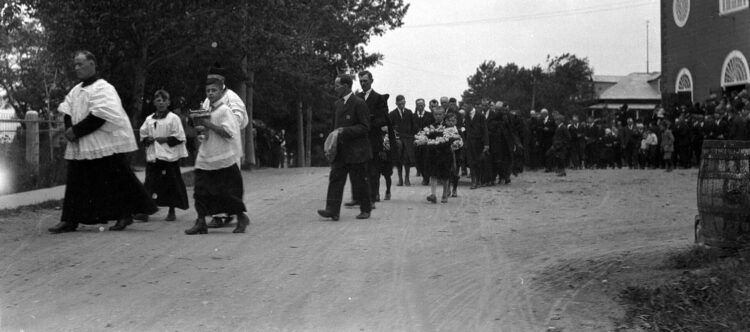
This image documents the blessing ceremony held on September 14, 1940, for a newly built roadside cross constructed by Origène Dumont. In the words of Joseph-Napoléon, such a cross “expresses the Christian spirit that inspired our ancestors.”
Funerals, by their very nature, are solemn events. In this scene, the mood is heavy as the crowd exits the church, following the priest in procession toward the cemetery in Saint-Alexandre. The image conveys a deep sense of gravity and reverence.
In the first half of the 20th century, French-language theatre in Quebec was deeply influenced by Catholic culture. Here, a group of convent students rehearses a play in honour of Mother Mallet, founder of the Sisters of Charity of Québec, on the occasion of the congregation’s centennial.
In her studio, Dumont frequently documented the religious sacraments of Saint-Alexandre’s youth. At times, she would also go to the church to photograph young celebrants on the front steps.
At the time, it was customary to hold wakes at home. Here, the body of Marie-Louise Dumont lies in repose, under the watchful gaze of her parents, whose portraits are displayed on the wall behind her.
The Saint-Alexandre cemetery featured long, tree-lined paths, a calvary, an oratory and a Lourdes grotto that attracted many visitors to the village. The photographer even included an image of it in the booklet of postcards she published and sold.
This striking portrait of Sister Saint-Joseph-de-la-Présentation and a convent student who appears to be blind was taken in front of the steps of the Saint-Alexandre convent.
It was common in Dumont’s era to photograph the deceased. Babies, in particular, were dressed in white and posed with their hands clasped, in a way meant to evoke peaceful rest. The effect was intended to feel natural, although in some cases, the babies look more like dolls.
Abbot James Sanga was a priest with the White Fathers Mission in Tanganyika. In 1950, he visited Saint-Alexandre during a vacation spent with the family of his “benefactor,” Ernest Soucy. He is the only Black person to appear in the photographs Dumont left behind.
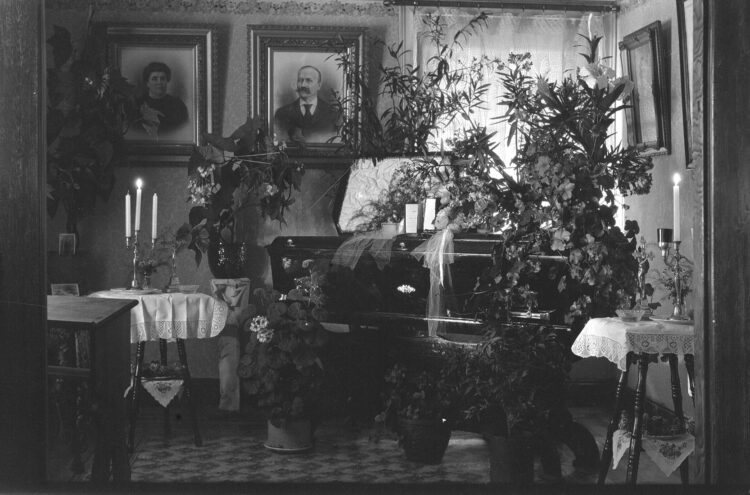
This image documents the blessing ceremony held on September 14, 1940, for a newly built roadside cross constructed by Origène Dumont. In the words of Joseph-Napoléon, such a cross “expresses the Christian spirit that inspired our ancestors.”
Funerals, by their very nature, are solemn events. In this scene, the mood is heavy as the crowd exits the church, following the priest in procession toward the cemetery in Saint-Alexandre. The image conveys a deep sense of gravity and reverence.
In the first half of the 20th century, French-language theatre in Quebec was deeply influenced by Catholic culture. Here, a group of convent students rehearses a play in honour of Mother Mallet, founder of the Sisters of Charity of Québec, on the occasion of the congregation’s centennial.
In her studio, Dumont frequently documented the religious sacraments of Saint-Alexandre’s youth. At times, she would also go to the church to photograph young celebrants on the front steps.
At the time, it was customary to hold wakes at home. Here, the body of Marie-Louise Dumont lies in repose, under the watchful gaze of her parents, whose portraits are displayed on the wall behind her.
The Saint-Alexandre cemetery featured long, tree-lined paths, a calvary, an oratory and a Lourdes grotto that attracted many visitors to the village. The photographer even included an image of it in the booklet of postcards she published and sold.
This striking portrait of Sister Saint-Joseph-de-la-Présentation and a convent student who appears to be blind was taken in front of the steps of the Saint-Alexandre convent.
It was common in Dumont’s era to photograph the deceased. Babies, in particular, were dressed in white and posed with their hands clasped, in a way meant to evoke peaceful rest. The effect was intended to feel natural, although in some cases, the babies look more like dolls.
Abbot James Sanga was a priest with the White Fathers Mission in Tanganyika. In 1950, he visited Saint-Alexandre during a vacation spent with the family of his “benefactor,” Ernest Soucy. He is the only Black person to appear in the photographs Dumont left behind.
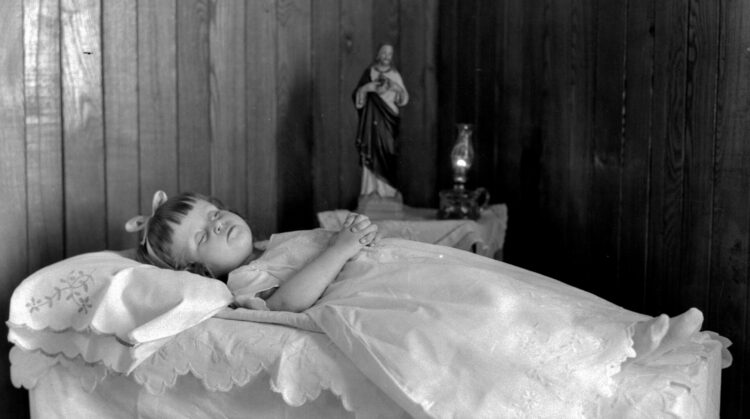
This image documents the blessing ceremony held on September 14, 1940, for a newly built roadside cross constructed by Origène Dumont. In the words of Joseph-Napoléon, such a cross “expresses the Christian spirit that inspired our ancestors.”
Funerals, by their very nature, are solemn events. In this scene, the mood is heavy as the crowd exits the church, following the priest in procession toward the cemetery in Saint-Alexandre. The image conveys a deep sense of gravity and reverence.
In the first half of the 20th century, French-language theatre in Quebec was deeply influenced by Catholic culture. Here, a group of convent students rehearses a play in honour of Mother Mallet, founder of the Sisters of Charity of Québec, on the occasion of the congregation’s centennial.
In her studio, Dumont frequently documented the religious sacraments of Saint-Alexandre’s youth. At times, she would also go to the church to photograph young celebrants on the front steps.
At the time, it was customary to hold wakes at home. Here, the body of Marie-Louise Dumont lies in repose, under the watchful gaze of her parents, whose portraits are displayed on the wall behind her.
The Saint-Alexandre cemetery featured long, tree-lined paths, a calvary, an oratory and a Lourdes grotto that attracted many visitors to the village. The photographer even included an image of it in the booklet of postcards she published and sold.
This striking portrait of Sister Saint-Joseph-de-la-Présentation and a convent student who appears to be blind was taken in front of the steps of the Saint-Alexandre convent.
It was common in Dumont’s era to photograph the deceased. Babies, in particular, were dressed in white and posed with their hands clasped, in a way meant to evoke peaceful rest. The effect was intended to feel natural, although in some cases, the babies look more like dolls.
Abbot James Sanga was a priest with the White Fathers Mission in Tanganyika. In 1950, he visited Saint-Alexandre during a vacation spent with the family of his “benefactor,” Ernest Soucy. He is the only Black person to appear in the photographs Dumont left behind.
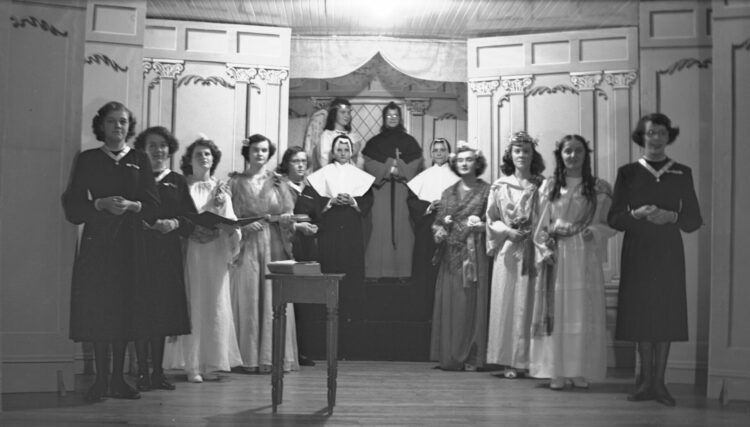
This image documents the blessing ceremony held on September 14, 1940, for a newly built roadside cross constructed by Origène Dumont. In the words of Joseph-Napoléon, such a cross “expresses the Christian spirit that inspired our ancestors.”
Funerals, by their very nature, are solemn events. In this scene, the mood is heavy as the crowd exits the church, following the priest in procession toward the cemetery in Saint-Alexandre. The image conveys a deep sense of gravity and reverence.
In the first half of the 20th century, French-language theatre in Quebec was deeply influenced by Catholic culture. Here, a group of convent students rehearses a play in honour of Mother Mallet, founder of the Sisters of Charity of Québec, on the occasion of the congregation’s centennial.
In her studio, Dumont frequently documented the religious sacraments of Saint-Alexandre’s youth. At times, she would also go to the church to photograph young celebrants on the front steps.
At the time, it was customary to hold wakes at home. Here, the body of Marie-Louise Dumont lies in repose, under the watchful gaze of her parents, whose portraits are displayed on the wall behind her.
The Saint-Alexandre cemetery featured long, tree-lined paths, a calvary, an oratory and a Lourdes grotto that attracted many visitors to the village. The photographer even included an image of it in the booklet of postcards she published and sold.
This striking portrait of Sister Saint-Joseph-de-la-Présentation and a convent student who appears to be blind was taken in front of the steps of the Saint-Alexandre convent.
It was common in Dumont’s era to photograph the deceased. Babies, in particular, were dressed in white and posed with their hands clasped, in a way meant to evoke peaceful rest. The effect was intended to feel natural, although in some cases, the babies look more like dolls.
Abbot James Sanga was a priest with the White Fathers Mission in Tanganyika. In 1950, he visited Saint-Alexandre during a vacation spent with the family of his “benefactor,” Ernest Soucy. He is the only Black person to appear in the photographs Dumont left behind.
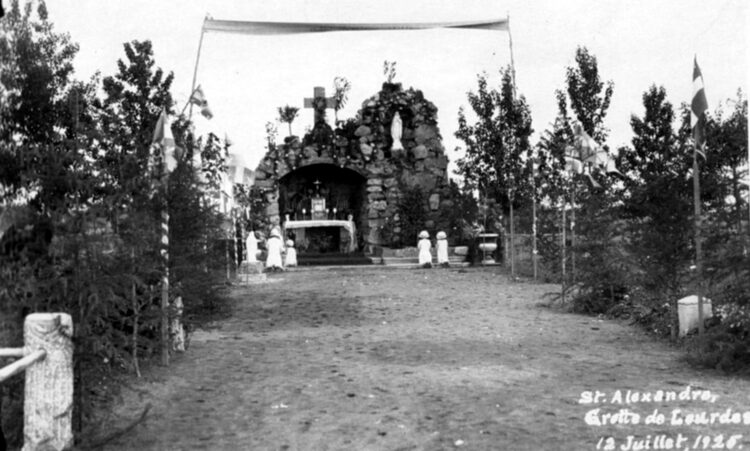
This image documents the blessing ceremony held on September 14, 1940, for a newly built roadside cross constructed by Origène Dumont. In the words of Joseph-Napoléon, such a cross “expresses the Christian spirit that inspired our ancestors.”
Funerals, by their very nature, are solemn events. In this scene, the mood is heavy as the crowd exits the church, following the priest in procession toward the cemetery in Saint-Alexandre. The image conveys a deep sense of gravity and reverence.
In the first half of the 20th century, French-language theatre in Quebec was deeply influenced by Catholic culture. Here, a group of convent students rehearses a play in honour of Mother Mallet, founder of the Sisters of Charity of Québec, on the occasion of the congregation’s centennial.
In her studio, Dumont frequently documented the religious sacraments of Saint-Alexandre’s youth. At times, she would also go to the church to photograph young celebrants on the front steps.
At the time, it was customary to hold wakes at home. Here, the body of Marie-Louise Dumont lies in repose, under the watchful gaze of her parents, whose portraits are displayed on the wall behind her.
The Saint-Alexandre cemetery featured long, tree-lined paths, a calvary, an oratory and a Lourdes grotto that attracted many visitors to the village. The photographer even included an image of it in the booklet of postcards she published and sold.
This striking portrait of Sister Saint-Joseph-de-la-Présentation and a convent student who appears to be blind was taken in front of the steps of the Saint-Alexandre convent.
It was common in Dumont’s era to photograph the deceased. Babies, in particular, were dressed in white and posed with their hands clasped, in a way meant to evoke peaceful rest. The effect was intended to feel natural, although in some cases, the babies look more like dolls.
Abbot James Sanga was a priest with the White Fathers Mission in Tanganyika. In 1950, he visited Saint-Alexandre during a vacation spent with the family of his “benefactor,” Ernest Soucy. He is the only Black person to appear in the photographs Dumont left behind.
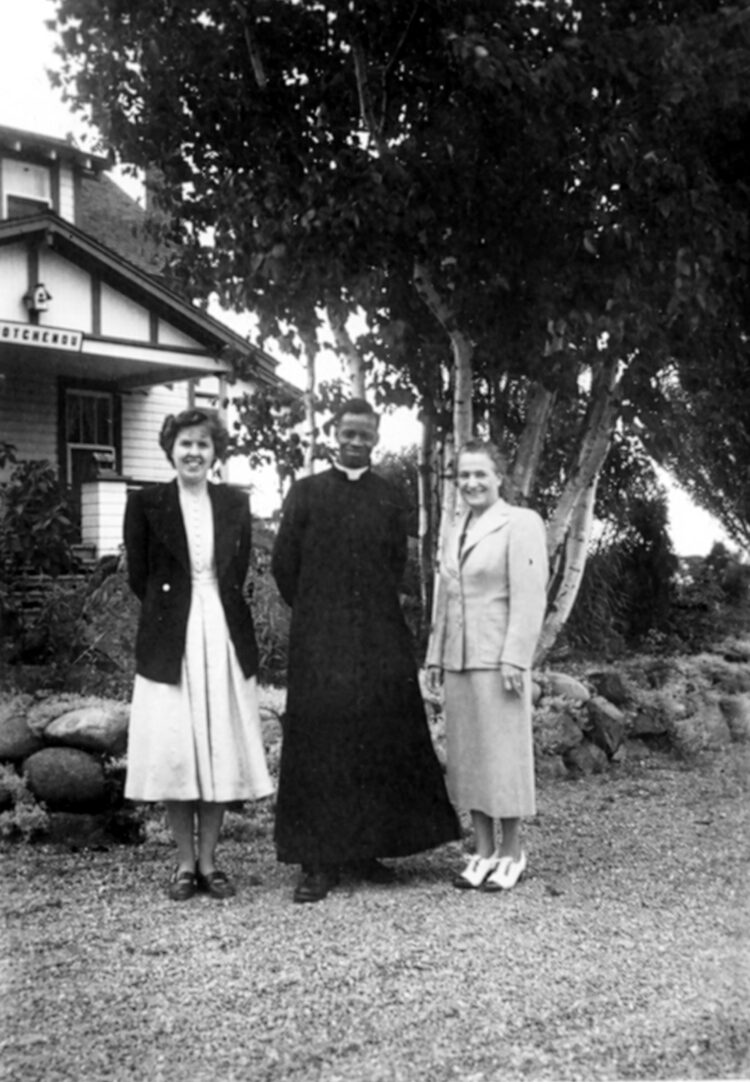
Along with Charlevoix, Kamouraska ranks among Quebec’s earliest and most beloved tourist destinations. The region’s breathtaking scenery has been drawing visitors since the 19th century, captivating them with its stunning sunsets, sweeping views of the St. Lawrence River, tranquil fields and distinctive the solitary hills, called cabourons, unique to the area. For Marie-Alice Dumont, however, these picturesque landscapes were part of her daily life. In her photography, they often serve as striking backdrops, setting the stage for her subjects. Occasionally, though, the scenery takes centre stage, becoming the focal point of her work.
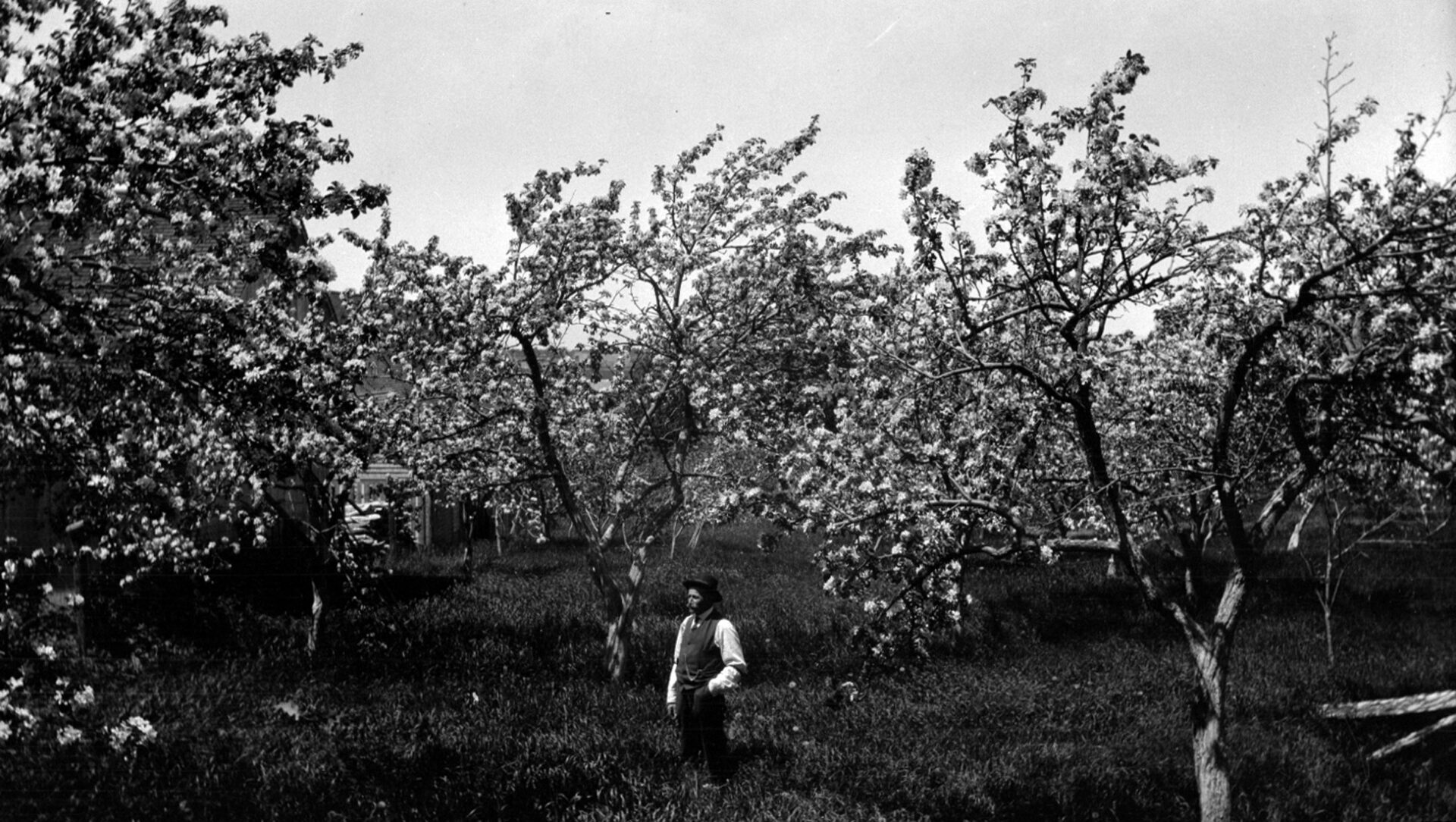
Uldéric Dumont stands proudly in the middle of the orchard, which he tended with his eldest son, François, and his photographer daughter. Is he the subject of the photograph, or did Dumont wish, instead, to capture the majesty of the surrounding landscape?
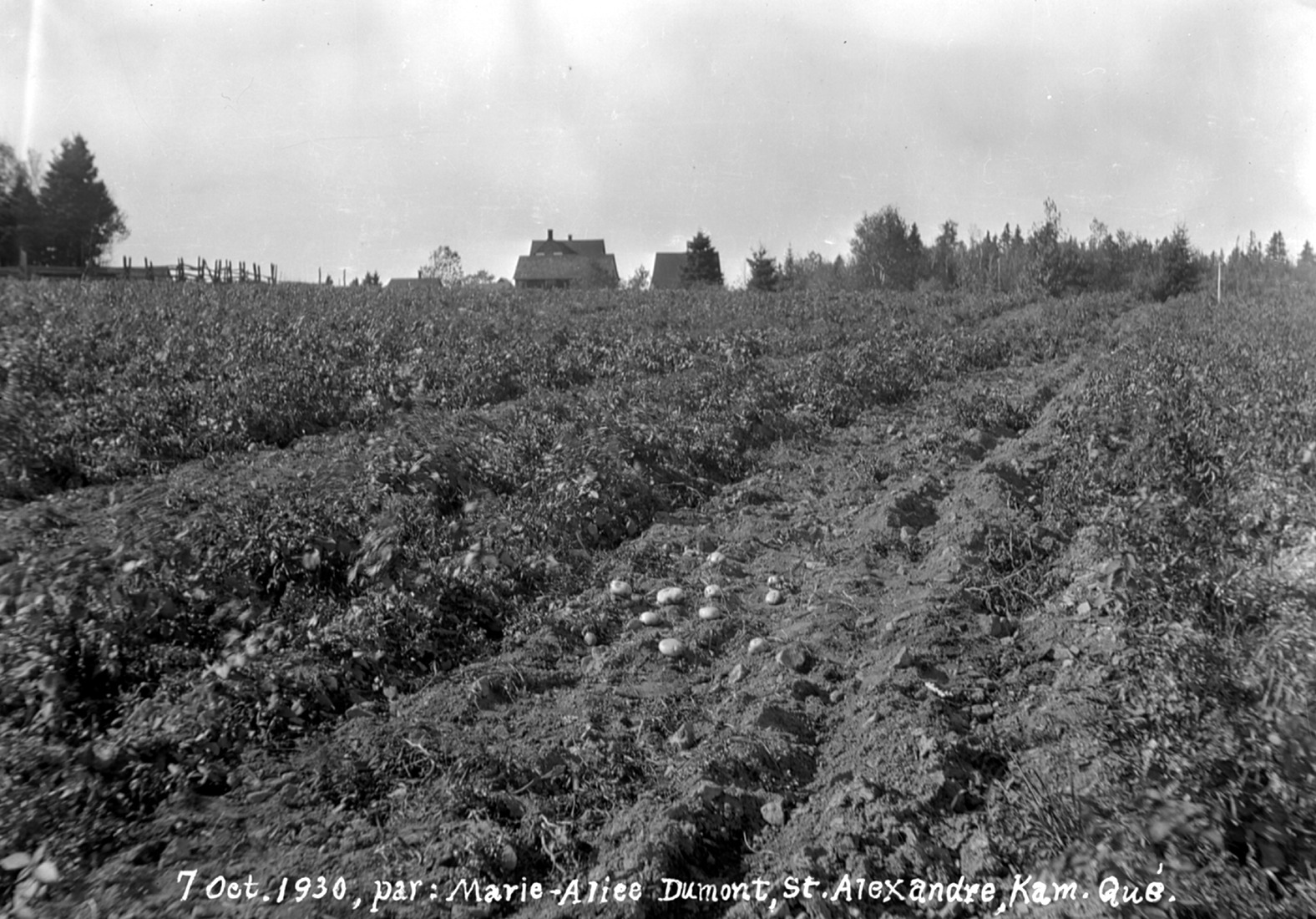
The slightly upward angle on this potato field gives it a sense of scale and depth that conveys the magnitude of the labour required to cultivate it.
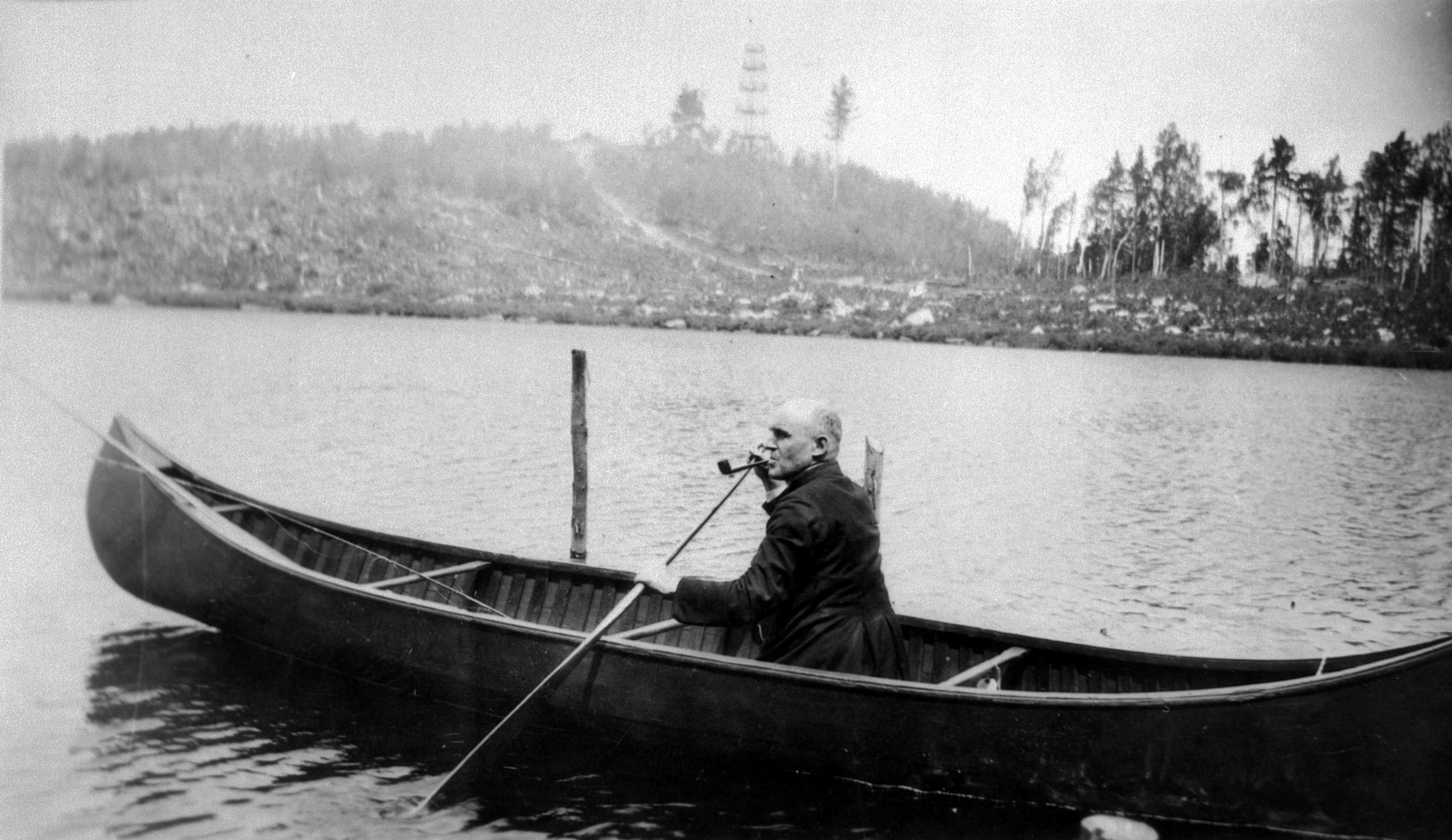
This negative was likely sent to Dumont to be developed. A clergyman inspects the freshly cleared edges of a lake (Pohénégamook, perhaps, or Témiscouata), possibly in preparation for welcoming the first groups of settlers.
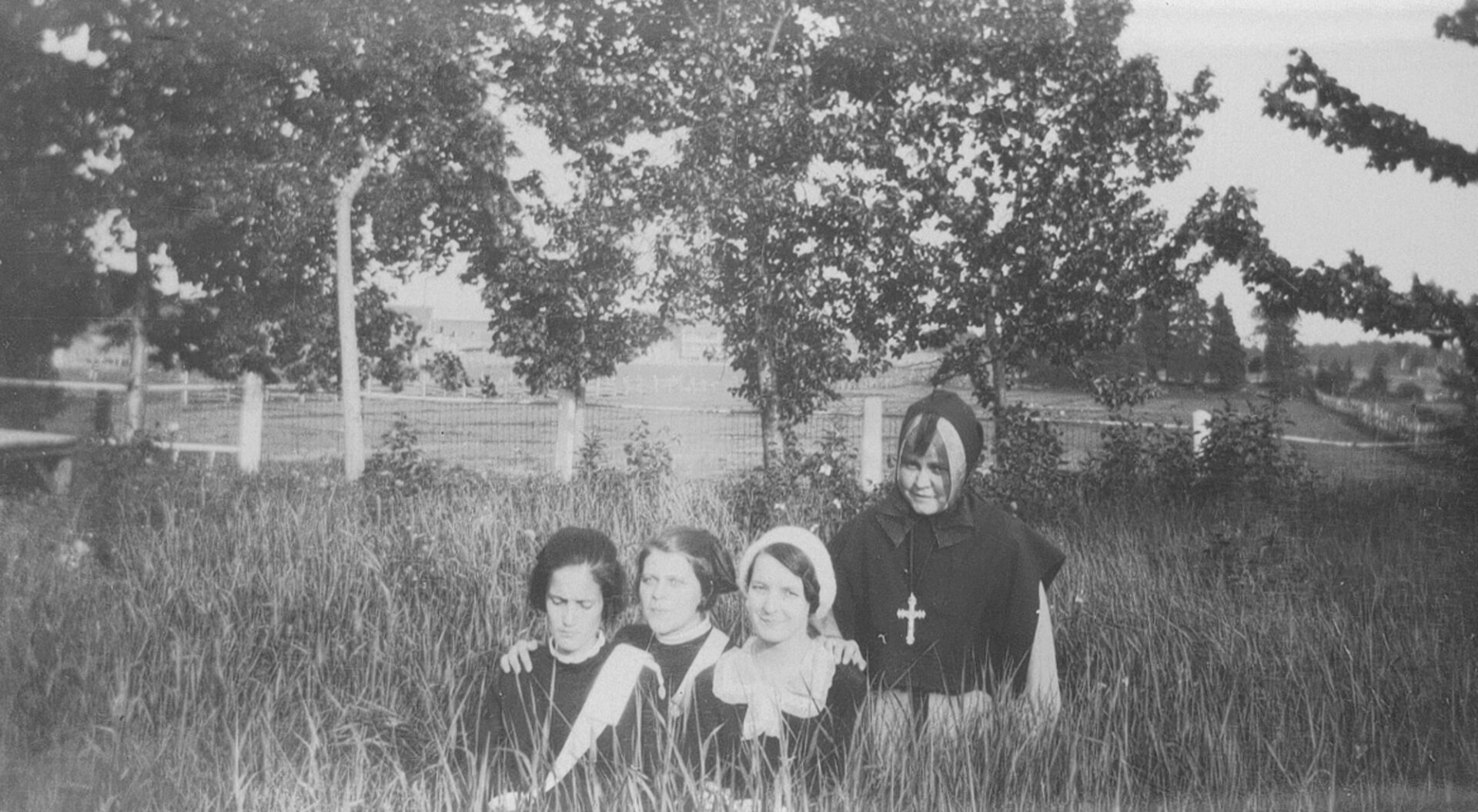
The bucolic landscapes of Kamouraska also served as a playground for the convent students of Saint-Alexandre. Here, Sister Sainte-Anna-Marie is accompanied by three of her pupils, including Madeleine Guérette, on whose shoulder her hand gently rests.
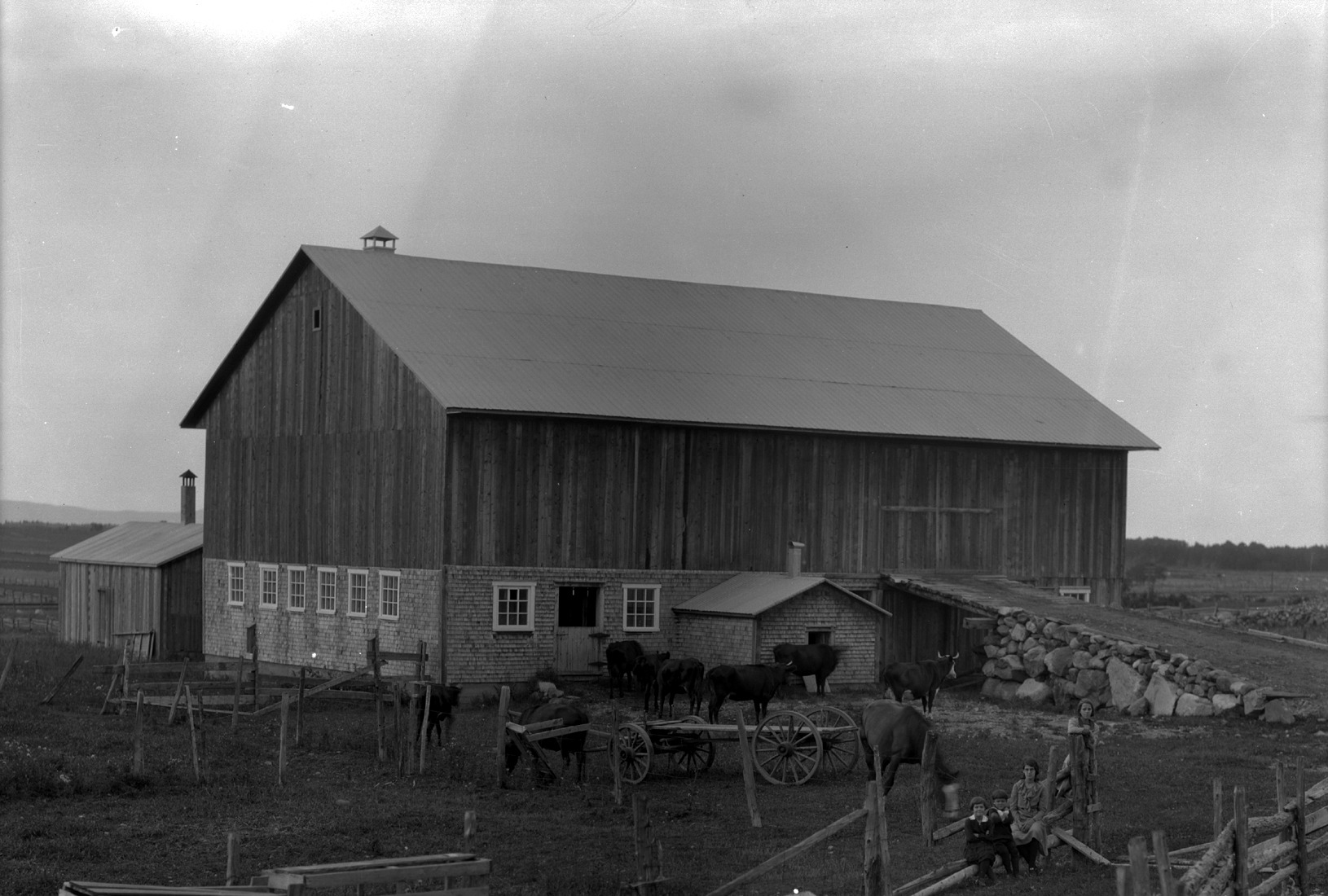
Families sometimes called upon Marie-Alice Dumont to photograph their home and farm buildings. In 1944, Dumont visited Marie-Hermine Plourde, widow of Jules Chénard, to capture their grand and immaculately maintained house and barn.
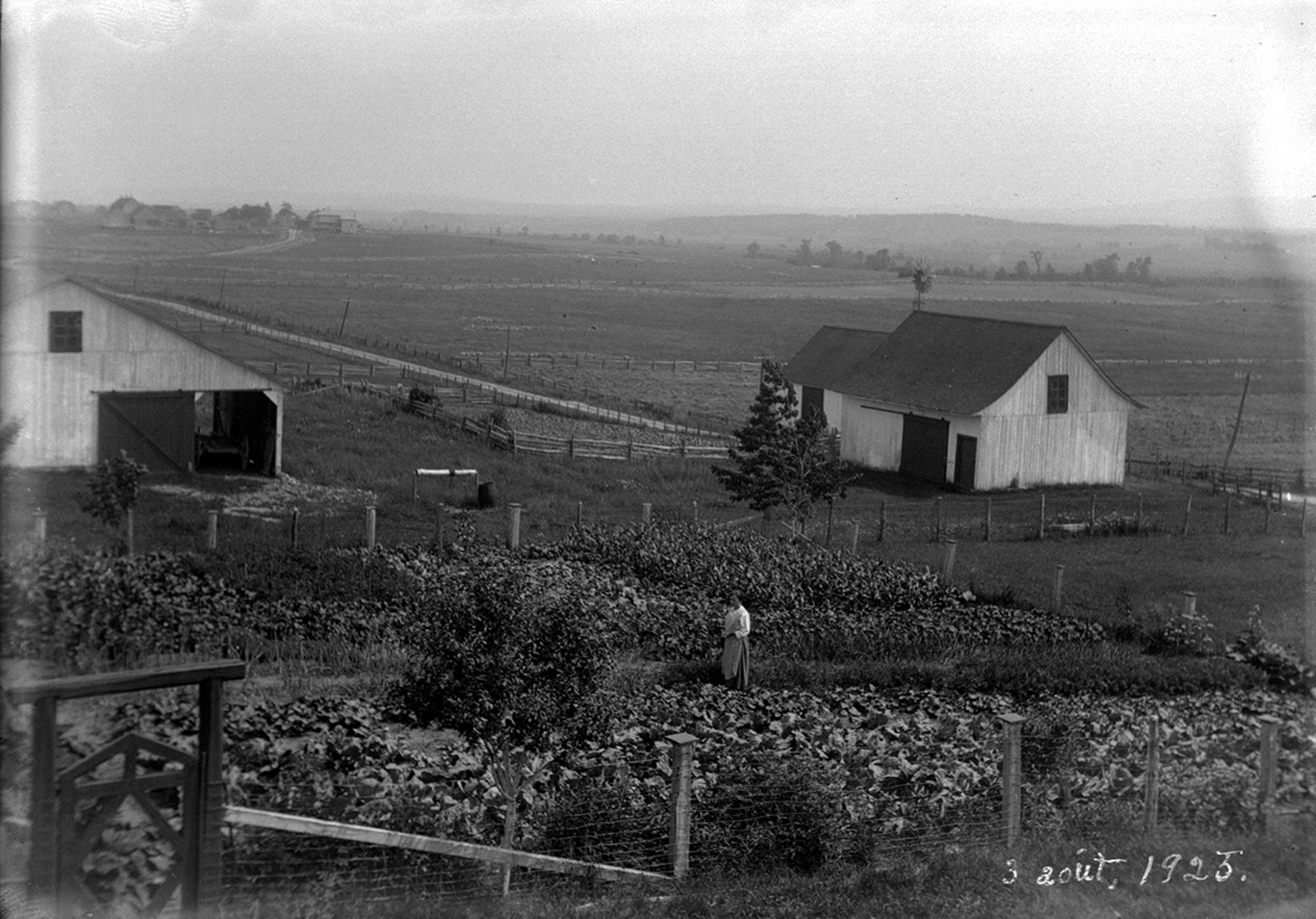
This photograph of Marie-Alice standing in the middle of the family garden offers a glimpse into the Dumont family’s way of life and the rural landscape that surrounded them.
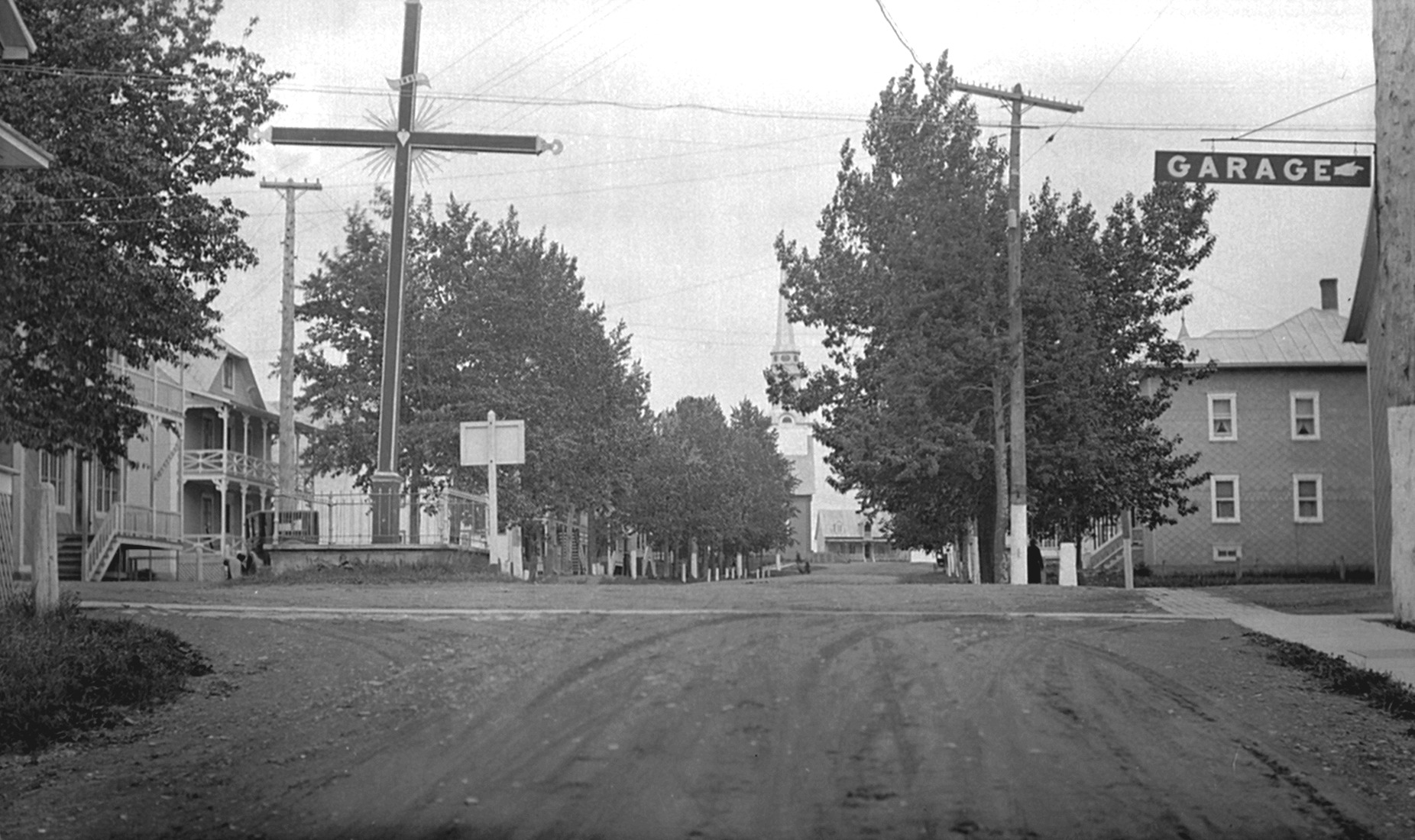
The roadside cross was a familiar sight in the Kamouraska landscape. At the very centre of Saint-Alexandre, where two busy roads meet, this tall cross was erected as a symbol of the villagers’ faith.
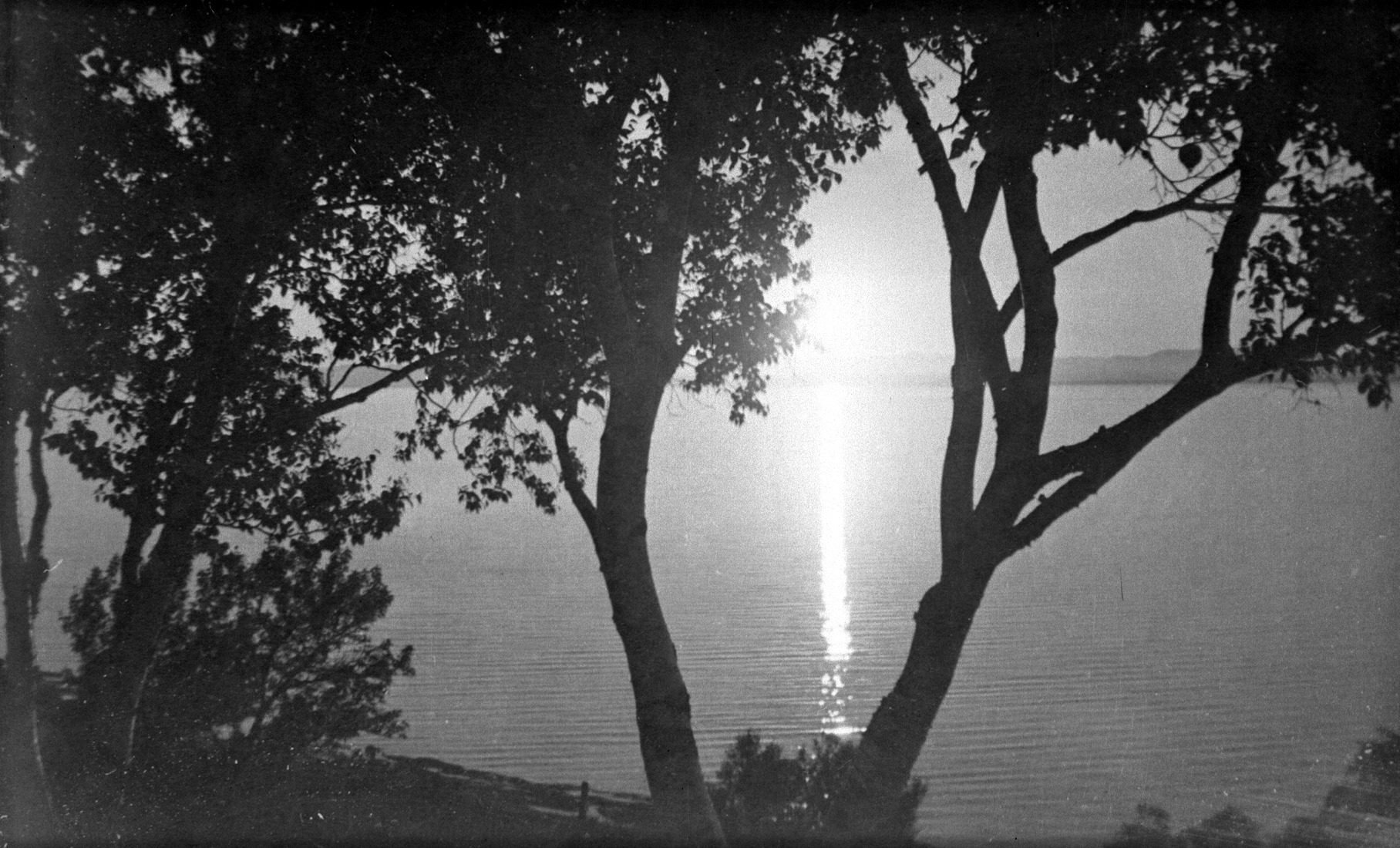
In one of her few preserved self-portraits, Dumont relaxes in the glow of the setting sun during a holiday on Patins Island. Could this image of a sunset have been taken during the same photo session?
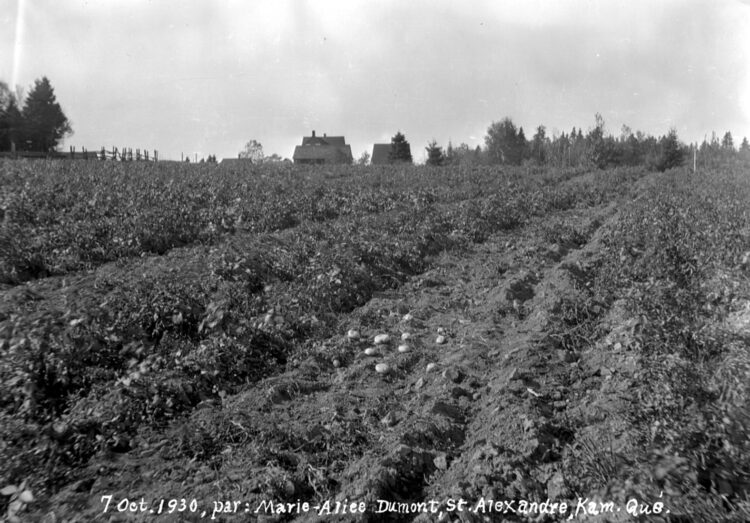
The slightly upward angle on this potato field gives it a sense of scale and depth that conveys the magnitude of the labour required to cultivate it.
This negative was likely sent to Dumont to be developed. A clergyman inspects the freshly cleared edges of a lake (Pohénégamook, perhaps, or Témiscouata), possibly in preparation for welcoming the first groups of settlers.
The bucolic landscapes of Kamouraska also served as a playground for the convent students of Saint-Alexandre. Here, Sister Sainte-Anna-Marie is accompanied by three of her pupils, including Madeleine Guérette, on whose shoulder her hand gently rests.
Families sometimes called upon Marie-Alice Dumont to photograph their home and farm buildings. In 1944, Dumont visited Marie-Hermine Plourde, widow of Jules Chénard, to capture their grand and immaculately maintained house and barn.
This photograph of Marie-Alice standing in the middle of the family garden offers a glimpse into the Dumont family’s way of life and the rural landscape that surrounded them.
The roadside cross was a familiar sight in the Kamouraska landscape. At the very centre of Saint-Alexandre, where two busy roads meet, this tall cross was erected as a symbol of the villagers’ faith.
In one of her few preserved self-portraits, Dumont relaxes in the glow of the setting sun during a holiday on Patins Island. Could this image of a sunset have been taken during the same photo session?
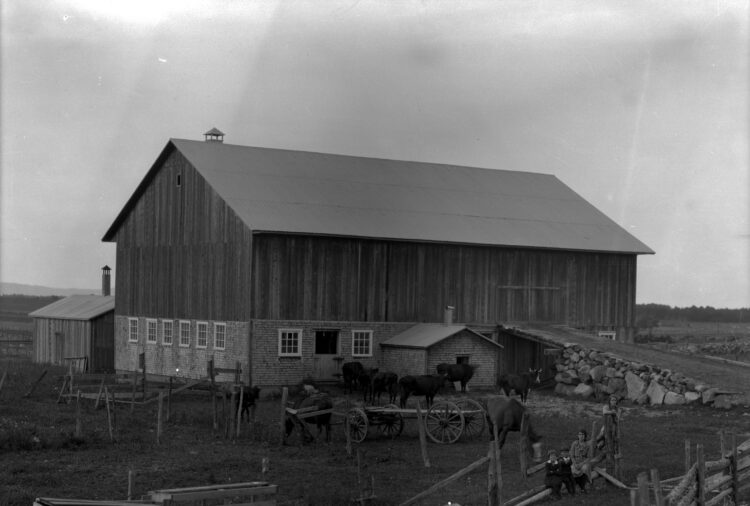
The slightly upward angle on this potato field gives it a sense of scale and depth that conveys the magnitude of the labour required to cultivate it.
This negative was likely sent to Dumont to be developed. A clergyman inspects the freshly cleared edges of a lake (Pohénégamook, perhaps, or Témiscouata), possibly in preparation for welcoming the first groups of settlers.
The bucolic landscapes of Kamouraska also served as a playground for the convent students of Saint-Alexandre. Here, Sister Sainte-Anna-Marie is accompanied by three of her pupils, including Madeleine Guérette, on whose shoulder her hand gently rests.
Families sometimes called upon Marie-Alice Dumont to photograph their home and farm buildings. In 1944, Dumont visited Marie-Hermine Plourde, widow of Jules Chénard, to capture their grand and immaculately maintained house and barn.
This photograph of Marie-Alice standing in the middle of the family garden offers a glimpse into the Dumont family’s way of life and the rural landscape that surrounded them.
The roadside cross was a familiar sight in the Kamouraska landscape. At the very centre of Saint-Alexandre, where two busy roads meet, this tall cross was erected as a symbol of the villagers’ faith.
In one of her few preserved self-portraits, Dumont relaxes in the glow of the setting sun during a holiday on Patins Island. Could this image of a sunset have been taken during the same photo session?
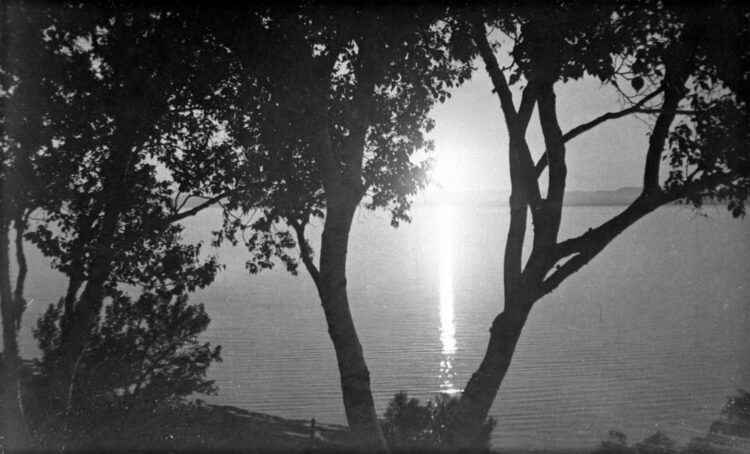
The slightly upward angle on this potato field gives it a sense of scale and depth that conveys the magnitude of the labour required to cultivate it.
This negative was likely sent to Dumont to be developed. A clergyman inspects the freshly cleared edges of a lake (Pohénégamook, perhaps, or Témiscouata), possibly in preparation for welcoming the first groups of settlers.
The bucolic landscapes of Kamouraska also served as a playground for the convent students of Saint-Alexandre. Here, Sister Sainte-Anna-Marie is accompanied by three of her pupils, including Madeleine Guérette, on whose shoulder her hand gently rests.
Families sometimes called upon Marie-Alice Dumont to photograph their home and farm buildings. In 1944, Dumont visited Marie-Hermine Plourde, widow of Jules Chénard, to capture their grand and immaculately maintained house and barn.
This photograph of Marie-Alice standing in the middle of the family garden offers a glimpse into the Dumont family’s way of life and the rural landscape that surrounded them.
The roadside cross was a familiar sight in the Kamouraska landscape. At the very centre of Saint-Alexandre, where two busy roads meet, this tall cross was erected as a symbol of the villagers’ faith.
In one of her few preserved self-portraits, Dumont relaxes in the glow of the setting sun during a holiday on Patins Island. Could this image of a sunset have been taken during the same photo session?
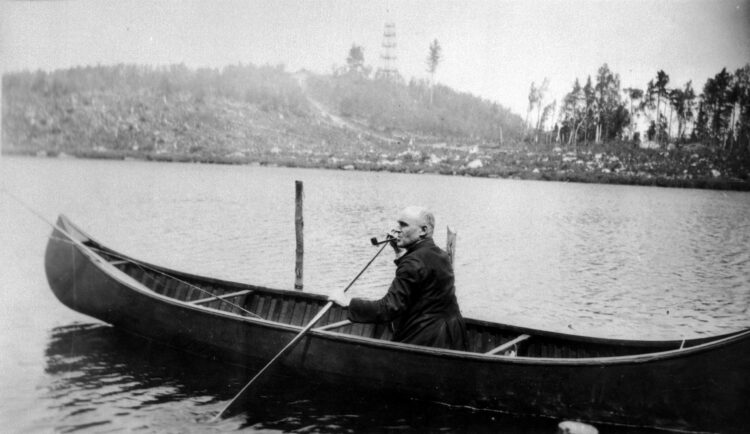
The slightly upward angle on this potato field gives it a sense of scale and depth that conveys the magnitude of the labour required to cultivate it.
This negative was likely sent to Dumont to be developed. A clergyman inspects the freshly cleared edges of a lake (Pohénégamook, perhaps, or Témiscouata), possibly in preparation for welcoming the first groups of settlers.
The bucolic landscapes of Kamouraska also served as a playground for the convent students of Saint-Alexandre. Here, Sister Sainte-Anna-Marie is accompanied by three of her pupils, including Madeleine Guérette, on whose shoulder her hand gently rests.
Families sometimes called upon Marie-Alice Dumont to photograph their home and farm buildings. In 1944, Dumont visited Marie-Hermine Plourde, widow of Jules Chénard, to capture their grand and immaculately maintained house and barn.
This photograph of Marie-Alice standing in the middle of the family garden offers a glimpse into the Dumont family’s way of life and the rural landscape that surrounded them.
The roadside cross was a familiar sight in the Kamouraska landscape. At the very centre of Saint-Alexandre, where two busy roads meet, this tall cross was erected as a symbol of the villagers’ faith.
In one of her few preserved self-portraits, Dumont relaxes in the glow of the setting sun during a holiday on Patins Island. Could this image of a sunset have been taken during the same photo session?
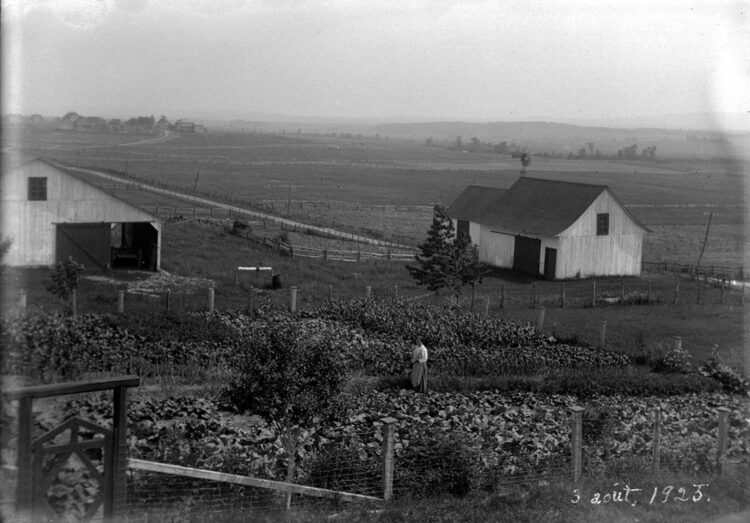
The slightly upward angle on this potato field gives it a sense of scale and depth that conveys the magnitude of the labour required to cultivate it.
This negative was likely sent to Dumont to be developed. A clergyman inspects the freshly cleared edges of a lake (Pohénégamook, perhaps, or Témiscouata), possibly in preparation for welcoming the first groups of settlers.
The bucolic landscapes of Kamouraska also served as a playground for the convent students of Saint-Alexandre. Here, Sister Sainte-Anna-Marie is accompanied by three of her pupils, including Madeleine Guérette, on whose shoulder her hand gently rests.
Families sometimes called upon Marie-Alice Dumont to photograph their home and farm buildings. In 1944, Dumont visited Marie-Hermine Plourde, widow of Jules Chénard, to capture their grand and immaculately maintained house and barn.
This photograph of Marie-Alice standing in the middle of the family garden offers a glimpse into the Dumont family’s way of life and the rural landscape that surrounded them.
The roadside cross was a familiar sight in the Kamouraska landscape. At the very centre of Saint-Alexandre, where two busy roads meet, this tall cross was erected as a symbol of the villagers’ faith.
In one of her few preserved self-portraits, Dumont relaxes in the glow of the setting sun during a holiday on Patins Island. Could this image of a sunset have been taken during the same photo session?
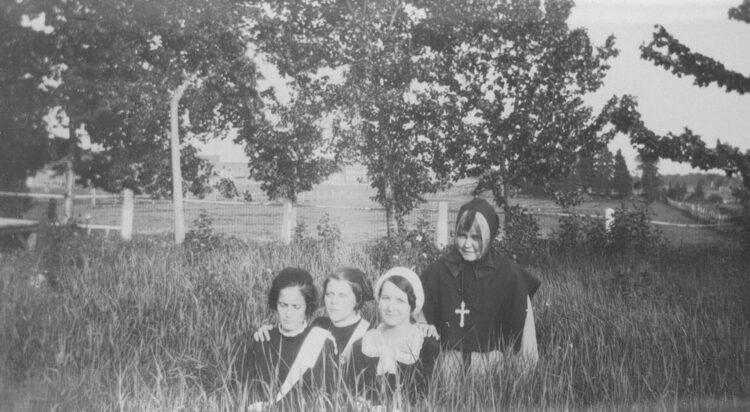
The slightly upward angle on this potato field gives it a sense of scale and depth that conveys the magnitude of the labour required to cultivate it.
This negative was likely sent to Dumont to be developed. A clergyman inspects the freshly cleared edges of a lake (Pohénégamook, perhaps, or Témiscouata), possibly in preparation for welcoming the first groups of settlers.
The bucolic landscapes of Kamouraska also served as a playground for the convent students of Saint-Alexandre. Here, Sister Sainte-Anna-Marie is accompanied by three of her pupils, including Madeleine Guérette, on whose shoulder her hand gently rests.
Families sometimes called upon Marie-Alice Dumont to photograph their home and farm buildings. In 1944, Dumont visited Marie-Hermine Plourde, widow of Jules Chénard, to capture their grand and immaculately maintained house and barn.
This photograph of Marie-Alice standing in the middle of the family garden offers a glimpse into the Dumont family’s way of life and the rural landscape that surrounded them.
The roadside cross was a familiar sight in the Kamouraska landscape. At the very centre of Saint-Alexandre, where two busy roads meet, this tall cross was erected as a symbol of the villagers’ faith.
In one of her few preserved self-portraits, Dumont relaxes in the glow of the setting sun during a holiday on Patins Island. Could this image of a sunset have been taken during the same photo session?
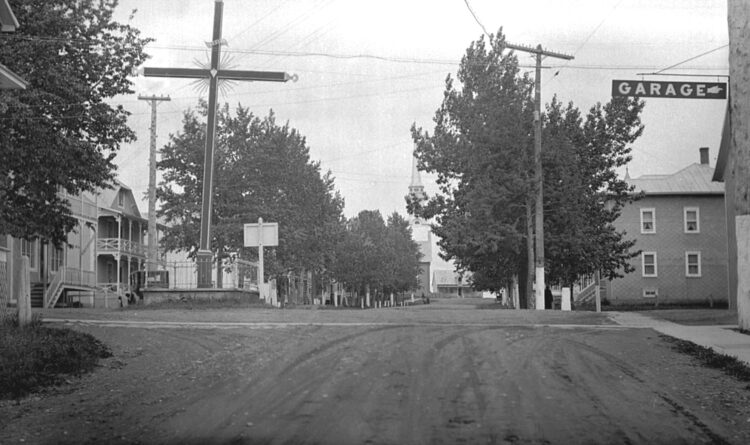
Kamouraska has long been a favourite destination for vacations in Quebec. During Marie-Alice Dumont’s era, tourism in the region was flourishing, driven by the rise of the automobile and the newfound freedom it offered. Was it to amuse tourists that local boys hitched up their dogs in playful costumes? Perhaps—but the people of Kamouraska did not need an excuse to enjoy the beauty of their local area. Picnics by the river, swimming and outdoor sports are just a few of the pastimes immortalized by Dumont’s camera.
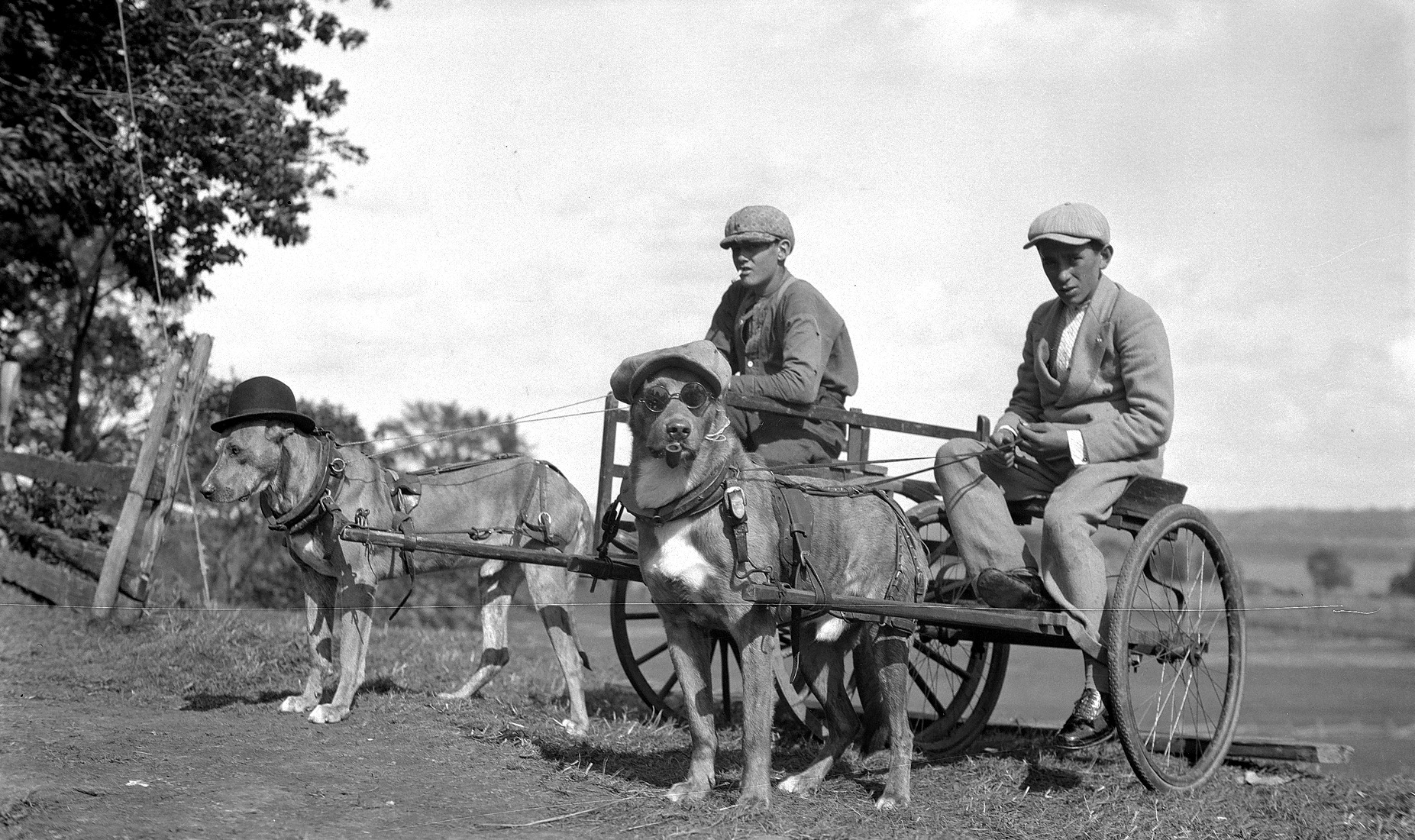
Dumont photographed several dog-drawn sleds, which were used in both summer and winter, sometimes to transport children. In the 1920s, local residents would also entertain tourists in this way. These visitors, often city dwellers from the United States, would leave convinced that French Canadians had preserved a traditional and rustic way of life. One can only wonder what purpose the sleds in this photograph once served.
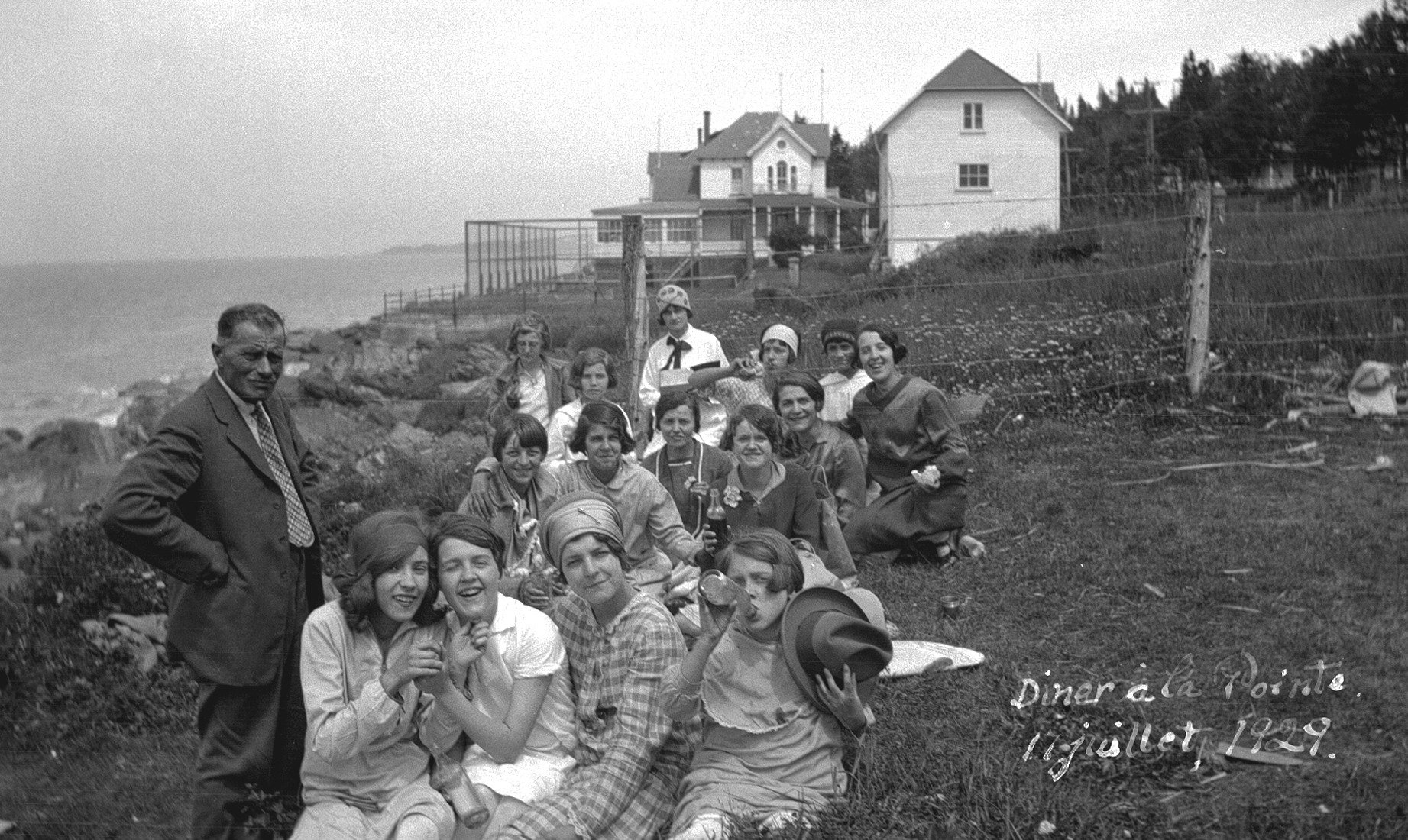
On July 17, 1929, a cheerful group of young women, led by a chaperone, set off from Saint-Alexandre for a picnic on the point in Rivière-du-Loup. Dumont (seated in the centre) brought along her Kodak camera so that she and her assistant Rosalie (behind the lens) could capture the memories of the day on film.
Picnicking on the shoreline was one of the most popular summer activities in Kamouraska during Dumont’s time. At the centre of this photo, lying down, is Rosalie Bergeron, the photographer’s adopted sister.
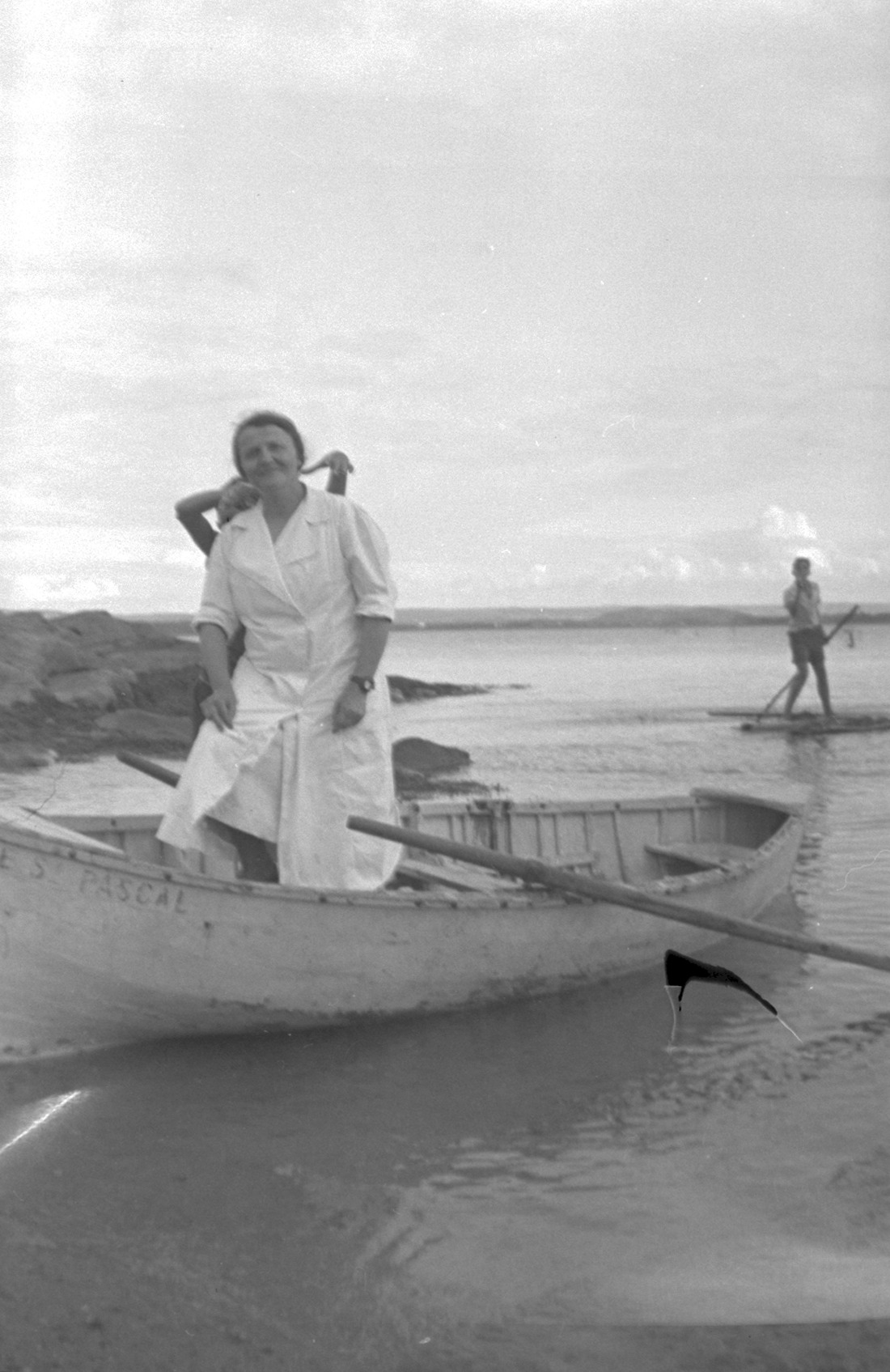
Marie-Alice Dumont was visiting her sister Émilia on Patins Island. Invited to take a dip in the St. Lawrence River with some of her nephews, she gladly accepted, without suspecting their mischievous intentions!
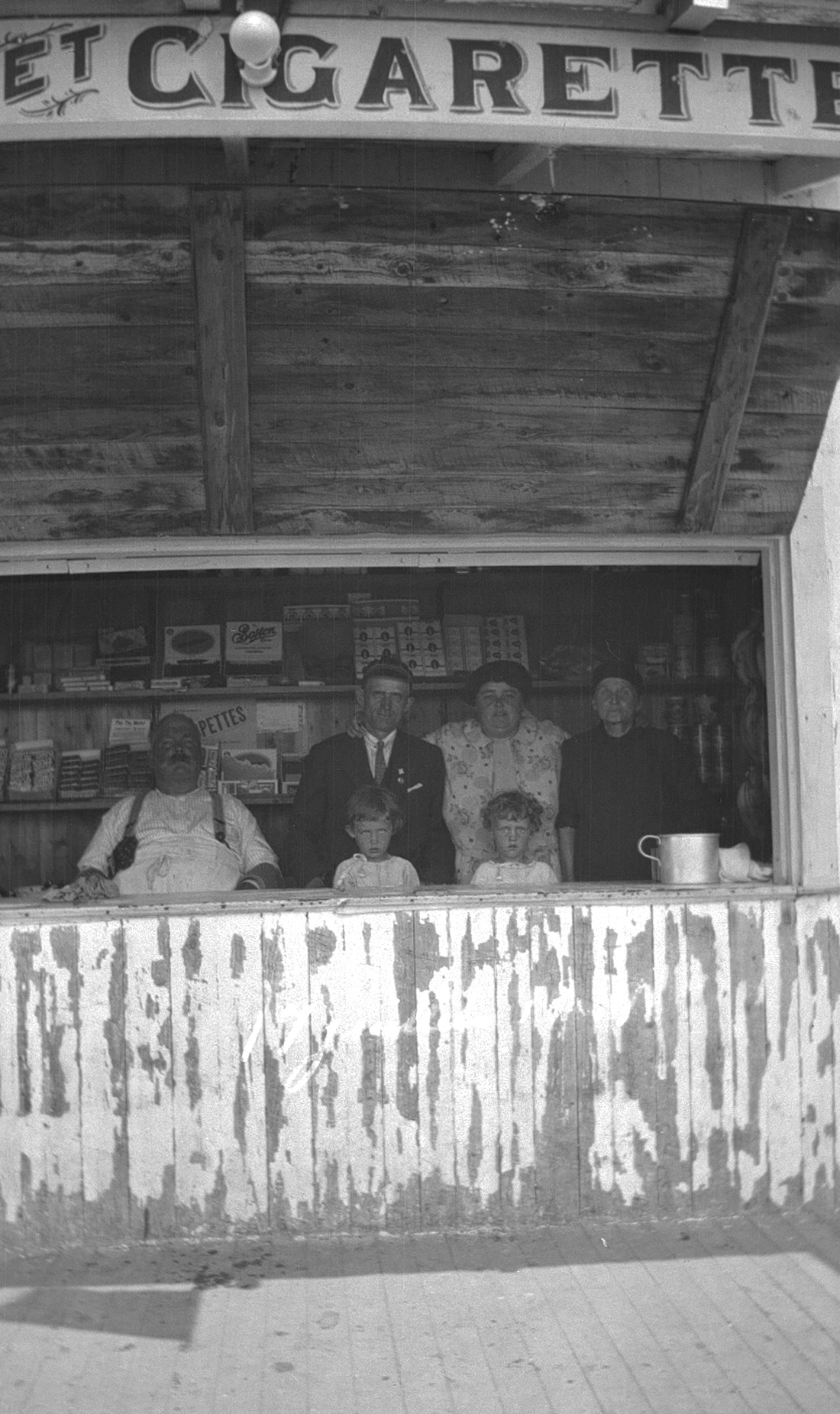
This small family kiosk, located on the point in Rivière-du-Loup, benefited from the influx of travellers brought by the ferry that had been connecting the point to the northern shore of the St. Lawrence since 1909.
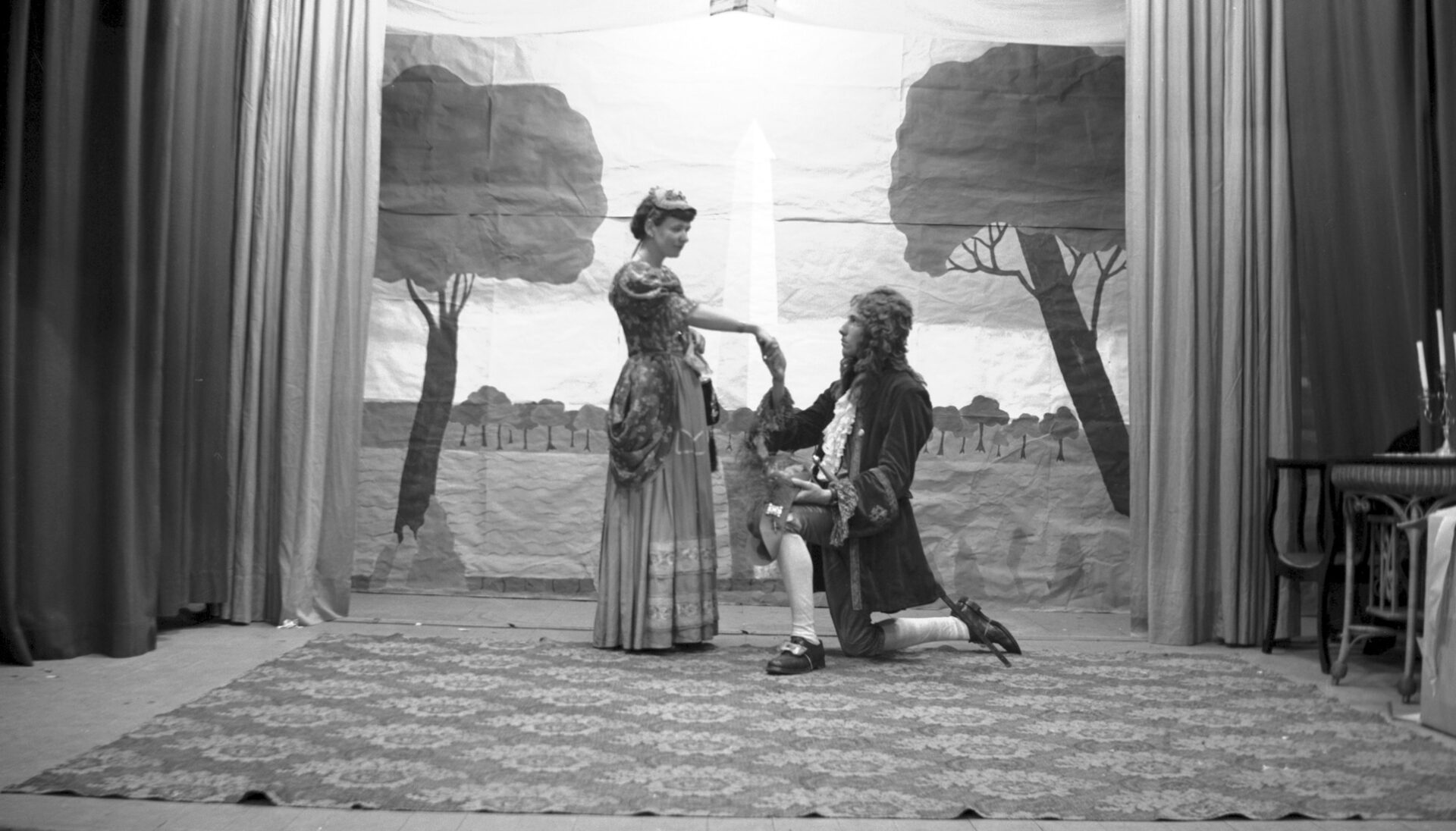
Abbot Joseph-Napoléon Dumont, the photographer’s brother, published dramatic works in the 1930s to provide wholesome entertainment for young audiences. His plays were performed in several colleges, Catholic Action groups and convents. Did the young members of the Saint-Alexandre theatre troupe ever perform the works of this local playwright?
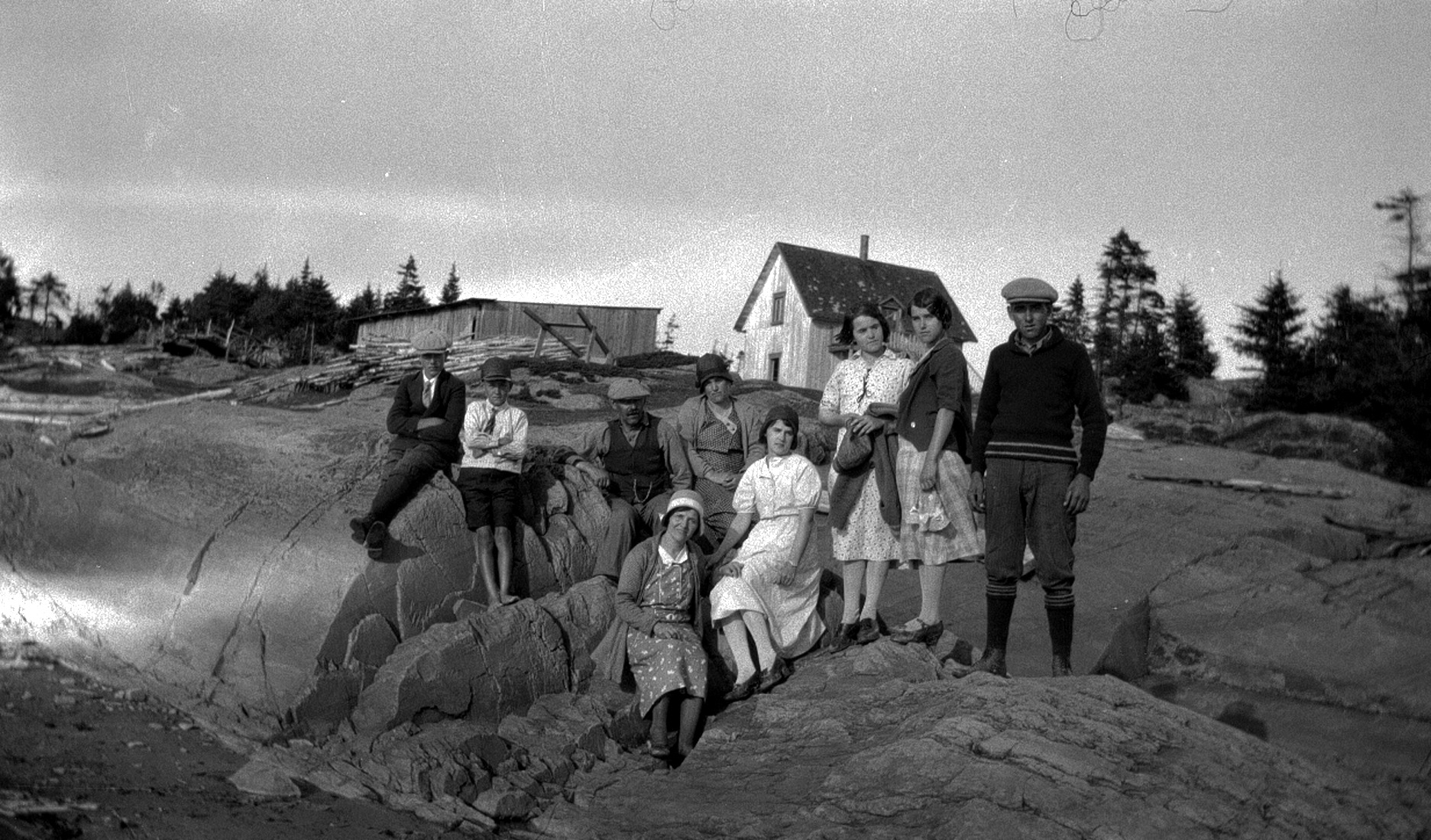
Here is another portrait of Marie-Alice Dumont with her sister Émilia’s family on Patins Island. The crossing to this small island paradise could be perilous. One day, Dumont’s brother and her nephew Charles-Eugène were caught by the rising tide. The water already reached their waists when they were only barely halfway across. Out of breath, they had to push their physical limits to avoid drowning.
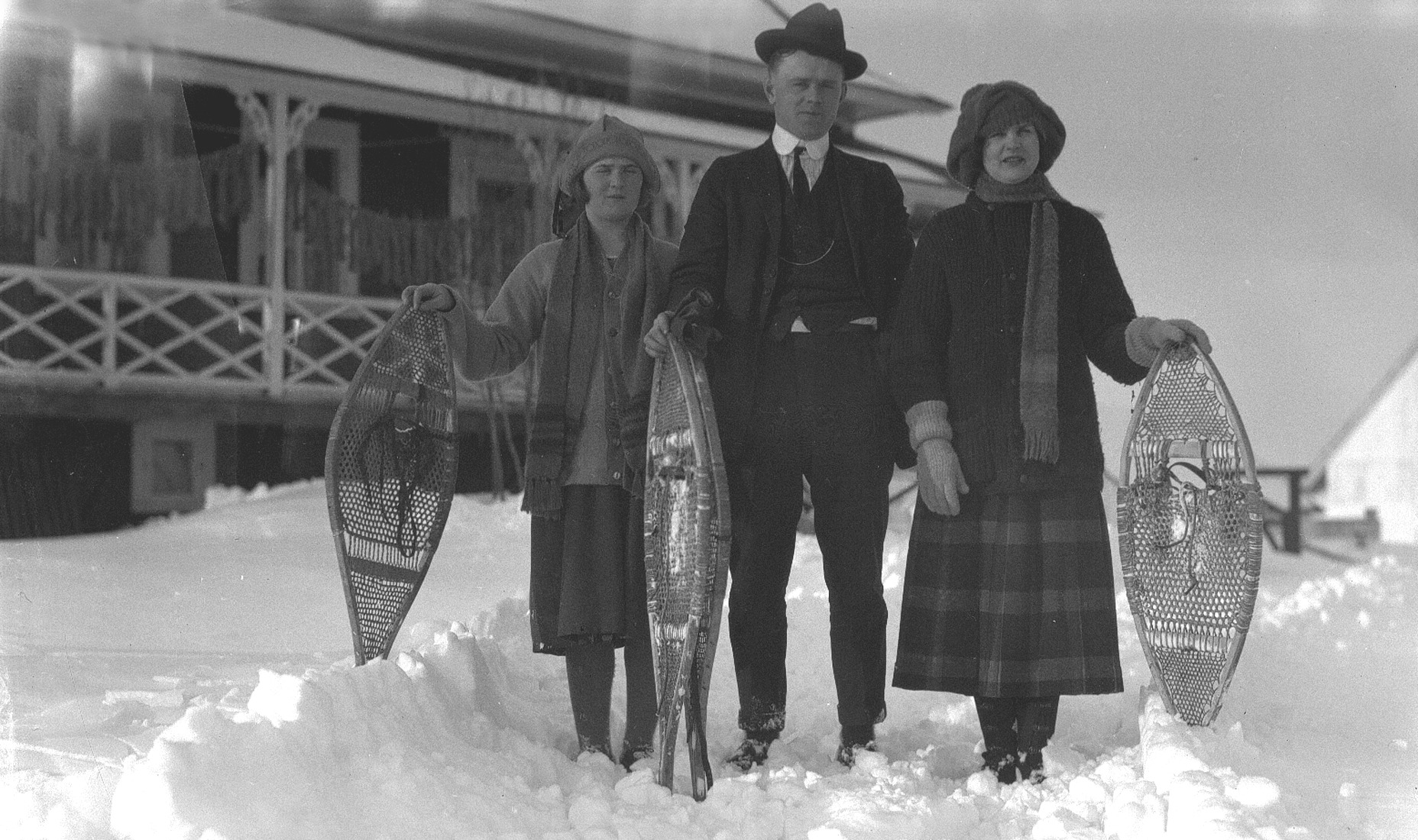
Then, as now, skiing and snowshoeing were favourite winter sports and means of travel for the people of Quebec.
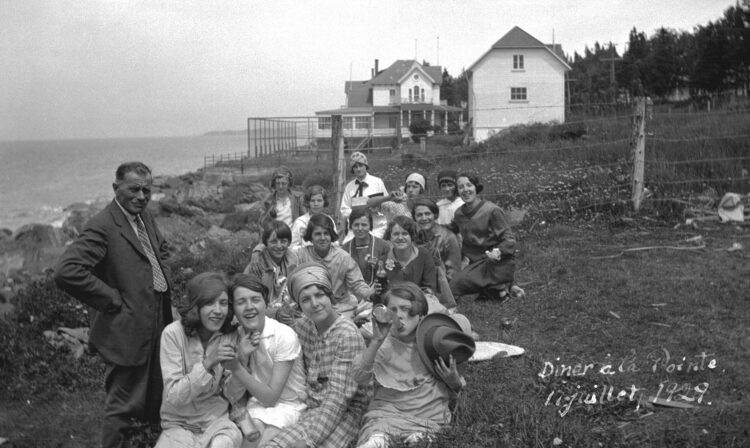
On July 17, 1929, a cheerful group of young women, led by a chaperone, set off from Saint-Alexandre for a picnic on the point in Rivière-du-Loup. Dumont (seated in the centre) brought along her Kodak camera so that she and her assistant Rosalie (behind the lens) could capture the memories of the day on film.
Picnicking on the shoreline was one of the most popular summer activities in Kamouraska during Dumont’s time. At the centre of this photo, lying down, is Rosalie Bergeron, the photographer’s adopted sister.
Marie-Alice Dumont was visiting her sister Émilia on Patins Island. Invited to take a dip in the St. Lawrence River with some of her nephews, she gladly accepted, without suspecting their mischievous intentions!
This small family kiosk, located on the point in Rivière-du-Loup, benefited from the influx of travellers brought by the ferry that had been connecting the point to the northern shore of the St. Lawrence since 1909.
Abbot Joseph-Napoléon Dumont, the photographer’s brother, published dramatic works in the 1930s to provide wholesome entertainment for young audiences. His plays were performed in several colleges, Catholic Action groups and convents. Did the young members of the Saint-Alexandre theatre troupe ever perform the works of this local playwright?
Here is another portrait of Marie-Alice Dumont with her sister Émilia’s family on Patins Island. The crossing to this small island paradise could be perilous. One day, Dumont’s brother and her nephew Charles-Eugène were caught by the rising tide. The water already reached their waists when they were only barely halfway across. Out of breath, they had to push their physical limits to avoid drowning.
Then, as now, skiing and snowshoeing were favourite winter sports and means of travel for the people of Quebec.
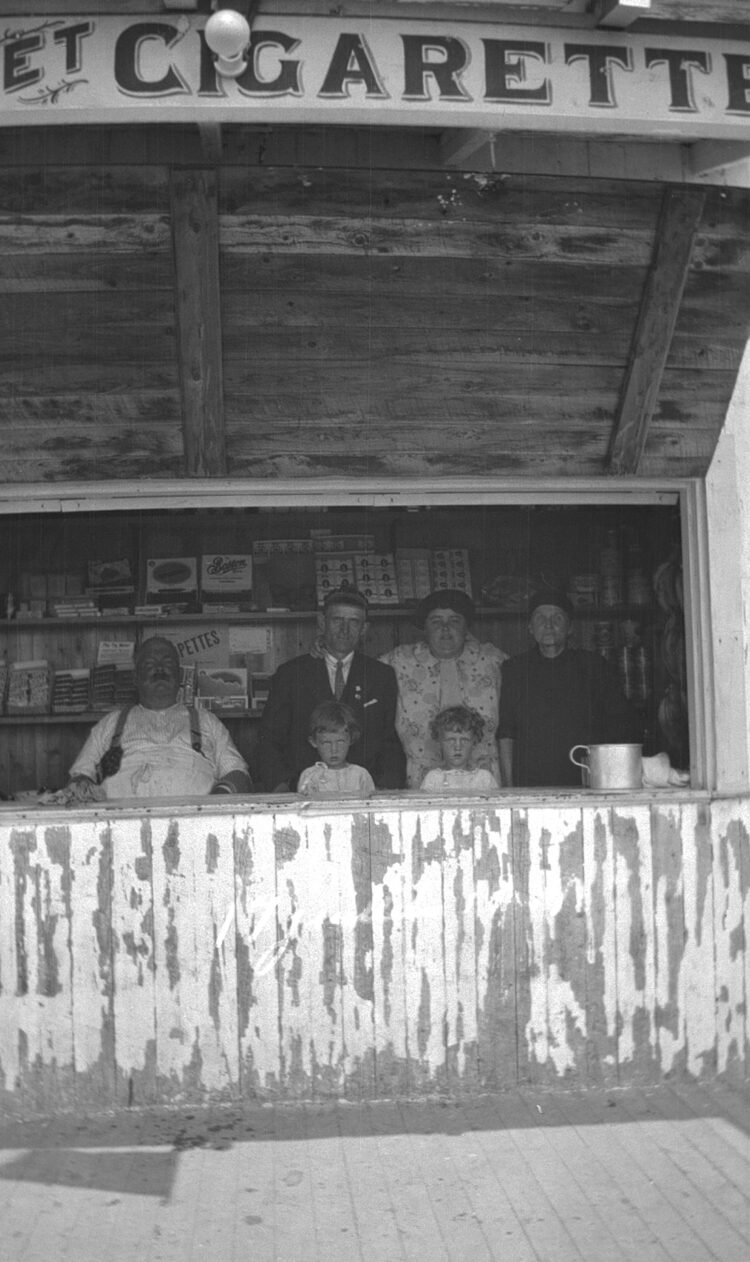
On July 17, 1929, a cheerful group of young women, led by a chaperone, set off from Saint-Alexandre for a picnic on the point in Rivière-du-Loup. Dumont (seated in the centre) brought along her Kodak camera so that she and her assistant Rosalie (behind the lens) could capture the memories of the day on film.
Picnicking on the shoreline was one of the most popular summer activities in Kamouraska during Dumont’s time. At the centre of this photo, lying down, is Rosalie Bergeron, the photographer’s adopted sister.
Marie-Alice Dumont was visiting her sister Émilia on Patins Island. Invited to take a dip in the St. Lawrence River with some of her nephews, she gladly accepted, without suspecting their mischievous intentions!
This small family kiosk, located on the point in Rivière-du-Loup, benefited from the influx of travellers brought by the ferry that had been connecting the point to the northern shore of the St. Lawrence since 1909.
Abbot Joseph-Napoléon Dumont, the photographer’s brother, published dramatic works in the 1930s to provide wholesome entertainment for young audiences. His plays were performed in several colleges, Catholic Action groups and convents. Did the young members of the Saint-Alexandre theatre troupe ever perform the works of this local playwright?
Here is another portrait of Marie-Alice Dumont with her sister Émilia’s family on Patins Island. The crossing to this small island paradise could be perilous. One day, Dumont’s brother and her nephew Charles-Eugène were caught by the rising tide. The water already reached their waists when they were only barely halfway across. Out of breath, they had to push their physical limits to avoid drowning.
Then, as now, skiing and snowshoeing were favourite winter sports and means of travel for the people of Quebec.
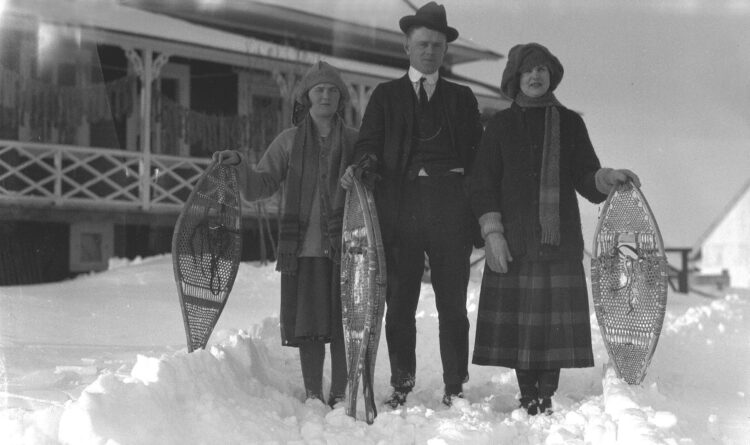
On July 17, 1929, a cheerful group of young women, led by a chaperone, set off from Saint-Alexandre for a picnic on the point in Rivière-du-Loup. Dumont (seated in the centre) brought along her Kodak camera so that she and her assistant Rosalie (behind the lens) could capture the memories of the day on film.
Picnicking on the shoreline was one of the most popular summer activities in Kamouraska during Dumont’s time. At the centre of this photo, lying down, is Rosalie Bergeron, the photographer’s adopted sister.
Marie-Alice Dumont was visiting her sister Émilia on Patins Island. Invited to take a dip in the St. Lawrence River with some of her nephews, she gladly accepted, without suspecting their mischievous intentions!
This small family kiosk, located on the point in Rivière-du-Loup, benefited from the influx of travellers brought by the ferry that had been connecting the point to the northern shore of the St. Lawrence since 1909.
Abbot Joseph-Napoléon Dumont, the photographer’s brother, published dramatic works in the 1930s to provide wholesome entertainment for young audiences. His plays were performed in several colleges, Catholic Action groups and convents. Did the young members of the Saint-Alexandre theatre troupe ever perform the works of this local playwright?
Here is another portrait of Marie-Alice Dumont with her sister Émilia’s family on Patins Island. The crossing to this small island paradise could be perilous. One day, Dumont’s brother and her nephew Charles-Eugène were caught by the rising tide. The water already reached their waists when they were only barely halfway across. Out of breath, they had to push their physical limits to avoid drowning.
Then, as now, skiing and snowshoeing were favourite winter sports and means of travel for the people of Quebec.
On July 17, 1929, a cheerful group of young women, led by a chaperone, set off from Saint-Alexandre for a picnic on the point in Rivière-du-Loup. Dumont (seated in the centre) brought along her Kodak camera so that she and her assistant Rosalie (behind the lens) could capture the memories of the day on film.
Picnicking on the shoreline was one of the most popular summer activities in Kamouraska during Dumont’s time. At the centre of this photo, lying down, is Rosalie Bergeron, the photographer’s adopted sister.
Marie-Alice Dumont was visiting her sister Émilia on Patins Island. Invited to take a dip in the St. Lawrence River with some of her nephews, she gladly accepted, without suspecting their mischievous intentions!
This small family kiosk, located on the point in Rivière-du-Loup, benefited from the influx of travellers brought by the ferry that had been connecting the point to the northern shore of the St. Lawrence since 1909.
Abbot Joseph-Napoléon Dumont, the photographer’s brother, published dramatic works in the 1930s to provide wholesome entertainment for young audiences. His plays were performed in several colleges, Catholic Action groups and convents. Did the young members of the Saint-Alexandre theatre troupe ever perform the works of this local playwright?
Here is another portrait of Marie-Alice Dumont with her sister Émilia’s family on Patins Island. The crossing to this small island paradise could be perilous. One day, Dumont’s brother and her nephew Charles-Eugène were caught by the rising tide. The water already reached their waists when they were only barely halfway across. Out of breath, they had to push their physical limits to avoid drowning.
Then, as now, skiing and snowshoeing were favourite winter sports and means of travel for the people of Quebec.
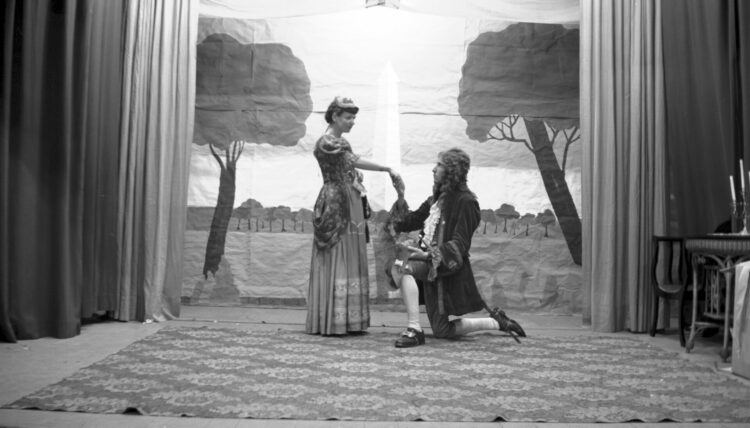
On July 17, 1929, a cheerful group of young women, led by a chaperone, set off from Saint-Alexandre for a picnic on the point in Rivière-du-Loup. Dumont (seated in the centre) brought along her Kodak camera so that she and her assistant Rosalie (behind the lens) could capture the memories of the day on film.
Picnicking on the shoreline was one of the most popular summer activities in Kamouraska during Dumont’s time. At the centre of this photo, lying down, is Rosalie Bergeron, the photographer’s adopted sister.
Marie-Alice Dumont was visiting her sister Émilia on Patins Island. Invited to take a dip in the St. Lawrence River with some of her nephews, she gladly accepted, without suspecting their mischievous intentions!
This small family kiosk, located on the point in Rivière-du-Loup, benefited from the influx of travellers brought by the ferry that had been connecting the point to the northern shore of the St. Lawrence since 1909.
Abbot Joseph-Napoléon Dumont, the photographer’s brother, published dramatic works in the 1930s to provide wholesome entertainment for young audiences. His plays were performed in several colleges, Catholic Action groups and convents. Did the young members of the Saint-Alexandre theatre troupe ever perform the works of this local playwright?
Here is another portrait of Marie-Alice Dumont with her sister Émilia’s family on Patins Island. The crossing to this small island paradise could be perilous. One day, Dumont’s brother and her nephew Charles-Eugène were caught by the rising tide. The water already reached their waists when they were only barely halfway across. Out of breath, they had to push their physical limits to avoid drowning.
Then, as now, skiing and snowshoeing were favourite winter sports and means of travel for the people of Quebec.
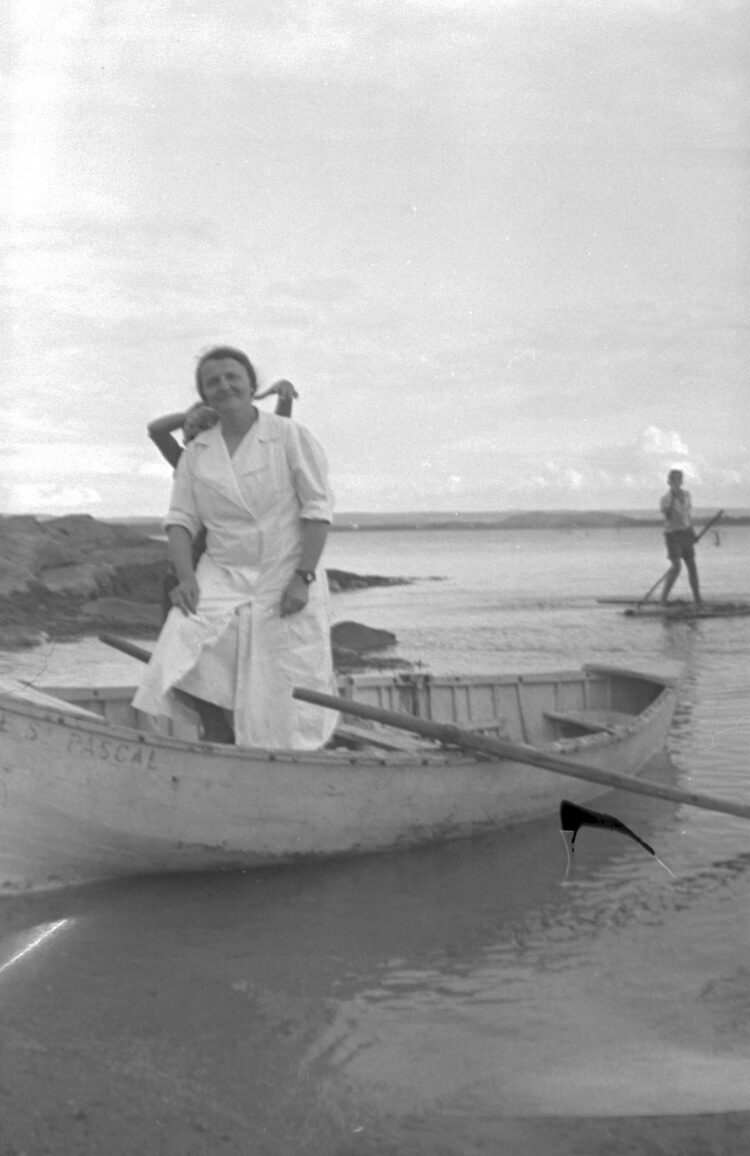
On July 17, 1929, a cheerful group of young women, led by a chaperone, set off from Saint-Alexandre for a picnic on the point in Rivière-du-Loup. Dumont (seated in the centre) brought along her Kodak camera so that she and her assistant Rosalie (behind the lens) could capture the memories of the day on film.
Picnicking on the shoreline was one of the most popular summer activities in Kamouraska during Dumont’s time. At the centre of this photo, lying down, is Rosalie Bergeron, the photographer’s adopted sister.
Marie-Alice Dumont was visiting her sister Émilia on Patins Island. Invited to take a dip in the St. Lawrence River with some of her nephews, she gladly accepted, without suspecting their mischievous intentions!
This small family kiosk, located on the point in Rivière-du-Loup, benefited from the influx of travellers brought by the ferry that had been connecting the point to the northern shore of the St. Lawrence since 1909.
Abbot Joseph-Napoléon Dumont, the photographer’s brother, published dramatic works in the 1930s to provide wholesome entertainment for young audiences. His plays were performed in several colleges, Catholic Action groups and convents. Did the young members of the Saint-Alexandre theatre troupe ever perform the works of this local playwright?
Here is another portrait of Marie-Alice Dumont with her sister Émilia’s family on Patins Island. The crossing to this small island paradise could be perilous. One day, Dumont’s brother and her nephew Charles-Eugène were caught by the rising tide. The water already reached their waists when they were only barely halfway across. Out of breath, they had to push their physical limits to avoid drowning.
Then, as now, skiing and snowshoeing were favourite winter sports and means of travel for the people of Quebec.
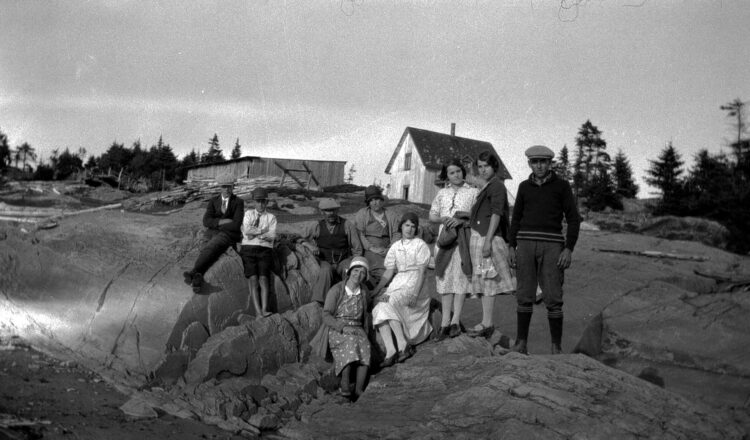
Marie-Alice Dumont’s work comes alive through its vivid portrayal of remarkable events. Imagine the sight of an airplane arriving in Saint-Alexandre in 1928—pulled by horses! Nor did her sharp eye miss major gatherings and celebrations, from the 1946 Congrès Lacordaire and the village’s centennial to the ever-popular agricultural fairs. Even Quebec’s infamous winter storms earned a place in Dumont’s collection, including the towering snowbanks that nearly swallowed the front of her house.
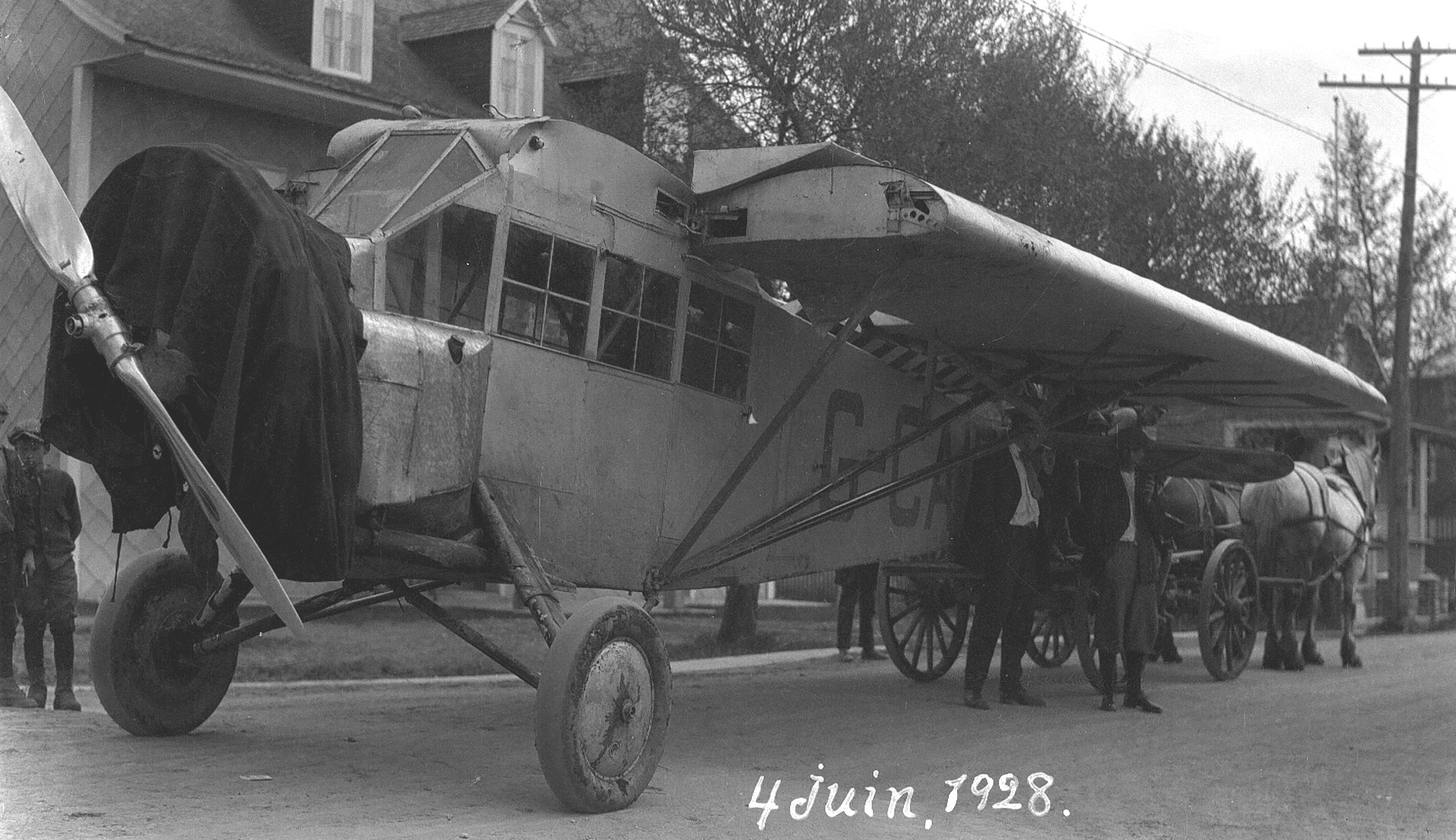
The transport of this airplane in 1928 must have caused quite a stir in Saint-Alexandre. Villagers can be seen gathered along the roadside, eager to witness the spectacle. The contrast is striking between the “modernity” represented by the airplane and the horses, a mode of transport that had endured for millennia.
A total solar eclipse took place on August 31, 1932. The newspapers of the time enthusiastically reported this rare phenomenon, which, by good fortune, took place under clear skies in the Québec City region. Dumont did not miss the opportunity to capture the event on film.
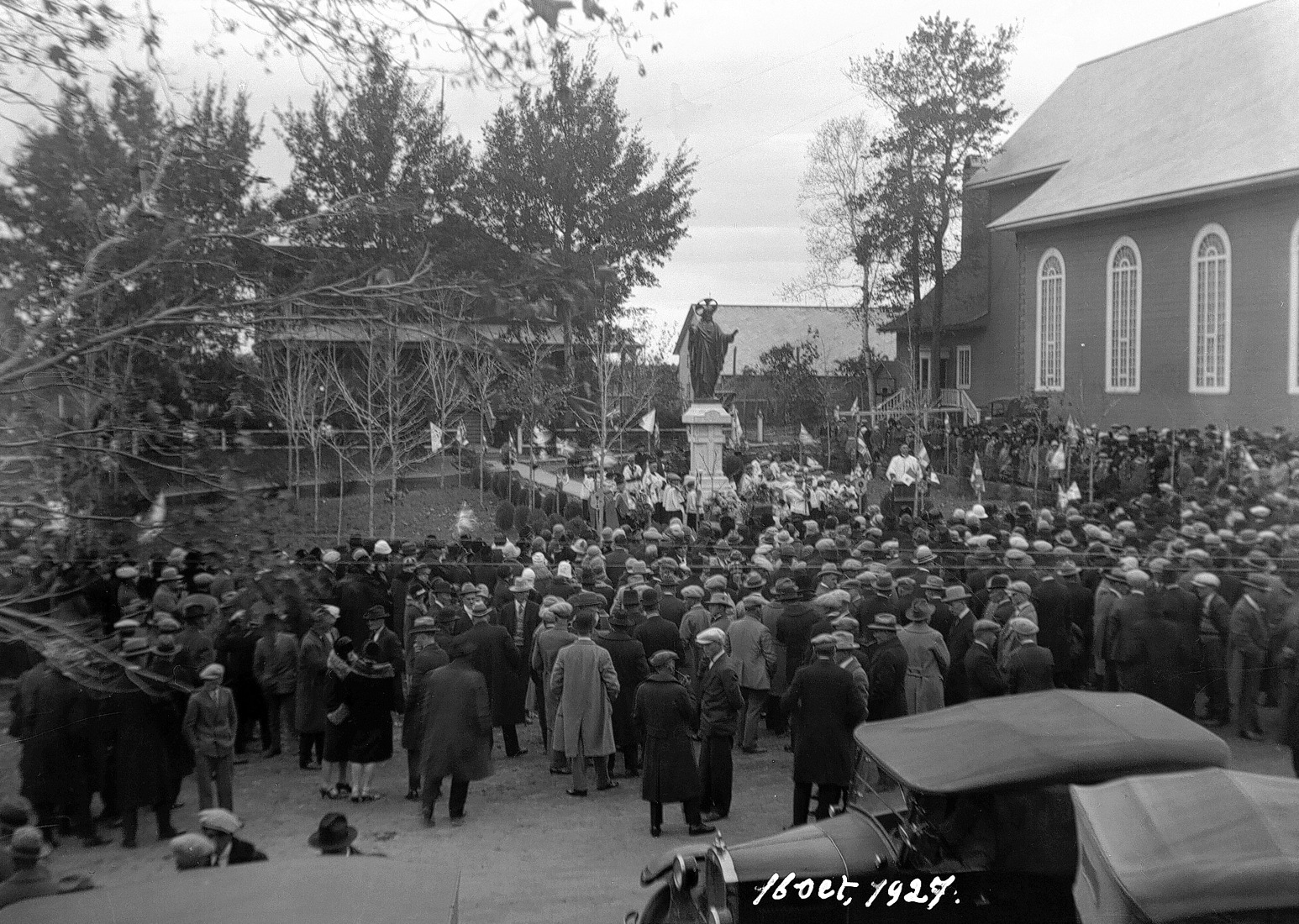
What kind of event could have drawn such a large crowd to Rivière-du-Loup in 1927? The visit of a politician? The arrival of a music or film star? No! It was a religious gathering, as the photograph’s title indicates.
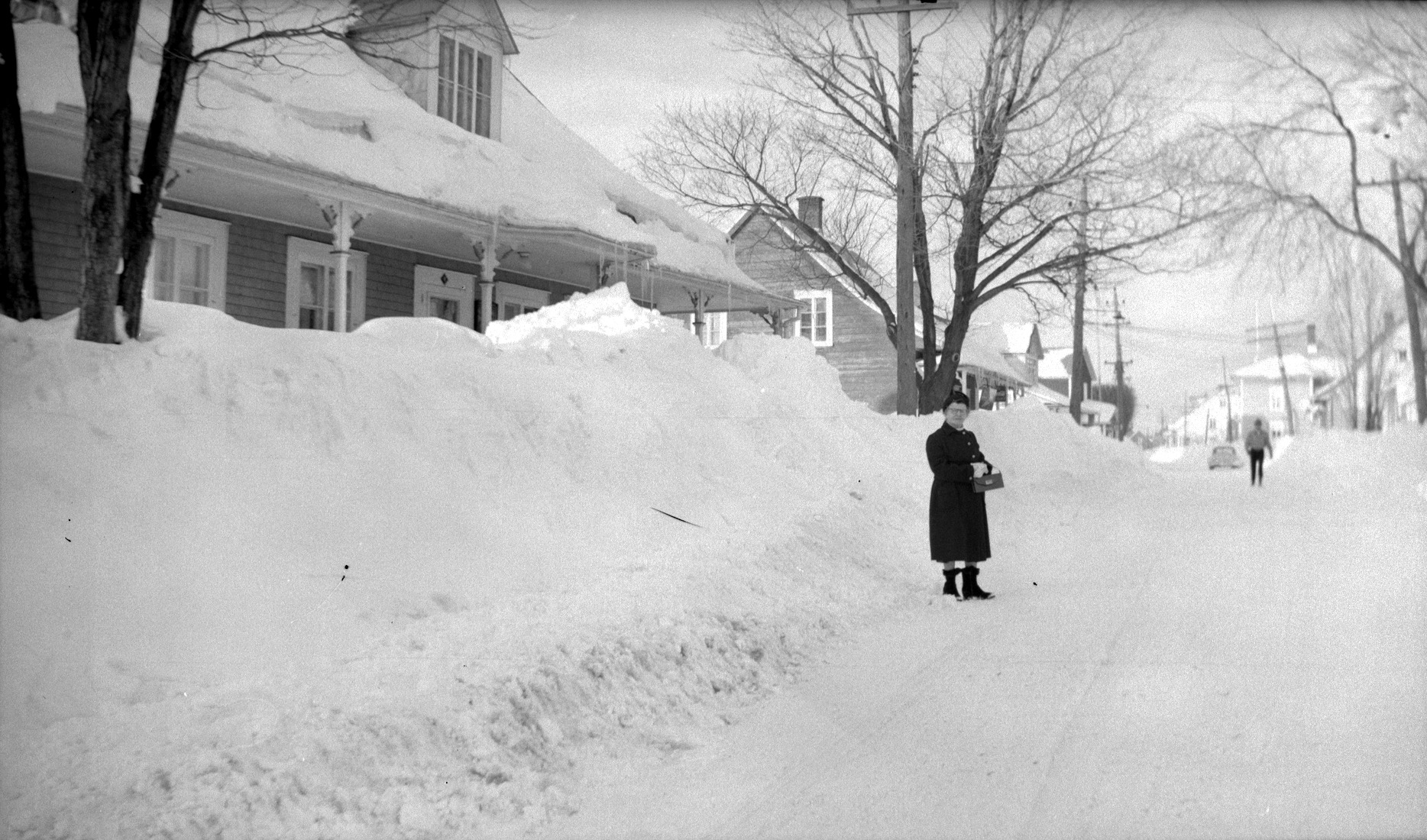
Ah, the infamous Quebec snowstorms… They always seem more impressive in our ancestors’ time or in our own backyard! Marie-Alice Dumont appears tiny beside the towering snowbanks that partly conceal her house.
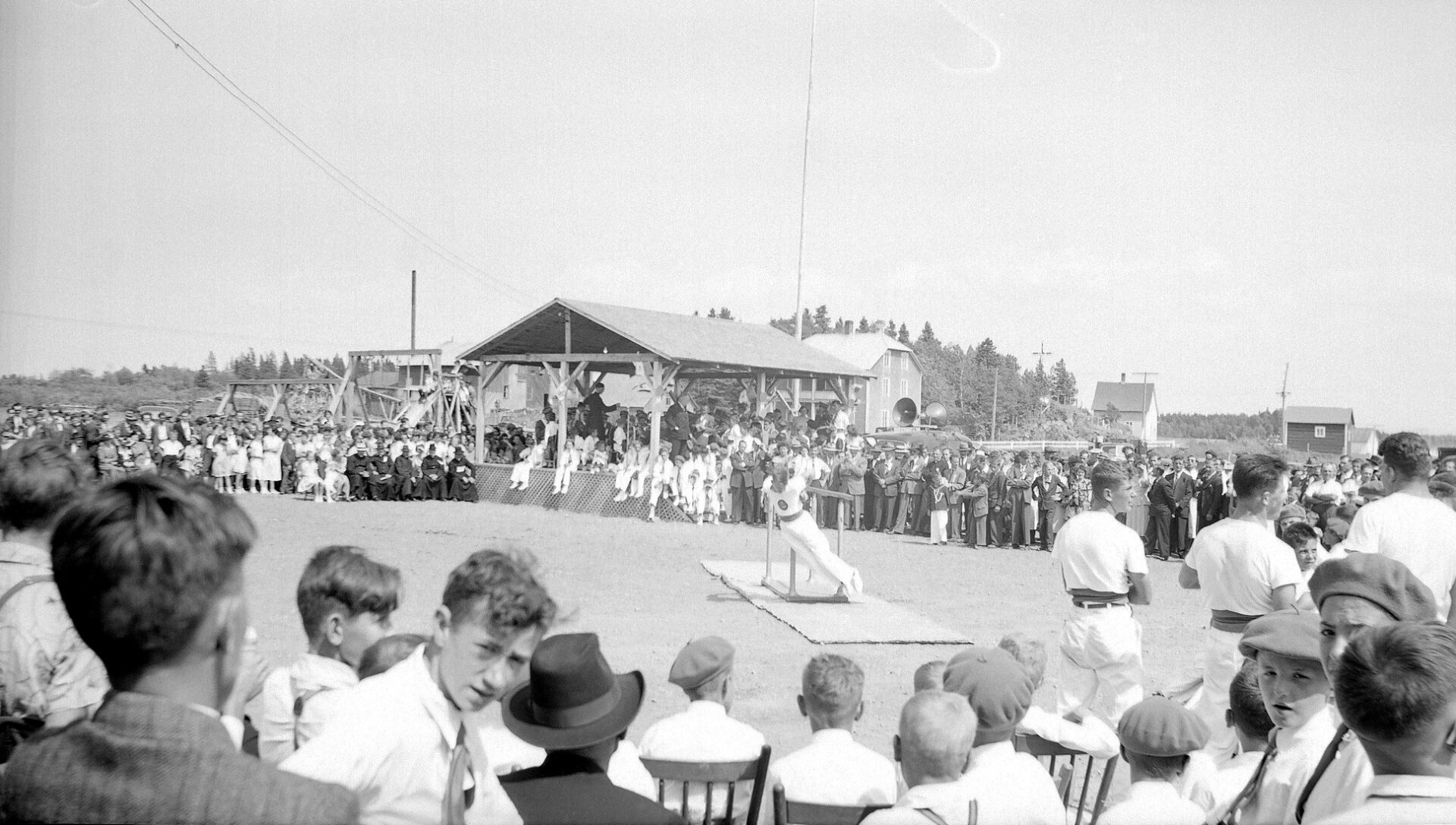
The Cercle Lacordaire societies, a temperance movement, were widespread in Québec from the 1940s onward. Each year, major diocesan congresses were held across the province, offering festive occasions marked by sobriety. The Dumont family was close to this movement, which promoted total abstinence from alcohol.
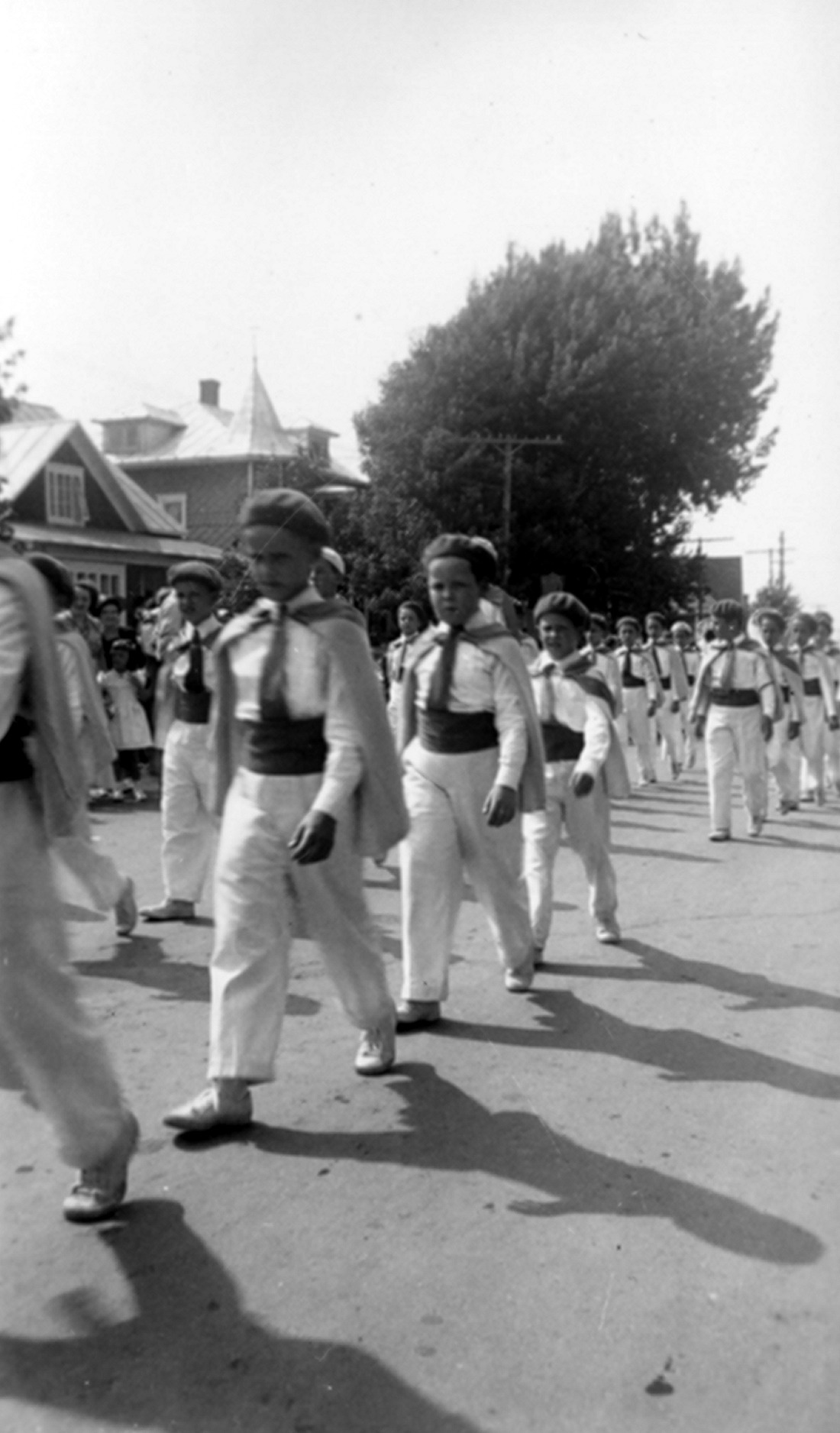
These young people were part of a large parade of 500 Le Patro members that marched through Saint-Alexandre on Sunday, July 27, 1952. The Patro movement, another Catholic Action initiative for youth, first emerged in the early 20th century.
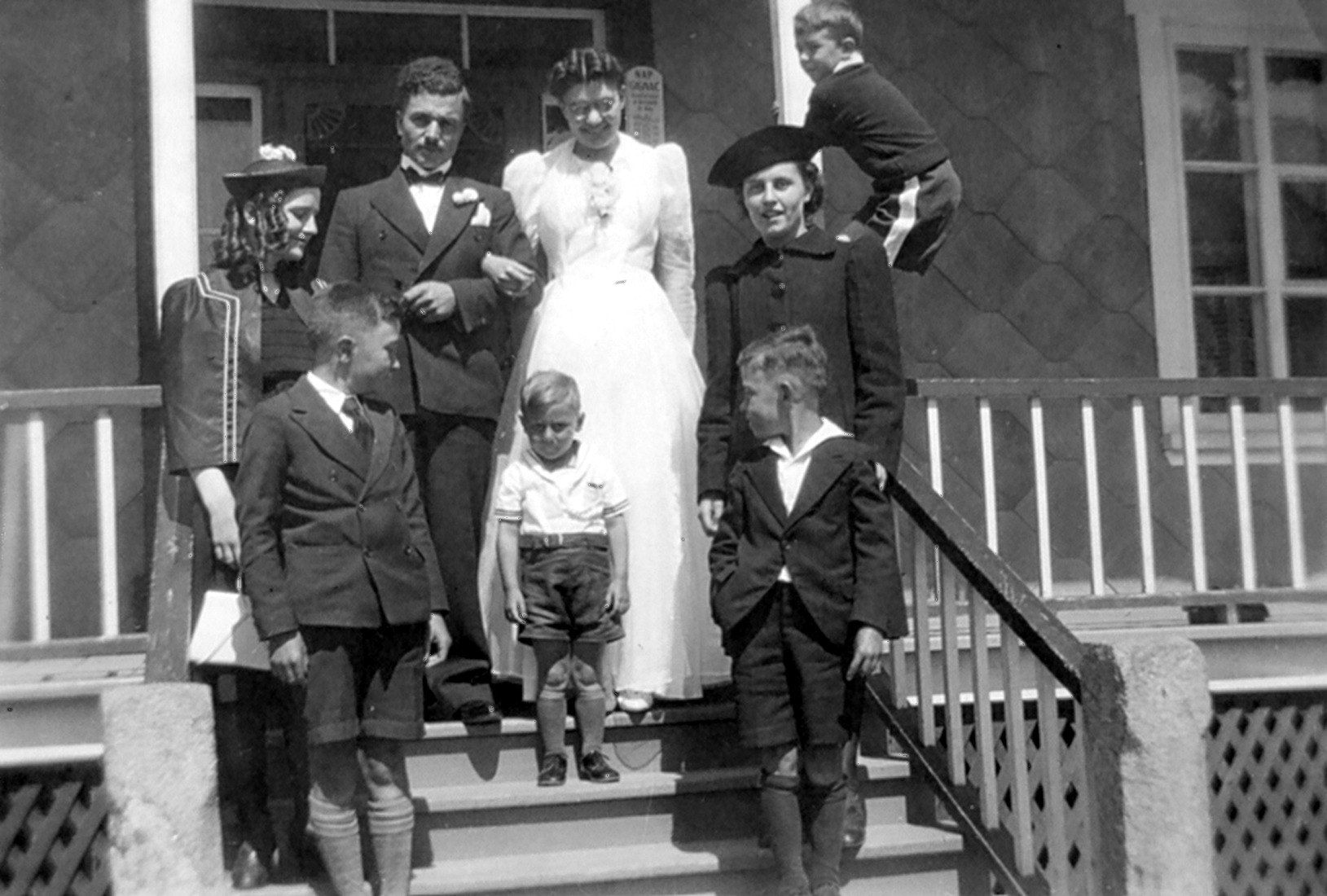
The little boy at the centre of this photograph quite literally steals the show from the bride and groom as onlookers watch him pout. The photographer may have just asked him to smile, and he, sulking, decided otherwise, much to everyone’s amusement. The portrait may not be perfect, but it brims with spontaneity and authenticity.
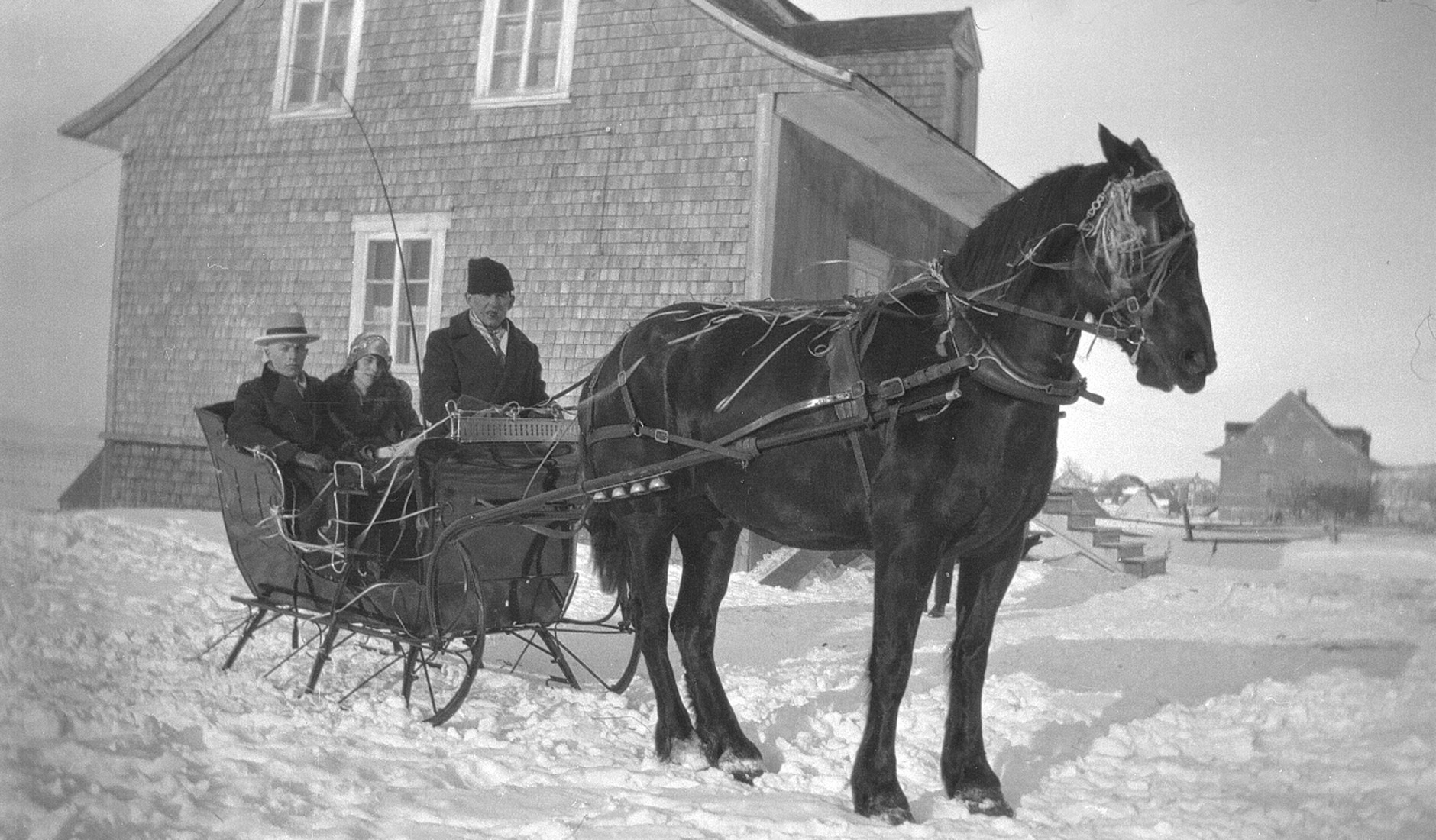
The Dumonts celebrated weddings in grand style! Several photographs remain from that very special day for Marie-Jeanne Ouellet, the photographer’s niece, and Paul-Émile Lajoie.
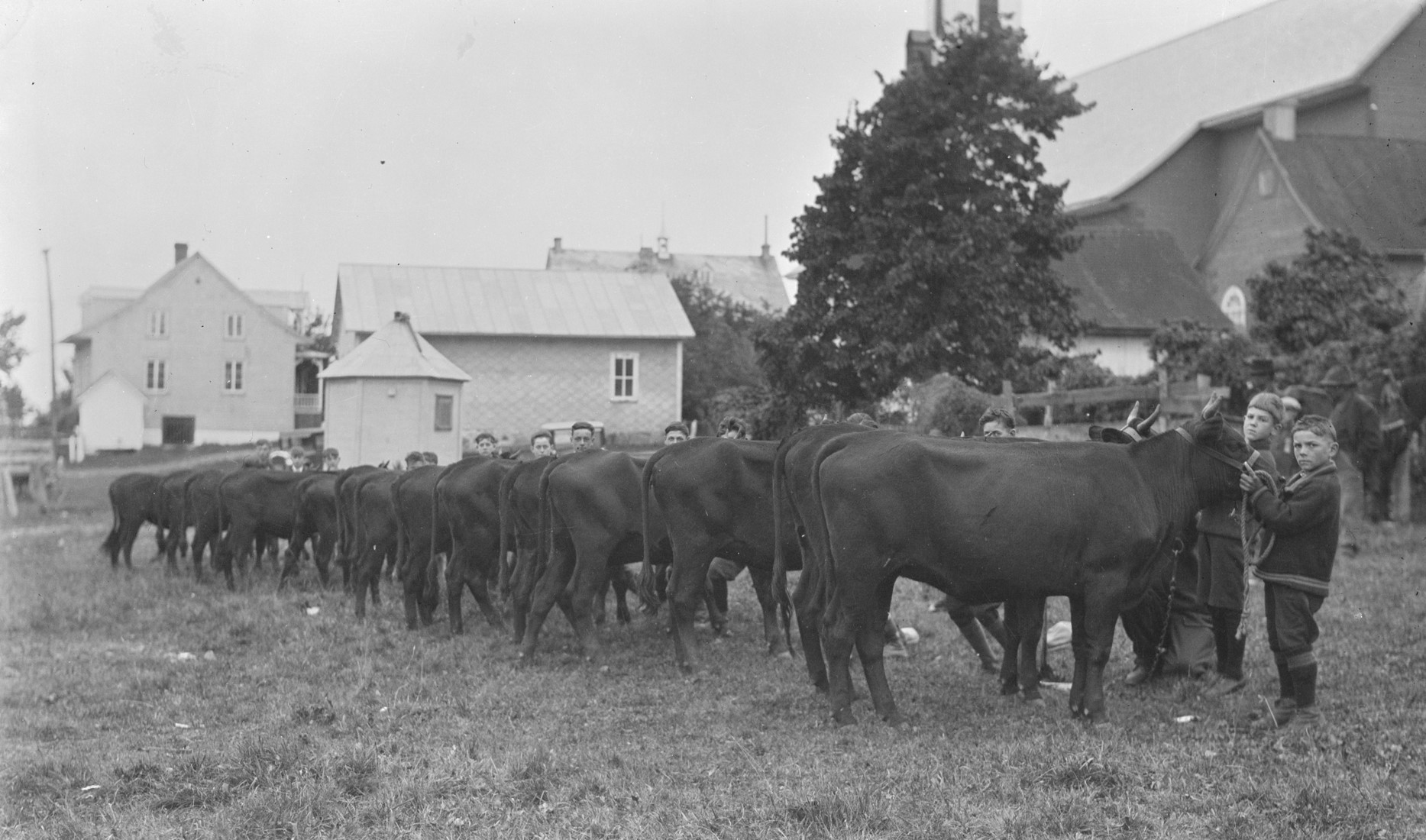
In Marie-Alice Dumont’s day, agricultural fairs were organized every summer throughout the province, and many members of the Dumont family took part. Sometimes, the younger generation even entered competitions, such as this one for the most handsome calf.
A total solar eclipse took place on August 31, 1932. The newspapers of the time enthusiastically reported this rare phenomenon, which, by good fortune, took place under clear skies in the Québec City region. Dumont did not miss the opportunity to capture the event on film.
What kind of event could have drawn such a large crowd to Rivière-du-Loup in 1927? The visit of a politician? The arrival of a music or film star? No! It was a religious gathering, as the photograph’s title indicates.
Ah, the infamous Quebec snowstorms… They always seem more impressive in our ancestors’ time or in our own backyard! Marie-Alice Dumont appears tiny beside the towering snowbanks that partly conceal her house.
The Cercle Lacordaire societies, a temperance movement, were widespread in Québec from the 1940s onward. Each year, major diocesan congresses were held across the province, offering festive occasions marked by sobriety. The Dumont family was close to this movement, which promoted total abstinence from alcohol.
These young people were part of a large parade of 500 Le Patro members that marched through Saint-Alexandre on Sunday, July 27, 1952. The Patro movement, another Catholic Action initiative for youth, first emerged in the early 20th century.
The little boy at the centre of this photograph quite literally steals the show from the bride and groom as onlookers watch him pout. The photographer may have just asked him to smile, and he, sulking, decided otherwise, much to everyone’s amusement. The portrait may not be perfect, but it brims with spontaneity and authenticity.
The Dumonts celebrated weddings in grand style! Several photographs remain from that very special day for Marie-Jeanne Ouellet, the photographer’s niece, and Paul-Émile Lajoie.
In Marie-Alice Dumont’s day, agricultural fairs were organized every summer throughout the province, and many members of the Dumont family took part. Sometimes, the younger generation even entered competitions, such as this one for the most handsome calf.
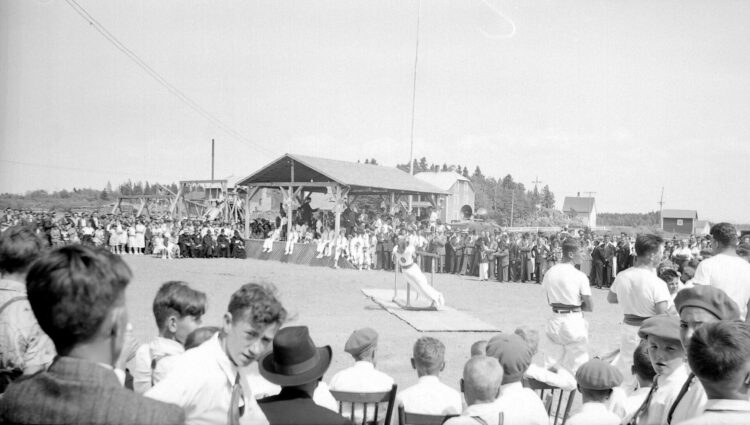
A total solar eclipse took place on August 31, 1932. The newspapers of the time enthusiastically reported this rare phenomenon, which, by good fortune, took place under clear skies in the Québec City region. Dumont did not miss the opportunity to capture the event on film.
What kind of event could have drawn such a large crowd to Rivière-du-Loup in 1927? The visit of a politician? The arrival of a music or film star? No! It was a religious gathering, as the photograph’s title indicates.
Ah, the infamous Quebec snowstorms… They always seem more impressive in our ancestors’ time or in our own backyard! Marie-Alice Dumont appears tiny beside the towering snowbanks that partly conceal her house.
The Cercle Lacordaire societies, a temperance movement, were widespread in Québec from the 1940s onward. Each year, major diocesan congresses were held across the province, offering festive occasions marked by sobriety. The Dumont family was close to this movement, which promoted total abstinence from alcohol.
These young people were part of a large parade of 500 Le Patro members that marched through Saint-Alexandre on Sunday, July 27, 1952. The Patro movement, another Catholic Action initiative for youth, first emerged in the early 20th century.
The little boy at the centre of this photograph quite literally steals the show from the bride and groom as onlookers watch him pout. The photographer may have just asked him to smile, and he, sulking, decided otherwise, much to everyone’s amusement. The portrait may not be perfect, but it brims with spontaneity and authenticity.
The Dumonts celebrated weddings in grand style! Several photographs remain from that very special day for Marie-Jeanne Ouellet, the photographer’s niece, and Paul-Émile Lajoie.
In Marie-Alice Dumont’s day, agricultural fairs were organized every summer throughout the province, and many members of the Dumont family took part. Sometimes, the younger generation even entered competitions, such as this one for the most handsome calf.
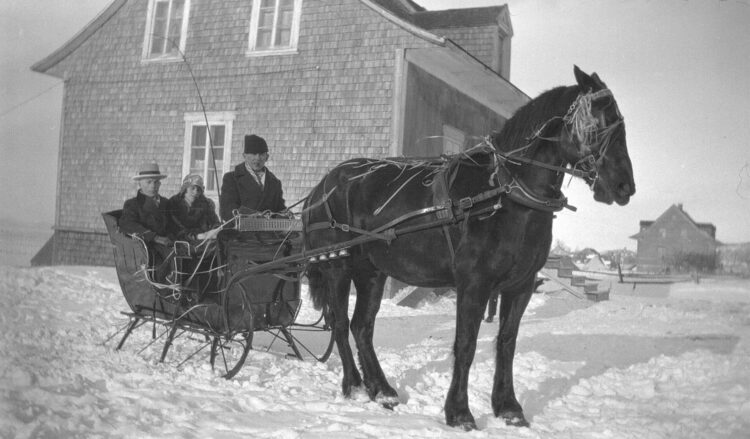
A total solar eclipse took place on August 31, 1932. The newspapers of the time enthusiastically reported this rare phenomenon, which, by good fortune, took place under clear skies in the Québec City region. Dumont did not miss the opportunity to capture the event on film.
What kind of event could have drawn such a large crowd to Rivière-du-Loup in 1927? The visit of a politician? The arrival of a music or film star? No! It was a religious gathering, as the photograph’s title indicates.
Ah, the infamous Quebec snowstorms… They always seem more impressive in our ancestors’ time or in our own backyard! Marie-Alice Dumont appears tiny beside the towering snowbanks that partly conceal her house.
The Cercle Lacordaire societies, a temperance movement, were widespread in Québec from the 1940s onward. Each year, major diocesan congresses were held across the province, offering festive occasions marked by sobriety. The Dumont family was close to this movement, which promoted total abstinence from alcohol.
These young people were part of a large parade of 500 Le Patro members that marched through Saint-Alexandre on Sunday, July 27, 1952. The Patro movement, another Catholic Action initiative for youth, first emerged in the early 20th century.
The little boy at the centre of this photograph quite literally steals the show from the bride and groom as onlookers watch him pout. The photographer may have just asked him to smile, and he, sulking, decided otherwise, much to everyone’s amusement. The portrait may not be perfect, but it brims with spontaneity and authenticity.
The Dumonts celebrated weddings in grand style! Several photographs remain from that very special day for Marie-Jeanne Ouellet, the photographer’s niece, and Paul-Émile Lajoie.
In Marie-Alice Dumont’s day, agricultural fairs were organized every summer throughout the province, and many members of the Dumont family took part. Sometimes, the younger generation even entered competitions, such as this one for the most handsome calf.
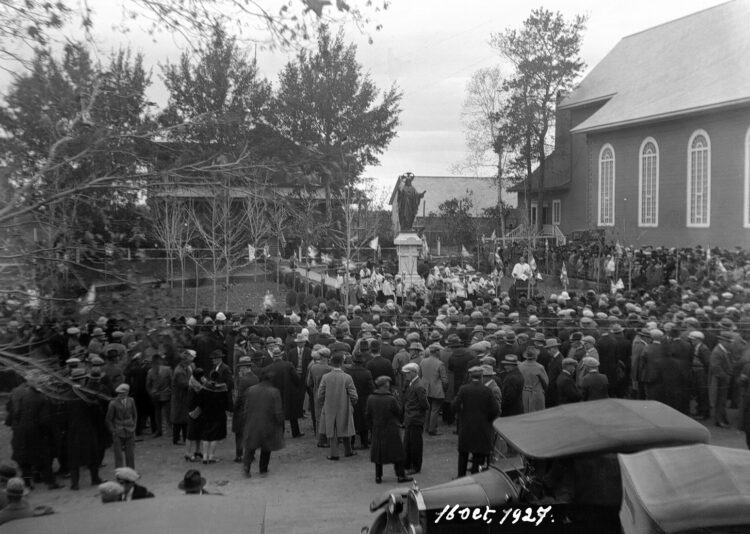
A total solar eclipse took place on August 31, 1932. The newspapers of the time enthusiastically reported this rare phenomenon, which, by good fortune, took place under clear skies in the Québec City region. Dumont did not miss the opportunity to capture the event on film.
What kind of event could have drawn such a large crowd to Rivière-du-Loup in 1927? The visit of a politician? The arrival of a music or film star? No! It was a religious gathering, as the photograph’s title indicates.
Ah, the infamous Quebec snowstorms… They always seem more impressive in our ancestors’ time or in our own backyard! Marie-Alice Dumont appears tiny beside the towering snowbanks that partly conceal her house.
The Cercle Lacordaire societies, a temperance movement, were widespread in Québec from the 1940s onward. Each year, major diocesan congresses were held across the province, offering festive occasions marked by sobriety. The Dumont family was close to this movement, which promoted total abstinence from alcohol.
These young people were part of a large parade of 500 Le Patro members that marched through Saint-Alexandre on Sunday, July 27, 1952. The Patro movement, another Catholic Action initiative for youth, first emerged in the early 20th century.
The little boy at the centre of this photograph quite literally steals the show from the bride and groom as onlookers watch him pout. The photographer may have just asked him to smile, and he, sulking, decided otherwise, much to everyone’s amusement. The portrait may not be perfect, but it brims with spontaneity and authenticity.
The Dumonts celebrated weddings in grand style! Several photographs remain from that very special day for Marie-Jeanne Ouellet, the photographer’s niece, and Paul-Émile Lajoie.
In Marie-Alice Dumont’s day, agricultural fairs were organized every summer throughout the province, and many members of the Dumont family took part. Sometimes, the younger generation even entered competitions, such as this one for the most handsome calf.
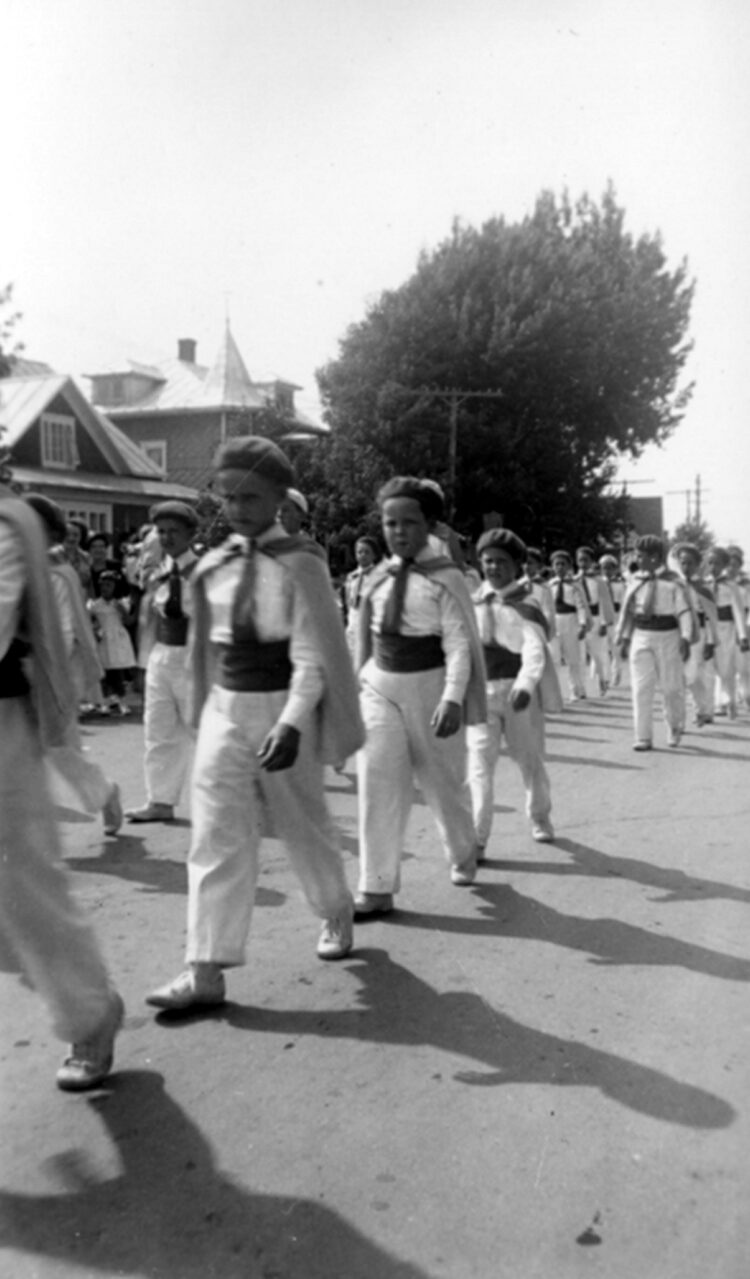
A total solar eclipse took place on August 31, 1932. The newspapers of the time enthusiastically reported this rare phenomenon, which, by good fortune, took place under clear skies in the Québec City region. Dumont did not miss the opportunity to capture the event on film.
What kind of event could have drawn such a large crowd to Rivière-du-Loup in 1927? The visit of a politician? The arrival of a music or film star? No! It was a religious gathering, as the photograph’s title indicates.
Ah, the infamous Quebec snowstorms… They always seem more impressive in our ancestors’ time or in our own backyard! Marie-Alice Dumont appears tiny beside the towering snowbanks that partly conceal her house.
The Cercle Lacordaire societies, a temperance movement, were widespread in Québec from the 1940s onward. Each year, major diocesan congresses were held across the province, offering festive occasions marked by sobriety. The Dumont family was close to this movement, which promoted total abstinence from alcohol.
These young people were part of a large parade of 500 Le Patro members that marched through Saint-Alexandre on Sunday, July 27, 1952. The Patro movement, another Catholic Action initiative for youth, first emerged in the early 20th century.
The little boy at the centre of this photograph quite literally steals the show from the bride and groom as onlookers watch him pout. The photographer may have just asked him to smile, and he, sulking, decided otherwise, much to everyone’s amusement. The portrait may not be perfect, but it brims with spontaneity and authenticity.
The Dumonts celebrated weddings in grand style! Several photographs remain from that very special day for Marie-Jeanne Ouellet, the photographer’s niece, and Paul-Émile Lajoie.
In Marie-Alice Dumont’s day, agricultural fairs were organized every summer throughout the province, and many members of the Dumont family took part. Sometimes, the younger generation even entered competitions, such as this one for the most handsome calf.
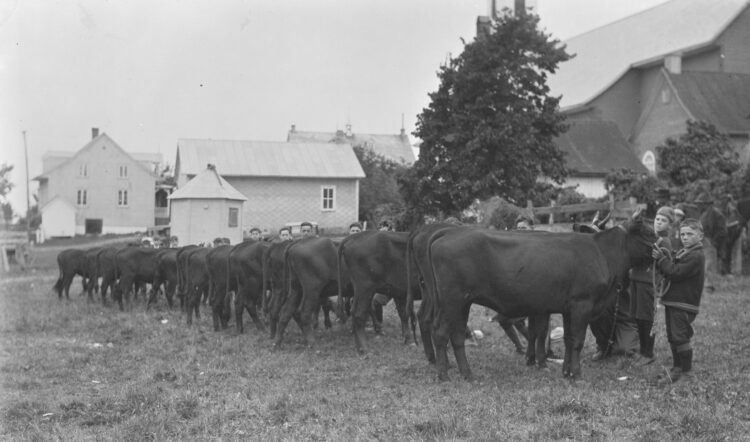
A total solar eclipse took place on August 31, 1932. The newspapers of the time enthusiastically reported this rare phenomenon, which, by good fortune, took place under clear skies in the Québec City region. Dumont did not miss the opportunity to capture the event on film.
What kind of event could have drawn such a large crowd to Rivière-du-Loup in 1927? The visit of a politician? The arrival of a music or film star? No! It was a religious gathering, as the photograph’s title indicates.
Ah, the infamous Quebec snowstorms… They always seem more impressive in our ancestors’ time or in our own backyard! Marie-Alice Dumont appears tiny beside the towering snowbanks that partly conceal her house.
The Cercle Lacordaire societies, a temperance movement, were widespread in Québec from the 1940s onward. Each year, major diocesan congresses were held across the province, offering festive occasions marked by sobriety. The Dumont family was close to this movement, which promoted total abstinence from alcohol.
These young people were part of a large parade of 500 Le Patro members that marched through Saint-Alexandre on Sunday, July 27, 1952. The Patro movement, another Catholic Action initiative for youth, first emerged in the early 20th century.
The little boy at the centre of this photograph quite literally steals the show from the bride and groom as onlookers watch him pout. The photographer may have just asked him to smile, and he, sulking, decided otherwise, much to everyone’s amusement. The portrait may not be perfect, but it brims with spontaneity and authenticity.
The Dumonts celebrated weddings in grand style! Several photographs remain from that very special day for Marie-Jeanne Ouellet, the photographer’s niece, and Paul-Émile Lajoie.
In Marie-Alice Dumont’s day, agricultural fairs were organized every summer throughout the province, and many members of the Dumont family took part. Sometimes, the younger generation even entered competitions, such as this one for the most handsome calf.
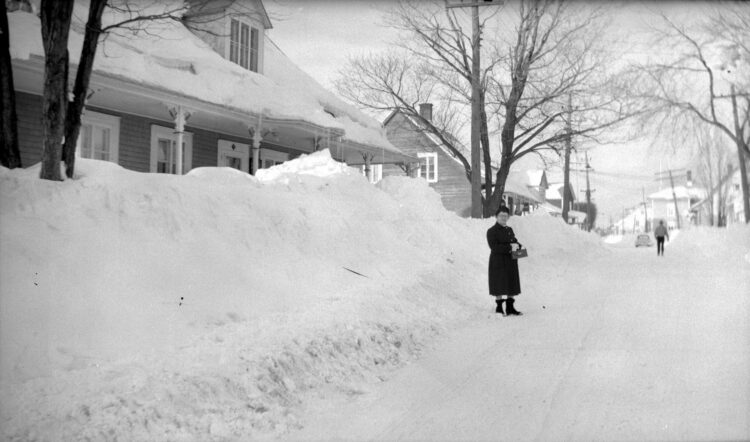
A total solar eclipse took place on August 31, 1932. The newspapers of the time enthusiastically reported this rare phenomenon, which, by good fortune, took place under clear skies in the Québec City region. Dumont did not miss the opportunity to capture the event on film.
What kind of event could have drawn such a large crowd to Rivière-du-Loup in 1927? The visit of a politician? The arrival of a music or film star? No! It was a religious gathering, as the photograph’s title indicates.
Ah, the infamous Quebec snowstorms… They always seem more impressive in our ancestors’ time or in our own backyard! Marie-Alice Dumont appears tiny beside the towering snowbanks that partly conceal her house.
The Cercle Lacordaire societies, a temperance movement, were widespread in Québec from the 1940s onward. Each year, major diocesan congresses were held across the province, offering festive occasions marked by sobriety. The Dumont family was close to this movement, which promoted total abstinence from alcohol.
These young people were part of a large parade of 500 Le Patro members that marched through Saint-Alexandre on Sunday, July 27, 1952. The Patro movement, another Catholic Action initiative for youth, first emerged in the early 20th century.
The little boy at the centre of this photograph quite literally steals the show from the bride and groom as onlookers watch him pout. The photographer may have just asked him to smile, and he, sulking, decided otherwise, much to everyone’s amusement. The portrait may not be perfect, but it brims with spontaneity and authenticity.
The Dumonts celebrated weddings in grand style! Several photographs remain from that very special day for Marie-Jeanne Ouellet, the photographer’s niece, and Paul-Émile Lajoie.
In Marie-Alice Dumont’s day, agricultural fairs were organized every summer throughout the province, and many members of the Dumont family took part. Sometimes, the younger generation even entered competitions, such as this one for the most handsome calf.