The Family

Capturing everyday life

Marie-Alice and the Dumont family

Scroll
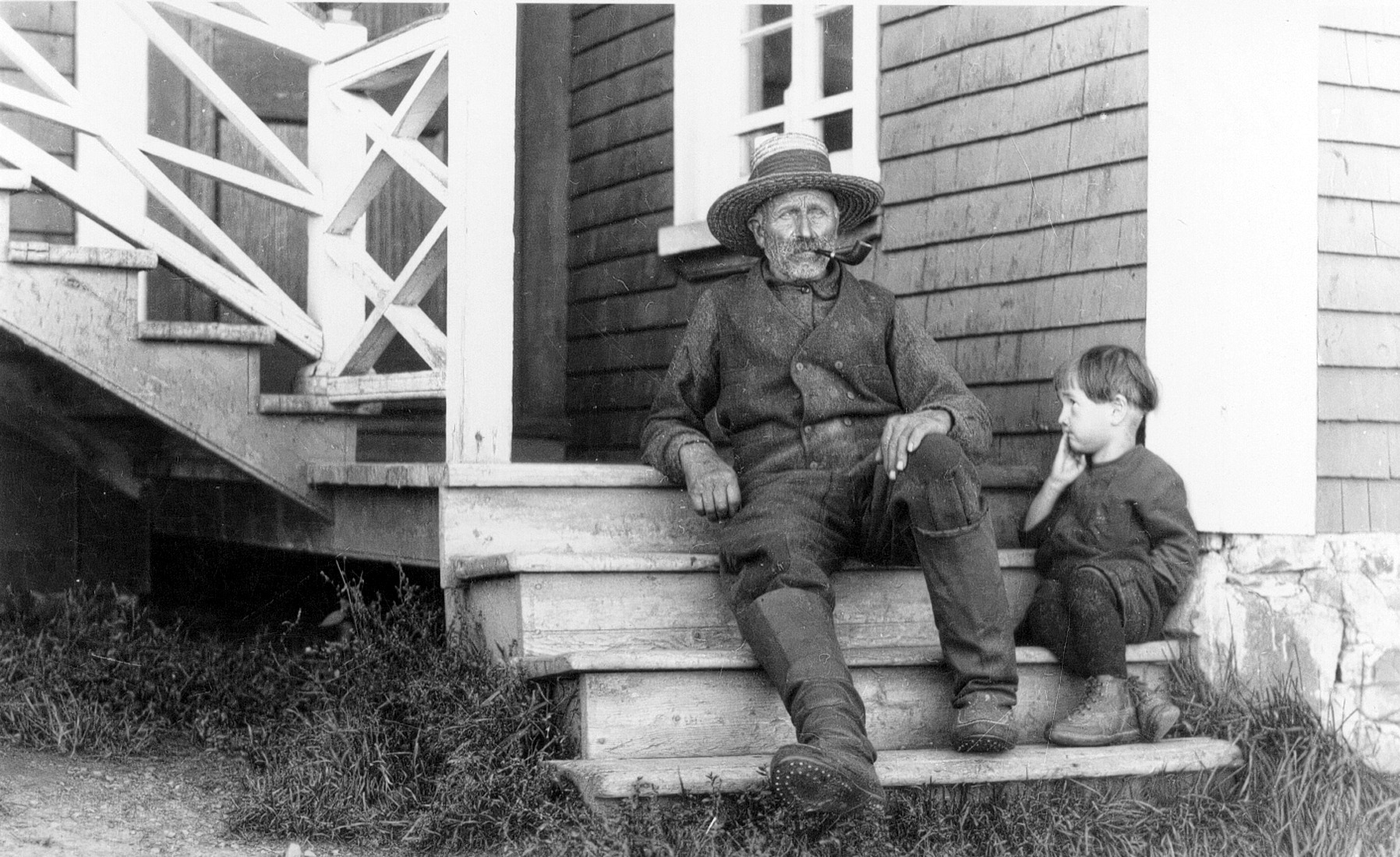
An old man and a boy about three years old sitting on the steps of the Dumont family's house porch.

d1552

1925Photographe: Photographer: Marie-Alice Dumont

This is one of Marie-Alice Dumont’s best-known photographs. Taken in the early days of her practice, it shows her father, Uldéric, smoking a pipe and wearing a straw hat, gazing into the distance as he sits comfortably on the steps of the family home. Marie-Alice’s nephew Origène Dumont looks at his grandfather with a mixture of shyness and admiration. Were they posing, or was it a spontaneous scene?

8 cm X 13 cmMarie-Alice Dumont collection, MBSL, d1552
An old man and a boy about three years old sitting on the steps of the Dumont family's house porch.
Marie-Alice Dumont often took photos of her own family. This was fairly common practice for amateur photographers of her time, just as it is today! In this section, you will learn more about Marie-Alice and the Dumont family.

d1573a

1925Photographe: Photographer: Marie-Alice Dumont

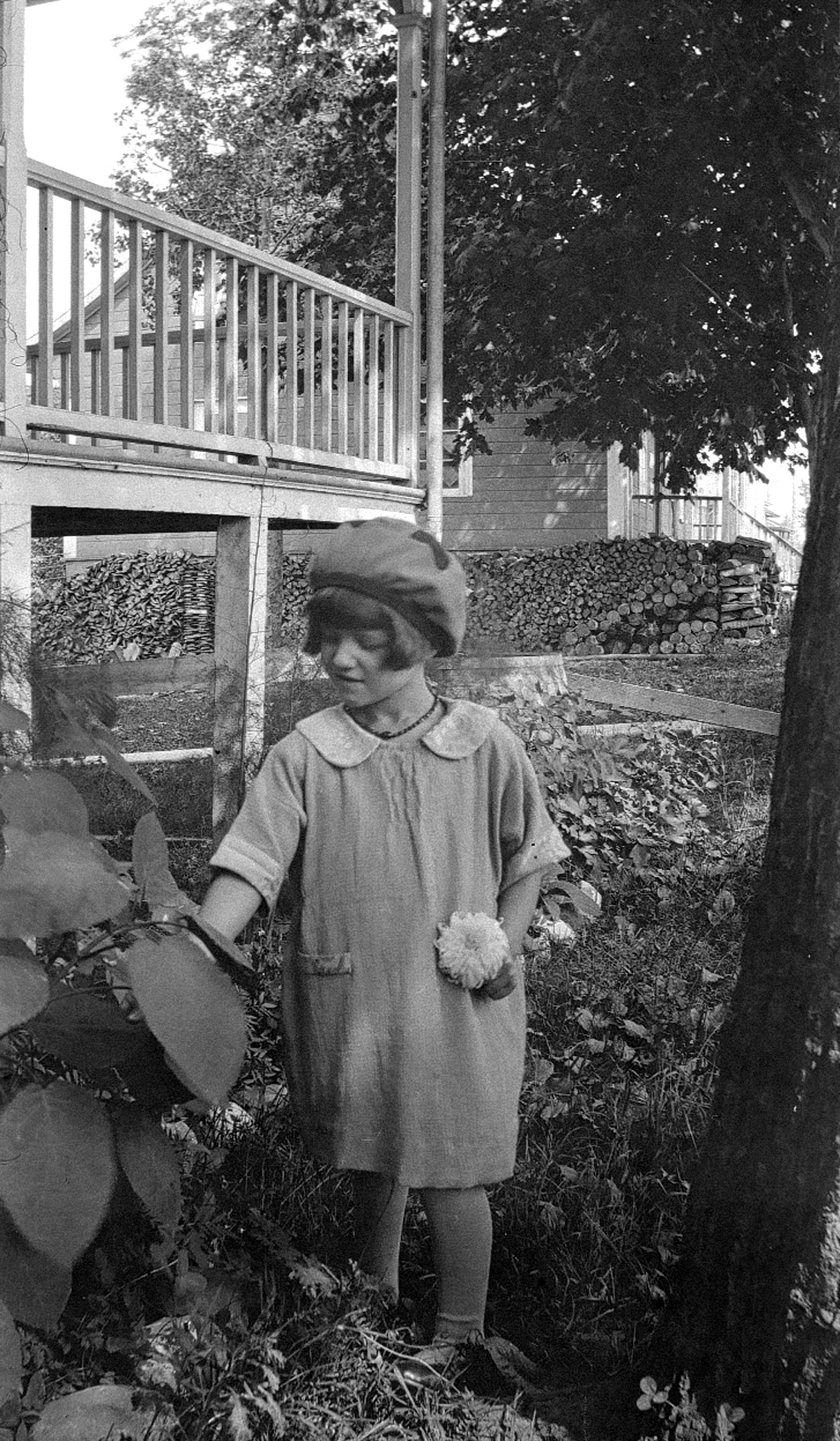
This little girl, probably one of Marie-Alice Dumont’s nieces, often appears in her shots: on the front porch, in the studio, on the family plot, alone or in a group. Here, we see her in front of the house in the heart of the village. She is on the right, picking a flower. Is she enjoying herself as much as the photographer behind the lens?

7 cm X 11 cmMarie-Alice Dumont collection, MBSL, d1573a
A little girl standing on the grounds of the Dumont residence observing a plant.

d8377

1894-1990 [probably early 1940s]Photographe: Photographer: Marie-Alice Dumont

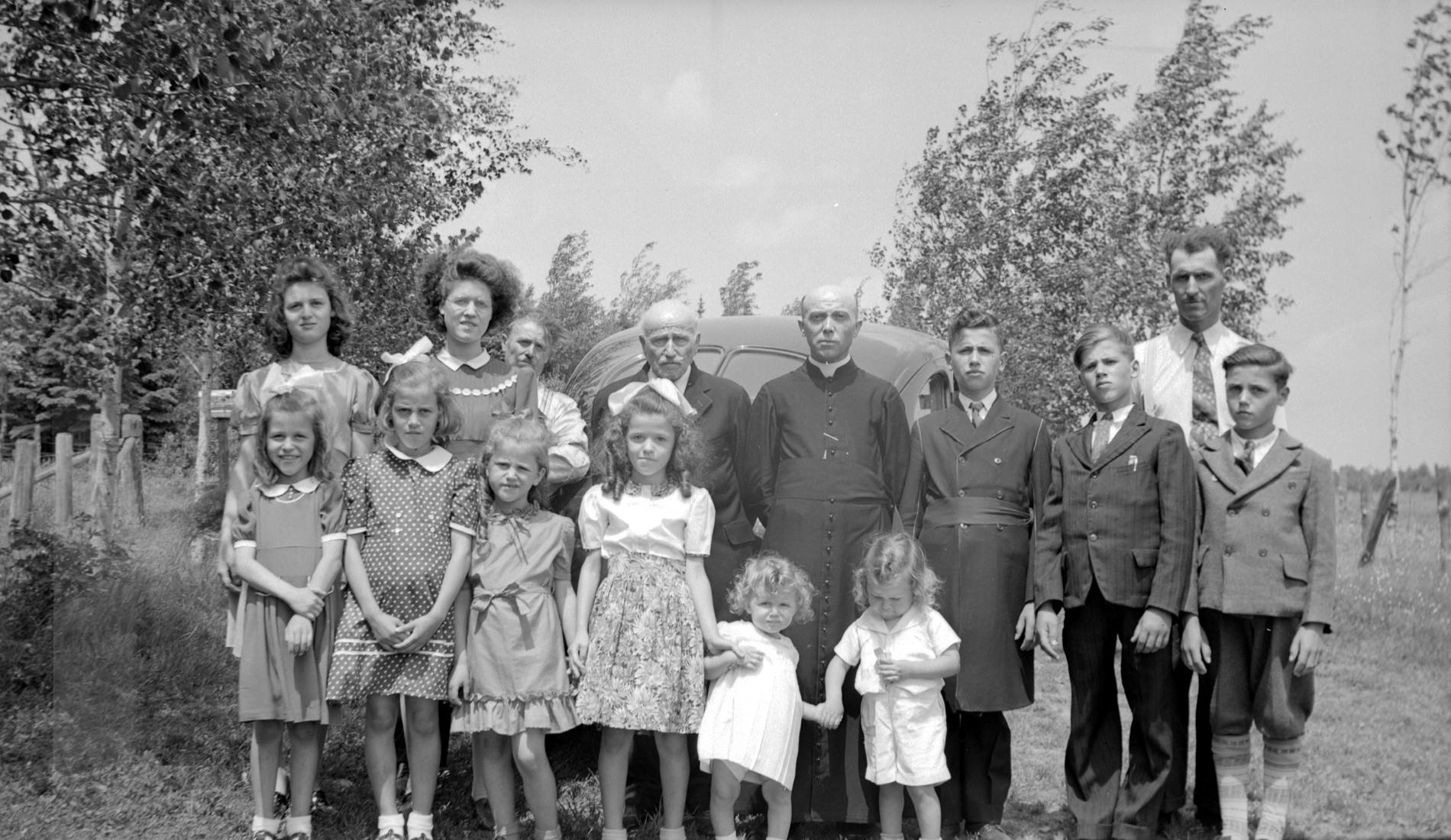
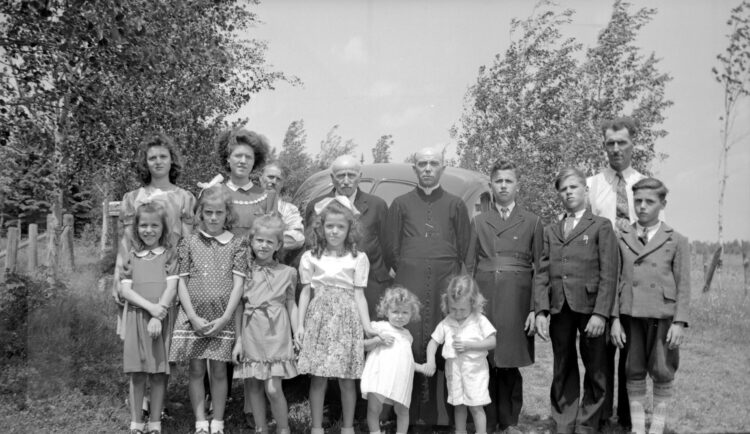
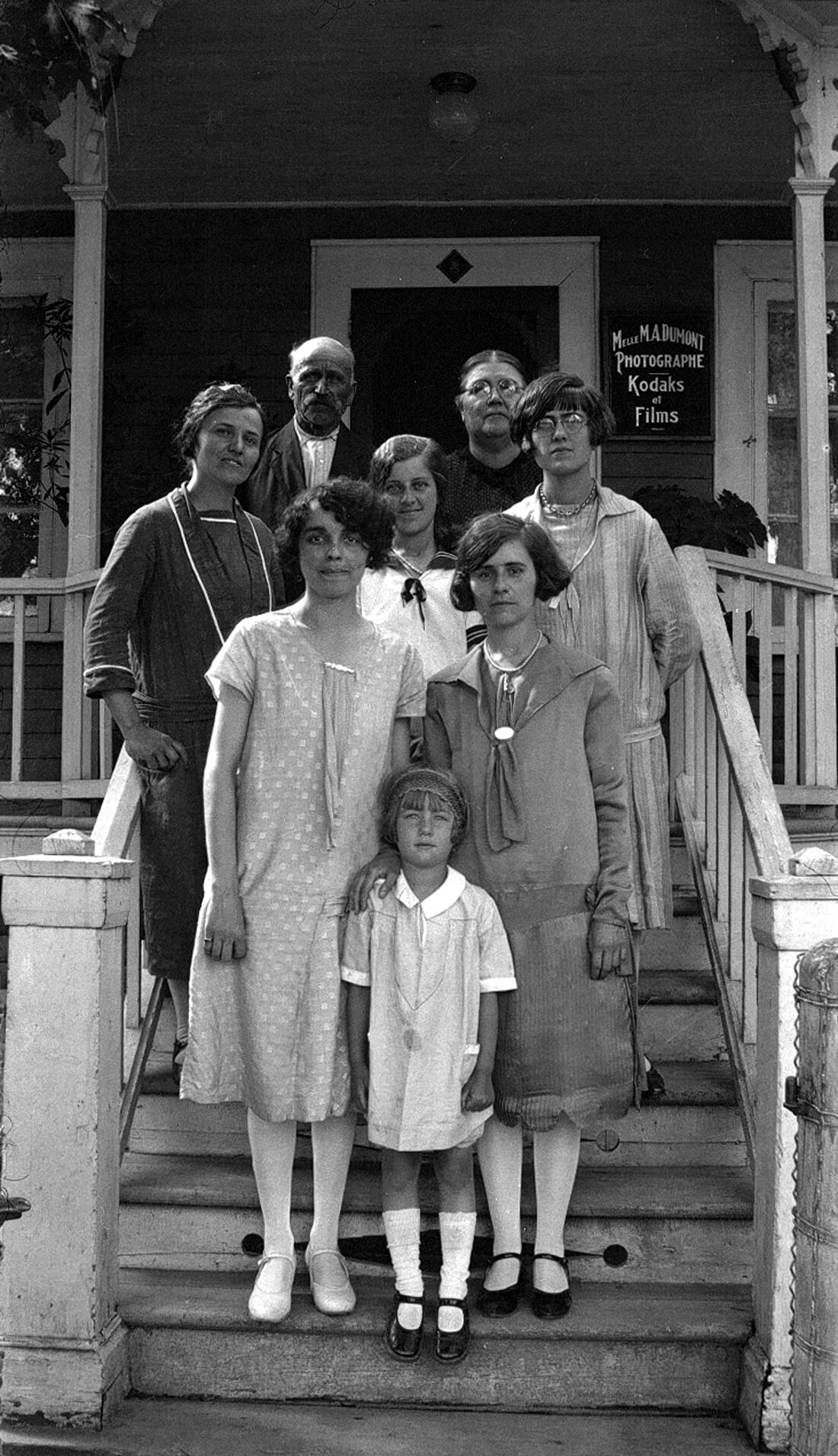
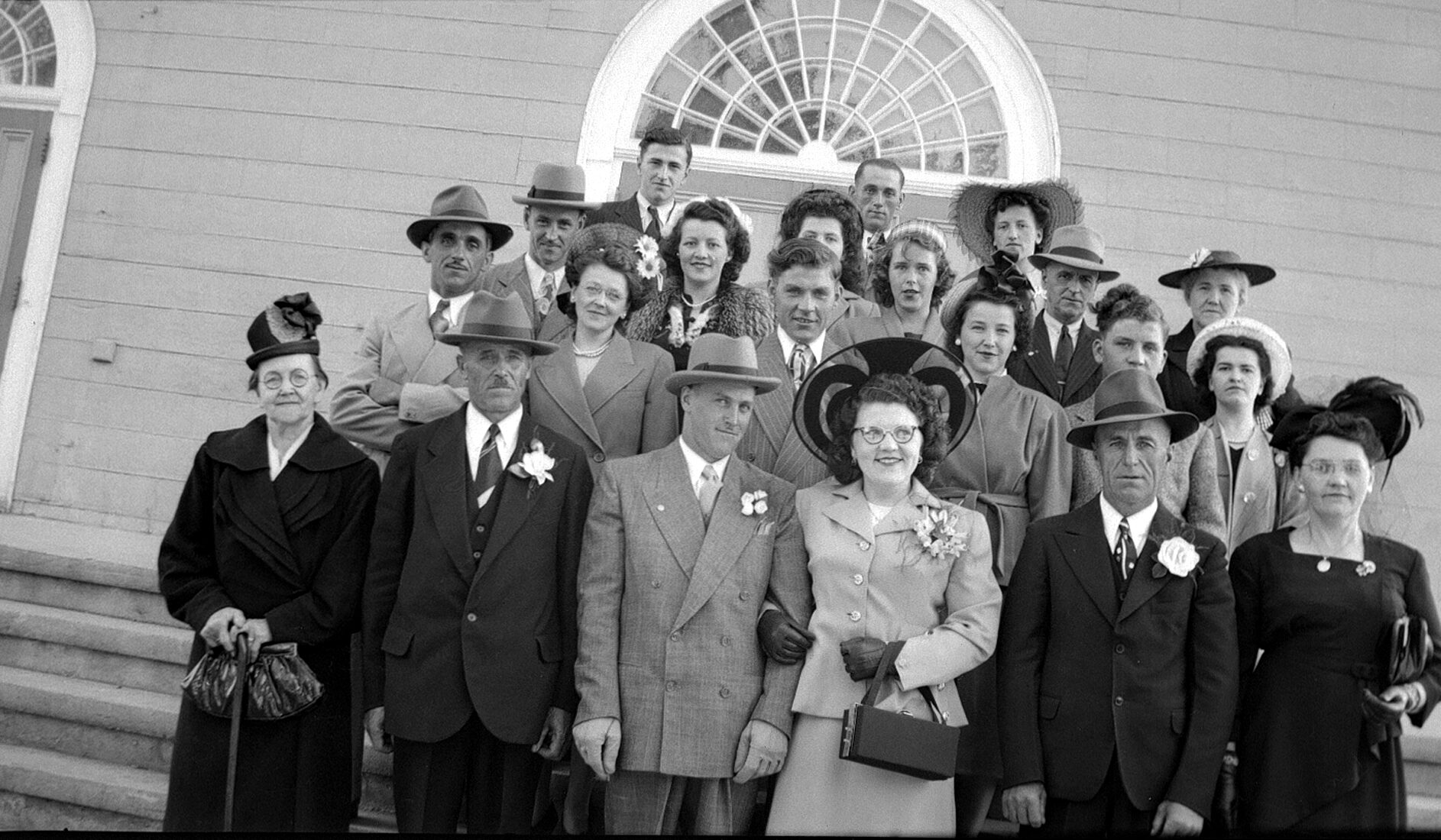
François Dumont recounts in autobiographical notes how pleasant it was, “back in the day,” to spend evenings and weekends with relatives and friends. We can imagine that this group portrait was taken by Marie-Alice Dumont during such a visit. François, at the back on the left, is with his father, Uldéric, and his brother Joseph-Napoléon (in the middle), as well as his brother-in-law Émile Boucher (the tallest of them all). As usual, several nieces and nephews are present for the occasion.

13 cm X 8 cmMarie-Alice Dumont collection, MBSL, d8377
A family group of about fifteen people of all ages posing outdoors.

Family and home life played a central role in Marie-Alice’s work. She worked from home most of the time—a bit like teleworkers do today—alongside her loved ones. Imagine: two of her sisters acted as her assistants, her mother’s room was right behind the large backdrop, and even the hallway doubled as part of the studio.

Is it any surprise that, from the early 1920s, her parents started appearing in everyday snapshots? Marie-Alice also loved to photograph her siblings and other relatives. Often, the portraits she took were candid, almost impromptu, capturing the close-knit bond between the photographer and her subjects.

For four decades, Marie-Alice documented her family through her lens. These images now offer us a glimpse into the Dumont family’s history. Explore this section to discover their story.

II
Marie-Alice Dumont, on the other side of the lens

d7169

1894-1990 [probably 1940s]Photographe: Photographer: unknown

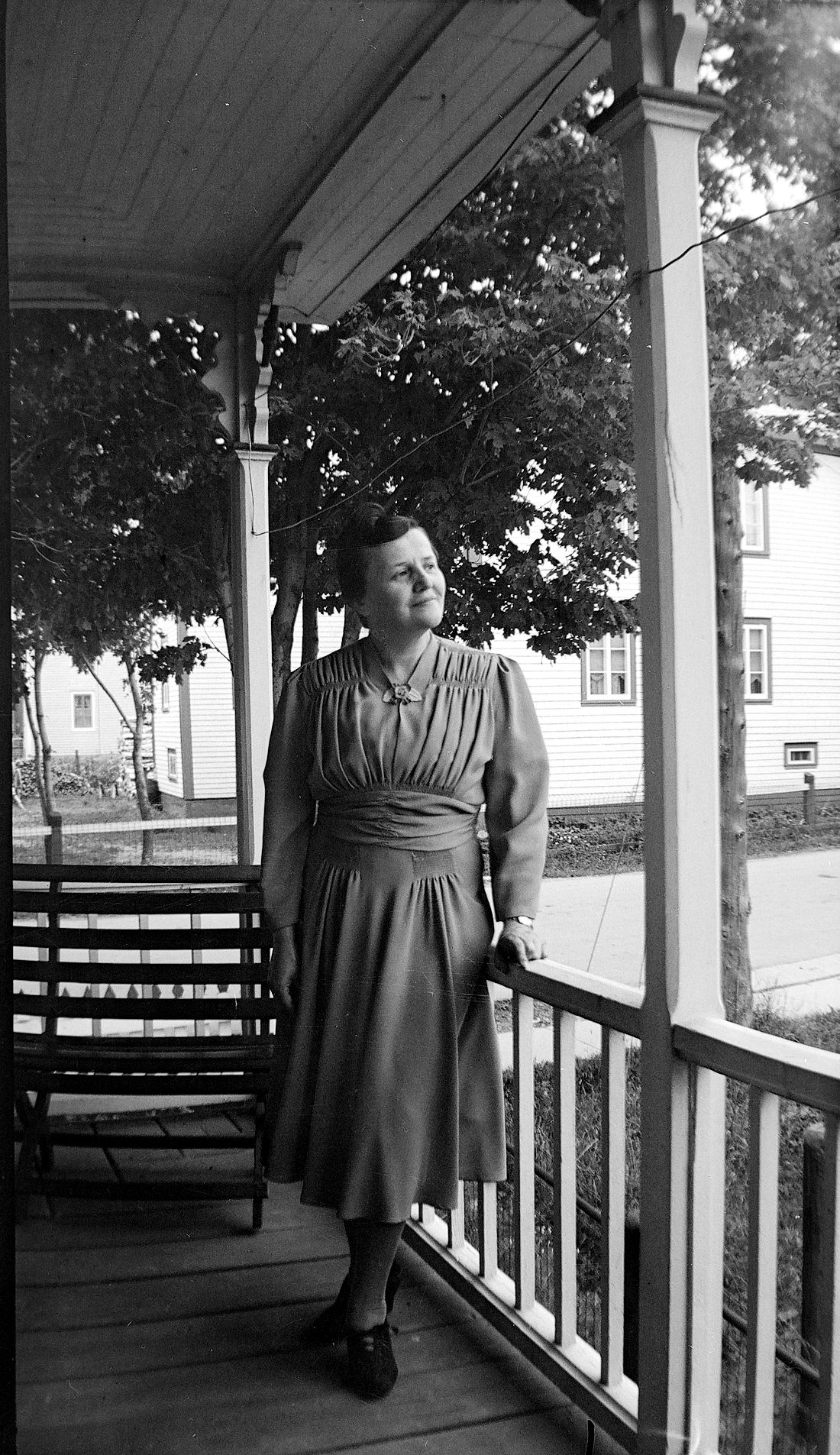
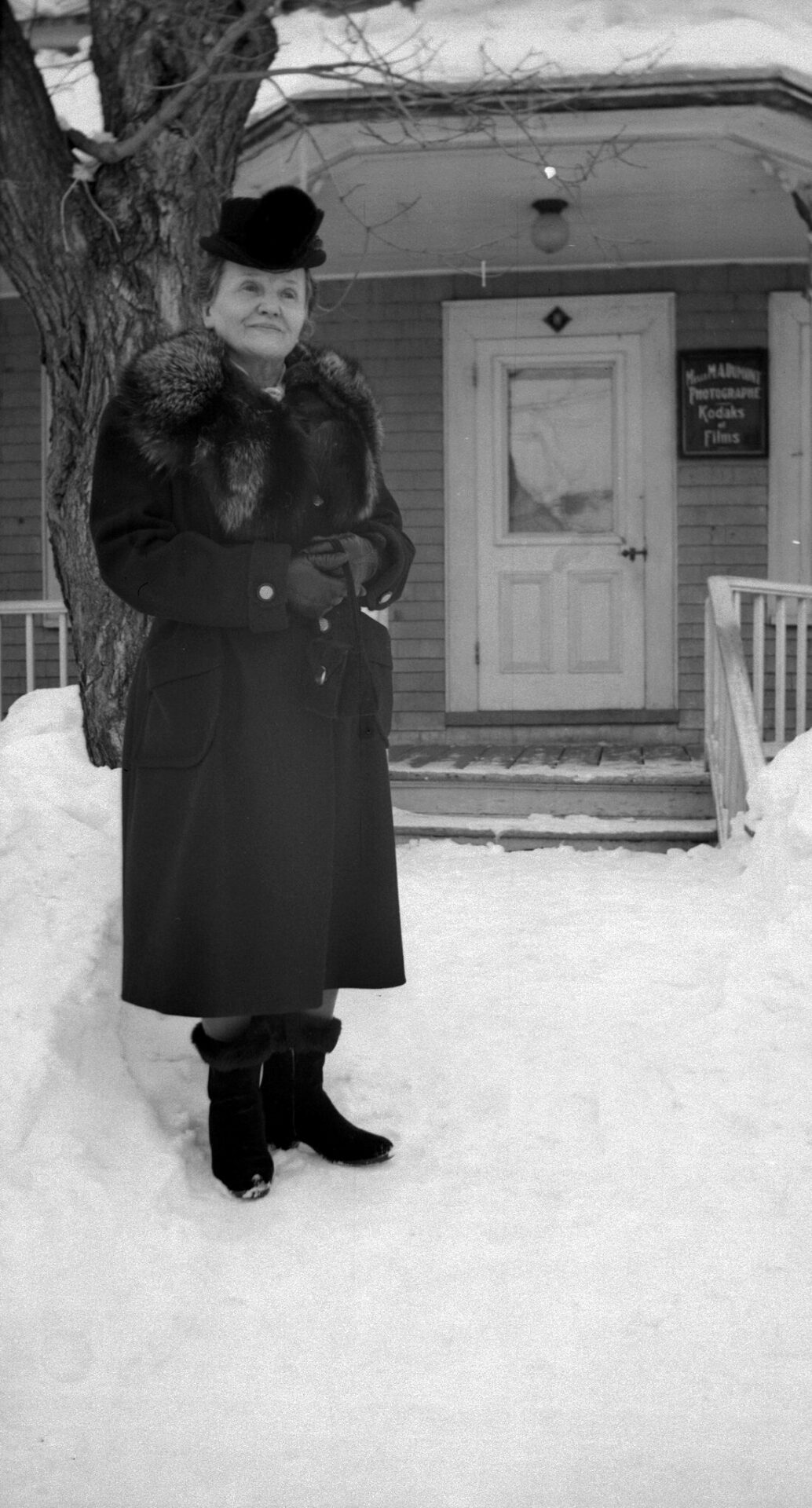
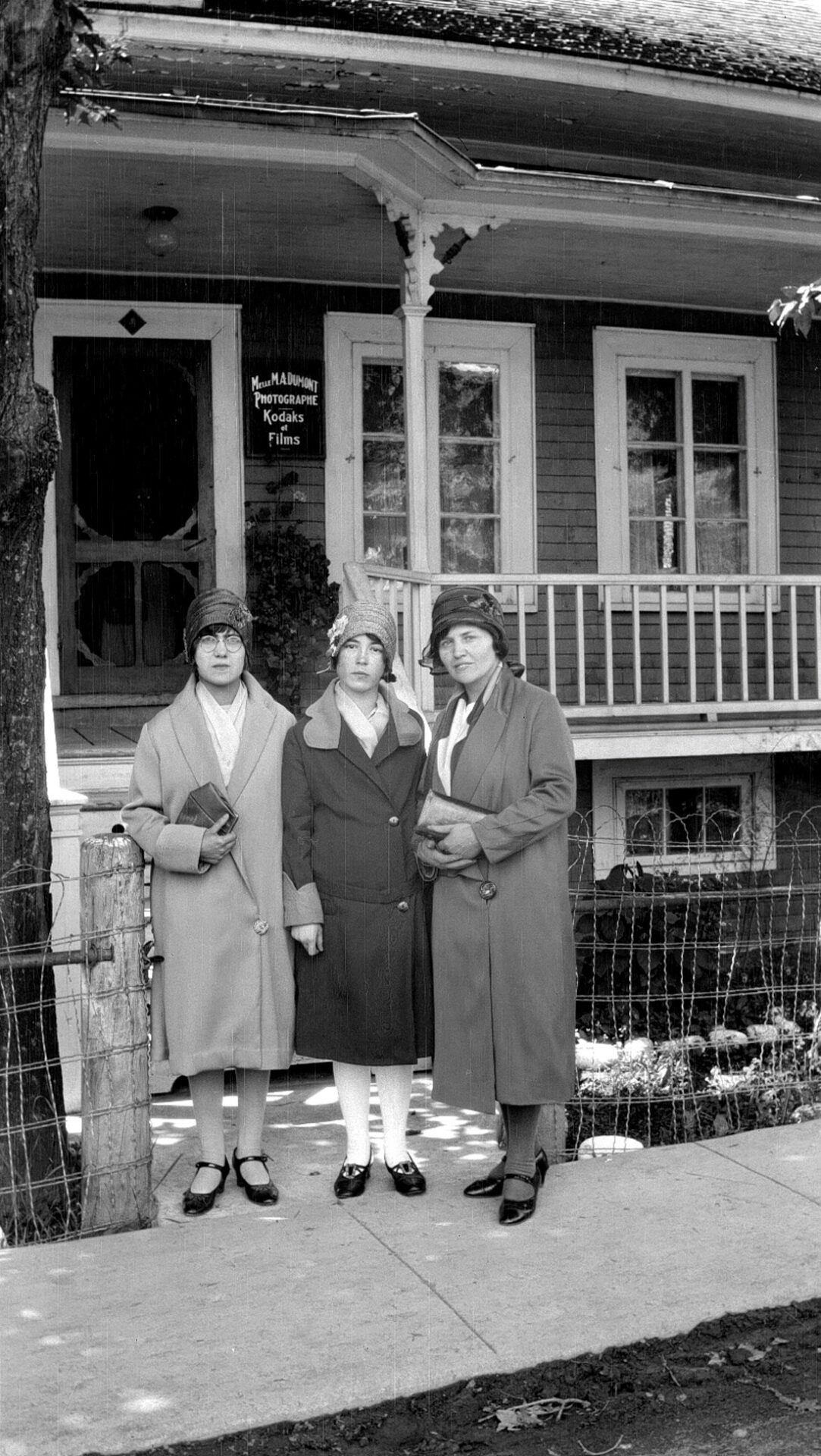
In this portrait, perhaps taken by one of her assistants, Marie-Alice Dumont is elegantly dressed, standing on the front porch of the house containing her studio. Is she on her way to mass?

12 cm X 8 cmMarie-Alice Dumont collection, MBSL, d7169
Marie-Alice Dumont, approximately 50 years old, standing on her porch and elegantly dressed.

d7104

1920-1961 [probably 1930s]Photographe: Photographer: Marie-Alice Dumont

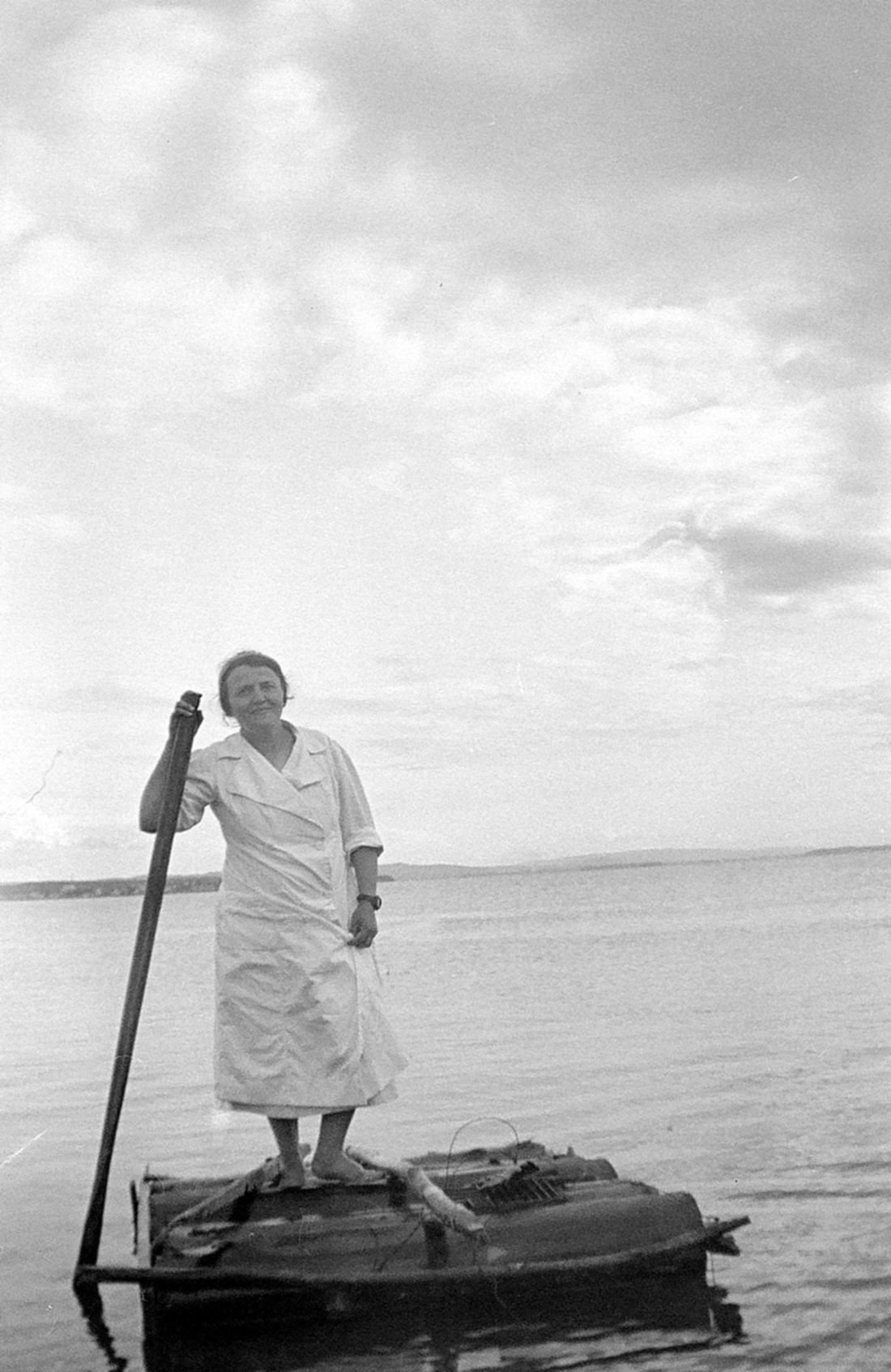
The St. Lawrence River is part of everyday life for many residents of the Kamouraska area. Here, Marie-Alice Dumont is testing the buoyancy of a rudimentary raft while enjoying a swim with some of her nephews.

4 cm X 6 cmMarie-Alice Dumont collection, MBSL, d7104
Marie-Alice Dumont in a bathing suit standing on a rudimentary raft.

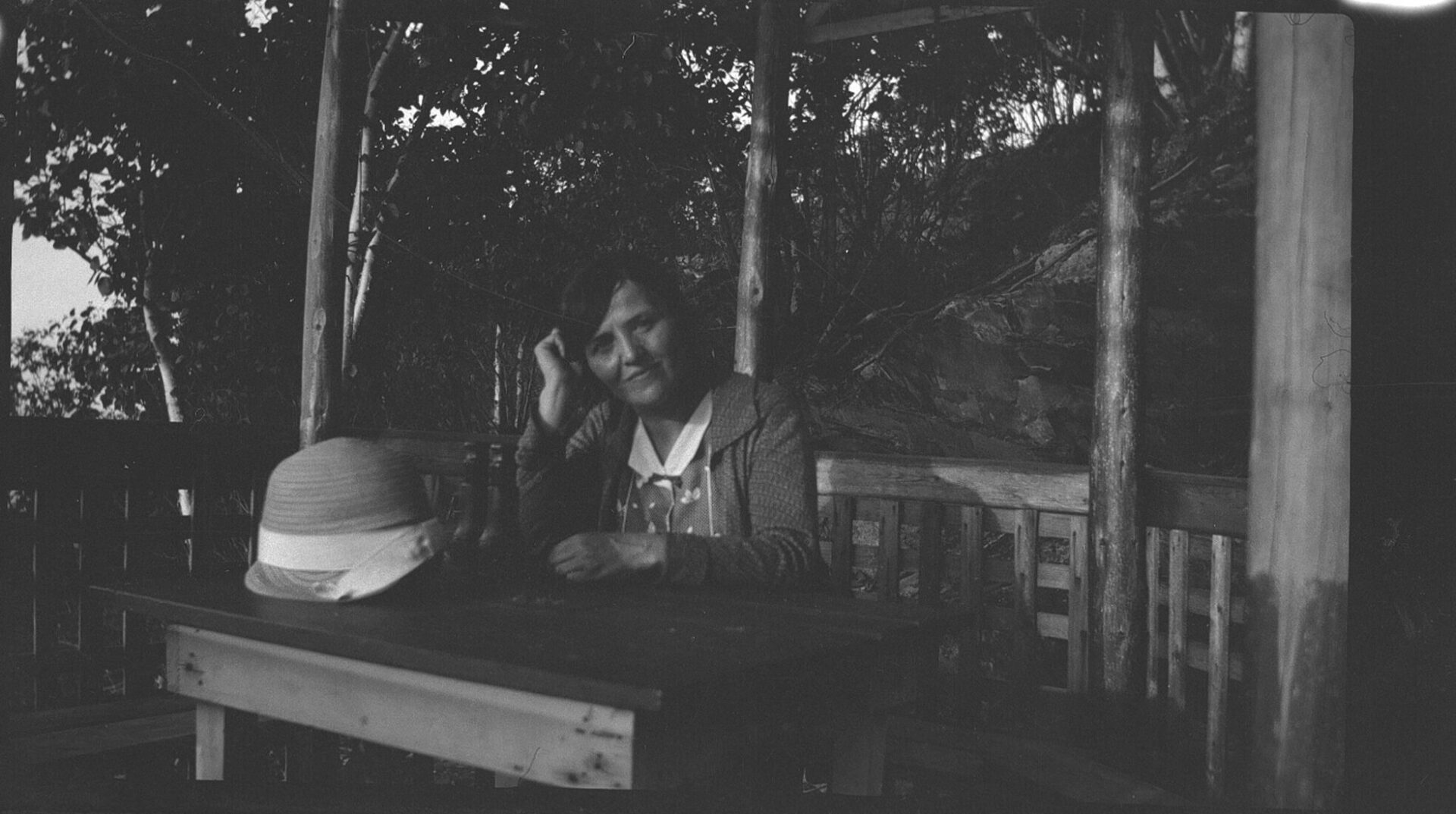
Before we dive into the stories of her family, it is worth noting that Marie-Alice often found herself in front of the lens, too. She had a fondness for taking self-portraits from time to time. In the early 20th century, the selfie craze was still a long way off, let alone the selfie stick! Try to imagine a camera the size of a shoebox, mounted on a pole… quite a sight! Nevertheless, Marie-Alice managed to act as her own model on occasion.

How did she do it? First, a remote trigger allowed her to operate the camera by herself. She also had a timer, which gave her a few precious seconds to position herself in front of the lens.

She would certainly have taught some of her family members how to work the camera, as well as the young assistants who came and went throughout her career. It seems that, more often than not, it was her family who helped her get in front of the camera.

III
Dumont's parents: Uldéric and Marie

d1805

1925-1927 [probably between 1922 and fall of 1926]Photographe: Photographer: Marie-Alice Dumont

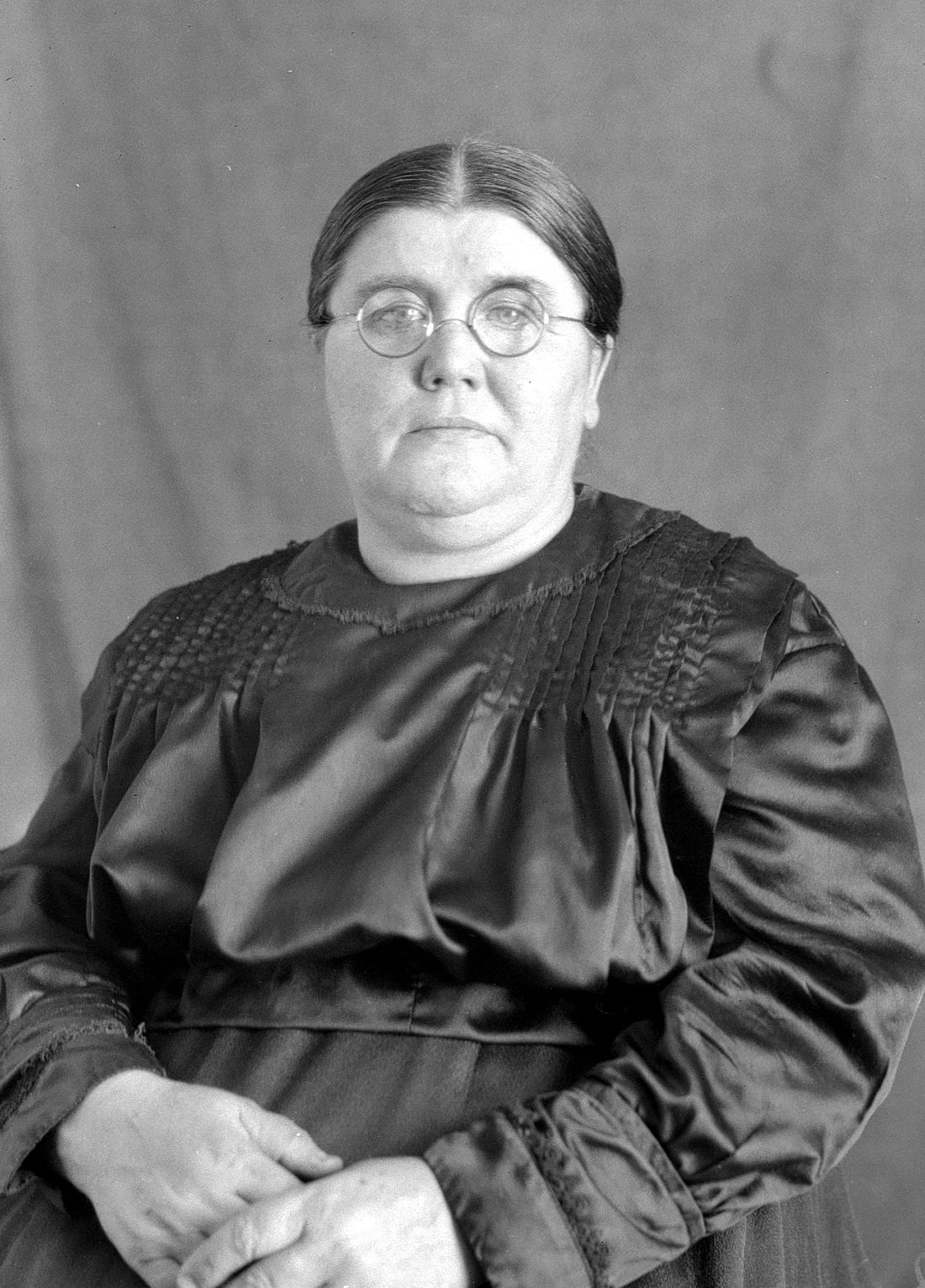
Daughter of François-Xavier Pelletier and Arthémise Garon, Marie Pelletier (1868–1932) was born into a farming family in Saint-Alexandre-de-Kamouraska. Her parents owned land on the 5e Rang in Saint-Alexandre. In 1885, she married Uldéric Dumont, who was 13 years her senior. She died of cancer at the age of 64. If we are to believe Joseph-Napoléon, Uldéric “was full of praise for this woman who was so good, so Christian, so skilled at the domestic duties of the time, so understanding, so thrifty, so hard-working and so strong in the face of life’s trials.”
8 cm X 14 cmMarie-Alice Dumont collection, MBSL, d1805
Studio bust portrait of Marie Pelletier, approximately 55 years old, in a plain setting.

d5587

1951 [not after 1945]Photographe: Photographer: Marie-Alice Dumont

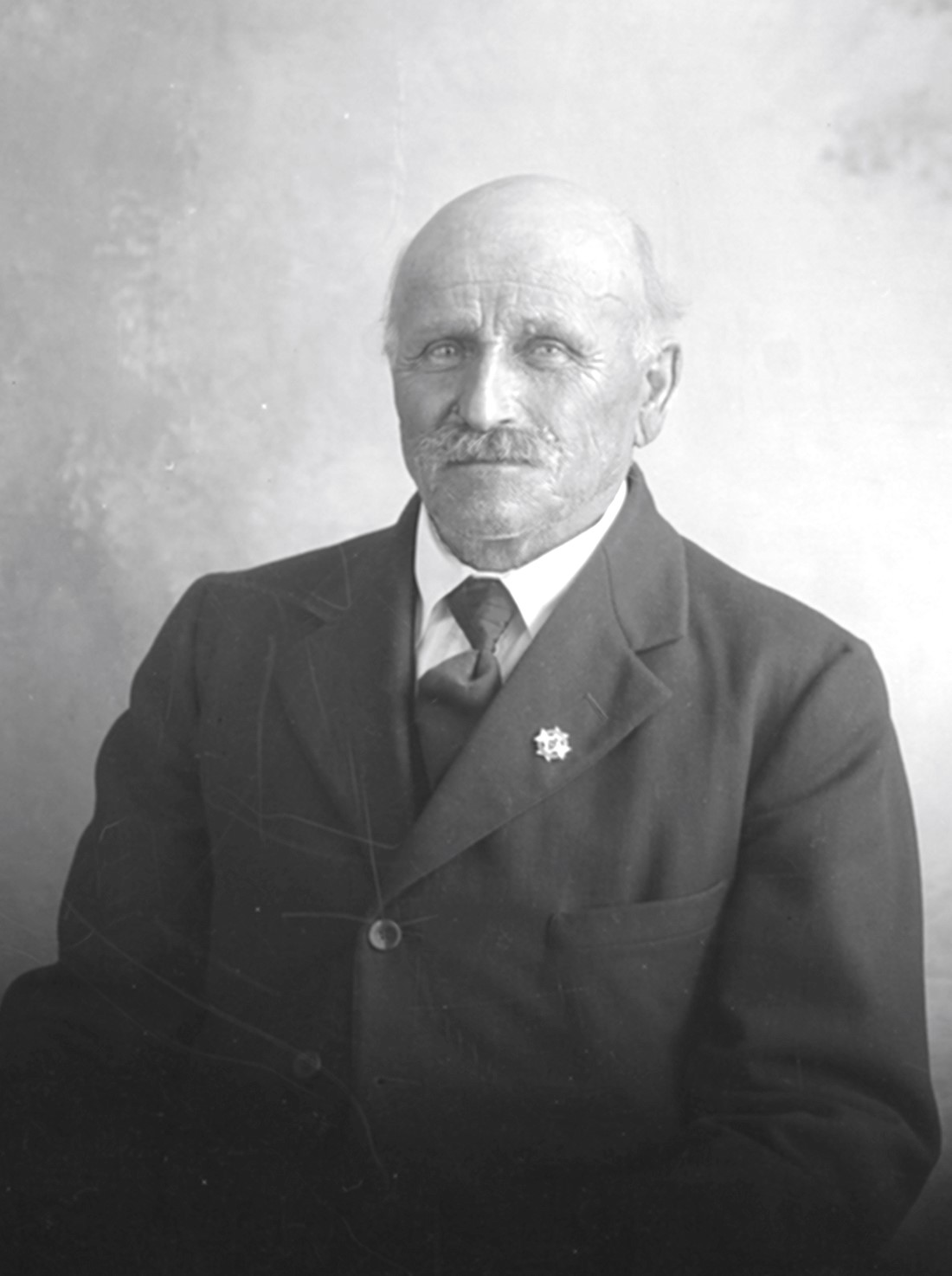
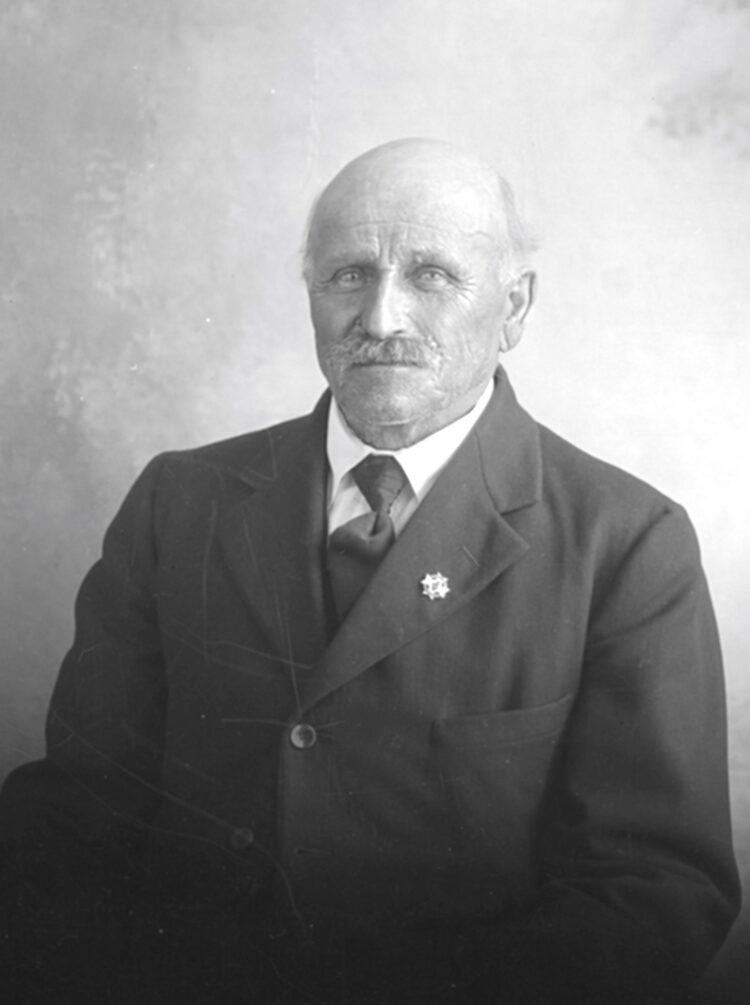
Son of Georges-Létus Dumont and Marie-Séraphine Anctil, Uldéric Dumont (1855–1945) was born in Saint-Alexandre-de-Kamouraska. He is shown here at the age of 80, posed by his daughter Marie-Alice. His wife, Marie Pelletier, had recently passed away, making him a widower. In the words of his son Joseph-Napoléon, Uldéric “walked with dignity in the footsteps of his ancestors, all trailblazers and farmers, all brave pioneers, models of courage, constancy and perseverance.” Napoléon clearly had great admiration for his father! Uldéric seems to have commanded enormous respect within the family. On his 80th birthday, his 56 surviving grandchildren got together to send him a letter of praise, in which they thanked their “revered grandfather” for his “blessings.”
7 cm X 8 cmMarie-Alice Dumont collection, MBSL, d5587
Studio bust portrait of Uldéric Dumont, approximately 75 years old, in a plain setting.

Marie-Alice was fortunate that her parents, Marie Pelletier and Uldéric Dumont, supported her photography career. This was quite something! At the time she chose to pursue photography, women in the field were rare; even more so in rural Kamouraska, where career options for women were far fewer than in the city. By all accounts, Marie-Alice should have followed the usual path for women: get married and settle down as a housewife or perhaps become a teacher or nun. But a photographer? And staying single to boot? It seemed unimaginable!
But Marie and Uldéric not only accepted her unconventional path, they actively supported their “rather unique” daughter, as her brother Napoléon put it. First, they allowed her to set up a basic studio in their tiny home on the 5e Rang, a country road. Then, when the family moved into town in 1926, they agreed to turn much of their new house into a studio. Almost every day, they lived with clients coming in and out of their home. Marie even lent Marie-Alice a large portion of the money needed for equipment, allowing Studio Dumont to get off the ground.

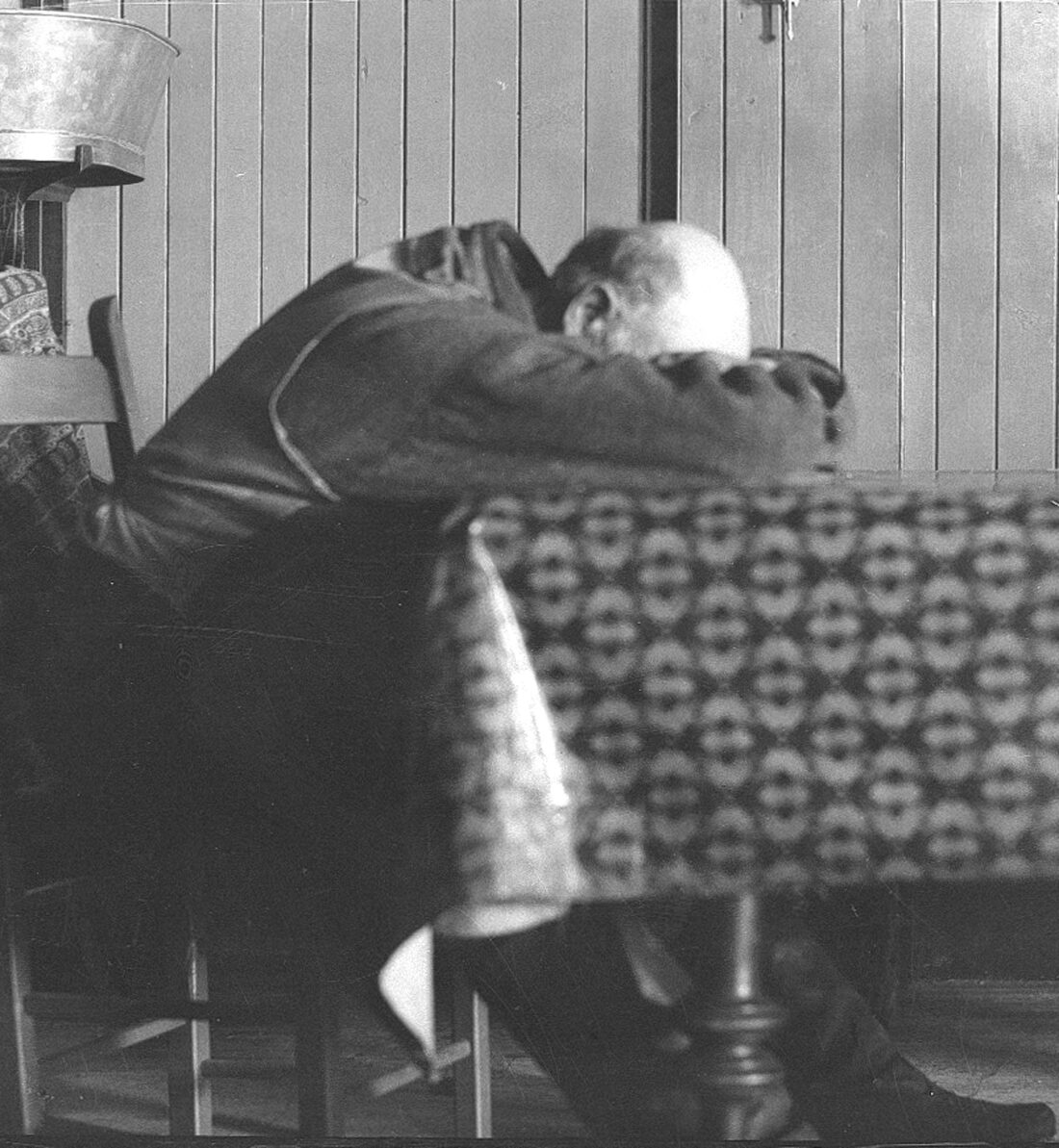
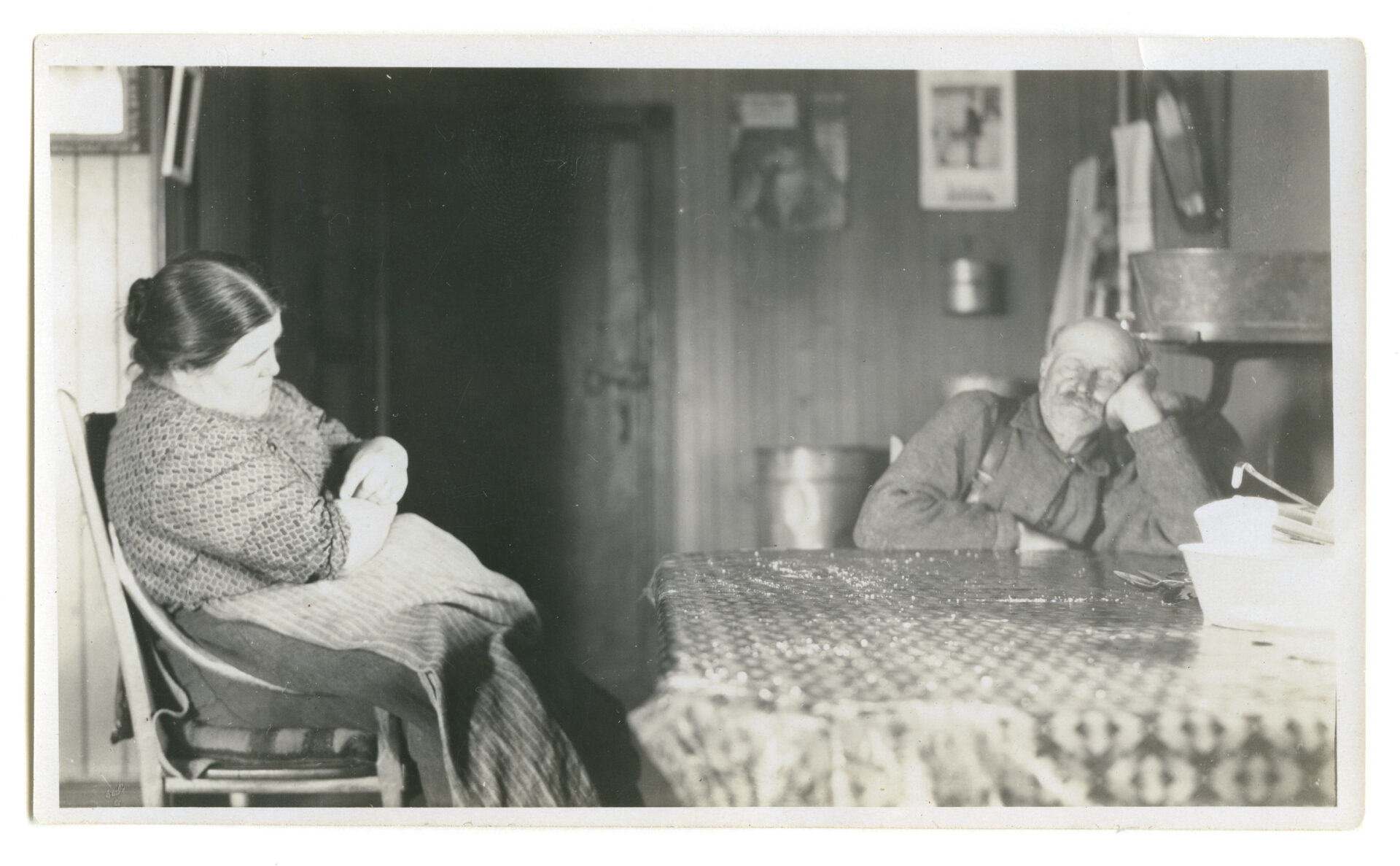
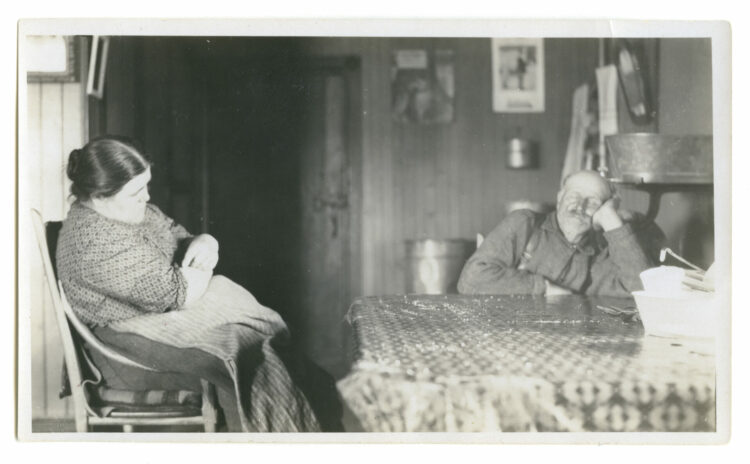
Marie and Uldéric were proud of their daughter and entertained by her profession. They could hardly resist when she asked them to pose for practice shots. Marie-Alice, ever the trickster, even photographed them while they napped! Would she have dared such mischief if they had not been so supportive and if their relationship was not so close? After all, who enjoys being caught off guard in a photograph? Without a doubt, Marie-Alice could always rely on her parents. And she would go on to care for them until the very end of their lives.

d1547

1925Photographe: Photographer: Marie-Alice Dumont

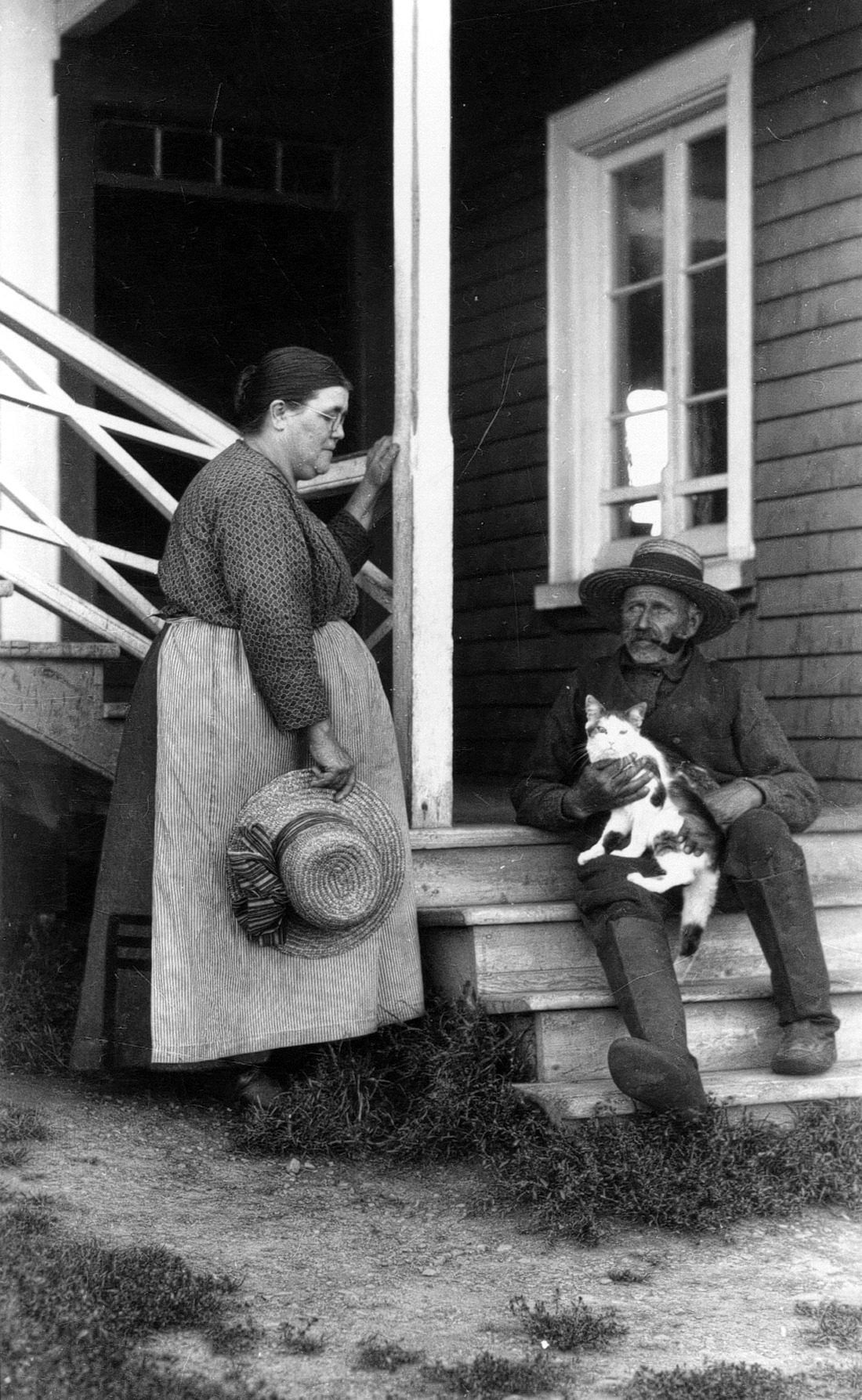
Marie-Alice Dumont’s parents, Marie and Uldéric, were favourite subjects in her early photographs, and they willingly lent themselves to their daughter’s visual experiments. Art historian Madeleine Marcil observes that they seem “very comfortable” in front of the camera. Here, Uldéric sits on the porch steps, smoking a pipe and stroking the cat—the only one who’s looking at us. Marie stands next to him, leaning on the railing, holding a straw hat in her right hand. She made this hat herself, as well as Uldéric’s. She also made the fabric to make their clothes. Marie and Uldéric were very resourceful, capable people. In a 1990 interview, Réal Beaupré, the photographer’s nephew, expressed the wistfulness he felt when looking at this portrait of his grandparents: “Let’s just say it sums up the times. In those days, they took the time to sit down and pet the cats.”

13 cm X 8 cmMarie-Alice Dumont collection, MBSL, d1547
Marie Pelletier and Uldéric Dumont in everyday clothes conversing in front of their house.

IV
Dumont's sisters

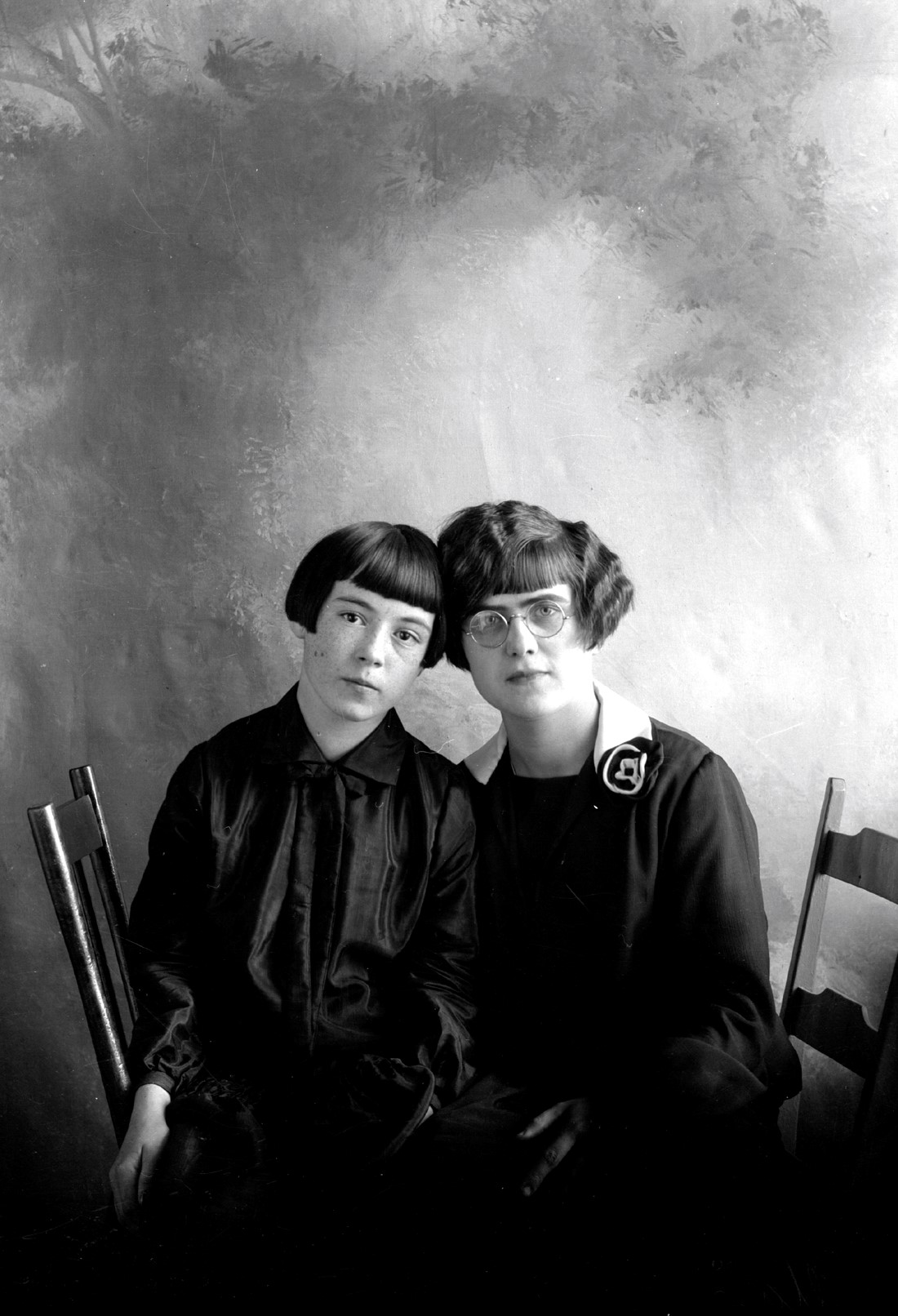
In addition to her parents, Marie-Alice Dumont’s sisters were also some of her most frequent subjects. Many of them appear in her photos, allowing us to see them grow and change over the years. Here are a few who held a special place in Marie-Alice’s heart: Elizabeth, Marie-Louise, Berthe and Emilia.

Dumont's sisters

d1803

1925-1927 [between 1922 and fall of 1926]Photographe: Photographer: Marie-Alice Dumont

Elizabeth poses here in the rudimentary setting of the first studio set up by her sister Marie-Alice Dumont in the family home. She is around 15 years old.

8 cm X 14 cmMarie-Alice Dumont collection, MBSL, d1803
Studio portrait of Elizabeth Dumont, approximately 15 years old.

ELIZABETH DUMONT

1907 - 1979

Elizabeth was probably the most photographed of Marie-Alice’s sisters. Known by the family as “Zelta,” she helped her older sister at the photography studio for many years.

Dumont's sisters

d1783

1925-1928 [before fall of 1926]Photographe: Photographer: Marie-Alice Dumont

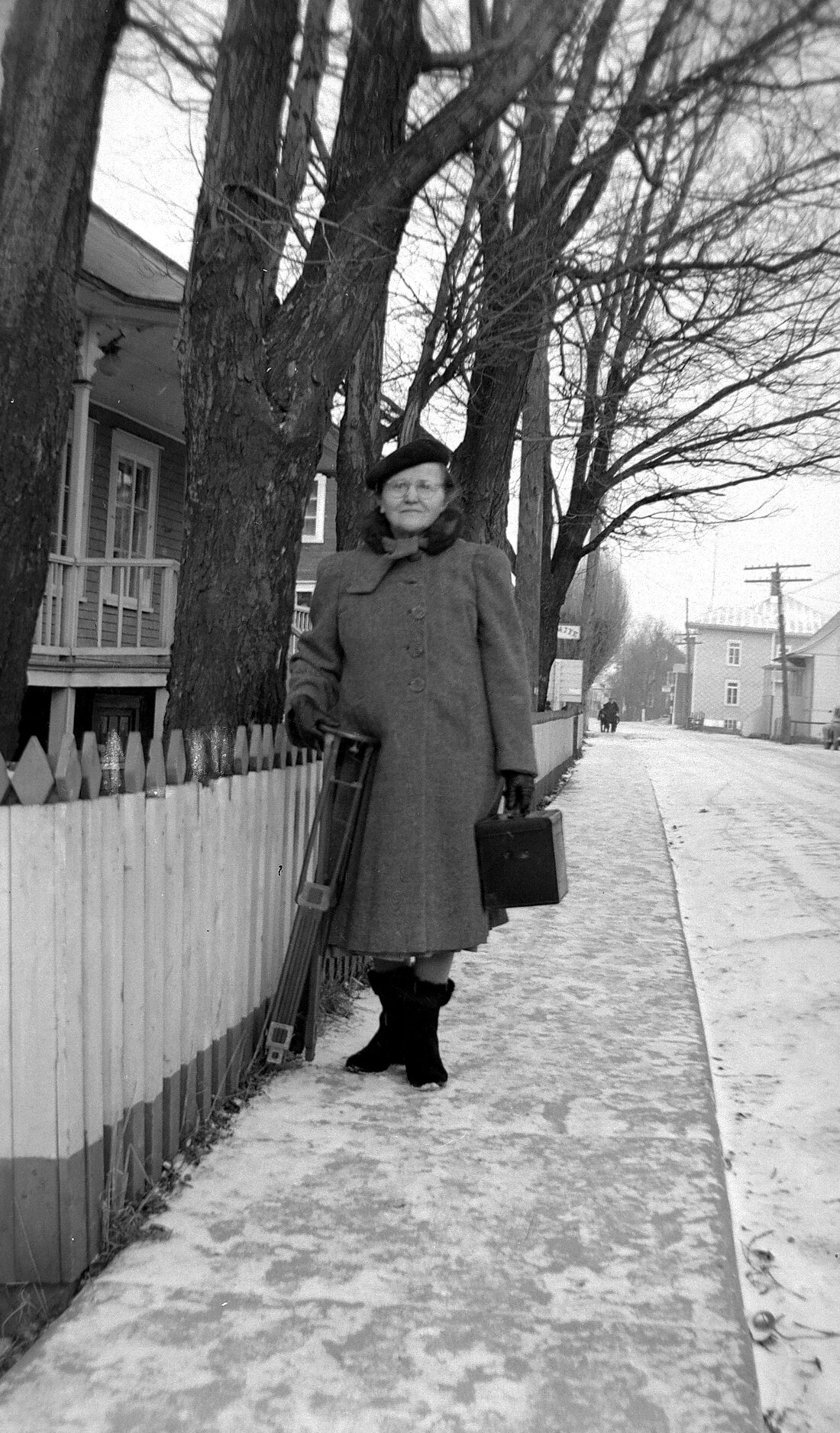
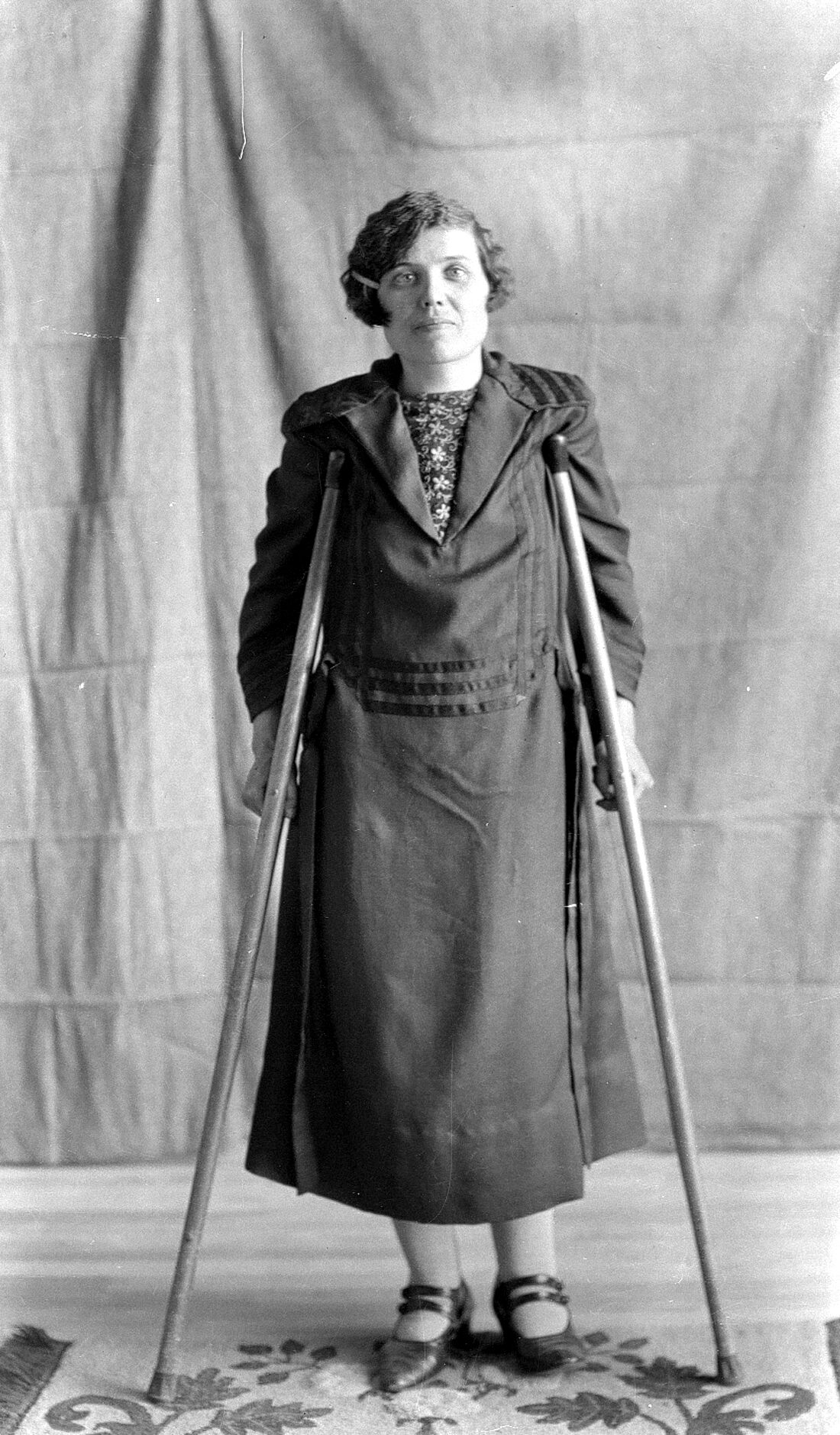
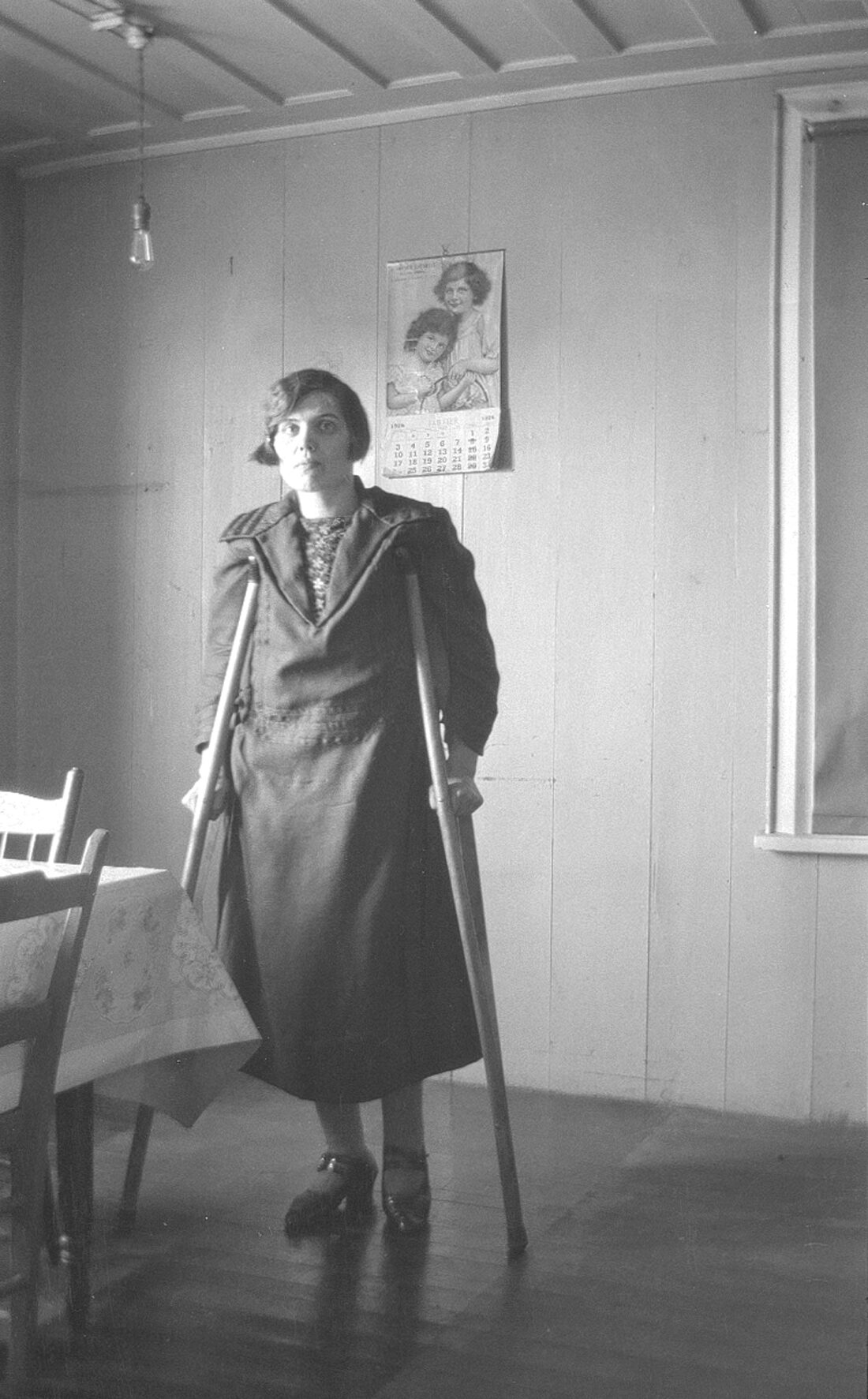
Marie-Louise, like many members of her family, gave Marie-Alice the opportunity to practise by posing for her in her first photo studio. Aged around 30 in this portrait, Marie-Louise is at a stage in her short life when she needs her crutches at all times.

8 cm X 13 cmMarie-Alice Dumont collection, MBSL, d1783
Studio portrait of Marie-Louise Dumont, approximately 30 years old, on crutches, in a plain setting.

MARIE-LOUISE

1895 - 1927

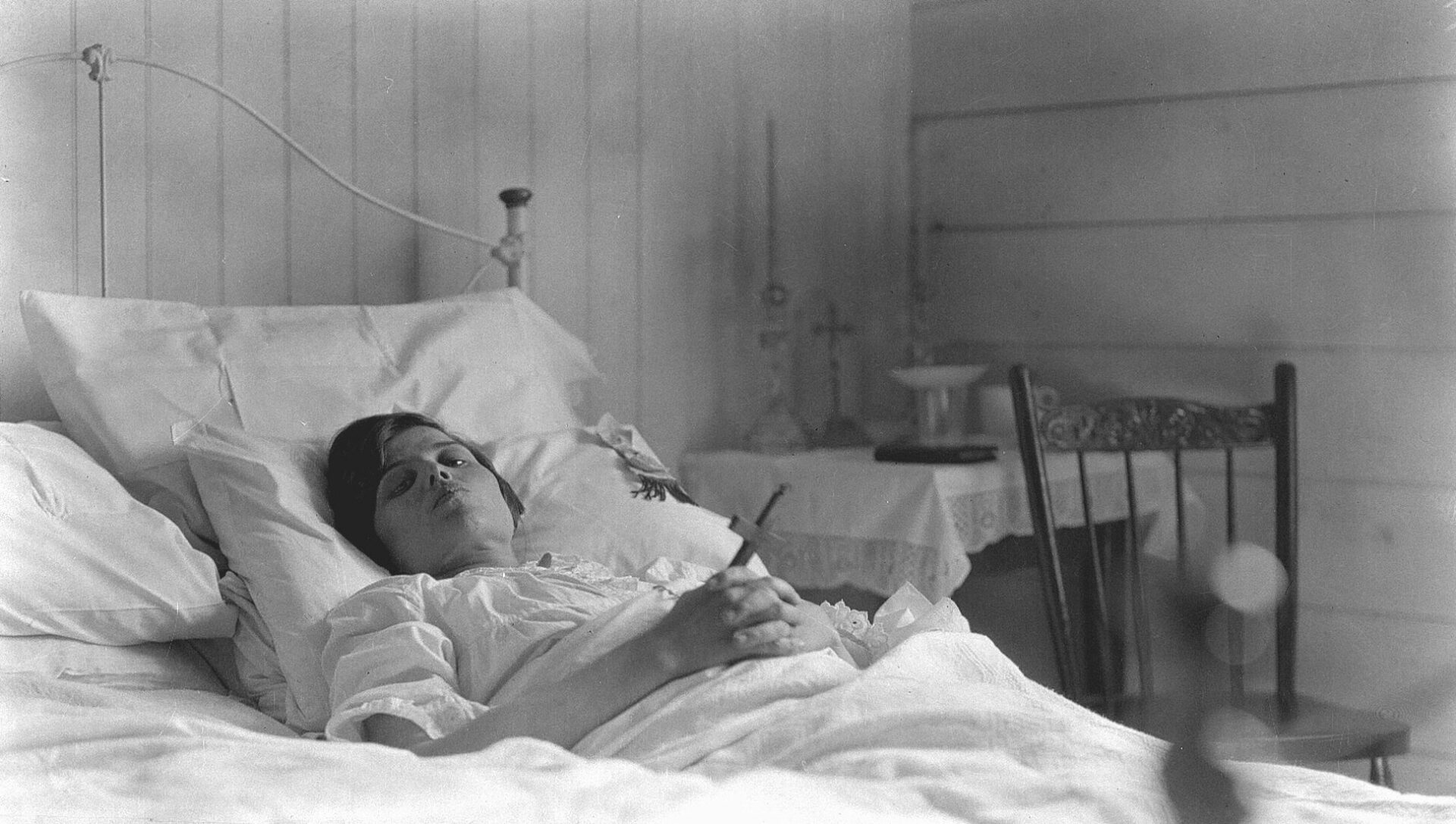
Except for her few years working as a schoolhouse teacher, Marie-Louise always lived with Marie-Alice. She died from illness at only 31. The portraits Marie-Alice took of her are some of the most poignant in her entire collection. In the earlier photos, Marie-Louise can be seen standing, but we soon see her sitting—or, as in this one, using crutches. Later portraits capture the heartbreaking fragility of her condition and the quiet strength with which she endured her hip deformity in the final years of her short life.

Dumont's sisters

d1428

1934-1939Photographe: Photographer: Marie-Alice Dumont

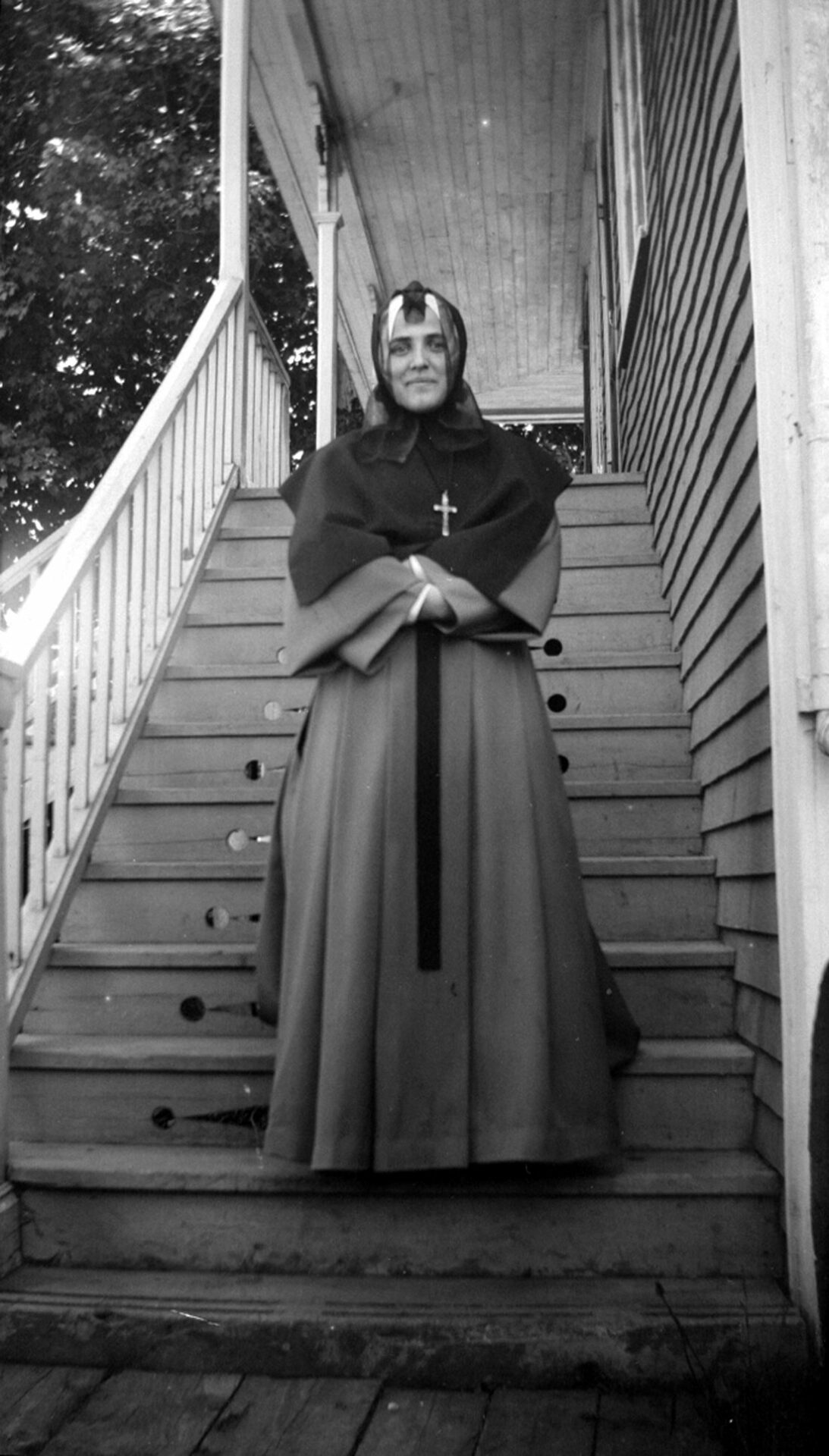
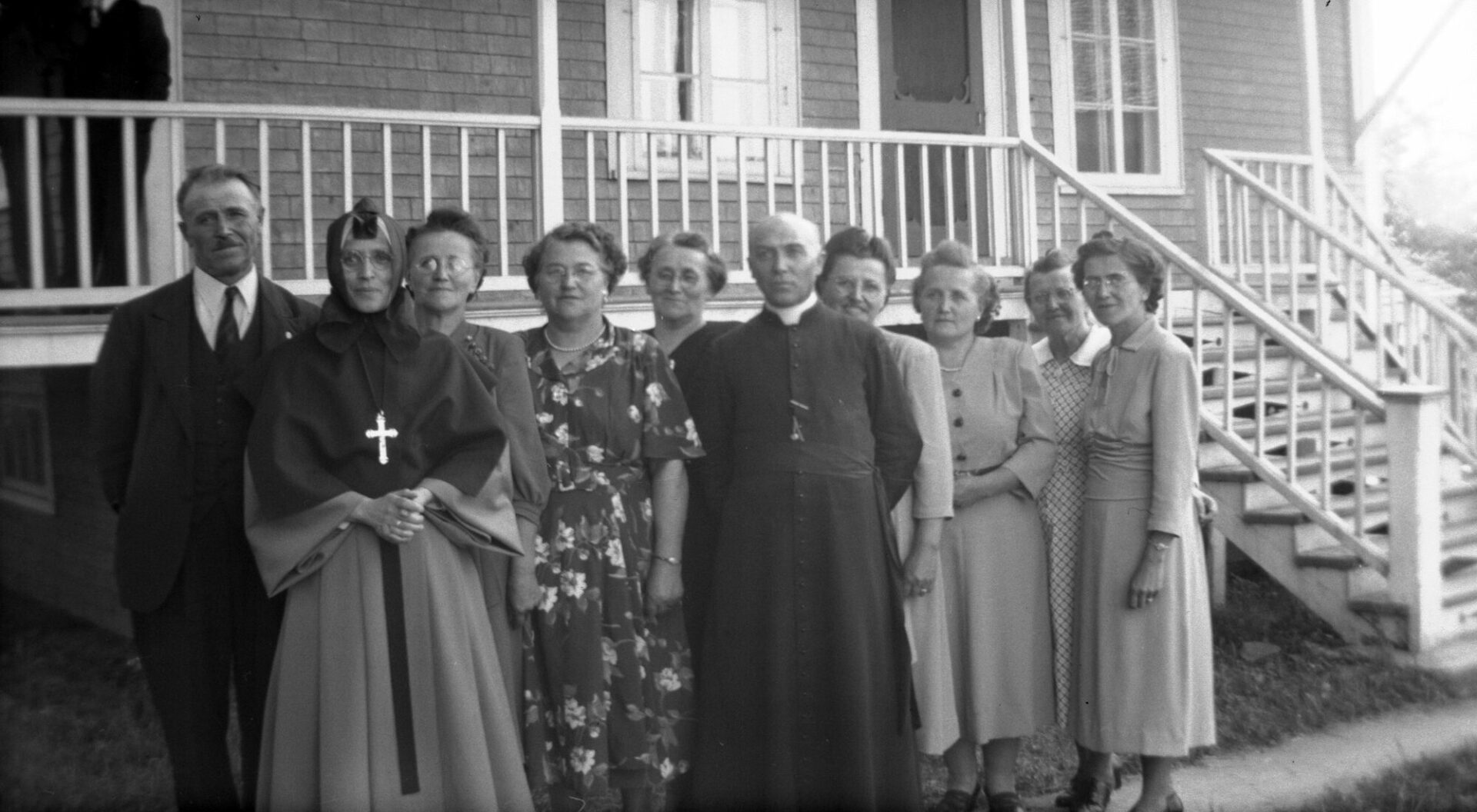
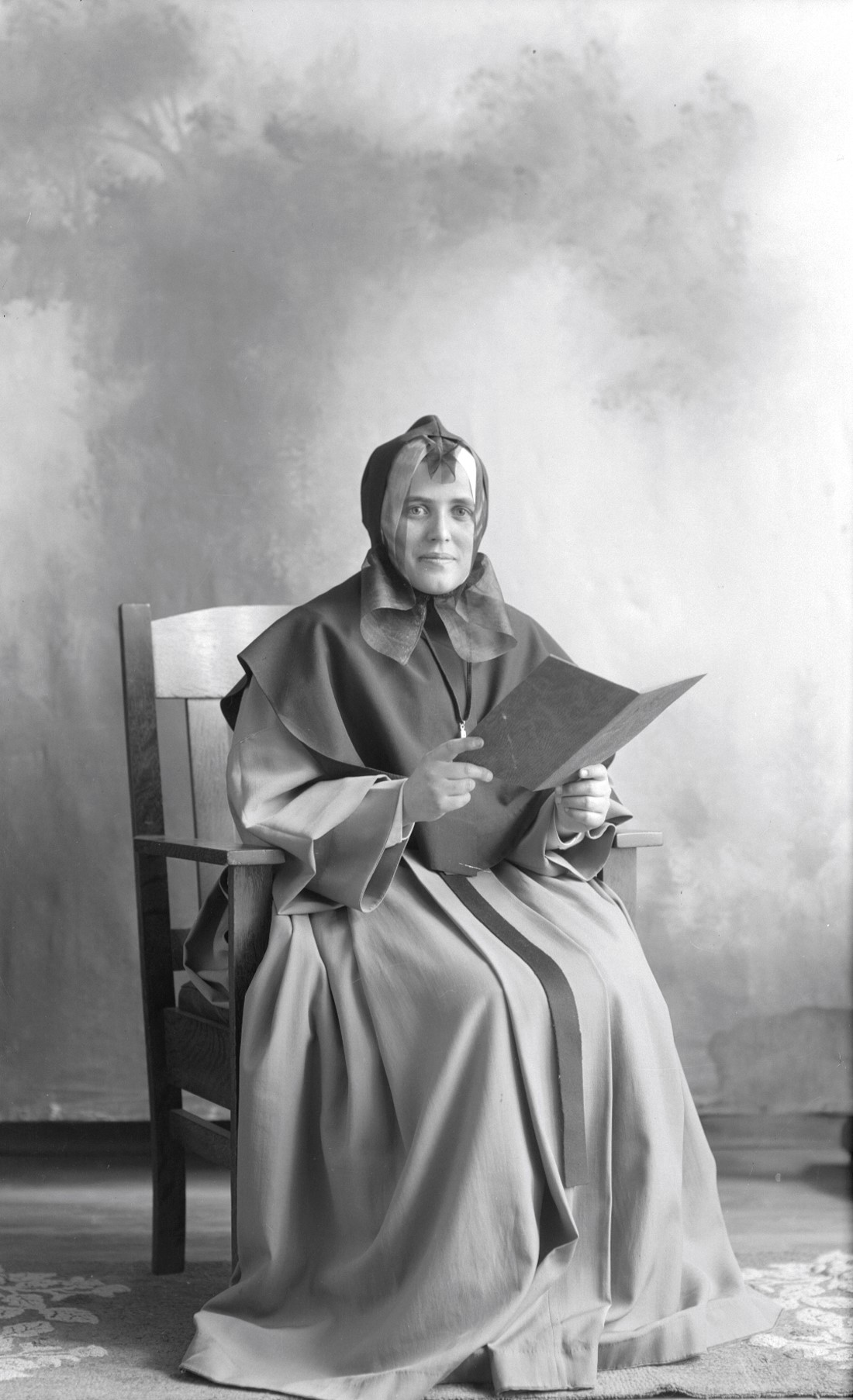
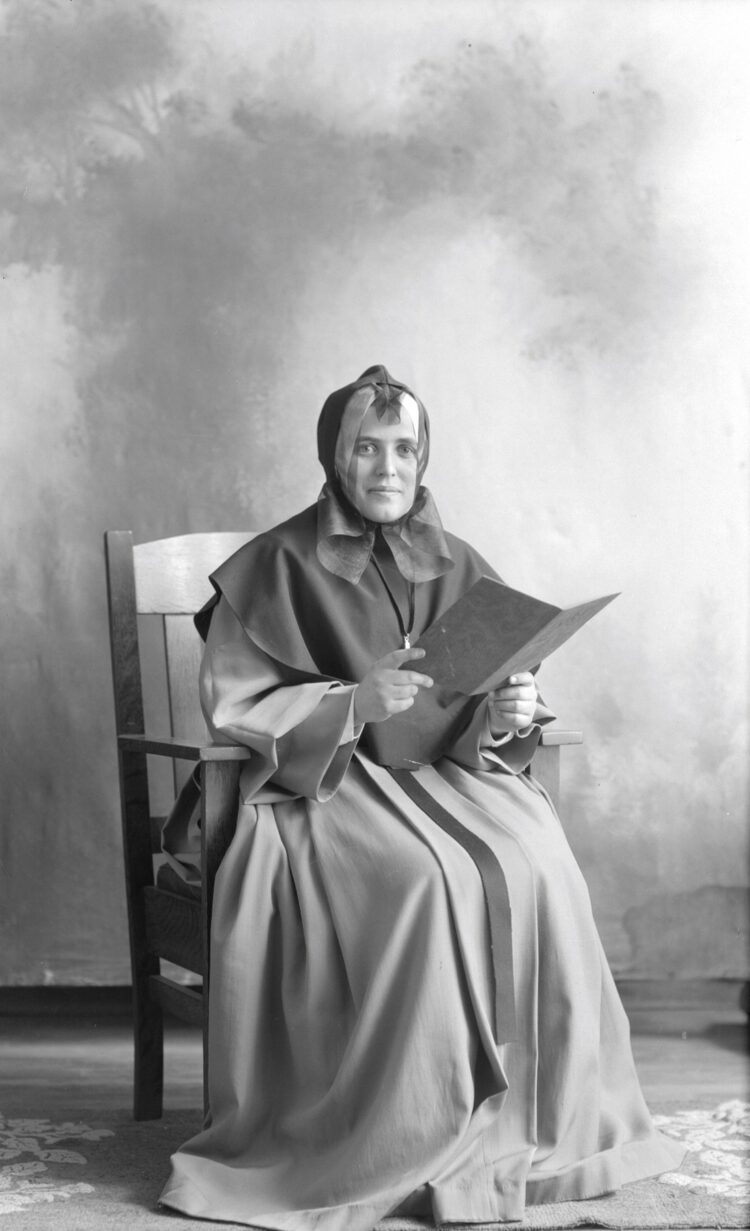
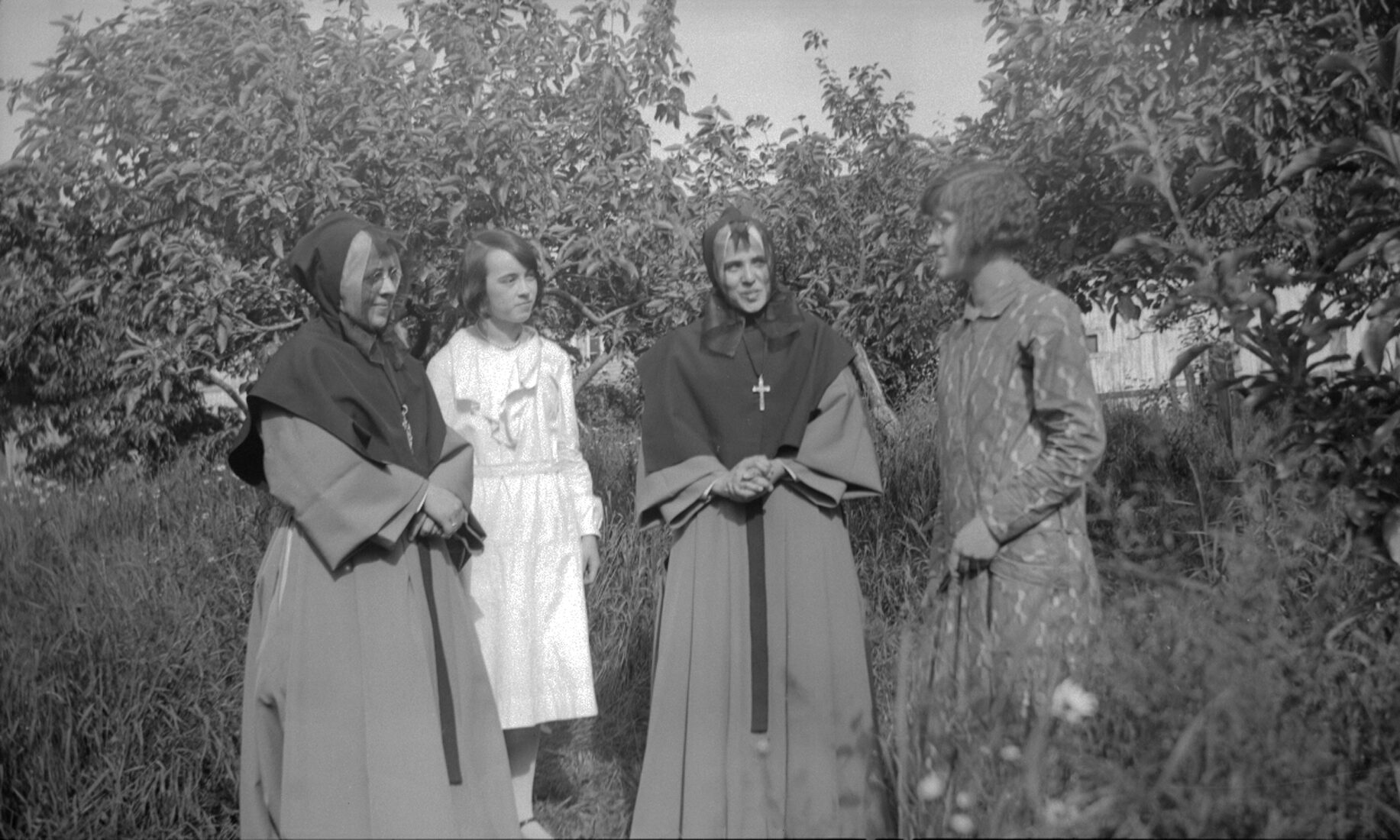
The youngest Dumont child poses here on the side staircase of her sister Marie-Alice’s home and studio. She is between 25 and 30 years old, and she had taken her vows as a Sister of Charity some 10 years earlier. In a letter dated May 21, 1928, at the age of 18 or 19, Berthe wrote to her parents with great emotion that she would be taking her perpetual vows on July 16. After all the “sacrifices” she and her parents had had to make to “reach this point,” she was delighted to finally become “the Bride of the great God we adore.” She wrote that she had no regrets, and that she had “freely and willingly” decided to devote her life “to Our Lord.”

6 cm X 11 cmMarie-Alice Dumont collection, MBSL, d1428
Berthe Dumont in a nun's habit on exterior stairs.

BERTHE

1909 - ?

Marie-Alice played a key role in Berthe’s upbringing, teaching her for two years and preparing her for her first communion. She also encouraged Berthe to join the Sisters of Charity of Québec City. When Berthe became Sister Sainte-Marie-Anne, it was almost as if she was fulfilling the dream Marie-Alice had once had of becoming a nun herself.

Dumont's sisters

d1784

1925-1928Photographe: Photographer: Marie-Alice Dumont

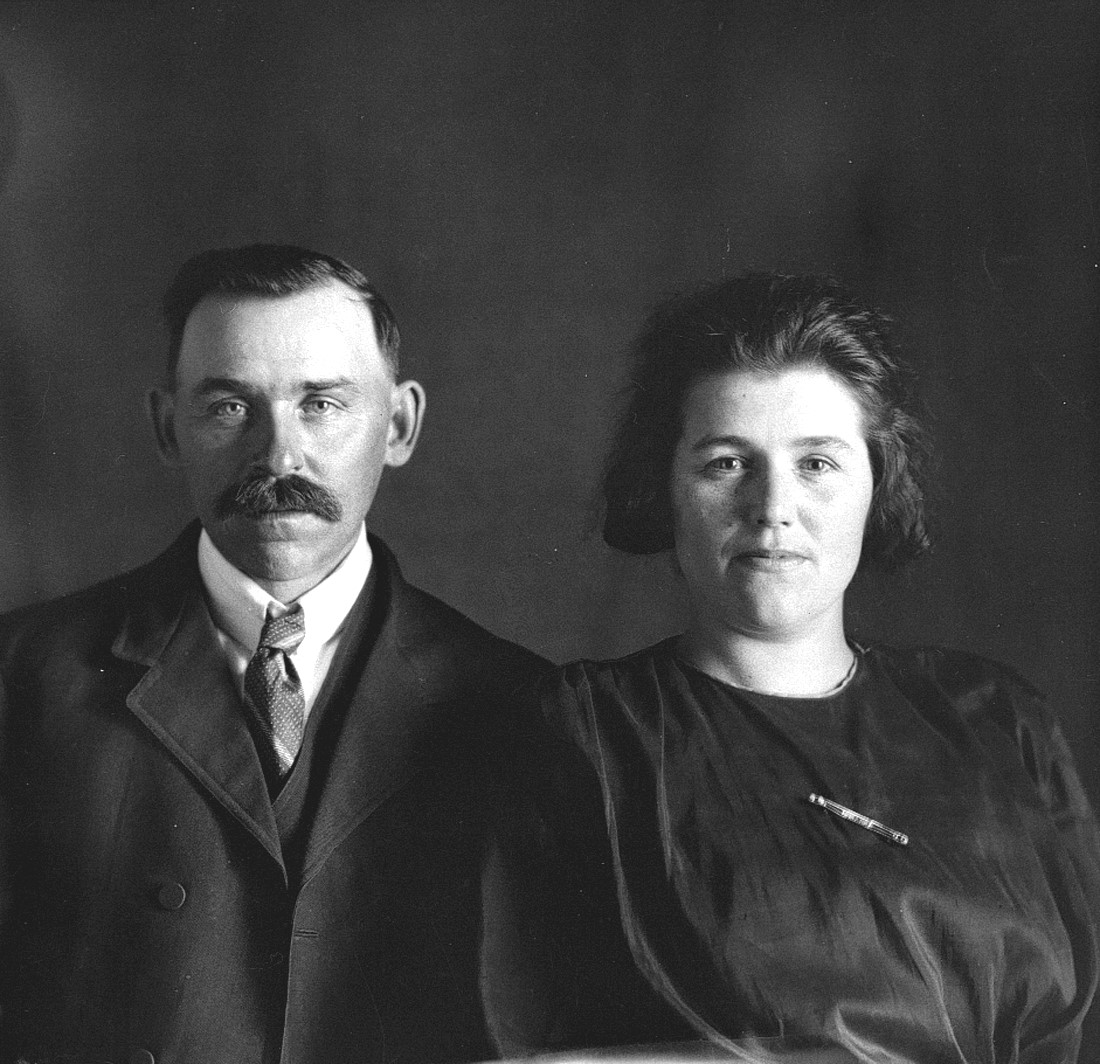
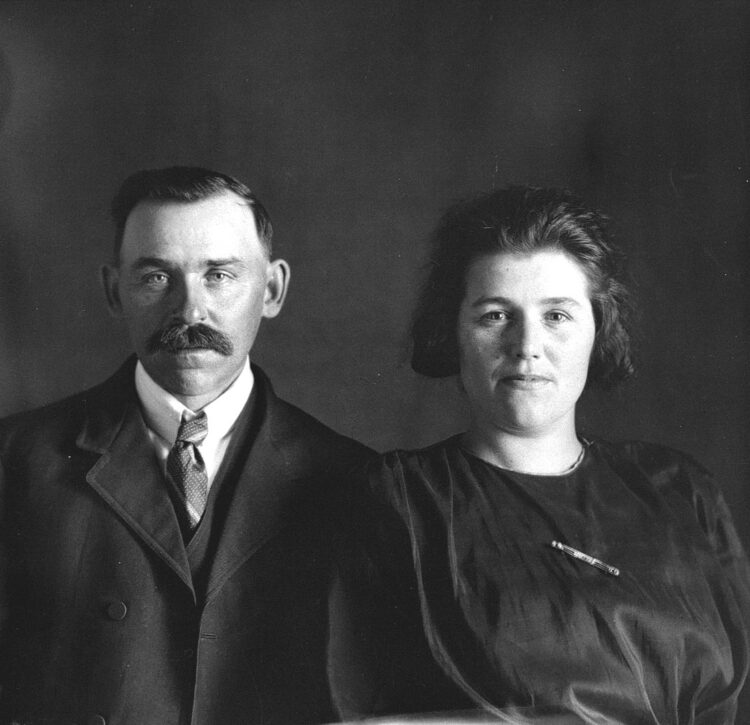
Émilia, the Dumont family’s eldest daughter and second-born after François, married Flavius Ouellet (1878–1961) in 1906, when she was 18 and he was 27. When this portrait was taken in Marie-Alice Dumont’s first small studio, they were aged around 40 and 50, respectively. They had been married for almost 20 years and already had 12 children together… with three more to come!

6 cm X 10 cmMarie-Alice Dumont collection, MBSL, d1784
Studio bust portrait of Émilia Dumont and Flavius Ouellet, approximately 35 and 40 years old, in a plain setting.

EMILIA

1888 - 1978

In the summer, Marie-Alice often visited her older sister Emilia at her home on Patins Island, off Kamouraska. Many photographs capture these joyful moments spent outdoors with her sister and brother-in-law, Flavius Ouellet. But what truly stands out is the photographer’s pure delight in being surrounded by her nieces and nephews.

V
Rosalie Bergeron

The story of Rosalie Bergeron, Marie-Alice Dumont’s adopted sister, is one of tragic beginnings. Born on February 10, 1916, in Sainte-Emmélie-de-Lotbinière, Rosalie experienced a childhood of extreme poverty. Her mother, Mary Lemay, died from destitution and her father, Philéas, was an alcoholic who was unable to care for his children. As a result, Rosalie was underfed, poorly clothed and received very limited schooling. If this were happening today, it is safe to say social services would have stepped in!

d0151a

1923-1928 [1928 - early 1930s]Photographe: Photographer: Marie-Alice Dumont

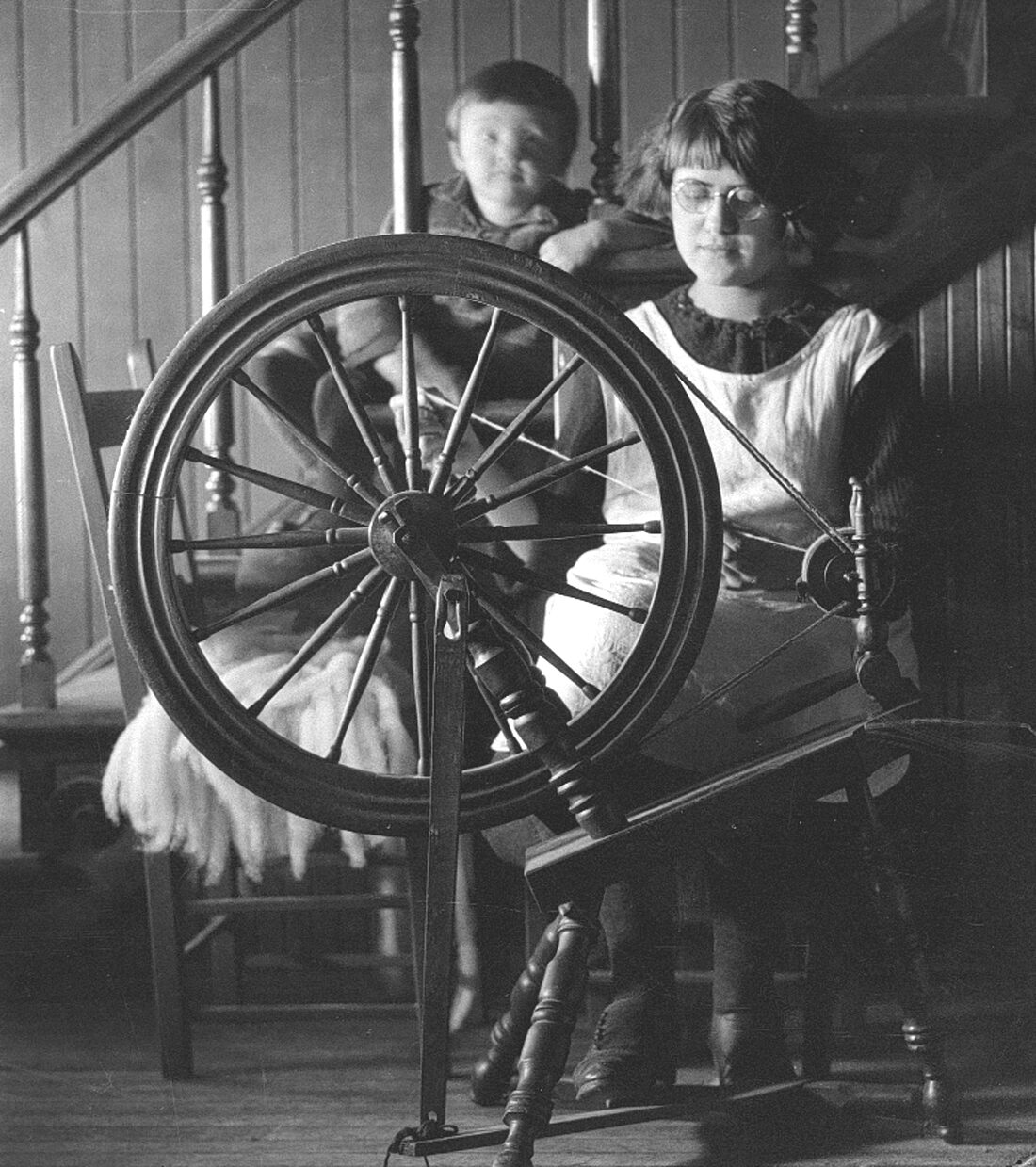
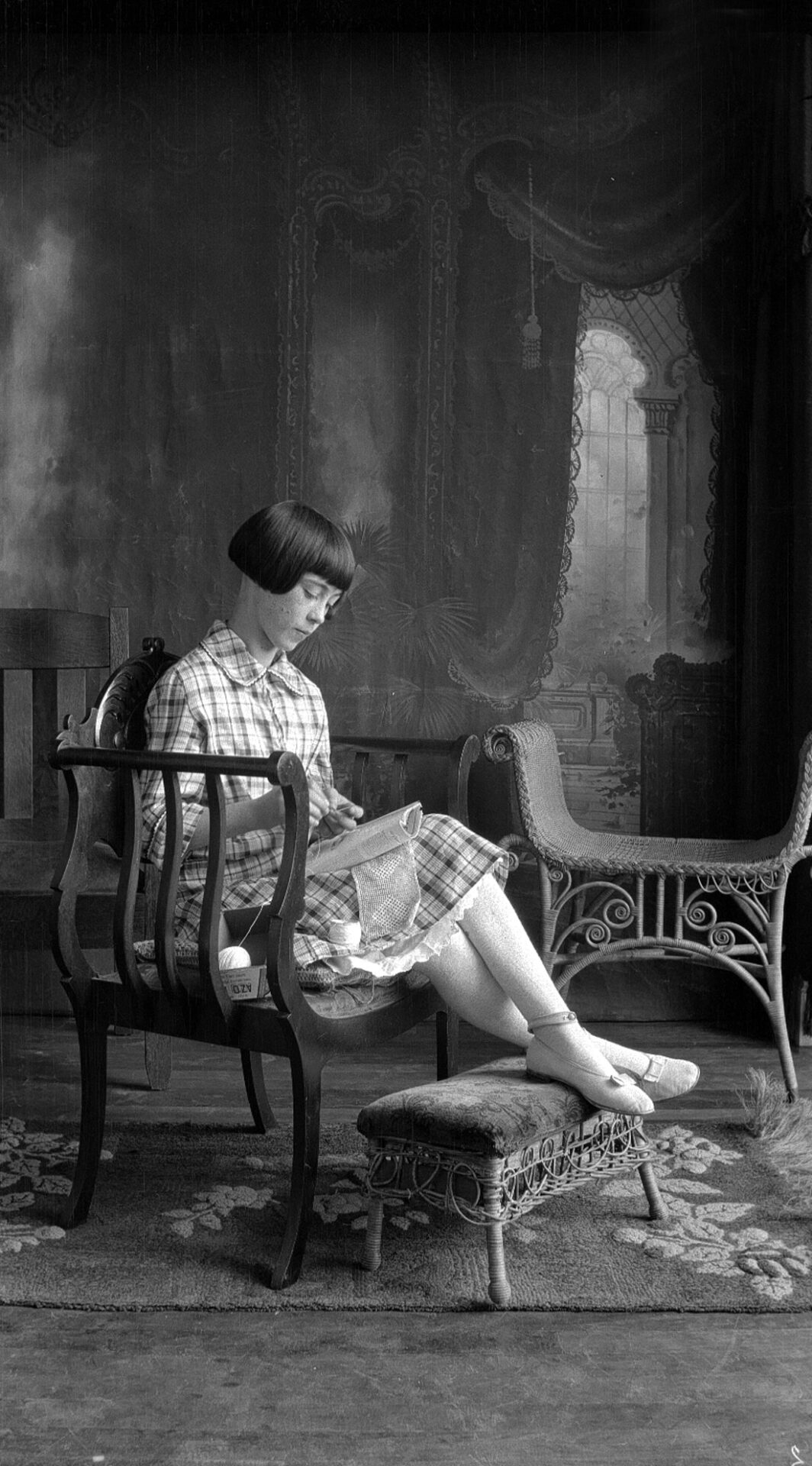
Rosalie Bergeron joined the Dumont family in 1928, at the age of 11. She would stay until just after she got married in April 1945, at the age of 29. Her teenage years and first experiences of adulthood were therefore spent with Marie-Alice Dumont. Here she is between 12 and 15 years old. The portrait shows her practising embroidery, a craft learned by many young girls in those days. Dumont’s staging is rather serious. Rosalie looks diligent and focused. She is not looking at the camera, but at her hands or the instruction manual on her lap. Although the portrait was taken in a studio, it is meant to appear authentic and natural. It also suggests a false spontaneity, as if the photographer were saying, “See this young girl at work? This is part of her daily routine. She will soon be an adult and a responsible woman.” This portrait symbolizes the Dumont family’s acceptance of Rosalie after her difficult childhood.

11 cm X 13 cmMarie-Alice Dumont collection, MBSL, d0151a
Studio portrait of Rosalie Bergeron embroidering.

In December 1927, Philéas was found dead in a train car, a victim of alcohol poisoning. His body was brought back to the family home and left on the floor for several days. No surprise, then, that the children complained about the smell.

When Rosalie was left orphaned at 11 years of age, Marie-Alice’s brother Napoléon was a priest in the parish where Rosalie lived. He was saddened by the “dire poverty” the Bergeron children were enduring, knowing that they would starve and freeze without help. He spoke to his parents, who decided to take Rosalie in.

d1809

1925-1927 [probably winter or spring of 1928]Photographe: Photographer: Marie-Alice Dumont

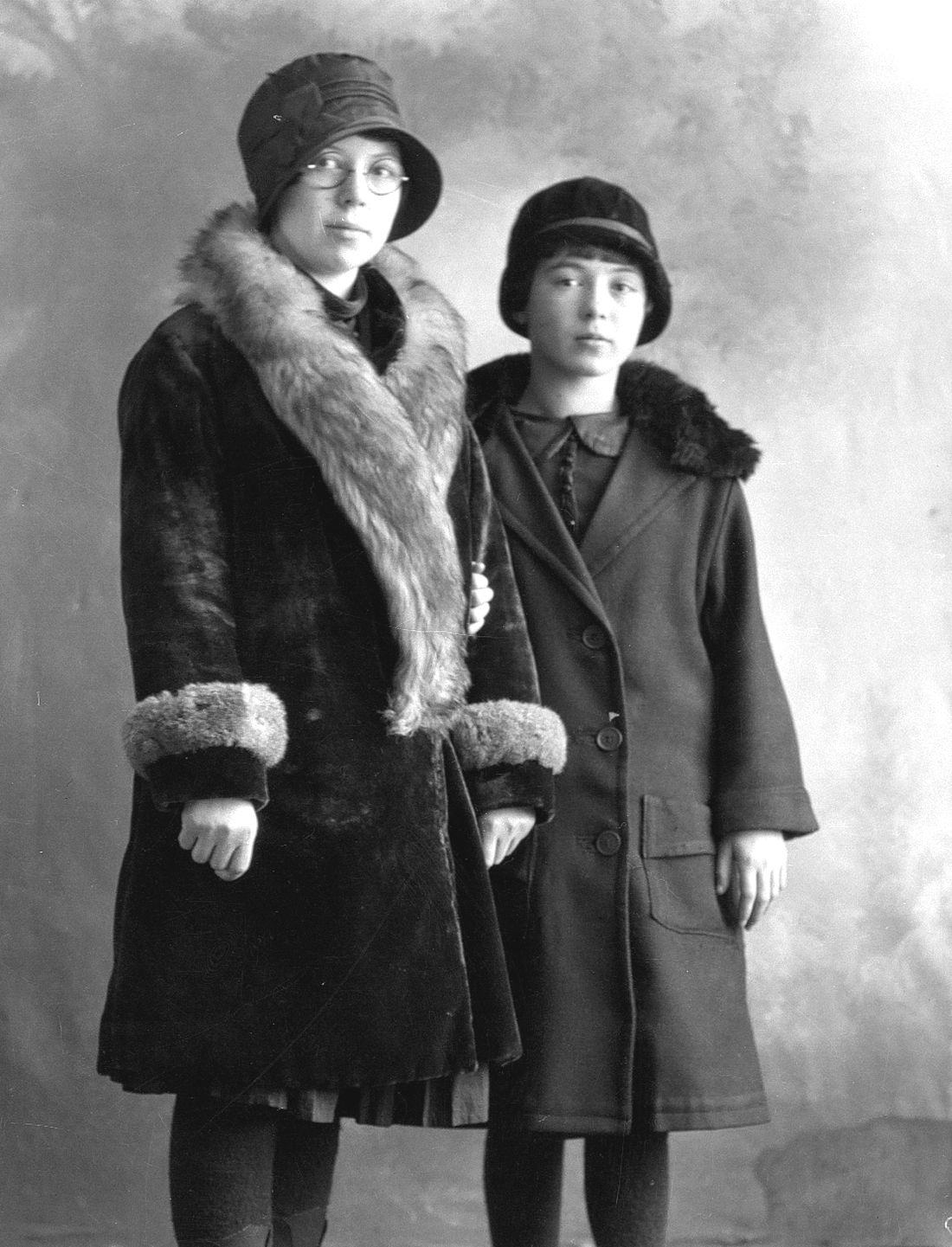
In January 1928, Joseph-Napoléon went to Lotbinière to collect Rosalie (right) and her older sister Marguerite (left). Much to Napoleon’s surprise, the girls had no winter clothes; Rosalie was dressed in cotton garments full of holes. It would have been impossible to make the journey by train and horse-drawn cart, in strong winds and in temperatures of -20 °C, dressed like that. Napoléon lent the two girls his coats and heavy woollen stockings, and all three endured the icy journey as best they could. In this portrait, one of the first that Marie-Alice took of the Bergeron sisters, Rosalie and Marguerite are dressed quite differently. They wear warm, fashionable winter coats trimmed with fur, which was a luxury. What a change! A far cry from the “poor rags” they arrived in, as Napoléon wrote. It is clear that the Dumont family quickly changed Rosalie’s life.

9 cm X 11 cmMarie-Alice Dumont collection, MBSL, d1809
Studio portrait of Rosalie and Marguerite Bergeron elegantly dressed for winter.

Rosalie’s story is closely tied to Marie-Alice’s. For Marie-Alice, Rosalie was a sister, a friend and an assistant for nearly 20 years. The two remained close, as shown in the many portraits Marie-Alice left behind of Rosalie.

These photos let us piece together significant moments from Rosalie’s life. They start with her early teenage years, follow her through adulthood, capture her marriage to Lorenzo and end with her final years alongside her daughters, Céline and Pierrette. Click on the photos to learn more about Rosalie’s story!

VI
Dumont's brothers and extended family

Marie-Alice’s older brother, François, and her younger brother, Joseph-Napoléon, just three years her junior, were also frequent subjects of her photography. Marie-Alice remained close to her brothers throughout her life.

d5472

1951Photographe: Photographer: Marie-Alice Dumont

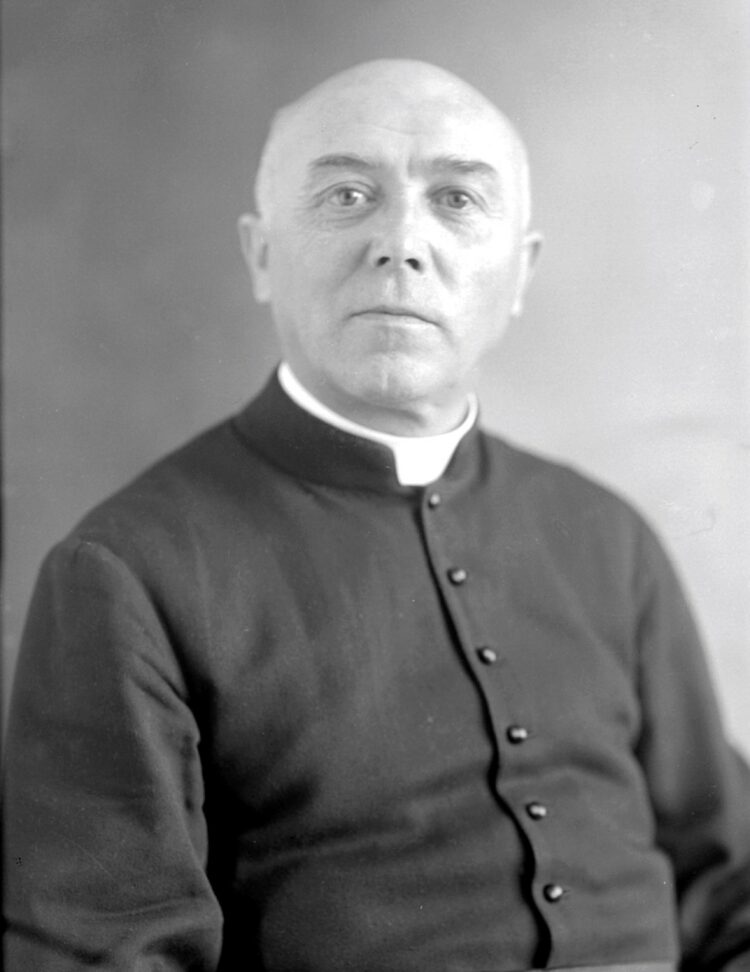
In this studio portrait, Marie-Alice Dumont’s younger brother, Joseph-Napoléon, is approaching the age of 55. After more than 30 years in the priesthood, the time for retirement was fast approaching. Napoleon would soon have plenty of time to gather his archives and to write his memoirs and family history. What a wealth of information and anecdotes he left us!

11 cm X 16 cmMarie-Alice Dumont collection, MBSL, d5472
Studio bust portrait of Joseph-Napoléon Dumont, approximately 60 years old, in a plain setting.
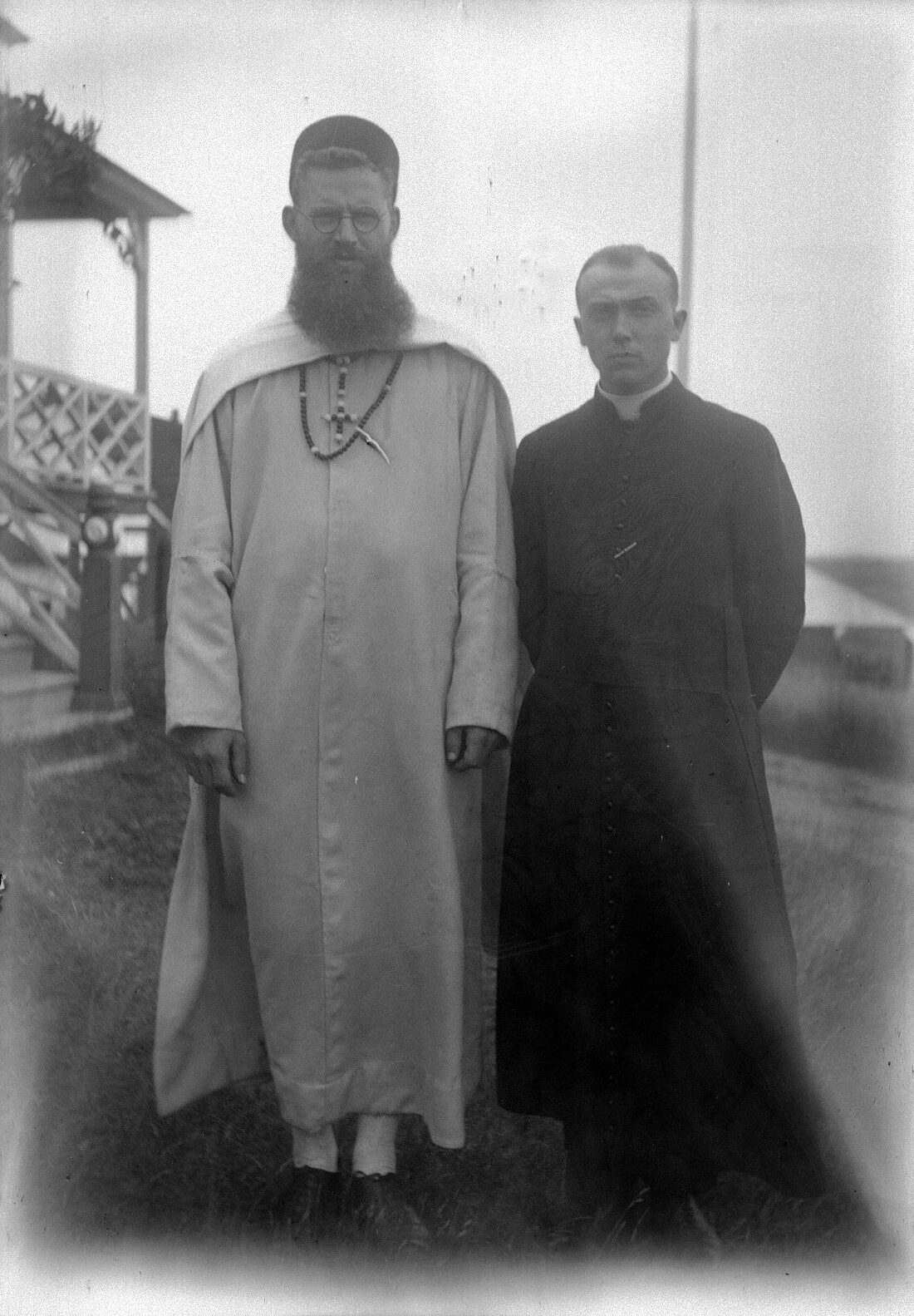
Joseph-Napoléon was the first to encourage his sister Marie-Alice to take up photography as a profession

The special bond she shared with certain members of her extended family also stands out, especially with her nephew Origène Dumont, and his wife, Daria Lavoie.

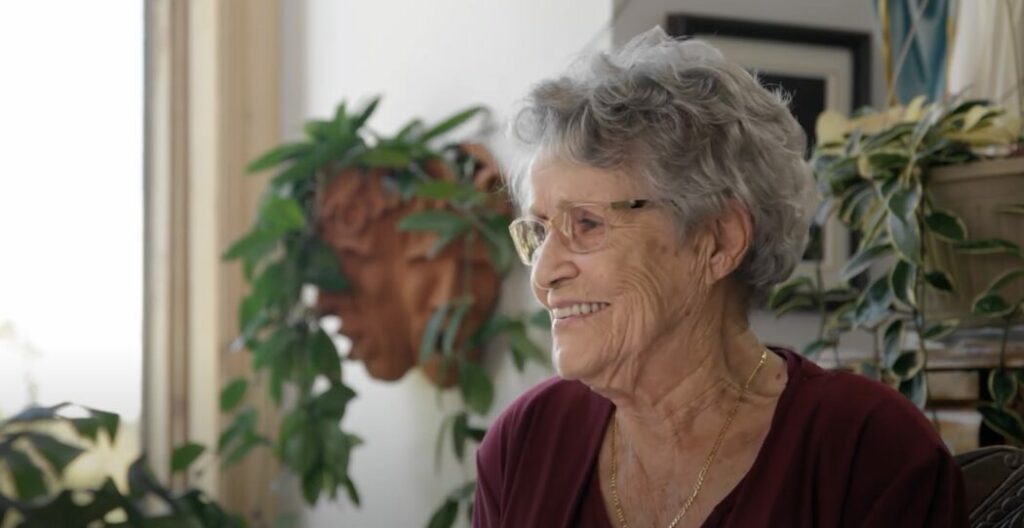
When Marie-Alice moved into a retirement home, it was Origène and Daria who took over the family home and studio. Today, Daria acts as the guardian of “Auntie Alice’s” legacy.

“My brother told me, “You could learn photography, it’s not that hard, and you could make a living from it. Next holiday, I’ll introduce you to photography.” He sent me an amateur’s guide and said, “Study this, and we’ll try it during the break.” ”
Marie-Alice Dumont (1981)

“She had a wonderful personality. She was wise, always smiling, a little quirky. She was an artist, the photographer of the village, respected by everyone.”

Art historian and photographer Madeleine Marcil sits down with Daria Dumont, who keeps the memory of her husband’s aunt, Marie-Alice Dumont, alive.

d0343

1925Photographe: Photographer: Marie-Alice Dumont

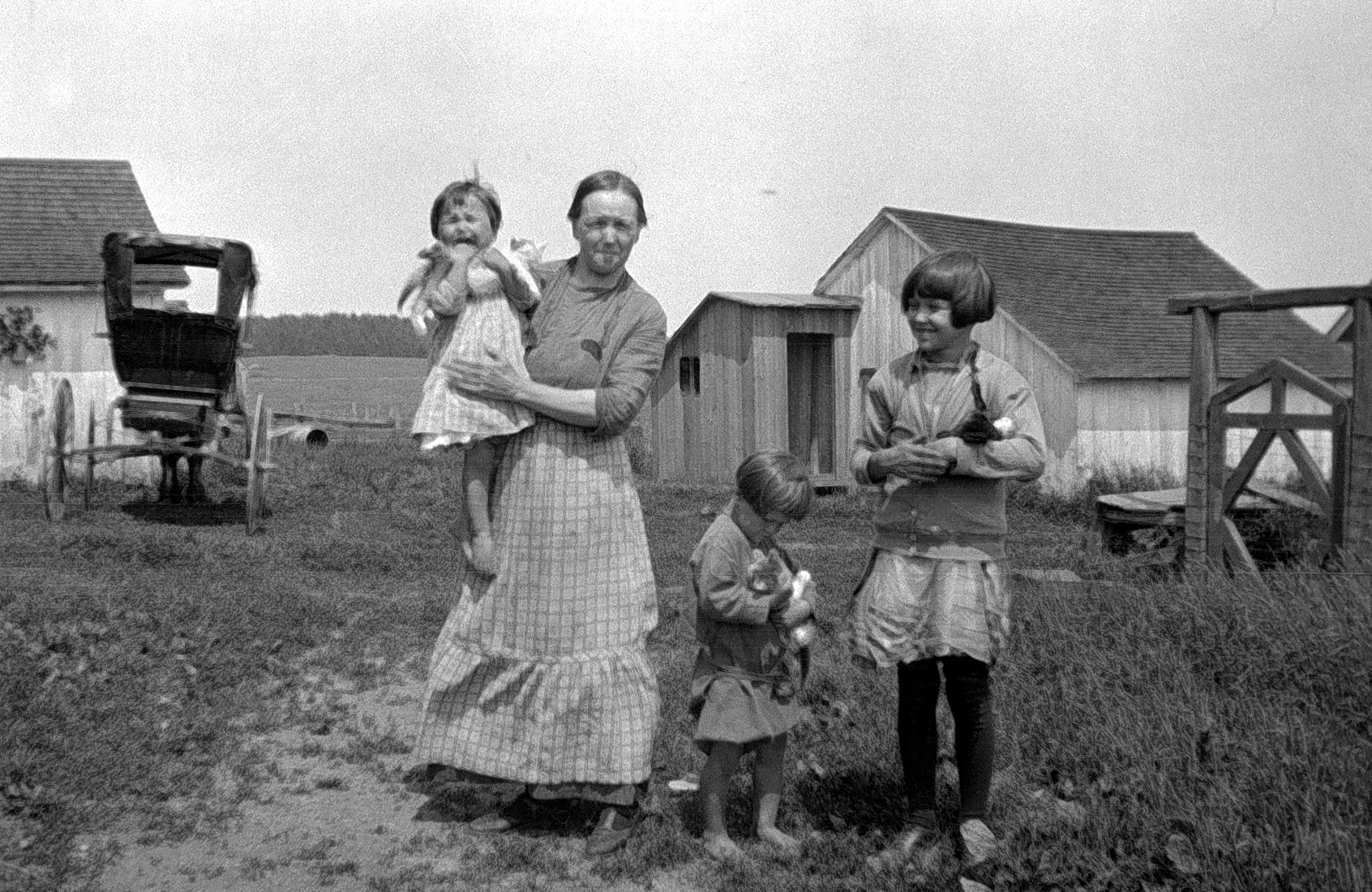
This portrait shows Mary April with the three children she cared for with François Dumont. Each carries a small animal, possibly a cat. Origène, the youngest, cries in his mother’s arms. Yvan keeps a close eye on the little creature in his hands. Meanwhile, Félix smiles, gazing into the distance. At what time of day was the photograph taken? What were they doing beforehand? What will they do afterwards? We can only speculate. However, the farm setting gives us a clue to their daily life, which was shaped by the work and chores required to maintain a farm property.

7 cm X 4 cmMarie-Alice Dumont collection, MBSL, d0343
Mary April on the farm grounds with her three children, each holding a cat in their arms.